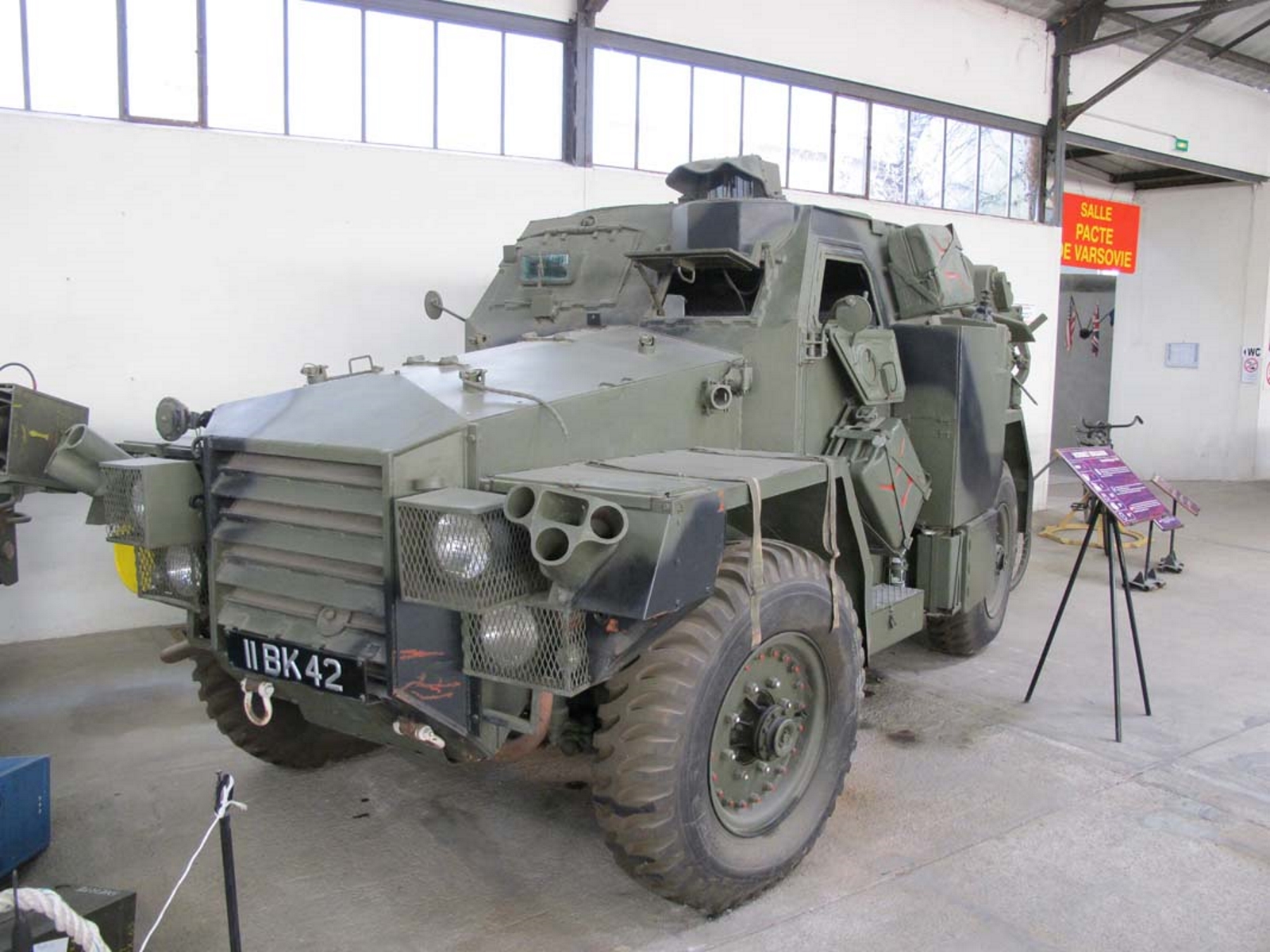
FV1620 Humber Hornet | |
|---|---|
| Ország | Egyesült Királyság, Ausztrália |
| Szerepet | Tartályromboló |
| Termelt | 1958-1961 |
| Gyártó | Humber |
A FV1620 Humber Hornet (FV1620, 1 tonnás teherautó, légi hordozható, páncélozott hordozórakéta, Hornet hordozórakéta) egy speciális, légi bevethető páncélozott harcjármű volt, amelyet a Malkara, egy Ausztrália és az Egyesült Királyság által kifejlesztett páncéltörő irányított rakéta hordozására terveztek.
| FV1620 Humber Hornet séta | |
|---|---|
| Fotósok | Vlagyimir Jakubov |
| Lokalizáció | Musee des Blindes, Saumur |
| Fénykép | 98 |

Lásd még:


A FV1620 Humber Hornet was a British light armoured vehicle designed in the 1950s for airborne operations. It was based on the chassis of the Humber FV1600 series, but fitted with a Malkara anti-tank guided missile launcher and a small turret with a 7.62 mm machine gun. The Hornet had a crew of three: a driver, a commander and a missile operator. The vehicle was air-portable by a Blackburn Beverley transport aircraft or a heavy-lift helicopter.
A Lódarázs entered service with the British Army in 1958 and was used by the 16th Parachute Brigade until 1967, when it was replaced by the Ferret Mk 5 Swingfire. The Hornet saw combat during the Suez Crisis in 1956 and the Indonesian Confrontation in 1962-1966. It was also exported to Australia and Jordan.
Views : 1836