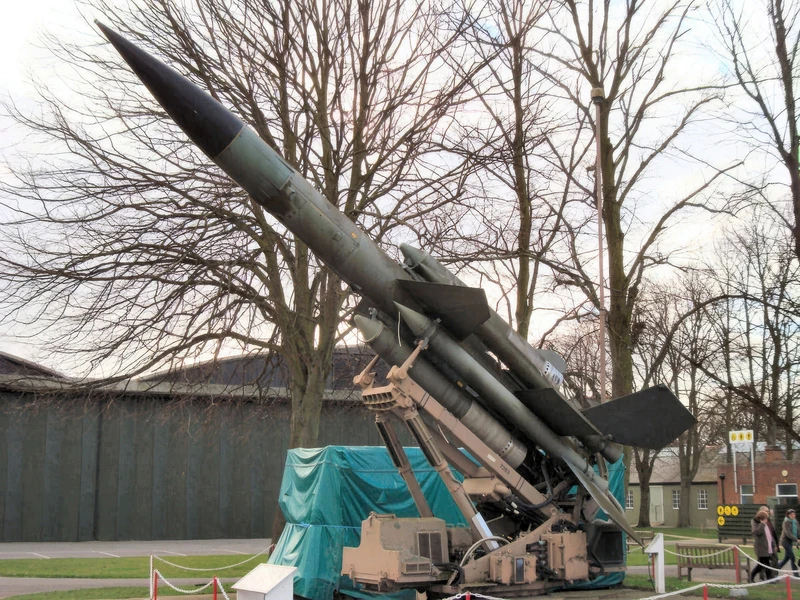
Bristoli véreb | |
|---|---|
| Ország | Egyesült Királyság |
| Szerepet | Föld-levegő rakéta |
| Szolgálatban | 1958 – 1991 |
| Beépített | 783 |
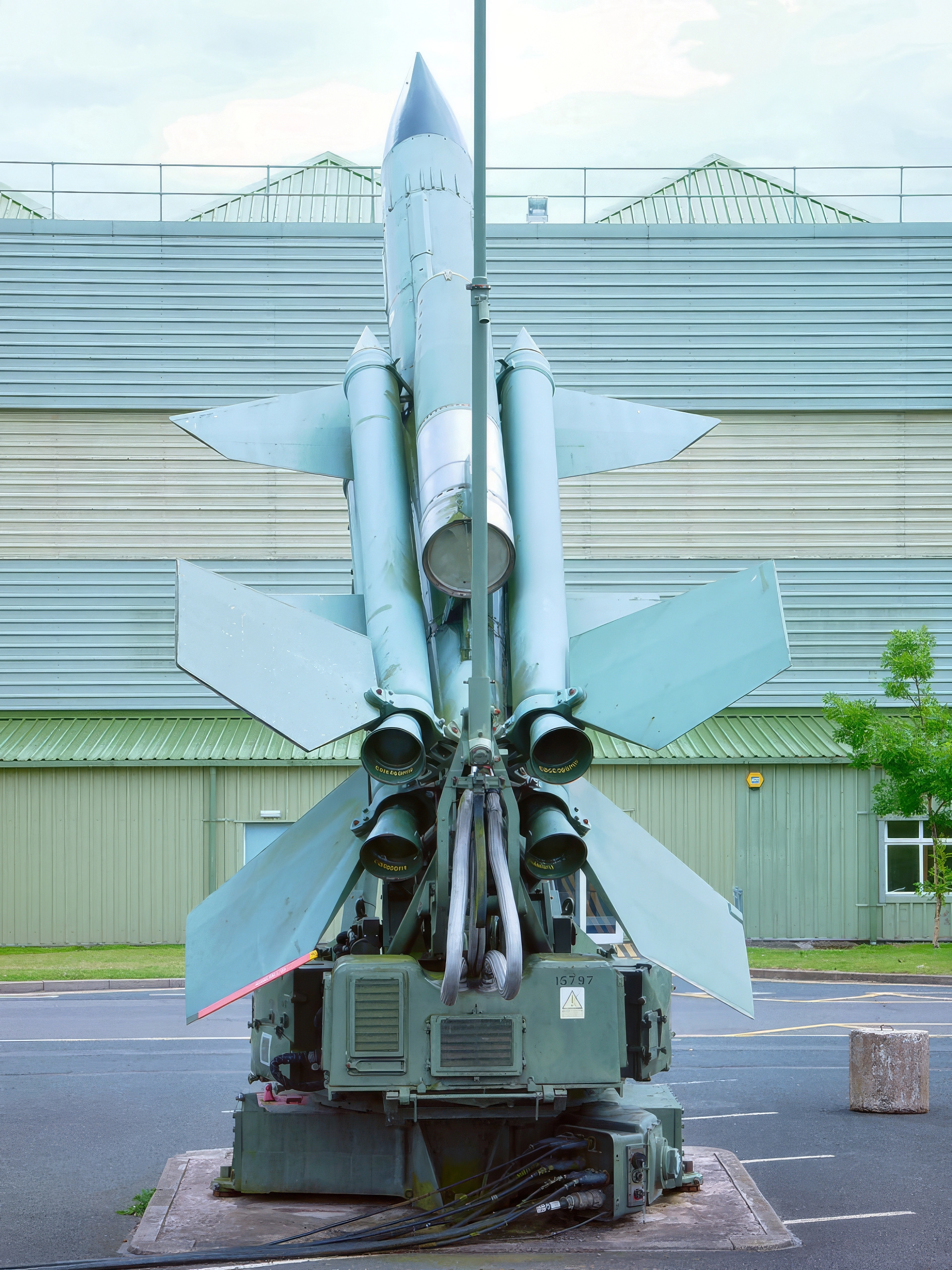
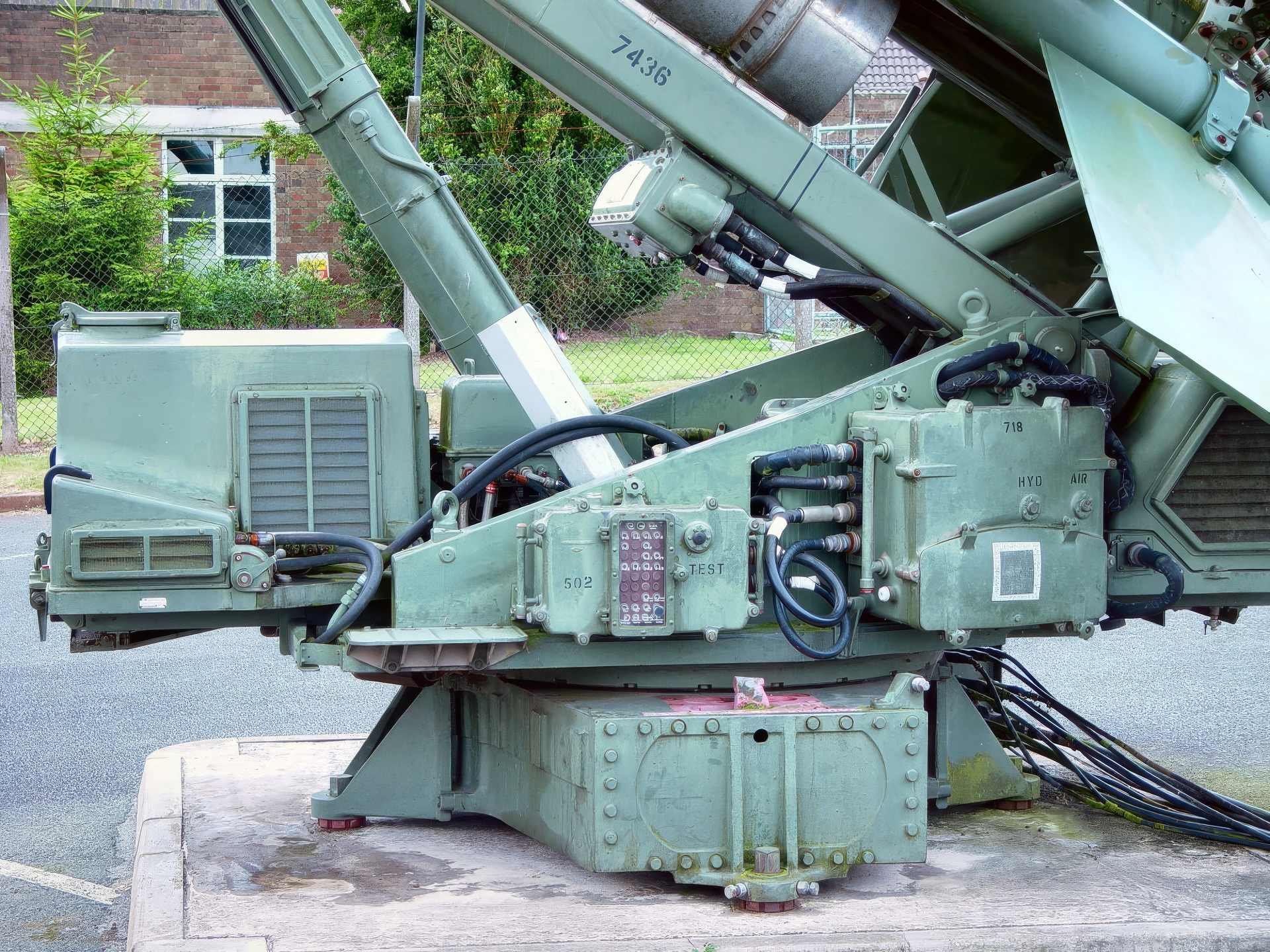
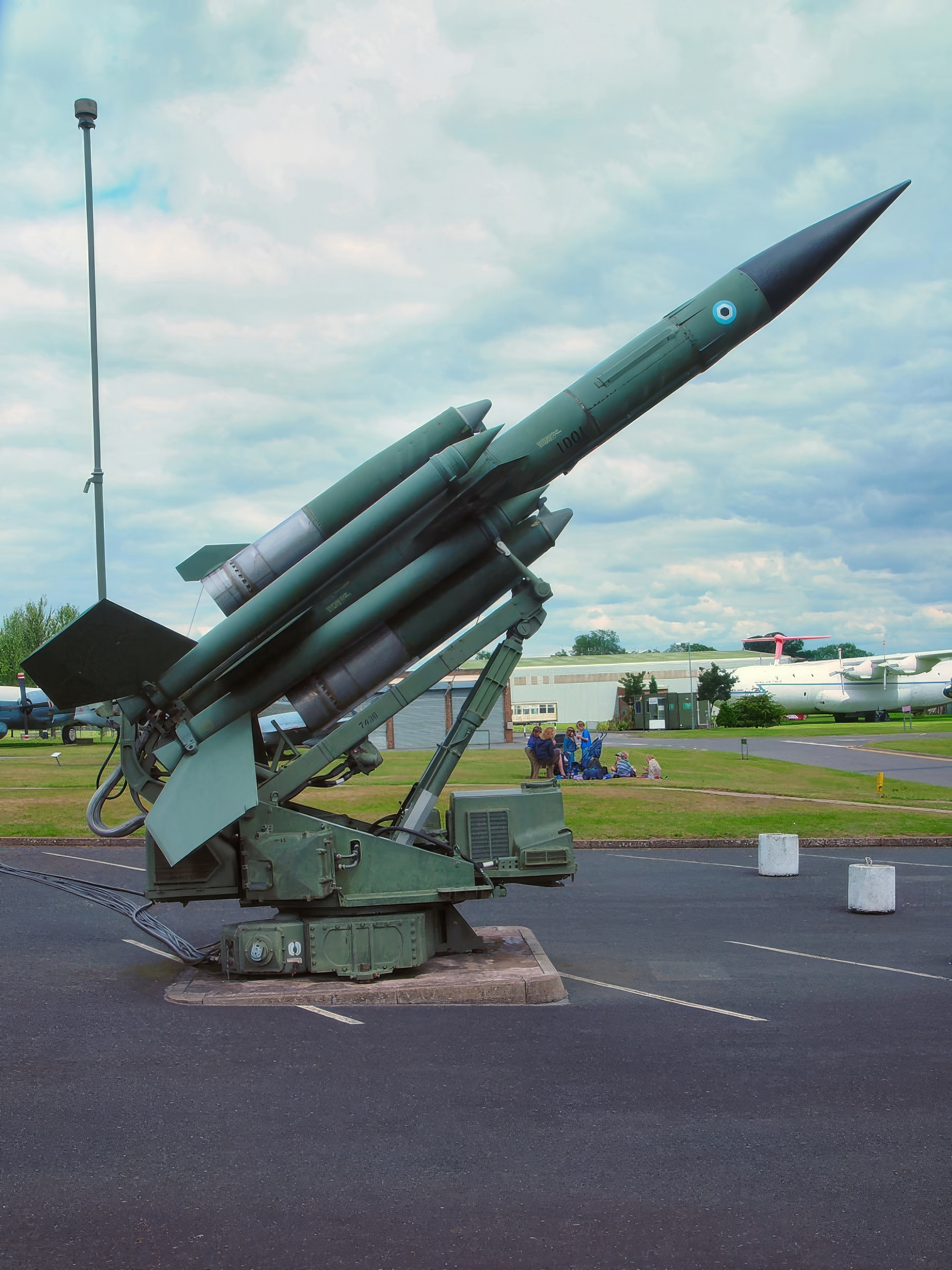
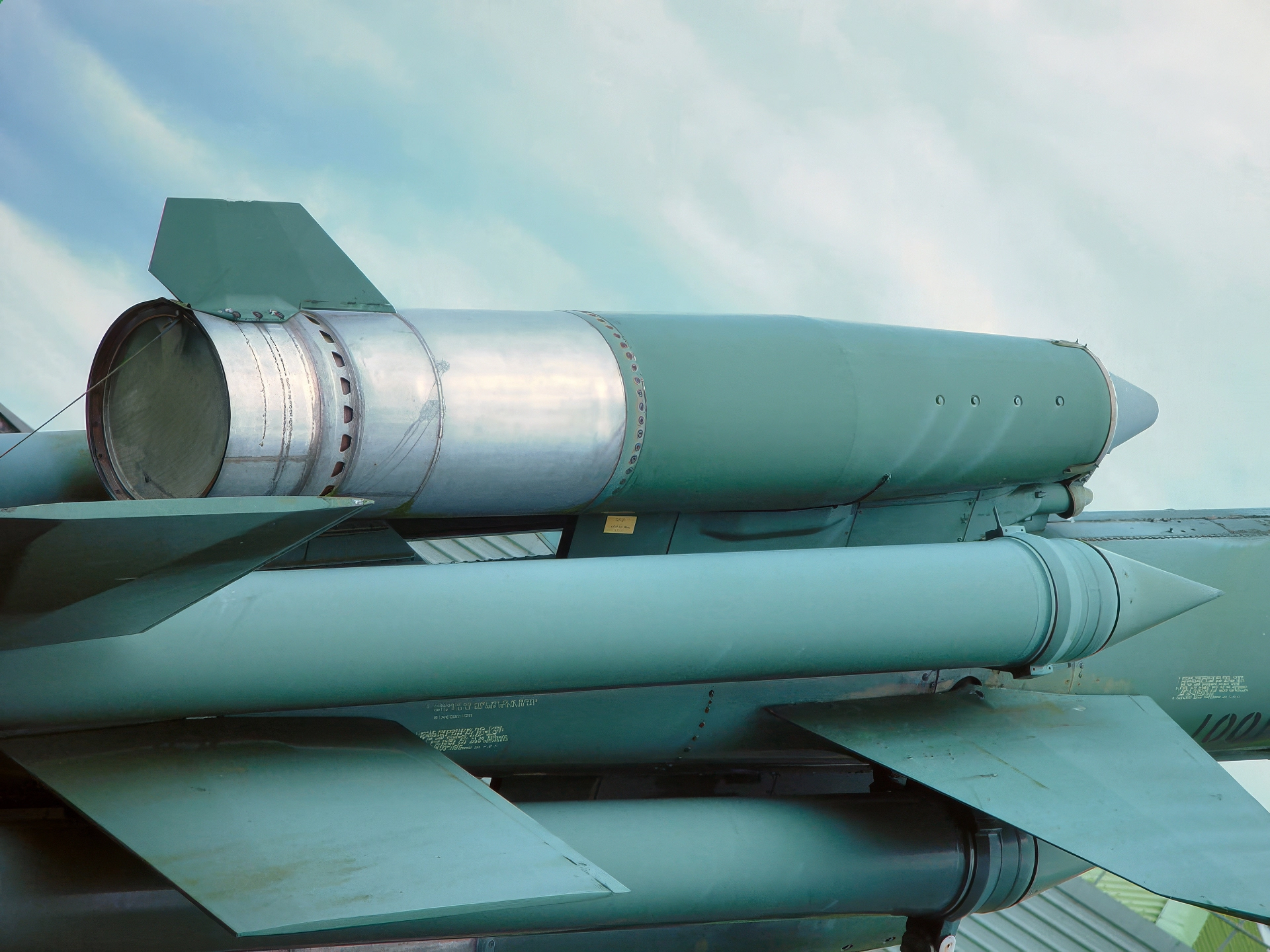
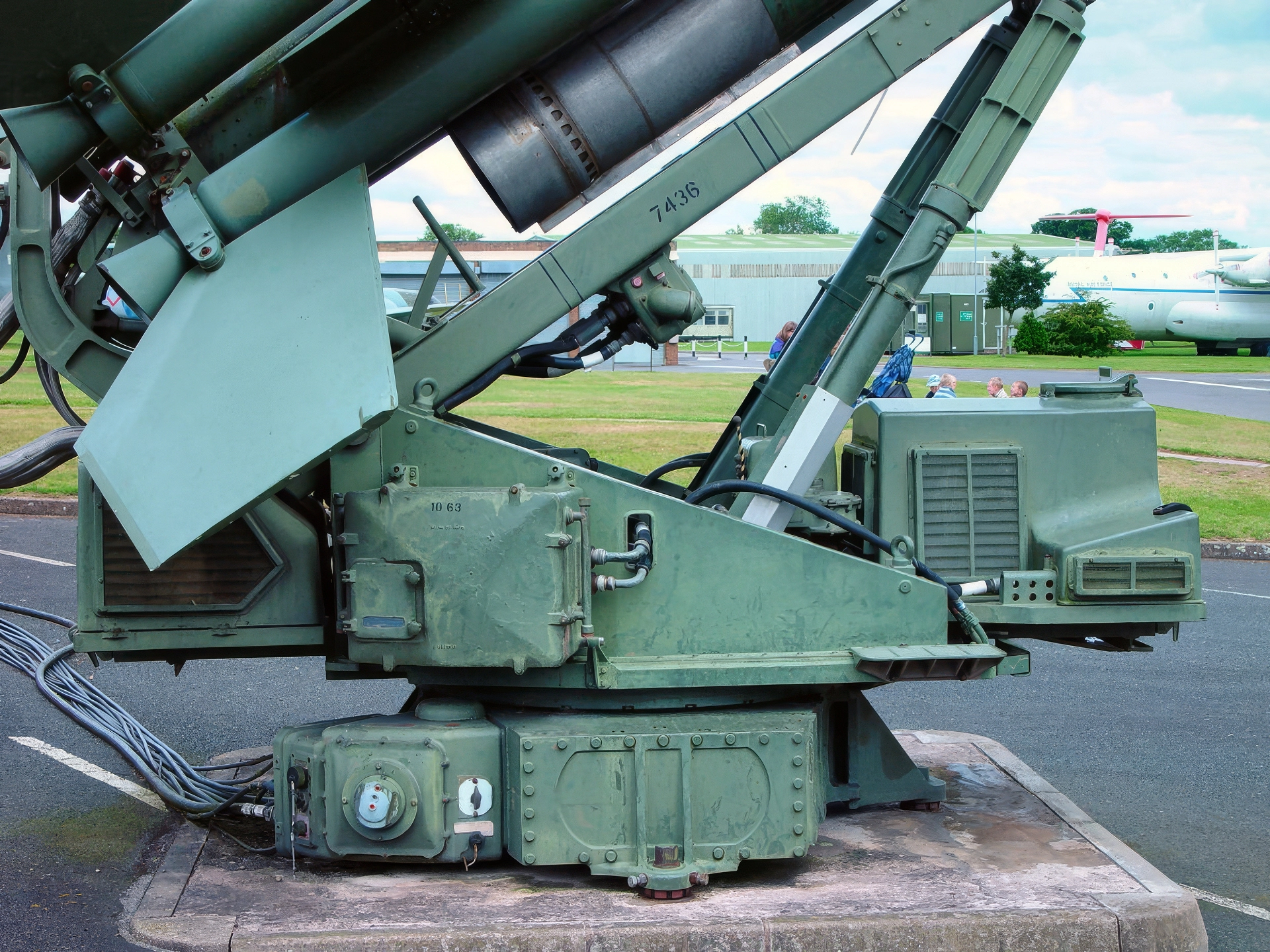
A Bristoli véreb is a British ramjet powered surface-to-air missile developed during the 1950s. It served as the UK’s main air defence weapon into the 1990s and was in large-scale service with the Royal Air Force (RAF) and the forces of four other countries. Part of sweeping changes to the UK’s defence posture, the Bloodhound was intended to protect the RAF’s V bomber bases to preserve the deterrent force, attacking bombers that made it past the Lightning interceptor force. Bloodhound Mk. I entered service in December 1958, the first British guided weapon to enter full operational service. This was part of Stage 1 upgrades to the defensive systems, in the later Stage 2, both Bloodhound and the fighters would be replaced by a longer-range missile code named Blue Envoy. When this was ultimately cancelled in 1957, parts of its design were worked into Bloodhound Mk. II, roughly doubling the range of the missile. The Mk. I began to be replaced by the Mk. II starting in 1964.
Forrás: Bristoli véreb a Wikipédián
| Bristol Bloodhound SAM Walk Around | |
|---|---|
| Fotósok | Michael Benolkin, David Spurgeon-Jackson |
| Lokalizáció | Ismeretlen |
| Fénykép | 38 |


Lásd még:


General Characteristics and Role
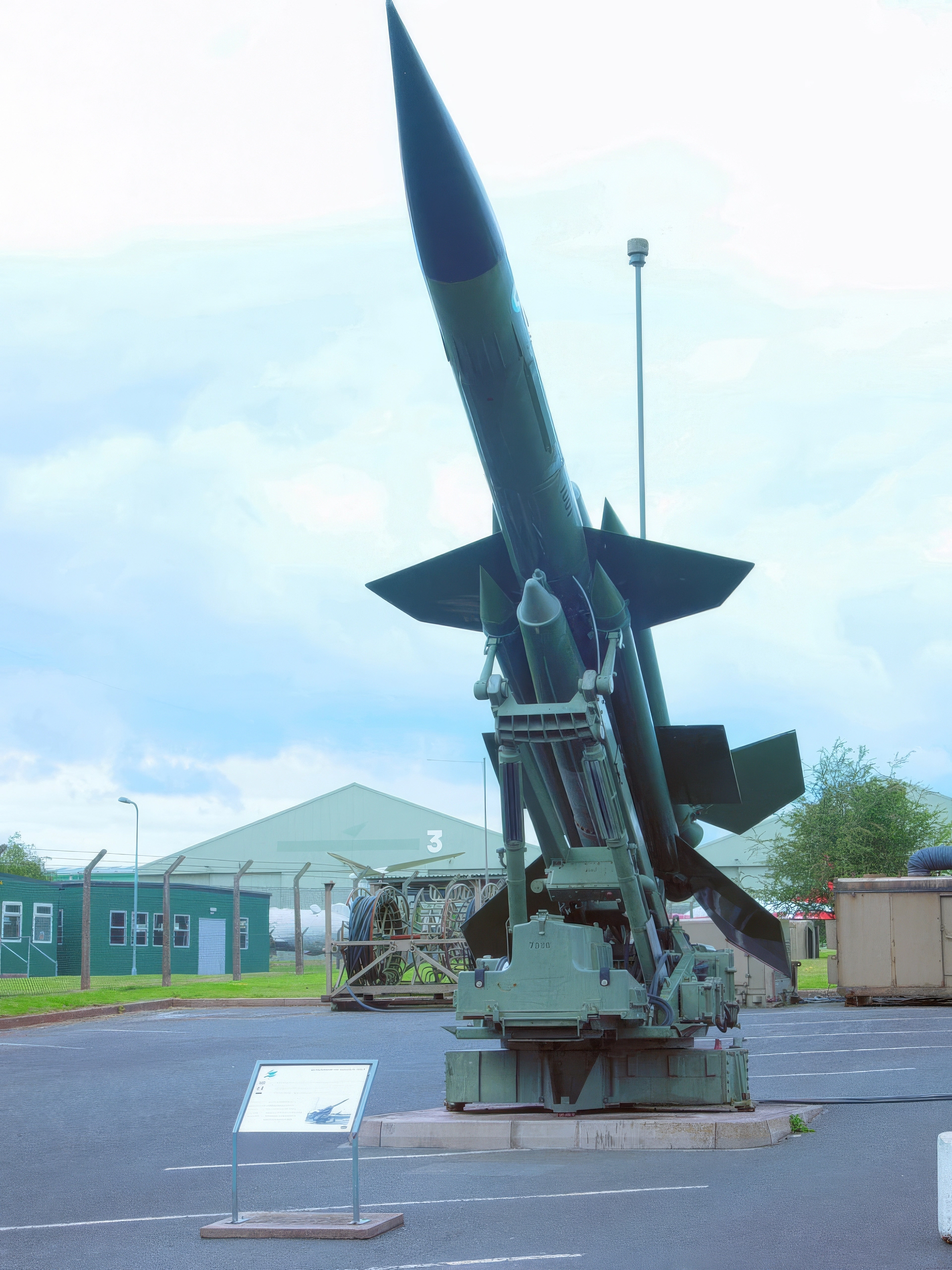
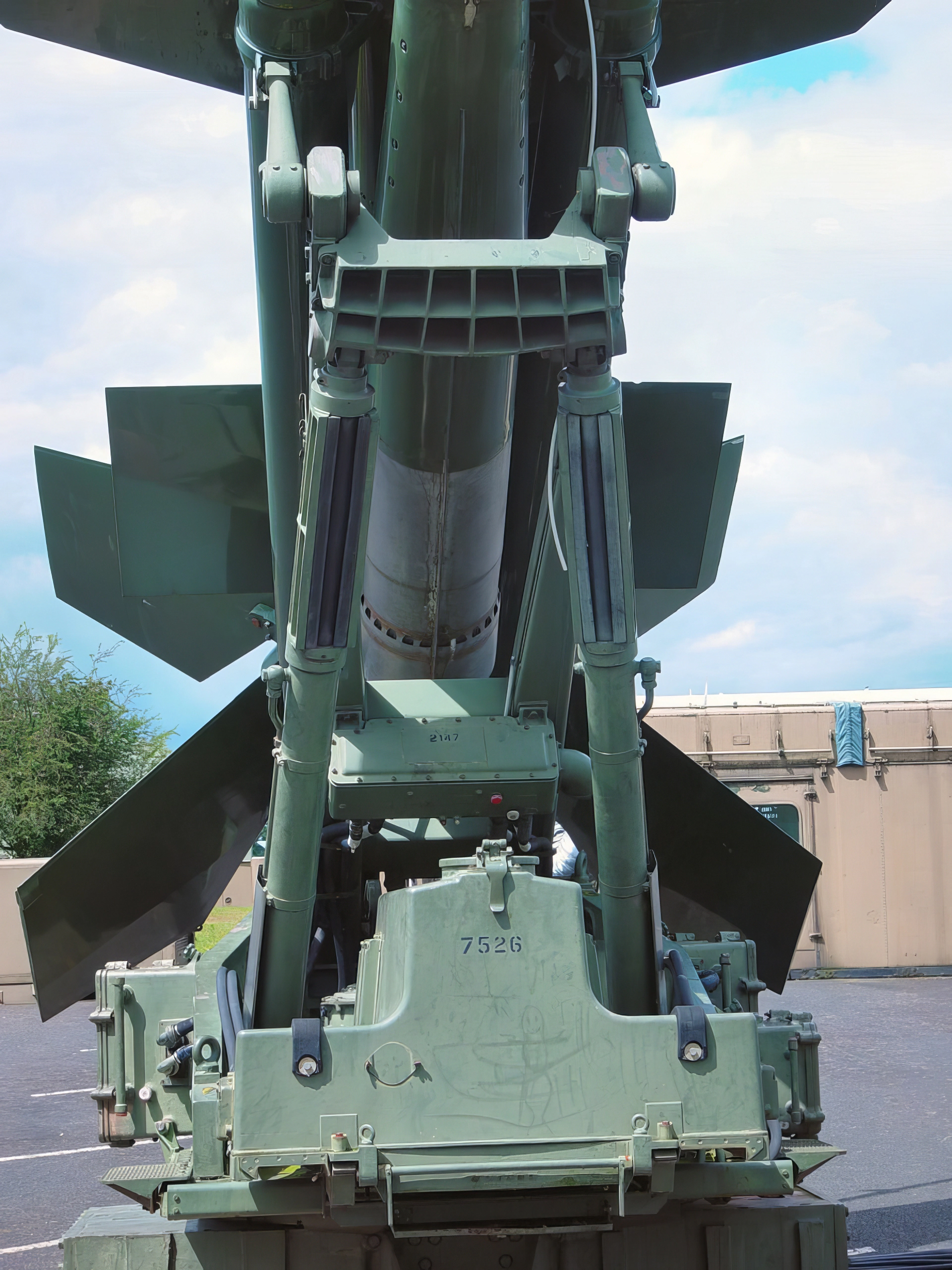
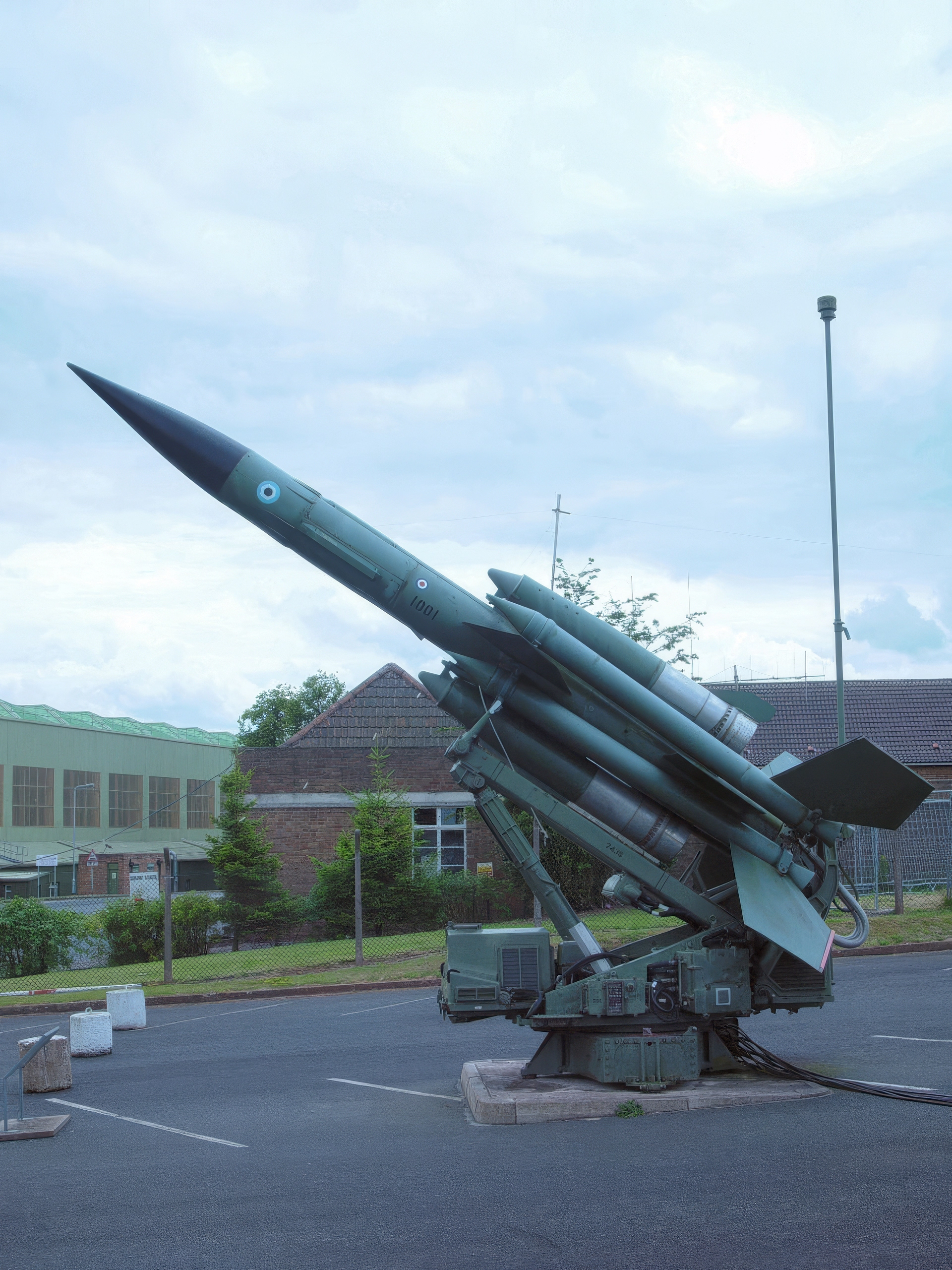
The Bristol Bloodhound was the United Kingdom’s first operational surface-to-air missile system, developed during the Cold War as a long-range defensive weapon. Known initially by the codename “Red Duster,” it was designed primarily to protect critical assets like Royal Air Force V bomber bases from high-flying Soviet nuclear bombers. The system evolved significantly from the Mk 1, which was vulnerable to jamming, to the much more capable Mk 2. The Mk 2 utilized advanced continuous-wave radar and more powerful ramjet engines, allowing it to engage targets at a wider range of altitudes, including low-level strikes, and remained a key part of UK air defenses until 1991.
| Property | Typical Value (Bloodhound Mk 2) |
|---|---|
| Szerepet | Long-Range Surface-to-Air Missile (SAM) |
| National Origin | Egyesült Királyság |
| Gyártó | Bristol Aeroplane Co. / Ferranti Ltd. (Guidance) |
| Service Entry (Mk 2) | 1964 |
| Length (with boosters) | 8.45 m (27 ft 9 in) |
| Szárnyfesztávolsága | 2.83 m (9 ft 3 in) |
| Launch Weight | Approx. 2,270 kg (5,000 lb) |
| Guidance System | Semi-Active Radar Homing (Continuous Wave) |
Propulsion and Performance
- Propulsion System:
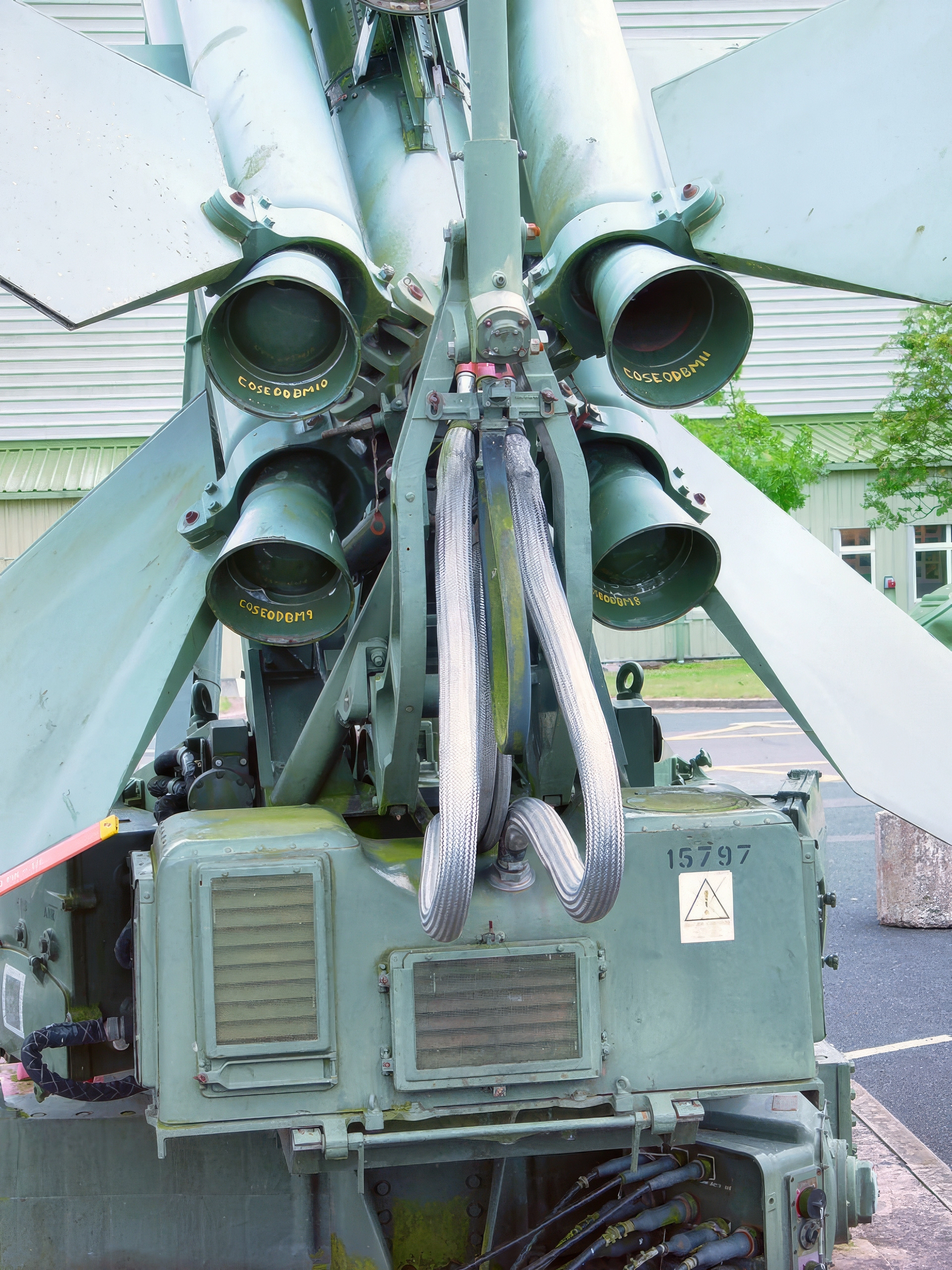
- Main Engines: 2 x Bristol Thor ramjet engines (Improved for Mk 2).
- Boosters: 4 x Gosling solid-fuel booster rockets (used only for initial launch and acceleration).
- Maximum Speed: Mach 2.7 (Approx. 3,330 km/h or 2,070 mph).
- Note: The missile achieves Mach 1 within its own length (25 ft) upon launch.
- Maximum Range (Mk 2): Up to 190 km (120 mi) (Target engagement range: approx. 85 km / 50 mi).
- Engagement Altitude: Between 300 m (1,000 ft) and 18,000 m (60,000 ft).
- Control System: Uses a unique “twist and steer” aerodynamic control system where the main wings pivot to steer the missile.
Radar and Warhead
- Fire Control Radar (Target Illumination Radar – TIR):
- Mobile System: Ferranti Type 86 “Firelight” (codenamed Indigo Corkscrew).
- Fixed System: Marconi Type 87 “Scorpion” (codenamed Blue Anchor).
- Guidance Method: The ground radar tracks and illuminates the target; the missile’s nose receiver homes in on the reflected energy.
- Warhead: High Explosive (HE) continuous-rod warhead (Mk 2: 179 kg / 395 lb).
- Detonation: Proximity fuse designed to scatter a large number of metal rods, creating a massive blast effect.
- Deployment: Used by the RAF, Royal Australian Air Force (RAAF), Republic of Singapore Air Force (RSAF), and the Swedish and Swiss Air Forces (who utilized a semi-mobile configuration).
Views : 1826
Láthatjuk azt is:
 Bristol Bolingbroke – Fotók és videók
 V-1 repülő bomba – Fotók és videók
 9K33 Osa - Fotók és videók
 Bristol F.2 Fighter – Fotók & Videók
 Northrop JB-1 denevér – Fotók és videók
 Republic-Ford JB-2 – Fotók és videók
 MIM-3 Nike Ajax – Fotók és videó
 IT-1 rakétatartály – Fotók & Videó
 M1167 vontató – WalkAround
 Beaufighter – SétaAround