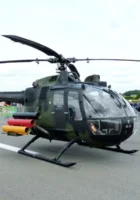
BO-105 HAP

MBB Bo 105

PaysAllemagne de l’Ouest
RôleHélicoptère utilitaire léger
Premier vol6 février 1967
Construit1500+

Lla Messerschmitt-Bölkow-Blohm Bo 105 is a light, twin-engine, multi-purpose helicopter developed by Bölkow of Ottobrunn, West Germany. It was the first light twin-engine helicopter in the world, and the first rotorcraft that could perform aerobatic maneuvers such as inverted loops. The Bo 105 features a revolutionary hingeless rotor system, a pioneering innovation in helicopters when it was introduced into service in 1970. Production of the Bo 105 began at the then-recently merged Messerschmitt-Bölkow-Blohm (MBB). The main production facilities for producing the Bo 105 were located in Germany and Canada; due to the level of export sales encountered, additional manufacturing lines were set up in Spain, Indonesia, and the Philippines. MBB became a part of Eurocopter in 1991, who continued production of the type until 2001. The Bo 105 was formally replaced in Eurocopter’par le nouvel Eurocopter EC135.

Source: MBB Bo 105 sur Wikipedia

Lire l’article

Vues : 888

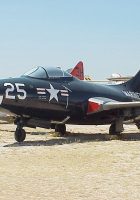
Panthère F9F-4

Grumman F9F Panther

PaysUsa
RôleChasseur-bombardier
Premier vol21 novembre 1947
Construit1382

Lla Grumman F9F Panther était le fabricant’premier chasseur à réaction et un de la Marine des États-Unis’s first successful carrier-based jet fighters. A single-engined, straight-winged day fighter, it was armed with four 20 mm (0.79 in) cannon and could carry a wide assortment of air-to-ground munitions. The Panther was used extensively by the U.S. Navy and Marine Corps in the Korean War. It was also the first jet aircraft used by the Blue Angels flight team, used by them from 1949 through late 1954. The aircraft was exported to Argentina and was the first jet used by the Argentine Naval Aviation. Total F9F production was 1,382. The design evolved into the swept wing Grumman F-9 Cougar.

Source: Grumman F9F Panther sur Wikipédia

Lire l’article

Vues : 4544

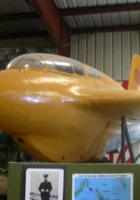
Mitsubishi J8M1 Shusui

Mitsubishi J8M1 Shusui

PaysJapon
RôleAvions intercepteurs propulsés par fusée
Premier vol7 juillet 1945
Construit7

Lla Mitsubishi J8M Shūsui était un avion d’interception japonais propulsé par fusée de la Seconde Guerre mondiale, basé sur le Messerschmitt Me 163 Komet allemand. Construit comme un projet conjoint pour la marine et les services aériens de l’armée, il a été désigné J8M (marine) et Ki-200 (armée).

Source: Mitsubishi J8M1 Shusui sur Wikipedia

Lire l’article

Vues : 2857

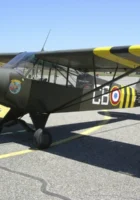
Piper PA-18 Super Cub

Piper PA-18

Pays Usa
Rôle Avion utilitaire léger
Premier vol 1949
Construit 10326
Lla Piper PA-18 Super Cub est un monoplan biplace monomoteur. Introduit en 1949 par Piper Aircraft, il a été développé à partir du Piper PA-11, et retrace sa lignée à travers le J-3 jusqu’au Taylor E-2 Cub des années 1930. En près de 40 ans de production, plus de 10 000 exemplaires ont été construits. Les Super Cubs se retrouvent généralement dans des rôles tels que le vol de brousse, le remorquage de bannières et le remorquage de planeurs.
Source: Piper PA-18 sur Wikipedia
Lire l’article

Vues : 1309

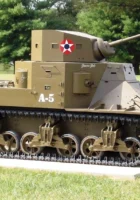
Char léger M2A1

M2 light tank

PaysUsa
RôleRéservoir léger
Produit1935–42
Construit698

Lla Char léger M2, officially Light Tank, M2, was an American pre–World War II light tank which saw limited use during World War II. The most common model, the M2A4, was equipped with one 37 mm (1.5 in) M5 gun and five .30 cal M1919 Browning machine guns. It was originally developed from the prototype T2 light tank built by Rock Island Arsenal, which had a Vickers-type leaf spring suspension. The suspension was replaced by the superior vertical volute system in the T2E1 series of 1935. This was put into production with minor modifications as the M2A1 in 1936, with ten produced. The main pre-war version was the M2A2, with 239 produced, becoming the main tank in the US Army infantry units in the interwar period. The Spanish Civil War showed that tanks armed only with machine guns were ineffective. This led to the M2A4 with a 37 mm gun as the main armament. A total of 375 were delivered, the last ten as late as April 1942.

Source: Char léger M2 sur Wikipedia

Lire l’article

Vues : 1261

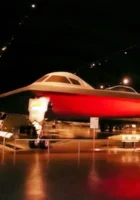
Northrop B-2 Spirit

Northrop Grumman B-2 Spirit

PaysUsa
RôleBombardier lourd stratégique furtif
Premier vol17 juillet 1989
Construit21

Lla Northrop (plus tard Northrop Grumman) Le B-2 Spirit, également connu sous le nom de Stealth Bomber, est un bombardier stratégique lourd américain, doté d’une technologie furtive peu observable conçue pour pénétrer les défenses antiaériennes denses. Conçu pendant la guerre froide, il s’agit d’une conception d’aile volante avec un équipage de deux personnes. Le bombardier est subsonique et peut déployer des armes conventionnelles et thermonucléaires, telles que des bombes à guidage GPS Mk 82 JDAM de classe 500 livres (230 kg), ou seize bombes nucléaires B83 de 2 400 livres (1 100 kg). Le B-2 est le seul avion reconnu capable de transporter de grandes armes air-surface dans une configuration furtive.

Source: Northrop Grumman B-2 Spirit sur Wikipedia

Lire l’article

Vues : 878

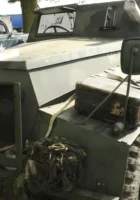
Voiture blindée Morris

Morris CS9

PaysRoyaume-uni
RôleVoiture blindée légère
Période1936+
ConstruitInconnu

Le véhicule était basé sur un Morris Commercial C9 4×2 15 long cwt (760 kg) truck chassis. On this chassis, a riveted hull was mounted with an open-topped two-man turret. The armament consisted of either Boys anti-tank rifle and Bren light machine gun or Vickers machine gun. The vehicle carried a No. 19 radio set. The prototype was tested in 1936. A further 99 cars were ordered and were delivered in 1938. Thirty-eight of these cars were used by the 12th Royal Lancers in the Battle of France, where all of them were destroyed or abandoned. Another 30 served with the 11th Hussars in the North African Campaign. It was found that, when fitted with desert tyres, the vehicle had good performance on soft sand. However, its armour and armament were insufficient. The vehicle was retired halfway through the North African Campaign.

Source: Morris CS9 sur Wikipedia

Lire l’article

Vues : 908

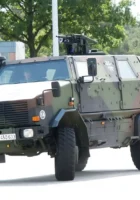
ATF Dingo 2A2-A2.3

ATF Dingo

PaysGermany
RôleVéhicule de mobilité d’infanterie
En service2000 – Aujourd’hui
ConstruitInconnu

Lla ATF Dingo is a German heavily armored military MRAP infantry mobility vehicle based on a Unimog chassis with a V-hull design, produced by the company Krauss-Maffei Wegmann (KMW). The first prototype of the Dingo 1 was completed in 1995 and the first production Dingo 1 entered service in 2000 with the German Army. It is designed to withstand land mines, rifle fire, artillery fragments and NBC-threats. ATF stands for Allschutz-Transport-Fahrzeug, meaning all-protected transport vehicle in German. It is named after the Australian native dog, the dingo. The Dingo 2 entered service in late 2004 after undergoing trials from November 2003-May 2004. Currently KMW is developing the Dingo 2 GFF for the German Army with increased internal volume. Textron signed an exclusive deal to produce and market KMW’s Dingo aux États-Unis. Cependant, Textron a choisi son propre véhicule de sécurité blindé M1117 plus cher et plus lourd pour le concours MRAP, qui n’a pas reçu de contrat.

Source: ATF Dingo sur Wikipedia

Lire l’article

Vues : 1259

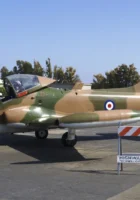
British Aircraft Jet Provost T.Mk.5A

BAC Jet Prévôt

PaysRoyaume-uni
RôleAvion d’entraînement militaire
Premier vol26 juin 1954
Construit734

Lla BAC Jet Prévôt est un avion d’entraînement à réaction britannique qui a été utilisé par la Royal Air Force (RAF) de 1955 à 1993. Il a été développé à l’origine par Hunting Percival à partir de l’ancien entraînement de base Percival Provost à moteur à pistons, et produit plus tard par la British Aircraft Corporation (BAC). En plus des multiples commandes de la RAF, le Jet Provost, parfois avec un armement léger, a été exporté vers de nombreuses forces aériennes dans le monde entier. La conception a également été développée en une variante d’attaque au sol plus lourdement armée sous le nom de BAC Strikemaster.

Source: BAC Jet Provost sur Wikipedia

Lire l’article

Vues : 936

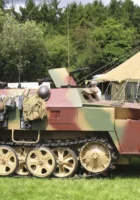
Sd.Kfz. 250

Sd.Kfz. 250

PaysGermany
TypeVéhicule blindé de transport de troupes semi-chenillé
En service1941–1945
Construit6600+

Lla Sd.Kfz. 250 (allemand: Sonderkraftfahrzeug 250; ‘véhicule automobile spécial’) was a light armoured half-track, very similar in appearance to the larger Hanomag-designed Sd.Kfz. 251, and built by the DEMAG firm, for use by Nazi Germany in World War II. Most variants were open-topped and had a single access door in the rear. The Sd. Kfz 250 was adopted in 1939 to supplement the standard half-track. Production delays meant that the first vehicle did not appear until mid-1941.

Source: Sd.Kfz. 250 sur Wikipedia

Lire l’article

Vues : 3295