TOG2 | |
|---|---|
| País | Uk |
| Papel | Tanque superpesado |
| Producido | 1941 |
| Construido | 1 prototipo |
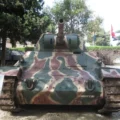
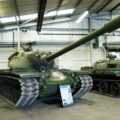
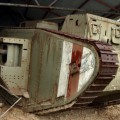
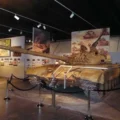
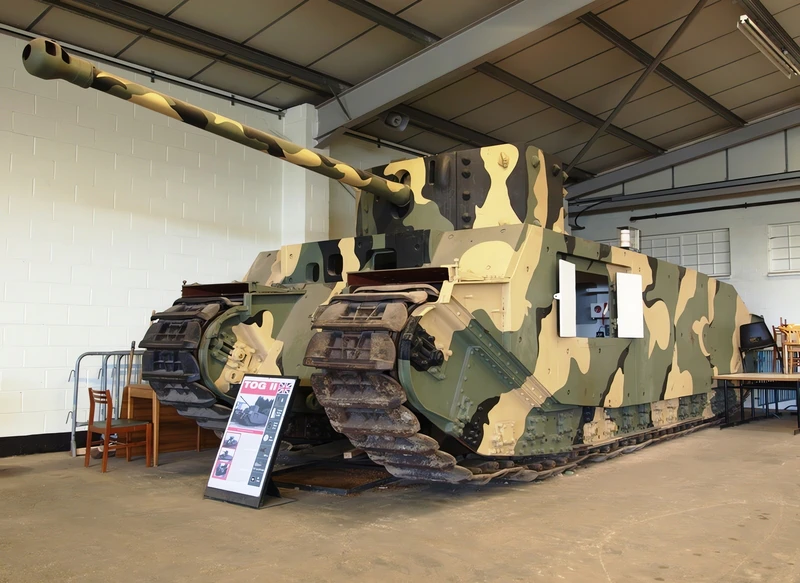
El tanque, pesado, TOG II fue un prototipo de diseño de tanque británico producido en la primera parte de la Segunda Guerra Mundial en caso de que los campos de batalla del norte de Francia se convirtieran en una ciénaga de lodo, trincheras y cráteres como había sucedido durante la Primera Guerra Mundial. Cuando esto no sucedió, el tanque se consideró innecesario y el proyecto se terminó. Un desarrollo del diseño TOG I, solo se construyó un único prototipo antes de que se abandonara el proyecto.
Fuente: TOG2 en Wikipedia
| TOG II Walk Around | |
|---|---|
| Fotógrafos | Unknow |
| Localización | Unknow |
| Fotos | 14 |


Ver también:


General Characteristics
The TOG II* (The Old Gang Mark II) was a British experimental super heavy tank designed early in World War II by the Special Vehicle Development Committee, a group nicknamed “The Old Gang” for having designed the original tanks of World War I. It was conceived for a worst-case scenario where the battlefields of Europe returned to the muddy, trench-filled conditions of WWI. Only a single prototype was built, and due to its slow speed and the shift toward mobile warfare, it was already obsolete by the time it was fully trialed in 1943, and never entered service.
| Property | Typical Value (TOG II*) |
|---|---|
| Papel | Experimental Super Heavy Tank / Trench Warfare |
| Fabricante | William Foster & Co. Ltd. (Lincoln) |
| Producido | 1941 (Prototype built) |
| No. Built | 1 (Prototype) |
| Equipo | 6 (Commander, Gunner, 2 Loaders, Driver, Co-driver) |
| Mass (Weight) | 80–81.3 tonnes (Approx. 179,200 lb) |
| Longitud | 10.13 m (33 ft 3 in) |
| Ancho | 3.12 m (10 ft 3 in) |
Powerplant and Mobility
- Engine: Paxman-Ricardo V12 diesel engine.
- Engine Power: 447 kW (600 hp).
- Power/Weight Ratio: Very low, approximately 7.5 hp/tonne.
- Maximum Speed (Road): 13.7 km/h (8.5 mph).
- Transmission: Diesel-electric drive (using two electric motors).
- Suspension: Initially unsprung, later modified to use **torsion bar suspension** in 1943.
- Design Concept: Its extremely long hull was specifically designed to bridge and cross wide trenches.
Armament and Armor
- Main Armament: The prototype was tested with several guns; it is historically fitted with the **Ordnance QF 28-pounder (94 mm) gun**, derived from a 3.7-inch anti-aircraft gun with a 17-pounder breech.
- Secondary Armament: One coaxial 7.92 mm Besa machine gun.
- Maximum Turret Armor: 114 mm (4.5 in) (Front of Turret).
- Maximum Hull Armor: 76 mm (3 in) (Front/Sides).
- Armament Significance: It was one of the first British tanks capable of mounting the powerful **QF 17-pounder (76.2 mm)** gun (or the 94mm derivation) in its large turret, making it highly effective against German armor of the time.
- Status: The single prototype remains a static display at The Tank Museum in Bovington, UK.
Vistas : 920