Harrier aeroespacial británico GR.9

British Aerospace Harrier II

PaísUk
PapelAvión de ataque V/STOL
Primer vuelo30 de abril de 1985
Construido143

el British Aerospace Harrier II es un avión a reacción de segunda generación de despegue y aterrizaje vertical/corto (V/STOL) utilizado anteriormente por la Royal Air Force (RAF) y, entre 2006 y 2010, la Royal Navy (RN). El avión fue el último desarrollo de la familia Harrier Jump Jet, y se derivó del McDonnell Douglas AV-8B Harrier II. Las entregas iniciales del Harrier II fueron designadas en servicio como Harrier GR5; posteriormente, los fuselajes mejorados fueron redesignados en consecuencia como GR7 y GR9.

Fuente: British Aerospace Harrier II en Wikipedia

Continuar leyendo

Vistas : 3517

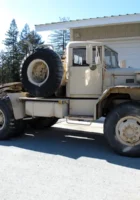
M123A1C

Mack M123 Truck

PaísE.e.u.u
TipoCamiones de 10 toneladas 6×6
Producido1955–1969
Construido3580

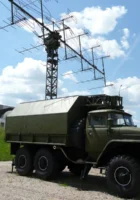
En 1949, el Ejército de los Estados Unidos estableció un requisito para una familia de camiones tácticos extra pesados de 10 toneladas (9.072 kg) fuera de la carretera con una clasificación de 6×6 camiones tácticos. Mack’s design, influenced by their WWII era NO, was chosen. Designed as an entire family, only the semi-tractor and cargo/prime mover were built. 392 M123s were built between 1955 and 1957 and 552 M125s in 1957 and 1958. In 1965 CONDEC began building 3188 diesel powered M123As, Mack began building 420 in 1968. In 1969 Mack then upgraded 210 gas engine models to diesel power. With the Army using more self‑propelled artillery, the need for prime movers was reduced, no follow‑up orders for M125s were made. Both M123s and M125s saw service in the Vietnam War. M123 tractors remained in Army service into the 1990s.

Fuente: Mack M123 Truck en Wikipedia

Continuar leyendo

Vistas : 3739

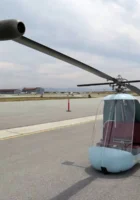
Hiller HJ-1 Hornet

Hiller HJ-1 Hornet

PaísE.e.u.u
PapelHelicóptero experimental
Primer vuelo1950
Construido18

el Hiller YH-32 Hornet (company designation HJ-1) was an American ultralight helicopter built by Hiller Aircraft in the early 1950s. It was a small and unique design because it was powered by two Hiller 8RJ2B ramjet engines mounted on the rotor blade tips which weigh 13lbs each and deliver an equivalent of 45 h.p. for a total of 90 h.p. Versions of the HJ-1 Hornet were built for the United States Army and the United States Navy in the early 1950s. The Hiller Museum identifies the YH-32A, named the Sally Rand, as the first helicopter gunship.

Fuente: Hiller HJ-1 Hornet en Wikipedia

Continuar leyendo

Vistas : 2204

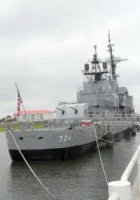
USS Laffey

USS Laffey (DD-724)

PaísE.e.u.u
Clase y tipoDestructor clase Allen M. Sumner
Lanzado21 de noviembre de 1943
Fuera de servicio9 de marzo de 1975

USS Laffey (DD-724) es un destructor de clase Allen M. Sumner, que fue construido durante la Segunda Guerra Mundial, puesto en grada y botado en 1943, y dado de alta en febrero de 1944. El barco se ganó el apodo de "El barco que no moriría" por sus hazañas durante la invasión del Día D y la batalla de Okinawa, cuando resistió con éxito un asalto decidido de bombarderos convencionales y los ataques aéreos kamikaze más implacables de la historia. Hoy en día, Laffey es un Monumento Histórico Nacional de los Estados Unidos y se conserva como un barco museo en Patriots Point, en las afueras de Charleston, Carolina del Sur.

Fuente: USS Laffey (DD-724) en Wikipedia

Continuar leyendo

Vistas : 2354

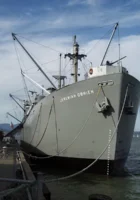
USS Jeremiah O Brien

SS Jeremiah O’Brien

PaísE.e.u.u
PapelNave de la libertad
Lanzado19 de junio de 1943
Fuera de servicio7 de febrero de 1946

SS Jeremías O'Brien is a Liberty ship built during World War II and named for American Revolutionary War ship captain Jeremiah O’Brien (1744–1818). Now based in San Francisco, she is a rare survivora of the 6,939-ship armada that stormed Normandy on D-Day, 1944. Jeremiah O’Brien, SS John W. Brown, and SS Hellas Liberty are the only currently operational Liberty ships of the 2,710 built

Fuente: SS Jeremiah O'Brien en Wikipedia

Continuar leyendo

Vistas : 2456

Fokker S14 Machtrainer

Fokker S.14 Machtrainer

PaísPaíses Bajos
PapelEntrenador de jet
Primera mosca19 de mayo de 1951
Construido21

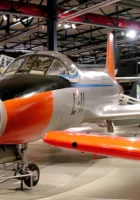
el Fokker S.14 Machtrainer es un avión a reacción de entrenamiento militar biplaza holandés diseñado y fabricado por Fokker para la Real Fuerza Aérea de los Países Bajos. El desarrollo comenzó a finales de la década de 1940. Fue uno de los primeros aviones de entrenamiento de caza a reacción en el mundo, haciendo su primer vuelo el 19 de mayo de 1951 y entrando en servicio en 1955.

Fuente: Fokker S.14 Machtrainer en Wikipedia

Continuar leyendo

Vistas : 1204

Murciélago Northrop JB-1

Northrop JB-1 Bat

PaísE.e.u.u
PapelPrototipo de ala voladora a reacción
Primera mosca27 de agosto de 1943
ConstruidoUnknow

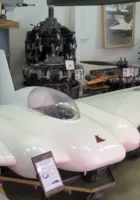
el Northrop JB-1 "Bat" fue un misil de crucero tierra-superficie de los Estados Unidos que era un prototipo de ala voladora a reacción. El programa MX-543 de las Fuerzas Aéreas del Ejército de los Estados Unidos se inició en septiembre de 1942 para utilizar versiones construidas bajo licencia del motor a reacción de Frank Whittle (General Electric J31). La Northrop Corporation fue contratada a finales de 1943, y sólo se construyeron 10 fuselajes JB-1. Una versión tripulada fue remolcada para el 1er vuelo el "27 de agosto de 1943", desde Rogers Dry Lake y una versión de planeador fue lanzada desde un trineo propulsado por cohete y se estrelló en diciembre de 1944. Un JB-1 no tripulado impulsado por un turborreactor improvisado General Electric B-1 con una envergadura de 28 pies y 4 pulgadas (8,64 m) realizó su primer vuelo desde la isla Santa Rosa de Eglin Field, Florida, el 7 de diciembre de 1944, y se estrelló a 400 yardas del lanzador ferroviario.

Fuente: Northrop JB-1 Bat en Wikipedia

Continuar leyendo

Vistas : 1527

Northrop MQM-57B Falconer

Radioplane BTT

PaísE.e.u.u
PapelDrone objetivo
Primera moscaUnknow
Construido7300+

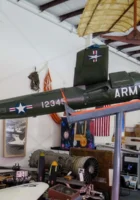
el Radioplano BTT, conocido como RP-71 por la compañía, como WS-426/2 por la Armada de los Estados Unidos, y como WS-462/2 por la Fuerza Aérea de los Estados Unidos, es una familia de drones de objetivo producidos por la Radioplane Company (más tarde una división de Northrop).

MQM-57 Halconero: A variant of the BTT designated the RP-71, also known as the SD-1 Observer and later redesignated MQM-57 Falconer, was built for battlefield reconnaissance, with first flight in 1955. The Falconer was similar in appearance to the Shelduck, but had a slightly longer and stockier fuselage. It had an autopilot system with radio-control backup, and could carry cameras, as well as illumination flares for night reconnaissance. Equipment was loaded through a hump in the back between the wings. Although it only had an endurance of a little more than a half-hour, making it of limited use, about 1,500 Falconers were built and the type was used internationally with several different military forces, remaining in service into the 1970s. Over 73,000 BTT targets were built in all, and the type was used by at least 18 nations. Some may still be lingering in service.

Fuente: Radioplane BTT en Wikipedia

Continuar leyendo

Vistas : 931

Submarino inteligente de ballenas

Intelligent Whale

PaísE.e.u.u
PapelSubmarino
Establecidas1863
Construido1

Intelligent Whale, an experimental hand-cranked submarine, was built on the design of Scovel Sturgis Merriam in 1863 by Augustus Price and Cornelius Scranton Bushnell. In 1864 the American Submarine Company was formed, taking over the interests of Bushnell and Price and there followed years of litigation over the ownership of the craft. When title was established by a court the submarine was sold on 29 October 1869 through a contract made by owner Oliver Halstead and Secretary of the Navy George M. Robeson to the United States Navy Department, with most of the price to be paid after successful trials. In September 1872 the first trial was held and was unsuccessful, whereupon the Department refused further payments and abandoned the project.

Fuente: Intelligent Whale on Wikipedia

Continuar leyendo

Vistas : 1133