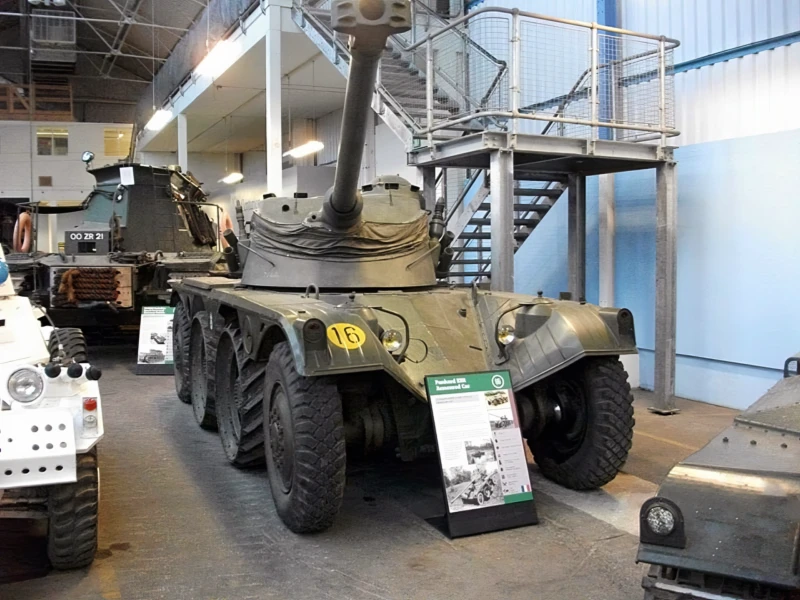
Panhard EBR Obrněné auto | |
|---|---|
| Země | Francie |
| Typ | Obrněné auto |
| Vyrobené | 1951-1960 |
| Postaven | 1200 |
Fotogalerie panhard EBR Obrněné auto, The Panhard EBR (Panhard Engin Blindé de Reconnaissance, francouzsky obrněné průzkumné vozidlo) je obrněný vůz navržený společností Panhard pro francouzskou armádu a později používaný po celém světě, zejména francouzskou armádou během alžírské války a portugalskou armádou během portugalské koloniální války v Angole, Mosambiku a Guineji-Bissau.
Zdroj: Wikipedie
| Panhard EBR Armoured Car | |
|---|---|
| Fotograf | Neznámé |
| Lokalizace | Neznámé |
| Fotografie | 43 |
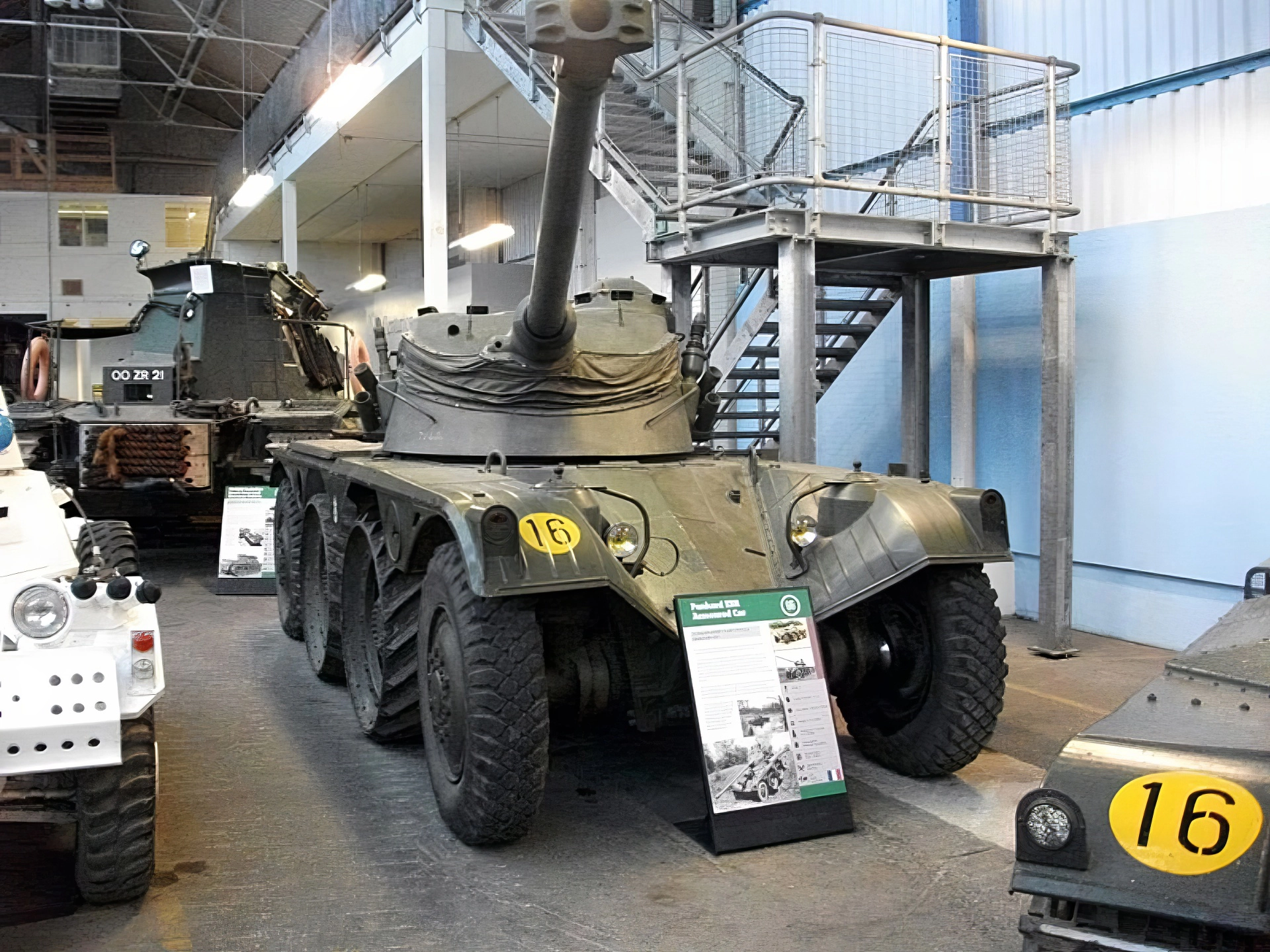
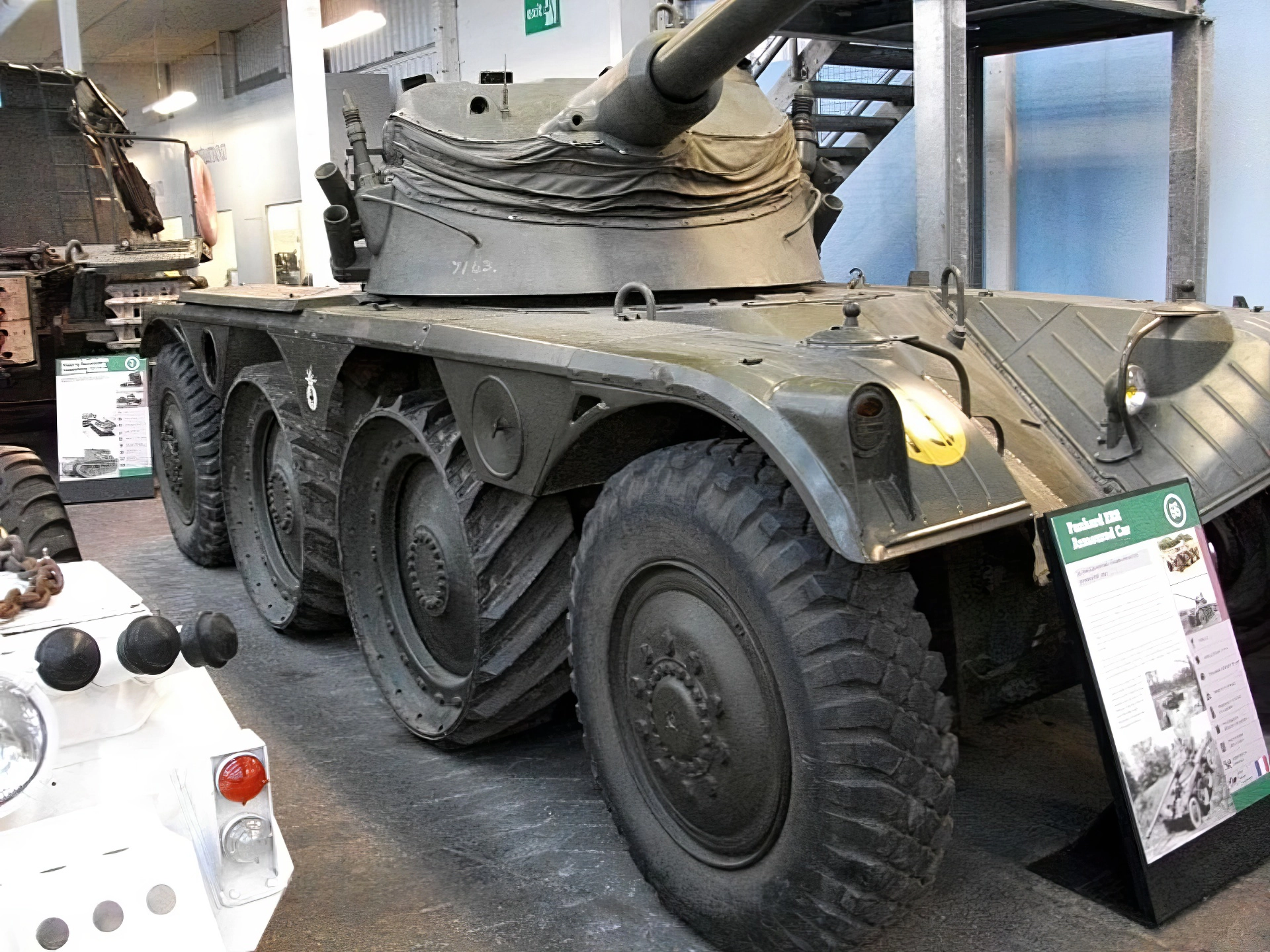
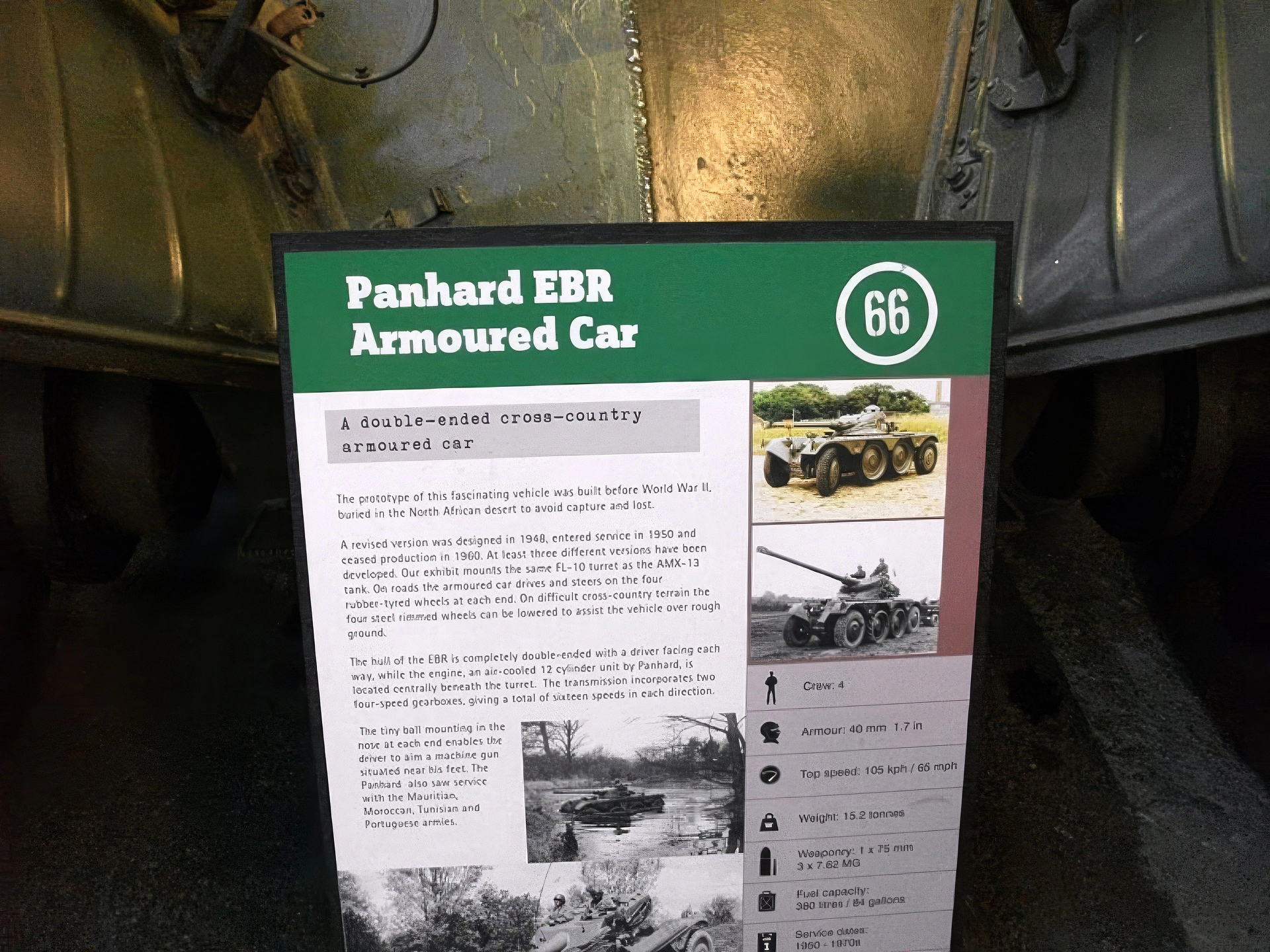
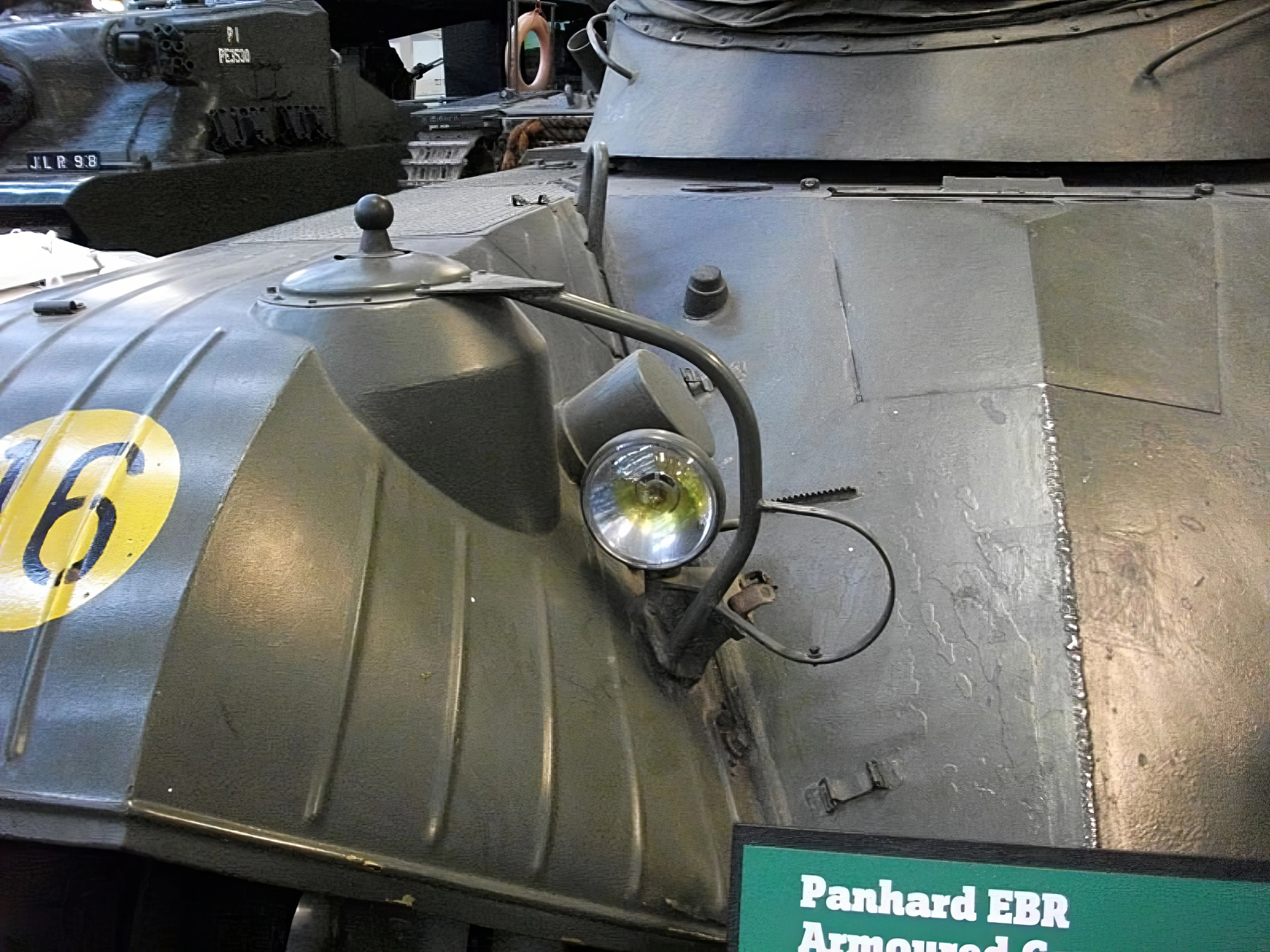
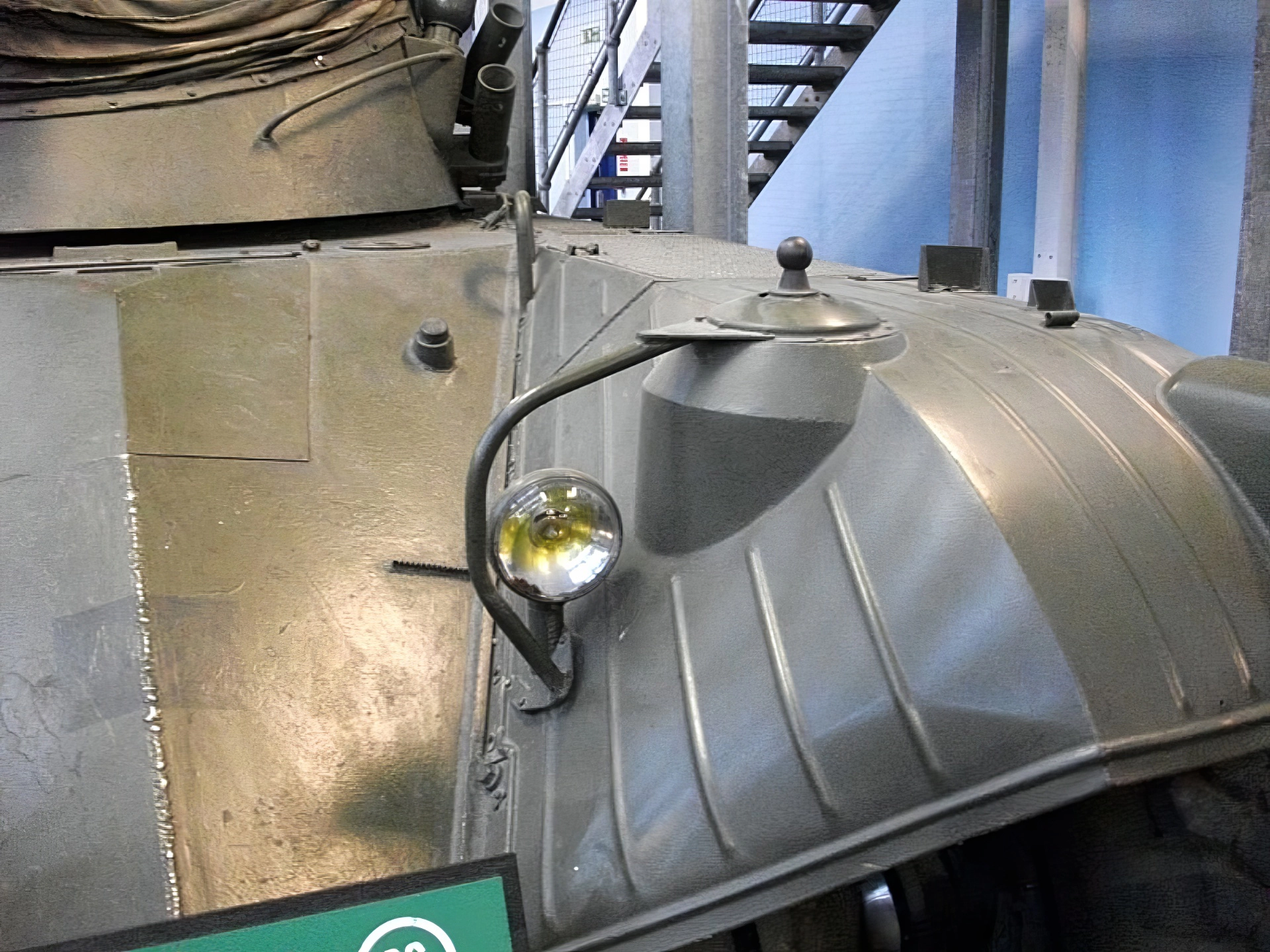
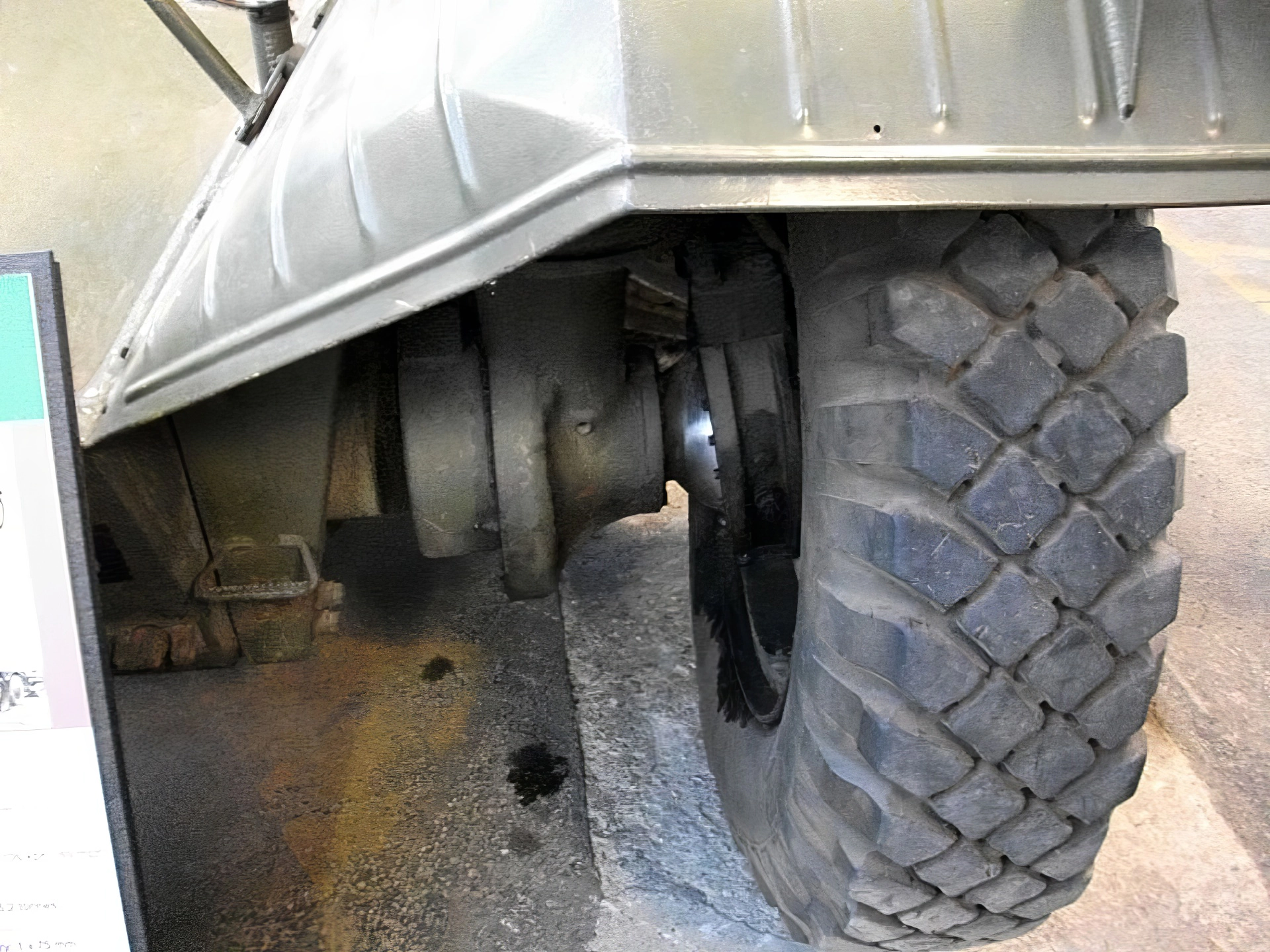
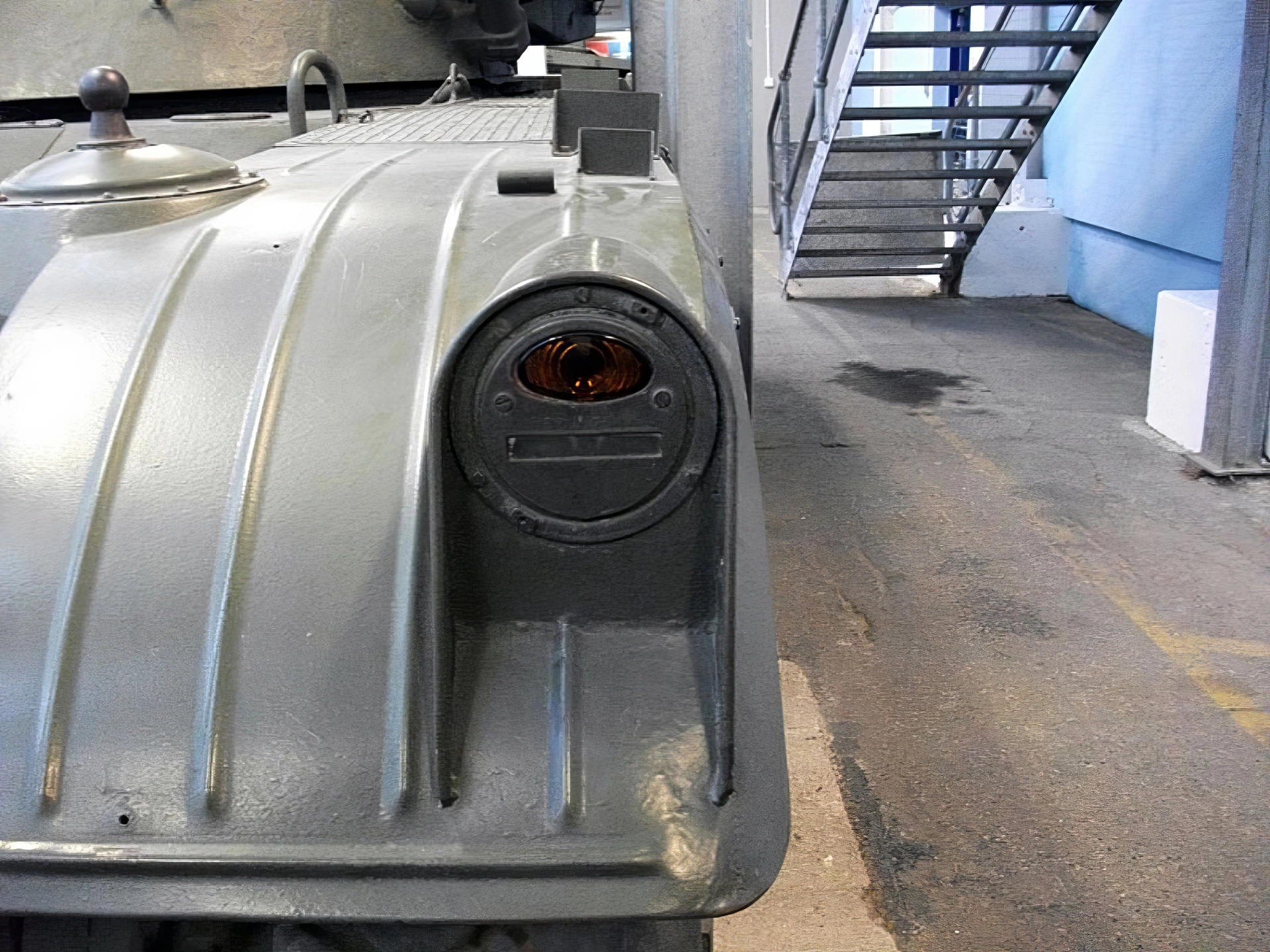
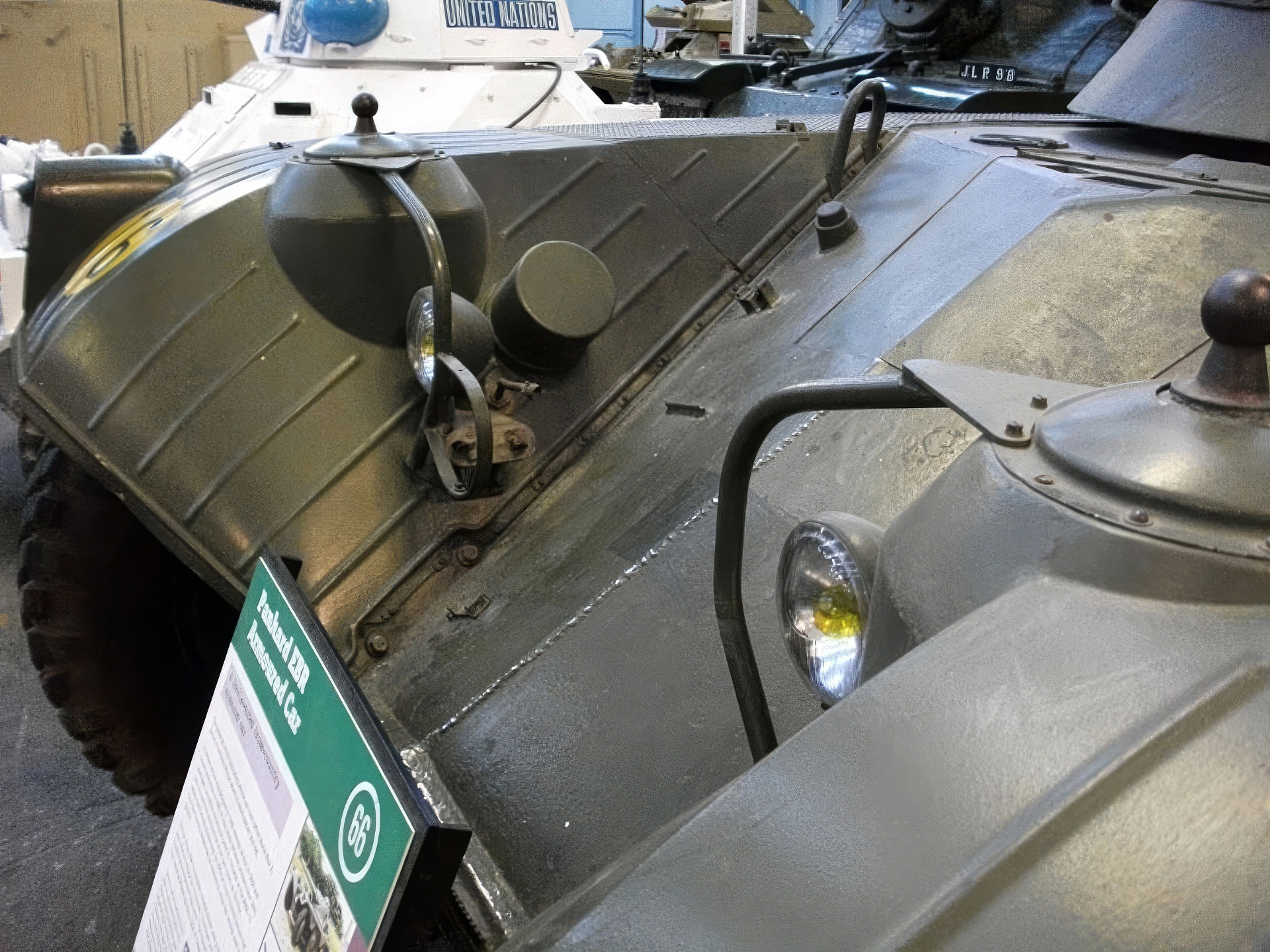
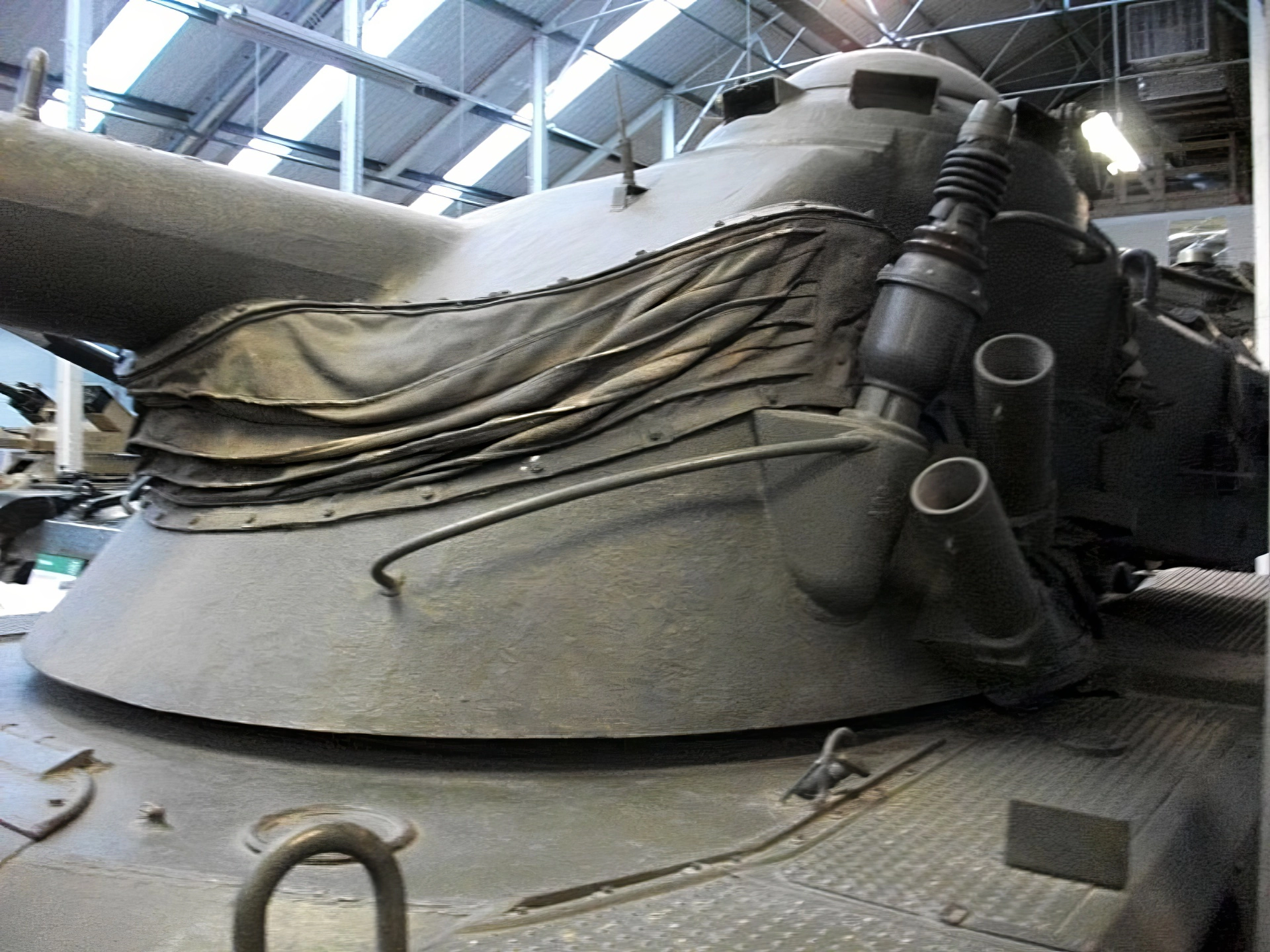

| Panhard EBR 90 Mod.F1 Walk Around | |
|---|---|
| Fotograf | Robert De Craecker |
| Lokalizace | Neznámé |
| Fotografie | 90 |
Viz také:


| Panhard EBR ETT Walk Around | |
|---|---|
| Fotograf | Vladimir Jakubov |
| Lokalizace | Musee des Blindes, Saumur, Francie |
| Fotografie | 62 |
Tá Panhard EBR (Engin Blindé de Reconnaissance) is a heavy armored car developed and produced in France after World War II. Designed by the famous French automotive company Panhard, the EBR was created to fill the critical post-war need for a fast, heavily armed reconnaissance and fire-support vehicle, primarily for use by the French Army and Colonial forces. It is instantly recognizable by its eight-wheel configuration, its unique retractable central wheels, and its oscillating turret.
Development and Design
- Role: Heavy Armored Reconnaissance and Fire Support. It replaced older armored cars and was intended to be capable of engaging tanks if necessary.
- Unique 8×8 System: The EBR featured an innovative 8×8 drive system with four outer wheels fitted with standard pneumatic tires, and four smaller metal wheels (with cleats) mounted centrally.
- On roads, the four metal wheels were often raised to reduce noise and tire wear, allowing the vehicle to run as a 4×8.
- In soft terrain or combat, the central wheels could be hydraulically lowered to improve traction and distribute weight, providing full 8×8 capability.
- Dual Driving Positions: To allow for rapid withdrawal from a combat situation without turning the vehicle, the EBR had **two drivers**—one at the front and one at the rear—each with a complete set of driving controls.
- Motor: It was powered by a 12-cylinder, air-cooled **Panhard flat-engine**, centrally mounted under the turret basket. This central placement helped to distribute weight and provided some protection, but made engine maintenance difficult.
Armament and Variants
The primary versions of the EBR were defined by their turret and gun:
- EBR 75 (Initial): Armed with the **75 mm Model 1950 gun** (FL-11 turret).
- EBR 90: Later models used a more powerful **90 mm gun** (FL-10 turret), which was effective against light armor and infantry positions.
The **oscillating turret** was a distinctive feature where the gun was fixed to the upper half of the turret, which pivoted vertically for elevation, while the lower half rotated horizontally. This allowed for an effective use of an auto-loading system, increasing the rate of fire.
Operační historie
- French Service: The Panhard EBR served as the standard heavy reconnaissance vehicle for the French Army from the 1950s until the 1980s, when it was gradually replaced by the AMX-10 RC.
- Colonial Conflicts: It saw combat use in the **Algerian War** and in French colonial engagements across Africa.
- Other Users: The EBR was also exported to several other countries, most notably Portugal and Morocco.
- Symbolic Role: The EBR held an important ceremonial role for many years, used by the Garde Républicaine (Republican Guard) for escort and security duties in Paris. Its unique appearance has made it one of the most recognizable French armored vehicles of the Cold War era.
Views : 8345
Můžete také vidět:
 BRDM-1 – Fotografie a video
 Obrněný vůz Austin – Procházka Kolem
 Panhard SPHINX – Fotografie & Videa
 Panhard AMD 178 – Fotografie & Videa
 Scout Car Ford Mk.1 – Fotografie & Video
 Panhard VBR – Fotografie & Video
 Obrněné auto Daimler Mk II – Fotografie & Video
 FV721 Fox CVR – Fotografie & Video
 Ferret Mk 2 – Fotografie & Video
 Humber Mk I – Procházka Kolem