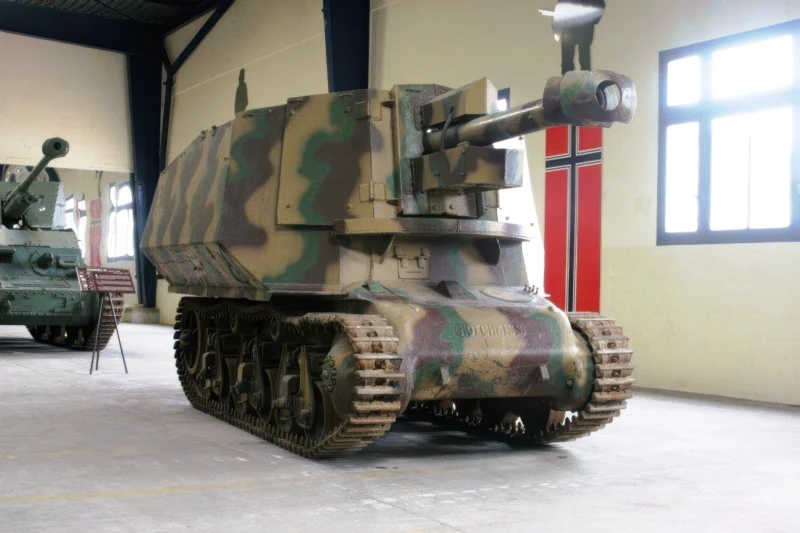
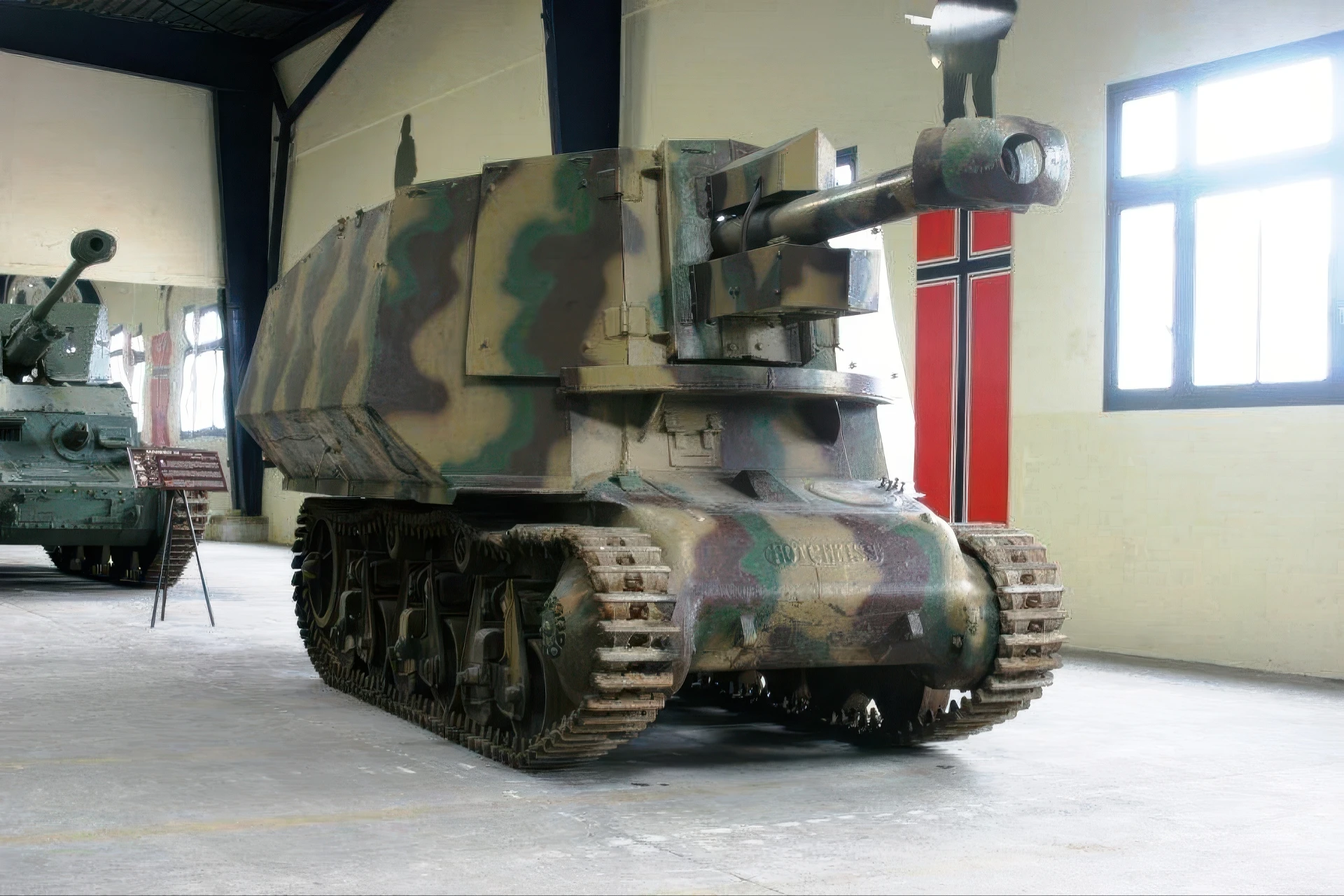
105mm leFH auf Hotchkiss 39H | |
|---|---|
| Země | Německo |
| Typ | Marder I. |
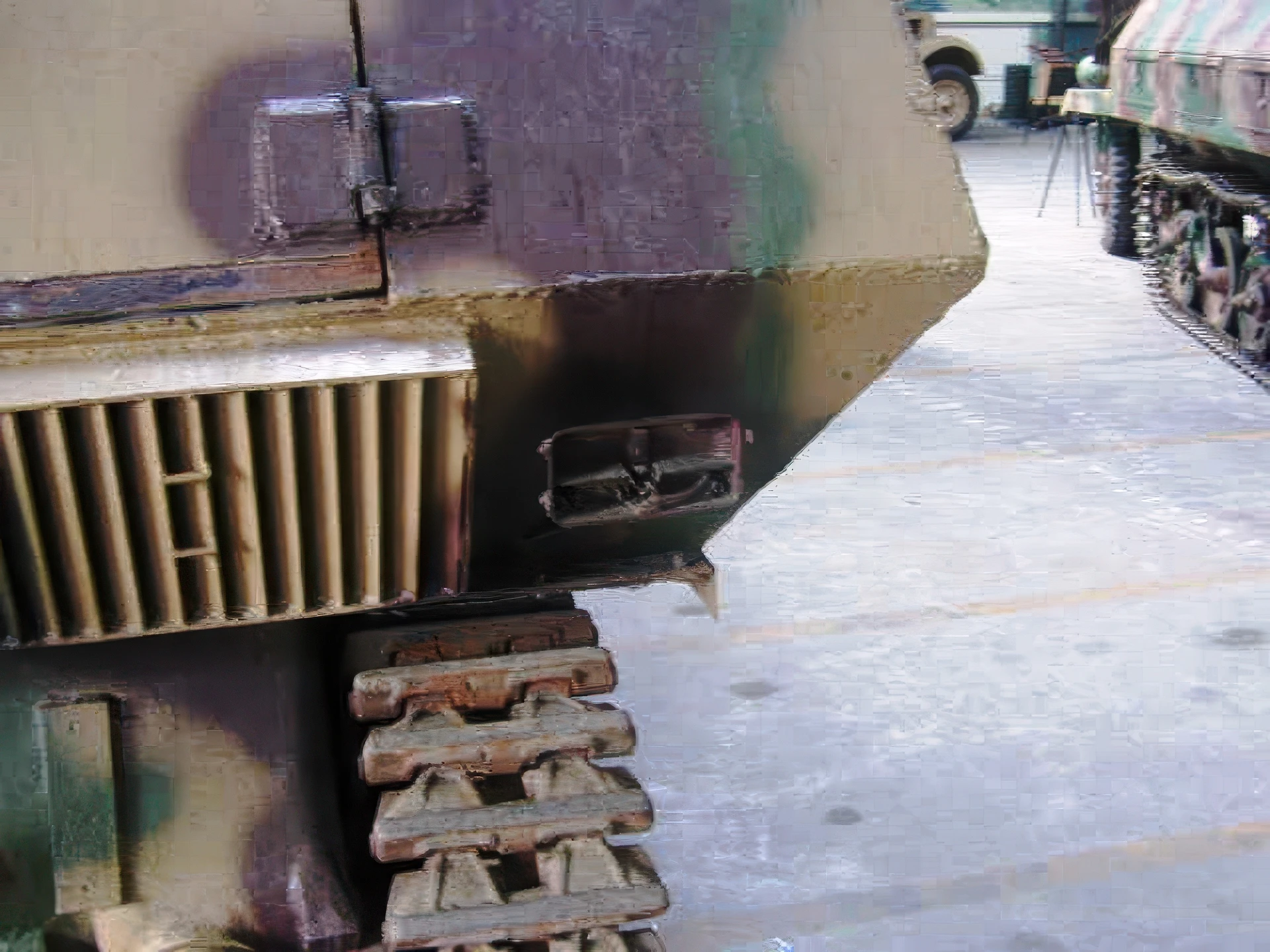
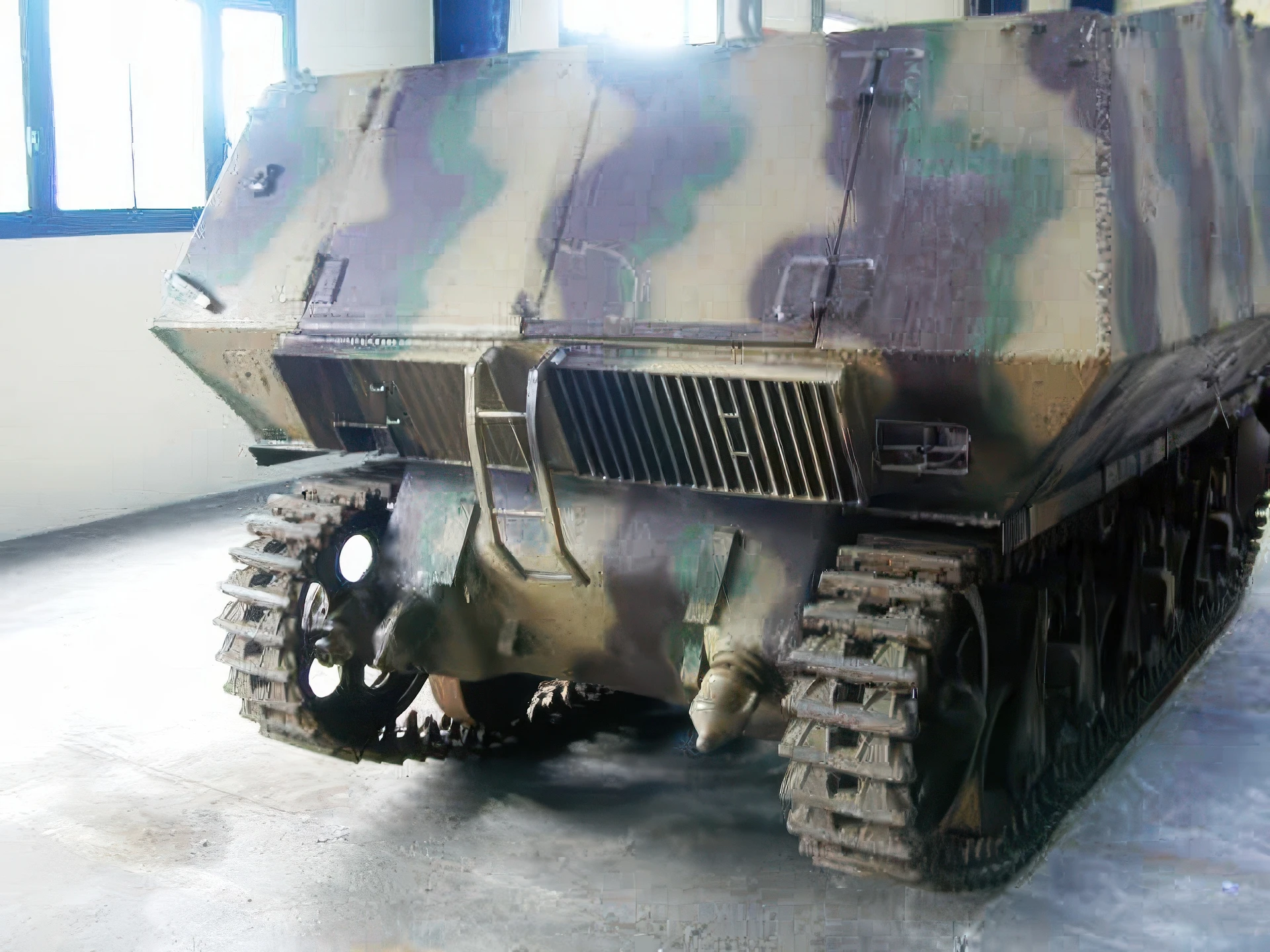
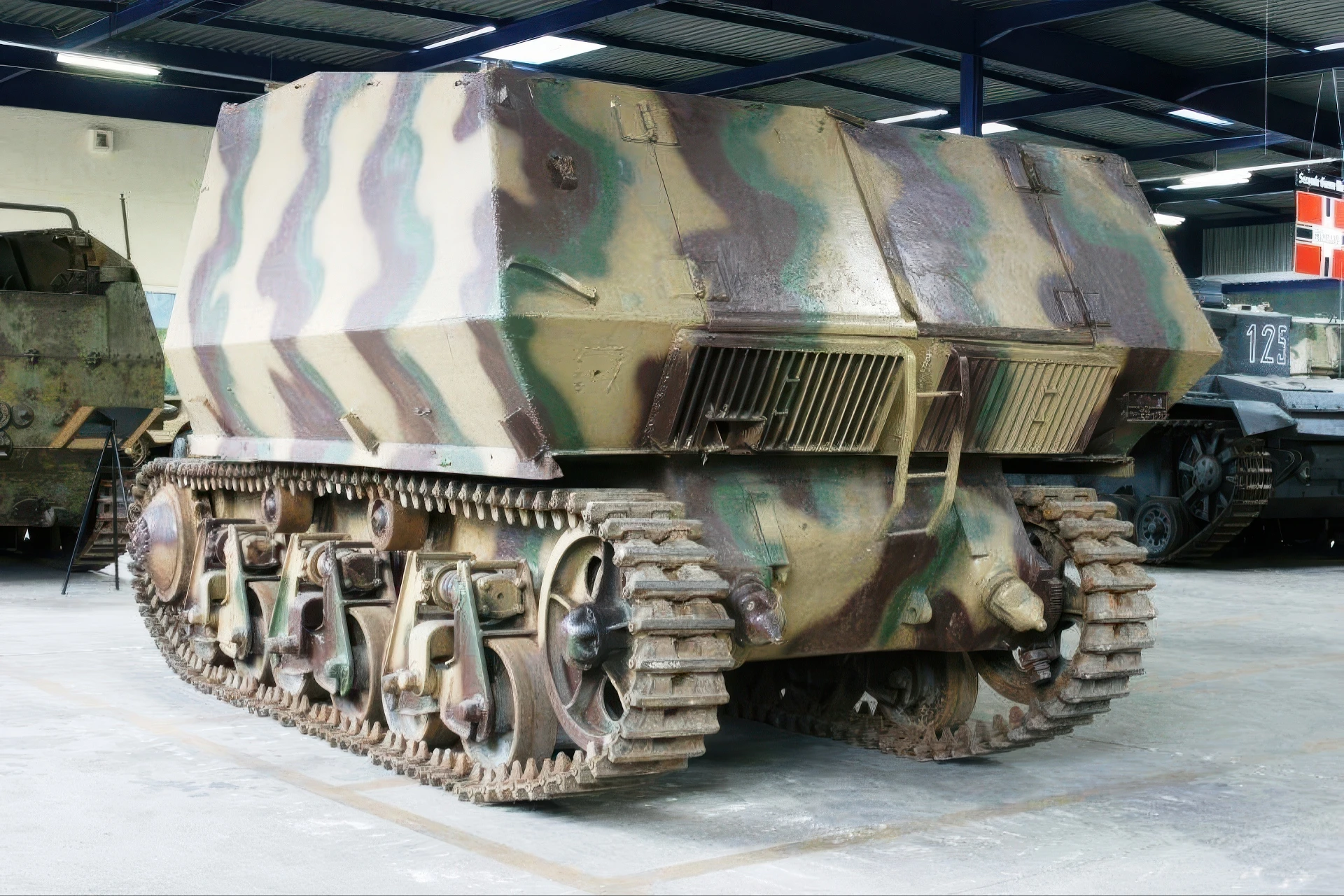
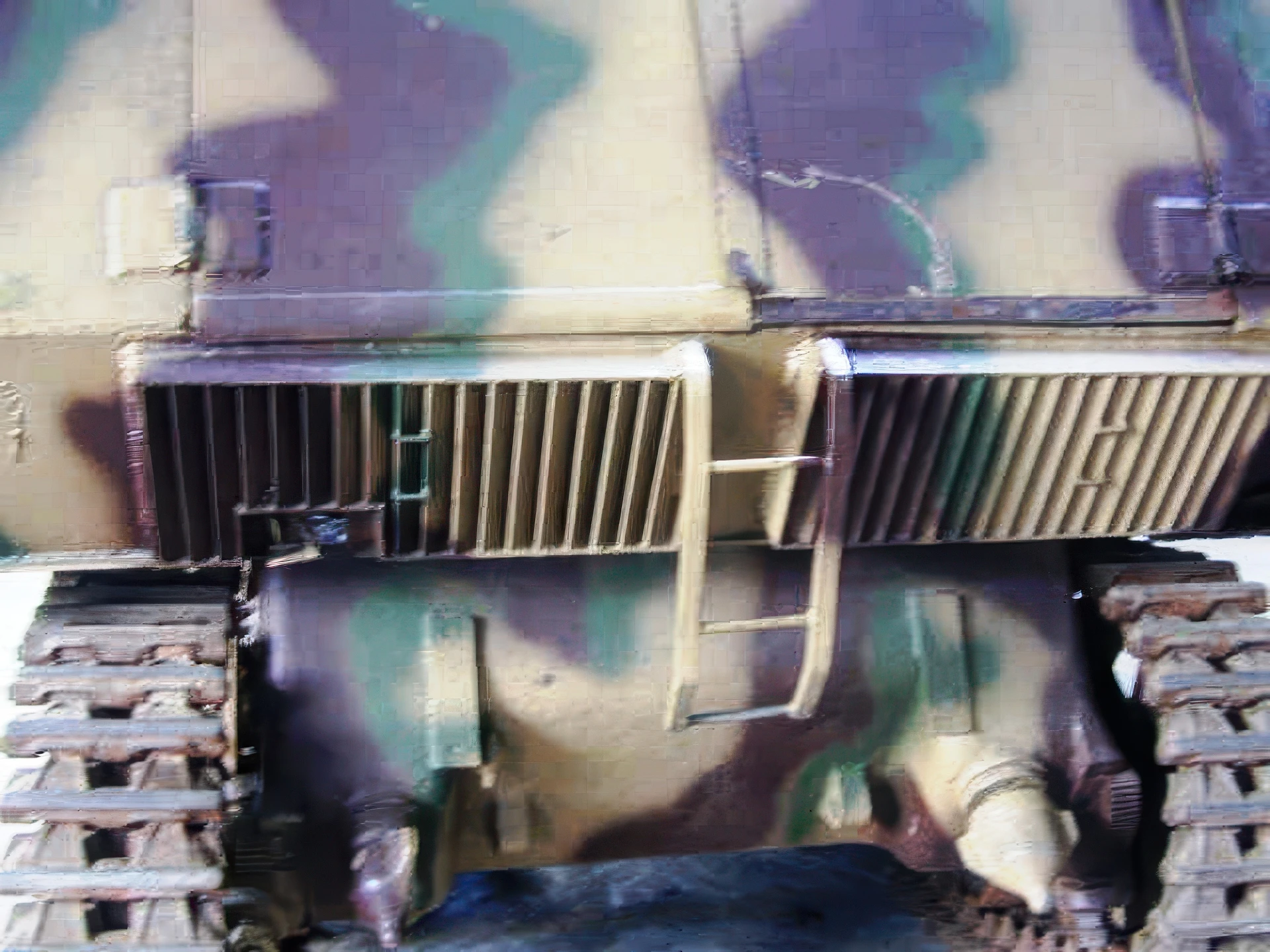
| Téma | Album 37 fotografie procházka kolem «105mm leFH auf Hotchkiss 39H» |
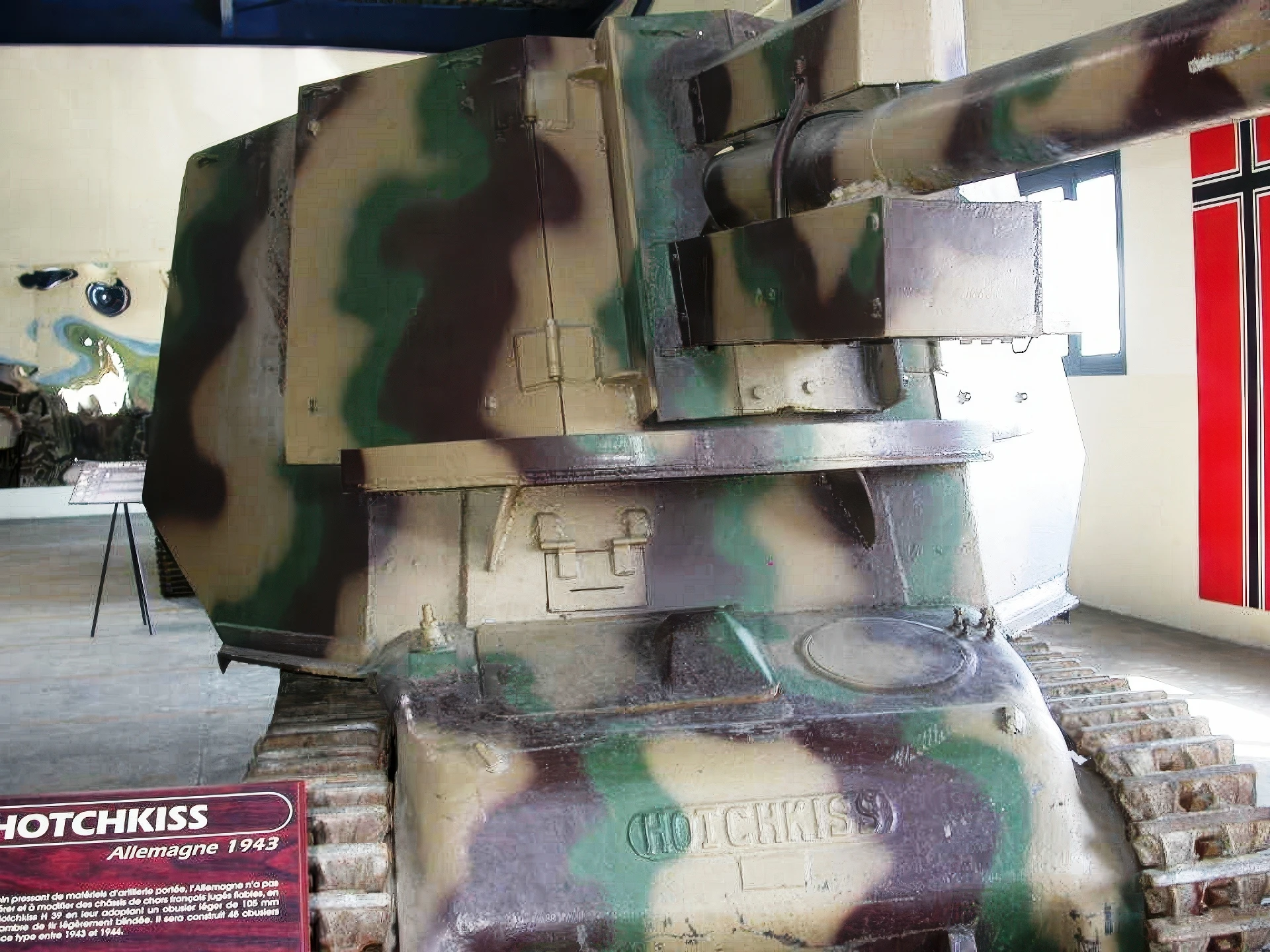
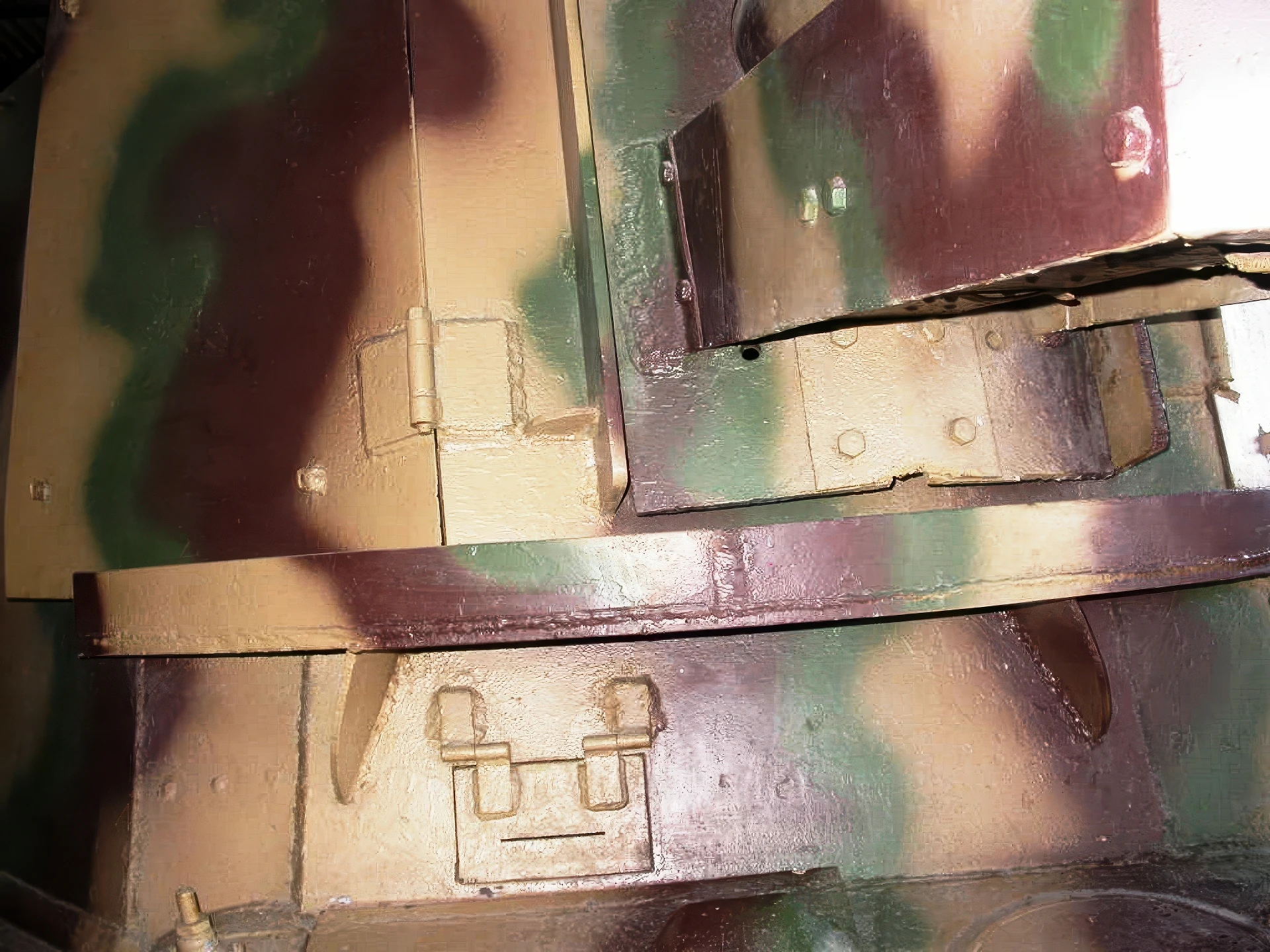
Fotogalerie 105mm leFH auf Hotchkiss 39H, The Hotchkiss H35 or Char léger modèle 1935 H was a French light tank developed prior to World War II. Despite having been designed from 1933 as a rather slow but well-armoured light infantry support tank, the type was initially rejected by the French Infantry because it proved difficult to steer while driving cross-country, and was instead adopted in 1936 by the French Cavalry.
Zdroj: Wikipedie

 Kupte mi kávu
Viz také:


The Scavenged Self-Propelled Gun
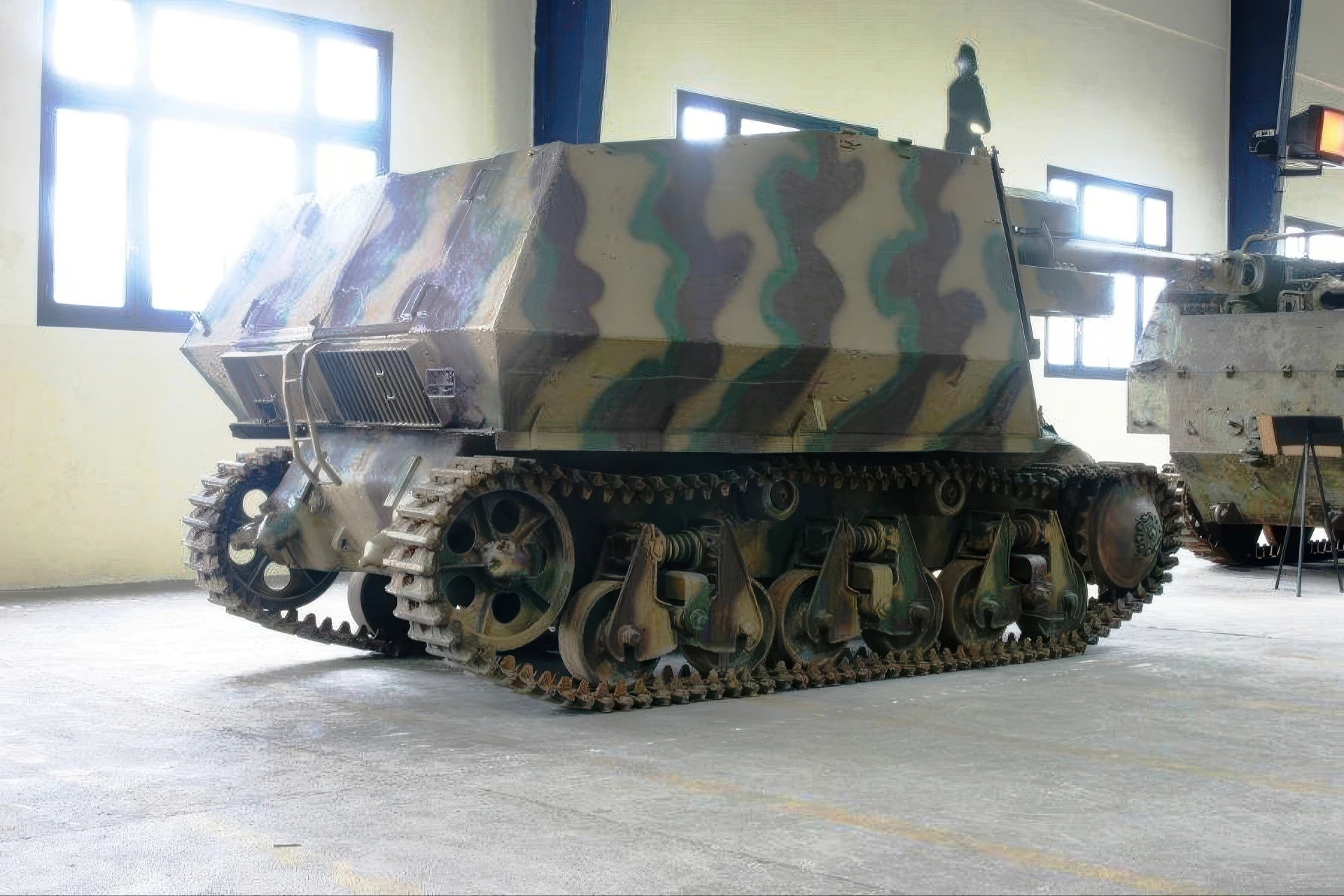
Tá 105mm leFH 16/18 auf Geschützwagen Hotchkiss 39H(f) was a prime example of Germany’s wartime resourcefulness and desperate pragmatism. Following the Fall of France in 1940, the Wehrmacht captured hundreds of functional French Hotchkiss H39 light infantry tanks. Rather than scraping them, German engineers—spearheaded by Major Alfred Becker’s specialized production unit—stripped away the tanks’ small turrets and grafted heavy German 105mm light field howitzers onto the modified hulls. The result was a mobile, armored artillery piece built to provide vital mechanized fire support during the defense of Occupied Europe.
| Attribute | Technical Specification (leFH 18 auf Hotchkiss 39H) |
|---|---|
| Roli | Self-Propelled Artillery / Tank Destroyer (Secondary) |
| Posádky | 4 to 5 (Commander, Driver, Gunner, Loaders) |
| Chassis Baseline | Captured French Hotchkiss H39 Light Tank |
| Primary Armament | 1 × 10.5 cm leFH 16 or leFH 18/40 Light Field Howitzer |
| Maximum Speed | ~36 km/h (22 mph) on roads |
| Operational Range | ~135 km (84 miles) |
| Maximum Gun Range | ~10,675 m (11,674 yds) indirect fire |
| Armor Thickness | 12mm to 40mm (Hull), 10mm to 20mm (Open-topped superstructure) |
Design Engineering: Frankenstein Superstructures and Heavy Howitzers
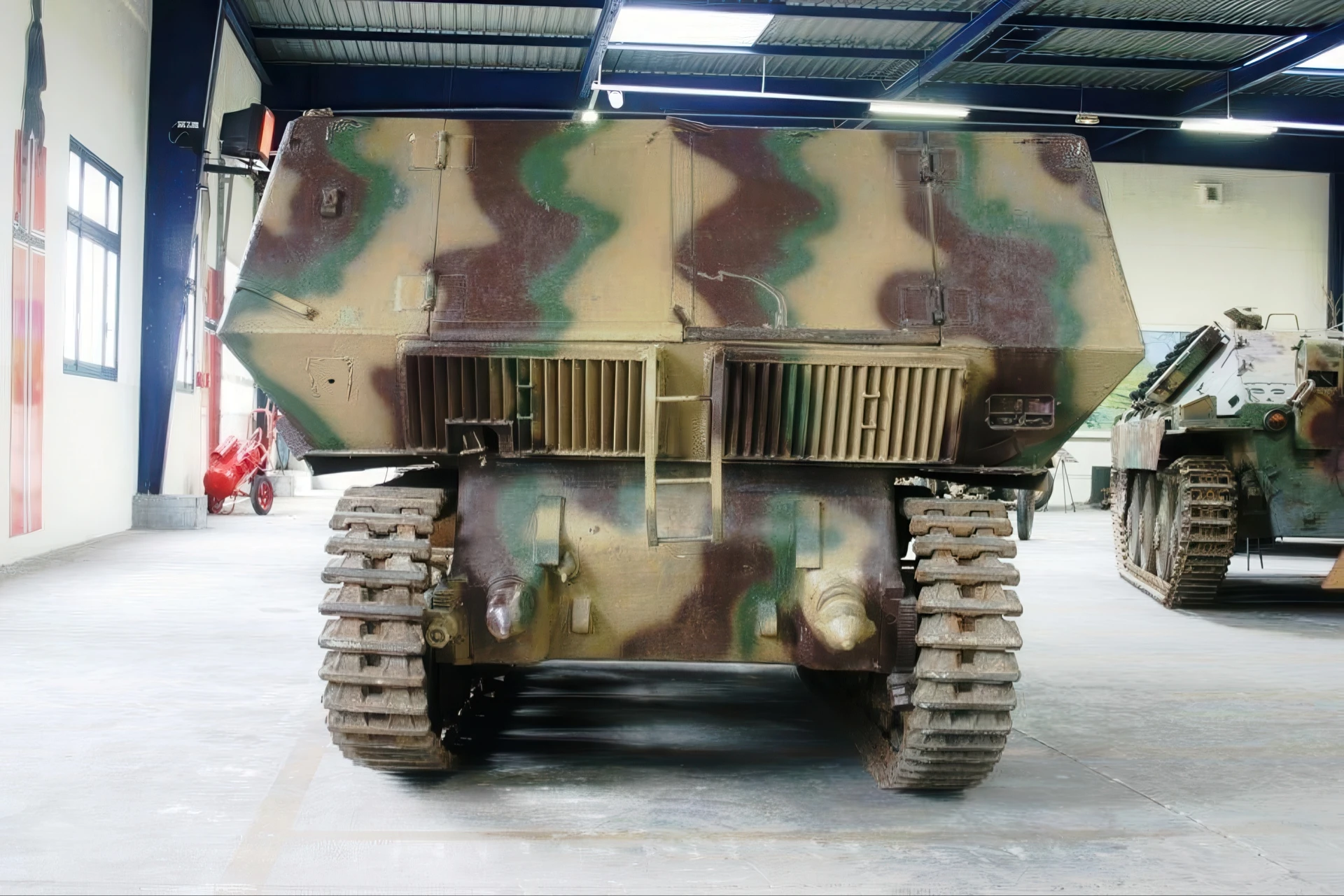
- Open-Topped Fighting Compartment: To clear room for the large artillery crew and the heavy gun assembly, engineers welded a boxy, fixed superstructure made of thin armor plates right onto the center-rear of the tank hull. The open-topped configuration kept the fighting compartment ventilated from toxic propellant gases but exposed the crew to weather and shrapnel.
- The 105mm leFH Integration: Cramming a massive 10.5 cm light field howitzer onto a lightweight French cavalry chassis required complex structural bracing. The gun’s heavy recoil apparatus had to be heavily buffered so it wouldn’t crack the cast-steel French hull plates or flip the narrow vehicle backward when firing.
- Spade Anchors: Because the H39 chassis was so light relative to the gun’s caliber, a heavy metal spade anchor was frequently attached to the rear hull of the vehicle. When deploying for indirect fire missions, this spade was dropped into the dirt to absorb the massive physical energy of the gun’s recoil.
- Defensive Machine Gun: Due to the vehicle’s vulnerability to close-in infantry rushes, a single 7.92mm MG34 machine gun was typically carried inside the fighting compartment or pinned to a pintle mount, providing basic self-defense against scouting parties.
Operational History: Baukommando Becker and Normandy’s D-Day Defenses
- Baukommando Becker Innovation: The conversion program was the brain-child of Alfred Becker, an artillery officer and mechanical engineer who set up a massive conversion shop near Paris. His team scavenged thousands of tons of captured French armor material, creating highly effective mobile platforms at zero cost to Germany’s strained domestic tank factories.
- The 21st Panzer Division: Nearly all of these specific Hotchkiss howitzer conversions were assigned to the reconstructed **21st Panzer Division**, which was stationed as a rapid-response force in Normandy, France, leading up to the expected Allied invasion.
- Clashing on D-Day: On June 6, 1944, when Allied troops stormed the beaches of Normandy, these mobile howitzer units were thrown directly into the fray. Hidden in orchards and behind stone walls, they rained heavy indirect fire down on British and Canadian forces advancing from Sword and Juno beaches.
- Defending the Bocage: While mechanically unreliable over long road marches due to being drastically overloaded, the vehicles proved highly dangerous in static defensive setups. They fought aggressively through the dense French hedge-country (bocage) until the Falaise Pocket encirclement wiped out most of the heavy equipment.
Views : 5156
Můžete také vidět:
 M270 Multiple Launch Rocket System – fotografie a videa
 2S3 Akatsiya – Fotografie & Videa
 Housnice M108 – Fotografie a videa
 Housnice M119 – Fotografie a videa
 M19 Multiple Gun Motor Carriage – Fotografie a video
 2S1 Gvozdika – Fotografie & Video
 Houfnice Merkava Sholef – fotografie & video
 M55 samohybná houfnice – fotografie a video
 Motorová houfnice M43 – fotografie a video
 Sovětská SU-152 Těžká houfnice s vlastním pohonem – Trumpetista 01571