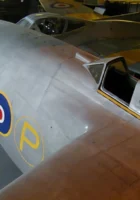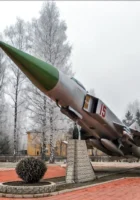
Sukhoi Su-15A Flagon

Sukhoi Su-15

CountrySoviet Union
TypeInterceptor aircraft
First flight30 May 1962
Built1290

The Sukhoi Su-15 (NATO reporting name: Flagon) is a twinjet supersonic interceptor aircraft developed by the Soviet Union. It entered service in 1965 and remained one of the front-line designs into the 1990s. The Su-15 was designed to replace the Sukhoi Su-11 and Sukhoi Su-9, which were becoming obsolete as NATO introduced newer and more capable strategic bombers.

Source: Sukhoi Su-15 on Wiki

Continue reading

Views : 2464

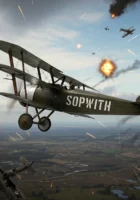
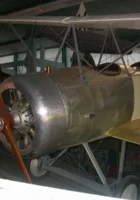
Sopwith Triplane war

Sopwith Triplane

CountryUK
RoleFighter
First Fly28 May 1916
Built147

The Sopwith Triplane was a British single seat fighter aircraft designed and manufactured by the Sopwith Aviation Company during the First World War. It has the distinction of being the first military triplane to see operational service. The Triplane was developed by the firm’s experimental department as a private venture, the project was headed by the designer Herbert Smith. Aside from its obvious difference in wing configuration, the aircraft shared many similarities with the company’s successful biplane fighter, the Sopwith Pup. The prototype Triplane performed its maiden flight on 28 May 1916 and was dispatched to the French theatre two months later, where it garnered high praise for its exceptional rate of climb and high manoeuvrability. During late 1916, quantity production of the type commenced in response to orders received from the Admiralty. During early 1917, production examples of the Triplane arrived with Royal Naval Air Service squadrons.

Source: Sopwith Triplane on Wikipedia

Continue reading

Views : 1210

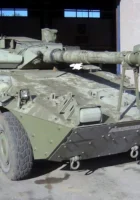
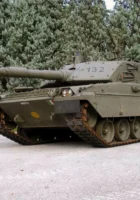
Centauro B1 105 mm

B1 Centauro

CountryItalia
RoleWheeled tank destroyer
Produced1991–2006
Built490+

The Centauro is a family of Italian military vehicles originating from a wheeled tank destroyer for light to medium territorial defense and tactical reconnaissance. It was developed by a consortium of manufacturers, the Società Consortile Iveco Fiat – OTO Melara (CIO). Iveco Fiat was tasked with developing the hull and propulsion systems while Oto Melara was responsible for developing the turrets and weapon systems. Over the years, the Centauro platform has been developed into multiple variants to fulfill other combat roles, such as infantry fighting vehicle or self-propelled howitzer.

Source: B1 Centauro on Wikipedia

Continue reading

Views : 3732

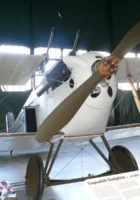
Sopwith Dolphin

Sopwith Dolphin

CountryUK
RoleFighter
First Fly23 May 1917
Built2072

The Sopwith 5F.1 Dolphin was a British fighter aircraft manufactured by the Sopwith Aviation Company. It was used by the Royal Flying Corps and its successor, the Royal Air Force, during the First World War. The Dolphin entered service on the Western Front in early 1918 and proved to be a formidable fighter. The aircraft was not retained in the postwar inventory and was retired shortly after the war.

Source: Sopwith Dolphin on Wikipedia

Continue reading

Views : 1236

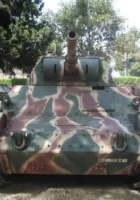
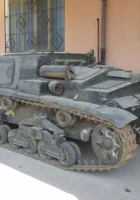
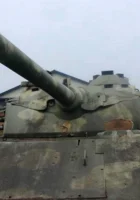
Carro Pesante P40

P26/40 tank

CountryItalia
RoleHeavy tank
Produced1943–44
Built103

The P 26/40 was an Italian World War II heavy tank. It was armed with a 75 mm gun and an 8 mm Breda machine gun, plus another optional machine gun in an anti-aircraft mount. Design had started in 1940 but very few had been built by the time Italy signed the armistice with the Allies in September 1943 and the few produced afterwards were used by the Germans. The official Italian designation was carro armato (“armoured vehicle”) P 26/40. The designation means: P for pesante (“heavy”), the weight of 26 tonnes, and the year of adoption (1940).

Source: P26/40 tank on Wikipedia

Continue reading

Views : 2238

Saunders-Roe SR.A-1

Saunders-Roe SR.A-1

CountryUK
RoleFlying boat fighter
First flight16 July 1947
Built2

The Saunders-Roe SR.A/1 was a prototype flying boat fighter aircraft designed and built by British seaplane manufacturer Saunders-Roe. It was the first jet-propelled water-based aircraft in the world. The concept behind the SR.A/1 originated during the Second World War as a reaction to Japan’s successful use of military floatplanes and the emergence of the turbojet engine. Saunders-Roe presented an initial proposal of their jet-powered seaplane concept, then designated SR.44, to the Air Ministry during mid-1943. In April 1944, the Ministry issued Specification E.6/44 for the type and supported its development with a contract for three prototypes. Development was protracted by Saunders-Roe’s work on other projects, the war having ended prior to any of the prototypes being completed.

Source: Saunders-Roe SR.A-1 on Wikipedia

Continue reading

Views : 1527

Sopwith 1A2 Strutter

Sopwith 1½ Strutter

CountryUK
RoleBiplane general purpose aircraft
First flightDecember 1915
Built4500 France & 1439 Great Britain

The Sopwith 1+1⁄2 Strutter was a British single- or two-seat multi-role biplane aircraft of the First World War. It was the first British two-seat tractor fighter and the first British aircraft to enter service with a synchronised machine gun. It was given the name 1+1⁄2 Strutter because of the long and short cabane struts that supported the top wing. The type was operated by both British air services and was in widespread but lacklustre service with the French Aéronautique Militaire.

Source: Sopwith 1½ Strutter on Wikipedia

Continue reading

Views : 1333

MBT Ariete

Ariete tank

CountryItalia
RoleMain battle tank
Produced1995–2002
Built200

The C1 Ariete (English: battering ram) is the main battle tank of the Italian Army, developed by Consorzio Iveco Oto Melara (CIO), a consortium formed by Iveco and OTO Melara. The chassis and engine were produced by Iveco, while the turret and fire-control system were supplied by OTO Melara.

Source: Ariete tank on Wikipedia

Continue reading

Views : 2535

Carro comando M41

M14/41 tank

CountryItalia
RoleMedium tank
Produced1941–42
Built800

The M 14/41 was a four-crew medium tank that served from 1941 in the Royal Italian Army. The official Italian designation was Carro Armato M 14/41. The tank was first employed in the North African Campaign where its shortcomings quickly became apparent.

Source: M14/41 tank on Wikipedia

Continue reading

Views : 1887