Savoia-Marchetti SM.79

Savoia Marchetti SM-79

CountryItaly
Role

Bomber

First flight28 September 1934
Built1240

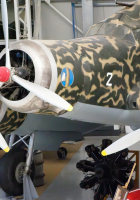
The Savoia-Marchetti SM.79 Sparviero (Italian for sparrowhawk) was a three-engined Italian medium bomber with a wood-and-metal structure. Originally designed as a fast passenger aircraft, between 1937 and 1939 this low-wing monoplane set 26 world records, qualifying it for some time as the fastest medium bomber in the world. It first saw action during the Spanish Civil War and flew on all fronts in which Italy was involved during World War II.

Source: Savoia Marchetti SM-79 on Wikipedia

Continue reading

Views : 6385

Light Tanks T-27, T-38, BT, T-26, T-40, T-50, T-60, T-70 - Mikhail Beryatinskiy

Ian Allan Publishing

Author

Mikhail Beryatinskiy

LangAnglais
Topic

Light Tanks

Pages96 pages
ISBN-13978-0711031630

Book description : There are few battles in the sometimes bloody history of the expansion of the United States in North American during the Indian Wars that are more famous than Little Bighorn. The romantic view of Custer’s last stand against marauding hordes of Indians has achieved iconic status but the reality was somewhat different, as recent research has shown. The Battle of Little Bighorn was the culmination of a process of attrition between the Native Americans and European settlers. On 25 June 1876 this clash of cultures was settled by force of arms as the 7th Cavalry under Custer came upon a huge Indian camp by the Little Bighorn River. The resulting battle was the stuff of legends, but legends based on misconception and hearsay – no members of the 7th Cavalry survived to tell their tale and the Indians recorded their triumph in pictographs and oral memory, long undeciphered by historians…

Editorial Reviews : This 96 page softcover volume is even more comprehensive than the title suggests, covering the tanks in the title and additionally the Russian Renault; T-18/MS-1; Vickers E; Christie Original; T-17; T-37; PPG; T-30; and T-80. For the BT section there is coverage of the BT-2, 3, 5, 7, 7M/8. In the text are lots of manufacturing, acceptance and in service numbers, and good descriptions of the development and service history. …

Continue reading

Views : 836

1943 La milice, pourquoi ? comment ? - Batailles 15

Histoire & Collections

SérieBatailles
Sujet1943 La milice
Période

Seconde guerre mondiale

Réf15

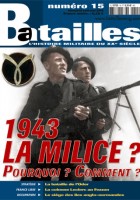
Une revue signée Histoire et Collections la revue «1943 La milice, pourquoi ? comment ? – Batailles 15».

  • Révolution Nationale : La milice française de février à août 1943
  • Troupes d’élite : Les parachutistes hongrois
  • France libre : La colonne Leclerc à la conquête du Fezzan
  • Face à l’Armée Rouge : La bataille de l’Oder
  • Stratégie : Objectif : Budapest
  • Occupation : L’occupation allemande dans les îles anglo-normandes
  • Chute du Reich : La bataille de Küstrin
  • Front de l’Est : La défense allemande sur l’Oder

Source: Histoire & Collections

Continue reading

Views : 1047

Hawker Sea Fury - Warbird Tech Vol. 37

Specialty Press

Author

Kev Darling

LanguageAnglais
Subject

Hawker Sea Fury

Pages104 pages
ISBN-13978-1580070638

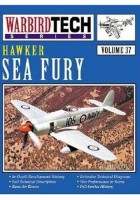
Book description : The Hawker Sea Fury is a bit of a mystery to most aircraft enthusiasts. If they’re familiar with Hawker and Sydney Camm’s designs, this plane – the Royal Navy’s last prop-driven fighter – is known to them, though not with much detail. Reno racing fanatics also know the Fury and the Sea Fury, but to air racing fans the Hawker design is just an airframe on which to hang the most powerful piston engine and biggest propeller possible. Warbird Tech Volume 37.

Editorial Reviews : For any fan of the Reno Unlimited races or any dye-hard aviation nut, nothing sounds nicer than the bariton hum of the Bristol Centaurus piston engine of the Hawker Sea Fury. Produced only after the end of WW2, the Sea Fury is one of the best single engine fighter planes ever produced by the British aviation industry before the Hunter jet from the same company. The present book provides a good amount of historical information, ample B&W illustrations and a good mix of close-ups and technical drawings all of which should please modelers as well. Kev Darling’s work is well researched and even details today’s privately owned Sea Furies in the USA and out of country. A good book.

Continue reading

Views : 787

Hawker Sea Fury FB 11

Hawker Sea Fury

PaysUK
PeriodWorld War II
TypeHunter

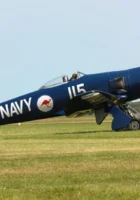
Photo Gallery on an FBII Hawker Sea Fury Fighter, The Sea Fury was a British fighter developed for the Royal Navy by the manufacturer Hawker-Siddeley during World War II. It was the Royal Navy's last propeller aircraft, one of the fastest single-engine piston engines ever built, and the last propeller fighter to shoot down a jet.

The Hawker Fury took over from the Hawker Tempest as well as the Hawker Typhoon. Developed in 1942 by engineer Sidney Camm in response to a tender issued by the RAF (Royal Air Force) to replace the outdated Tempest II. The basis of the concept is to design a Tempest by making it lighter with the use of its semi-elliptic wing positioned in the center of the fuselage which was itself identical to that of the Tempest. The differences between the two aircraft were the monohull mode and the elevated cockpit which provided the pilot with better visibility.

Source: Hawker Sea Fury on Wikipedia

Continue reading

Views: 4430

German Pz.Kpfw.IV Ausf.J Middle Production - GRIFFON MODEL 35034

Griffon Model

Ref35034
TypePhoto Découpe
Scale1/35
TopicGerman Pz.Kpfw.IV Ausf.J Middle Production
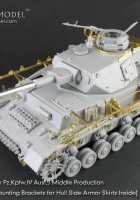
For kits Dragon 6556 A set from the brand Griffon ModelGerman Pz.Kpfw.IV Ausf.J Middle Production“. This 1/35 full detail set includes : (1)Photoetched Fret * 7 (2)Aluminum Barrel(Metal Muzzle Brake Not Include) * 1 (3)Preformed Spring * 7 (4)Brass Hollow Pipe * 4 (5)Auxiliary Material: ABS Rod, Brass Wire Suit for Dragon Smart Kit Series (Include 6556 Kit)

The Panzerkampfwagen IV (Pz.Kpfw. IV) commonly known as the Panzer IV was a medium tank developed in Nazi Germany in the late 1930s and used extensively during the Second World War. Its ordnance inventory designation was Sd.Kfz. 161. Designed as an infantry-support tank, the Panzer IV was not originally intended to engage enemy armor—that function was performed by the lighter Panzer III. However, with the flaws of pre-war doctrine becoming apparent and in the face of Soviet T-34 tanks, the Panzer IV soon assumed the tank-fighting role of its increasingly obsolete cousin. The most widely manufactured and deployed German tank of the Second World War, the Panzer IV was used as the base for many other fighting vehicles, including the Sturmgeschütz IV assault gun, Jagdpanzer IV tank destroyer, the Wirbelwind self-propelled anti-aircraft weapon, and the Brummbär self-propelled gun.

Source: Pz.Kpfw.IV sur Wikipedia
Continue reading

Views : 1797

Verdun - Batailles 14

Verdun

EditeurHistoire & Collections
SérieBatailles
Période

Première guerre mondiale

Réf14

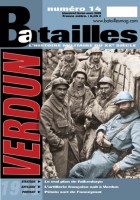
Une revue signée Histoire et Collections la revue «Verdun – Batailles 14».

  • TACTIQUE : Le vrai plan du Général Falkenhayn à Verdun
  • PORTRAIT : Le général Pétain sort de l’anonymat
  • ARTILLERIE : L’artillerie moderne franÇaise naît À verdun
  • BETONS ET FORTIFICATIONS : Douaumont ist gefallen
  • OPERATIONS AERIENNES : Bataille aérienne sur la Meuse
  • COMMANDEMENT : Le commandement français face à l’offensive allemande
  • STRATEGIE : La voie sacrée, seul lien avec l’arrière
  • LOGISTIQUE ET ORGANISATION : Le service de santé de la 5e armée allemande

Source: Histoire & Collections

Continue reading

Views : 702

Sherman Firefly - David Fletcher

Osprey Publishing

Author

David Fletcher

LangueAnglais
Subject

Sherman Firefly

Pages48 pages
ISBN-13978-1846032776

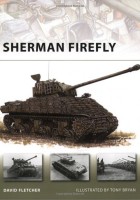
Book description : The most powerfully gunned tank fielded by the Allies during World War II was the Sherman Firefly. An ordinary American-built Sherman modified by the British, the Firefly had the firepower that could finally match the awesome German tanks that had dominated Europe. David Fletcher examines the controversy that dogged the Firefly and the psychological boost the tank provided to Allied forces. Exploring its successes and failures on the battlefield and providing a realistic assessment of the tank’s worth, this is essential reading for anyone wanting to know the facts about a tank variant that quickly developed its own mythology.

Editorial Reviews : “The Firefly was arguably the best WW2 tank of the Western allies to be produced in quantity, as far as anti-tank performance was concerned… All [of its production history] is described here and so is the Firefly’s combat use, as well as interesting sidelights such as the use of Fireflies for concrete-busting attack on bunkers and Firefly production for the US Army. Very highly recommended.” -John Prigent, Internet Modeler (March 2008)

Continue reading

Views : 1234

Firefly 1c Welded Hull - DML 6568

Dragon Model

Ref6568
TypeMaquette
Scale1/35
Topic

Firefly 1c Welded Hull

Une maquette de la marque Dragon Model la maquette : Sd.Kfz.184 Ferdinand Kursk 1943 – DML 6495.

The Sherman Firefly was a World War II British variant of the American Sherman tank, fitted with the powerful British 17 pounder anti-tank gun as its main weapon. Originally conceived as a stopgap until future British tank designs came into service, the Sherman Firefly became the most common vehicle with the 17 pounder in World War II. Though the British expected to have their own new tank models developed soon, British Major George Brighty championed the already-rejected idea of mounting the 17 pounder in the existing Sherman. With the help of Lieutenant Colonel Witheridge and despite official disapproval, he managed to get the concept accepted. This proved fortuitous, as both the Challenger and Cromwell tank designs experienced difficulties and delays.

Source: Firefly 1c Welded Hull sur Wikipedia

Continue reading

Views : 1340