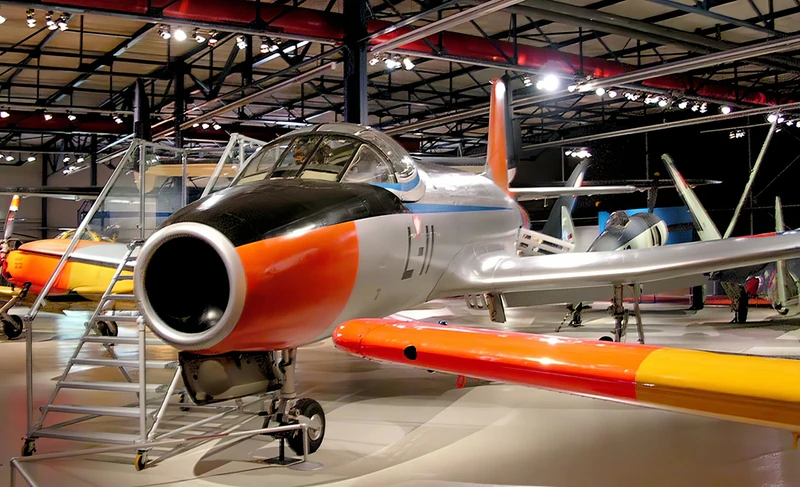
Fokker S.14 Machtrainer | |
|---|---|
| 国家 | 荷兰 |
| 作用 | 喷气式教练机 |
| 第一只苍蝇 | 19 五月 1951 |
| 建立 | 21 |
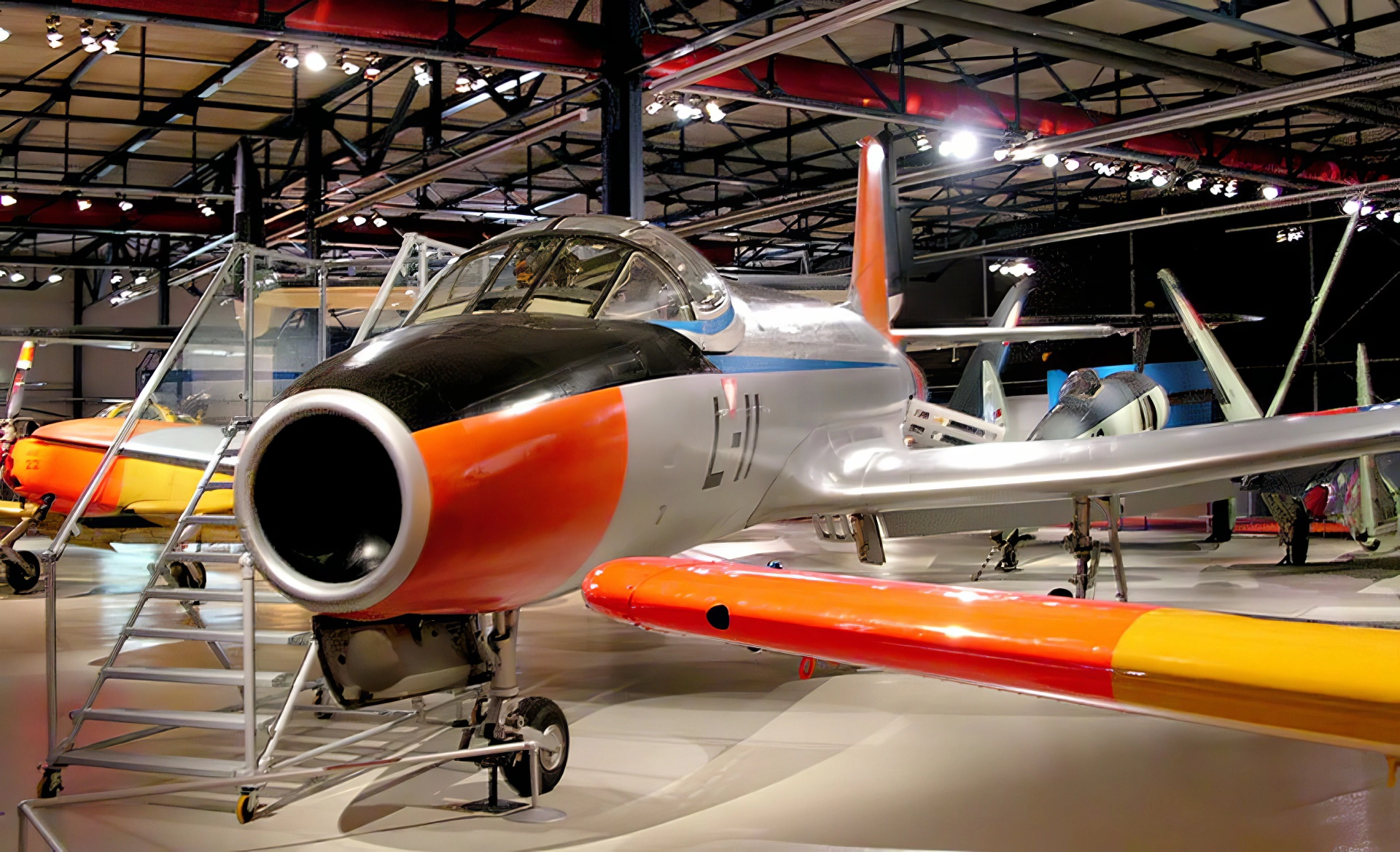
这 福克S.14马赫训练机 是福克为荷兰皇家空军设计和制造的荷兰双座军事训练喷气式飞机。开发始于20世纪40年代后期。它是世界上最早的喷气式战斗机训练机之一,于1951年5月19日首飞,并于1955年投入使用。
| Fokker S14 Machtrainer Walk Around | |
|---|---|
| Photographer | Unknow |
| Localisation | Unknow |
| Photos | 34 |
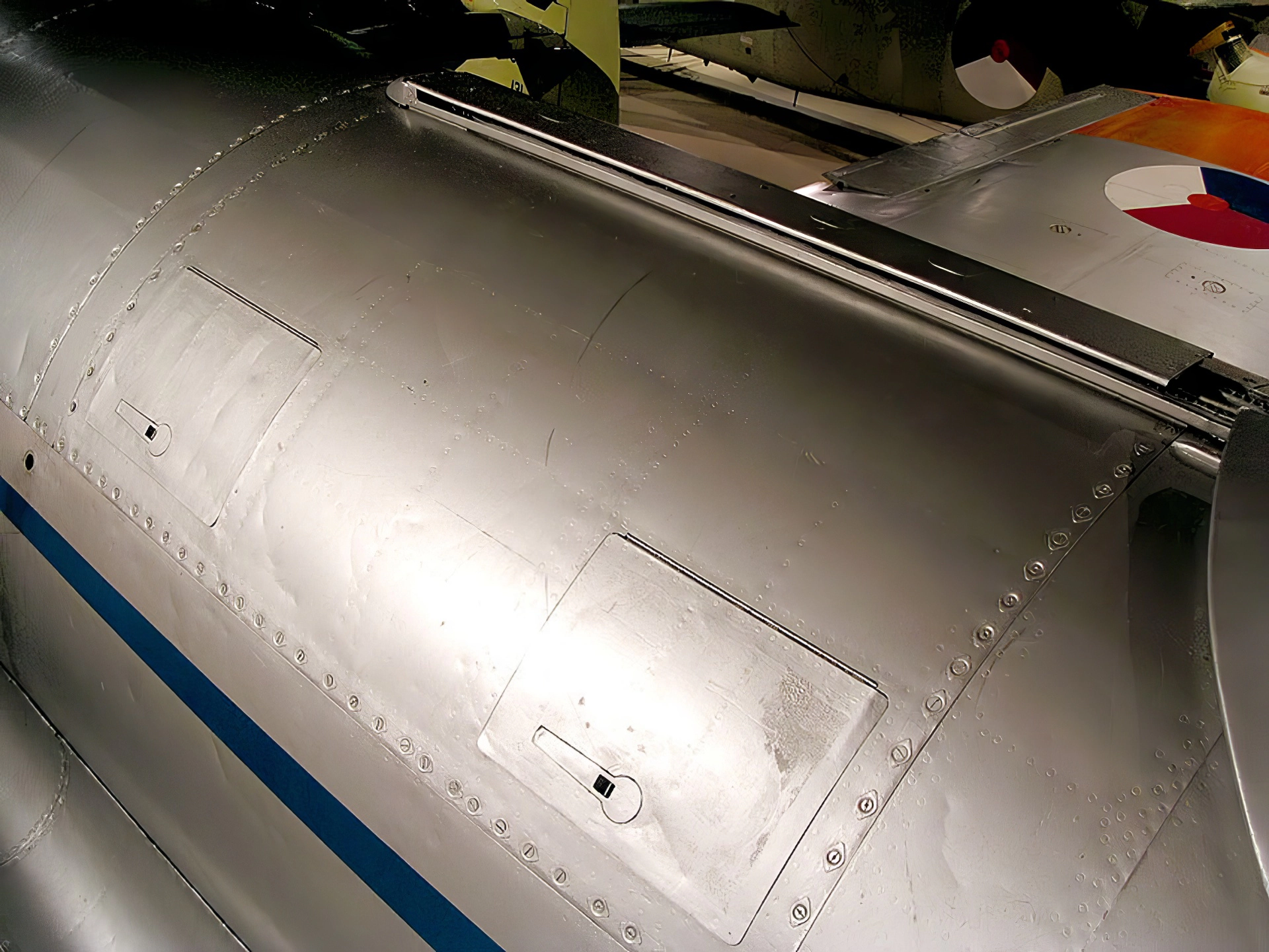
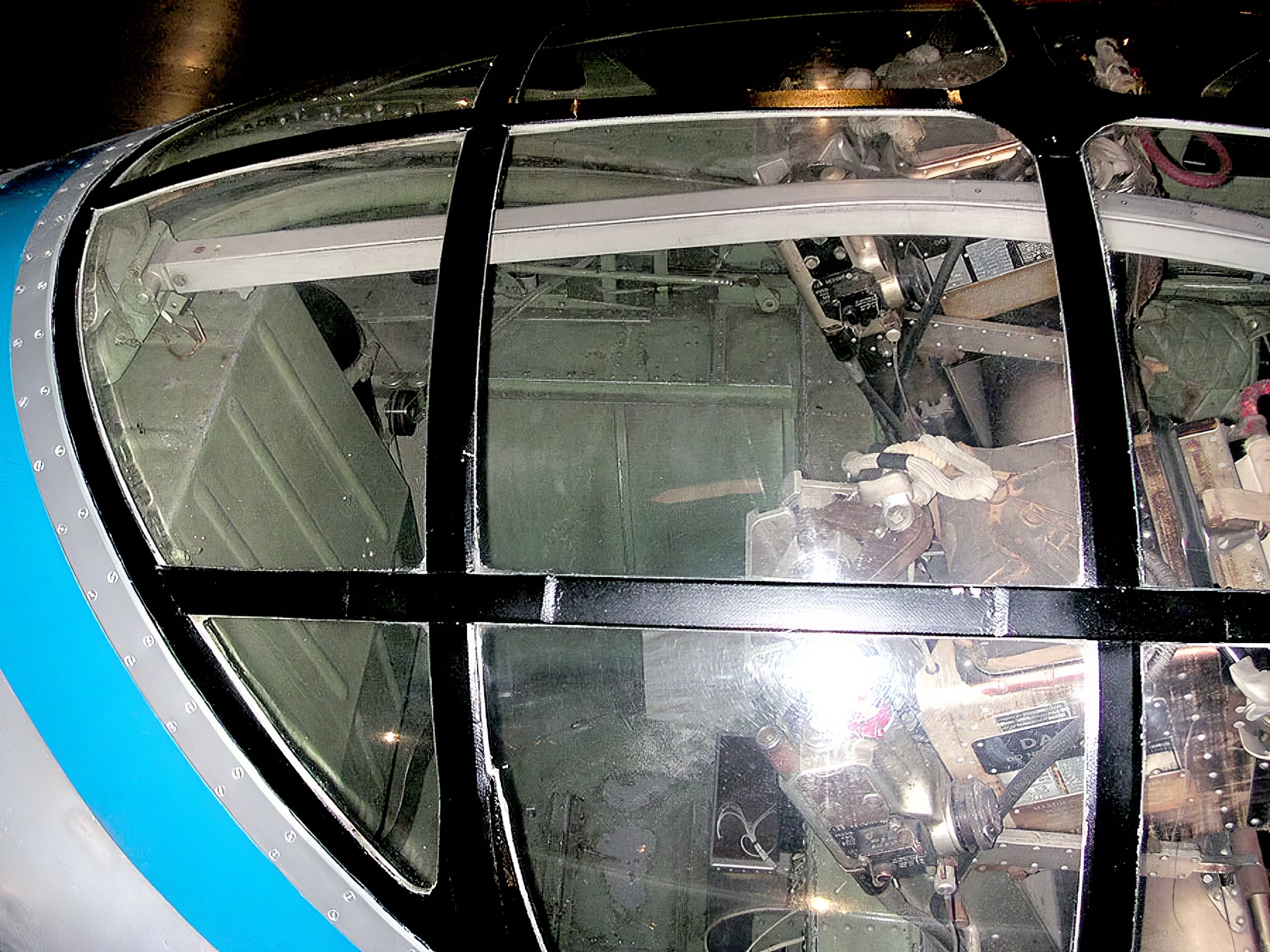
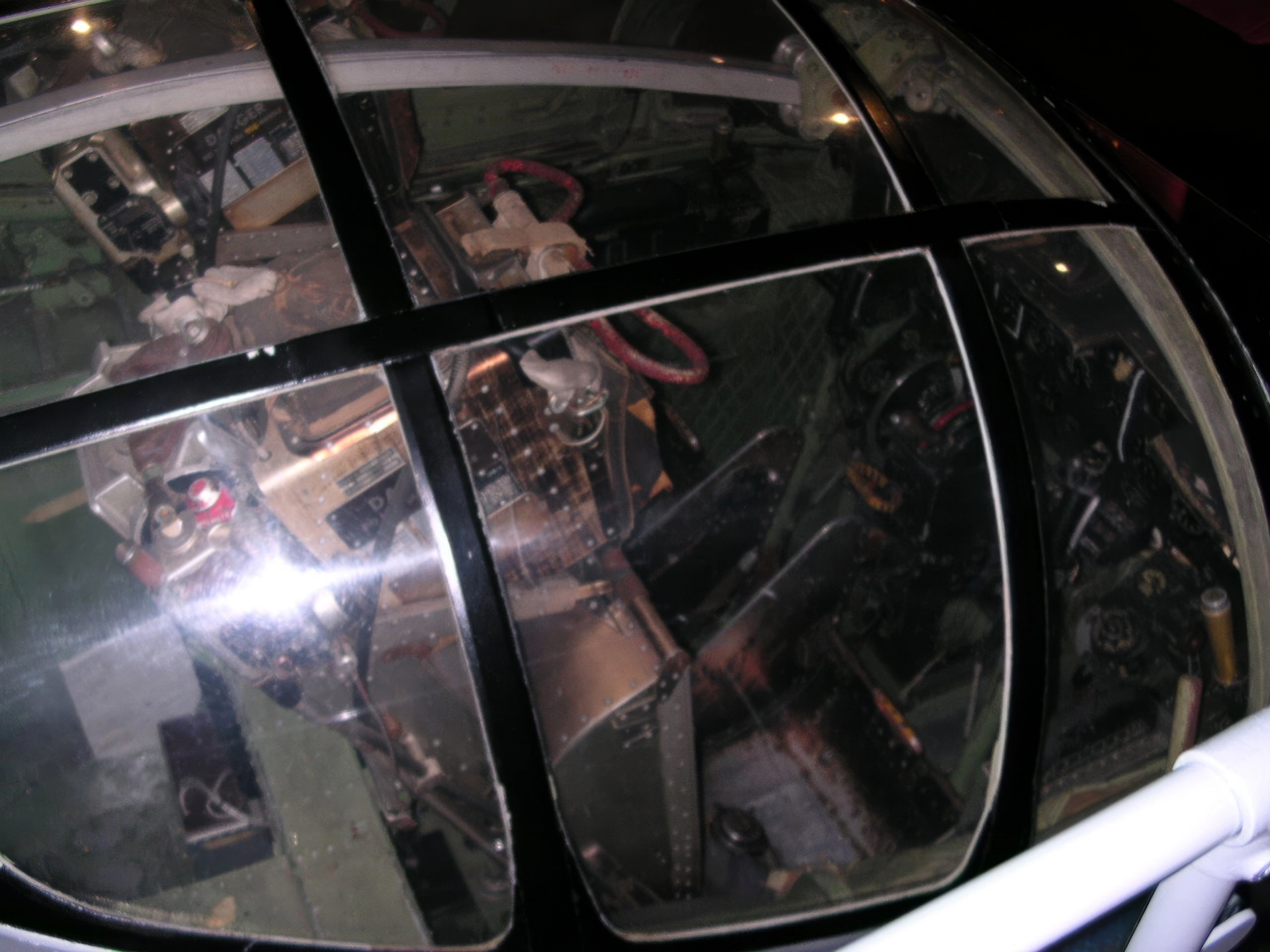
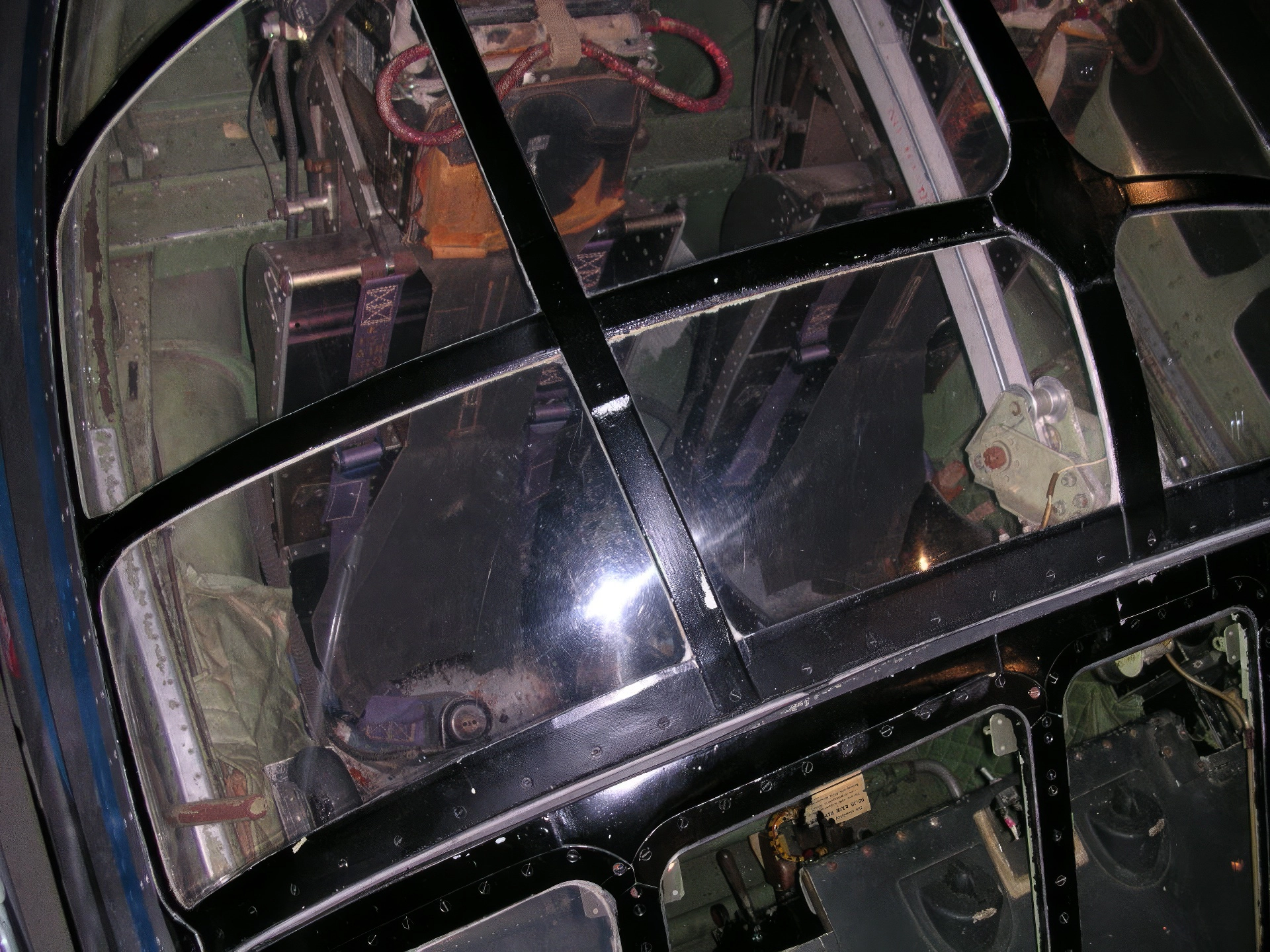

另请参阅:


General Characteristics and Role
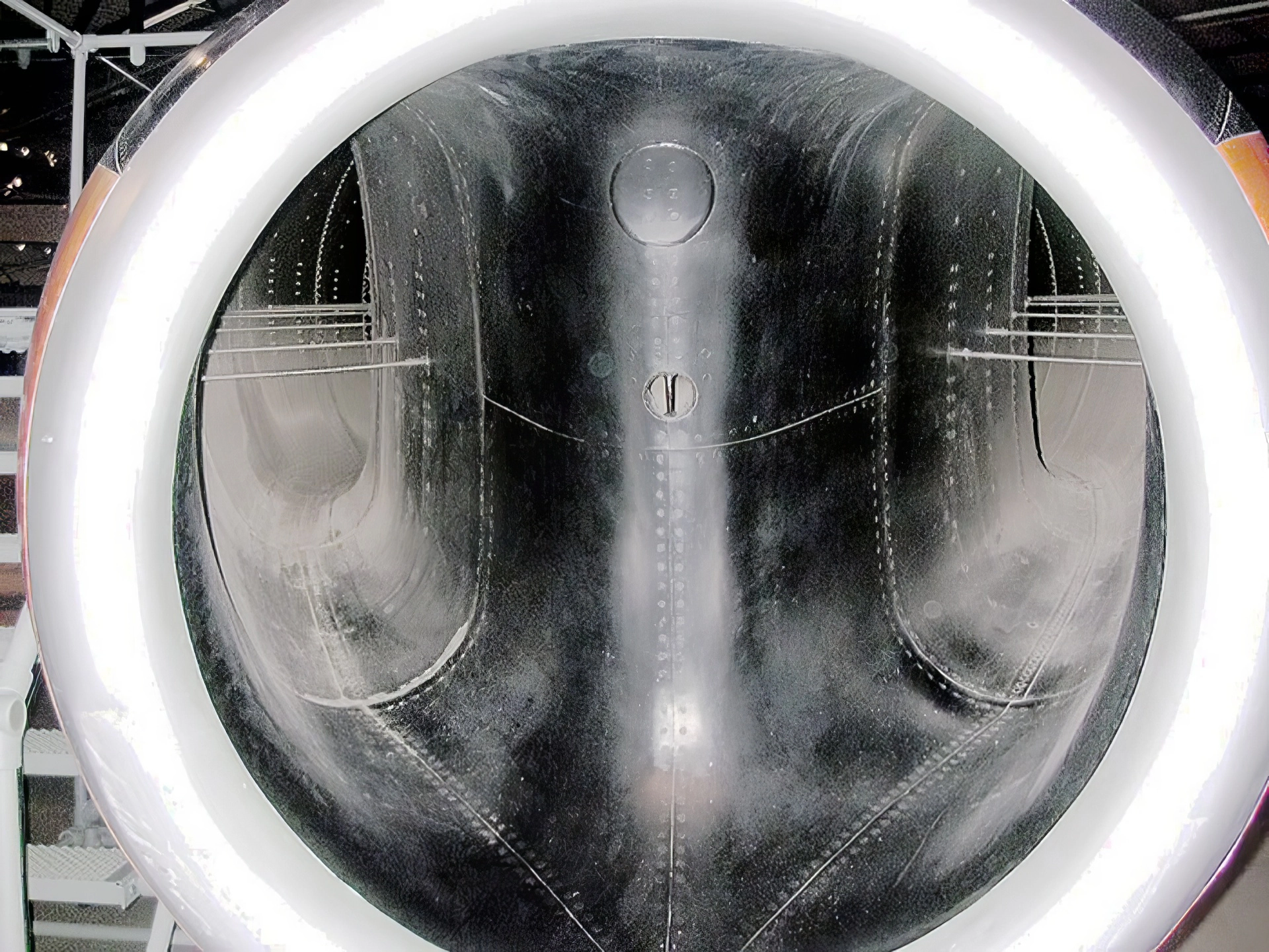
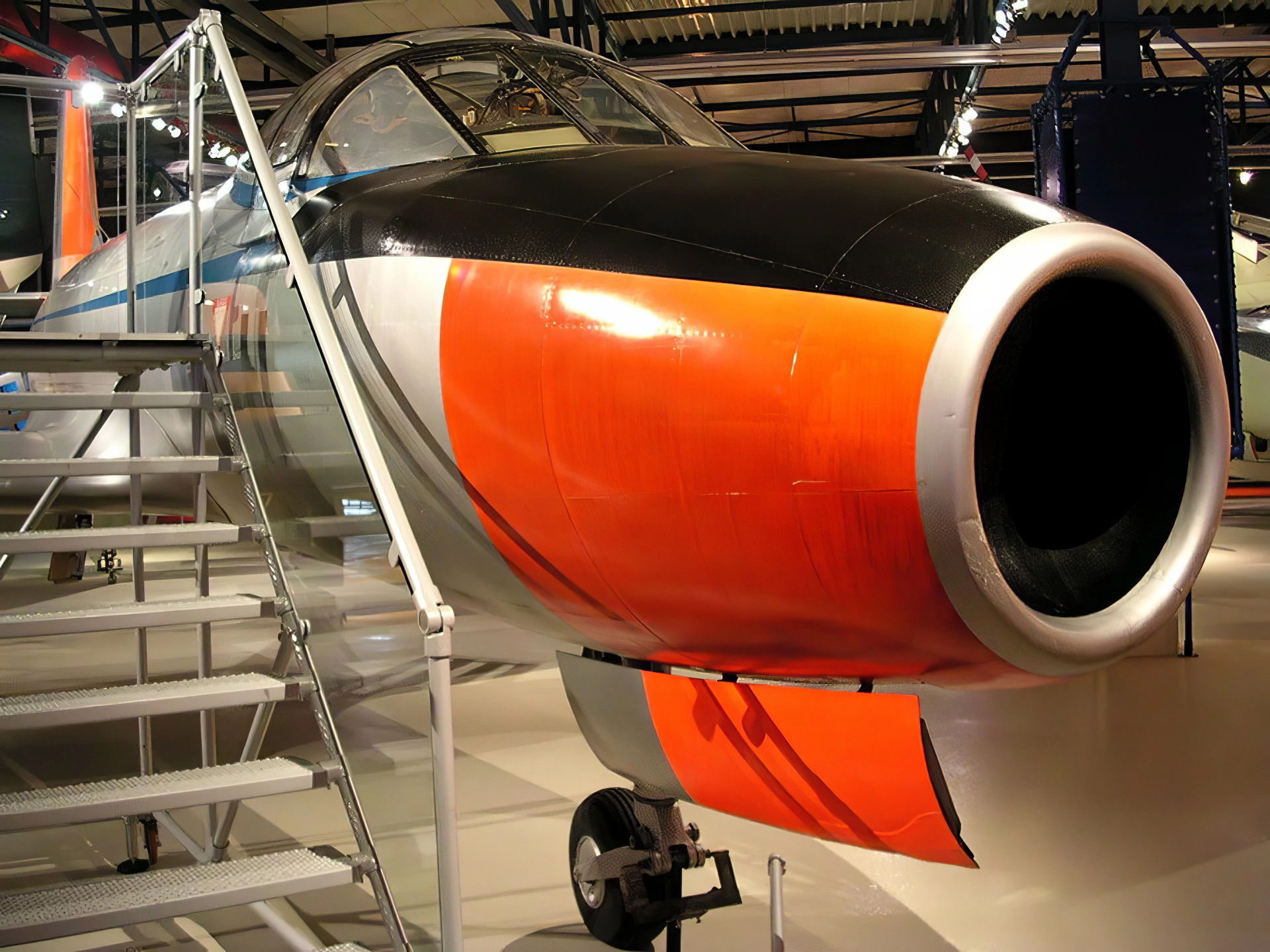
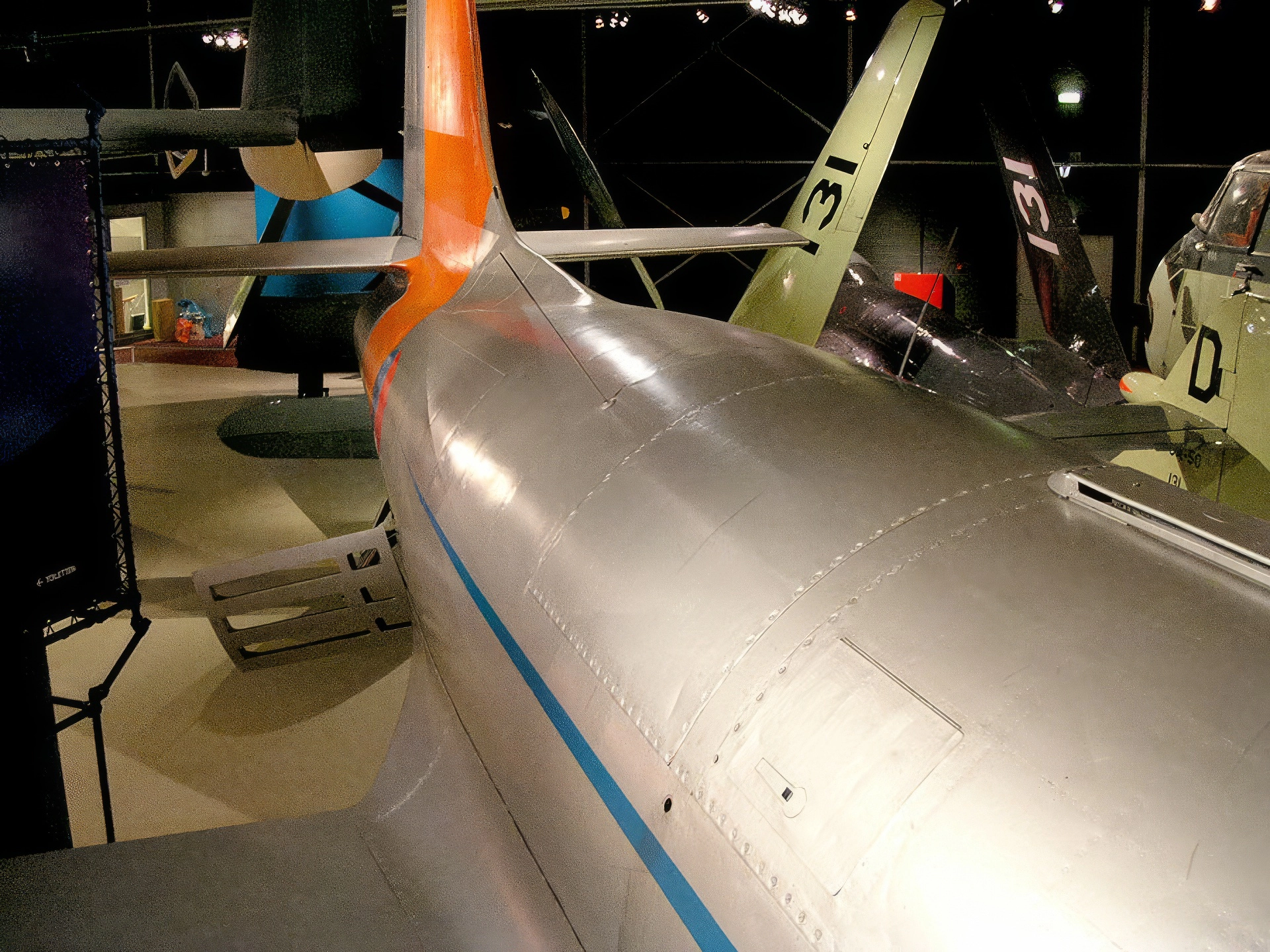
The Fokker S.14 Machtrainer was a Dutch post-war two-seat side-by-side jet trainer aircraft developed by Fokker. It holds the distinction of being one of the first jet trainers in the world specifically designed and built for this role, rather than being a modified fighter. The name “Machtrainer” combines the Dutch word “macht” (power/might) and “trainer.” Its primary purpose was to transition pilots from piston-engined aircraft to the high speeds and handling characteristics of jet fighters, providing a safe and effective learning platform. The S.14 was designed with an intake in the nose and an exhaust centrally under the fuselage, featuring a robust, conventional landing gear and a side-by-side cockpit for optimal instructor-student interaction.
| Property | Typical Value (S.14) |
|---|---|
| 作用 | Advanced Jet Trainer |
| National Origin | 荷兰 |
| 制造商 | 福克 |
| First Flight | 19 五月 1951 |
| 船员 | 2 (Instructor and Student, side-by-side) |
| 长度 | 13.3 m (43 ft 8 in) |
| 翼展 | 12.0 m (39 ft 4 in) |
| 高度 | 4.7 m (15 ft 5 in) |
| Empty Weight | 3,700 kg (8,157 lb) |
| Max Takeoff Weight | 5,500 kg (12,125 lb) |
Powerplant and Performance
- Engine: 1 x Rolls-Royce Derwent 8 centrifugal-flow turbojet (early variants used the Derwent 5).
- Thrust: 15.6 kN (3,500 lbf).
- Maximum Speed: 730 km/h (454 mph; 394 kn) at 8,000 m (26,250 ft).
- Range: 965 km (600 mi; 521 nmi).
- Service Ceiling: 11,735 m (38,500 ft).
- Key Feature: The Machtrainer provided jet performance sufficient to simulate contemporary fighter characteristics, crucial for transitioning student pilots.
Service and Legacy
- Primary Operator: The Royal Netherlands Air Force (Koninklijke Luchtmacht, KLu) was the main user, employing 20 aircraft for pilot training.
- Limited Export: While highly advanced for its time, the S.14 faced stiff competition from British and American jet trainers (like the T-33) and was not widely exported.
- Contribution: It demonstrated that a dedicated, purpose-built trainer could offer superior instructional qualities compared to two-seat fighter conversions.
- Retirement: The S.14 was retired from KLu service in 1967 after a long career, having been replaced by more modern jet trainers.
意见:1224