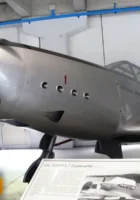
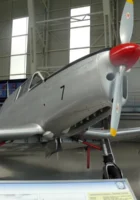
SAI Super S.7

Ambrosini S.7

ZemljaItalia
UloguTrkački avioni
Prvi letJuli 1939
Izgradio12 + 147

Čaj Ambrosini SAI.7 je italijanski trkački avion leteo pre Drugog svetskog rata koji je ušao u proizvodnju kao vojni trener (označen jednostavno S.7) posle rata. Bila je konvencionalne konfiguracije, konstruisana od drveta, sa podvoћenim zadnjim toиkom. Snagu je obezbedio vazdušno hlađeni inline motor, Alfa-Romeo model 115 sa 225 KS.

Izvor: Ambrosini S.7 na Vikipediji

Nastavi sa čitanjem

Views : 564

Kraljevska fabrika aviona R.E.8

Royal Aircraft Factory R.E.8

ZemljaVelike britanije
UloguIzviđanje, Bombaš
Prvi let17 jun 1916
Izgradio4077

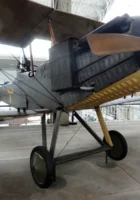
Čaj Royal Aircraft Factory R.E.8 was a British two-seat biplane reconnaissance and bomber aircraft of the First World War designed and produced at the Royal Aircraft Factory. It was also built under contract by Austin Motors, Daimler, Standard Motors, Siddeley-Deasy and the Coventry Ordnance Works. Intended as a replacement for the vulnerable B.E.2, the R.E.8 was widely regarded as more difficult to fly and gained a reputation in the Royal Flying Corps for being “unsafe” that was never entirely dispelled. Although eventually it gave reasonably satisfactory service, it was never an outstanding combat aircraft. Nonetheless, it remained the standard British reconnaissance and artillery observation aircraft from mid-1917 to the end of the war, serving alongside the rather more popular Armstrong Whitworth F.K.8.

Izvor: Royal Aircraft Factory R.E.8 on Wikipedia

Nastavi sa čitanjem

Views: 604

CATI 90 mm

Loyd Carrier

ZemljaVelike britanije
UloguOklopni nosač osoblja
U službi1939 -1960
Izgradio26000+

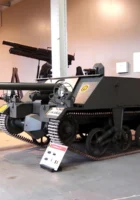
Čaj Loyd Carrier bio je jedno od brojnih malih praćenih vozila koje su britanske i komonveltske snage koristile u Drugom svetskom ratu za transport opreme i ljudi o bojnom polju. Pored Brena, izviđači i mitraljezi su takođe premestili pešadijsko oružje za podršku.

Izvor: Loyd Carrier on Wikipedia

Nastavi sa čitanjem

Poruke : 1381

Nardi FN.305 A

Nardi FN.305

ZemljaItalia
UloguBorbeni trener i monoplan za vezu
Prvi let19. februar 1935.
Izgradio211

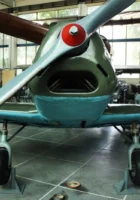
Čaj Nardi FN.305 was an Italian fighter trainer and liaison monoplane developed by the Fratelli Nardi company. The FN.305 was designed as a trainer and liaison aircraft and the prototype first flew on 19 January 1935. The FN.305 was a low-wing cantilever monoplane of mixed construction. It had tailskid landing gear, with the main gear retracting inwards. It was powered by a nose-mounted 200 hp (149 kW) Fiat A.70S inline piston engine. The prototype was a tandem two-seater with an enclosed cockpit. It was intended to produce both single-seat and two-seat variants and the next prototype was a single-seat fighter trainer followed by a two-seat basic trainer prototype which both had open cockpits.

Izvor: Nardi FN.305 na Vikipediji

Nastavi sa čitanjem

Views : 849

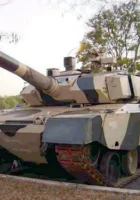
Engesa EE-T1 Osorio

EE-T1 Osório

Zemlja Brazil
Ulogu Glavni borbeni tenk
Proizvodi 1986
Izgradio 2 prototipa
Čaj Engesa EE-T1 Osório bio je brazilski glavni prototip borbenog tenka koji je razvila Engesa. Tenk je trebalo da bude prodat prvo arapskim i drugim zemljama Trećeg sveta, čime bi se omogućila proizvodnja u skoku u proizvodnju — i omogućilo brazilskoj vojsci da kasnije sama raspoređuje sopstvene narudžbine bez potrebe da finansira troškove razvoja. Razvoj tenka prvobitno je privatno finansirala kompanija Engesa, ali su problemi sa prilivom novca na kraju doveli do toga da brazilska vlada produži kredit za pomoć programu. Izgrađena su dva prototipa tenka, ali EE-T1 nikada nije usvojen za servis.
Izvor: EE-T1 Osório on Wikipedia
Nastavi sa čitanjem

Gledanja : 2058

FIAT G.46-2

Fijat CR.46

ZemljaItalija
UloguVojni trener
Prvi let25. jun 1947.
Izgradio223

Čaj Fijat G.46 was a military trainer developed in Italy shortly after World War II. The G.46 was a conventional, low-wing monoplane with tailwheel undercarriage, the main units of which retracted inwards. The pilot and instructor sat in tandem under a long canopy. The first prototype, powered by a 205 hp (153 kW) Alfa Romeo 115-Ibis engine, made its maiden flight on 25 June 1947.

Izvor: Fiat CR.46 na Vikipediji

Nastavi sa čitanjem

Views : 669

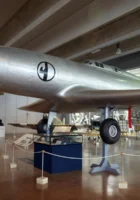
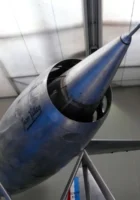
Campini-Caproni C.C.2

Caproni Campini N.1

ZemljaItalija
UloguEksperimentalni avioni
Prvi let27 Avgust 1940
Izgradio2

Čaj Caproni Campini N.1, also known as the C.C.2, was an experimental jet aircraft built in the 1930s by Italian aircraft manufacturer Caproni. The N.1 first flew in 1940 and was briefly regarded as the first successful jet-powered aircraft in history, before news emerged of the German Heinkel He 178’s first flight a year earlier. During 1931, Italian aeronautics engineer Secondo Campini submitted his studies on jet propulsion, including a proposal for a so-called thermo-jet to power an aircraft. Following a high-profile demonstration of a jet-powered boat in Venice, Campini was rewarded with an initial contract issued by the Italian government to develop and manufacture his envisioned engine. During 1934, the Regia Aeronautica (the Italian Air Force) granted its approval to proceed with the production of a pair of jet-powered prototype aircraft. To produce this aircraft, which was officially designated as the N.1, Campini formed an arrangement with the larger Caproni aviation manufacturer.

Izvor: Caproni Campini N.1 na Wikiju
Nastavi sa čitanjem

Views : 1578

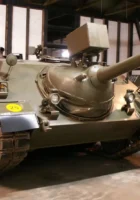
Jagdpanzer Kanone 90

Jagdpanzer Kanone 90

ZemljaZapadna Nemačka
UloguRazarač tenka
Proizvodi1965–1967
Izgradio770

Čaj Kanonenjagdpanzer (KanJPz; poznat i kao Jagdpanzer Kanone 90mm, "razarač tenkova, pištolj 90mm") bio je nemački razarač tenkova iz Hladnog rata opremljen protivtenkovskim pištoljem od 90mm uzet iz zastarelih tenkova M47 Paton. Njegov dizajn je bio veoma sličan onom u Jagdpanzeru IV iz Drugog svetskog rata.

Izvor: Jagdpanzer Kanone 90 na Vikipediji

Nastavi sa čitanjem

Views : 2275

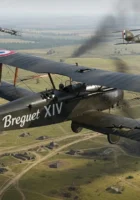
Breguet XIV war

Breguet XIV

ZemljaFrancuska
UloguBombaљ
Prvi let21. novembar 1916.
Izgradio8000+

Čaj Bréguet 14 was a French biplane bomber and reconnaissance aircraft of World War I. It was built in very large numbers and production continued for many years after the end of the war. Apart from its widespread usage, the Bréguet 14 is known for being among the first mass-produced aircraft to use large amounts of metal, rather than wood, in its structure. This allowed the airframe to be lighter than a wooden airframe of the same strength, in turn making the aircraft relatively fast and agile for its size; in combat it was able to outrun many contemporary fighters. The Bréguet 14’s strong construction allowed it to sustain considerable damage, in addition to being easy to handle and possessing favourable performance. The type has often been considered to have been one of the best aircraft of the war.

Izvor: Breguet XIV na Wikiju

Nastavi sa čitanjem

Views : 1379