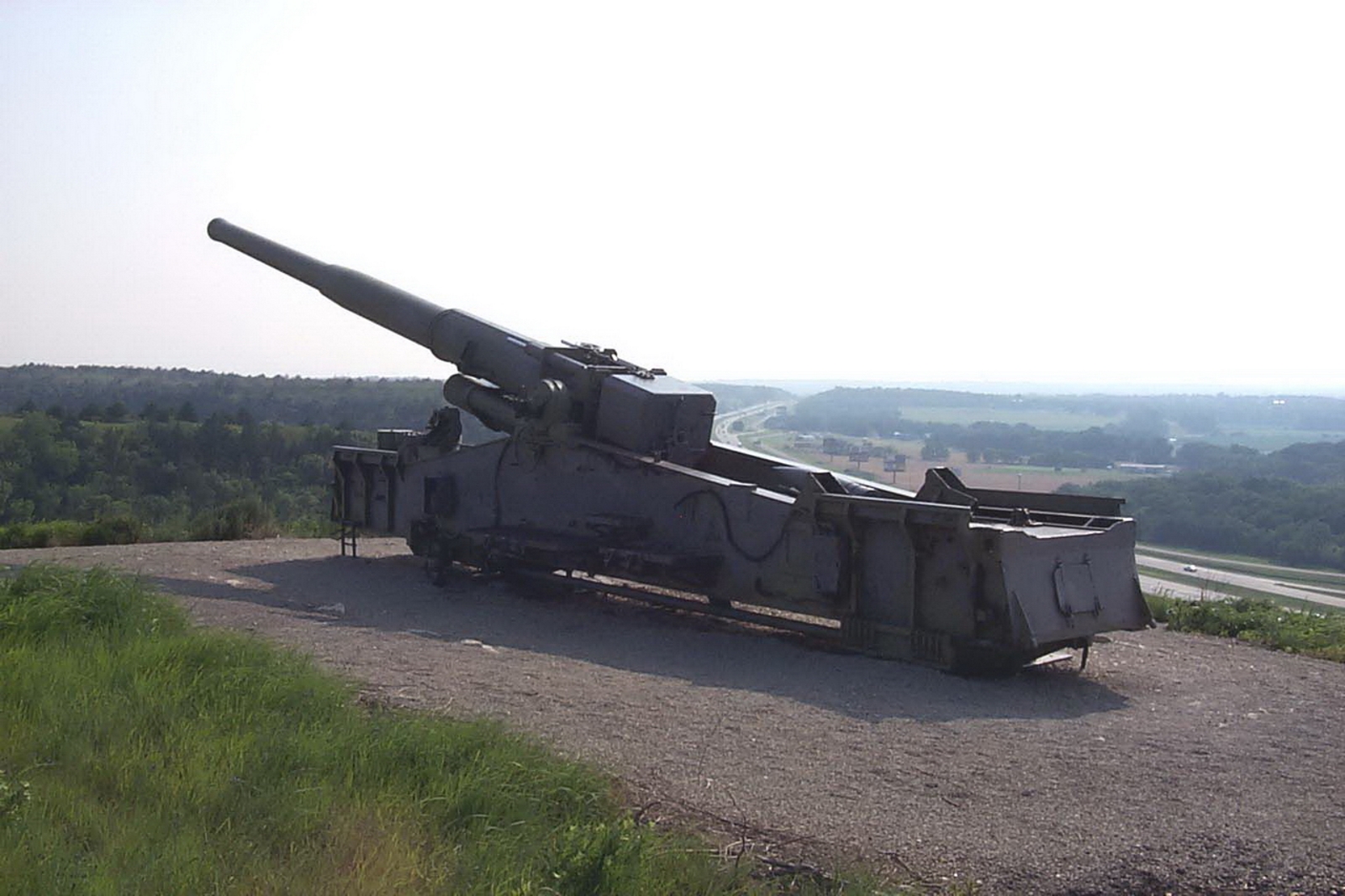
M65 atomic cannon |
|
|---|---|
| Krajiny | Spojené štáty americké |
| Úlohu | Vlečné delostrelectvo |
| Kaliber | 280 mm |
| Postavený | 20+ |
Komisia Atómové delo M65, často nazývaný "Atomic Annie", bol vlečný delostrelecký kus postavený Spojenými štátmi a schopný odpáliť jadrové zariadenie. Bol vyvinutý na začiatku 50. rokov 20. storočia, na začiatku studenej vojny a do roku 1953 bol v Európe a Južnej Kórei.
Zdrojový: Atómové delo M65 na Wikipédii
| M65 280 mm Atomic Cannon Walk Around | |
|---|---|
| Fotograf | Paul Truhe |
| Lokalizácia | Neznáme |
| Fotografie | 114 |

Pozri tiež:


Komisia Atómové delo M65 was a remarkable feat of engineering that demonstrated the United States’ ability to deliver nuclear weapons with conventional artillery. Developed in the early 1950s, at the height of the Cold War, the M65 was capable of firing a 280mm shell with a W9 or W19 nuclear warhead, with a yield of up to 15 kilotons. The M65 was also known as Atomic Annie, a nickname derived from a pair of German K5 railroad guns that bombarded Allied forces in Italy during World War II.
The M65 was a massive weapon, weighing 85 tons and measuring 85 feet in length. It required two heavy tractors to tow it and a crew of five to seven men to operate it. The M65 had a range of about 20 miles and could elevate up to 55 degrees for firing. The M65 was the only conventional cannon to fire a nuclear shell in a live test, which took place on May 25, 1953, at the Nevada Test Site. The test, codenamed Grable, was part of Operation Upshot-Knothole and produced a mushroom cloud that rose to 10,000 feet. Twenty M65 cannons were produced and deployed in West Germany, South Korea and Okinawa until 1963, when they were retired and replaced by more advanced nuclear delivery systems.
Pohľady : 3079
Môžete tiež vidieť:
 Howitzer 149-19 – Photos & Video
 220 mm TR mle 1915/1916 – fotografie a video
 17 cm Kanone 18 – WalkAround
 Raketový systém M270 s viacnásobným štartom - fotografie a videá
 2S3 Akatsiya - fotografie a videá
 7.5 cm Gebirgsgeschütz 36 – Fotografie a videá
 85 mm divízne delo D-44 – fotografie a video
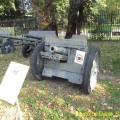 76 mm plukovná pištoľ M1927 – fotografie a video
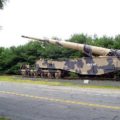 Nemecké železnično-cestné delo 28cm K5(E) Leopold
 21cm Morser 18 Húfnice – Chodiť