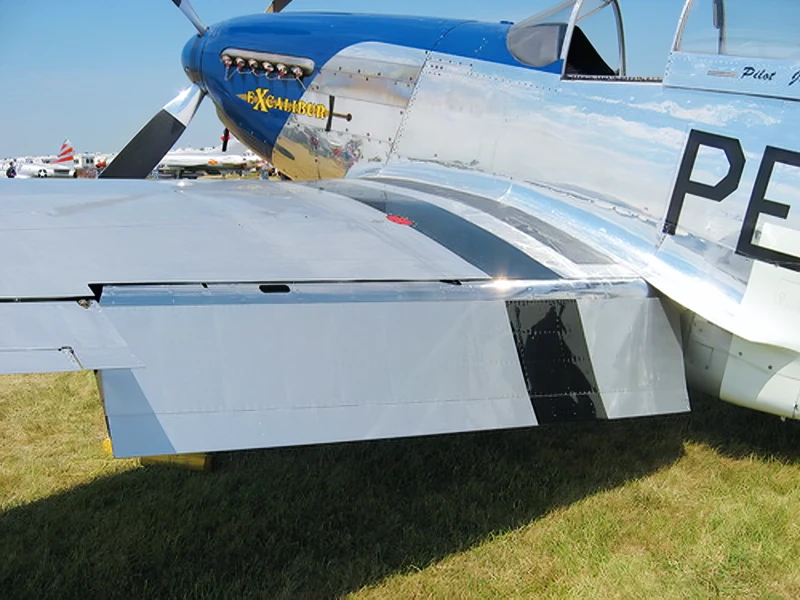
P-51D Mustang | |
|---|---|
| Страны | США |
| Тип | Одномоторный истребитель |
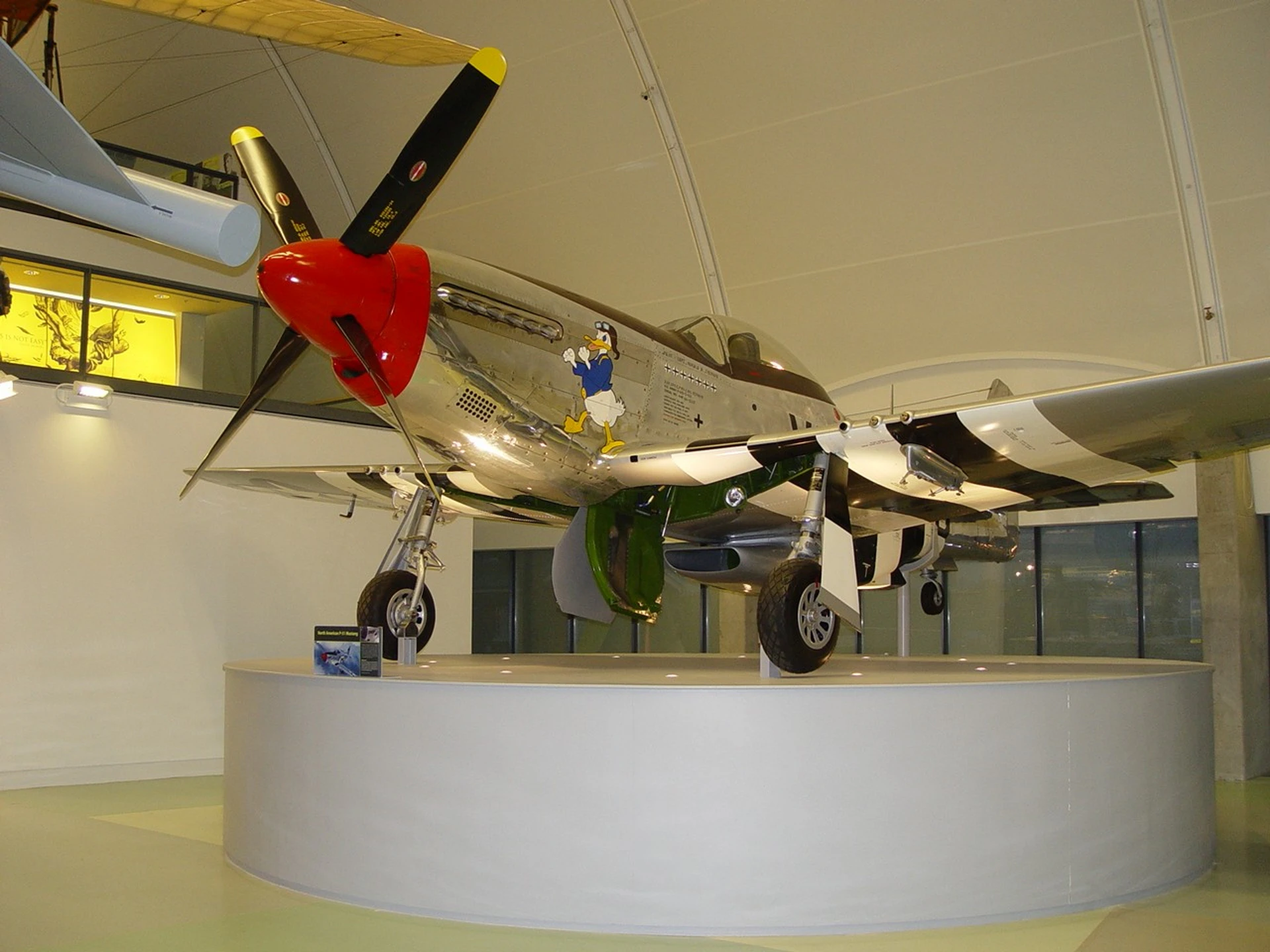
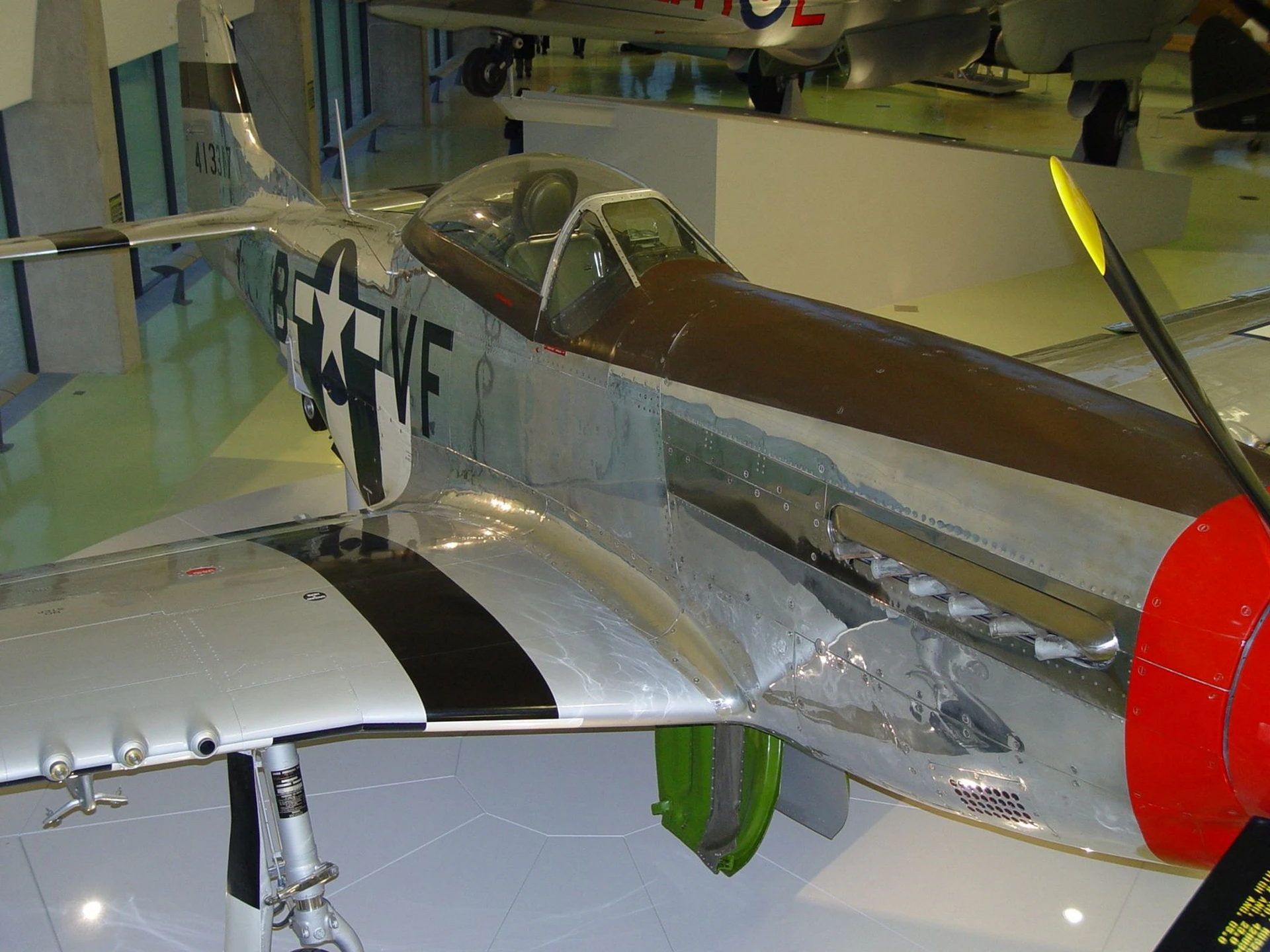
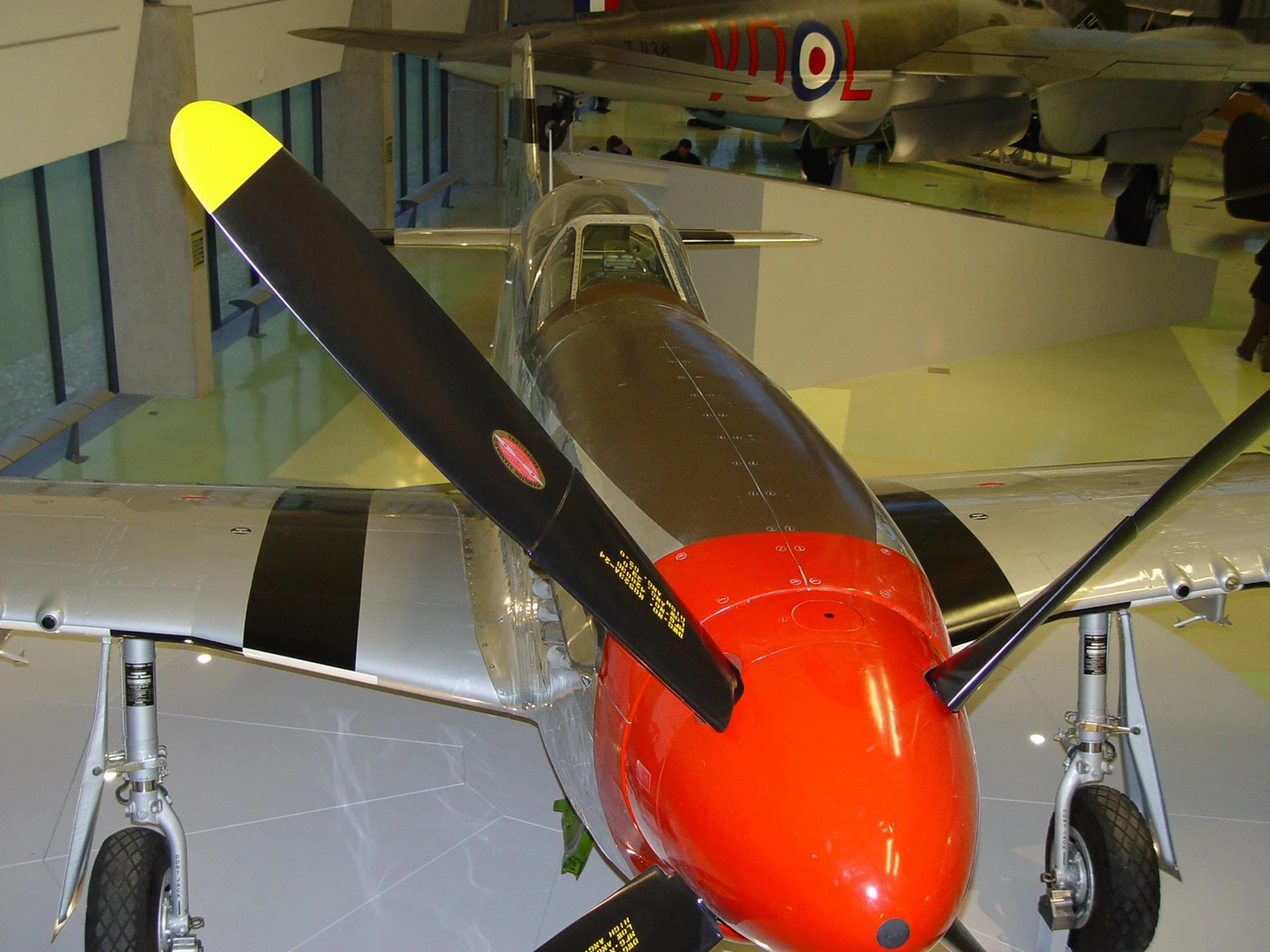
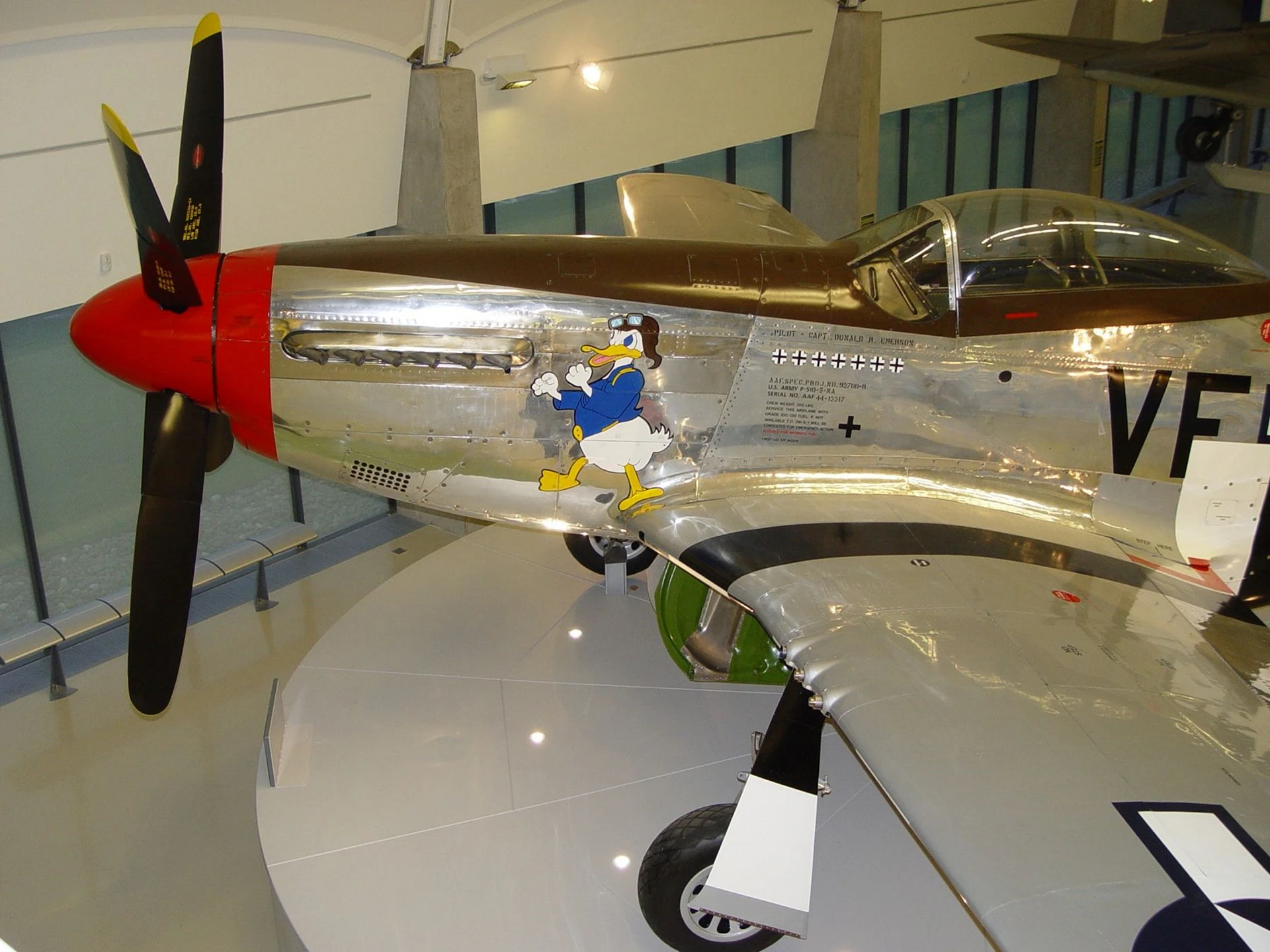
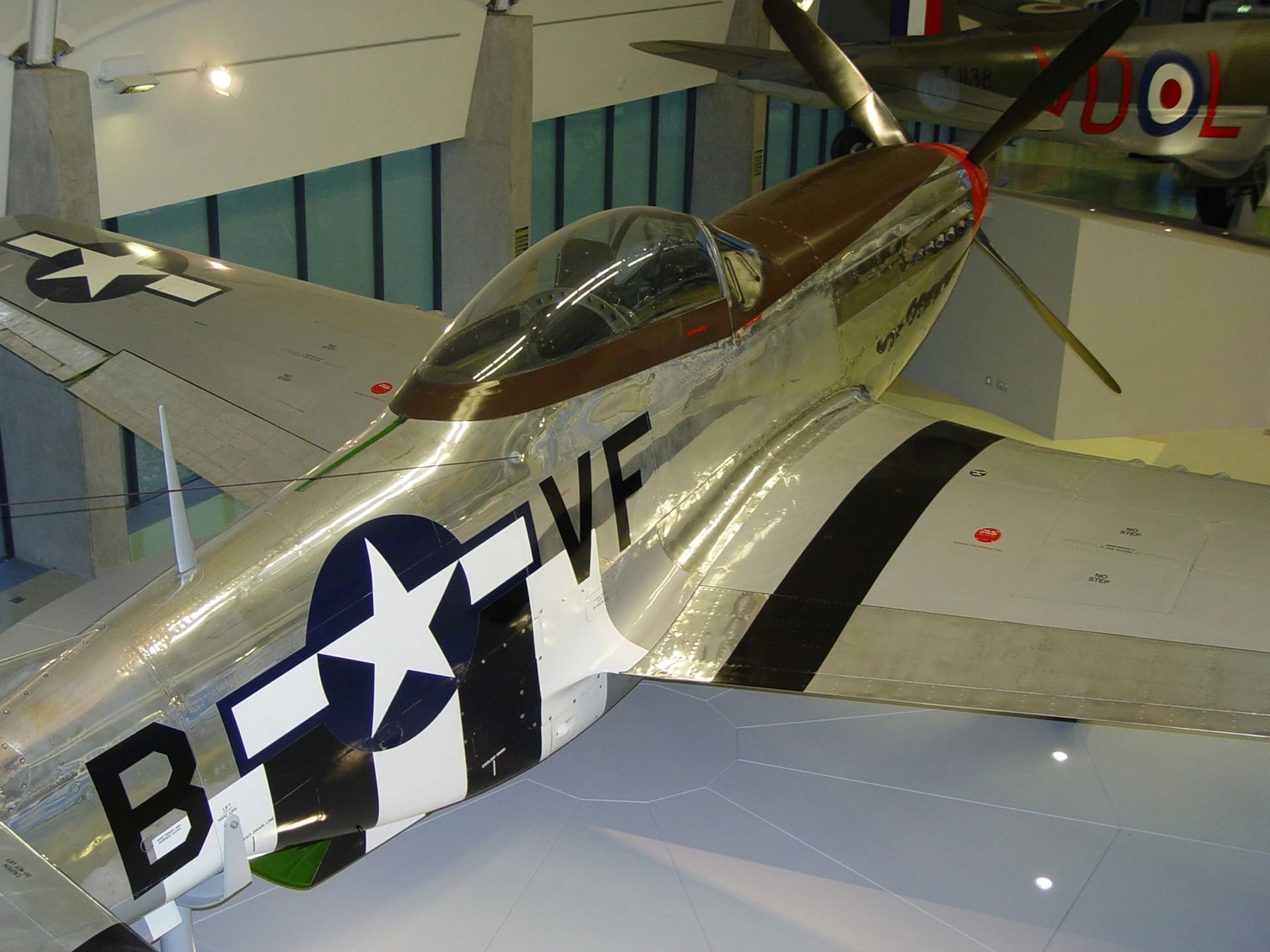
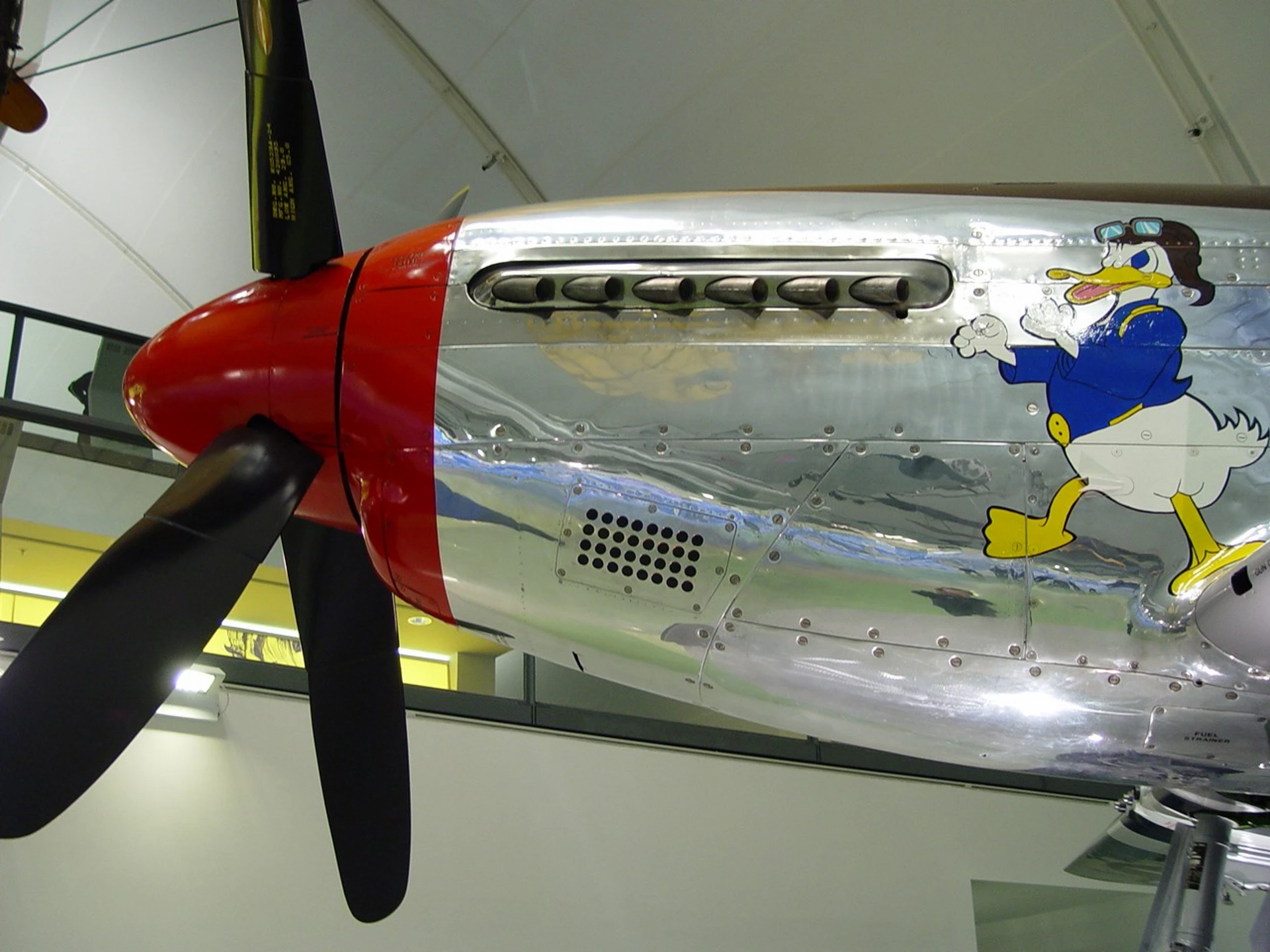
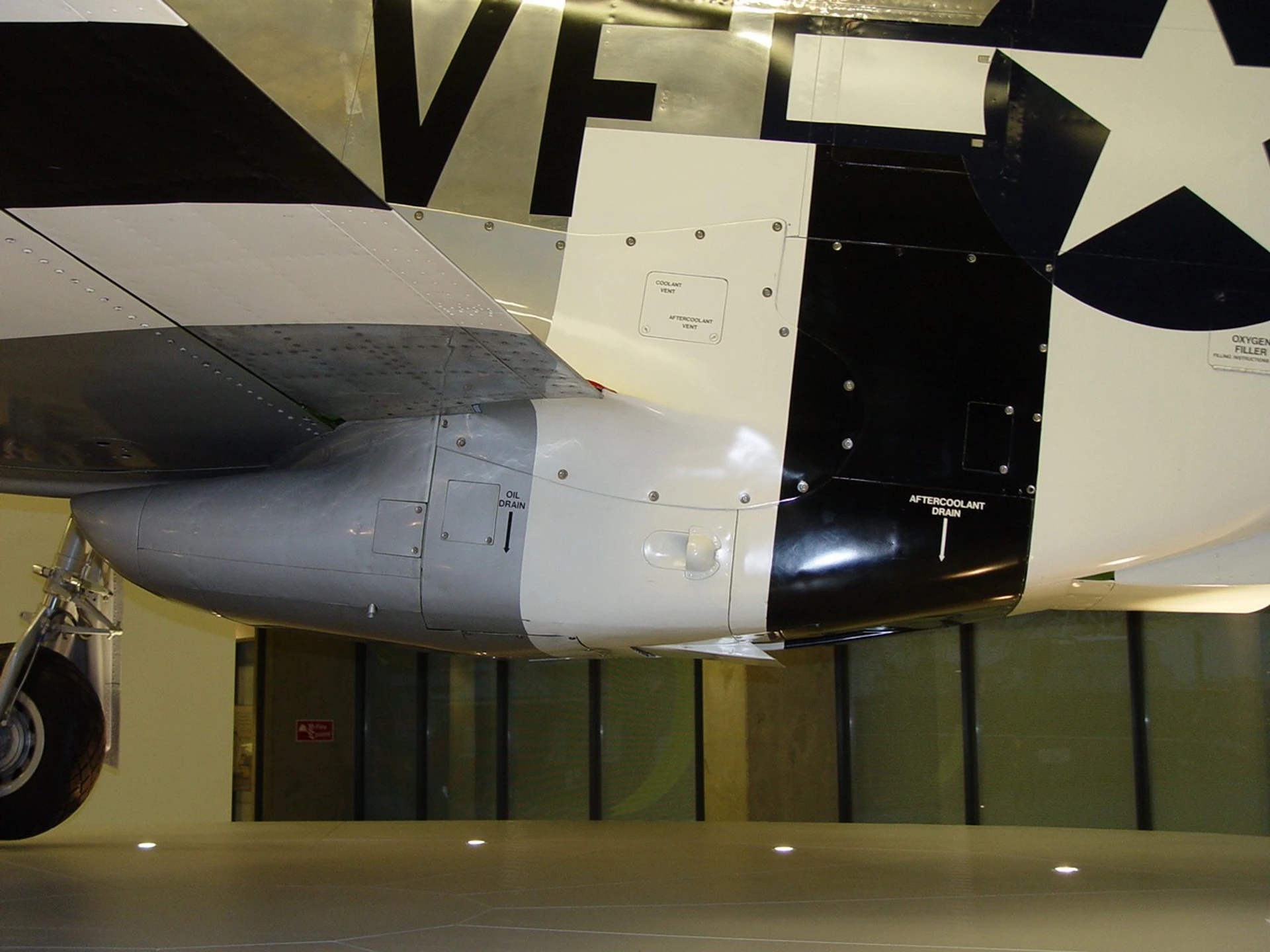
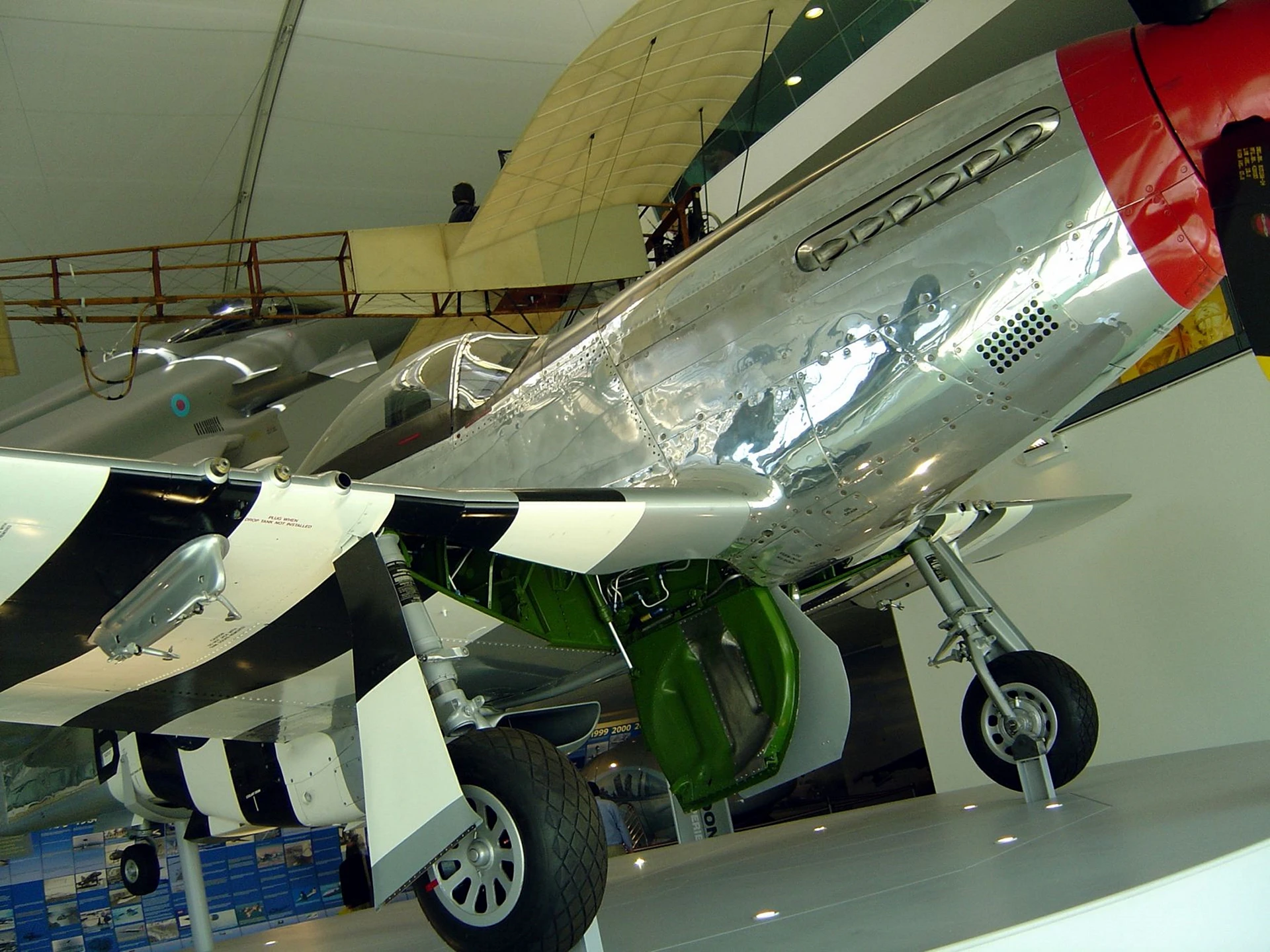
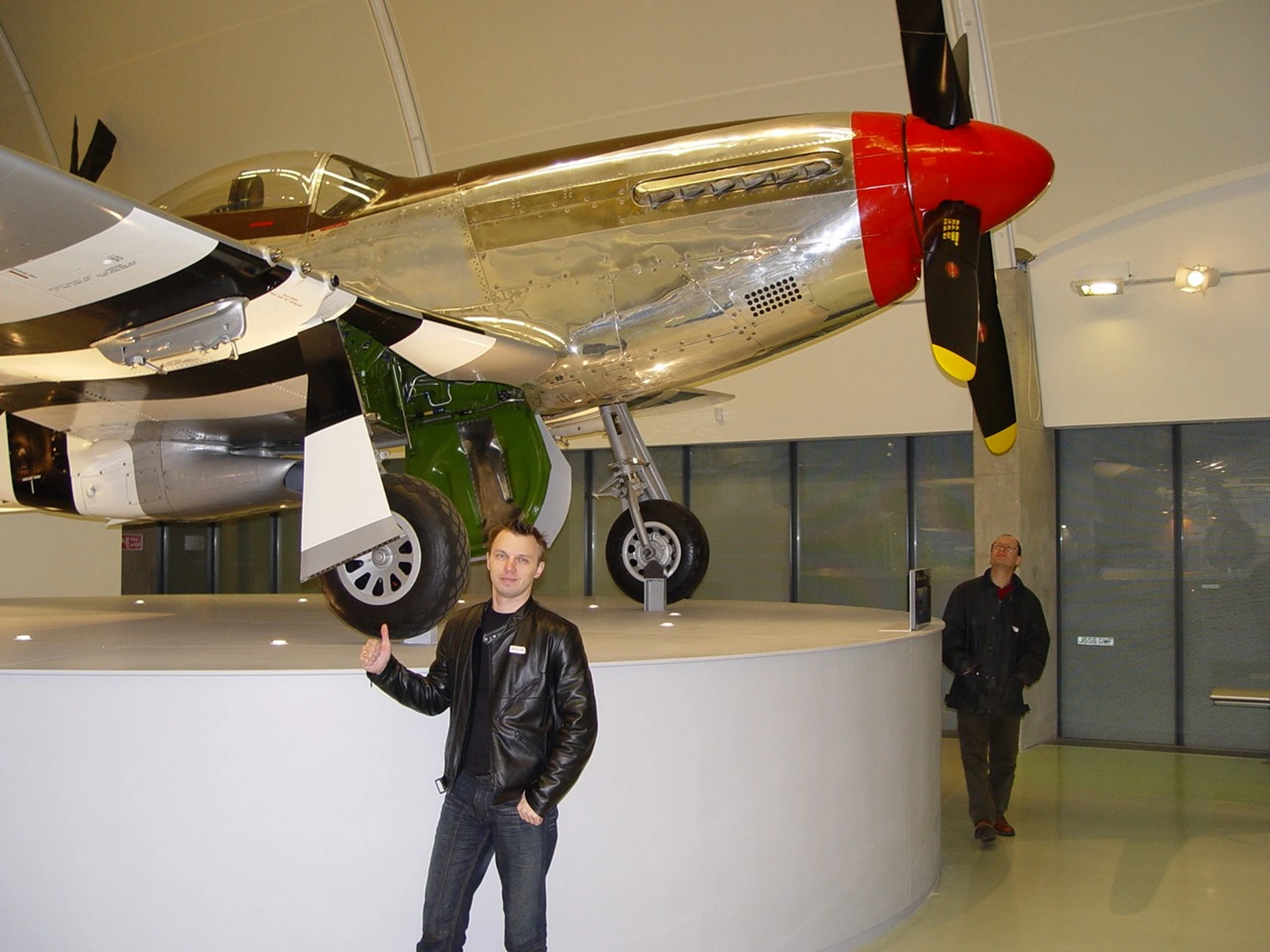
галерея фото d'un chasseur P-51D Мустанг, Le P-51 Мустанг является американский истребитель разработан североамериканской авиации, которая была использована во время Второй мировой войны. Он был разработан для удовлетворения насущной потребности в дополнительных британских истребителей в 1940 году во время битвы за Британию. Несмотря на то, что он выступает на малых высотах благодаря высокой аэродинамической утонченности, его двигатель Allison, чья система нагнетателя не очень продвинута, изначально ограничивал его использование в качестве истребителя превосходства в воздухе. После адаптации превосходного британского двигателя Rolls Royce Merlin P-51D стал самолет сопровождения Соединенных Штатов необходимо сопровождать свои большие дневные рейды стратегических бомбардировщиков над Германией. В начале 1944 года он принял решающее участие в получении превосходства в воздухе, что позволило вторжение в Европу. Это один из трех великих американских охотников Второй мировой войны по количеству, с 15586 экземпляров produced2. Его основными активами являются его скорость и, прежде всего, его очень широкий спектр действий. Многие считают его лучшим пропеллером всех времен. Название Мустанг из самолета был дан англичанами, американцы сначала назвал его Apache до принятия британского названия.
Источник: P-51D Мустанг в Википедии
| P-51D Mustang | |
|---|---|
| Фотограф | Неизвестная |
| Локализации | Неизвестная |
| Фотографии | 28 |
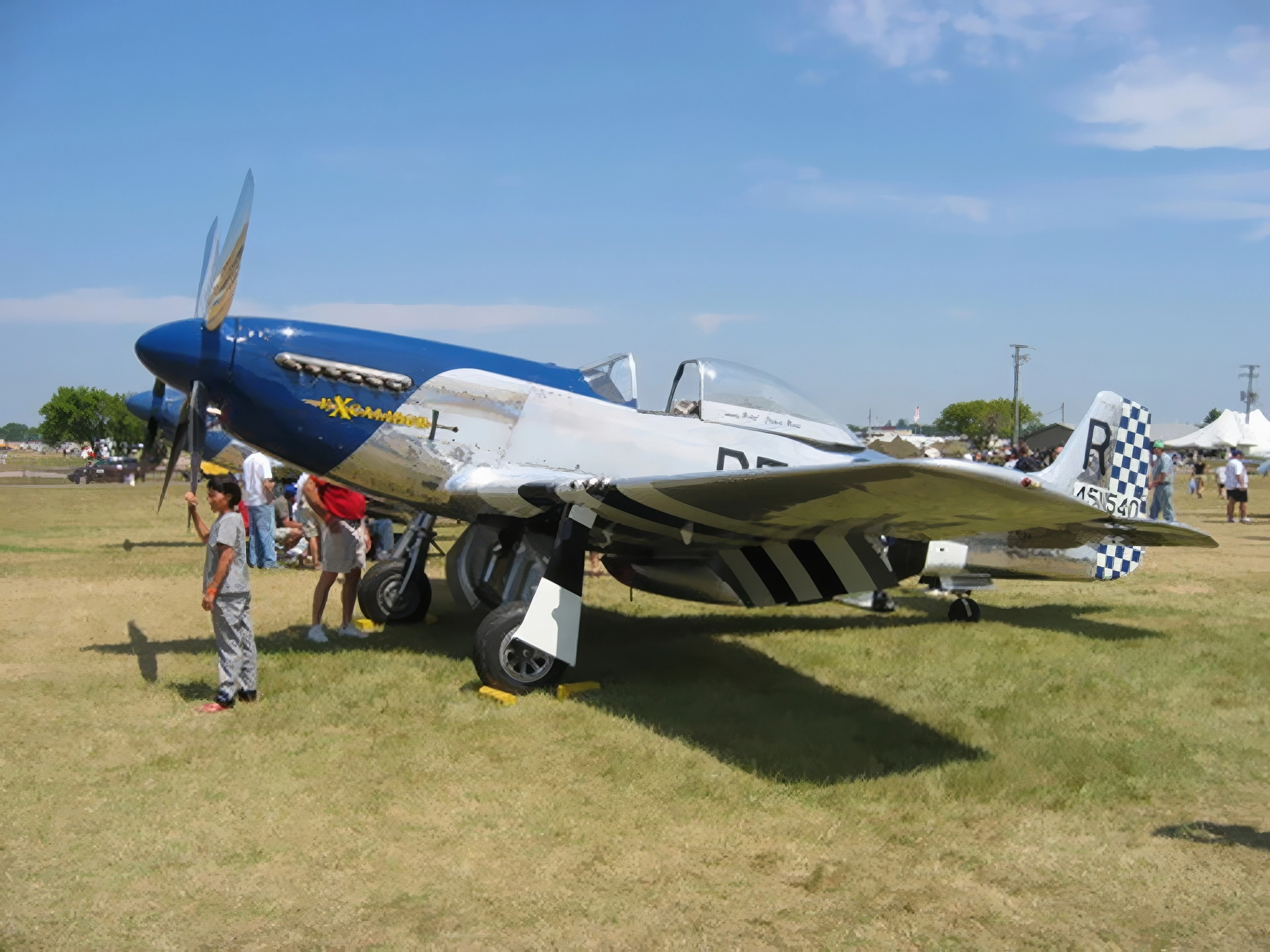
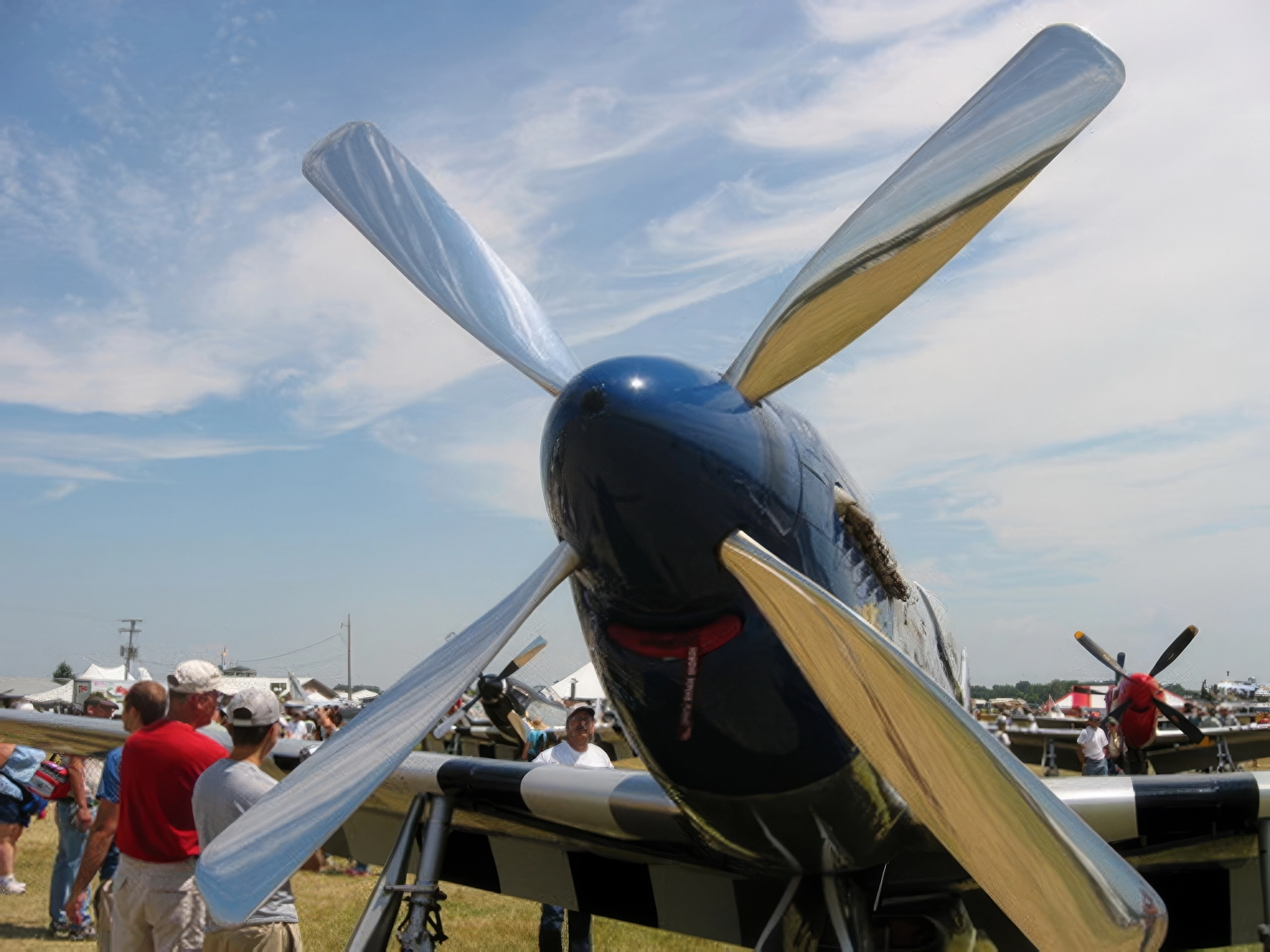
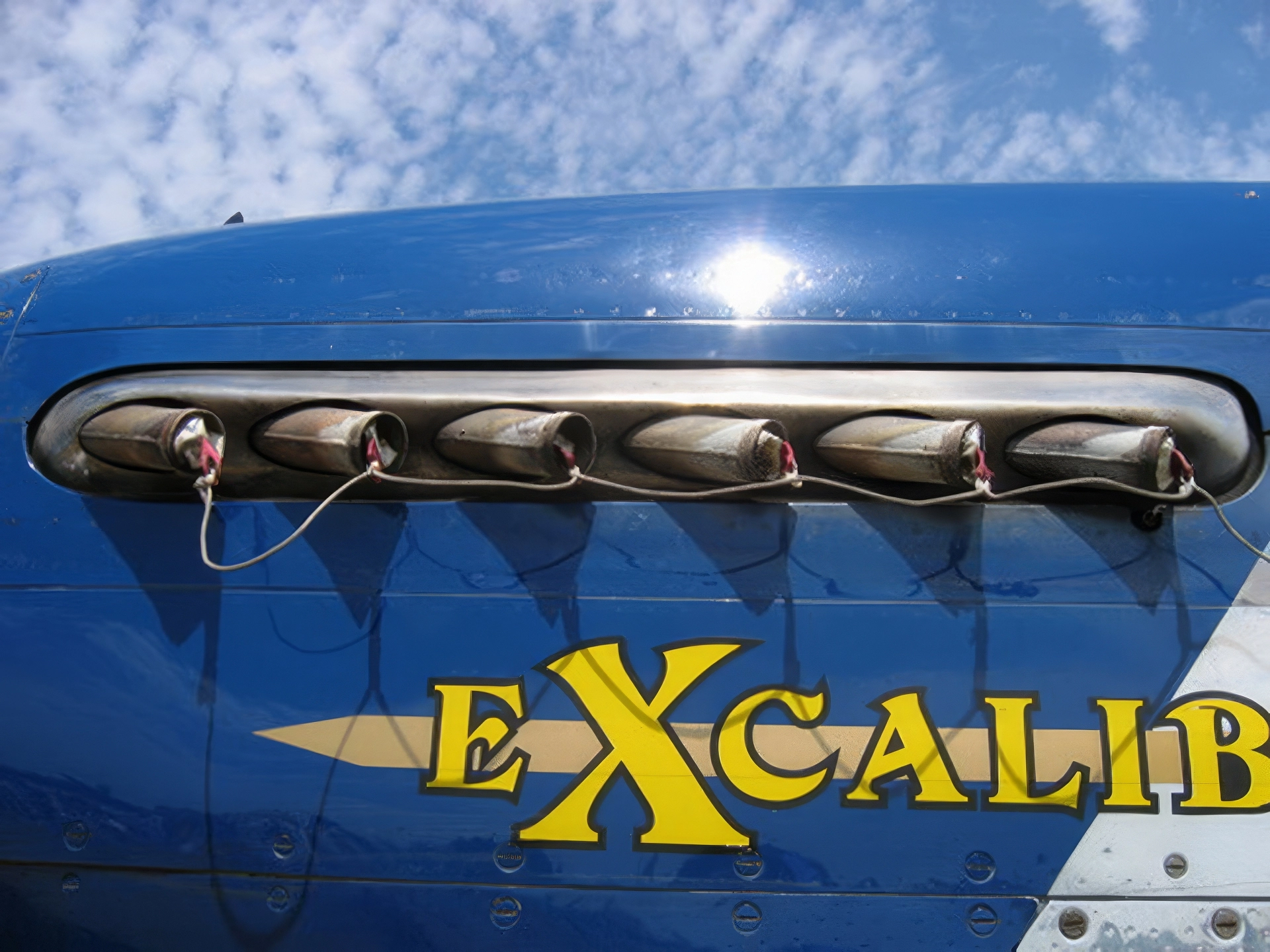
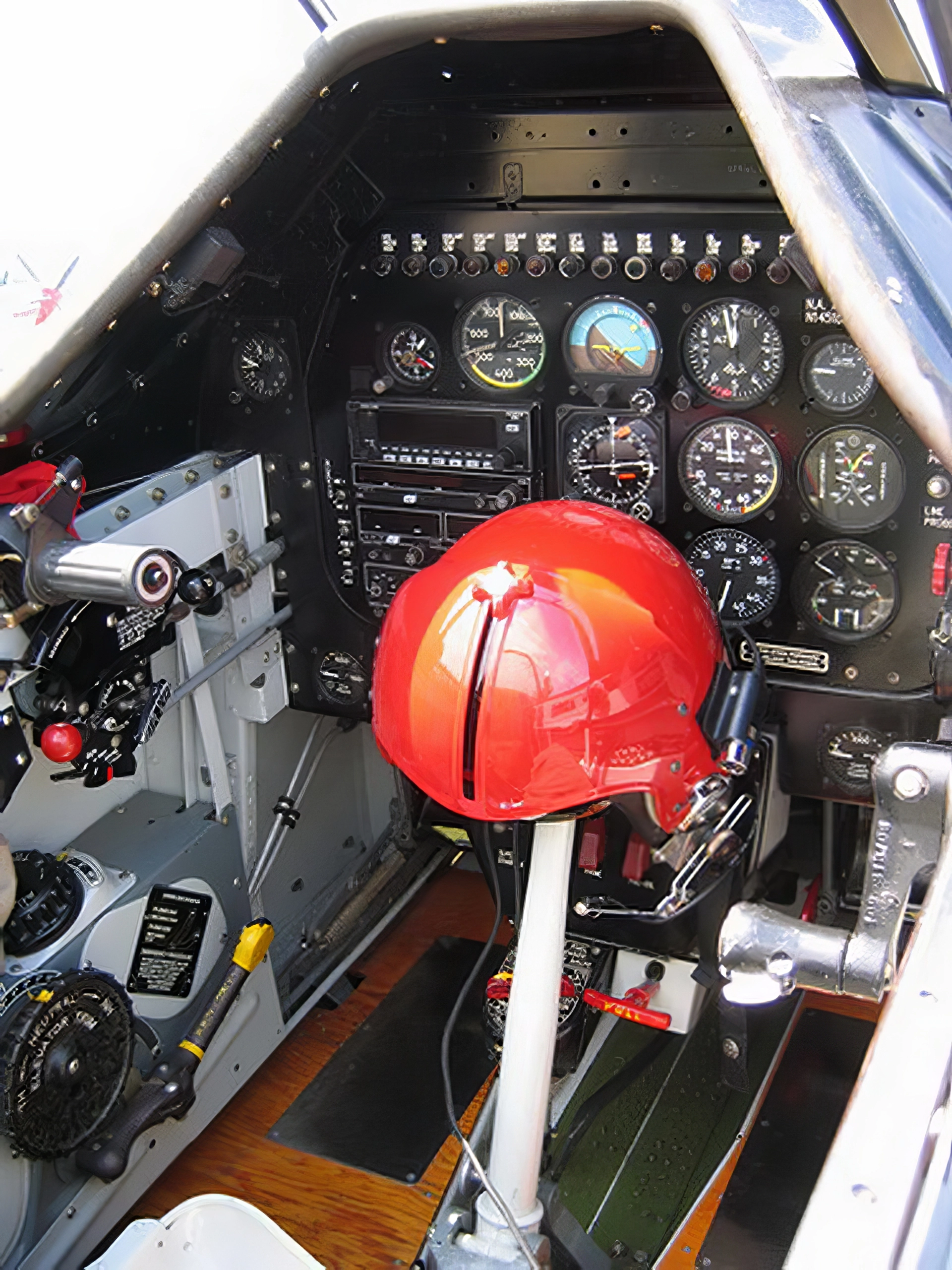
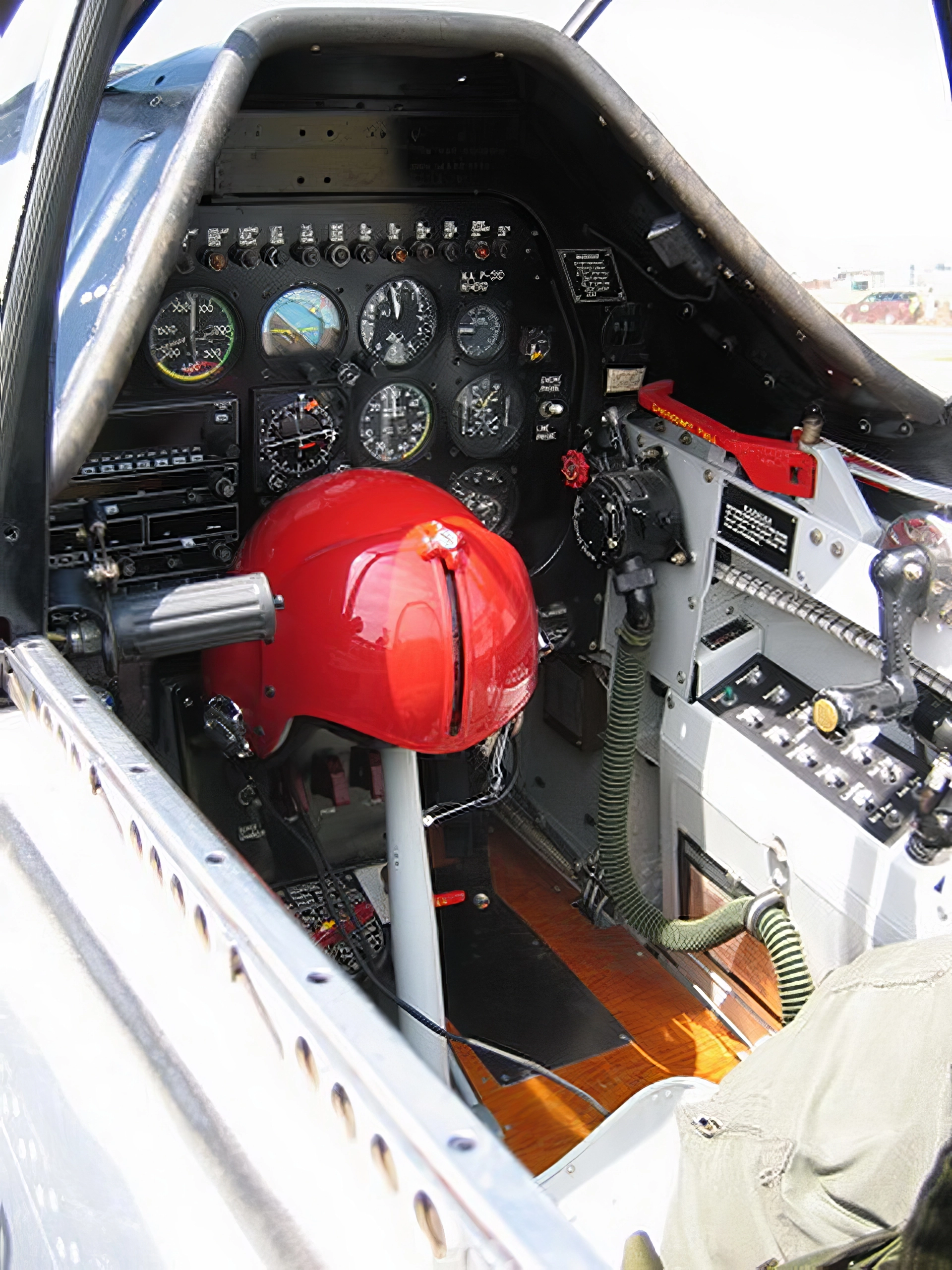
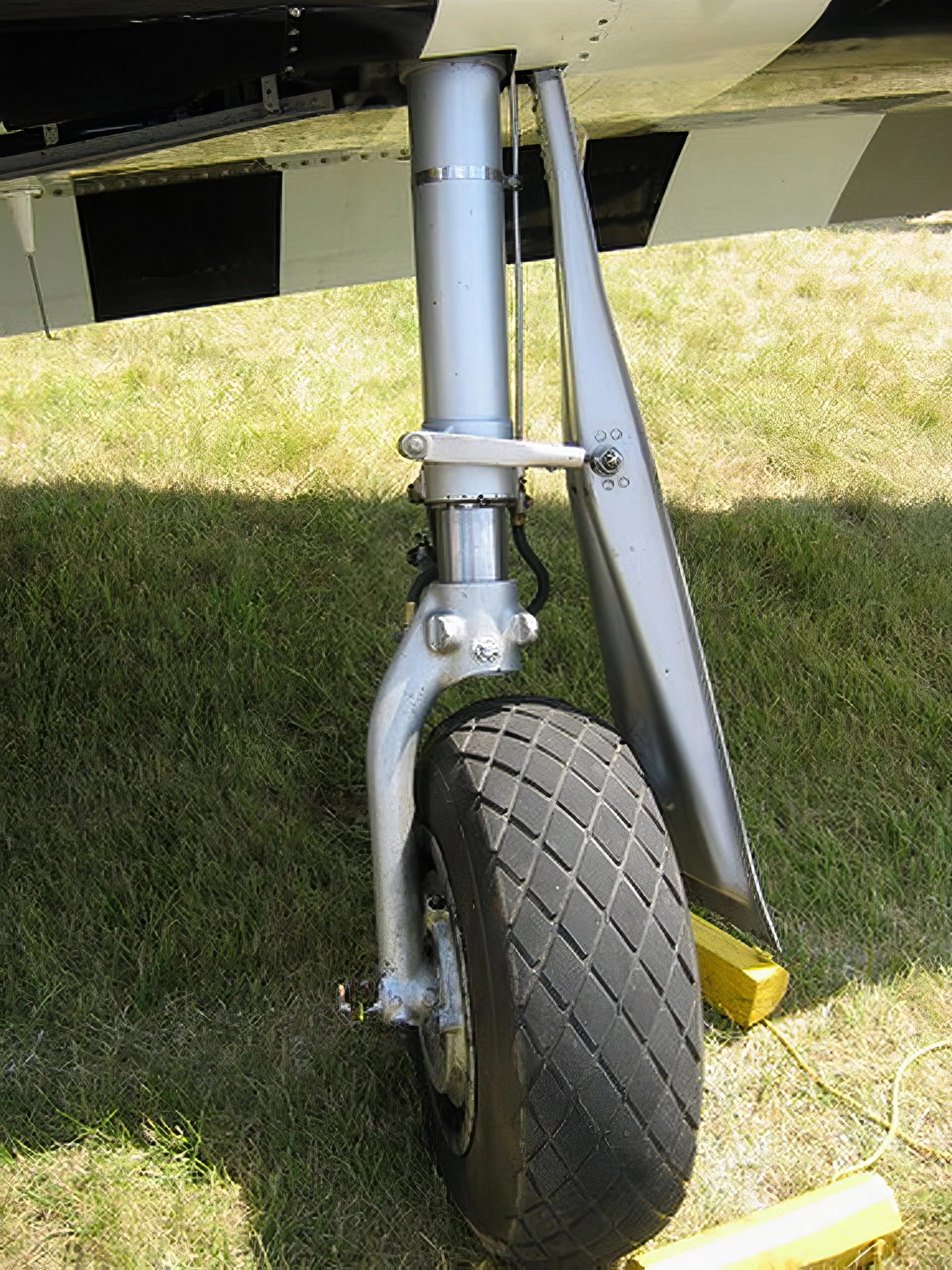
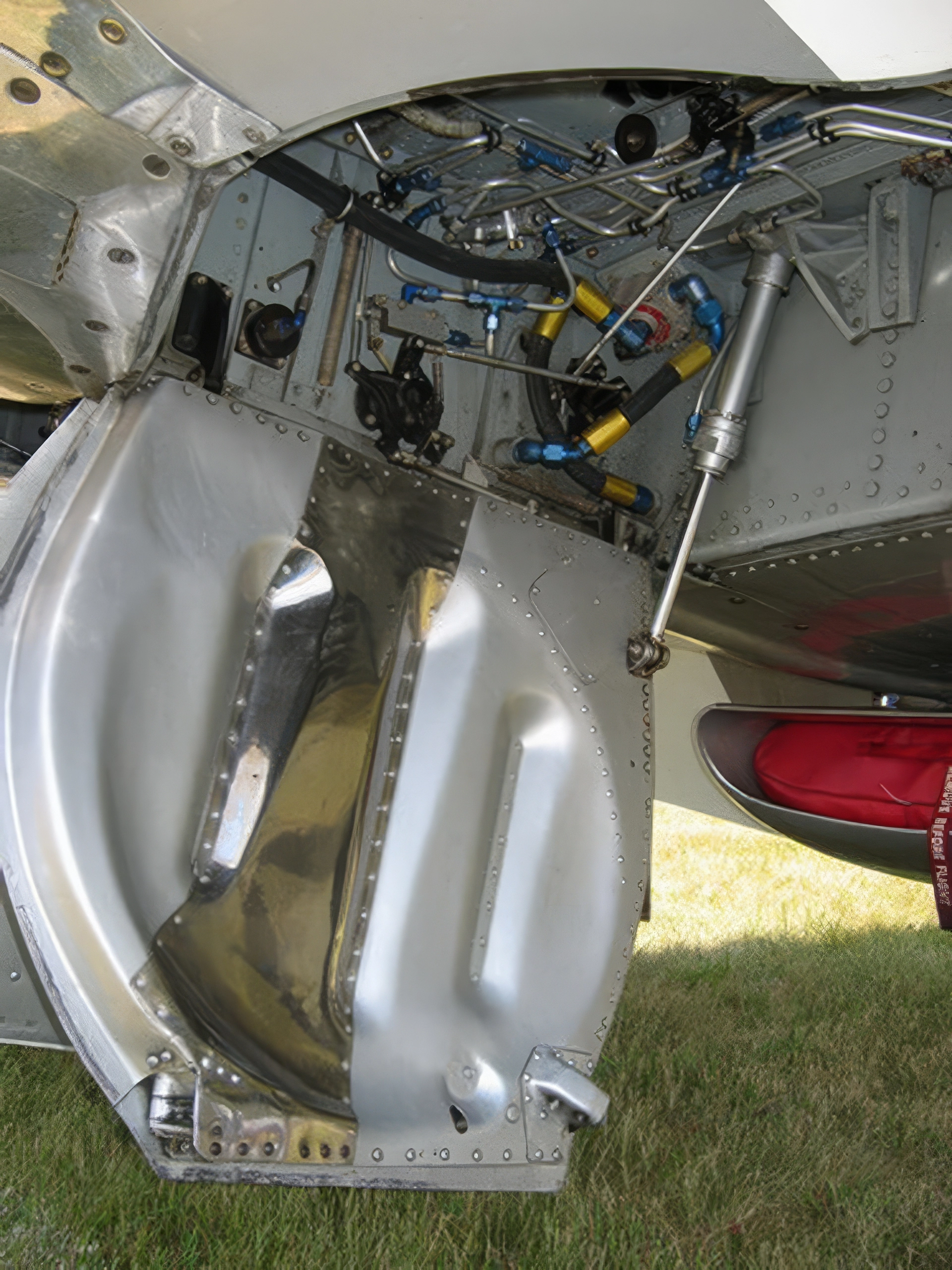
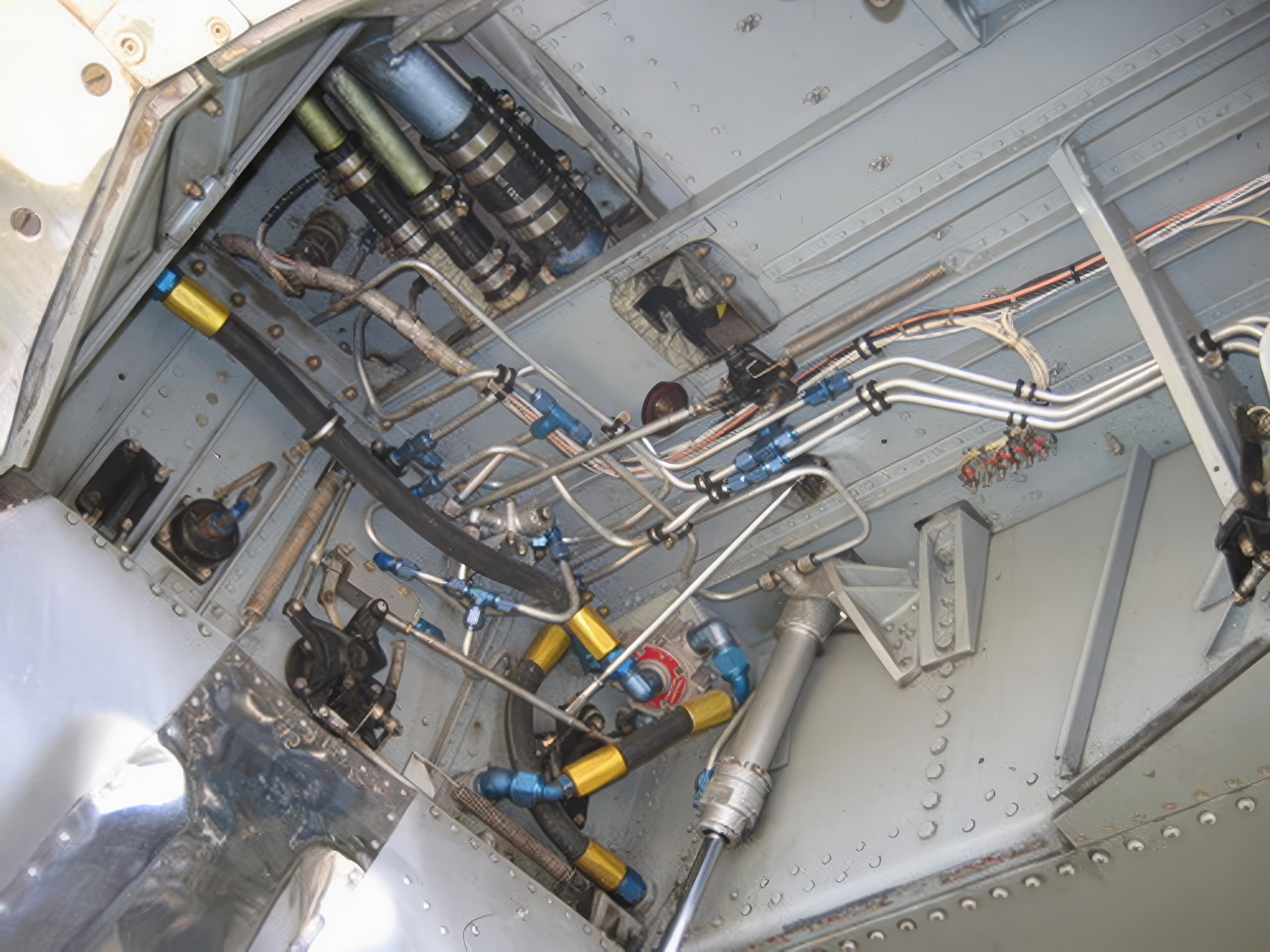
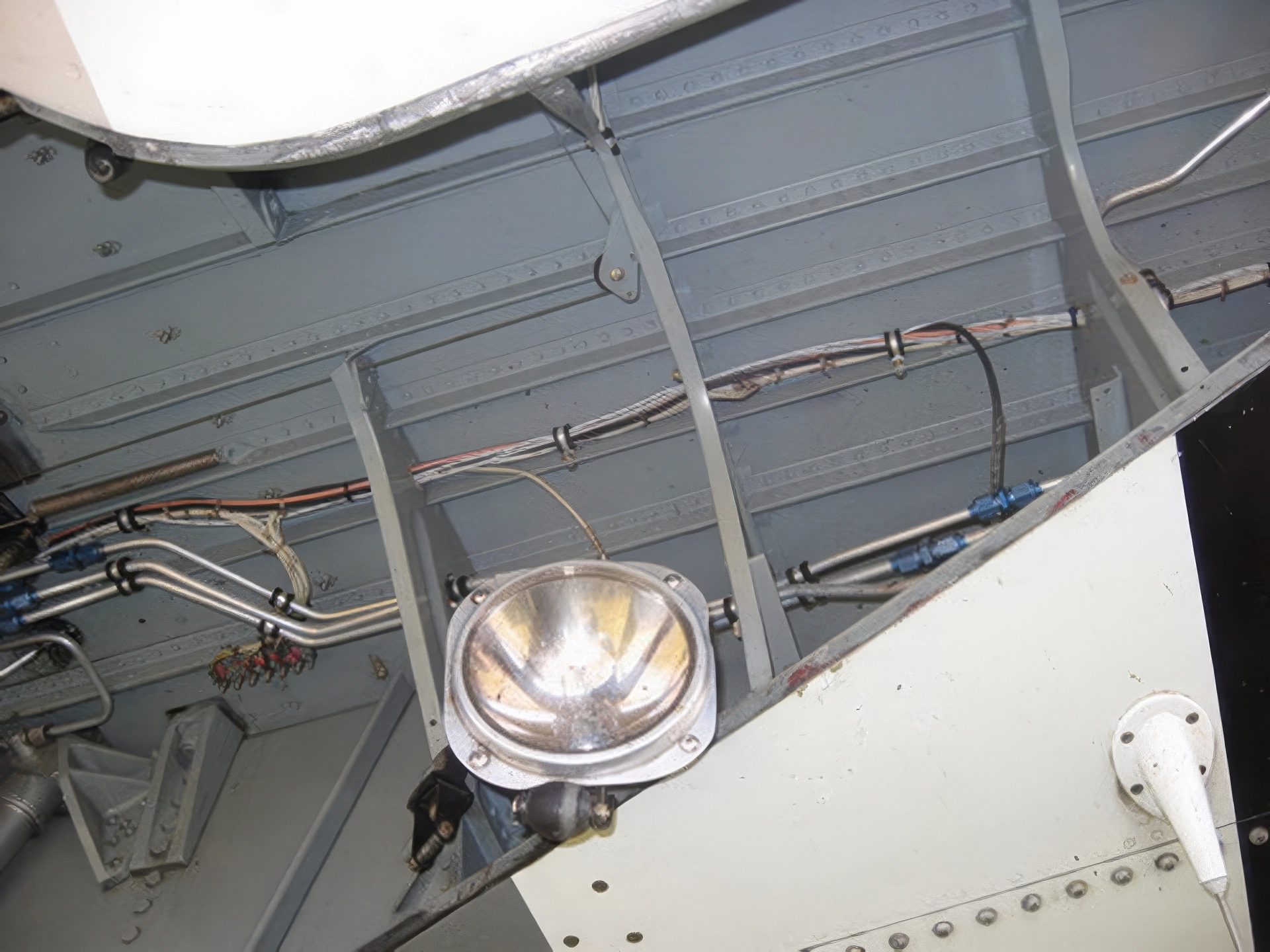

| Североамериканский P-51D Мустанг Прогулка вокруг | |
|---|---|
| Фотограф | Сергей Арчаков |
| Локализации | Королевский музей военно-воздушных сил в Хендоне |
| Фотографии | 33 |
Читайте также:


| North American P-51D Mustang Walk Around | |
|---|---|
| Фотограф | Сес Хендрикс |
| Локализации | Неизвестная |
| Фотографии | 210 |
The Sky Cleanser of Western Europe
Teh Североамериканский P-51D Мустанг is universally celebrated as one of the most influential and iconic fighter aircraft of World War II. Originally designed for a British procurement contract in record time, early models were hampered by poor high-altitude performance. However, by mating this aerodynamically advanced American airframe with the legendary British Rolls-Royce Merlin engine, engineers created an absolute masterpiece. The definitive “D” model, featuring its signature bubble canopy and heavy armament, possessed an unprecedented combination of high-speed agility and massive range. This allowed it to escort Allied heavy bombers deep into the heart of Germany, permanently breaking the back of the Luftwaffe and securing absolute air supremacy over Europe.
| Attribute | Technical Specification (P-51D Baseline) |
|---|---|
| Роль | Long-Range Escort Fighter / Fighter-Bomber |
| Экипажа | 1 (Pilot) |
| Двигателя | 1 × Packard V-1650-7 liquid-cooled V12 engine (1,490 hp baseline, up to 1,720 hp with war emergency power) |
| Максимальная скорость | 708 km/h (440 mph) at 7,600 m (25,000 ft) |
| Combat Range | ~1,525 km (950 miles) internal fuel; up to 2,655 km (1,650 miles) with external drop tanks |
| Service Ceiling | 12,800 m (41,900 ft) |
| Primary Armament | 6 × .50 caliber (12.7mm) AN/M2 Browning heavy machine guns (Mounted inside the wings) |
| Ordnance Capacity | Up to 2 × 1,000 lb bombs OR 6 to 10 × 5-inch High Velocity Aircraft Rockets (HVAR) |
Design Engineering: Laminar Flow and Packard-Merlin Integration
- Revolutionary Laminar Flow Wing: The Mustang was the first production aircraft to utilize a laminar flow wing. Designed with its thickest point much further back than traditional wings, this geometry dramatically reduced aerodynamic drag by maintaining a smooth, non-turbulent boundary layer of air across the wing surface. This fundamental breakthrough allowed the Mustang to achieve incredible speeds even with lower-horsepower early engines.
- The Meredith Effect Radiator: To cool its massive V12 engine without creating a massive aerodynamic penalty, engineers placed the radiator under the rear fuselage inside a specialized aerodynamic duct. The heat generated by the radiator expanded the incoming air before it exited a rear flap, creating a small amount of jet-like physical thrust. This phenomenon, known as the Meredith Effect, effectively neutralized the cooling system’s drag.
- The Packard V-1650 Transmutation: The Mustang’s transformation from an average low-altitude plane into a world-class interceptor came when the US built the Rolls-Royce Merlin under license as the Packard V-1650. Equipped with a two-stage, two-speed supercharger, this engine delivered massive horsepower at high altitudes, perfectly matching the Mustang’s clean airframe design.
- The Bubble Canopy and Gun Realignment: The P-51D variant introduced a fully transparent, molded plastic bubble canopy that eliminated the heavy framing and blind spots of earlier versions, granting pilots unmatched 360-degree battlefield vision. Additionally, engineers redesigned the internal wing structure to mount six .50 caliber machine guns vertically, solving the chronic gun-jamming issues that plagued the angled mountings of earlier P-51B variants.
Operational History: Escorting the Fortresses and the Great Jet Intercepts
- Saving the Eighth Air Force: By late 1943, Allied heavy bomber raids into Germany were suffering unsustainable losses from Luftwaffe fighters because escort planes lacked the range to defend them the entire way. The arrival of the P-51D changed the war entirely; fitted with cheap, paper-mache external drop tanks, Mustang squadrons could escort B-17 and B-24 bombers all the way to Berlin and back, aggressively hunting down interceptors before they could strike the bomber formations.
- Unleashing “Ultimate Pursuit” Tactics: General Jimmy Doolittle ordered Mustang pilots to stop flying in tight defensive formations with the bombers and instead cut them loose to aggressively hunt German airfields. Mustangs began strafing Luftwaffe planes on the ground, destroying Germany’s highly trained pilot pool and grinding their fuel infrastructure to absolute zero.
- Duels Against the First Jets: As Germany deployed the revolutionary twin-jet Messerschmitt Me 262, P-51D pilots adapted their tactics to counter the jet’s immense speed advantage. By diving from high altitudes to gain speed or ambushing the fuel-hungry jets as they slowed down to land at their airfields, Mustang pilots successfully destroyed dozens of the high-tech German jet fighters.
- The Global Afterlife: Following WWII, the Mustang served as a vital frontline asset during the Korean War, primarily acting as a rugged, low-level ground-attack fighter-bomber throwing down rockets and napalm. The design was so incredibly sound that it remained in active military service with international air forces well into the 1980s, eventually transitioning into the hands of civilian racers to become the ultimate kings of unlimited air racing.
Views : 12216
Вы также можете увидеть:
 Northrop Tacit Blue — Фото и видео
 Lockheed P-80 Shooting Star — фото и видео
 Болл-Барто Джетвинг – Фото и Видео
 Дуглас Уорлд Крузер – Фото и Видео
 Kellett K-2 – Фото и видео
 Travel Air 2000 – Фото и Видео
 Saab 21R – Фото и Видео
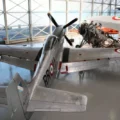 P-51D-25-NA Мустанг - Прогулка вокруг
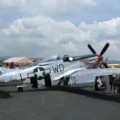 P-51D Мустанг vol2 - Прогулка вокруг
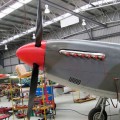 P-51 Мустанг vol2 - Прогулка вокруг