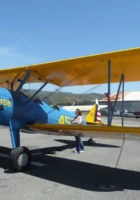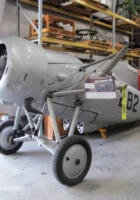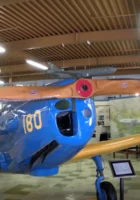
Fairchild PT-19A Cornell

Fairchild PT-19A Cornell

KrajuStany Zjednoczone Ameryki
TypuWojskowy samolot szkoleniowy
ZdjęcieRandy Ray
ZlokalizujMuzeum Bazy Sił Powietrznych Travis
OpisAlbum 59 zdjęcia spaceru po «Fairchild PT-19A Cornell»

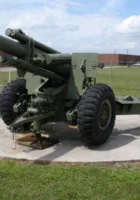
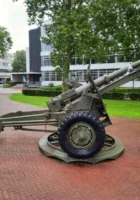
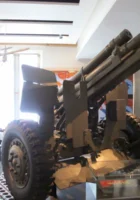
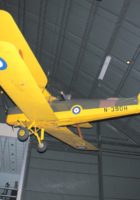
Galeria zdjęć Fairchild PT-19A Cornell, The Fairchild PT-19 (company designation Fairchild M62) is an American Fairchild Aircraft monoplane primary trainer aircraft that served with the United States Army Air Forces, RAF and RCAF during World War II. It was a contemporary of the Kaydet biplane trainer and was used by the USAAF during Primary Flying Training as the introductory pre-solo phase trainer for introducing new pilots to flying before passing them on to the more agile Kaydet. As with other USAAF trainers of the period, the PT-19 had multiple designations based on the powerplant installed.

Źródła: Fairchild PT-19A Cornell na Wiki

Czytaj dalej

Wyświetleń: 2516

Stearman PT-13D Kaydet

Stearman PT-13D Kaydet

KrajuStany Zjednoczone Ameryki
TypuWojskowy samolot szkoleniowy

Galeria zdjęć Stearman PT-13D Kaydet, The Stearman (Boeing) Model 75 is a biplane used as a military trainer aircraft, of which at least 10,626 were built in the United States during the 1930s and 1940s. Stearman Aircraft became a subsidiary of Boeing in 1934. Widely known as the Stearman, Boeing Stearman or Kaydet, it served as a primary trainer for the United States Army Air Forces, the United States Navy (as the NS & N2S), and with the Royal Canadian Air Force as the Kaydet throughout World War II. After the conflict was over, thousands of surplus aircraft were sold on the civilian market. In the immediate postwar years they became popular as crop dusters, sports planes, and for aerobatic and wing walking use in air shows.

Źródła: Stearman PT-13D Kaydet na Wiki

Czytaj dalej

Views : 4942

Polikarpow Po-2

Polikarpow Po-2

KrajuRadzieckiego
TypuDwupłatowiec ogólnego przeznaczenia
ZdjęcieWładimir Yakubov
ZlokalizujFantazja lotu, Polk City
OpisAlbum 83 zdjęcia spacer wokół «Polikarpov Po-2»

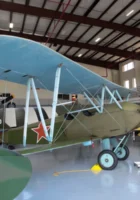
Galeria zdjęć Polikarpow Po-2, The Polikarpov Po-2 (also U-2) served as a general-purpose Soviet biplane, nicknamed Kukuruznik (Russian: Кукурузник, from Russian “kukuruza” (кукуруза) for maize; thus, “maize duster” or “crop duster”), NATO reporting name “Mule”. The reliable, uncomplicated concept of the Po-2’s design made it an ideal training aircraft, as well as doubling as a low-cost ground attack, aerial reconnaissance, psychological warfare and liaison aircraft during war, proved to be one of the most versatile light combat types to be built in the Soviet Union. As of 1978 it remained in production for a longer period of time than any other Soviet-era aircraft. It is one of the most produced aircraft, and may be the most produced biplane with production possibly as high as 30,000 Po-2s built between 1928 and 1959.However, production figures for Polikarpov U-2 and Po-2 bombers and trainers combined are between 20,000 and 30,000. with production ending as early as 1952.

Źródła: Polikarpov Po-2 na Wiki

Czytaj dalej

Liczba wyświetleń : 8668

Fouga Magister

Fouga Magister C.M.170

KrajuFrancja
TypuDwumiejscowy trenażer odrzutowy
Pierwszy lot23 lipca 1952
Zbudowany929

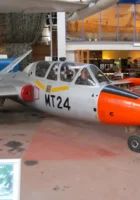
Tthe Fouga CM.170 Magister is a 1950s French two-seat jet trainer. The related CM.175 Zéphyr was a carrier-capable version for the French Navy. In 1948, development commenced at Fouga on a new primary trainer aircraft design that harnessed newly developed jet propulsion technology. The initial design was evaluated by the French Air Force (Armée de l’Air, AdA) and, in response to its determination that the aircraft lacked sufficient power for its requirements, was enlarged and adopted a pair of Turbomeca Marboré turbojet engines. First flying on 23 July 1952, the first production order for the type was received on 13 January 1954. In addition, the related CM.175 Zéphyr was a carrier-capable version developed and produced for the French Navy.

Źródła: Fouga Magister C.M.170 na Wiki

Czytaj dalej

Liczba wyświetleń : 5587

Supermarine Spitfire MK. Xiv

Supermarine Spitfire MK. Xiv

KrajuUk
RoliSamoloty myśliwskie
Pierwszy lot27 listopada 1941
Produkowane1942–48

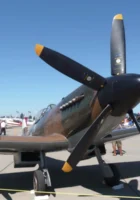
Tthe Supermarine Spitfire to brytyjski jednomiejscowy samolot myśliwski, który był używany przez Królewskie Siły Powietrzne i wiele innych krajów alianckich przed, w trakcie i po II wojnie światowej. Spitfire został zbudowany w wielu wariantach, przy użyciu kilku konfiguracji skrzydeł i był produkowany w większej liczbie niż jakikolwiek inny brytyjski samolot. Był to również jedyny brytyjski myśliwiec, który był w ciągłej produkcji przez całą wojnę. Spitfire nadal jest popularny wśród entuzjastów, a około 54 Spitfire'ów jest zdatnych do żeglugi, podczas gdy wiele innych to statyczne eksponaty w muzeach lotnictwa na całym świecie.

Źródła: Supermarine Spitfire MK. XIV na Wiki

Czytaj dalej

Liczba wyświetleń : 11767

Us 155mm M1A1 Haubica

Us 155mm M1A1 Haubica

KrajuStany Zjednoczone Ameryki
TypuHaubica
ZdjęcieRandy J Ray
ZlokalizujMuzeum Wojskowe Motts
OpisAlbum 49 zdjęcia spacer po «US 155mm M1A1 Howitzer»

Galeria zdjęć Us 155mm M1A1 Haubica, The M114 155 mm howitzer was a towed howitzer developed and used by the United States Army. It was first produced in 1942 as a medium artillery piece under the designation of 155 mm Howitzer M1. It saw service with the US Army during World War II, the Korean War, and the Vietnam War, before being replaced by the M198 howitzer.

Źródła: Amerykańska haubica 155 mm M1A1 na Wiki

Czytaj dalej

Liczba wyświetleń : 4398

QF Mk.III

Pistolet polowy QF 25pdr Mark II

KrajuUk
TypuHaubica
W eksploatacjiod 1940 do chwili obecnej

Galeria zdjęć Pistolet polowy QF 25pdr Mark II, The Ordnance QF 25-pounder, or more simply 25-pounder or 25-pdr, was the major British field gun and howitzer during World War II. It was introduced into service just before the war started, combining high-angle and direct-fire, relatively high rates of fire, and a reasonably lethal shell in a highly mobile piece. It remained the British Army’s primary artillery field piece well into the 1960s, with smaller numbers serving in training units until the 1980s. Many Commonwealth of Nations countries used theirs in active or reserve service until about the 1970s and ammunition for the weapon is currently being produced by Pakistan Ordnance Fac. Znak II: zamontowany w wagonie Mark I był standardowym działem podczas II wojny światowej. Zostały zbudowane w Australii i Kanadzie, ale głównie w Wielkiej Brytanii. Dostawy (z produkcji brytyjskiej) rozpoczęły się na początku 1940 roku i po raz pierwszy weszły do służby w kanadyjskim pułku stacjonującym w Wielkiej Brytanii w maju 1940 roku. We Francji nie zaginął żaden Ordnance 25-pr Mk 2 na carriage 25-pr Mark 1. To działo wystrzeliło wszystkie ładunki, 1 – 3 i Super. W 1942 roku do działa zamontowano hamulec wylotowy, aby wyeliminować niestabilność spowodowaną wystrzałem pociskiem 20 lb AP z Charge Super pod bezpośrednim ogniem pod niskimi kątami wysokości. Aby zachować równowagę działa na czopach, zamontowano również ciężar przeciwwagi, tuż przed pierścieniem zamka. Oznaczenie zmodyfikowanego działa nie zostało zmienione. Ostatecznie wszystkie działa służące w Europie zostały tak nawrócone.

Źródła: QF 25pdr Mark II Field Gun na Wiki

Czytaj dalej

Liczba wyświetleń : 4318

Us 105mm M2A2 Pistolet polowy

Us 105mm M2A2 Pistolet polowy

KrajuStany Zjednoczone Ameryki
TypuHaubica
ZdjęcieWładimir Yakubov
ZlokalizujMusée de l'Armée, Paryż
OpisAlbum 66 zdjęcia z objazdu «US 105mm M2A2 Field Gun»

Galeria zdjęć Us 105mm M2A2 Pistolet polowy, The 105 mm M2A1 (M101A1) howitzer was a howitzer developed and used by the United States. It was the standard U.S. light field howitzer in World War II and saw action in both the European and Pacific theaters. Entering production in 1941, it quickly gained a reputation for accuracy and a powerful punch. The M101A1 fired 105-millimetre (4.1 in) high explosive (HE) semi-fixed ammunition and had a range of 11,270 metres (12,330 yd), making it suitable for supporting infantry. Zobacz materiał M2A2 : Zmodyfikowana tarcza

Źródła: Amerykańskie działo polowe M2A2 105 mm na Wiki

Czytaj dalej

Liczba wyświetleń : 3539

de Havilland DH.82 Ćma tygrysa

de Havilland DH.82 Tiger Moth

KrajuUk
RoliTrener
Pierwsza mucha26 października 1931 r.
Zbudowany8868

Tthe de Havilland DH.82 Ćma tygrysa Jest dwupłatowiec z lat 30-tych zaprojektowany przez Geoffreya de Havillanda i był obsługiwany przez Royal Air Force (RAF) i innych jako podstawowy trener. Tiger Moth pozostał w służbie w RAF aż do zastąpienia przez de Havilland Chipmunk w 1952 roku, kiedy wiele nadwyżki samolotów wszedł do operacji cywilnej. Wiele innych narodów używane Tiger Moth zarówno w zastosowaniach wojskowych i cywilnych, i pozostaje w powszechnym użyciu jako samolot rekreacyjny w wielu krajach. Jest on nadal od czasu do czasu używany jako podstawowy samolot szkoleniowy, szczególnie dla tych pilotów, którzy chcą zdobyć doświadczenie przed przejściem do innych samolotów tylnego koła. Wiele z nich jest obecnie zatrudnionych przez różne firmy oferujące doświadczenia z lekcji próbnych. Klub de Havilland Moth założony w 1975 roku jest obecnie stowarzyszeniem właścicieli oferującym wspólny klub i wsparcie techniczne.

Źródła: de Havilland DH.82 Tiger Moth na Wiki

Czytaj dalej

Views : 6421

Dewoityna D.26

Dewoityna D.26

KrajuFrancja – Szwajcaria
TypuSamoloty treningowe
ZdjęcieWładimir Yakubov
ZlokalizujFantazja lotu, Polk City
OpisAlbum 80 zdjęcia spacer po «Dewoitine D.26»

Galeria zdjęć Dewoityna D.26, The Dewoitine D.26 was a military trainer developed in France for the Swiss Air Force in parallel with the D.27 fighter. The D.26 airframe was similar to that of the D.27. Differences included: The engine cowling was omitted on the D.26; The D.26 radial engine was smaller and produced less power; The D.26 was not equipped with provision for armament.

Źródła: Dewoitine D.26 na Wiki

Czytaj dalej

Liczba wyświetleń : 2784