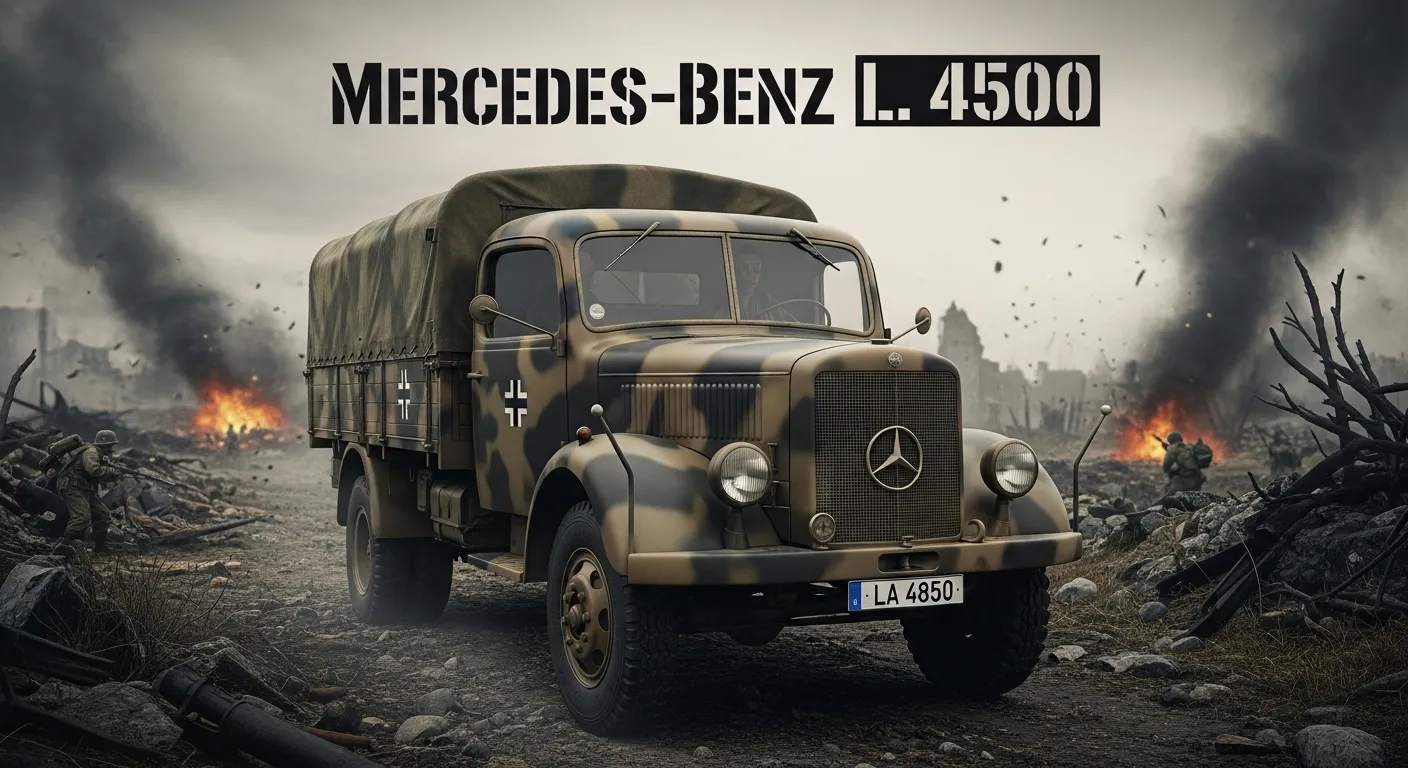
Mercedes-Benz L 4500 | |
|---|---|
| Country | Germany |
| Type | Truck |
| Production | 1939 – 1945 |
| Built | Unknow |
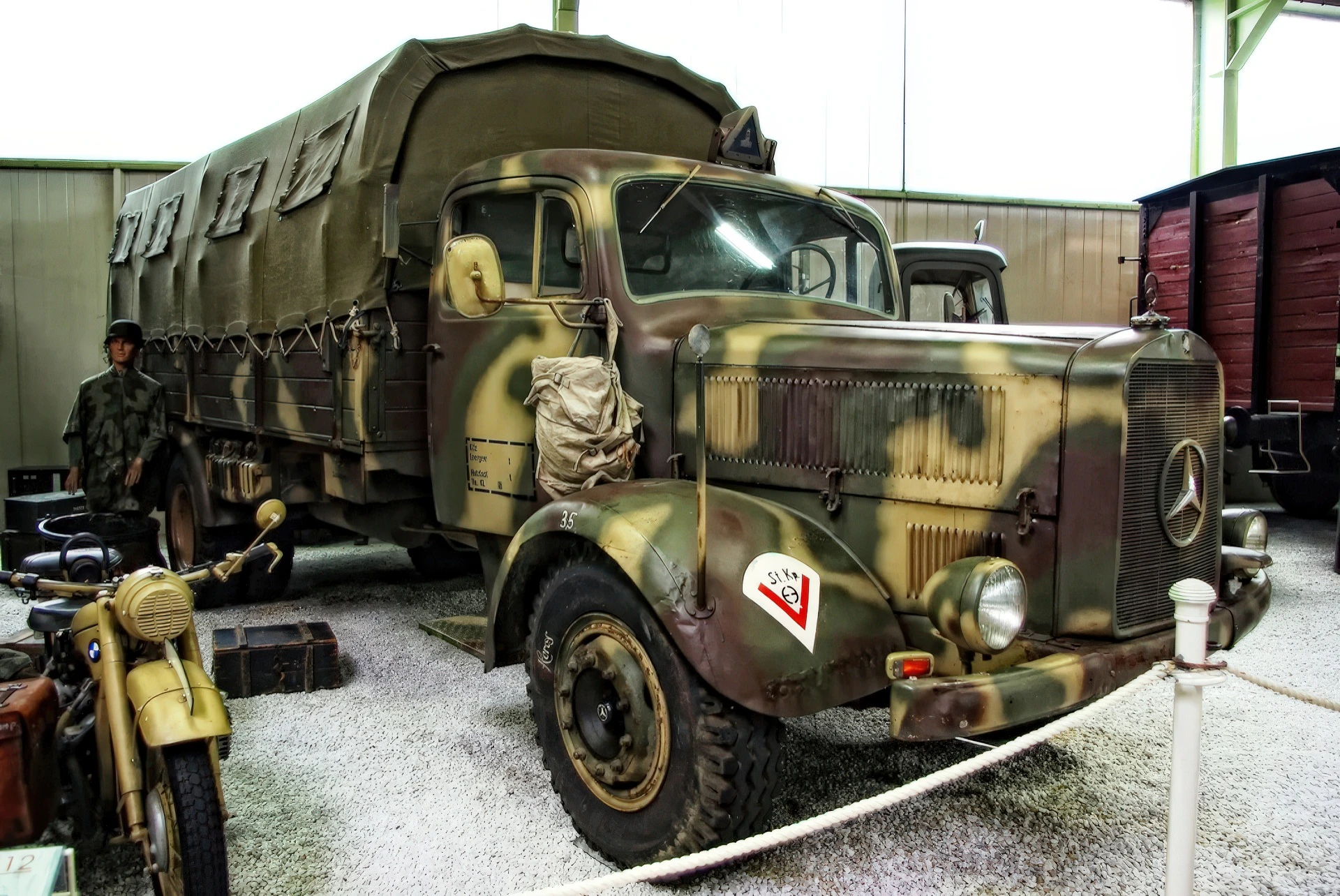
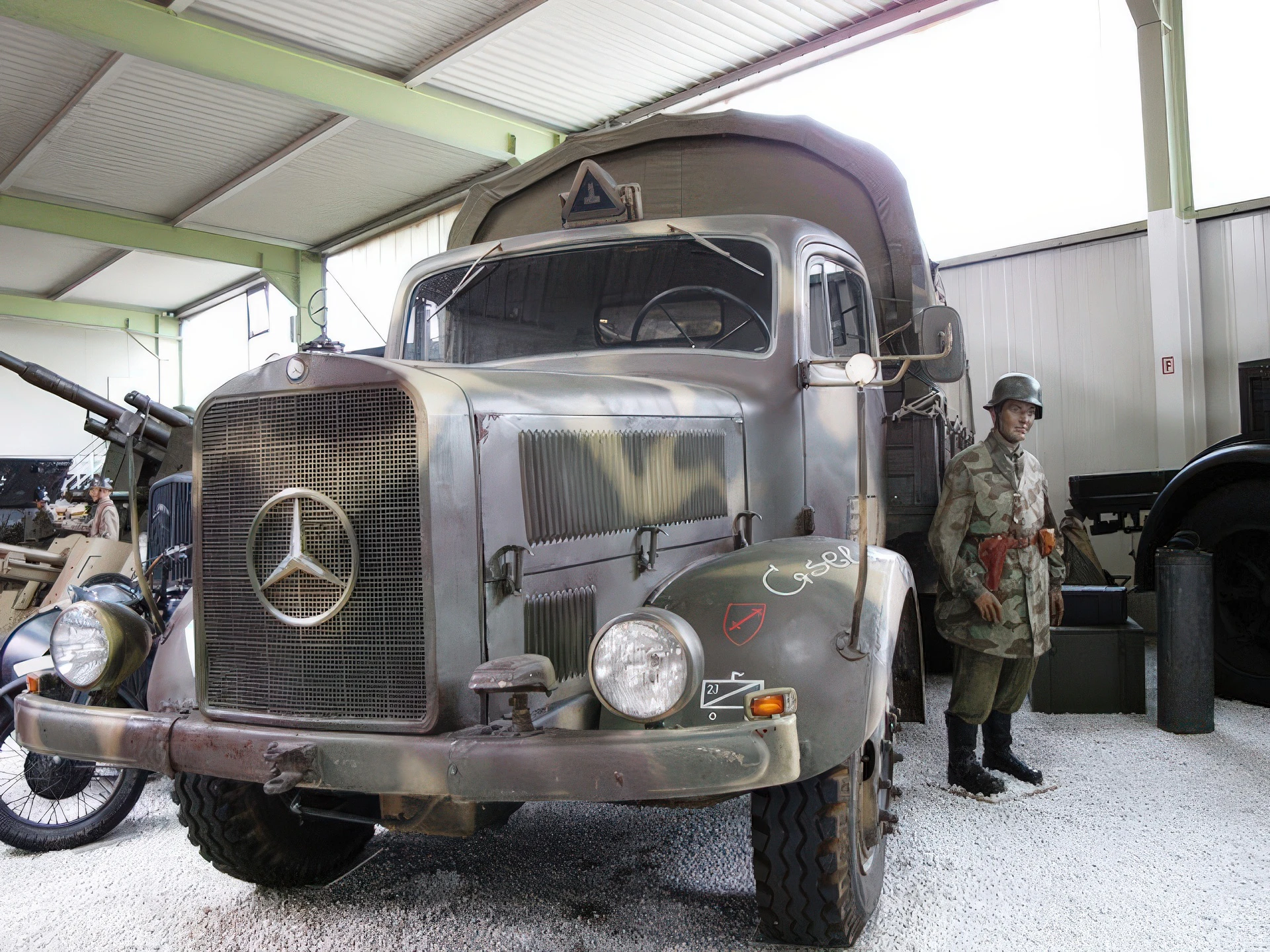
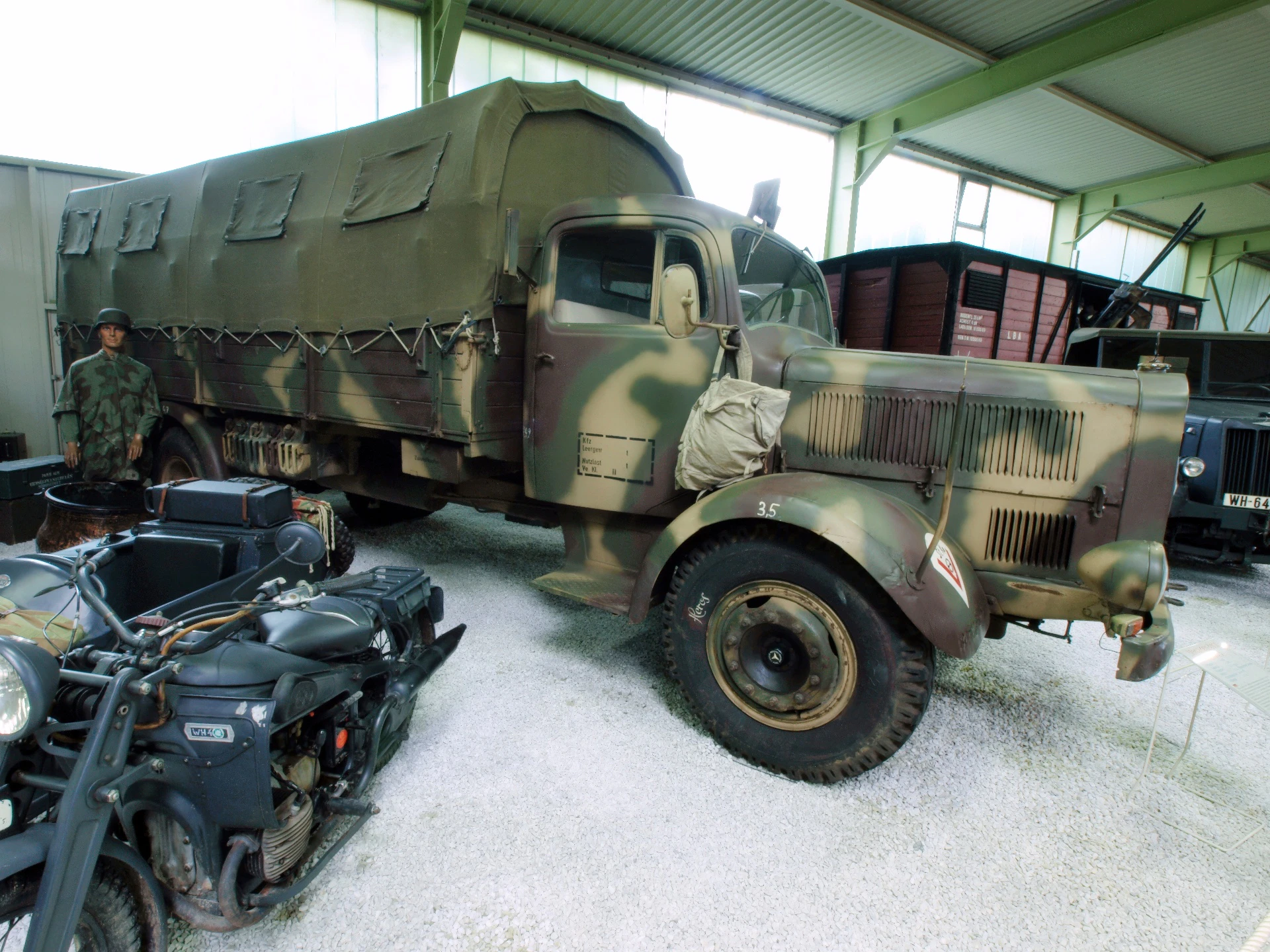
The Mercedes-Benz L 4500 was a heavy duty truck by Mercedes-Benz. It was built by Daimler-Benz from 1939 – 1944 in the Mercedes-Benz plant Gaggenau, and from 1944 – 1945 by Saurer. The vehicle is a long-bonnet truck and was offered as a rear-wheel-drive truck (L 4500 S) and as an all-wheel-drive truck (L 4500 A). The German Wehrmacht used the L 4500 with armoured cabins as Flak trucks during World War II.
Source: Wikipedia
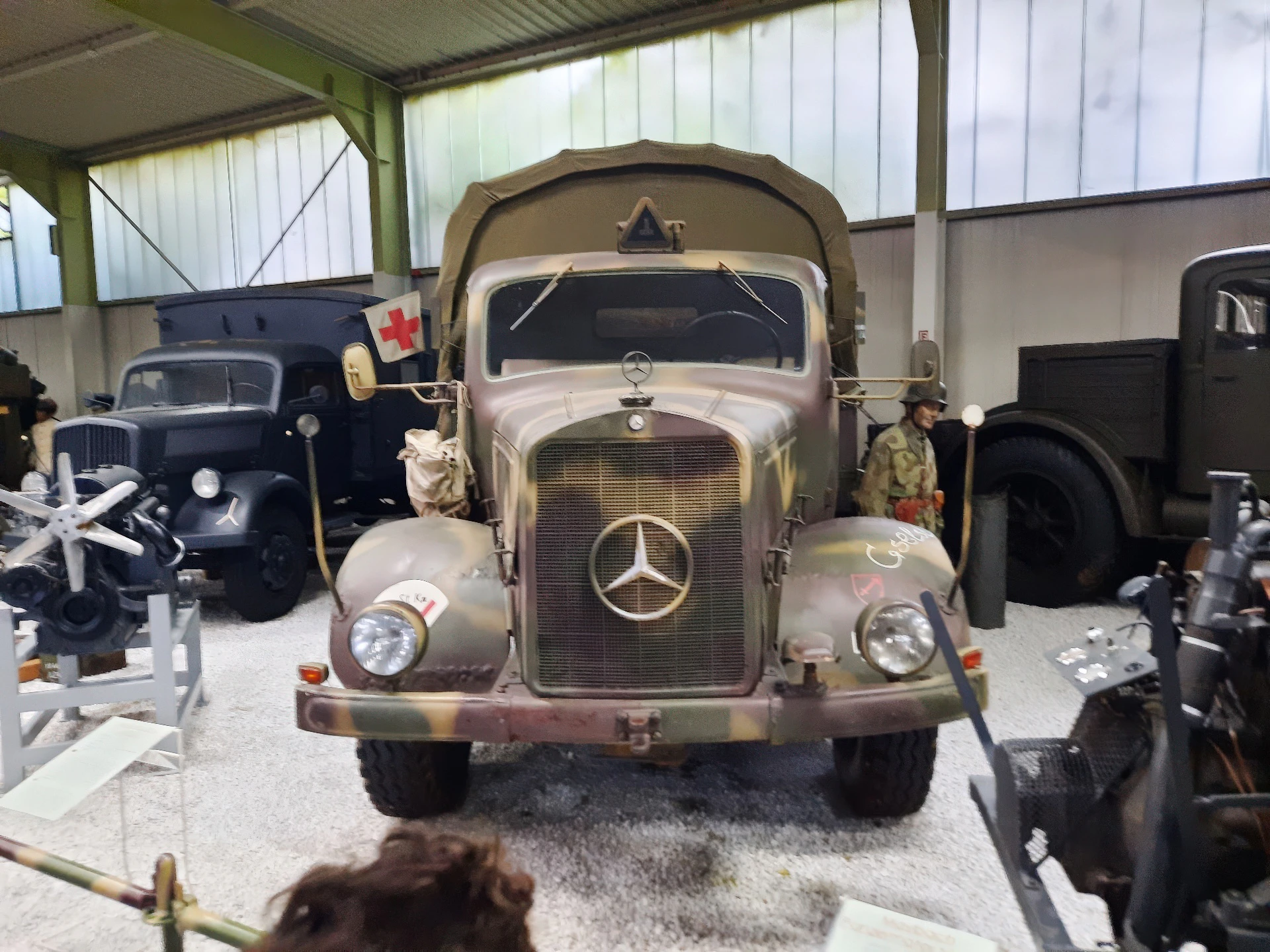
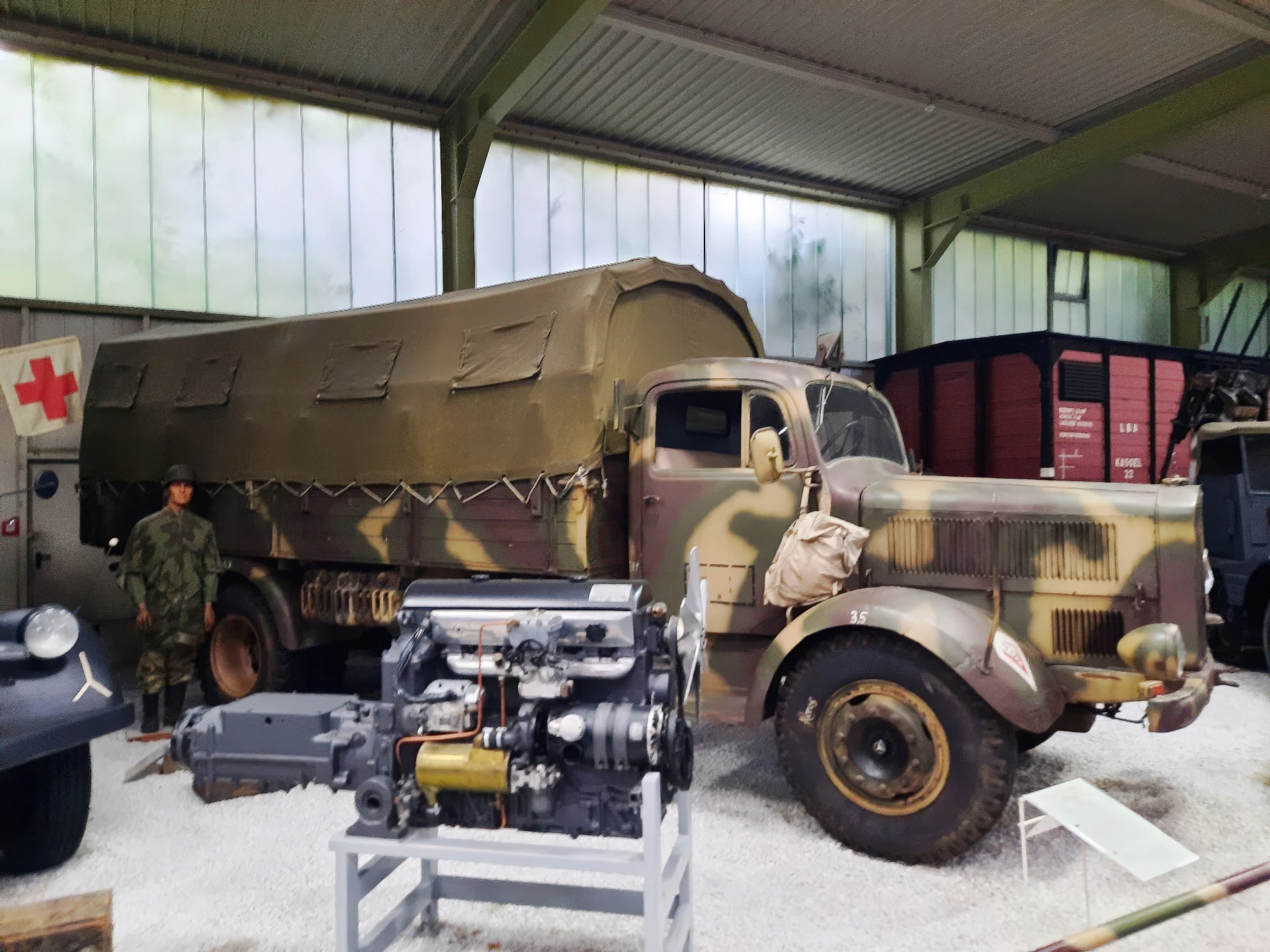
| Mercedes Benz L4500S 4.5t Walk Around | |
|---|---|
| Photographer | Unknow |
| Localisation | Unknow |
| Photos | 9 |
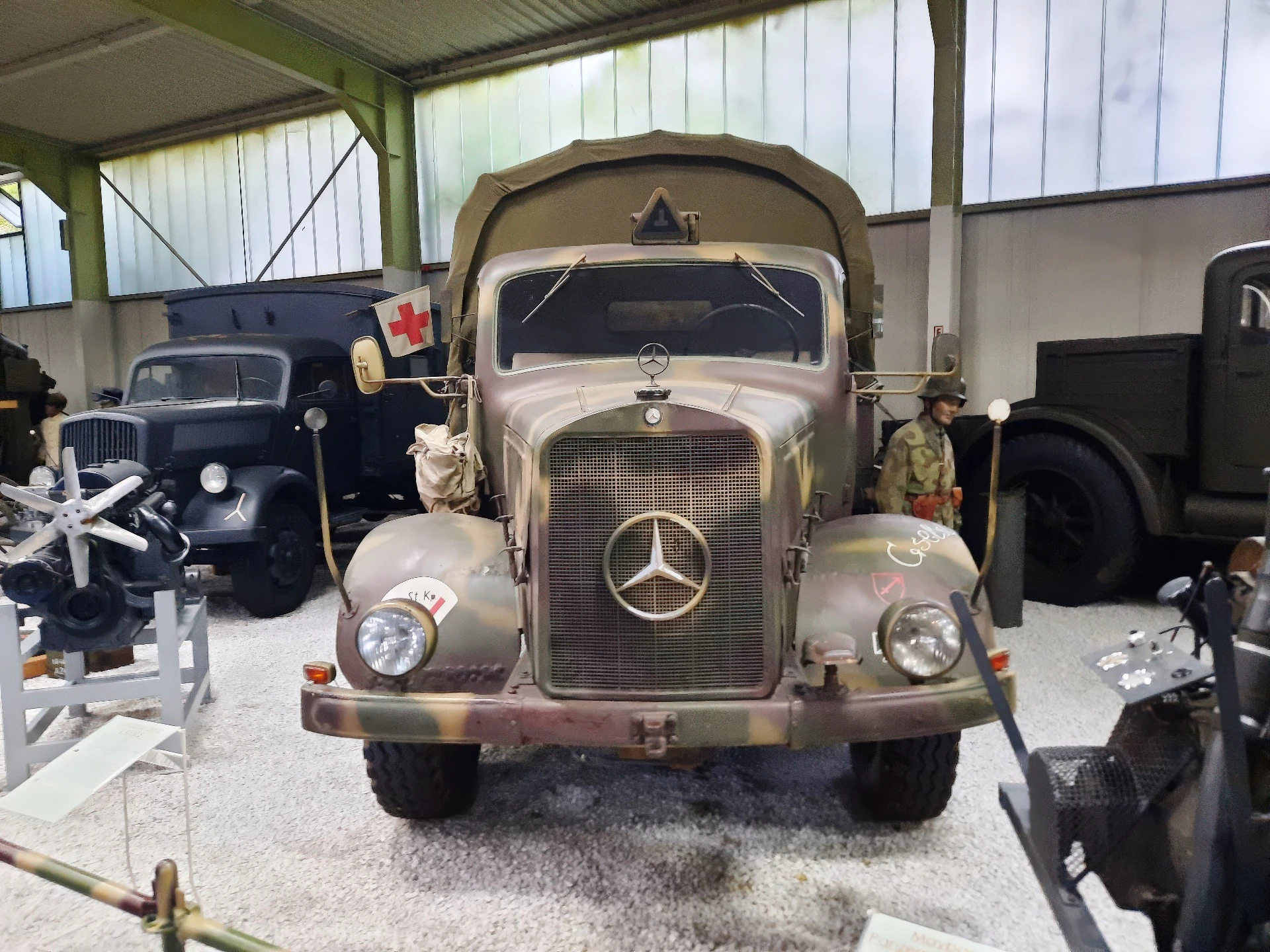
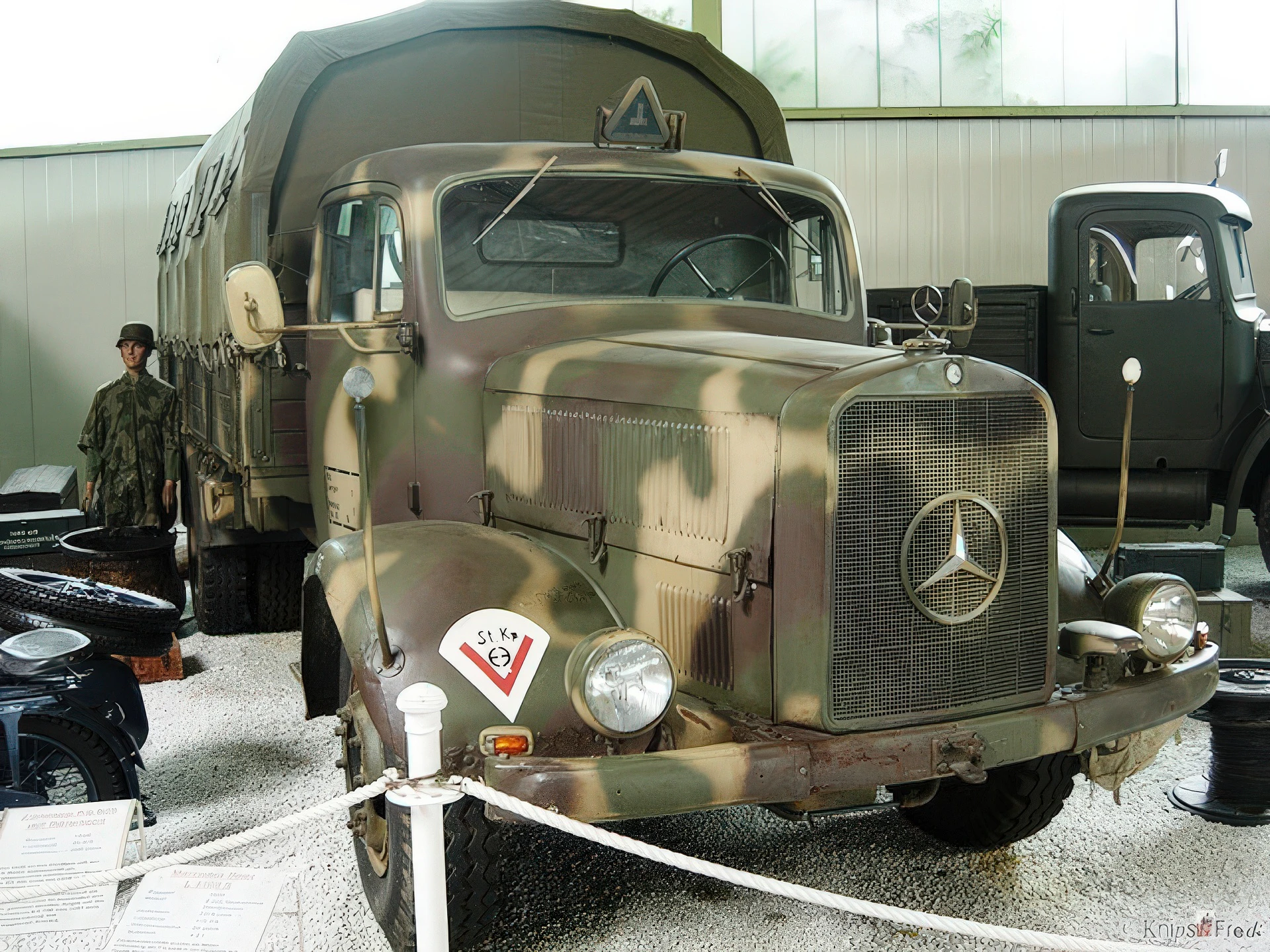
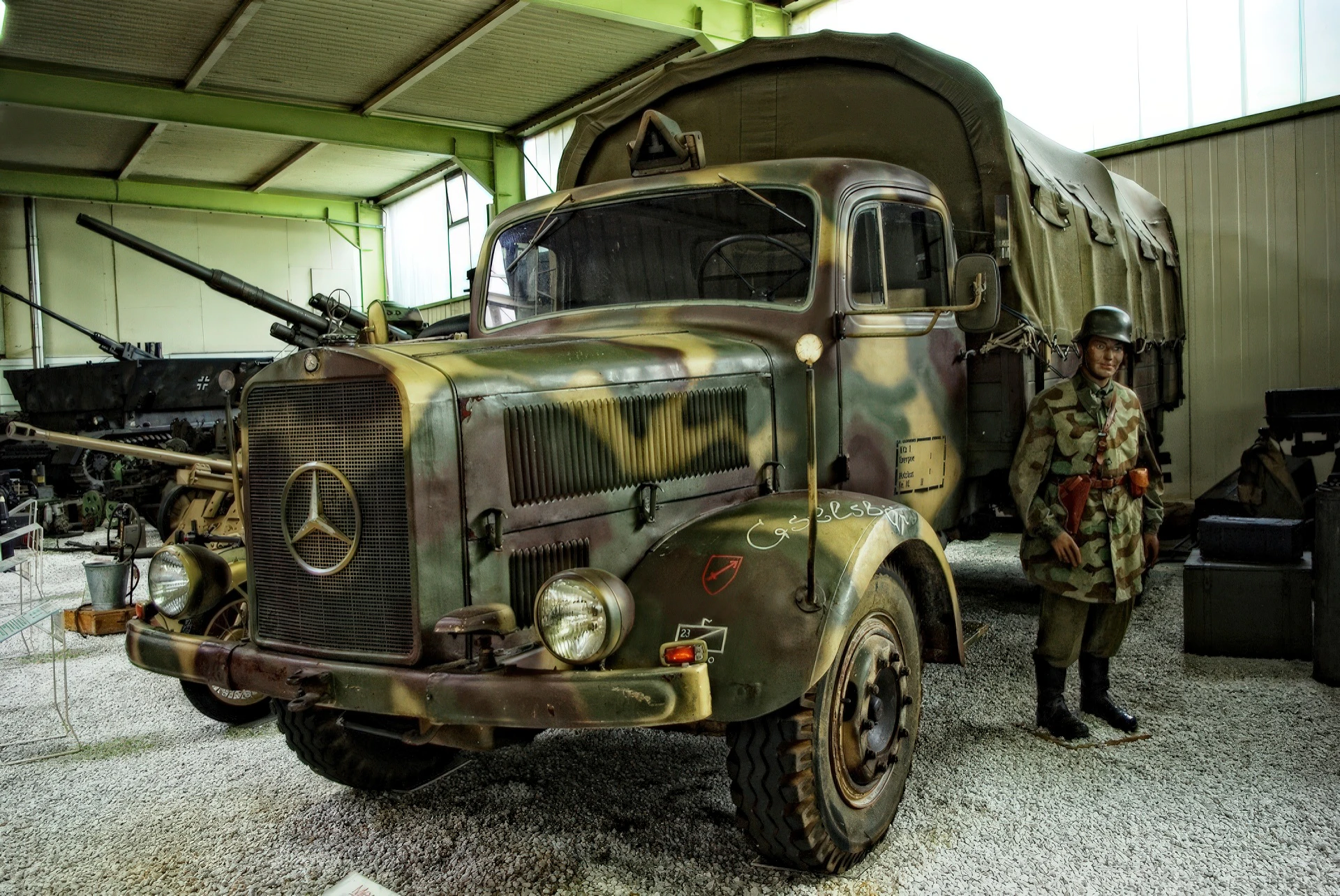

See also:


Design Philosophy and Heavy-Lift Capability
The Mercedes-Benz L4500 was a heavy-duty truck produced between 1939 and 1944. While the lighter “Opel Blitz” handled the majority of general transport, the L4500 was the “heavy lifter” designed for massive payloads and grueling long-distance supply runs. The S in the designation stands for Standard (rear-wheel drive), while the A version was the Allrad (all-wheel drive). Its robust chassis made it an ideal platform for specialized equipment, including anti-aircraft guns and even conversion into a half-track to deal with the mud of the Eastern Front.
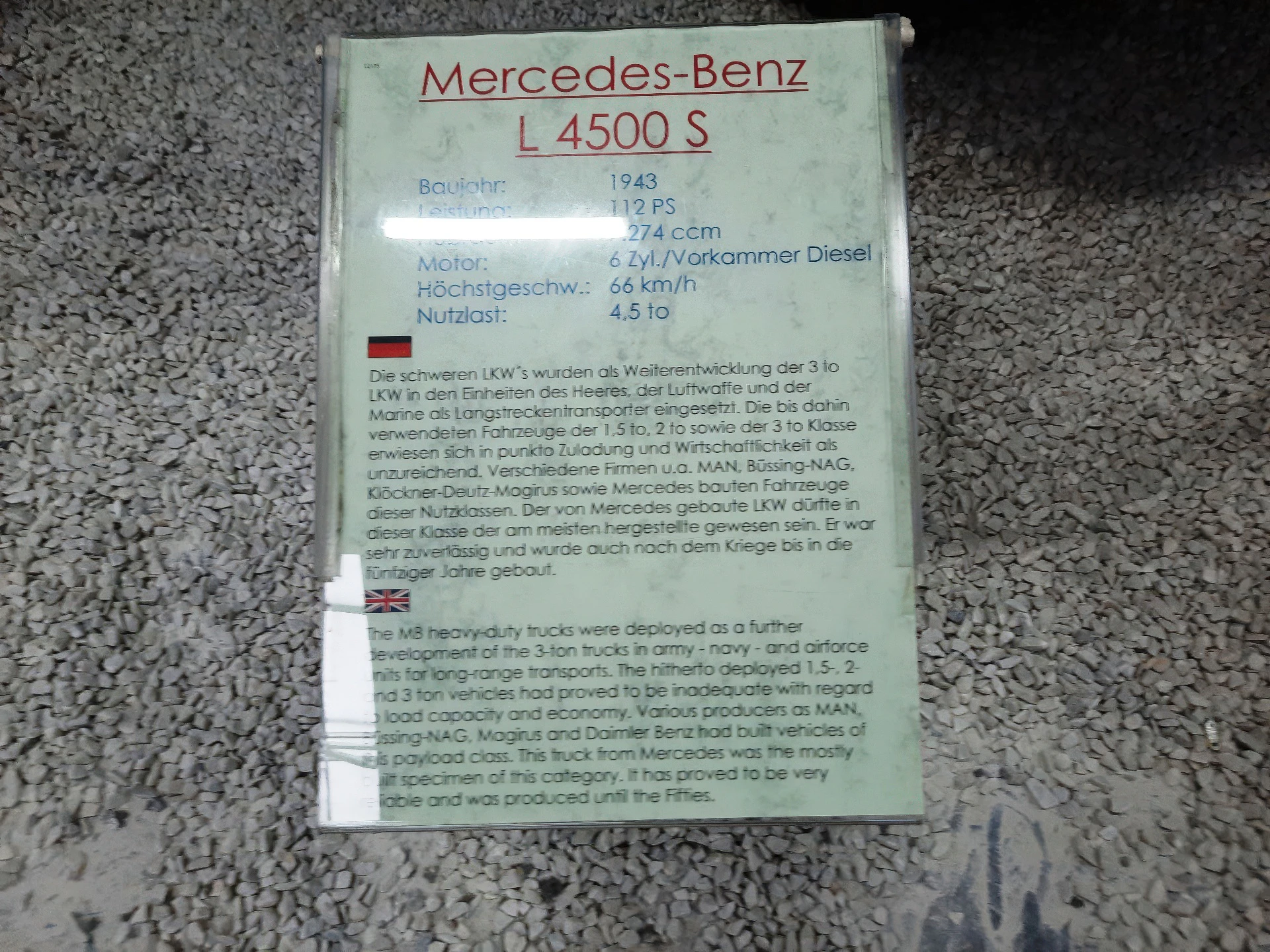
| Attribute | Standard Specification (Mercedes-Benz L4500S) |
|---|---|
| Role | Heavy Utility / Cargo Truck |
| Payload Capacity | 4,500 kg to 4,950 kg (approx. 4.5–5 Tonnes) |
| Powerplant | Mercedes-Benz OM 67/4, 6-cylinder Diesel |
| Displacement | 7.3 Liters (7,274 cc) |
| Horsepower | 112 hp at 2,250 rpm |
| Transmission | 5-speed Manual |
| Maximum Speed | 66 km/h (approx. 41 mph) |
| Fuel Capacity | 140 Liters |
Diesel Innovation: The OM 67 Engine
- Efficiency: At a time when many military trucks still used petrol, the L4500 utilized the OM 67/4 diesel engine. This provided superior fuel economy and higher torque, which was vital for pulling heavy trailers or navigating rough terrain.
- Durability: The 6-cylinder engine was known for its longevity, capable of running for thousands of kilometers with basic maintenance, provided the diesel fuel was of sufficient quality.
- Torque: With 112 horsepower, it wasn’t fast, but it possessed enough pulling power to move its own 4.9-ton weight plus a full load and an auxiliary trailer simultaneously.
Variants and Field Modifications
- L4500A (All-Wheel Drive): Featuring a transfer case and driven front axle, the 4500A was much rarer but highly prized for its ability to traverse deep mud and snow.
- L4500R “Maultier” (Mule): One of the most famous variants involved replacing the rear wheels with a Carden-Loyd track assembly (from captured British Bren Carriers or Panzer II tanks). This transformed the truck into a half-track specifically for the Soviet “Rasputitsa” mud seasons.
- Flak Platform: Due to its stability and weight, the L4500 was frequently used as a mobile platform for the 3.7 cm Flak 36 anti-aircraft gun, often with armored plating added to the cab.
- The “Einheitsfahrerhaus”: Late in the war, the metal cab was replaced with a simplified wooden and pressed-cardboard “Standardized Cab” to save on strategic materials like steel.
Historical Impact
- Production Numbers: Approximately 9,500 units were built (including both S and A variants) before production was disrupted by Allied bombing.
- Post-War Service: Because the design was so robust, many surviving L4500s were used in the reconstruction of Germany, serving in construction and firefighting roles well into the 1960s.
Views : 510
You can see also :
 Pavesi P4 – Photos & Videos
 Phenomenon Granit 1500 – Photos & Videos
 MAZ-537 – Photos & Videos
 M1120 HEMTT Load Handling System – Photos & Videos
 Mack M123 Truck – Photos & Videos
 P-18 radar – Photos & Videos
 M274 ½-ton 4×4 utility platform truck – Photos & Videos
 WC52 – Photos & Video
 Ford CMP 15cwt 4×4 GS – Walk Around
 Bedford OYC fuel tanker – Walk Around