Tecniche Usa in unità tedesche

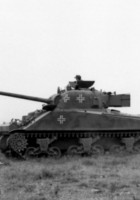
US Technics in German Units

PeriodSecond World War
ArmyGerman Wehrmacht
Description

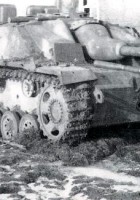
Album of 233 photos of US Technics in German Units

A volte sui carri armati tedeschi per i trofei tedeschi chiaramente apparsi è presente la designazione, che include la lettera E, il numero romano e altri numeri a tre cifre. In tutte le fotografie esistenti i serbatoi aventi tali designazioni hanno i danni insignificanti, che non rendono possibile introdurlo immediatamente nel sistema, o semplicemente chiaramente non viene utilizzato. Sulle ipotesi esistenti la lettera "E" indica a Erprobung - test, o Erbeuten - di prendere come trofeo, anche se del tutto possibile che anche Evakuieren – evacuare per evacuare il trofeo nella parte posteriore, il numero romano a giudicare dalle fotografie esistenti designa il tipo della macchina sequestrata. I numeri arabi molto probabilmente designano il numero ordinale di trofeo.

Continua a leggere

Visualizzazioni : 4042

Sturmgeschütz

Tecnica sovietica nelle unità tedesche

PeriodoSeconda guerra mondiale
EsercitoWehrmacht tedesca
Descrizione

Album di 131 foto di tecniche sovietiche nelle unità tedesche

A volte sui carri armati tedeschi per i trofei tedeschi chiaramente apparsi è presente la designazione, che include la lettera E, il numero romano e altri numeri a tre cifre. In tutte le fotografie esistenti i serbatoi aventi tali designazioni hanno i danni insignificanti, che non rendono possibile introdurlo immediatamente nel sistema, o semplicemente chiaramente non viene utilizzato. Sulle ipotesi esistenti la lettera "E" indica a Erprobung - test, o Erbeuten - di prendere come trofeo, anche se del tutto possibile che anche Evakuieren – evacuare per evacuare il trofeo nella parte posteriore, il numero romano a giudicare dalle fotografie esistenti designa il tipo della macchina sequestrata. I numeri arabi molto probabilmente designano il numero ordinale di trofeo.

Continua a leggere

Visualizzazioni : 3816

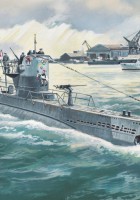
U-Boat Type IIB (1943) - Sottomarino tedesco - ICM S010

Icm

Scala1/144
RefS010 ·
Argomento

U-Boat Type IIB (1943) Sottomarino tedesco

Un modello del marchio Icm : il kit U-Boat Type IIB (1943) – German Submarine – ICM S010.

The coastal Type II U-Boats were became the first vessels of this class, that were built in Germany after the end of WWI. In the end of 1942 six Type IIB U-Boats were transferred to the Black Sea. They were used there up to September 1944. -This particular kit is the first attempt of ICM to release U-Boat Type IIB (1943) plastic kit in 1:144 scale into the market -Highly detailed hull and armament -2 versions decal sheet included

fonte: U-Boat su ICM

Continua a leggere

Visualizzazioni : 3609

Pubblicato in Icm.
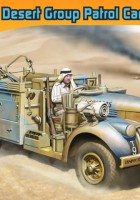
Auto di pattuglia del gruppo desertico a lungo raggio con cannone da 2 cm - DML 7504

Dragon Model

Ref 7504
digitare1/72 Militare
Scala1/72
Argomento

Auto di pattuglia del gruppo desertico a lungo raggio con cannone da 2 cm

Un modello del marchio Modello drago il kit : Auto di pattuglia del gruppo desertico a lungo raggio con cannone da 2 cm - DML 7504

-Newly tooled LRDG patrol car w/2cm cannon -Sand channel molded on side of vehicle -2cm cannon mounted in rear compartment -Intricate engine grille -Gunner’s seat accurately reproduced -Hand wheels and gun cradle offer great detail definition -Accurately shaped front fenders w/details -Well-defined wheels w/authentic tire tread pattern -Wheels are produced in separate parts -Slide-molded chassis -Delicate spade reproduced -Lee-Enfield mounted besides driver’s cab -Rolled tarpaulins w/detachable brackets fitted on front fenders -Detailed dashboard & driver’s compartment -POW cans included

The Long Range Desert Group (LRDG) was a highly effective unit that roved far behind enemy lines in North Africa during WWII. It gathered intelligence, performed reconnaissance and conducted attacks from mid-1940 through to April 1943. Yet the elite unit never exceeded 350 men at any one time. To successfully negotiate the desert, the LRDG used vehicles such as the two-wheel-drive truck. The truck entered service in March 1942 and these sturdy vehicles carried sand channels, jerry cans, a sun compass, sometimes a wireless, improved radiator cooling system and low-pressure desert tires. They were fitted with weapons such as Lewis guns, Vickers medium machine guns and the Vickers K. Some were even fitted with 2cm guns that had been captured from Italian forces. It was a 20mm antiaircraft gun widely used by Italy in WWII. Of course, the 330kg weapon could also be used against ground targets.

fonte: Drago

Continua a leggere

Punti di vista: 1329

RAF Gladiatore - HOBBY BOSS 80289

Hobby Boss

Oggetto

RAF Gladiatore

Scala1/72
Ref80289

Un modello del marchio HobbyBoss il kit : RAF Gladiator – HOBBY BOSS 80289

Caratteristiche : The kit consists of over 20 parts, includes 1 clear windscreen/canopy

Era il La RAF L'ultimo aereo da combattimento biplano ed è stato reso obsoleto dai nuovi progetti di monoplani anche quando è stato introdotto. Anche se spesso si scontrò con nemici più formidabili durante i primi giorni della seconda guerra mondiale, si comportò abbastanza bene in combattimento.

fonte: Hobby Boss

Continua a leggere

Punti di vista : 976

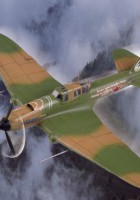
Aereo d'attacco IL-2M3 - HOBBY BOSS 80285

Hobby Boss

Oggetto

IL-2M3 Attack Aircraft

Scala1/72
Ref80285

Un modello del marchio HobbyBoss il kit : IL-2M3 Attack Aircraft – HOBBY BOSS 80285

Caratteristiche : The kit consists of over 30 parts, includes 1 clear windscreen/canopy

Le Ilyushin IL-2 Sturmovik was a Soviet Union attack aircraft in the WWII. Designed as a armored low-level close-support aircraft capable of defeating enemy armor and other ground targets. First flew on 12 October 1940 as prototype TsKB-57, The aircraft entered production in March 1941,and come into service in May. A total of 36,163 were built. The Sturmovik played a crucial role on the Eastern Front, famous nicknames as the “Black Death” .

fonte: Hobby Boss

Continua a leggere

Punti di vista: 1245

Carro armato sovietico T-26 Light Infantry Mod.1935 - HOBBY BOSS 82496

Hobby Boss

Scala1/35
Ref82496
Argomento

Carro armato sovietico T-26 Light Infantry Mod.1935

Un modello del marchio HobbyBoss il kit : Soviet T-26 Light Infantry Tank Mod.1935 – HOBBY BOSS 82496

Caratteristiche : The kit consists of over 970 parts, multi-directional slide molded lower hull w/fine detail, 240 individual track links, photo-etched parts included

Le T-26 tank was a Soviet light infantry tank used during many conflicts of the 1930s as well as during World War II. It was a development of the British Vickers 6-Ton tank and is widely considered one of the most successful tank designs of the 1930s. It was produced in greater numbers than any other tank of the period, with more than 11,000 produced. During the 1930s, the USSR developed approximately 53 variants of the T-26, including other combat vehicles based on its chassis. Twenty-three of these were mass-produced. The T-26 was used extensively in the armies of Spain, China and Turkey. In addition, captured T-26 light tanks were used by the Finnish, German, Romanian and Hungarian armies.

fonte: Hobby Boss

Continua a leggere

Visualizzazioni : 1735

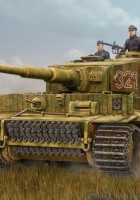
Pz.Kpfw. VI Tiger I - HOBBY BOSS 82601

Hobby Boss

Scala1/35
Ref82601
Argomento

Pz.Kpfw. VI Tiger I

Un modello del marchio HobbyBoss il kit : Pz.Kpfw. VI Tiger I – HOBBY BOSS 82601

Caratteristiche : the kit is a simplified version consists of over 460 parts

Panzerkampfwagen VI Tiger Ausf.E, spesso abbreviato in Tiger. Era una risposta all'inaspettatamente formidabile corazzatura sovietica incontrata nei primi mesi dell'invasione dell'Unione Sovietica da parte dell'Asse, in particolare il T-34 e il KV-1. Il Tiger I è il primo carro armato che monta il cannone da 88 mm, nella sua versione iniziale dedicata al veicolo da combattimento corazzato, che nella sua versione Flak aveva precedentemente dimostrato la sua efficacia contro bersagli sia aerei che terrestri. Durante il corso della guerra, il Tiger I vide combattere su tutti i fronti di battaglia tedeschi. Di solito era schierato in battaglioni di carri armati indipendenti, che si rivelarono piuttosto formidabili. Mentre il Tiger I era temuto da molti dei suoi avversari, era sovra-ingegnerizzato, utilizzava materiali e metodi di produzione costosi e laboriosi e richiedeva molto tempo per la produzione. Solo 1.347 furono costruiti tra l'agosto 1942 e l'agosto 1944.

fonte: Hobby Boss

Continua a leggere

Visualizzazioni : 3584

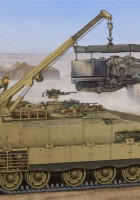
Israele Merkava ARV - HOBBY BOSS 82457

Hobby Boss

Scala1/35
Ref82457
Argomento

Israele Merkava ARV

Un modello del marchio HobbyBoss il kit : Israel Merkava ARV – HOBBY BOSS 82457

Caratteristiche : The kit consists of over 1070 parts – Multi-directional slide moulded lower hull and upper hull – 216 individual tracks links – Photo-etched parts included

Uno dei due tipi di Merkavaveicoli corazzati di recupero basati su base in fase di sperimentazione. Questa è la variante con la capacità di sollevamento più leggera. Sebbene ufficialmente costruito sullo scafo di un Merkava 3, questo modello sembra avere molte delle caratteristiche del Merkava 4. Da notare il caratteristico scarico del motore Merkava 4 style e la targhetta glacis. La macchina è dotata di cingoli in stile Merkava 3. Da notare anche il tipo di corazzatura a griglia per le minigonne laterali caratteristica del Merkava 4. Da notare le due mitragliatrici FN da 7,62 mm per la protezione dell'equipaggio.

fonte: Hobby Boss

Continua a leggere

Punti di vista : 1300

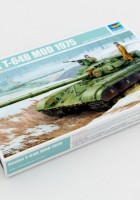
Sovietico T-64B MOD 1975 - Trombettista 01581

Trumpeter

Ref 01581
digitareKit modello
Scala1/35
Argomento

T-64B sovietico MOD 1975

Un modello del marchio Trumpeter il kit: Soviet T-64B MOD 1975 – Trumpeter 01581.

Features : The kit consists of over 550 parts -the kit w/refined detail -multi-slide moulded lower hull -plastic tracks links -Included Photo-etched parts

Le T-64 was conceived in Kharkov as the next-generation main battle tank by Alexander A. Morozov, the designer of the T-54. A revolutionary feature of the T-64 is the incorporation of an automatic loader for its 125-mm gun,allowing a crewmember’s position to be omitted, and helping to keep the size and weight of the tank down,and the T-64B of 1976 would be able to fire a guided antitank missile through its gun barrel. The T-64 would be used only by the Soviet Army and never exported, unlike the T-54/55. It was superior to these tanks in most qualitative terms, until the introduction of the T-72B model in 1985. The tank equipped elite and regular formations in Eastern Europe and elsewhere, the T-64A model being first deployed with East Germany’s Group of Soviet Forces in Germany (GSFG) in 1976, and some time later in Hungary’s Southern Group of Forces (SFG). By 1981 the improved T-64B began to be deployed in East Germany and later in Hungary.

Source: Trumpeter

Continua a leggere

Visualizzazioni : 1214