Stridsvagn 103

Stridsvagn 103

PaeseSvezia
digitareCarro armato da battaglia Anfibio Principale
In servizio1960-1997
Costruito290

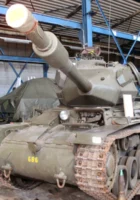
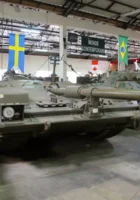
Le Stridsvagn 103 (Strv 103), also known as the S-Tank, was a Swedish post-war main battle tank. It was known for its unconventional design: it was turretless with a fixed gun traversed by engaging the tracks and elevated by adjusting the hull suspension. While turretless armoured fighting vehicles are usually classified as assault guns or tank destroyers, despite its unique gun laying process the Strv 103 is considered a tank because its designated combat role matched those of other tanks within contemporary Swedish doctrine. It is the only main battle tank and the only tank of any kind since the World War II era to dispense with a turret. The Strv 103 was designed and manufactured in Sweden. It was developed in the 1950s and was the first main battle tank to use a turbine engine. The result was a very low-profile design with an emphasis on defence and heightened crew protection level. Strv 103s formed a major portion of the Swedish armoured forces from the 1960s to part of the 1990s, but have since been removed from service in favour of the Stridsvagn 122.

fonte: Stridsvagn 74 su Wikipedia

Continua a leggere

Views : 9049

Strv 74

Stridsvagn 74

PaeseSvezia
digitareCarro armato da battaglia principale
FotografiaThord Wedman
Argomento

Album di 95 foto walk-around di un «Stridsvagn 74»

Galleria fotografica di un Stridsvagn 74, Stridsvagn 74 (strv 74) was a Swedish tank in use with the Swedish Army from 1958 to 1984. It was a modification of the older stridsvagn m/42 which was phased out of service in the 1950s. Instead of scrapping the vehicles altogether, the chassis were used to build a new tank which could be used as a supplement to the newly bought stridsvagn 101. The turret of strv 74 was completely new, with a 75 mm high-velocity gun based on an old anti-aircraft gun, engines and transmission were modified or changed from the strv m/42, broader tracks and a separate electrical engine for the turret rotation was introduced while retaining the manual control as a backup.

fonte: Stridsvagn 74 su Wikipedia

Continua a leggere

Views : 3572

Airco DH.4

Airco DH.4

PaeseRegno unito
digitareAereo biplano

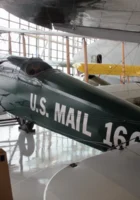
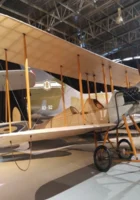
Galleria fotografica di un Airco DH.4, The Airco DH.4 was a British two-seat biplane day bomber of World War I. It was designed by Geoffrey de Havilland (hence “DH”) for Airco, and was the first British two-seat light day-bomber to have an effective defensive armament. It first flew in August 1916 and entered service with the Royal Flying Corps (RFC) in March 1917. The majority of DH.4s were actually built as general purpose two-seaters in the United States, for service with the American forces in France. The DH.4 was tried with several engines, of which the best was the 375 hp (280 kW) Rolls-Royce Eagle engine. Armament and ordnance for the aircraft consisted of one 0.303 in (7.7 mm) Vickers machine gun for the pilot and one 0.303 in (7.7 mm) Lewis gun on a Scarff ring mounting for the observer. Two 230 lb (100 kg) bombs or four 112 lb (51 kg) bombs could be carried. The DH.4 entered service on 6 March 1917 with No. 55 Squadron in France.

fonte: Airco DH.4 su Wikipedia

Continua a leggere

Punti di vista : 5604

Tipo 63 130mm su camion NJ 230

Tipo 63 130mm su camion NJ 230

PaeseRepubblica di Cina
digitareLanciatore a razzo multiplo
FotografiaDavid Lueck
Argomento

Album di 63 foto walk-around di un «Type 63 130mm su NJ 230 Truck»

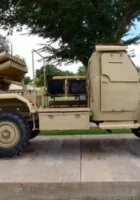
Galleria fotografica di un Tipo 63 130mm su camion NJ 230, The Type 63 multiple rocket launcher is a towed, 12-tube, 107mm rocket launcher produced by the People’s Republic of China in the early 1960s and later exported and manufactured globally. Although no longer serving with active infantry units, the Type 63 is still in People’s Liberation Army service with specialized formations such as mountain infantry units and special forces detachments. The Type 63 was widely used in the PLA until the late 1980s. It was adopted as the successor of the Type 50-5 of 102mm. China has also developed a Type 63 multiple rocket launcher of 130mm. The BM-14 is a Soviet 140mm MRL of similar design to the Type 63.

fonte: Tipo 63 130mm su NJ 230 Truck su Wikipedia

Continua a leggere

Views : 2722

Kurogane Type 95 Scout Car

Kurogane Type 95 Scout Car

PaeseGiappone
digitareAuto da ricognizione
FotografiaJurij Pasholok
Argomento

Album di 144 foto walk-around di una "Kurogane Type 95 Scout Car"

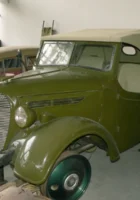
Galleria fotografica di un Kurogane Type 95 Scout Car, The Type 95 Kurogane (“Black Metal”) reconnaissance car was a Japanese scout car used during the war with China and World War II in the East. Between 1937 and 1945 approximately 4,800 were built. It was the only completely Japanese designed reconnaissance car ever used by the Japanese Army, which tended to use civilian cars. The Type 95 could accommodate only 3 persons – two in the front and one in the back. The two-cylinder air-cooled petrol engine was an advantage in cold climates encountered in China and it had 4-wheel drive. It was unarmed and unarmoured.

fonte: Kurogane Type 95 Scout Car su Wikipedia

Continua a leggere

Visualizzazioni : 5000

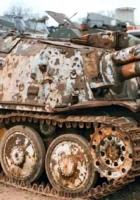
Stormartillerivagn M-43

Stormartillerivagn M-43

PaeseSvezia
digitareCarro d'artiglieria d'assalto
FotografiaTim Roberts
Argomento

Album di 37 foto walk-around di un «Stormartillerivagn M-43»

Galleria fotografica di un Stormartillerivagn M-43, Stormartillerivagn m/43 (Sav m/43) (English: model 1943) was an assault gun based on Stridsvagn m/41 SII chassis, a Swedish development of a license-built Czech TNH medium tank. The Sav m/43 was first armed with a 75 mm gun, later they were rearmed with a 105 mm m/44 gun.

fonte:: Stormartillerivagn M-43 su Wikipedia

Continua a leggere

Visualizzazioni : 3472

SPz2000

SPz2000

PaeseSvezia
digitareVeicolo da combattimento di fanteria
FotografiaGunther Neumahr
Argomento

Album di 56 foto walk-around di un «SPz2000»

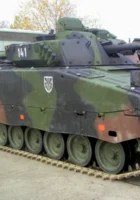
Galleria fotografica di un SPz2000, The Stridsfordon 90 (Strf 90) (Eng. Combat Vehicle 90 (CV90)) is a family of Swedish tracked combat vehicles designed by FMV, Hägglunds and Bofors during the mid-1980s and early 1990s. The Swedish version of the main infantry fighting vehicle is fitted with a turret from Bofors that is equipped with a 40 mm autocannon, although export versions use 30 mm and 35 mm autocannons. Developed specifically for the Nordic sub-arctic climate, it has very good mobility in snow and wetlands while carrying and supporting eight (later versions were reduced to six) fully equipped soldiers. Other variants include Forward Observation, Command and Control, Anti-air, Armoured Recovery, Electronic Warfare and so forth. It is still produced and being developed further by BAE Systems Hägglunds AB.

fonte:: SPz2000 su Wikipedia

Continua a leggere

Visualizzazioni : 2467

SPz kurz KrKW Hotchkiss

SPz kurz KrKW Hotchkiss

PaeseGermania
digitareVeicolo corazzato

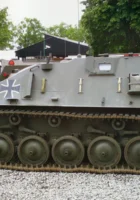
Galleria fotografica di un SPz kurz KrKW Hotchkiss, The SPz kurz KrKW (Hotchkiss) belonged to the initial supply the Bundeswehr with armored vehicles. The tank was based on the armored TT 6 French company Hotchkiss, the landing gear but was extended for a further five castors. From 1959 to 1967 1,600 cars were built under license at Magirus-Deutz in Mainz. The most famous version was the Spähpanzer, which was used to light reconnaissance troop in two vehicles.

fonte: SPz kurz KrKW Hotchkiss su Wikipedia

Continua a leggere

Visualizzazioni : 3004

Spahpanzer 2

Spahpanzer 2

PaeseGermania Ovest
digitareVeicolo da ricognizione
Prodotto1975–1977
Costruito408

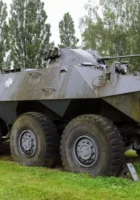
Le Spähpanzer Luchs (English: Lynx) is a German 8×8 amphibious reconnaissance armoured fighting vehicle (Spähpanzer) in service since 1975 with the German Army, who used 408 in their armoured reconnaissance battalions. It was developed by Daimler-Benz between 1968 and 1975, replacing the M41 and the Schützenpanzer SPz 11-2 Kurz. The all-wheel drive Luchs made by Thyssen-Henschel (now: Rheinmetall) is well armoured, has an NBC protection system and is characterized by its low-noise running. The eight large low-pressure tyres have run-flat properties. At speeds up to about 50 km/h, all four axles can be steered. As a special feature, the vehicle is equipped with a rear-facing driver with his own driving position. Up to the first combat effectiveness upgrade in 1986, the Luchs was fully amphibious and could surmount water obstacles quickly and independently using propellers at the rear and the fold back trim vane at the front.

fonte: Spahpanzer 2 su Wikipedia

Continua a leggere

Visualizzazioni : 3191

Royal Aircraft Factory BE2A

Royal Aircraft Factory BE2A

PaeseRegno unito
digitareAereo biplano
FotografiaVladimir Jakubov
LuogoMuseo RAAF, Point Cook, Australia
Argomento

Album di 53 foto walk-around di una «Royal Aircraft Factory BE2A»

Galleria fotografica di un Royal Aircraft Factory BE2A, The Royal Aircraft Factory B.E.2 was a British single-engine tractor two-seat biplane which was in service with the Royal Flying Corps (RFC) from 1912 until the end of World War I. About 3,500 were built. Initially used as front-line reconnaissance aircraft and light bombers; variants of the type were also used as night fighters. Like many warplanes since, the B.E.2 was retained in front-line service long after it had become obsolete, for want of a suitable replacement. After its belated withdrawal it finally served as a trainer, communications aircraft and on anti-submarine coastal patrol duties.

fonte: Royal Aircraft Factory BE2A su Wikipedia

Continua a leggere

Visualizzazioni : 2755