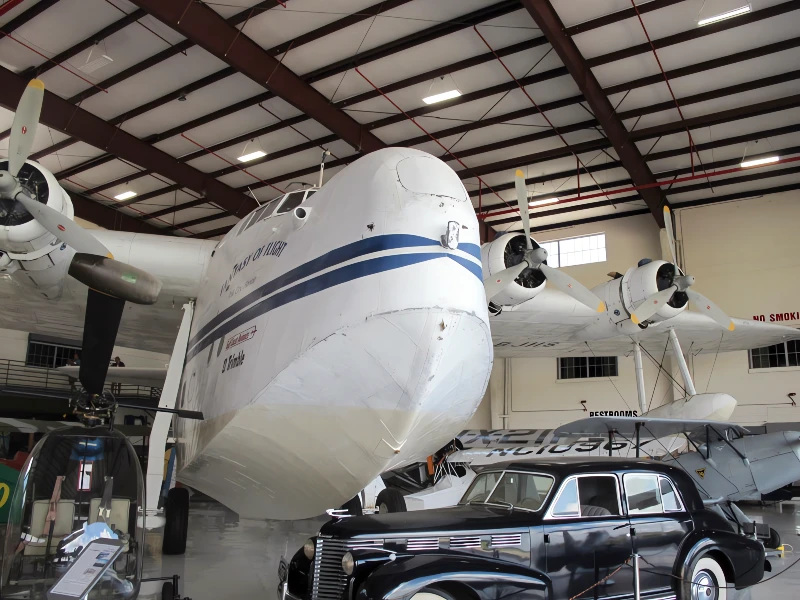
Short Sandringham | |
|---|---|
| Ország | Egyesült Királyság |
| Szerepet | Repülő hajó |
| Első repülés | 1937. október 16. |
| Beépített | Ismeretlen |
A Short S.25 Sandringham was a British civilian flying boat produced during the Second World War by the demilitarized conversions of Short Sunderland military flying boats previously operated by the Royal Air Force.
Forrás: Short Sandringham on Wikipedia
| Short S.25 Sandringham 4 Walk Around | |
|---|---|
| Fotós | Vlagyimir Jakubov |
| Lokalizáció | Repülés fantáziavilága, Polk City |
| Fénykép | 131 |

Lásd még:


The Luxurious Post-War Conversion of British Flying Boat Heritage
A Short Sandringham was a classic British civilian long-range passenger flying boat built in the immediate aftermath of World War II by Short Brothers. Developed directly from the legendary Rövid S.25 Sunderland maritime patrol bomber (which itself evolved from the pre-war S.23 Empire flying boat), the Sandringham was created to fill an urgent need for luxury long-haul commercial air routes before modern paved runways were widely established across global empire networks. By stripping out gun turrets, bomb racks, and military gear, and redesigning the double-deck hull with soundproofed passenger cabins, dining saloons, and cocktail lounges, Short Brothers transformed a lethal anti-submarine patrol bomber into one of the most comfortable long-distance passenger transports of the 1940s. Operating across the British Empire routes, Australasia, and South America, the Sandringham served as the elegant sunset chapter of the golden age of commercial flying boats.
| Attribute | Technical Specification (Short Sandringham Mk 6 Standard) |
|---|---|
| Szerepet | Four-Engine Long-Range Commercial Passenger Flying Boat |
| Legénység | 5 to 7 (2 Pilots, Navigator, Radio Operator, Flight Engineer, Flight Attendants) | 22 to 45 passengers |
| Hajtómű | 4 × Pratt & Whitney R-1830-92 Twin Wasp 14-cylinder radial engines (1,200 hp each; or Bristol Pegasus radials on earlier conversions) |
| Maximum Speed | 332 km/h (206 mph / 179 knots) cruising speed at 1,500 meters altitude |
| Combat / Takeoff Weight | 25,400 kg (56,000 lbs) maximum gross takeoff weight |
| Service Ceiling / Operational Range | 5,480 m (17,980 ft) ceiling | ~3,940 km (2,450 miles) maximum range |
| Passenger Capacity & Layout | 22 to 45 passengers across upper/lower deck saloons (variable by operator requirement) |
| Defensive Armament | None (Civilian air transport configuration; military nose/tail turrets removed and faired over with streamlined nose/tail cones) |
| Hull & Wing Construction | All-metal aluminum alloy flying-boat hull with high-mounted cantilever wing and underwing stabilizing floats |
| Production Total | 28 units total (all converted from RAF Sunderland Mk III and Mk V airframes between 1945 and 1948) |
Design Engineering: Hydrodynamic Hulls, Faired Turrets, and Two-Deck Comfort
- Redesigned Aerodynamic Extremities: Converting the wartime Sunderland into the Sandringham required extensive structural airframe modification. The heavy bow and stern gun turrets were completely removed, replaced by smooth, streamlined metal fairings that significantly reduced aerodynamic drag and extended flight range.
- Two-Deck Luxury Interiors: Capitalizing on the Sunderland’s exceptionally deep fuselage, Short Brothers split the interior into two distinct decks. The upper deck contained the flight crew station, crew quarters, and baggage compartments, while the lower deck featured wide, soundproofed passenger saloons, a promenade deck, fully equipped galleys, and lavatories.
- Proven Hydrodynamic Hull Geometry: The Sandringham inherited the Sunderland’s deep-V planform hull featuring a prominent transverse step. This hydrodynamic design allowed the heavy 25-ton flying boat to break surface tension and lift off from open harbor waters, sheltered bays, or river estuaries without requiring land-based runways.
- Transition to Reliable American Engines: While early Sandringham marks retained British Bristol Pegasus radial engines, most operational models (such as the Sandringham Mk 5, 6, and 7) were retrofitted with Pratt & Whitney R-1830 Twin Wasp engines. This provided higher engine reliability, lower fuel consumption, and easier maintenance across international stops where spare parts for American radials were ubiquitous after WWII.
Operational History: Empire Air Routes, Trans-Tasman Crossings, and Island Hopping
- BOAC and Imperial Air Routes: Introduced in 1945, the British Overseas Airways Corporation (BOAC) deployed Sandringhams on critical long-distance routes connecting Great Britain to South Africa, India, and Australia. These routes relied on coastal harbors and lakes for refueling, bypassing destroyed post-war European airfields.
- Trans-Tasman and Pacific Operations: The Sandringham found immense success in Australasia. TEAL (Tasman Empire Airways Limited) operated Sandringhams across the treacherous Tasman Sea between Sydney and Auckland, while Ansett Flying Boat Services flew them on popular island routes connecting Sydney’s Rose Bay to Lord Howe Island until the mid-1970s.
- Scandinavian and South American Service: SAS (Scandinavian Airlines System) utilized Sandringhams on northern coastal routes along Norway’s fjords, while South American airlines like ALFA and Aerolíneas Argentinas flew them along the Río de la Plata network between Buenos Aires and Montevideo.
- End of the Flying Boat Era: As World War II surplus land bases were converted into modern civilian airports with long concrete runways, four-engine landplanes like the Douglas DC-6 and Lockheed Constellation proved cheaper to maintain and operate. The Sandringham was gradually retired through the 1950s and 1960s, marking the end of an era when long-range international travel belonged to ocean-going aircraft.
Views : 2110
Láthatjuk azt is:
 Short Sunderland – Fotók és videók
 Grumman G-21 Goose – Fotók & Videók
 Short Solent – Fotók és videók
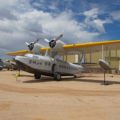 Sikorsky S-43 – Fotók & VIdeos
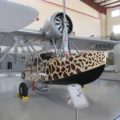 Sikorsky S-39 – Fotók és videók
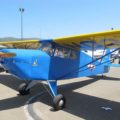 Interstate Cadet – Fotók & videó
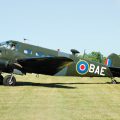 Beechcraft Model 18 - Fotók & videó
 Lockheed F-94 Starfire – Fotók & videó
 Dornier Do-24 – Fotók & videó
 Grumman F7F Tigercat – WalkAround