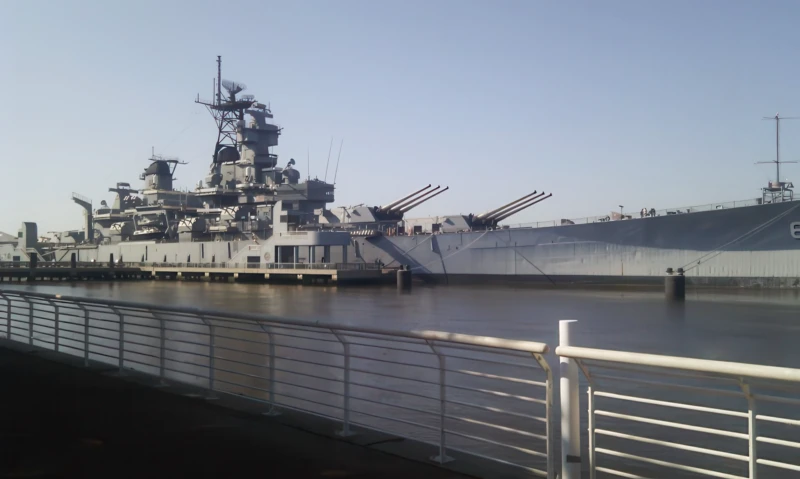
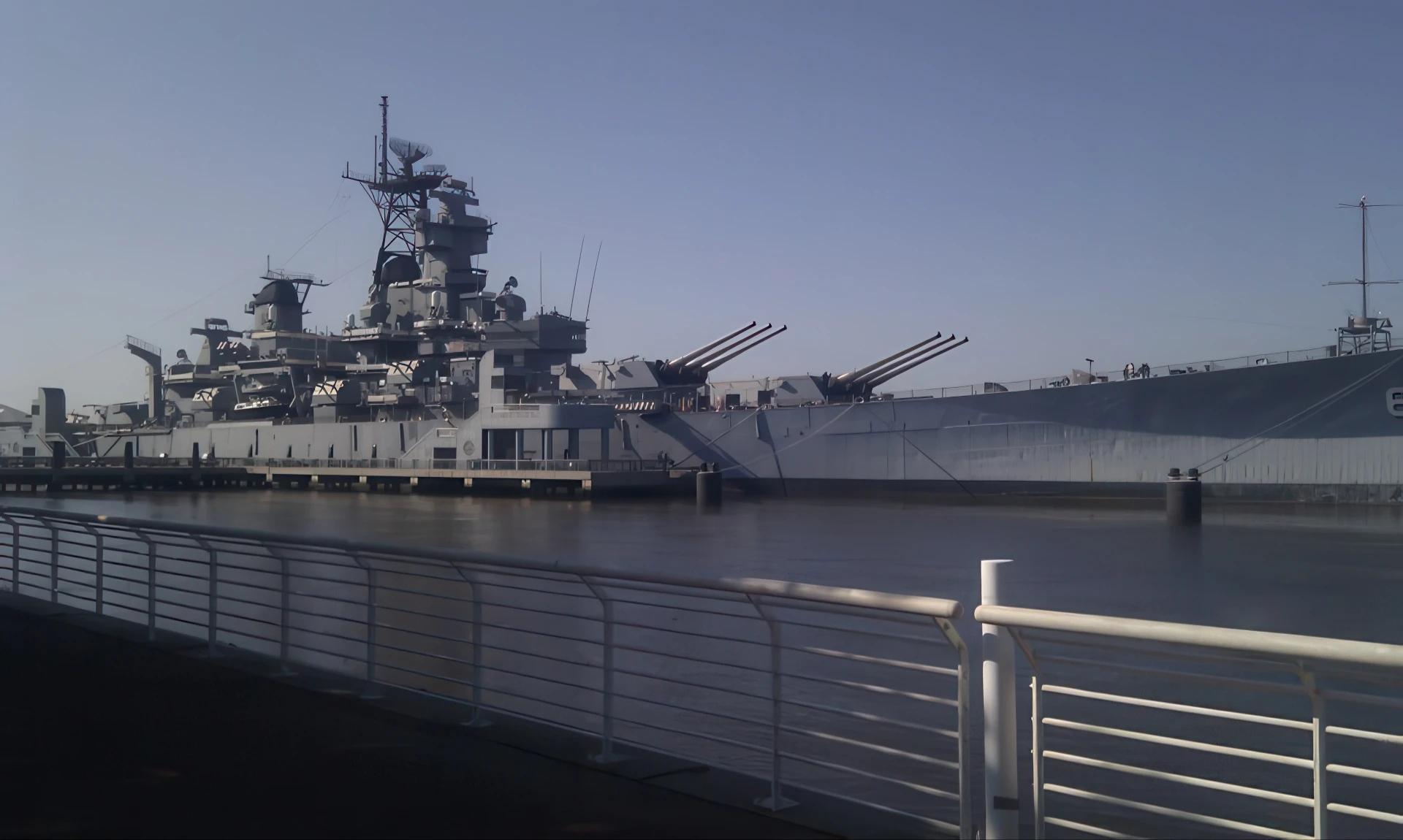
USS New Jersey (BB-62) (« Grand J » Ou « Dragon Noir ») is an Iowa-class battleship, and was the second ship of the United States Navy to be named after the US state of New Jersey. New Jersey earned more battle stars for combat actions than the other three completed Iowa-class battleships, and was the only US battleship providing gunfire support during the Vietnam War.
During World War II, New Jersey shelled targets on Guam and Okinawa, and screened aircraft carriers conducting raids in the Marshall Islands. During the Korean War, she was involved in raids up and down the North Korean coast, after which she was decommissioned into the United States Navy reserve fleets, better known as the « flotte de boules à mites ». Il a été brièvement réactivé en 1968 et envoyé au Vietnam pour soutenir les troupes américaines avant de retourner dans la flotte de boules à mites en 1969. Réactivé une fois de plus dans les années 1980 dans le cadre du programme de la marine de 600 navires, le New Jersey a été modernisé pour transporter des missiles et remis en service. En 1983, elle participe aux opérations américaines pendant la guerre civile libanaise.
Lla USS New Jersey (BB-62) est un Iowa-class fast battleship and the most decorated warship in United States naval history. Built to hunt down high-speed Japanese cruisers during World War II, « Grand J » (ou « The Black Dragon ») outlived the entire concept of battleship-to-battleship warfare. While her global contemporaries were systematically retired or scrapped, New Jersey was repeatedly pulled out of mothballs across four distinct decades. Her massive steel hull was modified to meet entirely new eras of conflict, transitioning from a floating anti-aircraft shield in WWII to a heavy shore-bombardment platform in Korea and Vietnam, and finally into a guided-missile capital ship at the twilight of the Cold War.
Design Engineering: The Armored Citadel and the 16-Inch Hammer
Lla « Fast Battleship » Formula:Traditional interwar battleships routinely sacrificed speed to maximize armor weight. TheIowa-class bypassed this limitation by utilizing an incredibly elongated, narrow bow profile coupled with a massive 212,000 shaft horsepower propulsion plant. This allowed New Jersey to keep pace with the Navy’s modern aircraft carrier task forces and provide them with a heavy, survivable air-defense umbrella.
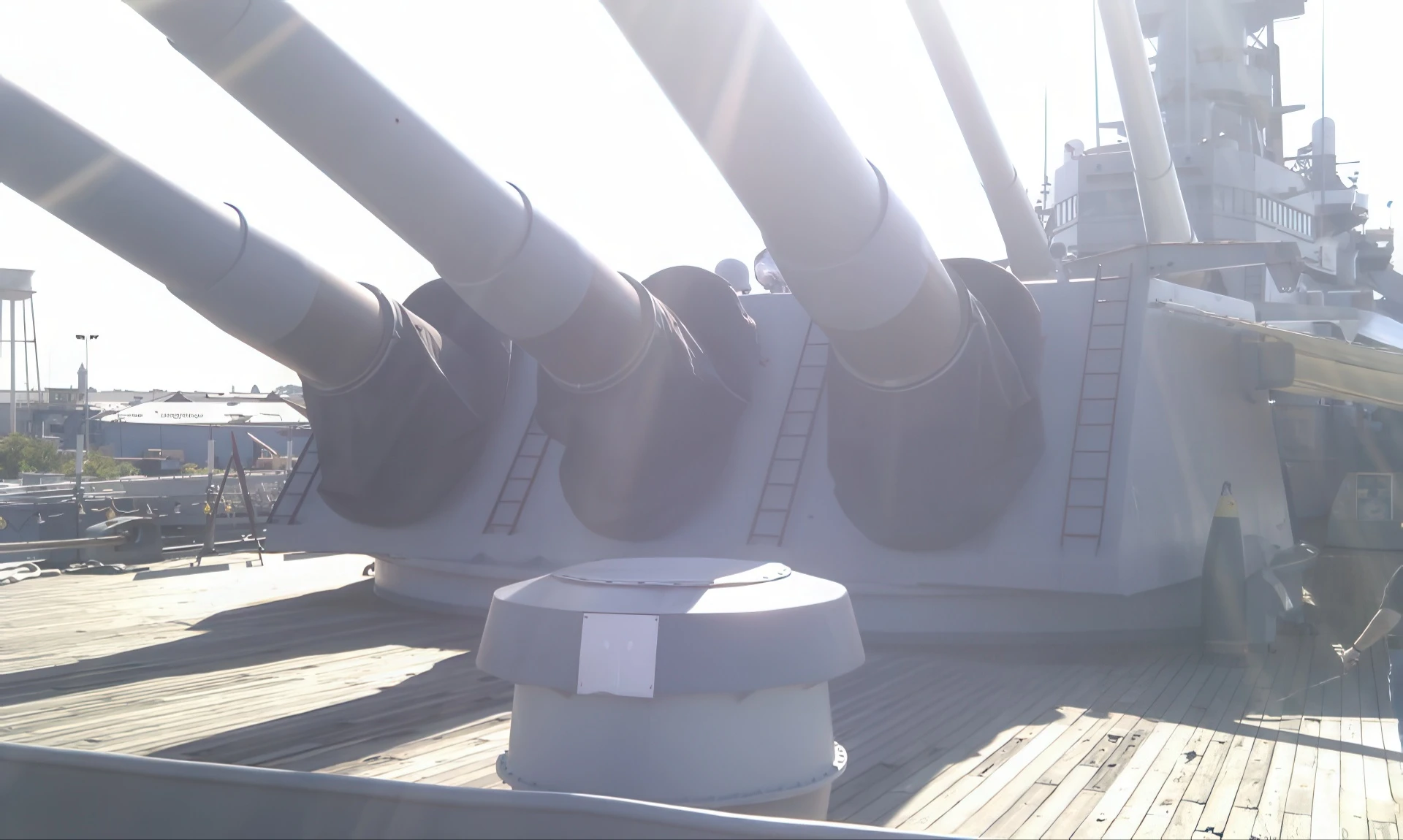
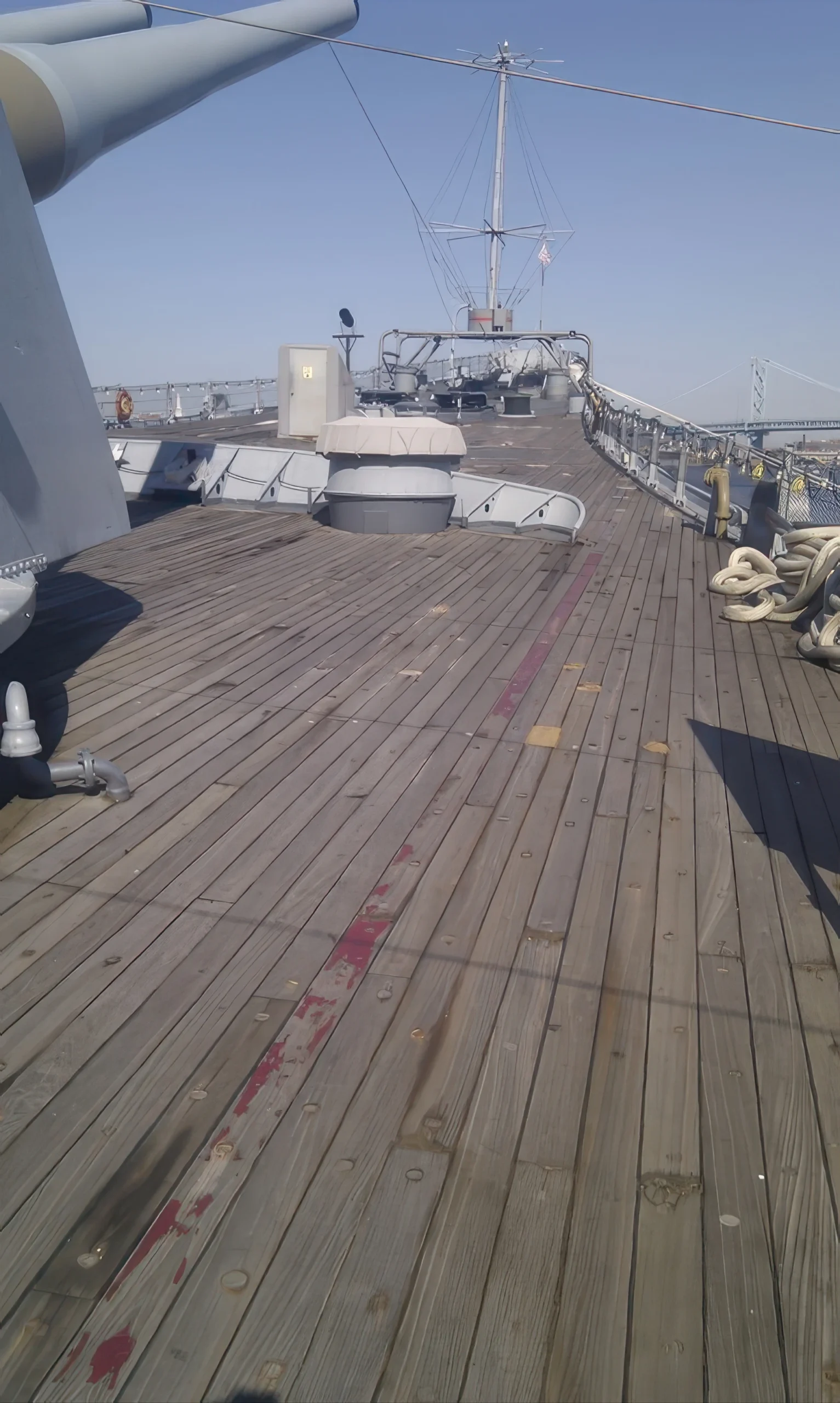
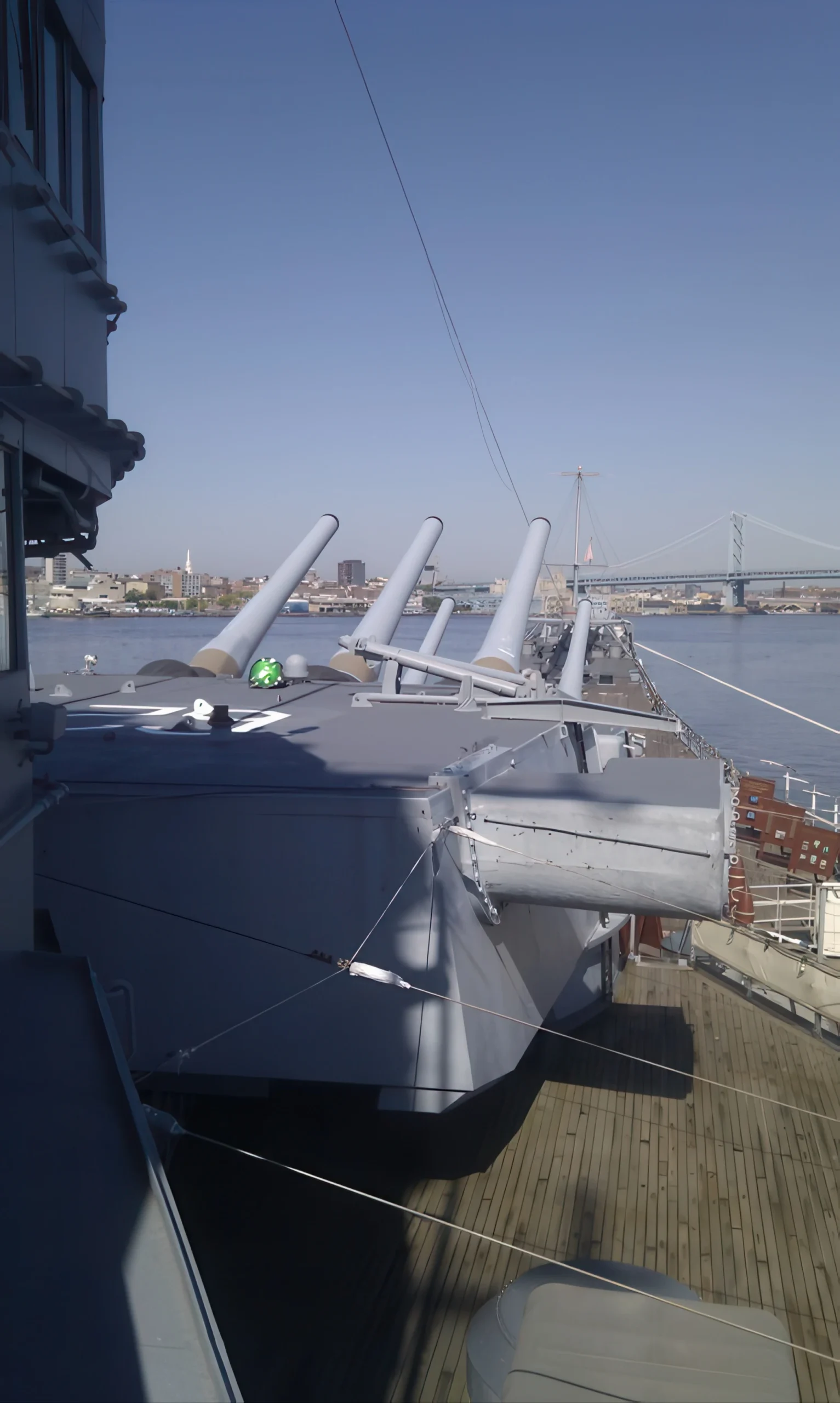
The 16-Inch / 50 Caliber Mark 7:Her main battery could strike targets up to 23 miles (37 km) away. The barrels fired a 2,700-pound armor-piecing super-heavy shell. When firing a full 9-gun broadside, the explosive energy and physical overpressure were so immense that the ship would create a massive shockwave on the water, though contrary to naval myth, the physical recoil did not push the ship sideways.
The Internal Armored Citadel:To protect her vitals (magazines and engine rooms) from enemy battleship fire, New Jersey used an « all-or-nothing » armor scheme. Instead of covering the entire hull in thin metal, a massive internal armored « box » or citadel up to 12.1 inches thick shielded the core. The rest of the ship’s unarmored structures could take generic damage without compromising her buoyancy.
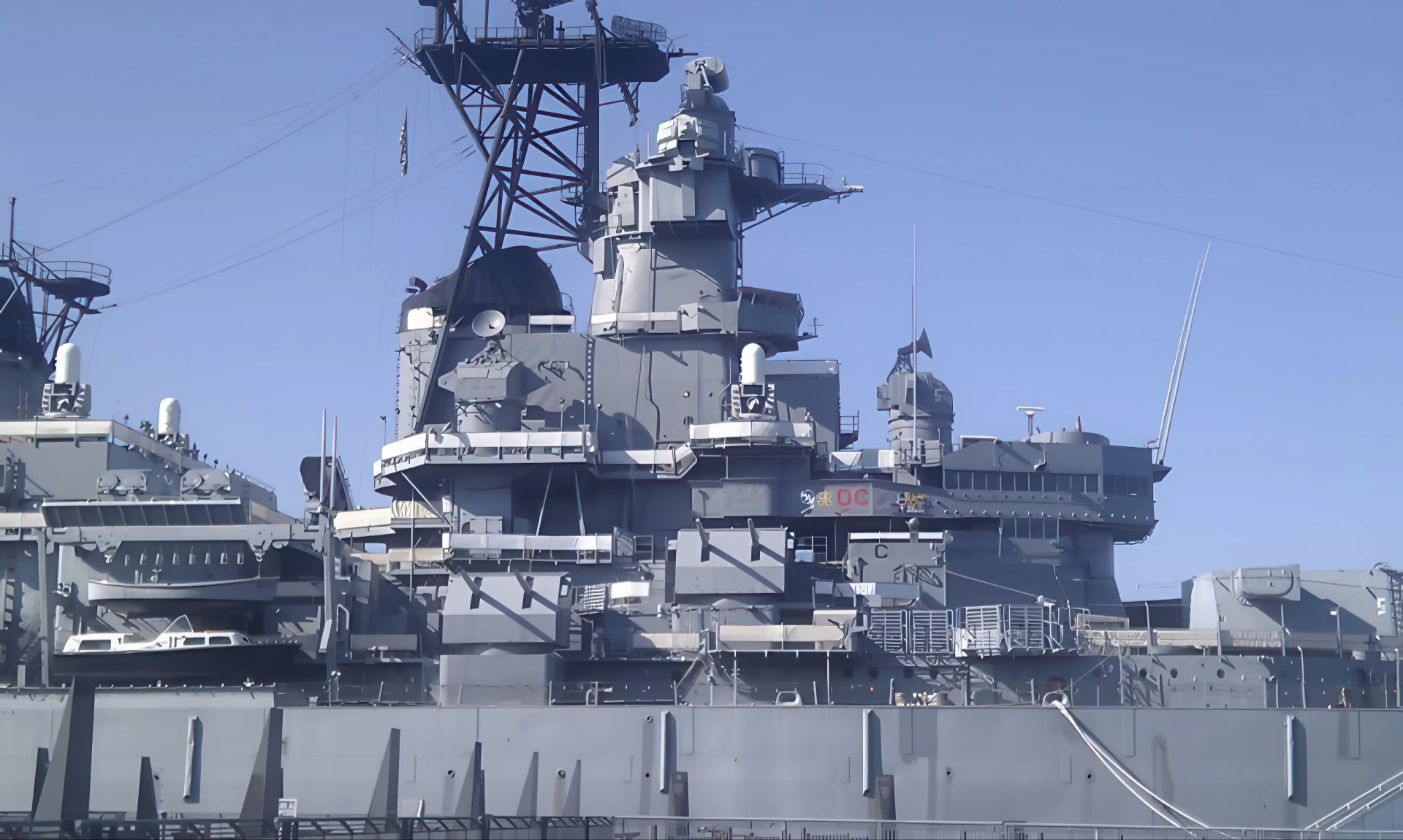
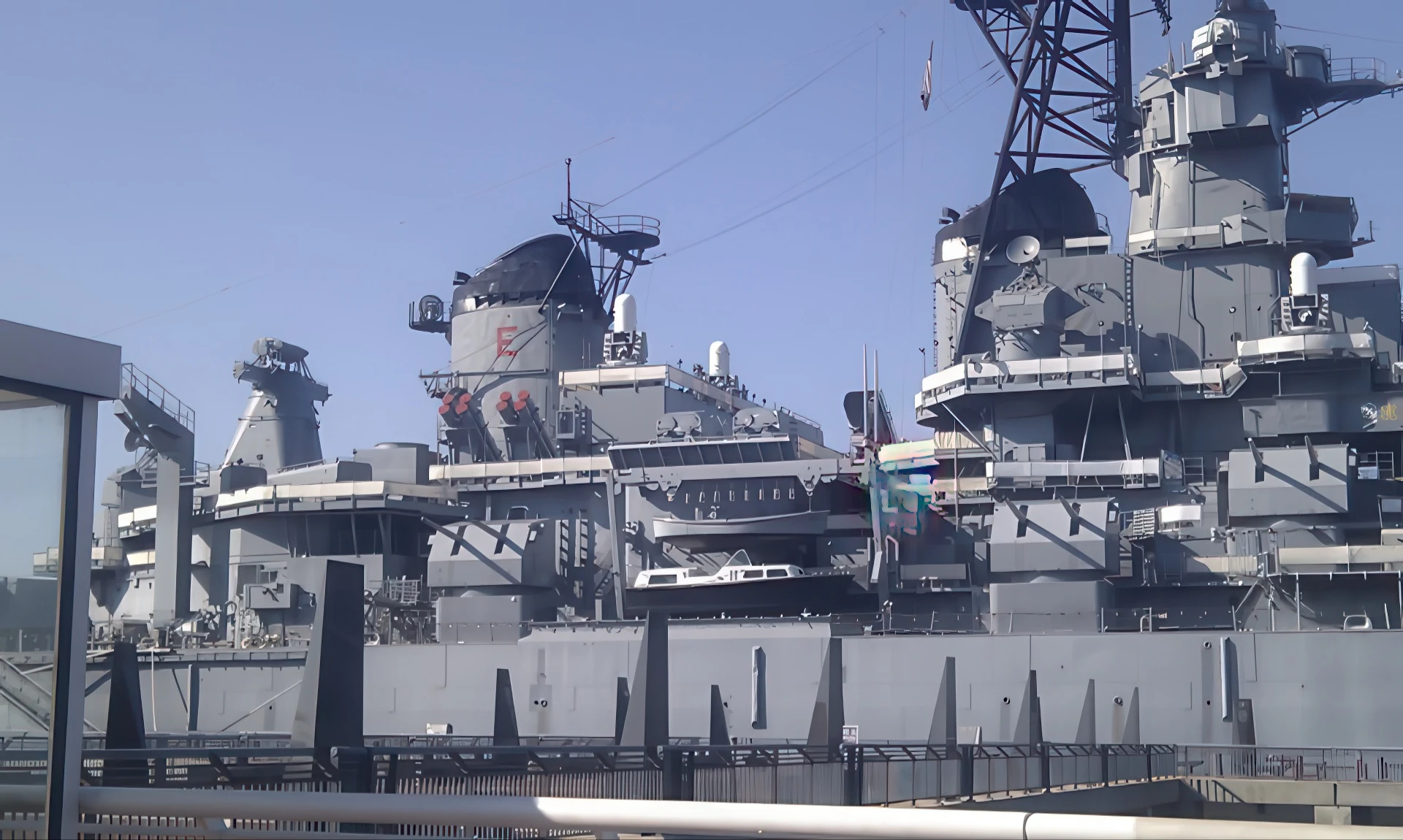
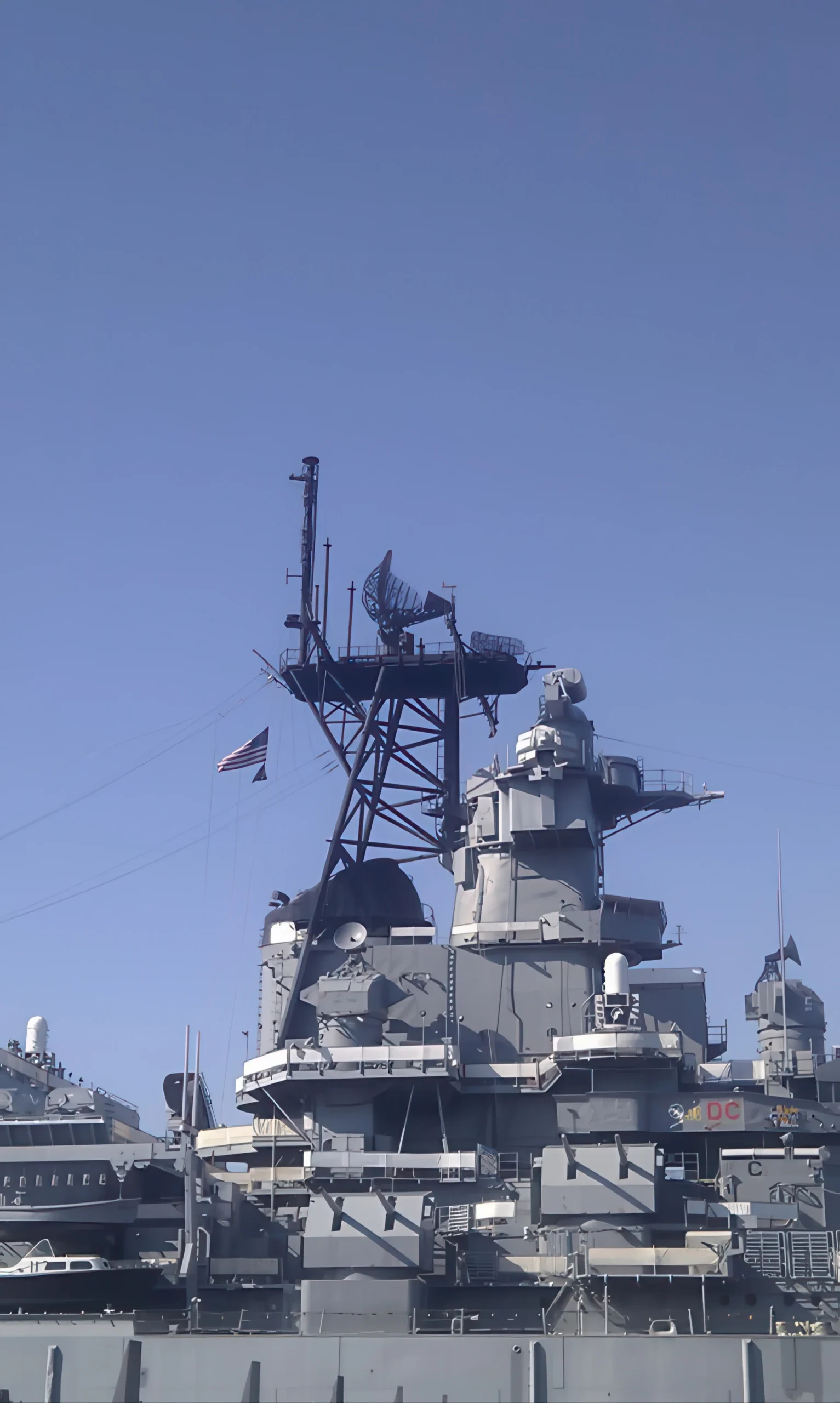
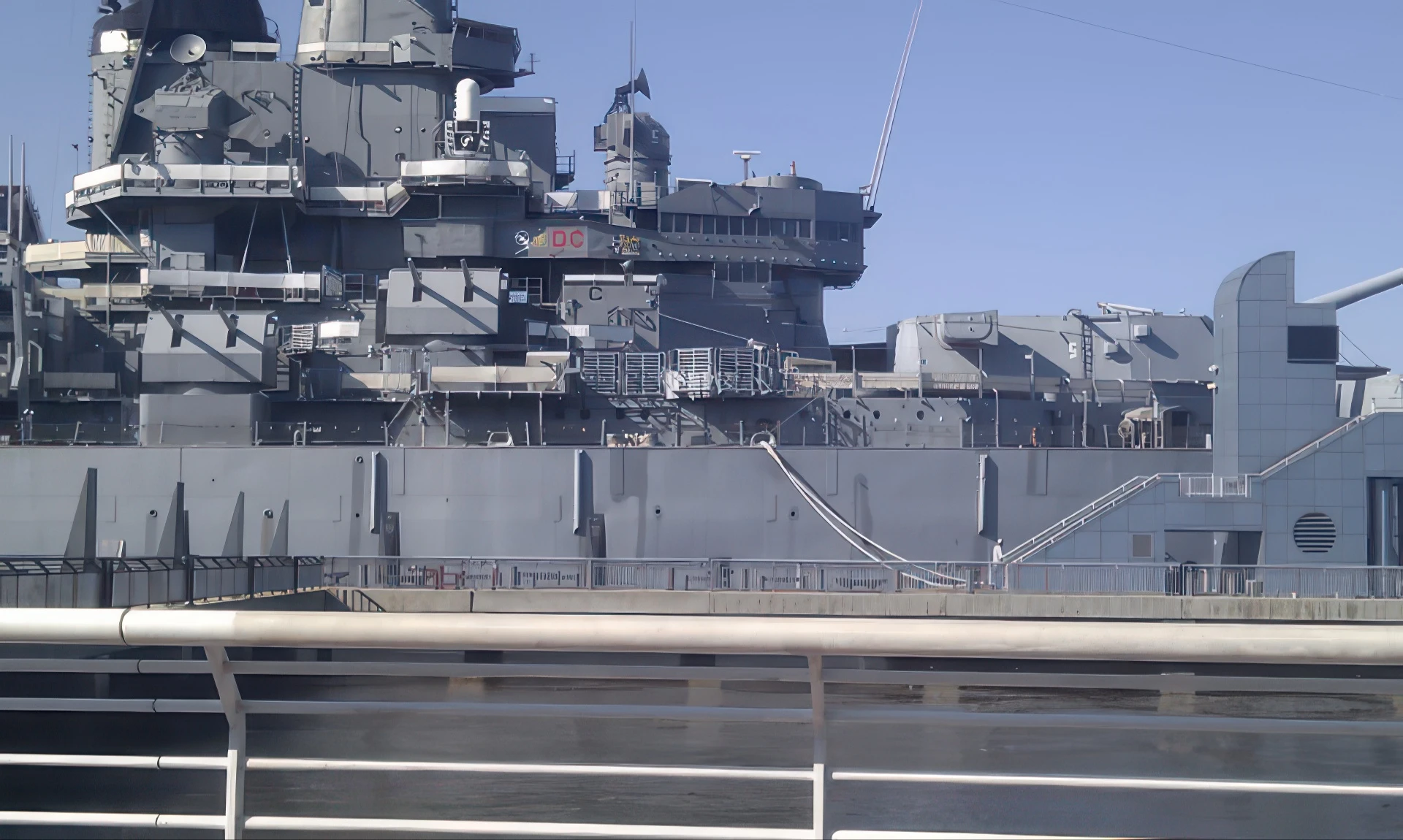
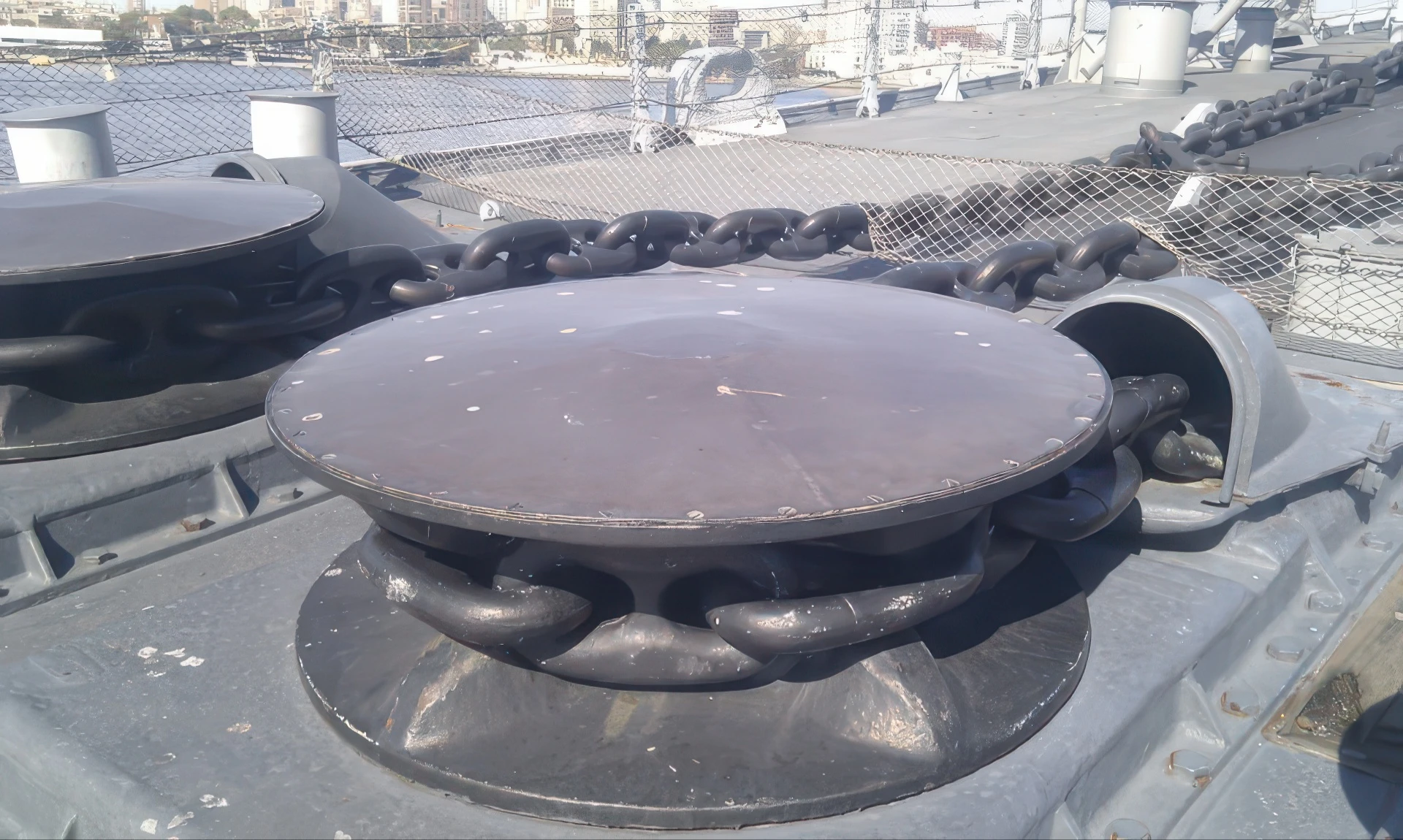
The 1980s Missile Metamorphosis:To counter the growing Soviet Navy threat, Ronald Reagan’s « 600-ship Navy » initiative completely modernized New Jersey. Engineers stripped away her obsolete 40mm and 20mm anti-aircraft gun tubs, replacing them with Armored Box Launchers for long-range Tomahawk cruise missiles and Harpoon anti-ship missiles, blending WWII armor with over-the-horizon strike power.
Operational History: 19 Battle Stars Across Four Eras
World War II & Flagship Status:Commissioned in 1943, New Jersey served as the legendary flagship for Admiral William « Bull » Halsey’s Third Fleet. She threw up massive walls of anti-aircraft fire during the Battle of the Philippine Sea (the « Marianas Turkey Shoot ») and hammered Japanese fortifications across the Pacific.
The Cold War Interventions (Korea & Lebanon):During the Korean War, she provided heavy shore fire support, destroying bridges and artillery positions. Decades later, during the Lebanese Civil War (1983–1984), New Jersey anchored off Beirut and fired massive salvos into the Bekaa Valley to strike militias targeting US Marines, utilizing the sheer psychological terror of her shells to alter ground operations.
The Lone Battleship in Vietnam:In 1968, New Jersey became the only battleship in the world reactivated for the Vietnam War. Operating along the gun-line off the DMZ, she fired over 5,600 main battery rounds in a single deployment, destroying subterranean North Vietnamese bunker systems that regular artillery and aerial bombs could not crack.
The Epitaph of the Dreadnought:Decommissioned for the final time in February 1991 as the Cold War ended, New Jersey concluded 21.5 years of active service—more than any of her sister ships (Iowa, MissouriOu Wisconsin). Today, she rests in her namesake state as a museum ship in Camden, serving as a monument to the absolute zenith of naval gun power.


 Arleigh Burke-class destroyer – Photos & Videos
 USS Becuna – Photos & Vidéos
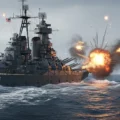 USS Wisconsin (BB-64) – Photos et vidéos
 USS Little Rock – Photos & Vidéos
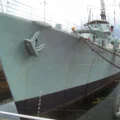 HMS Cavalier (R73) – Photos & Vidéos
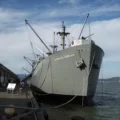 SS Jeremiah O’Brien – Photos & Vidéos
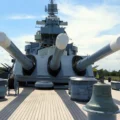 USS North Carolina (BB-55) – Photos et vidéos
 USS Lionfish SS-298 – Photos et vidéo
 USS Massachusetts BB-59 – Photos et vidéo
 U-505 Type IXc U-Boot – Photos & Vidéo