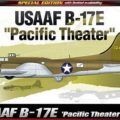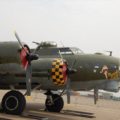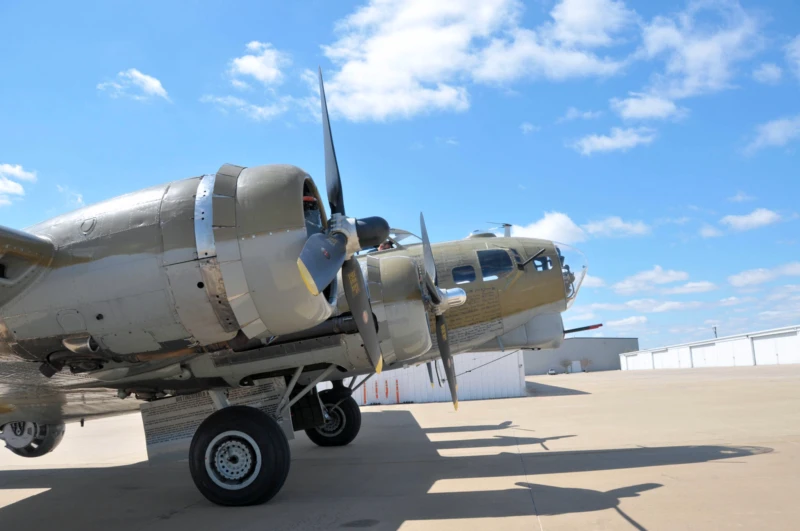
B-17F Lentävä linnoitus | |
|---|---|
| Maa | Yhdysvallat |
| Rooli | Raskas pommittaja |
| Ensimmäinen lento | 28. heinäkuuta 1935 |
| Rakennettu | 12000+ |
Nniiden Boeing B-17 Lentävä linnoitus is a four-engined heavy bomber developed in the 1930s for the United States Army Air Corps (USAAC). Competing against Douglas and Martin for a contract to build 200 bombers, the Boeing entry (prototype Model 299/XB-17) outperformed both competitors and exceeded the air corps’ performance specifications. Although Boeing lost the contract (to the Douglas B-18 Bolo) because the prototype crashed, the air corps ordered 13 more B-17s for further evaluation. From its introduction in 1938, the B-17 Flying Fortress evolved through numerous design advances, becoming the third-most produced bomber of all time, behind the four-engined B-24 and the multirole, twin-engined Ju 88.
| B-17F Flying Fortress | |
|---|---|
| Valokuvaaja | Unknow |
| Lokalisointi | Ei tietää |
| Valokuvat | 21 |
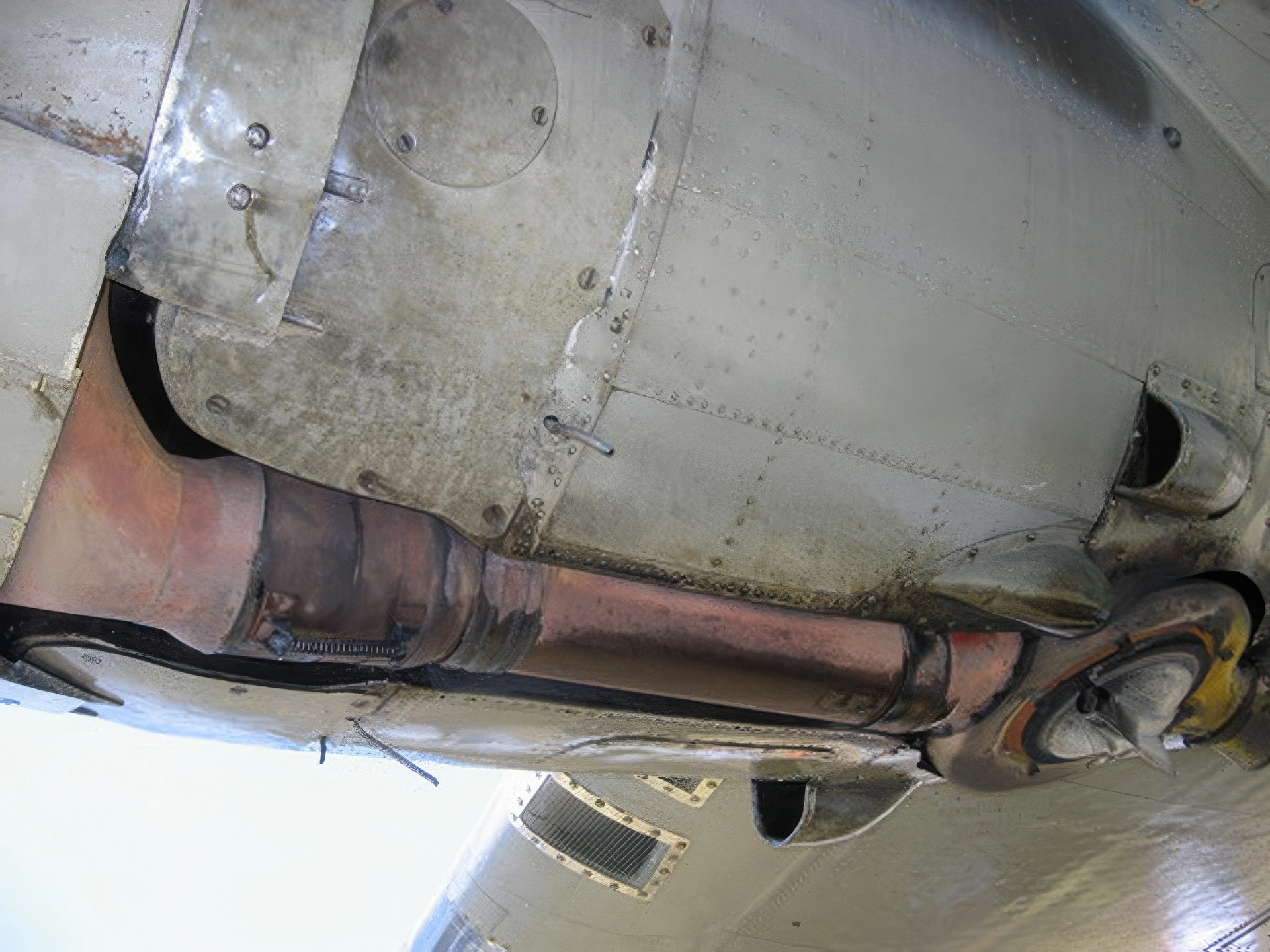
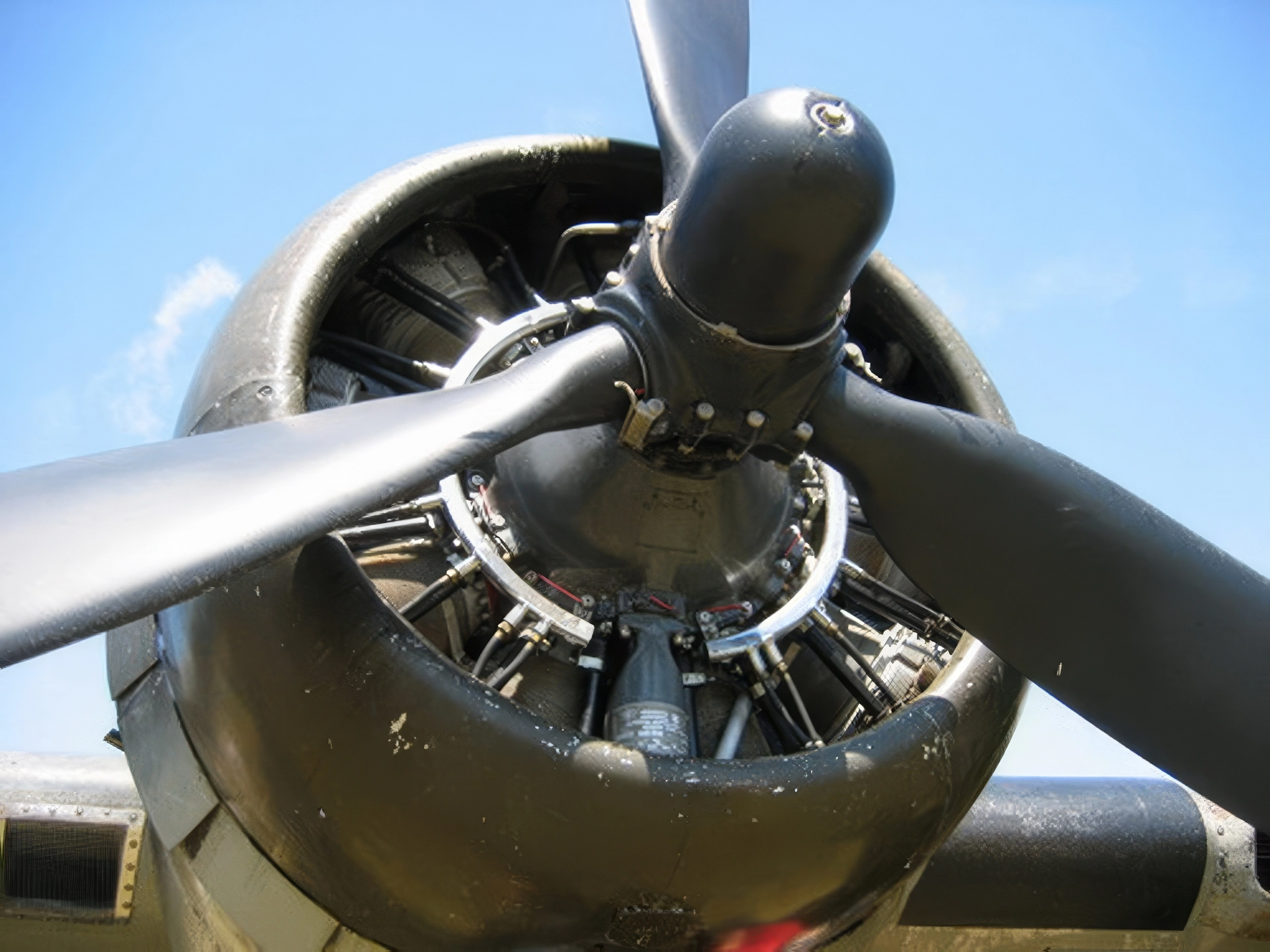
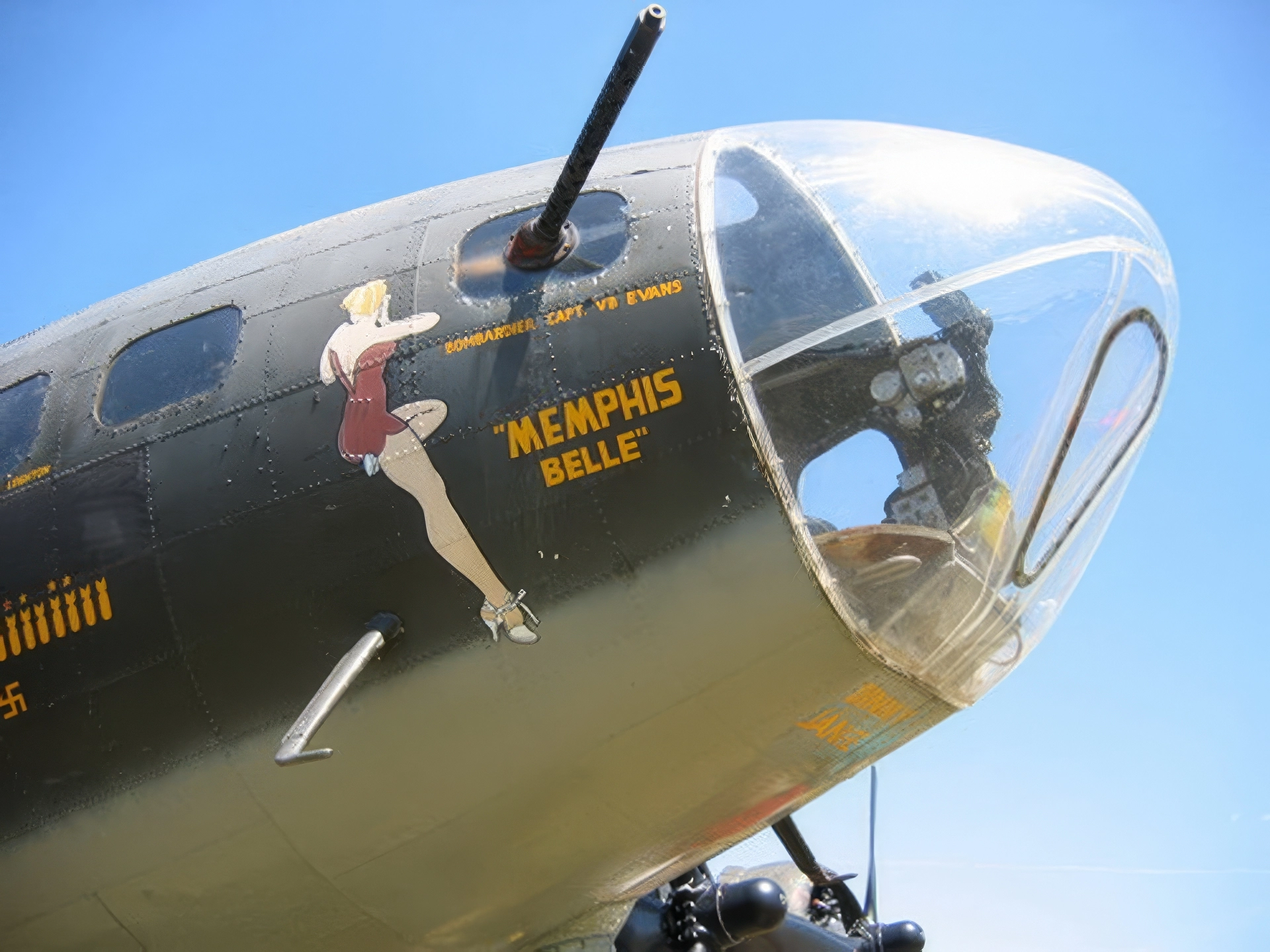
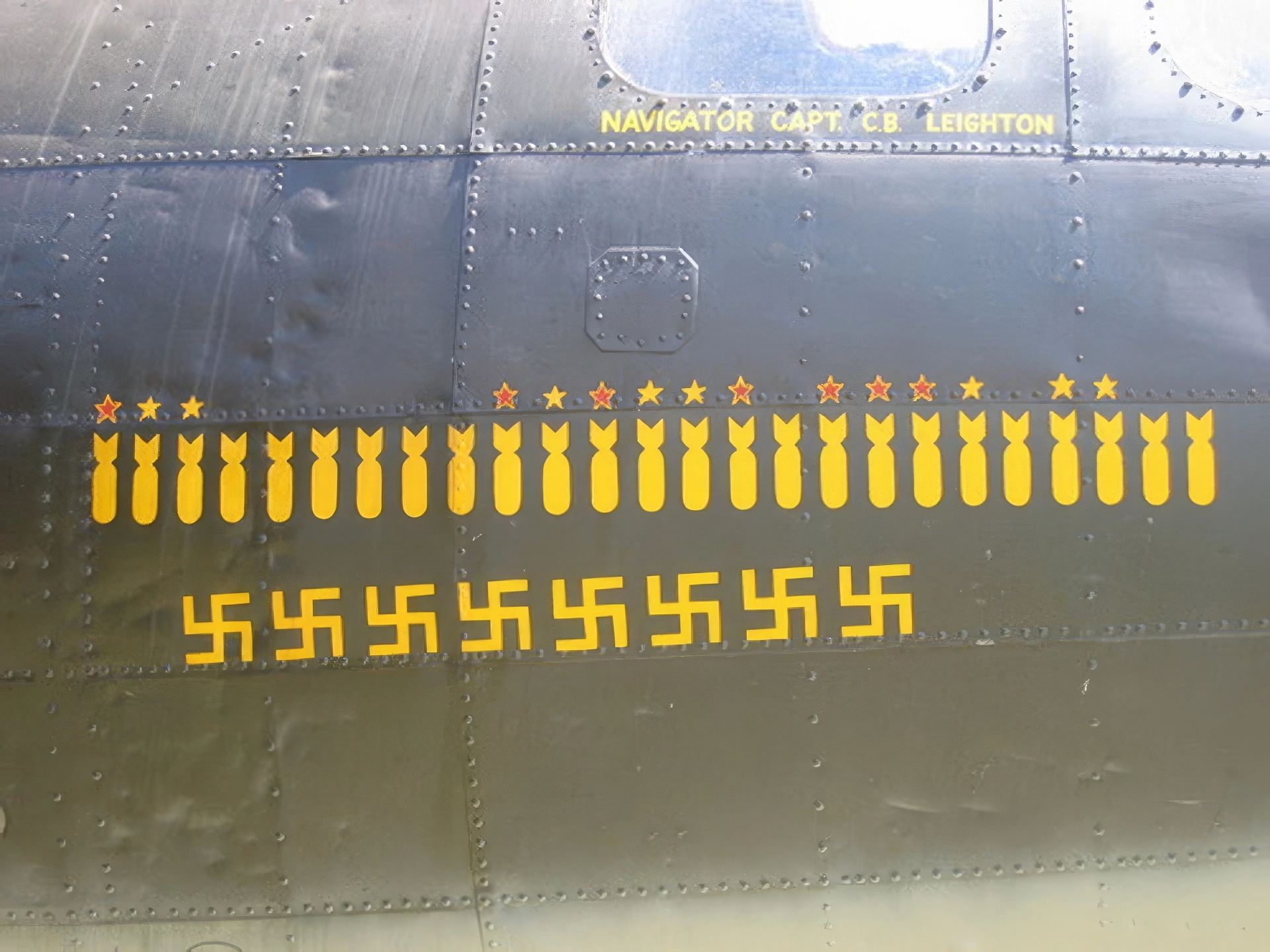
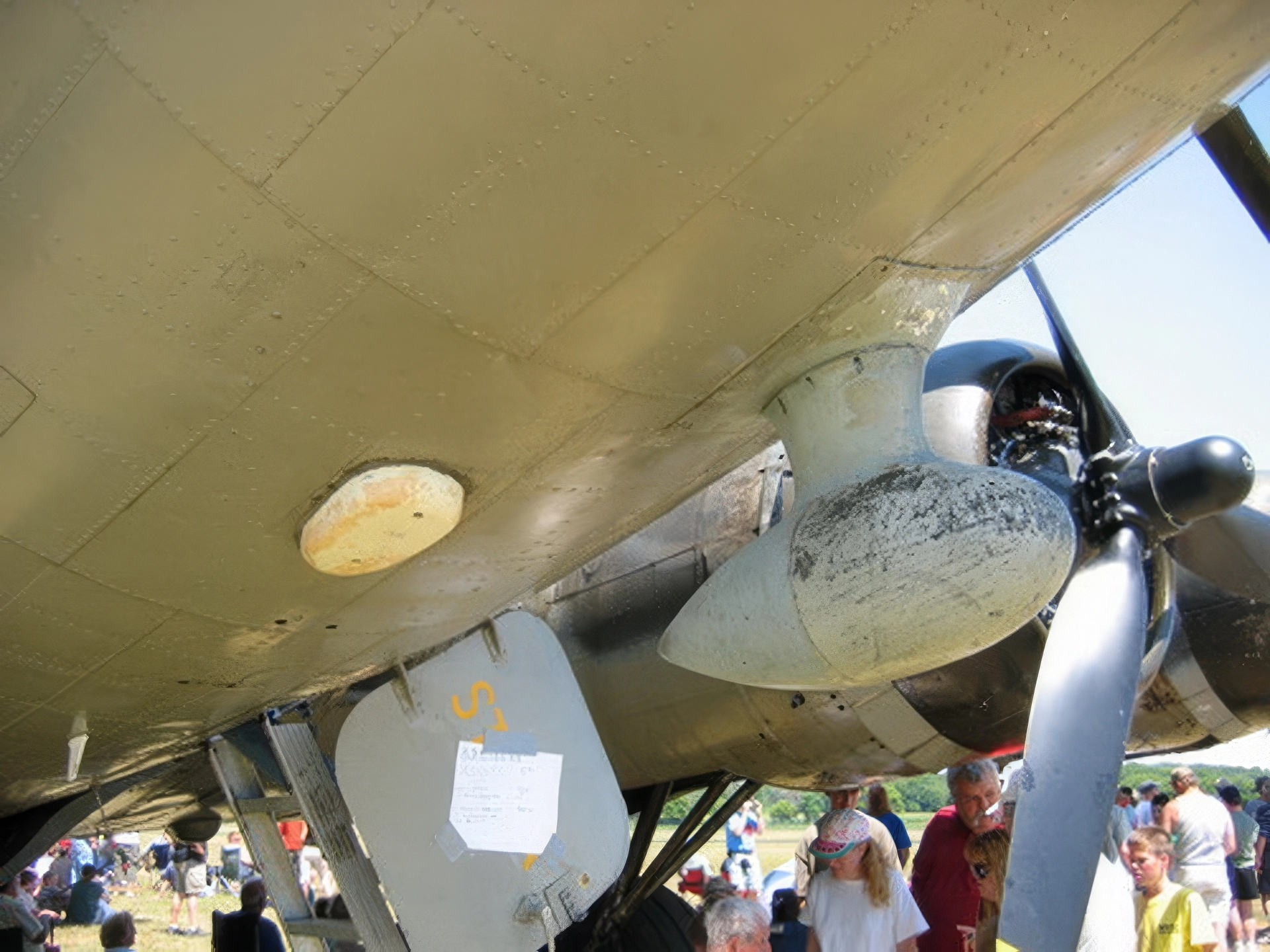
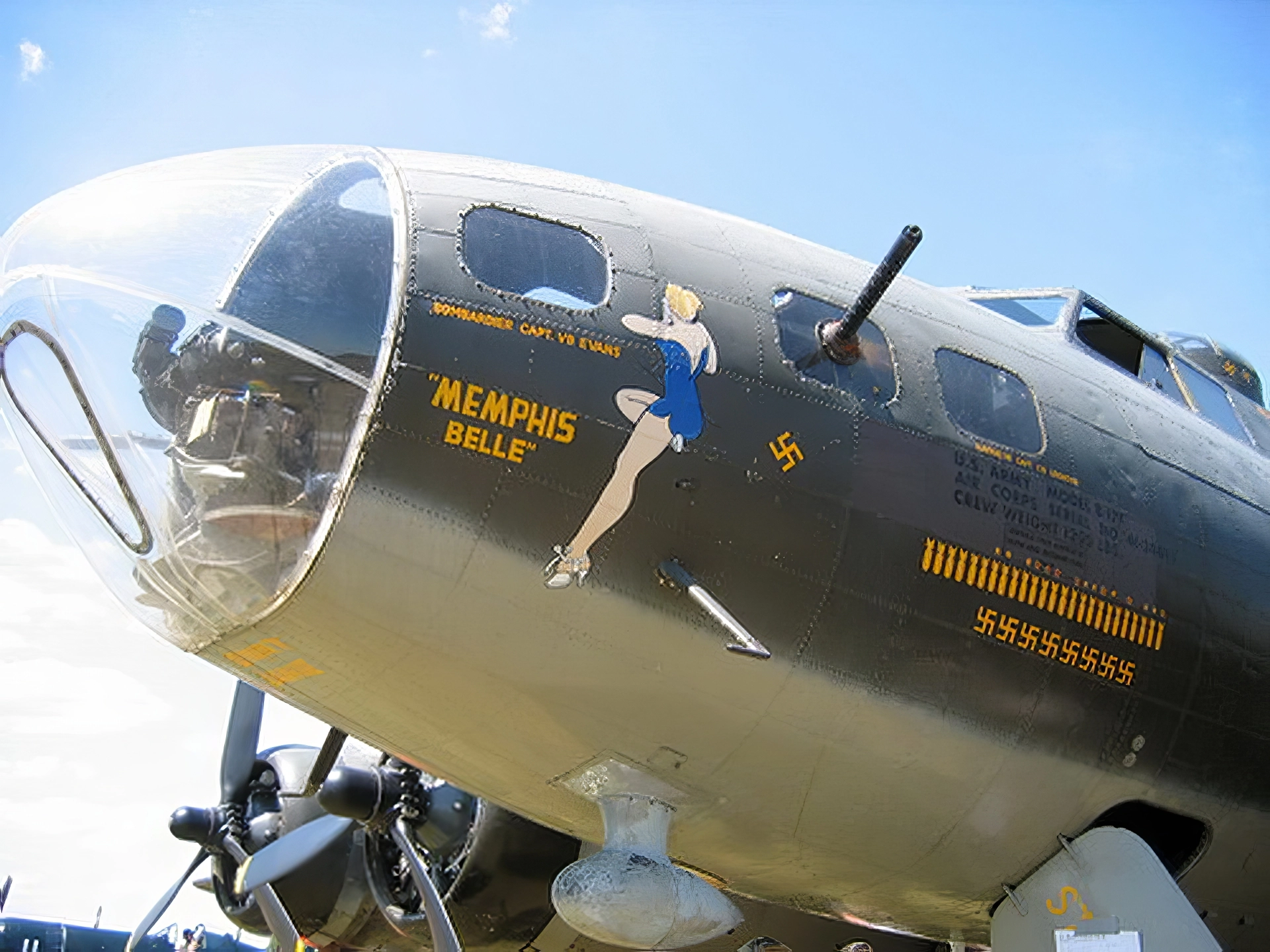
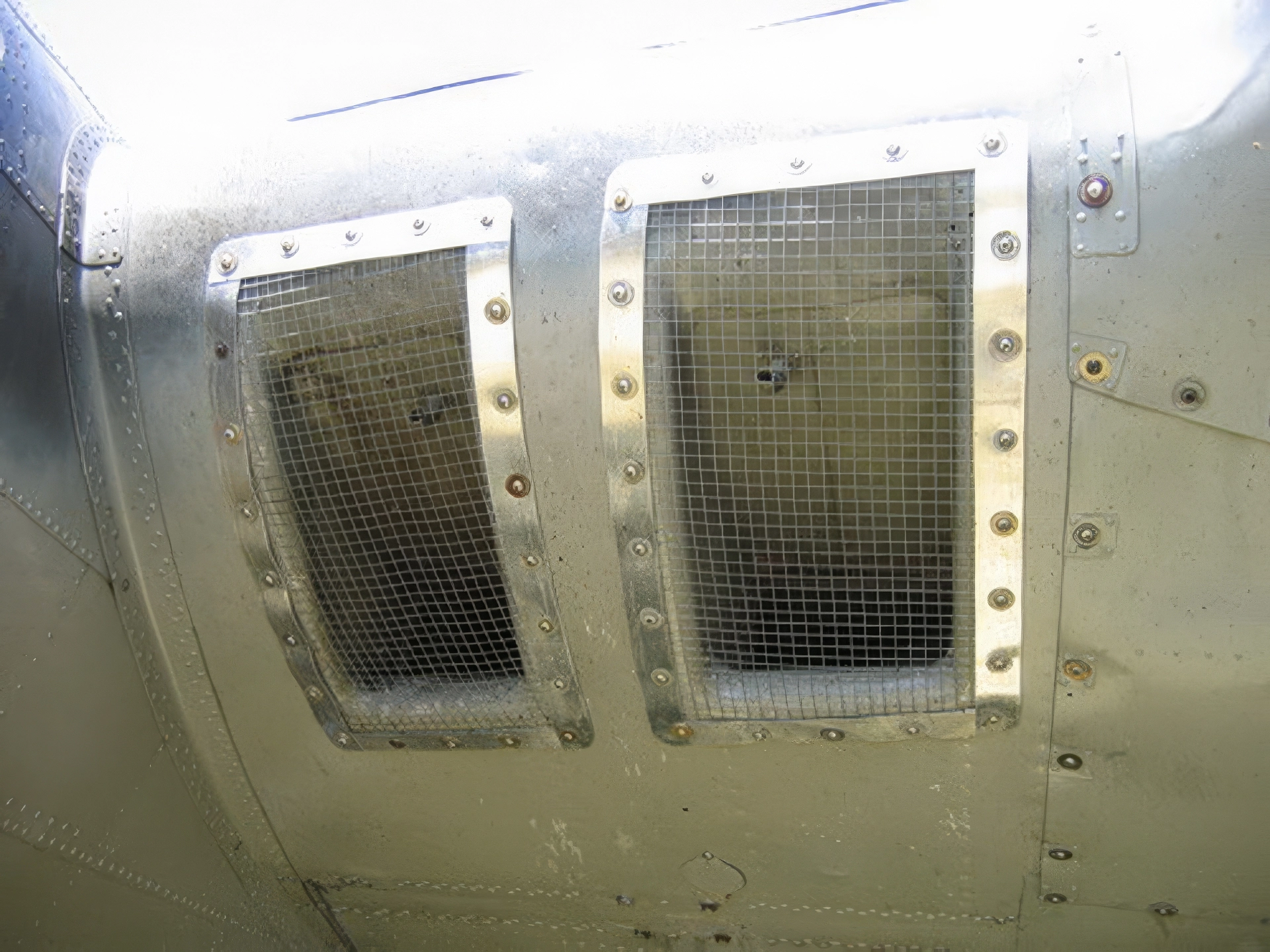
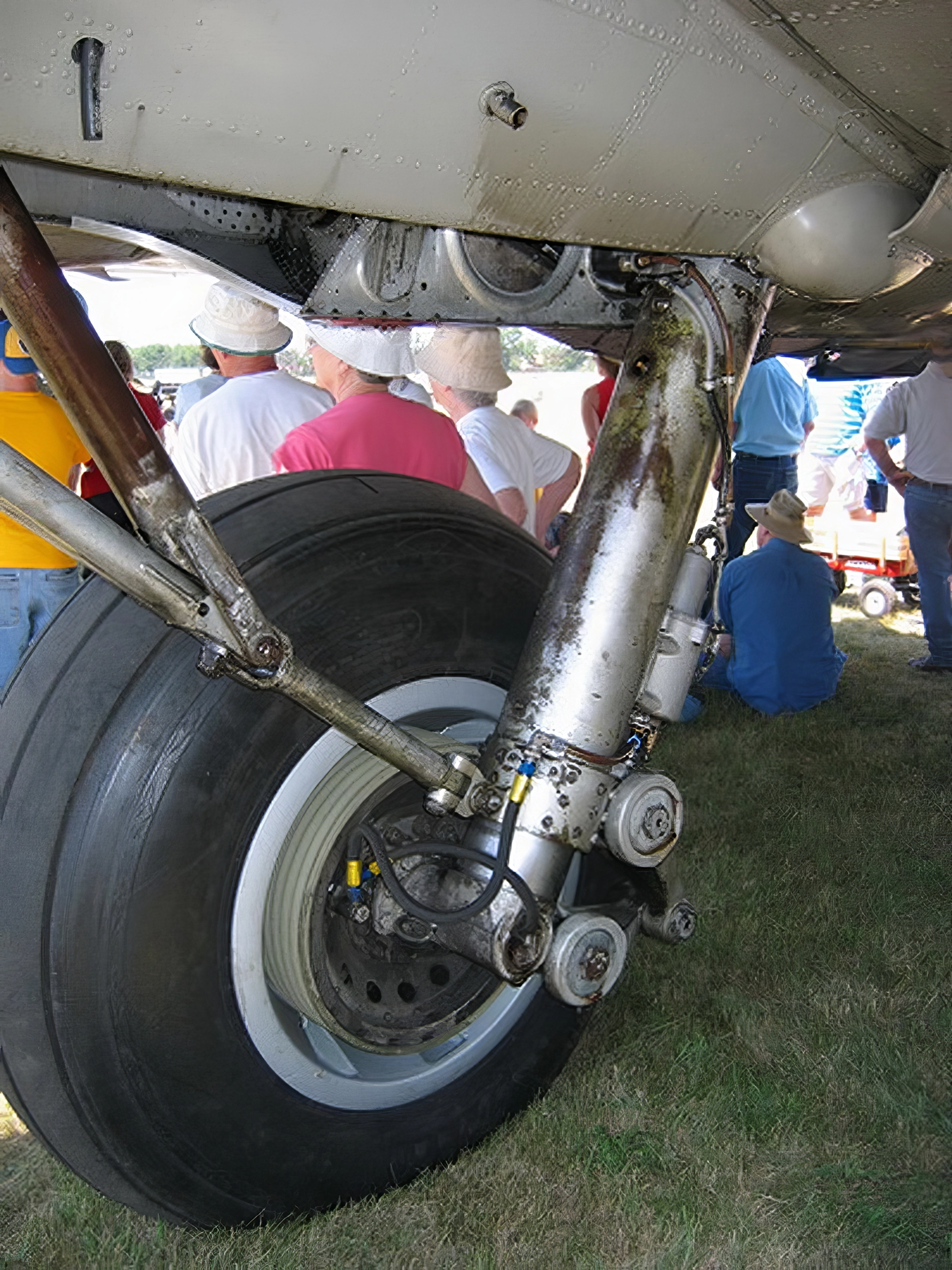
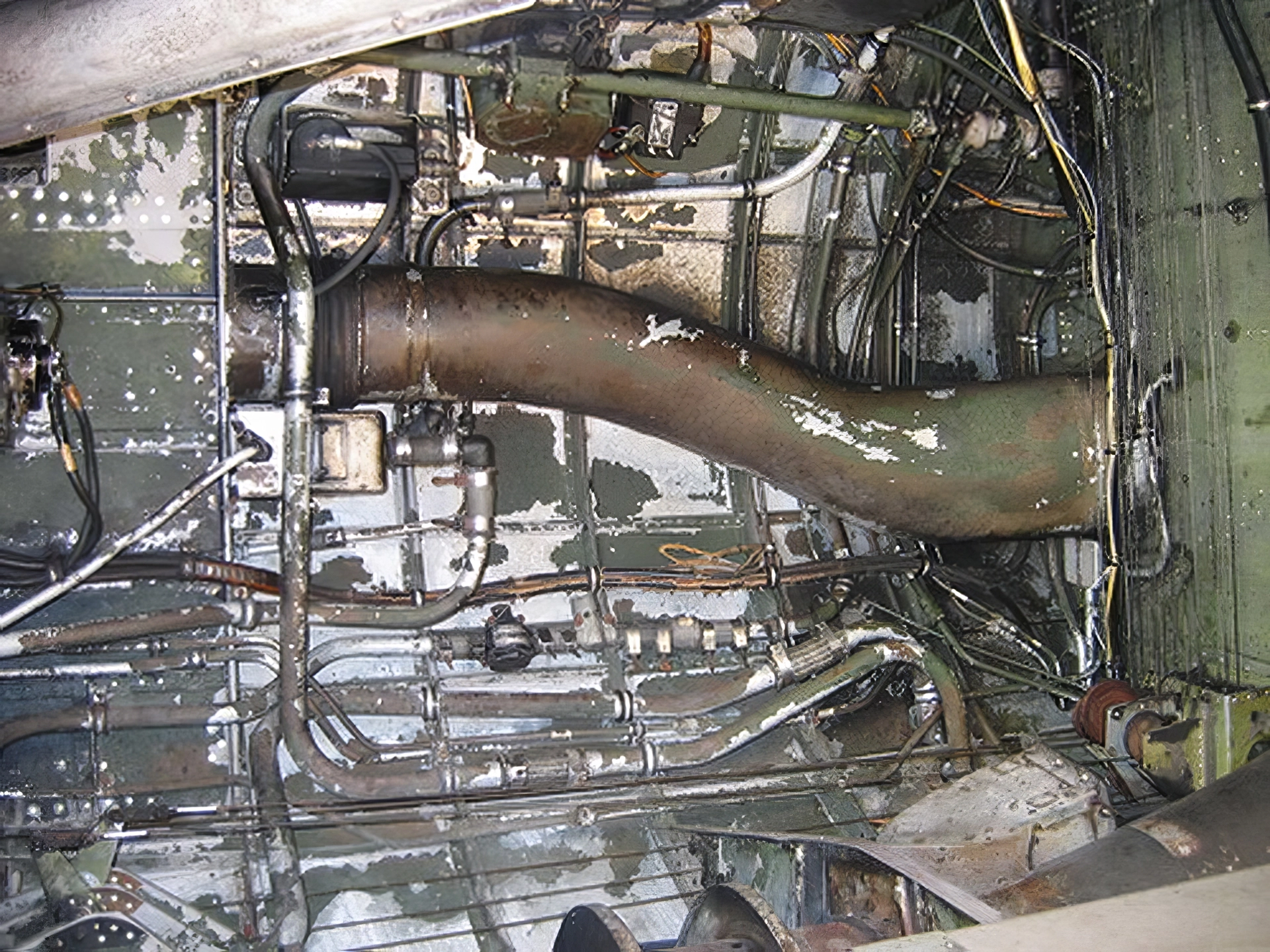

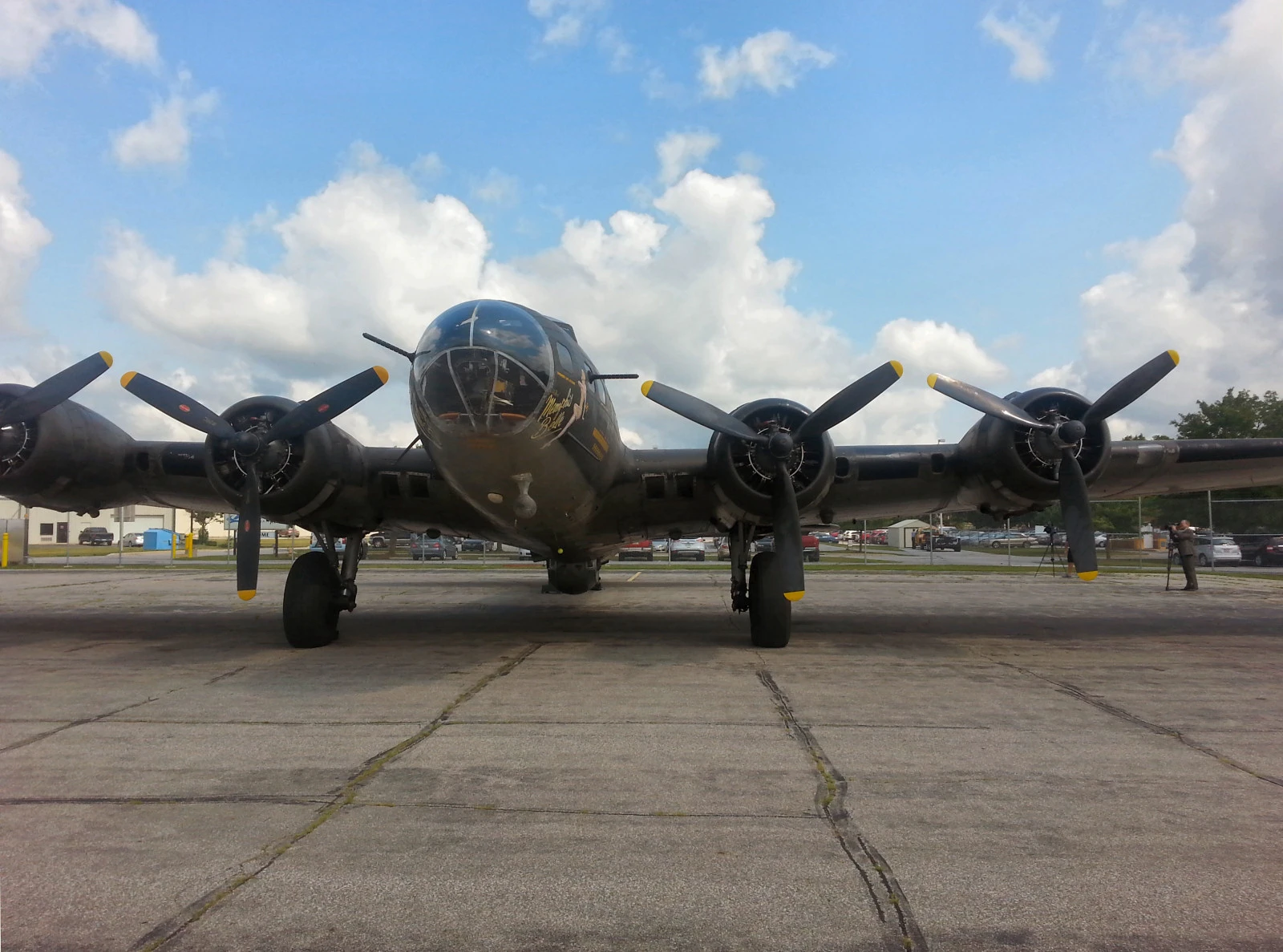
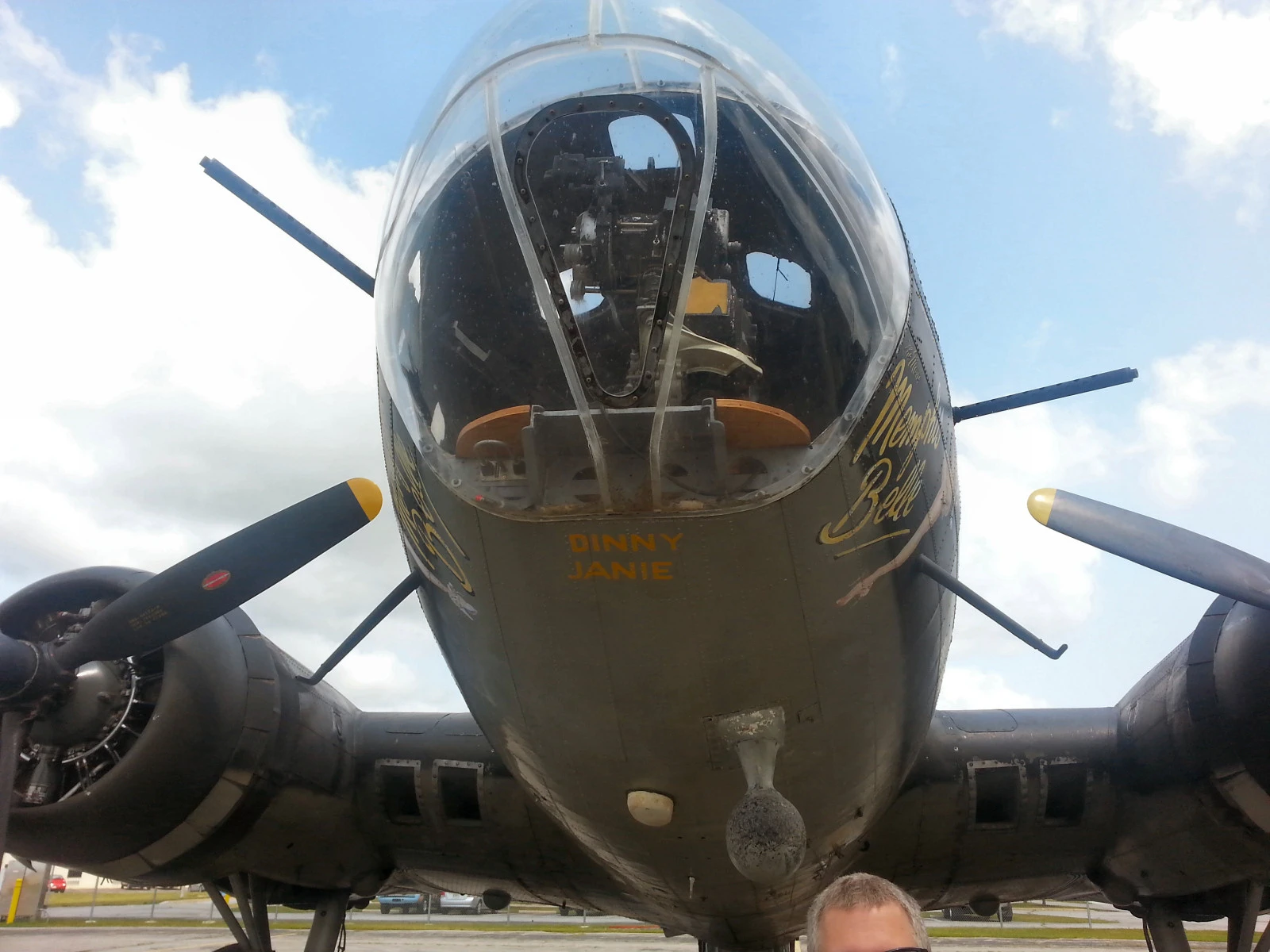
| B-17F Flying Fortress ‘Memphis Belle’ Walk Around | |
|---|---|
| Valokuvaaja | Dean Jackson |
| Lokalisointi | Ei tietää |
| Valokuvat | 32 |
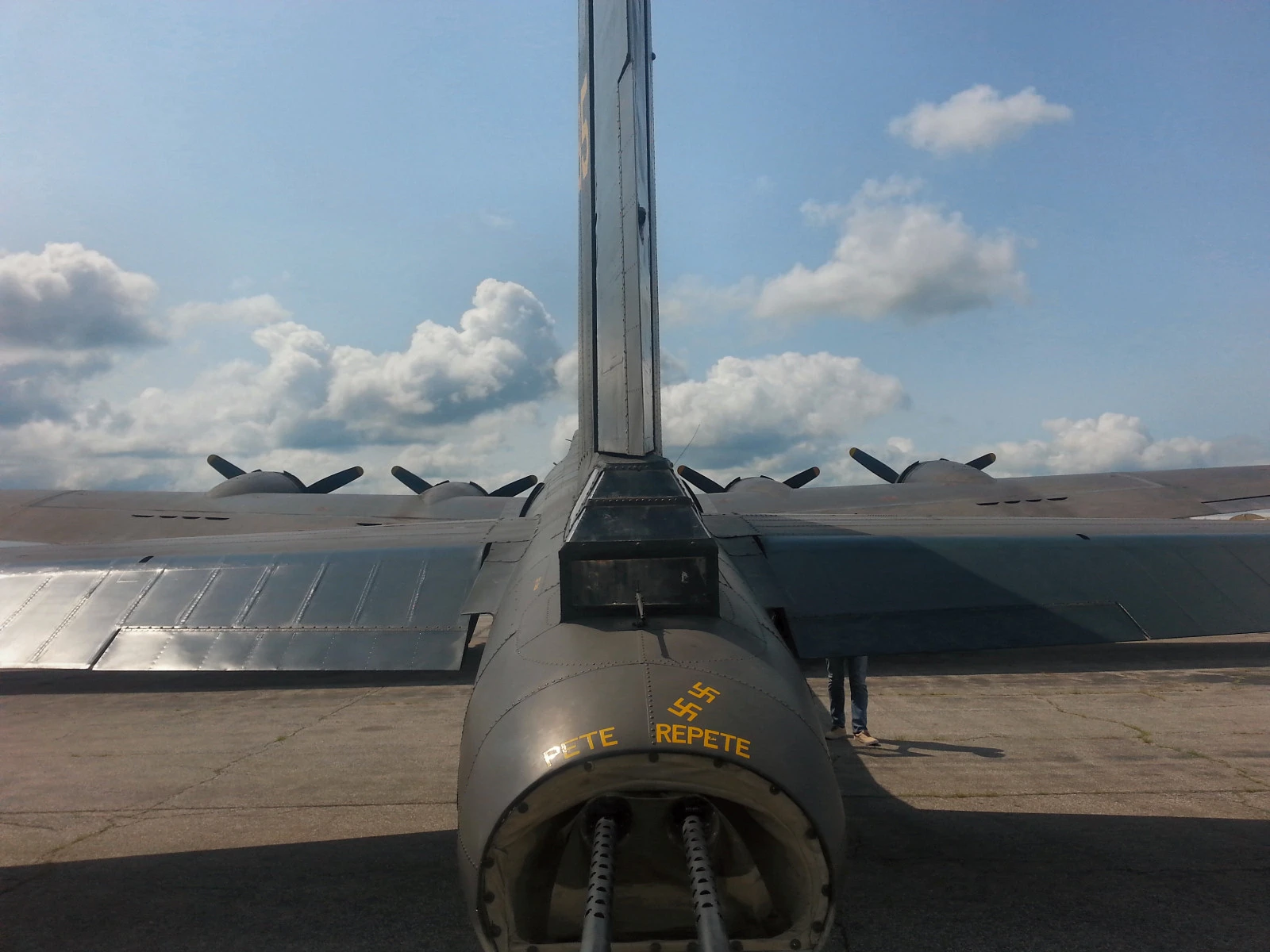
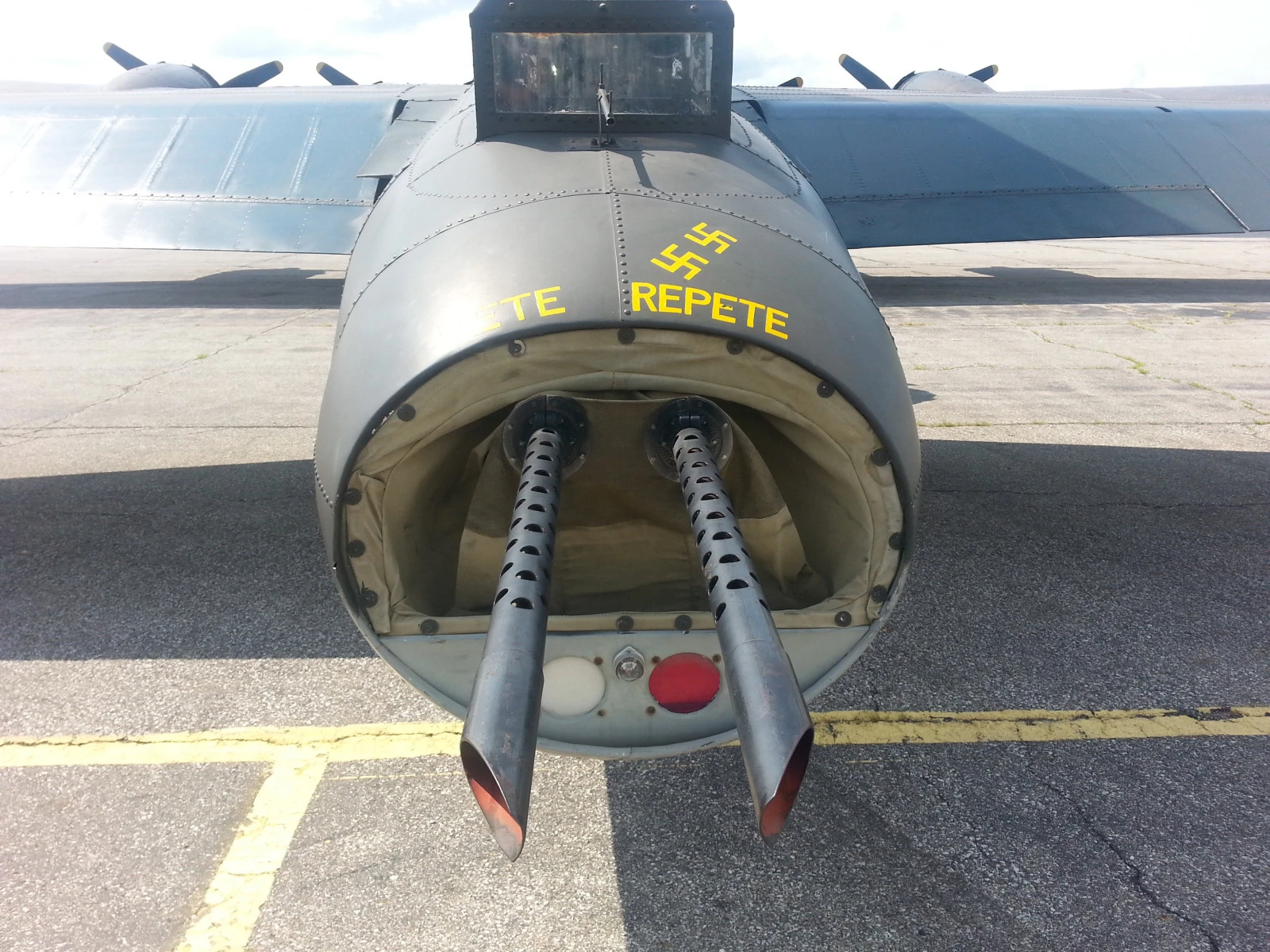
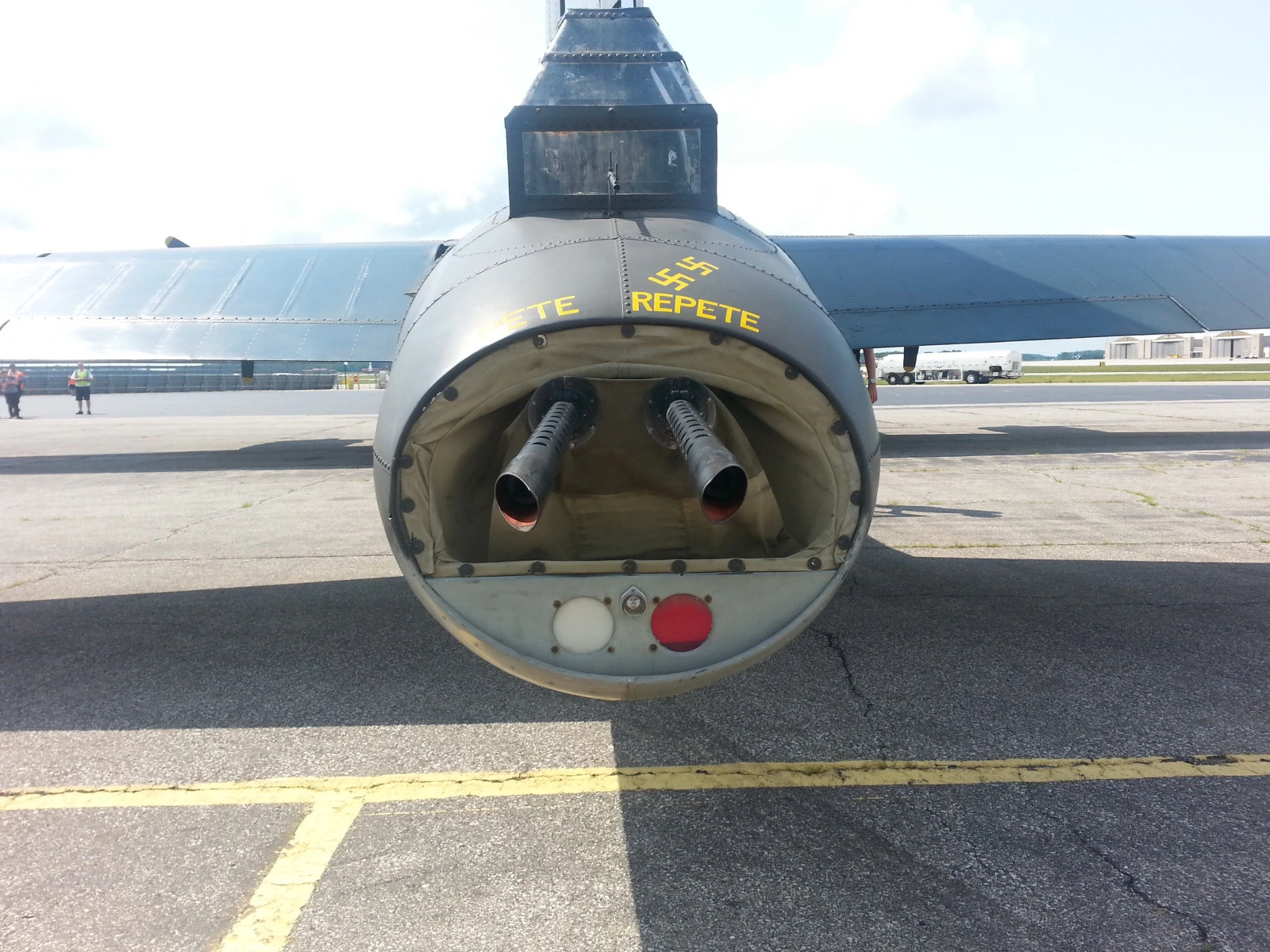
Katso myös:


The Legend of the Bloody Hundredth
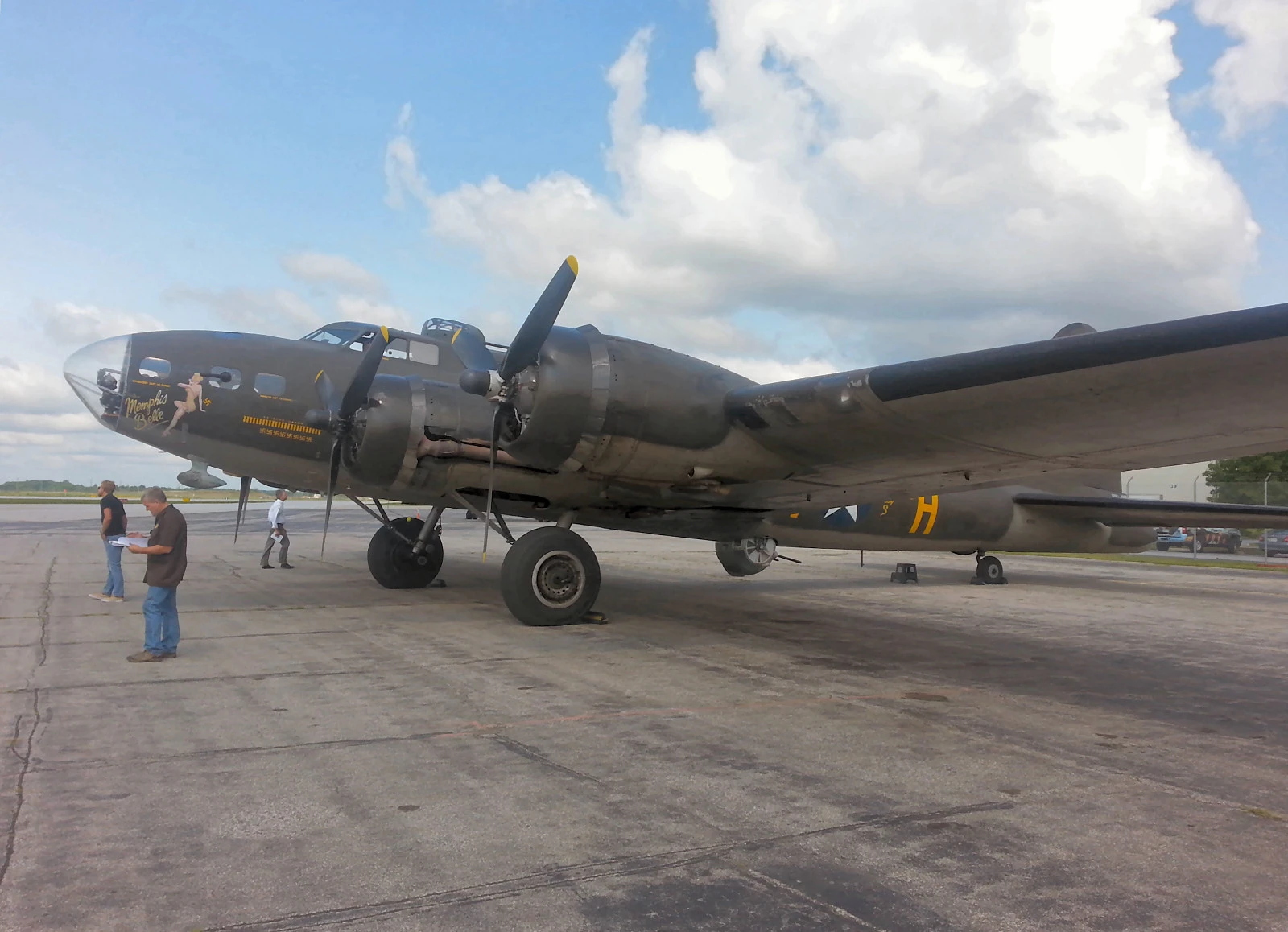
Nniiden Boeing B-17F Flying Fortress represents the definitive mid-war variant of America’s most iconic heavy bomber and the aircraft that bore the initial brunt of the dangerous daylight strategic bombing campaign over Nazi-occupied Europe. While later models became famous for their chin-mounted turrets, the “F” model was the ship that established the B-17’s legendary reputation for near-superhuman ruggedness. Capable of absorbing catastrophic damage from anti-aircraft flak and enemy interceptors—losing entire sections of its tail, engines, and wings while still bringing its teenage crew safely back across the English Channel—the B-17F flew the most hazardous early missions of the Eighth Air Force, immortalized by historic individual bombers like the Memphis Belle.
| Attribute | Technical Specification (B-17F Production Baseline) |
|---|---|
| Rooli | Strategic Heavy Bomber |
| miehistö | 10 (Pilot, Co-Pilot, Navigator, Bombardier, Flight Engineer/Top Turret, Radio Operator, 2 Waist Gunners, Ball Turret Gunner, Tail Gunner) |
| Voimalaitos | 4 × Wright R-1820-97 “Cyclone” 9-cylinder radial engines (1,200 hp each with General Electric turbo-superchargers) |
| Enimmäisnopeus | 523 km/h (325 mph) at combat altitude |
| Combat Range | ~3,219 km (2,000 miles) with a standard internal bomb load |
| Service Ceiling | 11,400 m (37,500 ft) |
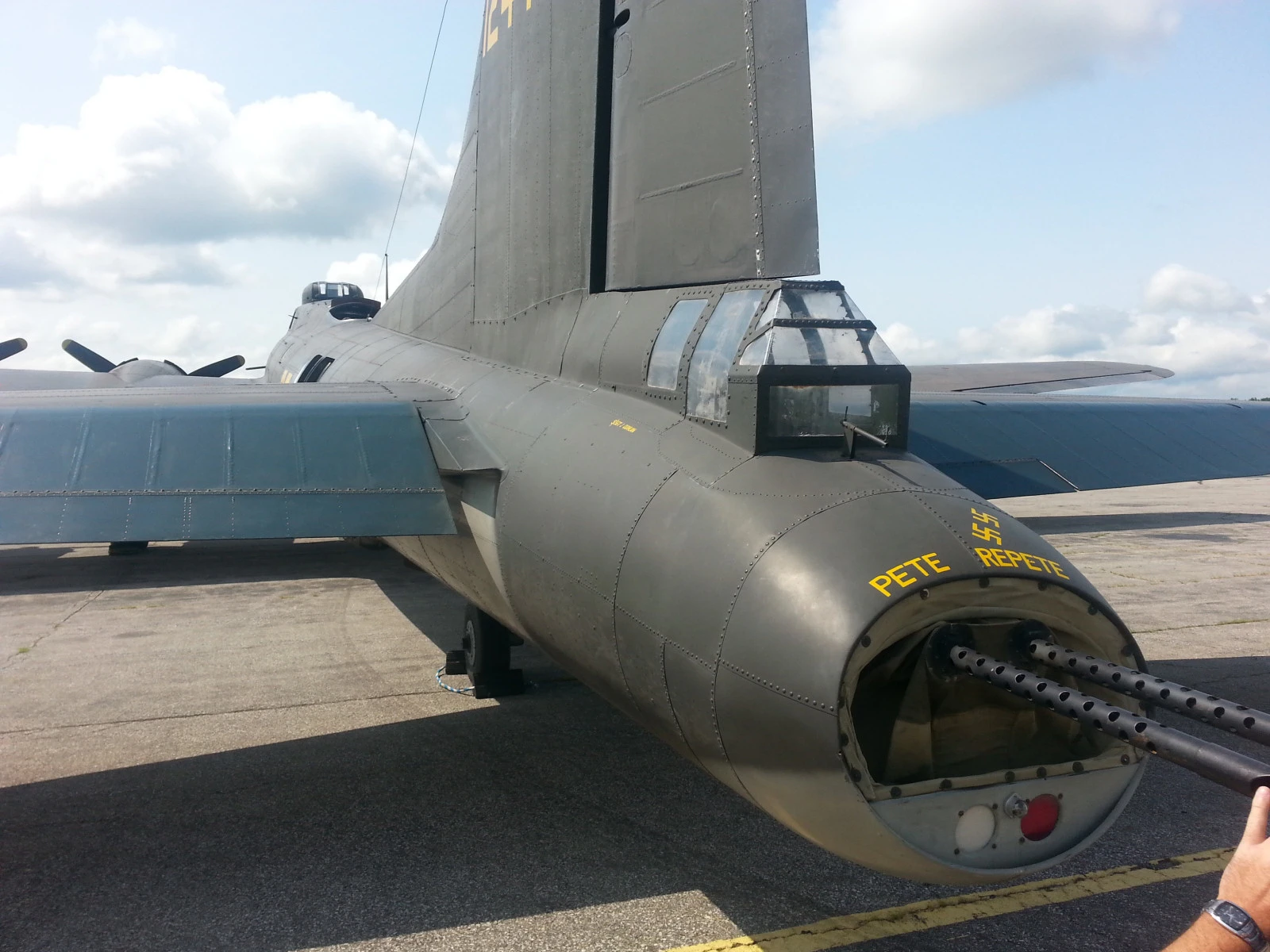
| Primary Armament | 10 to 12 × .50 caliber (12.7mm) Browning AN/M2 machine guns distributed in manual and power-operated mounts |
| Ordnance Capacity | Standard: 2,722 kg (6,000 lbs) internal; Maximum: Up to 7,983 kg (17,600 lbs) utilizes external wing racks for short missions |
Design Engineering: The Sperry Ball Turret and High-Altitude Superchargers
- The Tiny Sperry Ball Turret: To protect the bomber’s completely exposed belly from fighters diving from below, the B-17F integrated the highly advanced Sperry ball turret. Made of cast aluminum and plexiglass, this incredibly cramped sphere sat on a motorized hydraulic gimbal. The smallest man in the crew was chosen to sit curled up in a fetal position inside, tracking targets with two .50 caliber machine guns using an optical reflector sight directly between his knees.
- GE Turbo-Superchargers for High Flight: The B-17F relied on external General Electric turbo-superchargers tucked beneath its engine nacelles. Driven by the engine’s hot exhaust gases, these units compressed the thin high-altitude air before pumping it into the Wright Cyclone cylinders. This technological advantage allowed the B-17F to operate comfortably above 25,000 feet, safely bypassing the effective ceiling of many light German anti-aircraft gun batteries.
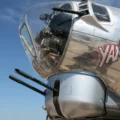
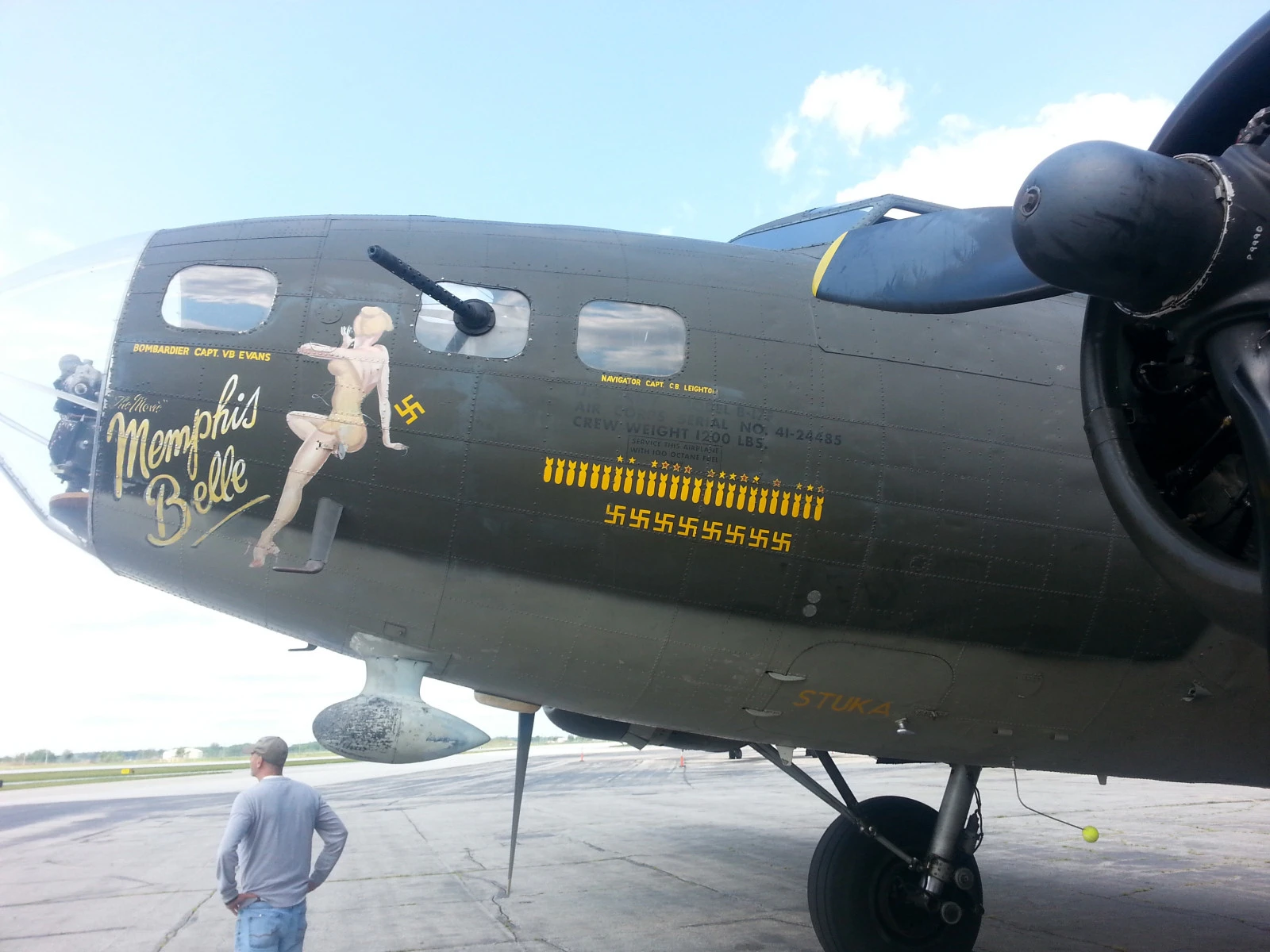
- The Framing of the Iconic Glass Nose: The B-17F featured a distinctive, elongated molded plexiglass nose piece that gave the bombardier an completely unobstructed view of the terrain below. Unlike later B-17G variants, the “F” model lacked a power-operated remote chin turret, forcing the navigator and bombardier to manually aim hand-held .50 caliber machine guns through flexible socket holes in the glass to fend off frontal assaults.
- The Tough All-Metal Monocoque Hull: Boeing engineered the Flying Fortress around a remarkably resilient, semi-monocoque aluminum structure. Instead of using a brittle, lightweight frame, its thick skin was reinforced by a mesh of internal bulkheads and longerons. This robust design meant that even if an artillery shell blew out a massive chunk of the fuselage skin, the surrounding metal framework could carry the load and prevent the plane from breaking apart in mid-air.
Operational History: Daylight Attrition and the Legend of the Memphis Belle
- The Meat Grinder of Unescorted Daylight Bombing: Introduced to frontline combat in 1942, B-17F wings spearheaded the American philosophy of unescorted daylight precision bombing. Operating without fighters to protect them due to range limits, B-17F formations had to fly in tightly stacked “combat boxes” to cross-cover each other with defensive gun fields, sustaining brutal losses during deep raids against Schweinfurt and Regensburg.
- The Fatal Frontal Vulnerability: Savvy Luftwaffe fighter pilots quickly noticed that the B-17F’s defensive arc was weakest directly from the front. German interceptors like the Fw 190 began flying terrifying head-on attack runs at 400 mph, firing explosive 20mm cannons directly through the unarmored glass nose of the B-17F. This tactical gap forced crews to improvise by welding extra machine gun mounts into the waist windows.
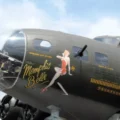
- The Triumph of the Memphis Belle: In May 1943, a B-17F named Memphis Belle (serial number 41-24485) belonging to the 91st Bomb Group became one of the very first heavy bombers in the Eighth Air Force to successfully complete 25 high-hazard combat missions over Europe with its entire crew intact, proving to a desperate home front that the air war was winnable.
- Passing the Torch to the G Model: Over 3,400 B-17F aircraft were manufactured before production lines shifted entirely to the final, heavily armed B-17G variant in late 1943. Today, true surviving “F” model airframes are exceptionally rare treasures of aviation history, with the beautifully restored original Memphis Belle serving as a premier permanent exhibit at the National Museum of the United States Air Force.
Views : 4012