Tiger II – Königstiger | |
|---|---|
| Land | Tyskland |
| Type | Tung tank |
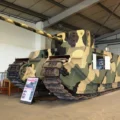
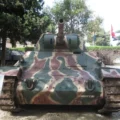
| Beskrivelse | Album 56 walk-around fotos af tanken Tiger II – Königstige |
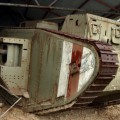
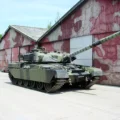
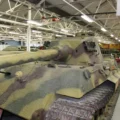
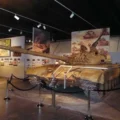
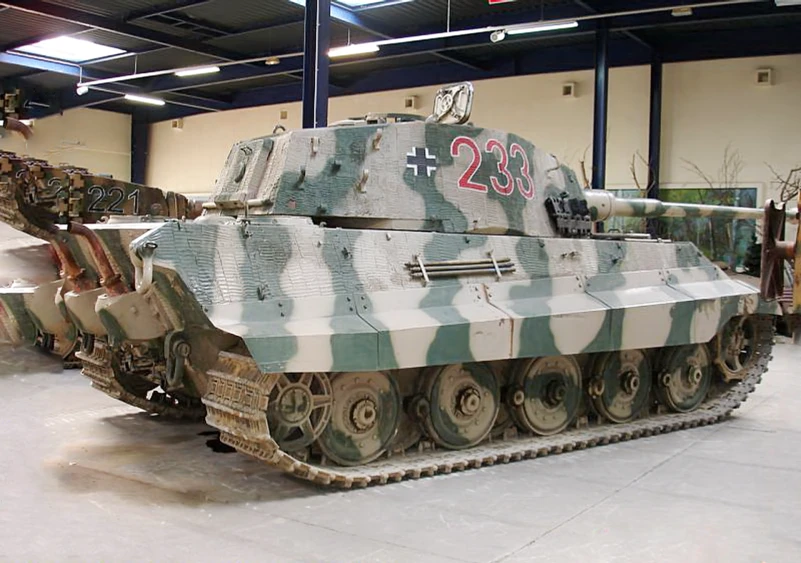
Fotogalleri af en Tiger II tank – Königstiger, The Tiger II, med tilnavnet Königstiger (Golden Tiger) var en tysk tank under Anden Verdenskrig.


Se også:


The Apex Predator of the Panzerwaffe
Den Panzerkampfwagen Tiger Ausf. B, universally known as the Tiger II Eller Königstiger (King Tiger / Bengal Tiger), was the heaviest and most heavily armored mass-produced tank of World War II. Developed by Nazi Germany to dominate the battlefield, the Tiger II combined the thick sloped armor concepts of the Panther with the sheer brute force of the Tiger I. Operating as a mobile fortress, its terrifying 88mm gun could obliterate any Allied tank at ranges well beyond the enemy’s ability to return fire. However, this apex predator arrived too late, crippled by Germany’s collapsing industrial supply chains, severe fuel shortages, and overwhelming Allied numbers.
| Attribute | Technical Specification (Tiger II Production Baseline) |
|---|---|
| Rolle | Heavy Tank / Breakthrough Vehicle |
| Besætning | 5 (Commander, Gunner, Loader, Driver, Radio Operator/Hull Gunner) |
| Motor | 1 × Maybach HL 230 P30 23-liter V12 liquid-cooled gasoline engine (700 hp) |
| Maximum Speed | 38 km/h (24 mph) on roads; 15–20 km/h (9–12 mph) cross-country |
| Combat Weight | 68.5 metric tons (Porsche turret variants: 67.5 metric tons) |
| Dimensions | Length (with gun forward): 10.28 m | Width: 3.75 m | Height: 3.09 m |
| Primary Armament | 1 × 8.8 cm KwK 43 L/71 rifled tank gun (86 rounds stowed) |
| Armor Thickness | Frontal Hull: 150mm sloped at 50° | Turret Front (Henschel): 180mm |
Design Engineering: Interlocking Slopes and Long-Barreled Ballistics
- Massive Sloped Steel Protection: Unlike the boxy, vertical armor of the original Tiger I, the King Tiger utilized highly angled, interlocking rolled steel armor plates. The 150mm thick upper front hull plate was sloped at a 50-degree angle, giving it an effective thickness of nearly 240mm. This geometric choice rendered the front of the tank completely impervious to every standard Allied tank gun and anti-tank weapon in existence.
- The Legendary 8.8 cm KwK 43 L/71: The heart of the Tiger II’s offensive capability was its incredibly long, high-velocity 88mm main gun. Firing a massive propellant cartridge, the shell achieved an astounding muzzle velocity that created a hyper-flat trajectory. It could accurately punch through over 200mm of armor at a distance of 1,500 meters, allowing King Tiger crews to snip and destroy enemy armor from total safety.
- The Overstrained Drive Train: To move a colossal 68.5-ton steel leviathan, German engineers used the exact same 700-horsepower Maybach V12 engine found in the 45-ton Panther. Because the engine was chronically underpowered for a vehicle of this scale, the transmission, final drives, and steering gears were subjected to immense mechanical stress, resulting in frequent, catastrophic drivetrain breakdowns during tactical road marches.
- The Two Turrets (Porsche vs. Henschel): The first 50 production King Tigers were fitted with curved turrets designed by Porsche (originally built for an unsuccessful prototype contract). These early turrets possessed a dangerous “shot trap” beneath the curved gun mantlet that could deflect incoming enemy shells straight down into the thin roof of the driver’s compartment. This design flaw was rapidly corrected by transitioning to the mass-produced, flat-faced Henschel turret.
Operational History: Steel Walls in the Ardennes and the Eastern Front
- The Debuts at Normandy and Baranów: The Tiger II saw its first combat action on the Western Front in July 1944 against British forces during the Battle of Normandy. Shortly after, on the Eastern Front, a deployment of King Tigers ambushed Soviet forces crossing the Vistula River at the Baranów bridgehead, demonstrating that while practically invulnerable in head-on engagements, the tank was highly vulnerable to side ambushes in close terrain.
- Spearheading the Ardennes Offensive: The King Tiger played a highly visible role during the Battle of the Bulge in December 1944. Assigned to elite heavy Panzer battalions (like *Schwere Panzer-Abteilung 501* attached to Kampfgruppe Peiper), these massive vehicles were meant to smash through American lines. However, their immense weight collapsed fragile civilian bridges, and their massive fuel consumption caused dozens of functional tanks to be abandoned by their crews simply because they ran out of petrol.
- The Late-War Material Collapse: As Allied bombing campaigns shattered Germany’s industrial heartland, the quality of the steel used to build late-production Tiger IIs sharply declined. Due to a critical lack of molybdenum and other vital alloys, the thick armor plates became brittle. While enemy shells still struggled to penetrate the front plates, the sheer kinetic impact of heavy Soviet or Allied rounds could cause the internal welds to fracture and shatter, killing the crew inside without a clean penetration.
- An Unreachable Tactical Ideal: While a single King Tiger in a well-prepared, static hull-down defensive position could easily hold off an entire armored brigade, Germany only managed to construct **489 units** before Soviet troops captured the factories. Outnumbered thousands to one by American M4 Shermans and Soviet T-34s, and completely exposed to relentless Allied fighter-bombers, the Tiger II became a monument to over-engineered, unsustainable wartime desperation.
Visninger : 5439