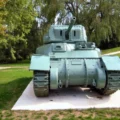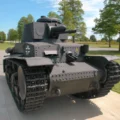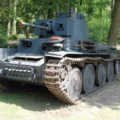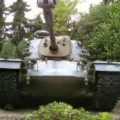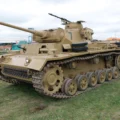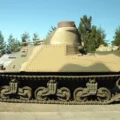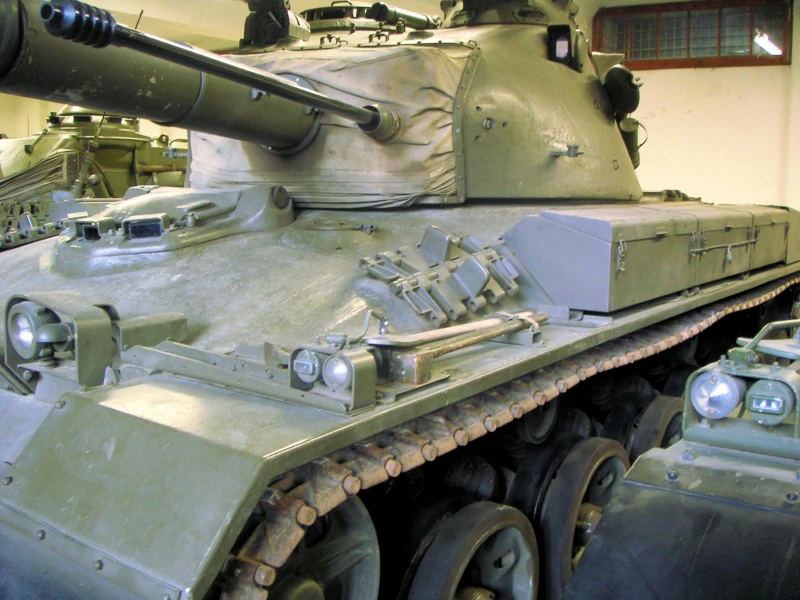
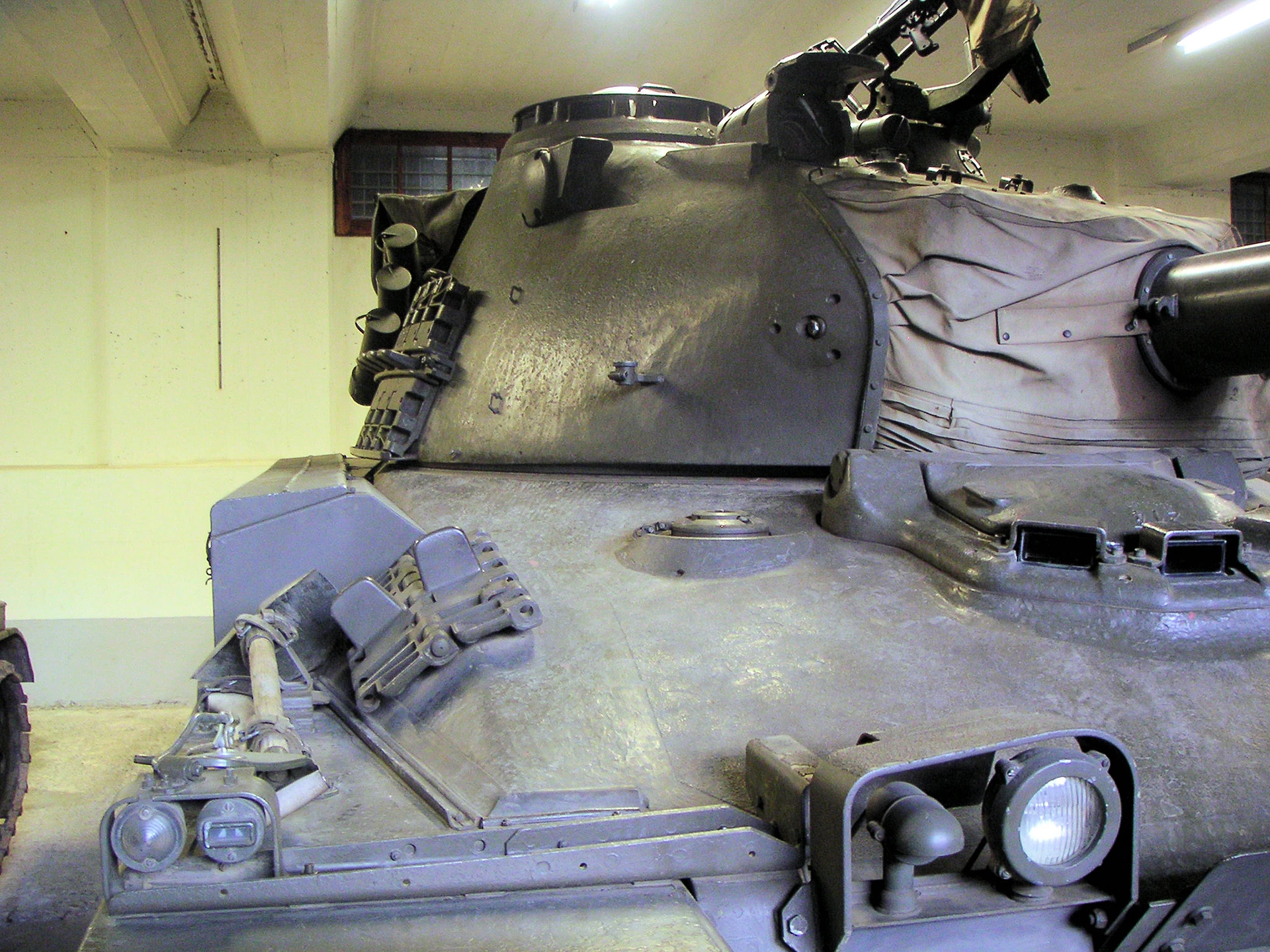
Panzer 61 | |
|---|---|
| Země | Švýcarsko |
| Typ | Střední nádrž |
| Fotografii | Gunther Neumahr |
| Téma | Album 46 fotografie tanku Panzer 61 |
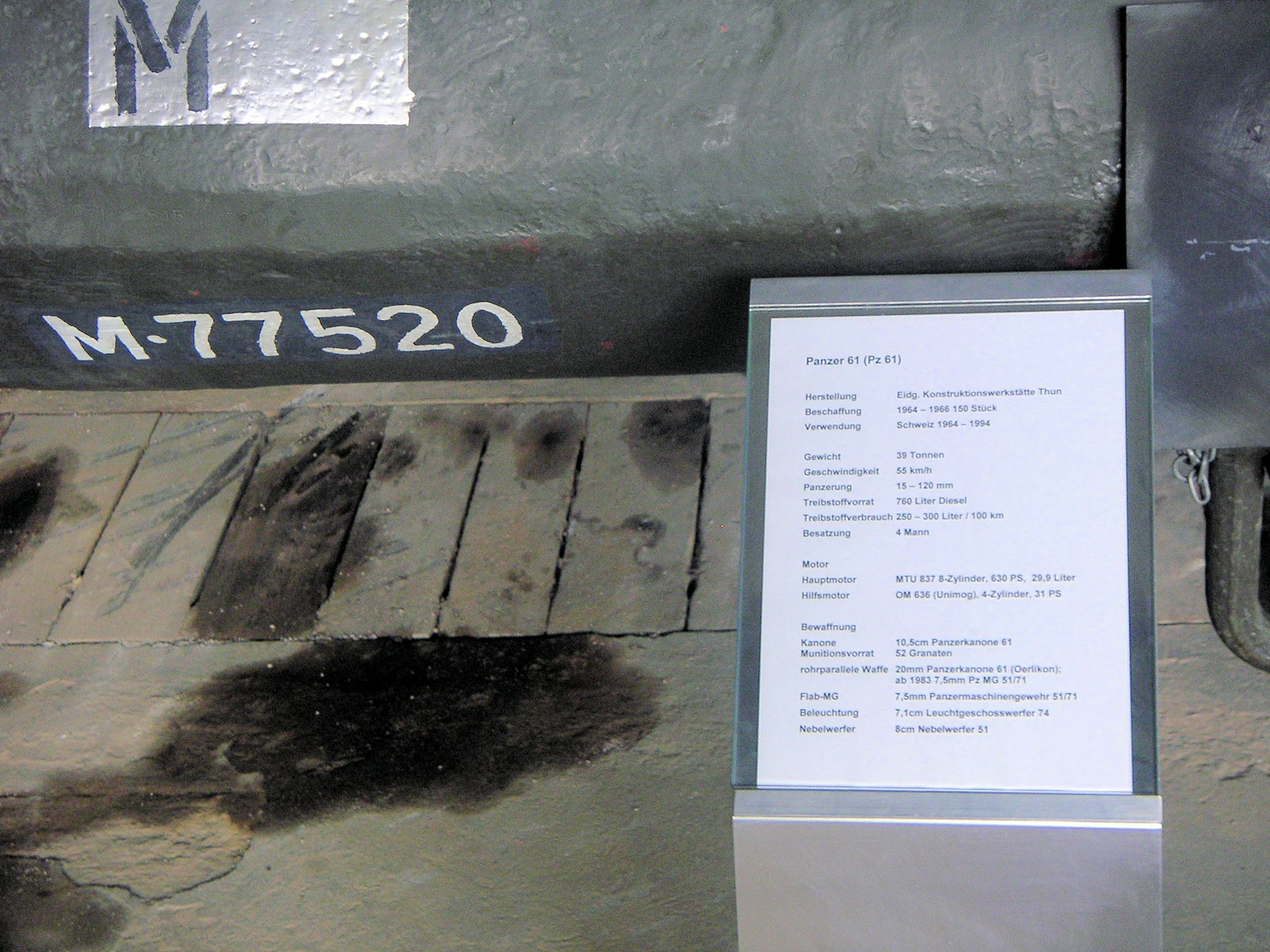
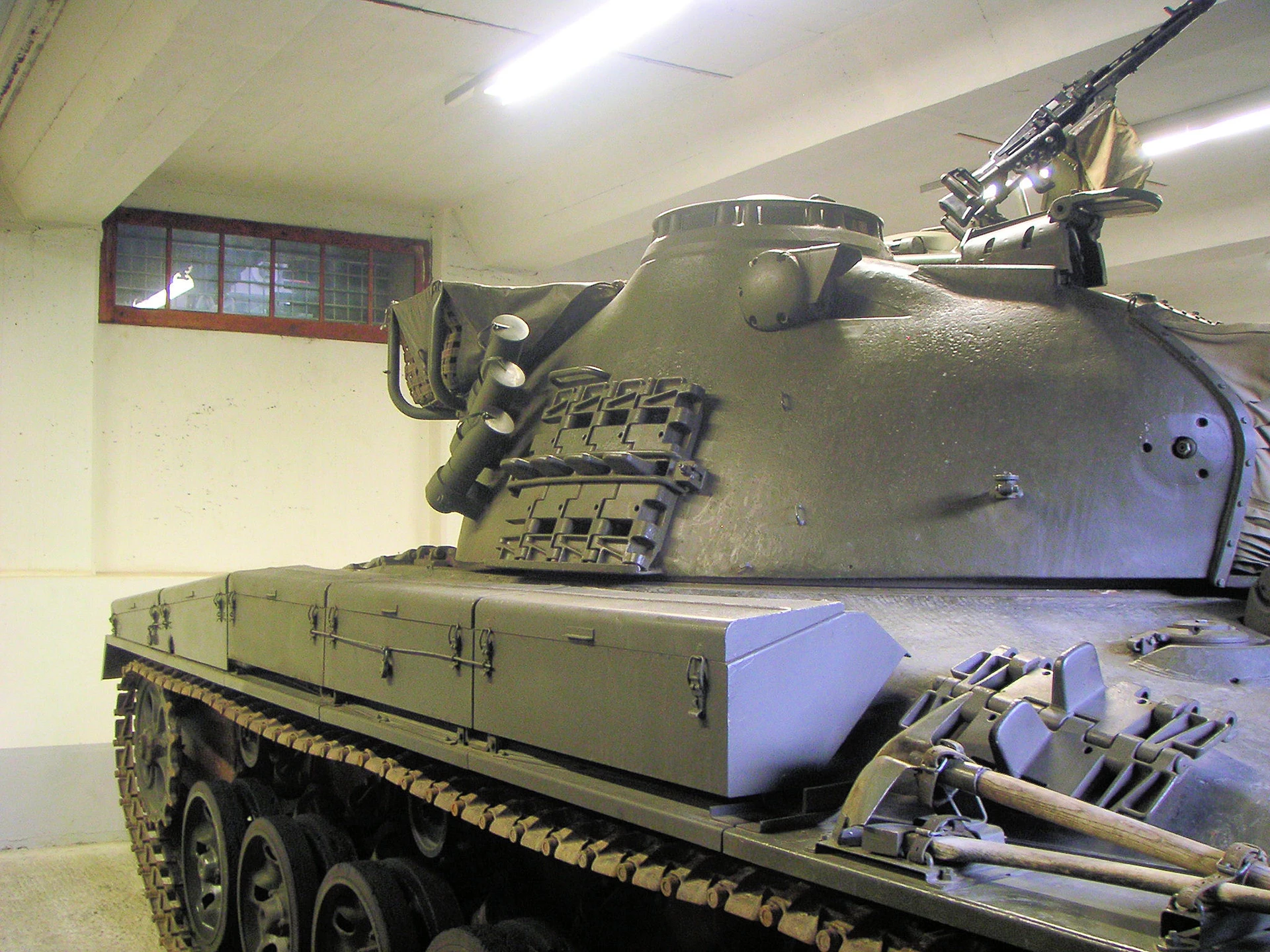
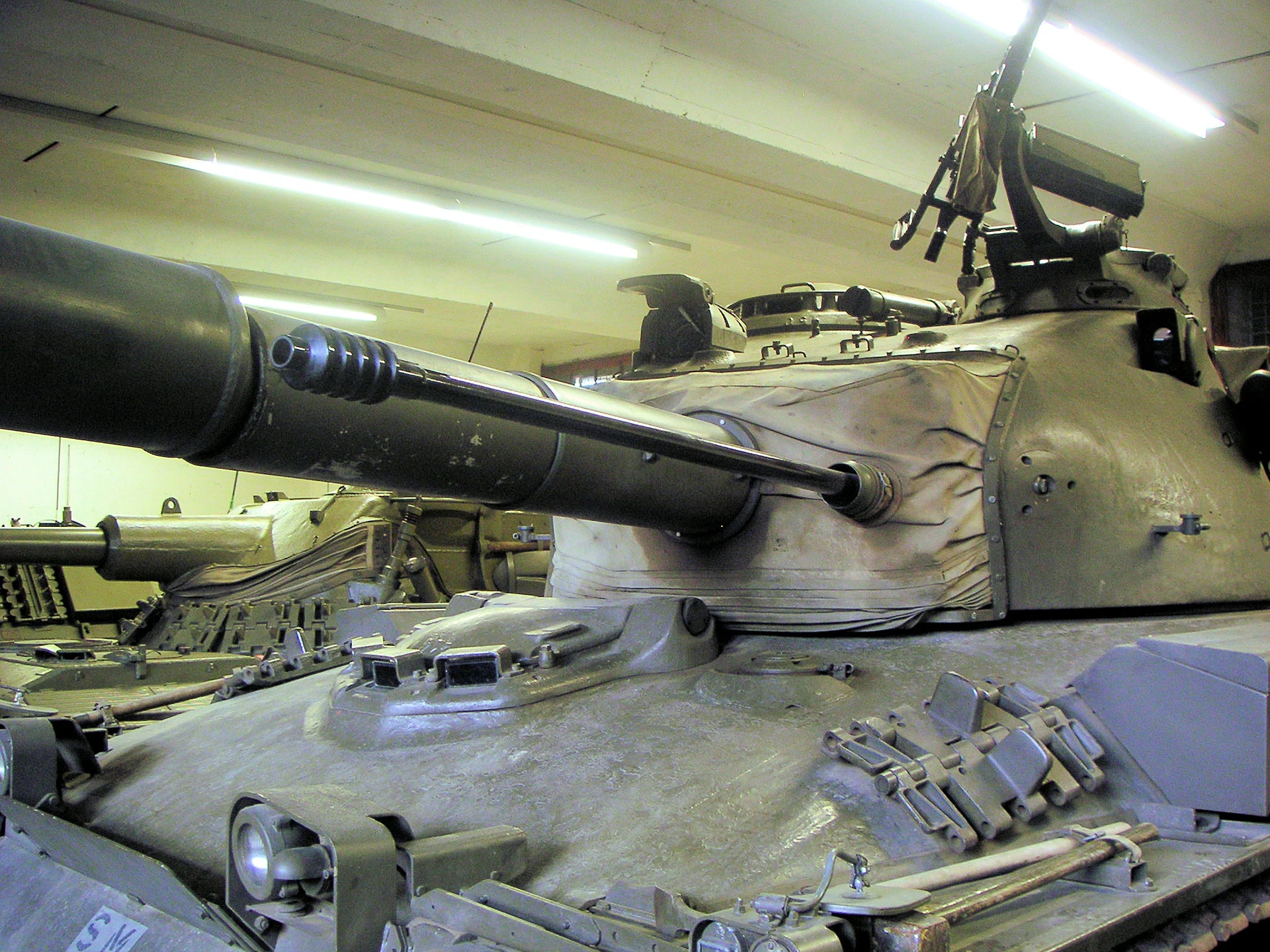
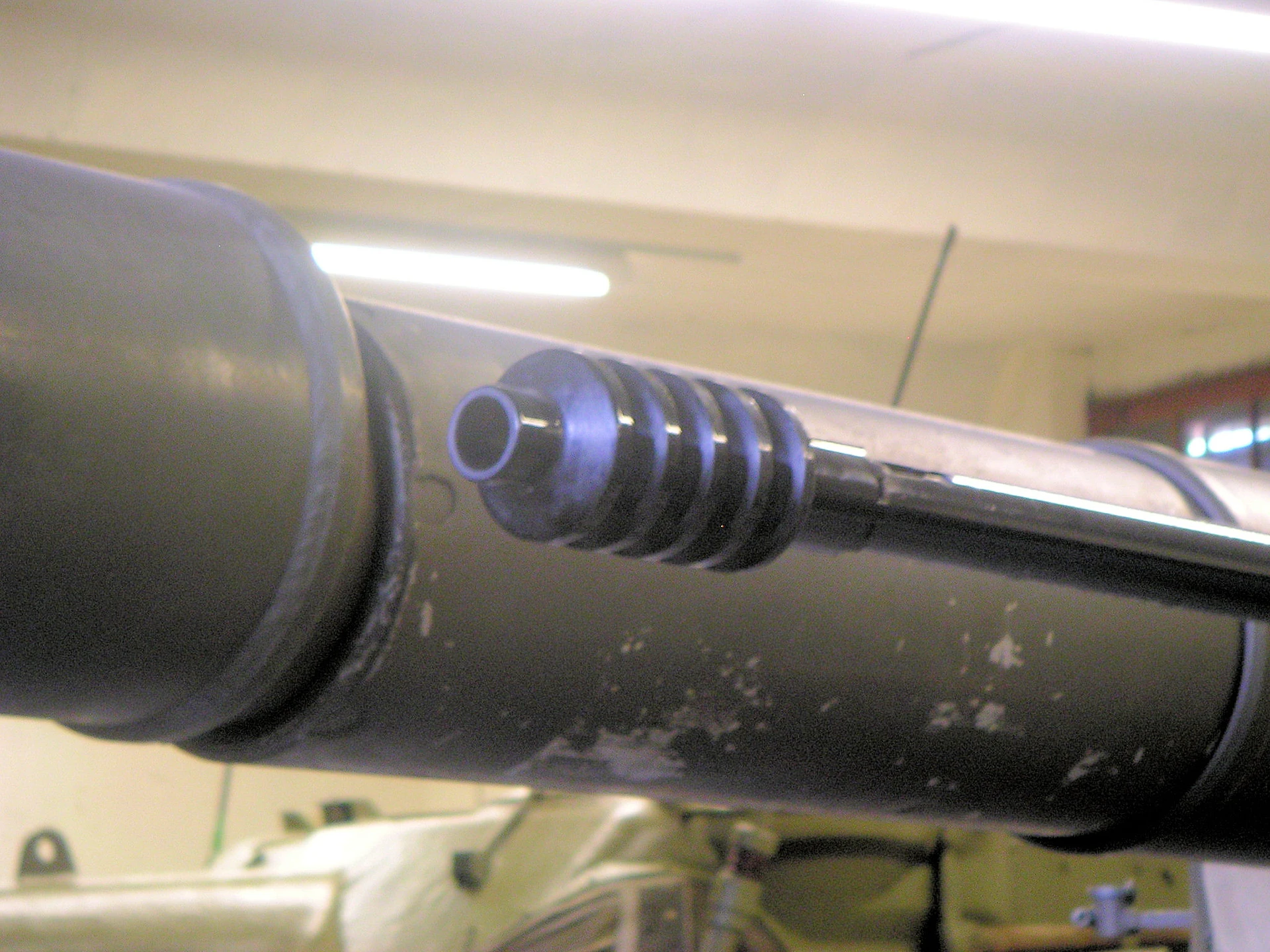
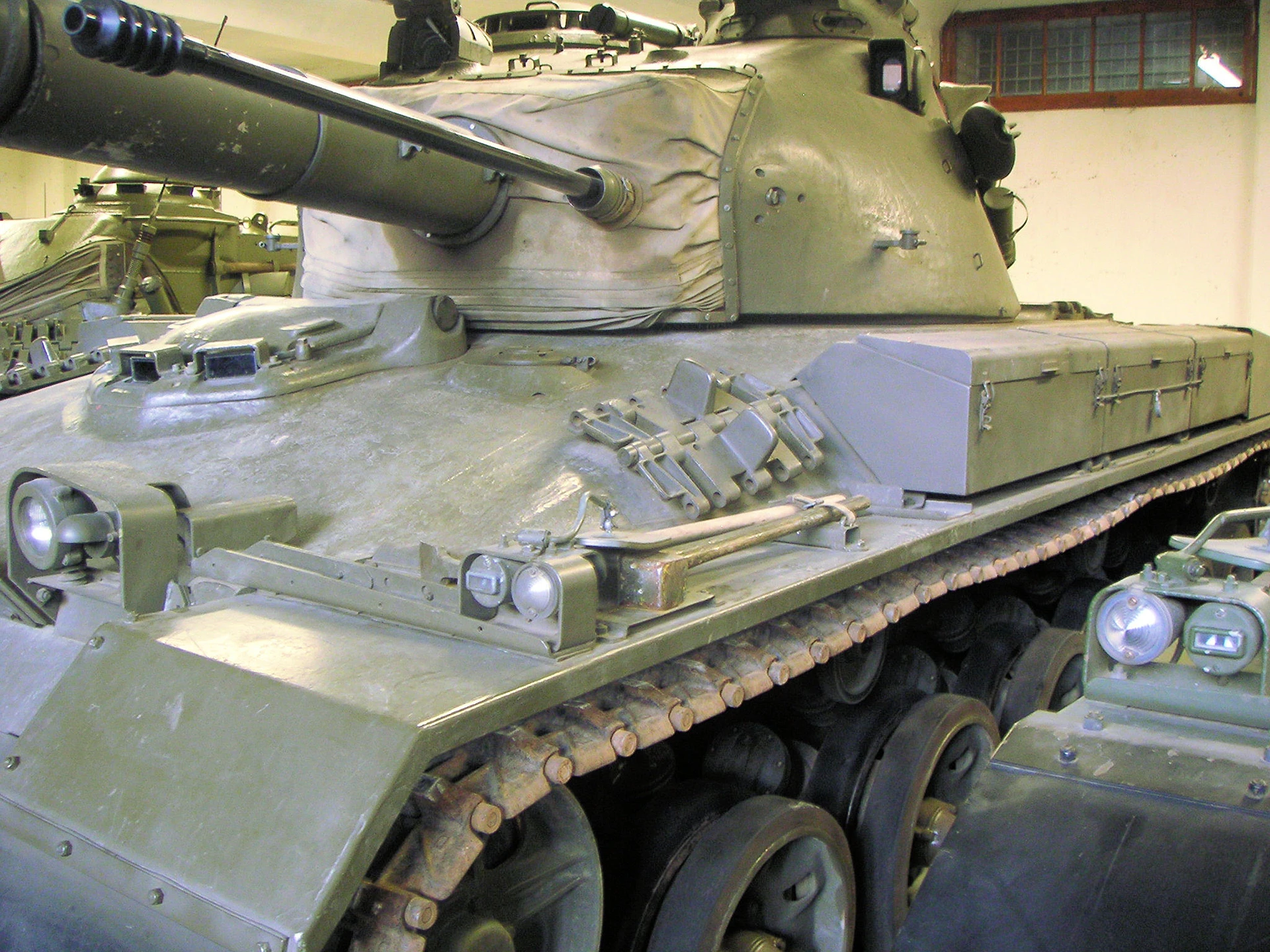
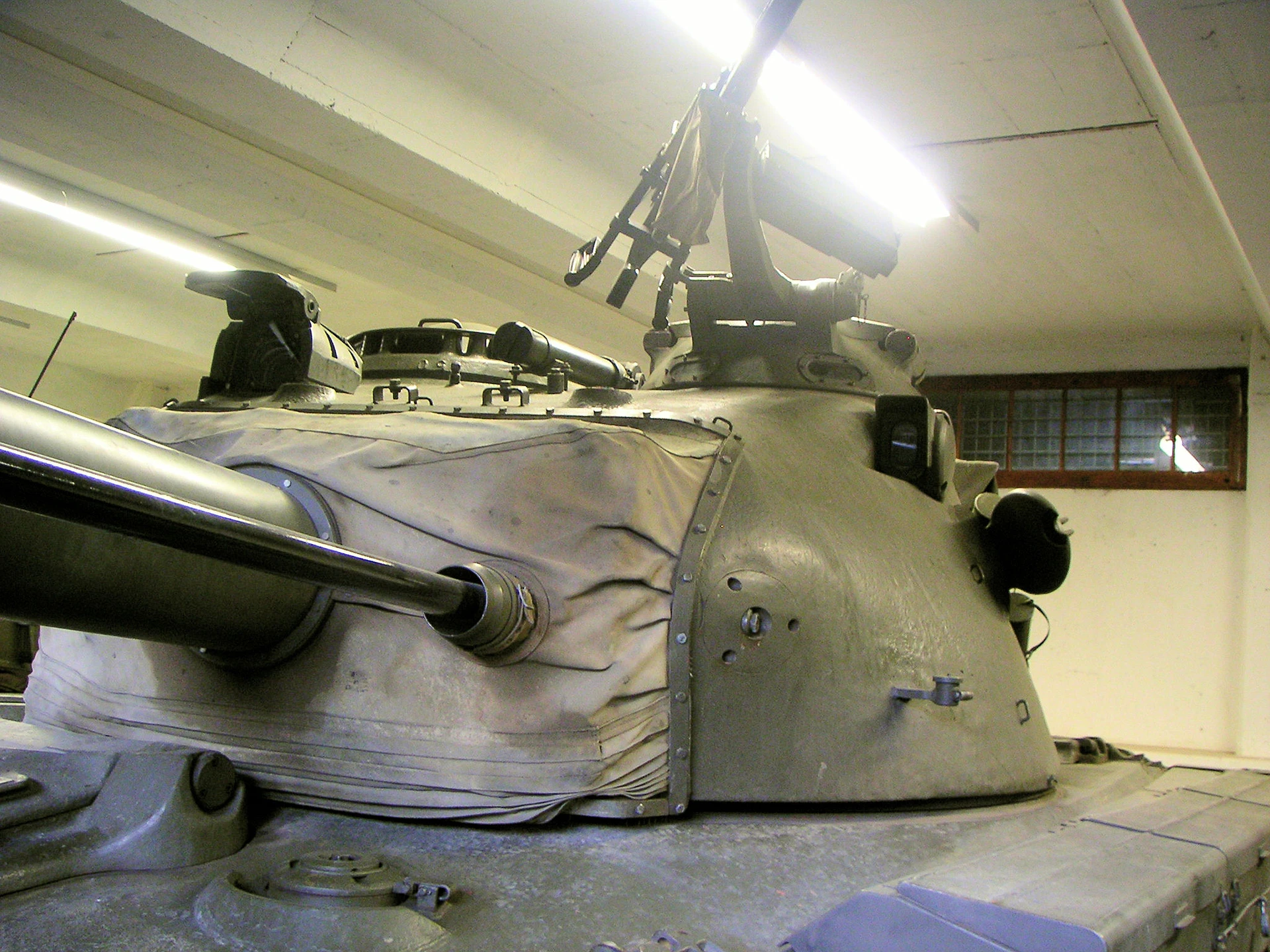
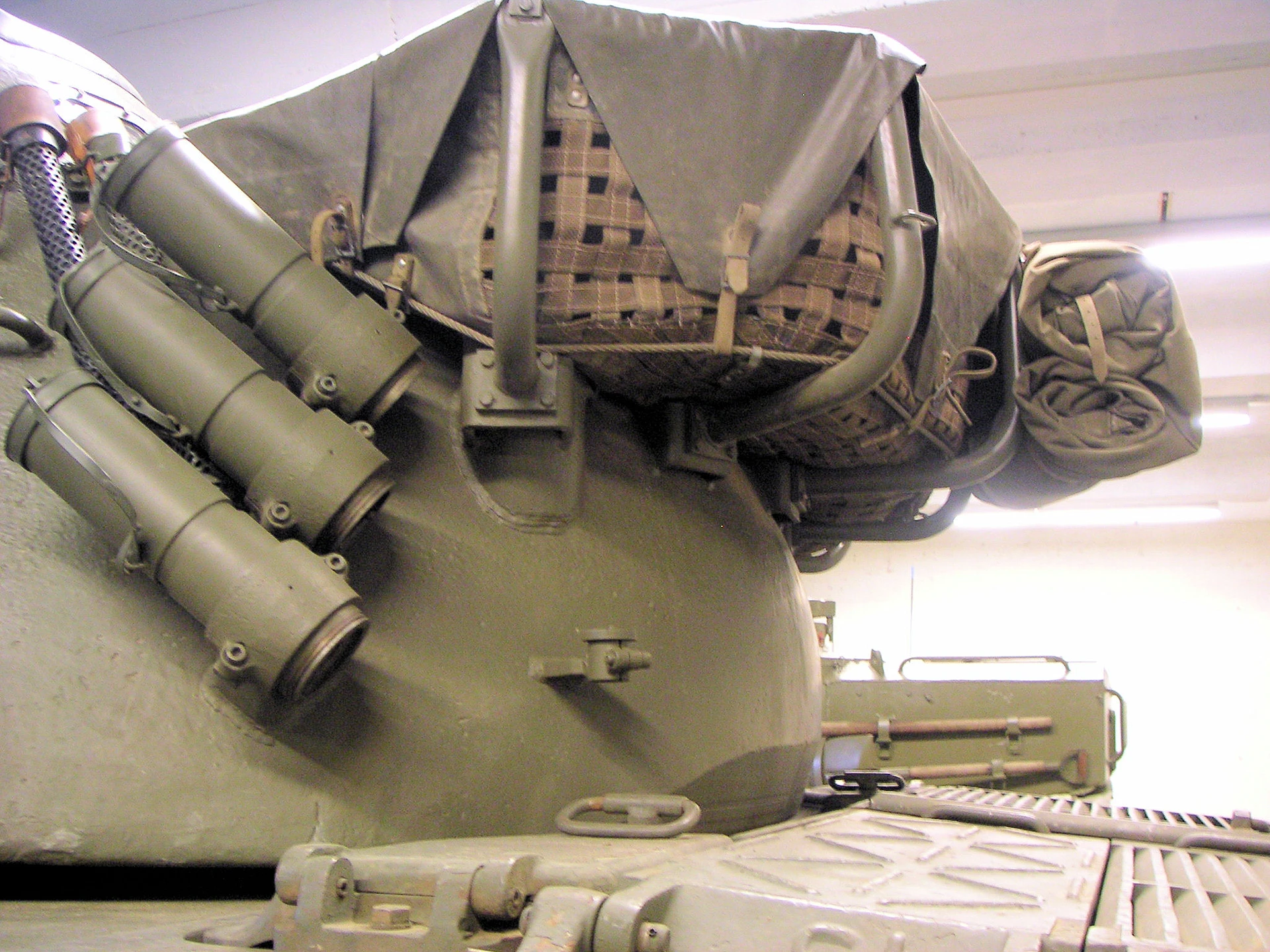
Panzer 61 byl švýcarský střední tank z dob studené války, později překlasifikovaný na hlavní bitevní tank druhé generace. Tank měl hmotnost 36,5 tuny a byl poháněn vznětovým motorem o výkonu 630 koní, který mu dával maximální rychlost 31 mph (50 km / h). Primární výzbrojí Tanku 61 bylo 105mm hlavní dělo.
Zdroj: Panzer 61 na Wikipedii

| Historie služeb | |
|---|---|
| V provozu | 1965–1994 |
| Používá | Švýcarsko |
| Historie výroby | |
| Navržen | 50. |
| Výrobce | Eidgenössische Konstruktionswerkstätte Thun |
| Vyrobené | 1965–1967 |
| Počet postavených | 150 |
| Specifikace | |
| Hmotnost | 196 |
| Délka | 9,45 m |
| Šířka | 3,06 m |
| Výška | 2,72 m |
| Posádky | 4 |
 Kupte mi kávu
Viz také:


The Swiss Solution to the Cold War
Tá Panzer 61 was born out of necessity in the 1950s when Switzerland found it impossible to purchase modern foreign tanks due to the Korean War’s strain on global production. Rather than wait, the Swiss developed their own. The Pz 61 was a sophisticated, second-generation Main Battle Tank (MBT) tailored specifically for the rugged, mountainous Swiss terrain. It was compact, agile, and featured a unique “cast” hull and turret that gave it a smooth, almost organic appearance compared to the boxy tanks of the era.
| Attribute | Technical Specification (Pz 61) |
|---|---|
| Roli | Main Battle Tank (MBT) |
| Posádky | 4 (Commander, Gunner, Loader, Driver) |
| motor | Mercedes-Benz MB 837 Ba-500 V8 Diesel (630 hp) |
| Maximum Speed | 55 km/h (34 mph) |
| Main Armament | 105 mm PzKan 61 (Swiss-built Royal Ordnance L7) |
| Secondary Armament | 1 × 20mm Oerlikon Autocannon (Coaxial) & 1 × 7.5mm MG |
| Suspenze | Belleville Washer (spring) system |
| Brnění | Cast Steel (up to 120mm on turret front) |
Design Engineering: Precision and Quirkiness
- The Coaxial Autocannon: In a move almost unique among MBTs, the Panzer 61 originally featured a 20mm Oerlikon autocannon next to the main gun. This was intended to engage light armored vehicles and “soft” targets without wasting expensive 105mm shells. However, it was eventually replaced by a standard 7.5mm machine gun in later versions (AA9) to save space.
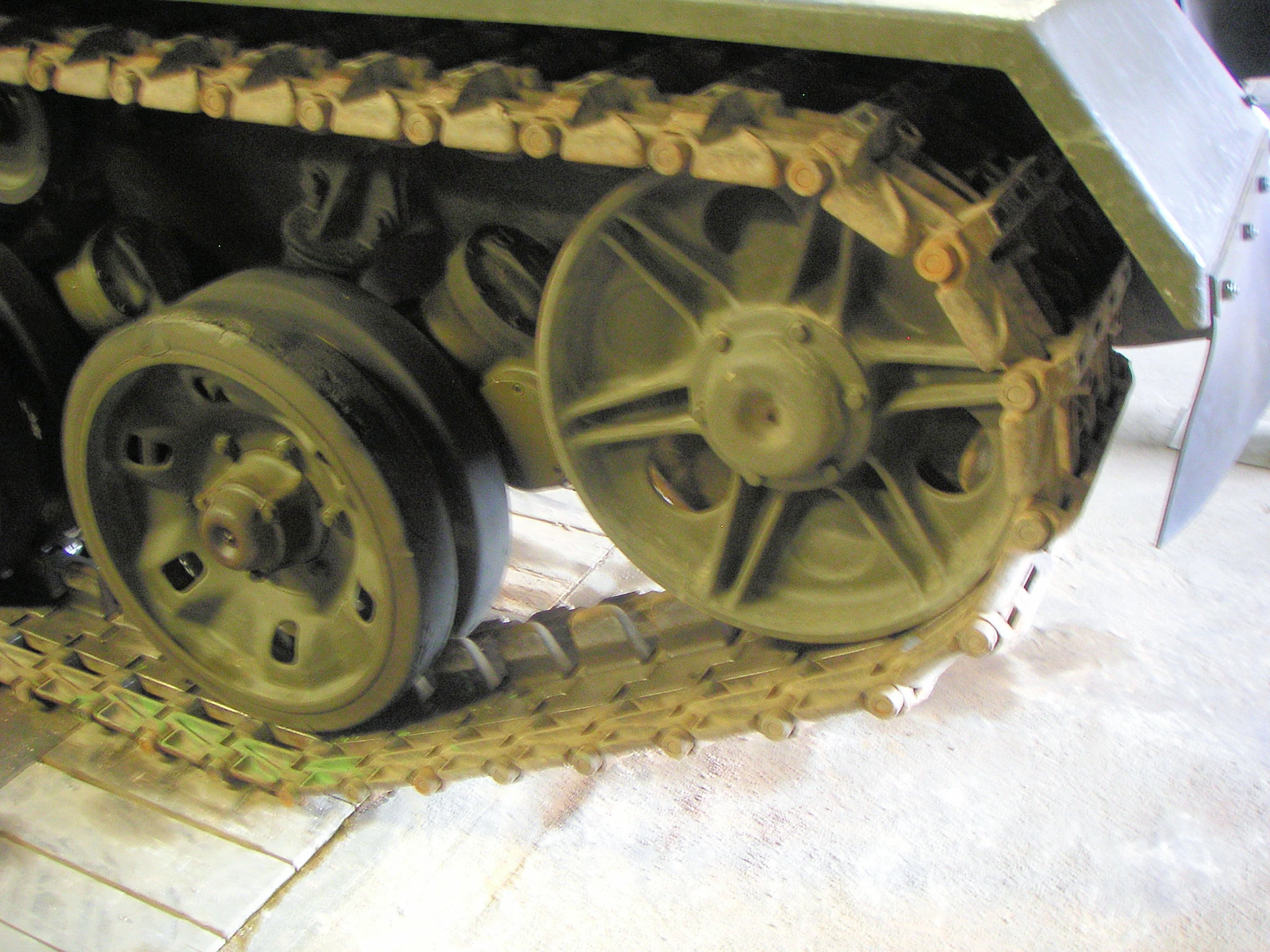
- Belleville Washer Suspension: Unlike the torsion bars used by the US or USSR, the Pz 61 used a stack of Belleville washers (disc springs). This compact system was easier to maintain in the field and was highly resistant to the extreme temperature changes of the Alps.
- The “Phone Box”: On the rear left of the hull, there is a small box containing a telephone. This allowed accompanying infantry to talk directly to the tank commander without the commander having to open their hatch in a combat zone.
- No Stabilization: One of the Pz 61’s primary drawbacks was its lack of a gun stabilizer. It could not fire accurately while moving—a trade-off made to keep the turret design simple and compact for mountain warfare where “hull-down” stationary firing was the expected tactic.
Operational History: Thirty Years of Vigilance
- Panzer 58 Prototyping: The Pz 61 was the direct evolution of the Panzer 58. The early prototypes used smaller 90mm or 84mm guns before settling on the legendary British 105mm L7, which the Swiss built under license.
- Defensive Doctrine: The tank was never exported and never saw combat. It was designed purely for the “National Redoubt” strategy—holding the mountain passes against a potential Soviet invasion through neutral Switzerland.
- The Pz 68 Successor: The Panzer 61 served as the mechanical blueprint for the more famous (and controversial) Panzer 68. Many Pz 61s were later retrofitted with Pz 68 technology to keep them relevant into the 1990s.
- Movie Star: Because of their “classic” look, two Pz 61s were famously mocked up to look like German Panzer III tanks for the movie Enemy at the Gates (2001).
Shlédnutí : 1941