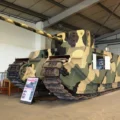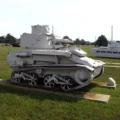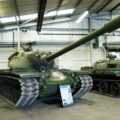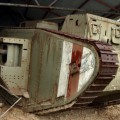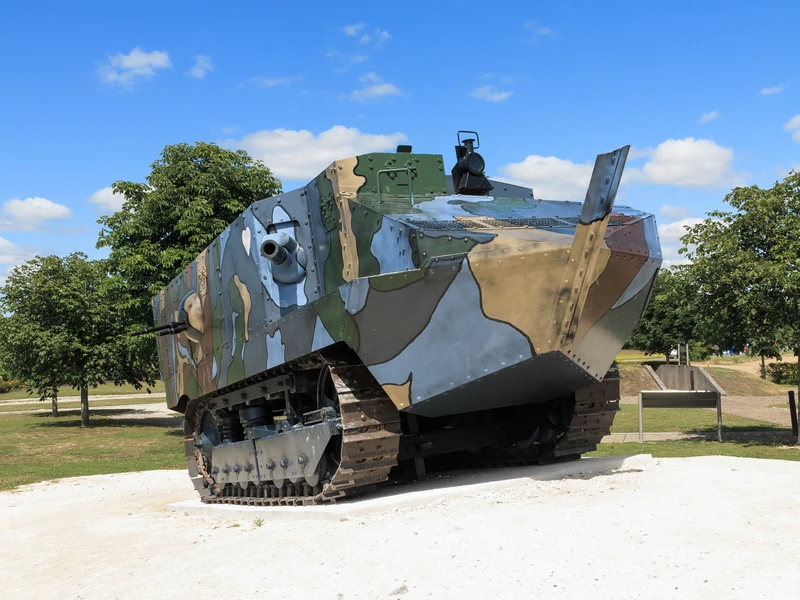
Шнайдер CA1 | |
|---|---|
| Країні | Франція |
| Тип | Важкий танк |
| На службі | 1916–1918 (Франція) / 1921–1936 (Іспанія) |
| Побудований | 400 |
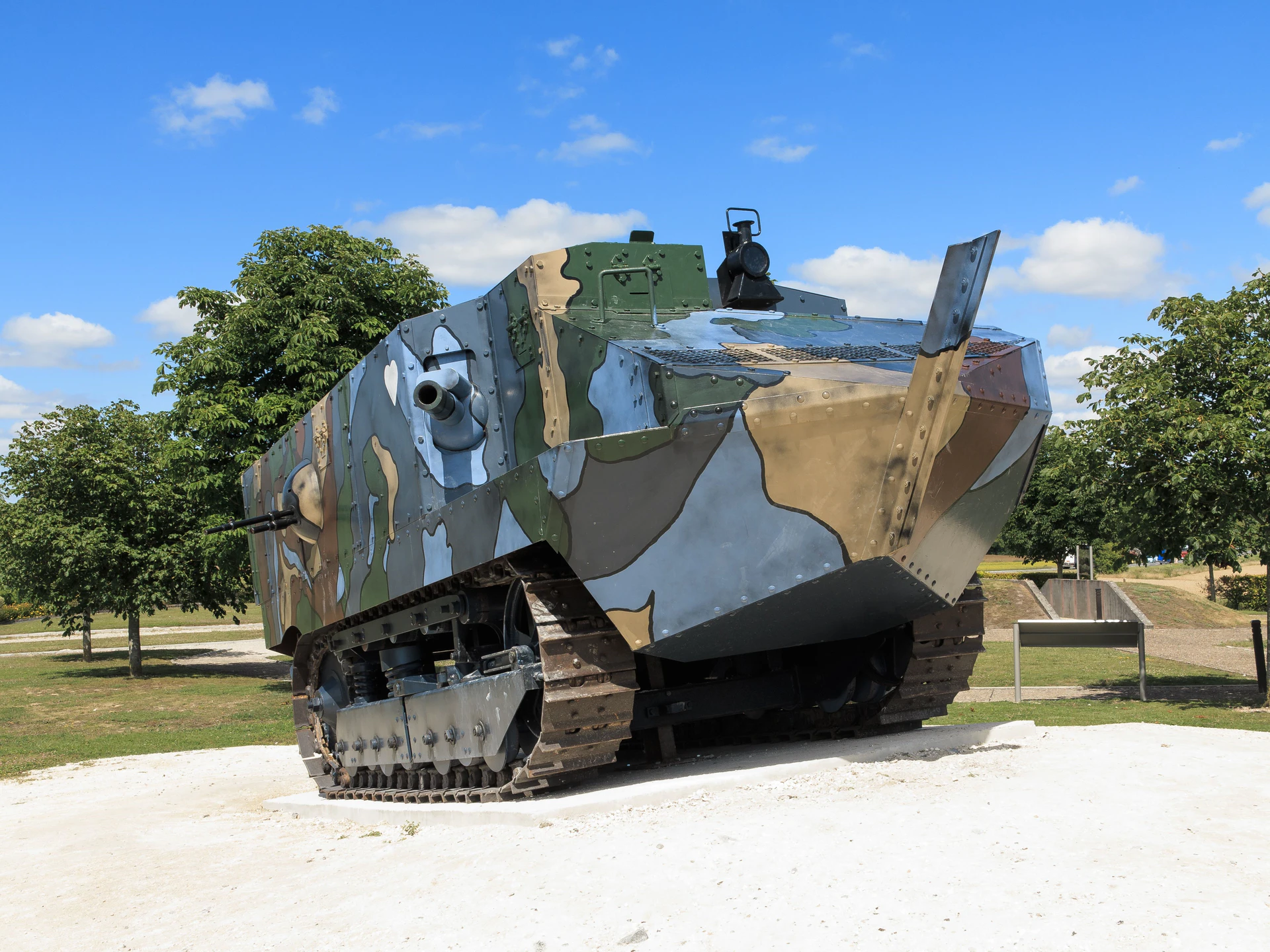
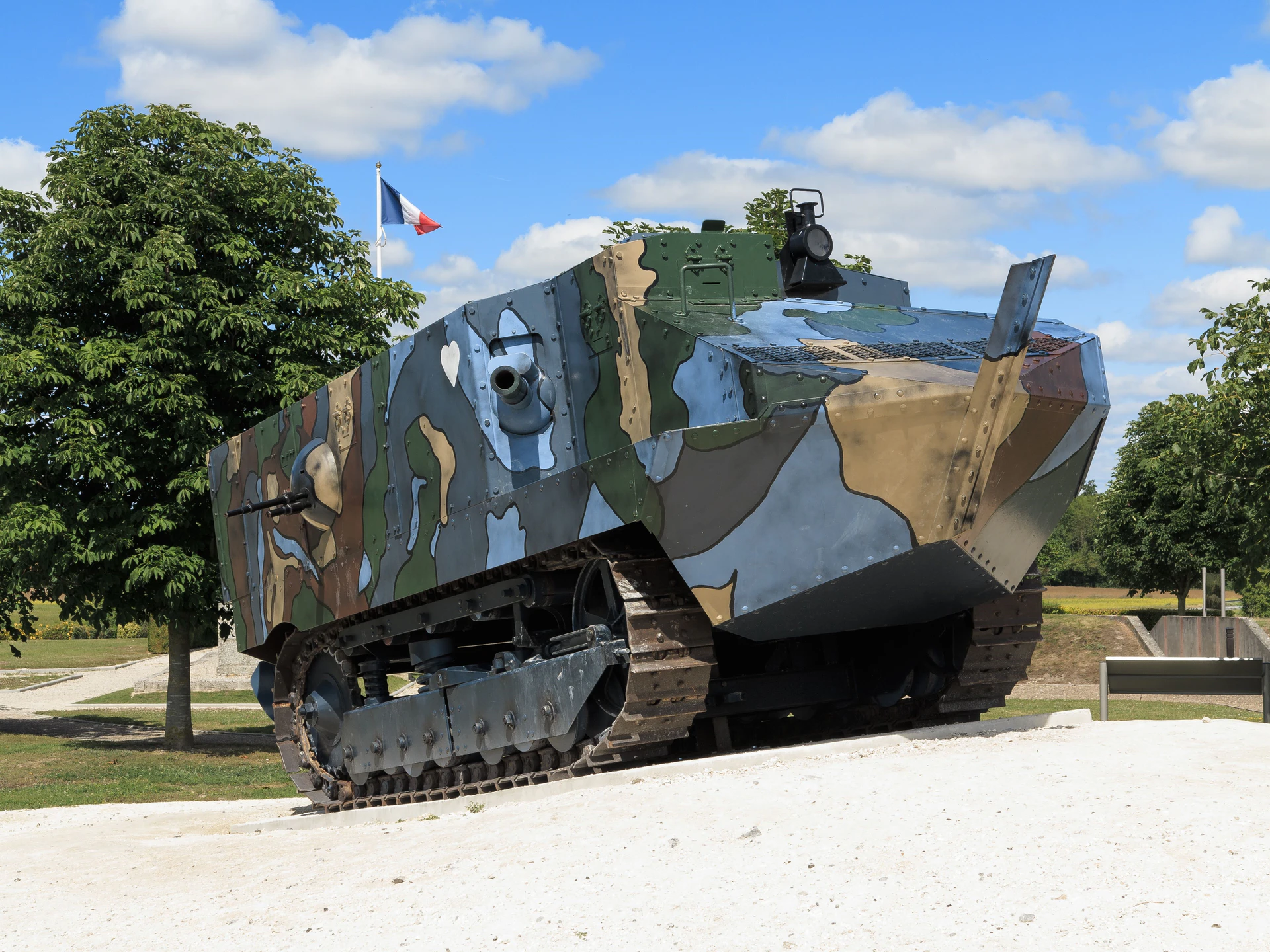
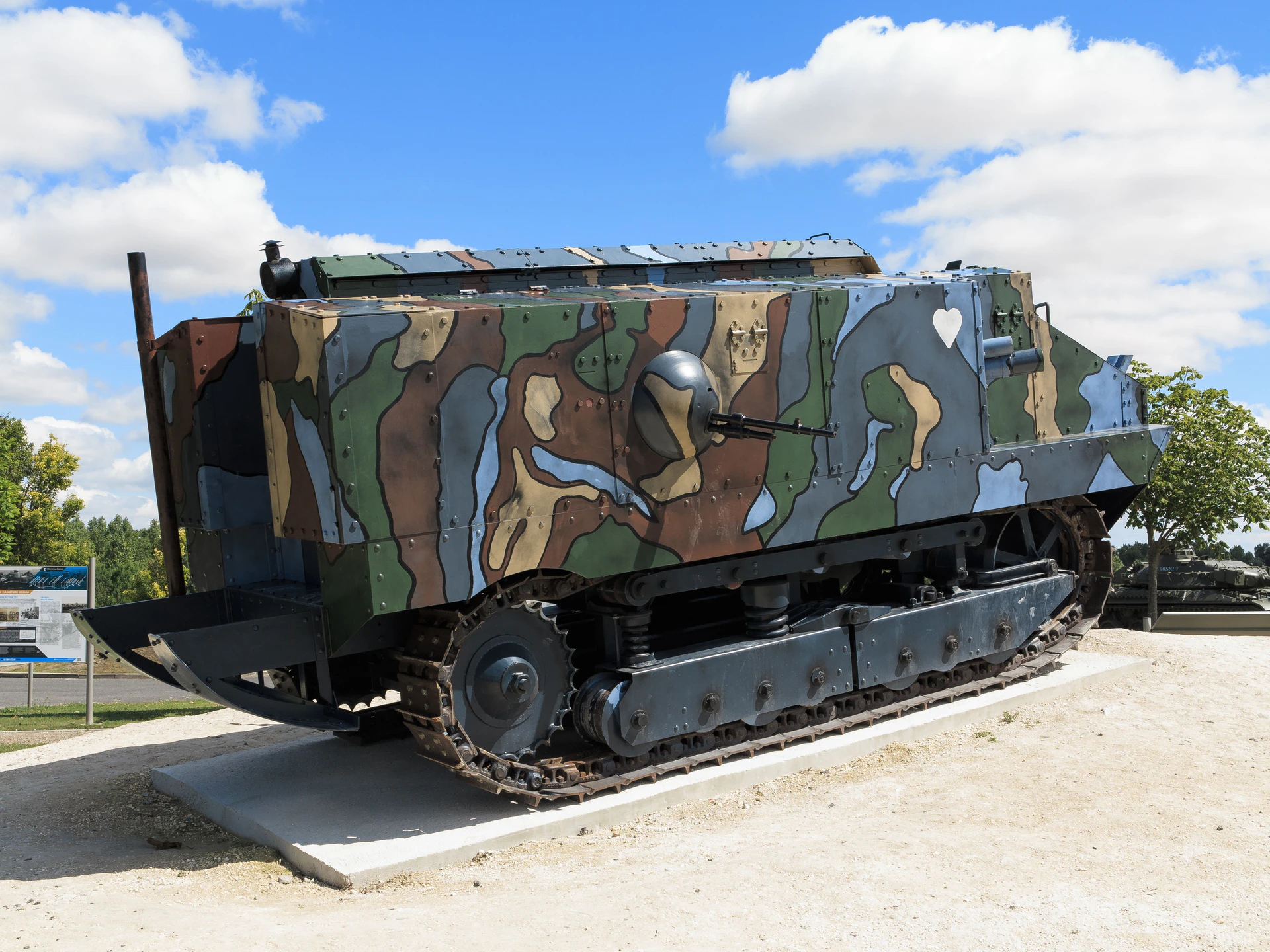
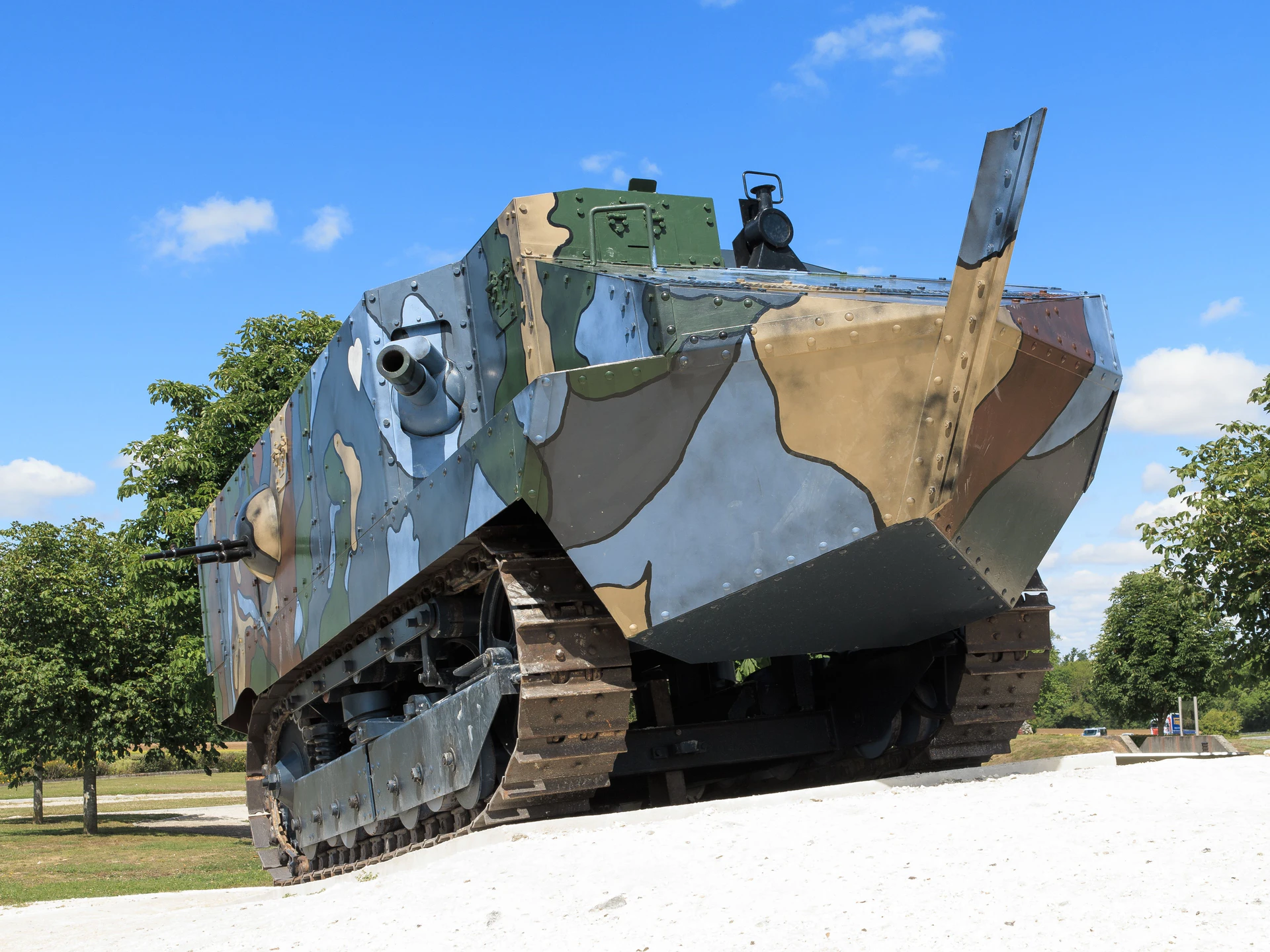
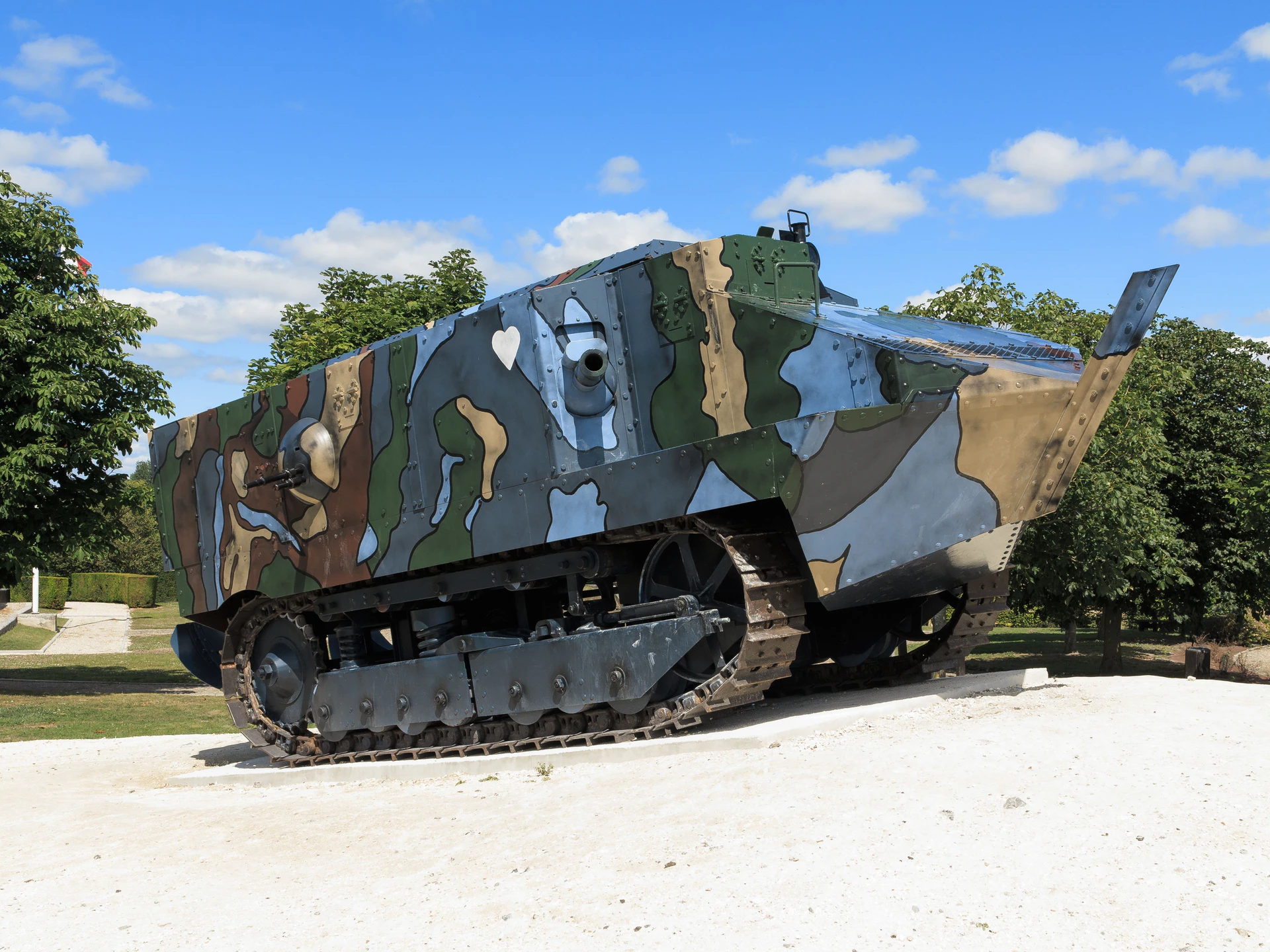
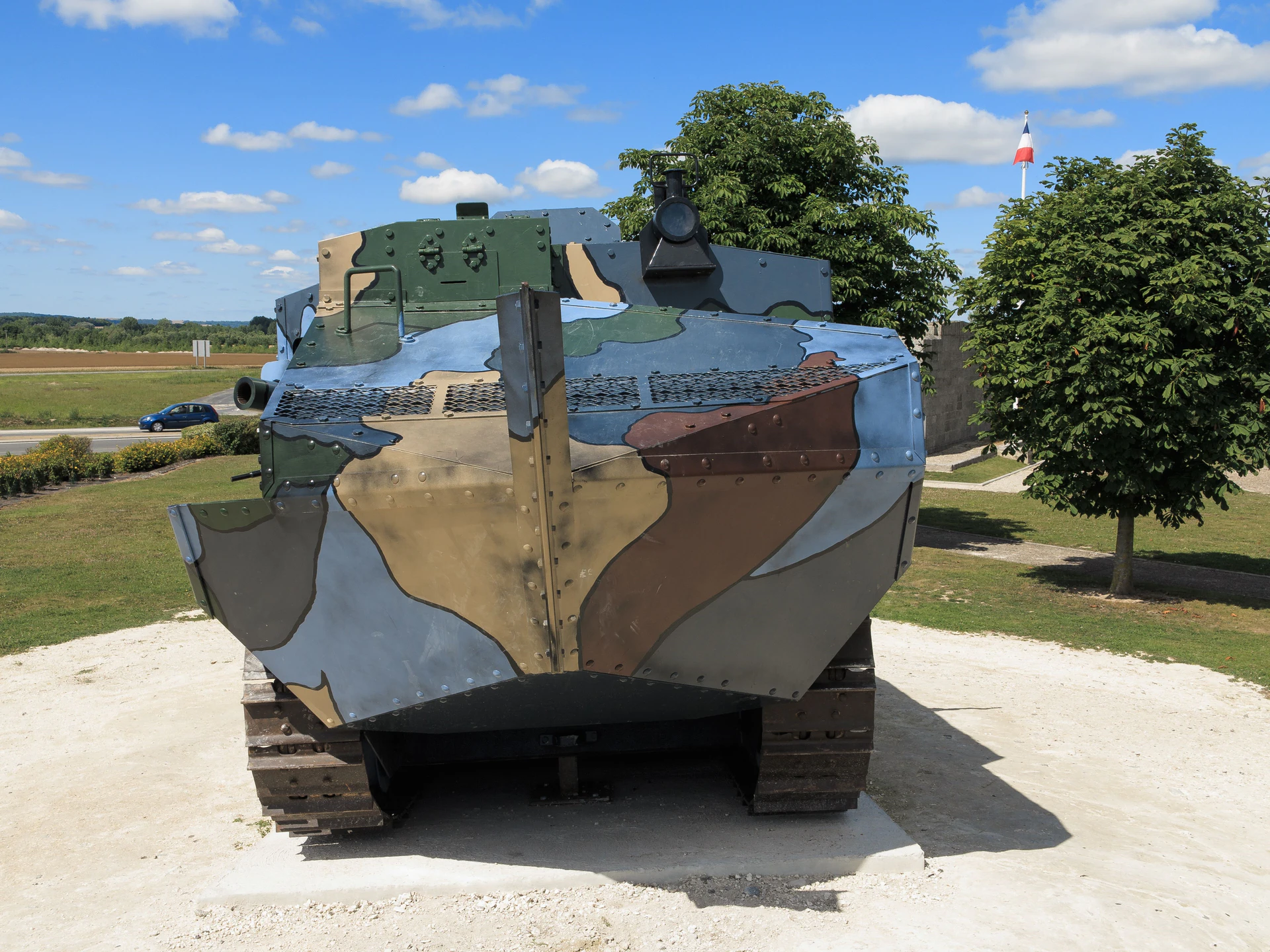
У 201 Шнайдер CA 1 (originally named the Schneider CA) was the first French tank, developed during the First World War. The Schneider was inspired by the need to overcome the stalemate of trench warfare which on the Western Front prevailed during most of the Great War. It was designed specifically to open passages for the infantry through barbed wire and then to suppress German machine gun nests. After a first concept by Jacques Quellennec devised in November 1914, the type was developed from May 1915 onwards by engineer Eugène Brillié, paralleling British development of tanks the same year. Colonel Jean Baptiste Eugène Estienne in December 1915 began to urge for the formation of French armoured units, leading to an order in February 1916 for four hundred Schneider CA tanks, which were manufactured by SOMUA, a subsidiary of Schneider located in a suburb of Paris, between September 1916 and August 1918.
Джерело: Шнайдер CA1 на Wkipedia
| Schneider CA1 | |
|---|---|
| Фотограф | Незнай |
| Локалізацією | Незнай |
| Фото | 12 |




Читайте також:


General Characteristics (World War I)
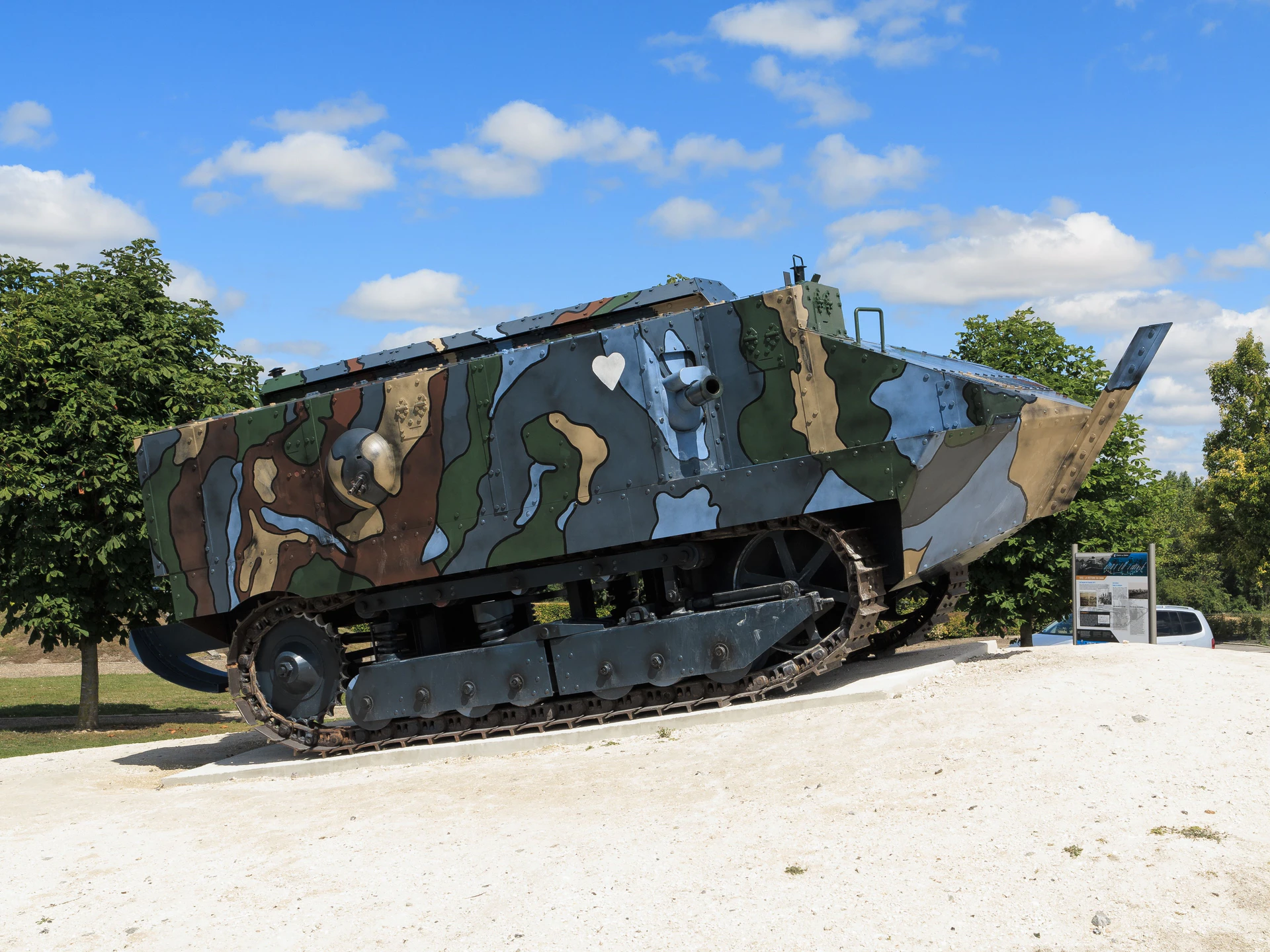
The Schneider CA1 was the first French tank to be used in combat during World War I. Based on the Holt agricultural tractor chassis, it was intended to crush barbed wire and attack trenches, preceding the more modern Renault FT light tank.
| Property | Value (CA1 Production Model) |
|---|---|
| Роль | Assault Tank, Infantry Support |
| Дизайнера | Colonel Jean Baptiste Estienne / Schneider et Cie |
| Entered Service | April 1917 (First Use in Combat) |
| команда | 4 (Commander, Driver, Gunner, Loader/Mechanic) |
| Combat Weight | 13.5 tonnes |
| Номер побудований | 400 |
Armament and Protection
- Main Armament: One 75 mm Short Barrel Blockhaus Schneider cannon (fixed in the right front sponson).
- Secondary Armament: Two 8 mm Hotchkiss Model 1914 machine guns (one in the left front sponson, one in a small turret/cupola).
- Armor Thickness: Riveted steel armor, 11.5 mm thick all around. This was designed to resist rifle fire and shrapnel, but was vulnerable to artillery and specialized anti-tank rifles.
- Design Flaw: The vehicle’s front overhang made the chassis vulnerable and tended to ground the tank when crossing obstacles or trenches.
- Unique Feature: A steel rail cutter was fitted to the front to cut through barbed wire, a key requirement for early tanks.
Powerplant and Mobility
- Engine: Schneider 4-cylinder gasoline engine.
- Power Output: 60 hp.
- Maximum Road Speed: 8 km/h (5 mph).
- Operational Range: Approximately 45 km (28 miles).
- Suspension: Based on the tracked suspension of the American Holt tractor.
- Mobility Issue: Extremely slow speed and a problematic fuel tank placement (in the front, under the cannon) made the tank dangerous and unreliable, leading to its eventual replacement by the Renault FT.
Views : 2005