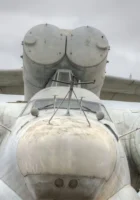
Lun-klass ekranoplan

Lun-klass ekranoplan

LandSovjetunionen
RollAttack/Transport markeffekt fordon
I bruk 1987–slutet av 1990-talet
Byggd2

Den Lun-klass ekranoplan (also called Project 903) is a ground effect vehicle (GEV) designed by Rostislav Alexeyev in 1975 and used by the Soviet and Russian navies from 1987 until sometime in the late 1990s. It flew using lift generated by the ground effect acting on its large wings when within about four metres (13 ft) above the surface of the water. Although they might look similar to traditional aircraft, ekranoplans like the Lun are not classified as aircraft, seaplanes, hovercraft, or hydrofoils. Rather, crafts like the Lun-class ekranoplan are classified as maritime ships by the International Maritime Organization due to their use of the ground effect, in which the craft glides just above the surface of the water.

Källkod: Lun-klass ekranoplan på Wikipedia

Fortsätt läsa

Visningar : 1726

Kort Sunderland ML814

Short Sunderland

LandStorbritannien
RollMilitärt flygande båtbombare
Första flygningenDen 16 oktober 1937
Byggd749

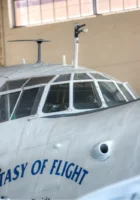
Den Kort S.25 Sunderland was a British flying boat patrol bomber, developed and constructed by Short Brothers for the Royal Air Force (RAF). The aircraft took its service name from the town (latterly, city) and port of Sunderland in North East England. Developed in parallel with the civilian S.23 Empire flying boat, the flagship of Imperial Airways, the Sunderland was developed specifically to conform to the requirements of British Air Ministry Specification R.2/33 for a long-range patrol/reconnaissance flying boat to serve with the Royal Air Force (RAF). As designed, it served as a successor to the earlier Short Sarafand flying boat. Sharing several similarities with the S.23, it featured a more advanced aerodynamic hull and was outfitted with various offensive and defensive armaments, including machine gun turrets, bombs, aerial mines, and depth charges. The Sunderland was powered by four Bristol Pegasus XVIII radial engines and was outfitted with various detection equipment to aid combat operations, including the Leigh searchlight, the ASV Mark II and ASV Mark III radar units, and an astrodome.

Källkod: Kort Sunderland på Wikipedia

Fortsätt läsa

Visningar : 1092

Boeing X-32 (Prototyp)

Boeing X-32

LandUsa
RollKoncept demonstrator flygplan
Första flygningenDen 18 september 2000
Byggd2

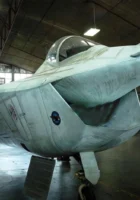
Den Boeing X-32 är ett konceptdemonstratorflygplan som designades för Joint Strike Fighter-tävlingen. Det förlorade mot Lockheed Martin X-35 demonstrator, som vidareutvecklades till Lockheed Martin F-35 Lightning II.

Källkod: Boeing X-32 på Wikipedia

Fortsätt läsa

Visningar : 1265

Sukhoi Su-15A Flagon

Sukhoi Su-15

LandSovjetunionen
TypInterceptor flygplan
Första flygningenDen 30 maj 1962
Byggd1290

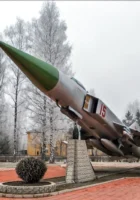
Den Sukhoi Su-15 (Natos rapporteringsnamn: Flagon) är ett överljudsflygplan utvecklat av Sovjetunionen. Den tas i bruk 1965 och förblev en av frontkonstruktionerna in på 1990-talet. Su-15 utformades för att ersätta Sukhoi Su-11 och Sukhoi Su-9, som blev föråldrade när Nato introducerade nyare och mer kapabla strategiska bombplan.

Källkod: Sukhoi Su-15 på Wiki

Fortsätt läsa

Visningar : 2050

Sopwith Triplane

Sopwith Triplane

LandStorbritannien
RollFighter
Första fluganden 28 maj 1916
Byggd147

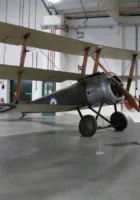
Den Sopwith Triplane was a British single seat fighter aircraft designed and manufactured by the Sopwith Aviation Company during the First World War. It has the distinction of being the first military triplane to see operational service. The Triplane was developed by the firm’s experimental department as a private venture, the project was headed by the designer Herbert Smith. Aside from its obvious difference in wing configuration, the aircraft shared many similarities with the company’s successful biplane fighter, the Sopwith Pup. The prototype Triplane performed its maiden flight on 28 May 1916 and was dispatched to the French theatre two months later, where it garnered high praise for its exceptional rate of climb and high manoeuvrability. During late 1916, quantity production of the type commenced in response to orders received from the Admiralty. During early 1917, production examples of the Triplane arrived with Royal Naval Air Service squadrons.

Källkod: Sopwith Triplane på Wikipedia

Fortsätt läsa

Views : 861

Centauro B1 105 mm

B1 Centauro

LandItalia
RollTankjagare med hjul
Produceras1991–2006
Byggd490+

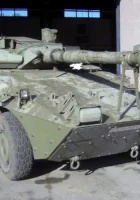
Den Centauro (på andra) is a family of Italian military vehicles originating from a wheeled tank destroyer for light to medium territorial defense and tactical reconnaissance. It was developed by a consortium of manufacturers, the Società Consortile Iveco Fiat – OTO Melara (CIO). Iveco Fiat was tasked with developing the hull and propulsion systems while Oto Melara was responsible for developing the turrets and weapon systems. Over the years, the Centauro platform has been developed into multiple variants to fulfill other combat roles, such as infantry fighting vehicle or self-propelled howitzer.

Källkod: B1 Centauro på Wikipedia

Fortsätt läsa

Visningar : 3068

Sopwith Delfin

Sopwith Delfin

LandStorbritannien
RollFighter
Första fluganden 23 maj 1917
Byggd2072

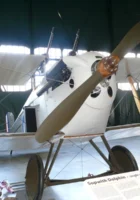
Den Sopwith 5F.1 Delfin Var ett brittiskt stridsflygplan tillverkat av Sopwith Aviation Company. Det användes av Royal Flying Corps och dess efterträdare, Royal Air Force, under första världskriget. Delfinen gick i tjänst på västfronten i början av 1918 och visade sig vara en formidabel fighter. Flygplanet behölls inte i efterkrigstidens inventering och pensionerades kort efter kriget.

Källkod: Sopwith Dolphin på Wikipedia

Fortsätt läsa

Visningar : 1026

Carro Pesante P40

P26/40 tank

LandItalia
RollTung tank
Produceras1943–44
Byggd103

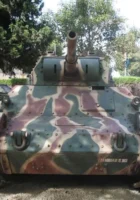
Den P 26/40 was an Italian World War II heavy tank. It was armed with a 75 mm gun and an 8 mm Breda machine gun, plus another optional machine gun in an anti-aircraft mount. Design had started in 1940 but very few had been built by the time Italy signed the armistice with the Allies in September 1943 and the few produced afterwards were used by the Germans. The official Italian designation was carro armato (“armoured vehicle”) P 26/40. The designation means: P for pesante (“heavy”), the weight of 26 tonnes, and the year of adoption (1940).

Källkod: P26/40 tank på Wikipedia

Fortsätt läsa

Visningar : 1680