RSO M 75mm PAK

RSO M 75mm PAK

LandNazityskland
TypCaterpillar traktor
ByggdUnknow

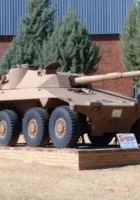
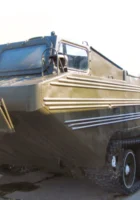
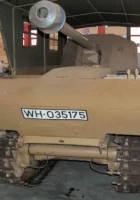
Fotogalleri av en RSO M 75mm PAK, Raupenschlepper Ost, literally “Caterpillar Tractor East”, is more commonly abbreviated to RSO. This fully tracked, lightweight vehicle was conceived in response to the poor performance of wheeled and half-tracked vehicles in the mud and snow during the Wehrmacht’s first autumn and winter on the Soviet Front. The RSO was a contemporary with somewhat similar Allied full-tracked small artillery tractors in use in other armies (such as the Soviet STZ-5 “Stalingradec”, and the U.S. Army’s own M4 Tractor), mostly originated from the pre-war light to medium series of Vickers artillery tractors. Two variants of this vehicle were built: the basic cargo carrier, and a self-propelled antitank vehicle armed with a PaK 40 gun. Both shared the same chassis.

Källkod: RSO M 75mm PAK på Wikipedia

Fortsätt läsa

Views : 3397

Rooikat

Rooikat

LandSydafrika
TypBepansrat stridsfordon med hjul
FotografJacques Pienaar
Ämne

Album av 56 foton walk-around av en «Rooikat»

Fotogalleri av en Rooikat, The Rooikat (Afrikaans for “Caracal”; literally “Red cat”) is a wheeled armoured fighting vehicle built in South Africa for the South African Army. It was designed for combat reconnaissance and seek and destroy operations. Its secondary roles include combat support, anti-armour and anti-guerrilla operations. The Rooikat is intended for deep penetration missions, so the wheeled design was needed for speed and to counter sandy desert conditions that might slow tracked vehicles.

Källkod: Rooikat på Wikipedia

Fortsätt läsa

Visningar : 3705

Renault UE Tankett

Renault UE Tankett

LandFrankrike
RollTanktte
Produceras1932 – mars 1941
Byggd50000+

Fotogalleri av en Renault UE Tankett, The Renault UE Chenillette was a light tracked armoured carrier and prime mover produced by France between 1932 and 1940. In 1930 the French Infantry decided to develop a light armoured vehicle able to tow and supply small cannon and mortars. In 1931 the Renault company was given the contract for production of its Renault UE, combined with the Renault UK trailer. In 1937, from a number of competitors, the Renault UE2 was chosen as an improved type for large-scale production. Of both types combined over five thousand were built, including licence production in Romania, and they were part of the standard equipment of all French infantry divisions. Most Renault UE vehicles in French service were unarmed; those in 1940 captured by Germany were used for a variety of purposes, including being armed with machine-guns, antitank-guns and rocket artillery.

Källkod: Renault UE Tankette på Wikipedia

Fortsätt läsa

Views : 4421

Ram Mk.II

RAM Mk.II

LandKanada
TypMedelstor tank
FotografGöran Persson
Ämne

Album av 18 bilder walk-around av en «RAM Mk.II»

Fotogalleri av en RAM Mk.II, The Tank, Cruiser, Ram was a cruiser tank designed and built by Canada in the Second World War, based on the U.S. M3 Medium tank. Due to standardization on the American Sherman tank for frontline units, it was used exclusively for training purposes and was never used in combat as a gun tank. The chassis was used for several other combat roles however, such as a flamethrower tank, observation post, and armoured personnel carrier.

Källkod: RAM Mk.II på Wikipedia

Fortsätt läsa

Views : 2489

Dnepr M-72

Dnepr M-72

LandSovjetunionen
TypSidovagn motorcykel
FotografHans-Hermann Bühling
Ämne

Album av 43 bilder walk-around av en «Sidecar motorcykel M-72»

Fotogalleri av en Schweres Beiwagenkrad M-72 , The M-72 was a motorcycle built by the Soviet Union. Conceived as a replacement for the two heavy motorcycles used by the Red Army—the TIZ-AM-600 and PMZ-A-750—both of which had performed unsatisfactorily during the Winter War with Finland and were considered outdated designs. The replacement chosen was the BMW R 71 which had been rejected by the Wehrmacht as a replacement for the R 12. As a result of the Molotov-Ribbentrop Pact the necessary legal, political and economic procedures were in place for BMW to provide the design, tooling and training for the manufacture of the motorcycle and military sidecar.

Källkod: Dnepr M-72 på Wikipedia

Fortsätt läsa

Visningar: 5668

CAC Bumerang CA-12

CAC Bumerang CA-12

LandAustralien
TypStridsflygplan
FotografVladimir Yakubov
Ämne

Album av 76 foton promenad runt av en «CAC Boomerang CA-12»

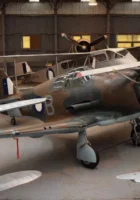
Fotogalleri av en CAC Bumerang CA-12, The CAC Boomerang was a World War II fighter aircraft designed and manufactured in Australia between 1942 and 1945. The Commonwealth Aircraft Corporation produced Boomerangs under the production contract numbers CA-12, CA-13, CA-14 and CA-19, with aircraft supplied under each subsequent contract incorporating modifications and improvements. The Boomerang is significant as the first combat aircraft designed and built in Australia.

Källkod: CAC Boomerang CA-12 på Wikipedia

Fortsätt läsa

Views : 7214

Pz87 (Pz87)

Pz87 (Pz87)

LandSchweiz
TypHuvudstridsvagn
FotografiGunther Neumahr
Ämne

Album av 50 bilder av en tank Pz87 (Pz87)

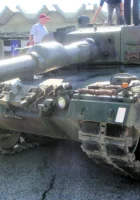
Den Leopard 2 is a main battle tank developed by Krauss-Maffei in the 1970s for the West German Army. The tank first entered service in 1979 and succeeded the earlier Leopard 1 as the main battle tank of the German Army. Various versions have served in the armed forces of Germany and 12 other European countries, as well as several non-European nations. More than 3,480 Leopard 2s have been manufactured.[citation needed] The Leopard 2 was used in Kosovo with the German Army and has also seen action in Afghanistan with the Danish and Canadian contributions to the International Security Assistance Force. The 2A4 was also license manufactured in Switzerland as the Stridsvagn 87 "Leopard" eller Pz 87. Denna version inkluderade schweiziskbyggda 7,5 mm Mg 87 kulsprutor och kommunikationsutrustning, och hade ett förbättrat NBC-skyddssystem. Schweiz hade 380 Pz 87 stridsvagnar.

Källkod: Pz87 på Wikipedia

Fortsätt läsa

Views : 4117

Pansarvärnskanonvagn m/43

Pvkv m/43

LandSweden
TypTankjagare
FotografiThord Wedman
Ämne

Album av 44 bilder av en tank Pvkv m/43

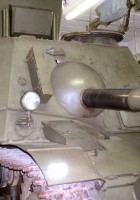
Tank destroyer m / 43 (Pvkv m / 43) was a Swedish combat vehicles that were manufactured in 1947-48. The carriages were built on the same chassis as Strv m / 42 with the superstructure of a lvkanon m / 36. They were originally built to open up but Armétygförvaltningen upgraded them in the 1950s with the roof. 1963 was fitted wagons with sexcylidriga Scania engines from decommissioned Strv m / 41 and m / 40. The carriages were used until the late 1970s. The gearbox was a Volvo VL 420 or Landsverk S-8082.

Källkod: Pvkv m/43 på Wikipedia

Fortsätt läsa

Views : 5006

Pz68 Flakpanzer

Pz68 Flakpanzer

LandSchweiz
TypFlakpanzer (flakpanzer)
FotografiGunther Neumahr
ÄmneAlbum av 18 bilder av en tank Pz68 Flakpanzer

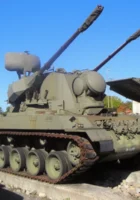
The Panzer 68 was a Swiss main battle tank developed by the Eidgenoessische Konstruktionswerkstaette in Thun in the late 1960s. Fliegerabwehrpanzer 68 : Anti-aircraft Tank 68 – variant fitted with Flakpanzer Gepard turret, mounting two Oerlikon 35mm anti-aircraft guns, on Panzer 68 hull widened by 180 millimetres (7 in); two tanks modified and tested in 1979-1980, not placed into production

Källkod: Pz68 Flakpanzer på Wikipedia

Fortsätt läsa

Visningar : 2617

PTS-M spårade amfibiska transporter

PTS-M spårade amfibiska transporter

LandSovjetunionen
TypSpårad amfibisk transport
Produktionpåbörjat 1965
KroppsstilVattentätt skrov

Den Pts is a Soviet tracked amphibious transport. PTS stands for Plavayushchij Transportyer – Sryednyj or medium amphibious transport vehicle. Its industrial index was Ob’yekt 65. Introduced in 1965, it is large, with a substantial payload of 10 tons, two to four times the capacity of the BAV 485, and better cross-country performance, at the cost of greater somewhat higher purchase costs because it is tracked. The most common model is the improved PTS-M that is powered by a 350 hp diesel engine. It has a boxy, open watertight hull, with six road wheels per side, front drive sprocket, rear idler sprocket, and no return rollers. Like the BAV 485, and unlike the DUKW, it has a rear loading ramp. The crew is seated at the front, leaving the rear of the vehicle open for a vehicle, which can be driven (or backed) in, rather than lifted over the side. To aid in facilitating this, the engine is under the floor. Propulsion in water is by means of twin propellers, in tunnels to protect them from damage during land operations.

Källkod: PTS-M spårade amfibiska transporter på Wikipedia

Fortsätt läsa

Views : 3092