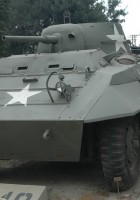
M8 Greyhound

ZemljaSad
TipLaki oklopni automobil
Ključne reči

Album 78 photos of the "M8 Greyhound Light Armored Car"

Foto galerija na M8 Greyhound Light Armored Car, The M8 Laki oklopni automobil (AM-M8 ili AMM8 u Francuskoj) bilo je oklopno vozilo na točkovima koje je proizvela Kompanija Ford Motor i koje su saveznici koristili tokom Drugog svetskog rata. M8 još uvek je viđen u borbama do 2006. Britanci su mu dali nadimak Greyhound (sivi pas).

Izvor: M8 Greyhound na Wikipediji

Nastavi sa čitanjem

Views : 5943

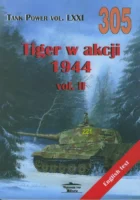
Wydawnictwo Militaria 305 Tiger w akcji 1944 vol_1

Wydawnictwo Militaria

SerijeNapajanje rezervoara
Tema

Tigar u akciji

Ref305<

Une documentation signée Wydawnictwo Militaria knjiga "Oklopna kola BA-64 – Wydawnictwo 303".

Le Tigar I (Tigre), char d’assaut lourd allemand, en service de 1942 à 1945, est l’un des chars les plus connus de la Seconde Guerre mondiale, bien qu’il n’ait été que peu produit par rapport au T-34 soviétique ou au Sherman américain. Ce sont ses dimensions, ses lignes très carrées, sa résistance au combat, sa puissance ainsi que les équipages expérimentés l’ayant mené au feu qui ont marqué les esprits, notamment du fait de la propagande allemande. Son développement a commencé en 1937 et, quand il apparaît pour la première fois sur le front, le 29 août 1942, près de Léningrad, le Tigre I est le char techniquement le plus avancé, le mieux protégé et le plus puissant aligné par l’Axe, affichant une mobilité limitée mais exceptionnelle pour un engin qui fait plus de deux fois le poids de ses prédécesseurs et de la majorité de ses adversaires chenillés. Mais le char lourd, outre de sa production faible, a pâti tout au long de sa carrière de sa mécanique très fragile réduisant considérablement sa disponibilité au feu, de sa mise en œuvre opérationnelle rendue difficile par sa faible autonomie, souffrant également de son poids excessif. Construit à seulement 1 350 exemplaires, il n’a été que rarement endivisionné mais plutôt engagé dans des unités indépendantes.

Izvor: Vikipedija
Nastavi sa čitanjem

Poruke : 772

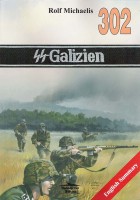
Wydawnictwo Militaria 302 - SS Galizien

Wydawnictwo Militaria

SerijeGeneral Vojna
menstruacijaDrugi svetski rat
Ref302
Tema

SS-Galicija

Une documentation signée Wydawnictwo Militaria knjiga "SS-Galicia – Wydawnictwo 302".

14. Waffen-Grenadier-Division der SS Galizien (ukrajinski: 14-A Гренадерська Дивизия SS "GalалЇина"), bila je jedinica Waffen-SS.

Izvor: Vikipedija

Nastavi sa čitanjem

Views : 976

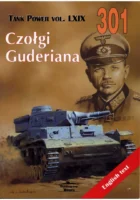
Wydawnictwo Militaria 301 Czolgi Guderiana

Guderian

IzdavačaWydawnictwo Militaria
SerijeGeneral Vojna
menstruacijaDrugi svetski rat
Ref301

Une documentation signée Wydawnictwo Militaria knjiga "Guderian – Wydawnictwo 301".

Heinz Guderian (né le 17 juin 1888 à Kulm, de nos jours Chełmno1 en Pologne – décédé à Schwangau en Bavière le 14 mai 1954) fut un officier général allemand. Il est connu comme un des créateurs des Panzer de l’Allemagne nazie pendant la Seconde Guerre mondiale, appliquant la doctrine de la guerre éclair (Blitzkrieg) pour les chars d’assaut lors des campagnes de France et d’URSS. Il était l’une des rares personnes qui osaient discuter les décisions et défendre son point de vue sur des sujets stratégiques avec Hitler.

Izvor: Vikipedija

Nastavi sa čitanjem

Views : 382

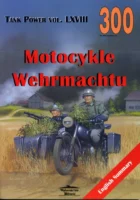
Wydawnictwo Militaria 300 Motocykle Wehrmachtu

Wydawnictwo Militaria

SerijeNapajanje rezervoara
Tema

Motocikli Vermahta

Ref300

Une documentation signée Wydawnictwo Militaria knjiga "Motocikl u Vermahtu – Vajdawnictwo 300".

Vermaht (u francuskim "Odbrambenim snagama") je ime koje je dato nemačkoj vojsci od 1935. do 1945. godine, kao deo nacističkog režima i njegovo preispitivanje klauzula Versajski sporazum (1919) koje je drastično ograničilo veličinu i moć tadašnje vojske, što je rezultat Versajnog sporazuma, Rajhsvehra. Vermaht je nekoliko godina bio vojska sa najnaprednnjom vojnom tehnologijom na svetu.

Izvor: Motocikli Vermahta na Vikipediji

Nastavi sa čitanjem

Broj posetilaca: 1276

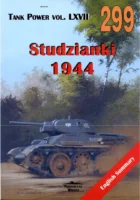
Wydawnictwo Militaria 299 Studzianki 1944

Wydawnictwo Militaria

SerieNapajanje rezervoara
Tema

La bataille de Studzianki

Ref.29

Knjiga iz Wydawnictwo Militaria «Studzianki battle 1944 – Wydawnictwo 299» .

The Battle of Studzianki, was a tactical engagement between the elements of the Red Army’s 2nd Tank Army employed as the Cavalry mechanized group of the 1st Belorussian Front and elements of the German 9th Army of Army Group North Ukraine defending south of Warsaw. The battle was part of the Soviet Lublin-Brest Offensive Operation. The 2nd Tank Army was launched through the breach in the German 4th Panzer Army’s front between Parczew and Chełm, and bypassing Lublin attempted to find a crossing over the Visla.

In this it was supported by the Polish First Army, including the Polish 1st Armoured Brigade. In a hasty encounter battle during which the Polish 1st Armoured Brigade was located in the first echelon of the 2nd Tank Army. At the point where the Army was able to occupy the Magnuszew brideghead, the Polish brigade engaged advance elements of the counter-attacking German Fallschirm-Panzer Division 1 Hermann Göring with the express orders to deny Vistula crossings to the Red Army. The German counter-attack tried to dislodge the Soviet engineers, and the Polish troops providing support for them, behind Vistula off the bridgehead. The Soviet and Polish forces held the bridgehead, and German forces suffered heavy casualties before withdrawing. To commemorate the battle, in 1969 the name of the village Studzianki was changed to include the word Pancerne, meaning Armoured in Polish language. The episodes 3-5 of Polish TV series Czterej pancerni i pies (Four Tankmen and the Dog) depict the crew of Polish tank during the battle of Studzianki.

Izvor: Vikipedija

Nastavi sa čitanjem

Poruke : 957

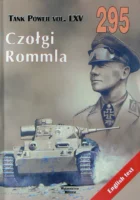
Wydawnictwo Militaria 295 Rommel's Tanks

Wydawnictwo Militaria

SerieNapajanje rezervoara
Tema

The Tanks of Rommel

Ref.295

The book “Wydawnictwo Militaria 295: The Tanks of Rommel” focuses on the tanks used by the Deutsches Afrikakorps (DAK) under General Erwin Rommel’s command during World War II. It provides detailed documentation on the various armored units and their operations in the deserts of Libya, western Egypt, and Tunisia. The author, Janusz Ledwoch, presents information on military tactics, equipment, and the engagements of these tank divisions in the context of the North African campaigns. The book is rich in illustrations and photographs, making it a valuable resource for military history enthusiasts and modelers.

Izvor: Vikipedija

Nastavi sa čitanjem

Views : 629

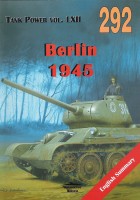
Vajdavnictwo Militaria 292 - Berlin 1945

Wydawnictwo Militaria

SerijeNapajanje rezervoara
Tema

Bataille de Berlin 1945

Ref292

Une documentation signée Wydawnictwo Militaria le livre «Bataille de Berlin 1945 – Wydawnictwo 292» .

U Bitka za Berlin se déroula de fin avril 1945 au 2 mai 1945. Elle opposa ce qui restait des forces du Troisième Reich à l’Armée rouge. Staline donna une portée symbolique à ce dernier coup porté au régime nazi, après les lourdes pertes subies par les Soviétiques pour inverser le flux de l’invasion.

Izvor: Vikipedija

Nastavi sa čitanjem

Views: 909

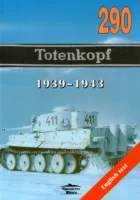
Wydawnictwo Militaria 290 Totenkopf 1939-1943

Wydawnictwo Militaria

SerijeNapajanje rezervoara
Tema

3e Panzer Division – SS-Totenkopf

Ref290

Une documentation signée Wydawnictwo Militaria le livre «3e Panzer Division SS Totenkopf – Wydawnictwo 290» .

La 3e Panzer Division SS Lobanja était l’une des 38 divisions de Waffen-SS durant la Seconde Guerre mondiale. La division Totenkopf avait pour origine les unités de garde des camps de concentrations, les SS-Totenkopfverbände (« unités SS à tête de mort »). Celles-ci étaient dirigées par Theodor Eicke à partir du 4 juillet 1934, lors de sa nomination comme inspecteur des camps de concentration. Rejoignant la Leibstandarte Adolf Hitler (« régiment de garde d’Adolf Hitler ») et la SS-Verfügunsgstruppe (littéralement « troupe SS à disposition »), les unités Totenkopf constituent l’un des trois piliers de la future Waffen SS. Après la réorganisation de la dénomination et de la numérotation des divisions SS en 1943, elle reçoit la dénomination officielle de 3rd SS Panzer Division Totenkopf, aux côtés, entre autres, de la 1re division SS Leibstandarte Adolf Hitler et de la 2e panzerdivision SS Das Reich, issue de la Verfügunsgstruppe. Le 16 octobre 1939, Adolf Hitler autorise le regroupement des régiments Totenkopf pour former une division Waffen-SS. Cette division est intégrée à la 2e Armée pendant les opérations de la campagne de France en mai 1940.

Izvor: 3rd SS Panzer Division Totenkopf on Wikipedia

Nastavi sa čitanjem

Views : 1208

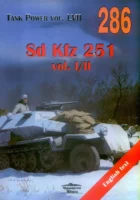
Wydawnictwo Militaria 286 Sd Kfz 251 vol. I-II

Wydawnictwo Militaria

SerijeNapajanje rezervoara
Tema

Sdkfz.251 – Sonderkraftfahrzeug 251

Ref286>

Une documentation signée Wydawnictwo Militaria knjiga "Sdkfz.251 – Wydawnictwo 286".

Le Sonderkraftfahrzeug 251 (SdKfz 251) (bukvalno: Specijalno borbeno vozilo) je nemačko oklopno borbeno vozilo sa polugusjenicama, izgrađeno tokom Drugog svetskog rata, koje je proizvedeno tokom sukoba. To je prvenstveno namenjen za opremanje Panzer divizije i Panzergrenadieren jedinica i dele mnoge mehaničke elemente sa SdKfz 7.

Izvor: Vikipedija

Nastavi sa čitanjem

Views : 669