Sino 206B

Bell 206

PaísEua
PapelHelicóptero utilitário multiuso
Primeiro voo8 de dezembro de 1962
Construído7300+

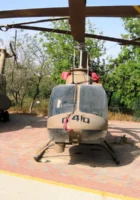
O Sino 206 is a family of two-bladed, single- and twin-engined helicopters, manufactured by Bell Helicopter at its Mirabel, Quebec, plant. Originally developed as the Bell YOH-4 for the United States Army’s Light Observation Helicopter program, it was not selected by the Army. Bell redesigned the airframe and successfully marketed the aircraft commercially as the five-place Bell 206A JetRanger. The new design was eventually selected by the Army as the OH-58 Kiowa. Bell also developed a seven-place LongRanger, which was later offered with a twin-engined option as the TwinRanger, while Tridair Helicopters offers a similar conversion of the LongRanger called the Gemini ST. The ICAO-assigned model designation “B06” is used on flight plans for the JetRanger and LongRanger, and the designation “B06T” is used for the twin-engined TwinRangers.

Fonte: Bell 206 na Wikipédia
Continue lendo

Visualizações: 1858

CV9035

Combat Vehicle 90

PaísSuécia
PapelVeículo de combate de infantaria
Produzido1993-presente
Construído1280

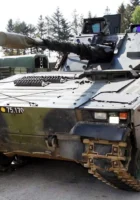
O Veículo de Combate 90 (CV90; Sw. Stridsfordon 90, Strf90) é uma família de veículos de combate rastreados suecos projetados pela Administração de Material de Defesa da Suécia (Försvarets Materielverk, FMV), Hägglunds e Bofors durante meados da década de 1980 até o início da década de 1990, entrando em serviço na Suécia em meados da década de 1990. O design da plataforma CV90 evoluiu continuamente em etapas do Mk0 ao atual MkIV com avanços na tecnologia e em resposta às mudanças nos requisitos do campo de batalha. A versão sueca do principal veículo de combate de infantaria (IFV) é equipada com uma torre da Bofors que é equipada com um autocanhão Bofors de 40 mm. As versões de exportação são equipadas com torres Hägglunds série E, armadas com um canhão automático Mk44 de 30 mm ou um canhão automático Bushmaster de 35 mm.

Fonte: Combat Vehicle 90 na Wikipédia

Continue lendo

Visualizações : 2348

Panhard AMD 178 |

Panhard AMD 178

PaísFrança
PapelBlindado
Produzido1937-1940
ConstruídoVersão 729 A + versão 414 B

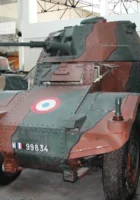
The Panhard 178 (officially designated as Automitrailleuse de Découverte Panhard modèle 1935, 178 being the internal project number at Panhard) or “Pan-Pan” was an advanced French reconnaissance 4×4 armoured car that was designed for the French Army Cavalry units before World War II. It had a crew of four and was equipped with an effective 25 mm main armament and a 7.5 mm coaxial machine gun. A number of these vehicles were in 1940 taken over by the Germans after the Fall of France and employed as the Panzerspähwagen P204 (f) for some months after the armistice of June production continued for the benefit of Germany. After the war a derived version, the Panhard 178B, was again taken into production by France.

Fonte: Panhard AMD 178 na Wikipédia

Continue lendo

Visualizações : 2141

M36 Jackson

M36 tank destroyer

PaísEua
PapelDestruidor de tanques
Produzido1944-1945
Construído2,324

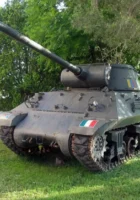
O Destruidor de tanques M36, formally 90 mm Gun Motor Carriage, M36, was an American tank destroyer used during World War II. The M36 combined the hull of the M10 tank destroyer, which used the M4 Sherman’s reliable chassis and drivetrain combined with sloped armor, and a new turret mounting the 90 mm gun M3. Conceived in 1943, the M36 first served in combat in Europe in October 1944, where it partially replaced the M10 tank destroyer. It also saw use in the Korean War, where it was able to defeat any of the Soviet tanks used in that conflict. Some were supplied to South Korea as part of the Military Assistance Program and served for years, as did re-engined examples found in Yugoslavia, which operated into the 1990s. Two remained in service with the Republic of China Army at least until 2001. The vehicle is also known under the unofficial nickname Jackson, but this designation appears to be a postwar appellation that was never used by the US Army.

Fonte: Destruidor de tanques M36 na Wikipédia

Continue lendo

Visualizações : 2762

Pantera Eurocopter AS565

Eurocopter AS565 Panther

PaísFrança
PapelHelicóptero militar utilitário
Primeiro voo28 de fevereiro de 1984
ConstruídoDesconhecido

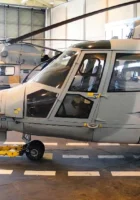
O Pantera Eurocopter AS565 é a versão militar do eurocopter AS365 Dauphin multi-peso multi-peso multi-peso helicóptero bi-propósito. O Pantera é usado para uma ampla gama de funções militares, incluindo ataque de combate, apoio ao fogo, guerra antissubmarino, guerra anti-superfície, busca e resgate, e evacuação médica.

Fonte: Eurocopter AS565 Pantera na Wikipédia

Continue lendo

Visualizações : 1196

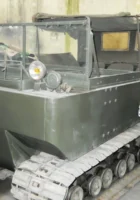
M29C Weasel Tipo A

M29 Weasel

PaísEua
PapelVeículo rastreado
tripulação4
ConstruídoDesconhecido

O Doninha M29 is a World War II tracked vehicle designed for operation in snow. Built by Studebaker, Weasels were also used in sandy, muddy, and desert terrains, including towing loads over terrain wheeled vehicles could not negotiate as in the US Marine invasions of Iwo Jima and Okinawa. Standard M29s were semi-amphibious, but with a very low freeboard. A M29C Water Weasel version was produced with fore and aft buoyancy cells and twin rudders. Capable of operating in inland waterways, it however also saw limited action in surf conditions in the Pacific Theatre.

Fonte: Doninha M29 na Wikipédia

Continue lendo

Visualizações : 2292

AMX AMI EBFS

AMX International AMX

PaísItália e Brasil
PapelAeronave de ataque terrestre
Primeiro voo15 de maio de 1984
Construído200

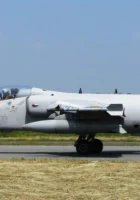
O AMX International AMX is a ground-attack aircraft jointly developed by Brazil and Italy. The AMX is designated A-11 Ghibli by the Italian Air Force and A-1 by the Brazilian Air Force. The Italian name, “Ghibli”, is taken from the hot dry wind of the Libyan desert. During the early 1970s, Italian manufacturer Aermacchi conducted a design study on a prospective light ground attack aircraft, which was given the designation of MB-340. During early 1977, the Italian Air Force issued a requirement for 187 new-build strike fighters, which were to replace its existing Aeritalia G.91 in the close air support. During 1980, the Brazilian government announced that they intended to participate in the program in order to provide a replacement for the Aermacchi MB-326. As a result of a memorandum between Italy and Brazil for the type’s joint development in 1981, AMX International, an Italian-Brazilian joint venture, was formed to develop, manufacture, and market the aircraft.

Fonte: AMX International AMX na Wikipédia

Continue lendo

Vistas: 2471

Aermacchi MB-326

Aermacchi MB-326

PaísItália
PapelTreinador avançado/Ataque leve
Primeiro voo10 de Dezembro de 1957
Construído800

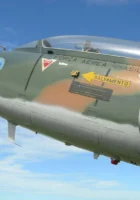
O Aermacchi ou Macchi MB-326 é um treinador a jato militar leve projetado na Itália. Originalmente concebido como um treinador de dois lugares, também foram produzidas versões de ataque leve de um e dois lugares. É uma das aeronaves de maior sucesso comercial de seu tipo, sendo comprada por mais de 10 países e produzida sob licença na Austrália, Brasil e África do Sul. Ele estabeleceu muitos recordes de categoria, incluindo um recorde de altitude de 56.807 pés (17.315 m) em 18 de março de 1966. Mais de 800 MB-326 foram construídos entre 1961-1975.

Fonte: Aermacchi MB-326 na Wikipédia

Continue lendo

Visualizações : 944

Komatsu LAV

Komatsu LAV

PaísJapão
PapelCarro escoteiro blindado
Produzido1997-2019
Construído1937

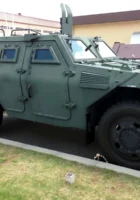
O Komatsu light armored vehicle is a Japanese military vehicle first produced in 2002. Currently used exclusively by the Japan Self-Defense Force (JSDF), it has seen use in the Iraq War. It is built by Komatsu Ltd. Defense Systems Division in Komatsu, Ishikawa, Japan. Komatsu’s factory designator for the vehicle is KU50W. The exterior resembles the Panhard VBL, used by the French army, but the LAV has 4 doors and a large cabin for carrying soldiers. The LAV can also be transported by air in vehicles like the CH-47J and the C-130H.

Fonte: Komatsu LAV na Wikipédia

Continue lendo

Views : 1212

Aerfer Sagitário 2

Aerfer Sagittario 2

PaísItália
PapelProtótipo de caça
Primeiro voo19 de maio de 1956
Construído2

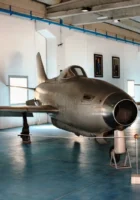
O Aerfer Sagitário 2 (italiano para sagitário) foi um protótipo de avião de combate leve de assento único totalmente metálico construído na Itália pela Aerfer, destinado a servir como um interceptador ou aeronave de apoio tático leve. Voou pela primeira vez em 1956, tornou-se a primeira aeronave italiana a quebrar a barreira do som em voo controlado quando atingiu Mach 1.1 durante um mergulho de 13.725 m (45.000 pés).

Fonte: Aerfer Sagittario 2 na Wikipédia

Continue lendo

Visualizações : 891