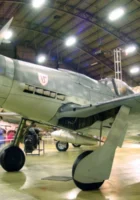
Focke-Wulf Fw 190D-9

Focke-Wulf Fw 190D-9

PaísAlemanha
TipoAvião de caça monomotor
Períodoww2

O Focke-Wulf Fw 190 Würger foi um avião de combate monoposto alemão projetado por Kurt Tank no final da década de 1930 e amplamente utilizado durante a Segunda Guerra Mundial. Alimentado por um motor radial, o 190 tinha ampla potência e era capaz de levantar cargas maiores do que sua contraparte bem conhecida, o Messerschmitt Bf 109. O 190 foi usado pela Luftwaffe em uma ampla variedade de funções, incluindo caça diurno, caça-bombardeiro, aeronave de ataque ao solo e, em menor grau, caça noturno.

Fonte: Wikipédia

Visto no fórum

Continue lendo

Views : 14051

Stoewer Kfz 1

Stoewer Kfz 1

PaísAlemanha
TipoAutomóvel ligeiro de passageiros de série cross-country
Períodoww2

O leichter geländegängiger Personenkraftwagen, ou às vezes designado como l. gl. Einheits-Pkw - traduzido literalmente: carro leve de passageiros padrão cross-country - foi fabricado por Stoewer, Hanomag e BMW de 1936 ao início de 1944. Quase 17.800 exemplares foram feitos de 1936 a 1943.

Fonte: KFZDERWEHRMACHT

Visto no fórum:

Continue lendo

Views : 5262

LeFH18-40

LeFH18-40

PaísAlemanha
TipoObus
Períodoww2
Tópico

Álbum de 29 fotos de uma arma LeFH18-40

The 10.5 cm leFH 18 was the standard divisional field howitzer used by the Wehrmacht during the Second World War.

Versão LeFH18-40 : a modification, known as the leFH 18/40 consisted of mounting the barrel of an leFH 18M on the carriage for a 7.5 cm PaK 40 antitank gun.

Fonte: Wikipédia

Continue lendo

Views : 2928

QF 17 pdr Mk I-II

QF 17 pdr Mk I-II

PaísReino unido
TipoGuerra anti-tanque
Períodoww2
TópicoÁlbum de 23 fotos de uma arma QF 17 pdr Mk I-II

Photo gallery of a QF 17 pdr Mk I-II, The Ordnance Quick-Firing 17-pounder (or just 17-pdr) was a 76.2 mm (3 inch) gun developed by the United Kingdom during World War II. It was used as an anti-tank gun on its own carriage, as well as equipping a number of British tanks. It was the most effective Allied anti-tank gun of the war. Used with the APDS shot it was capable of defeating all but the thickest armour on German tanks. It was used to ‘up-gun’ some foreign-built vehicles in British service, notably to produce the Sherman Firefly variant of the US M4 Sherman tank, giving British tank units the ability to hold their own against their German counterparts. In the anti-tank role it was replaced by the 120 mm BAT recoilless rifle after the war. As a tank gun it was succeeded by the 84 mm 20 pounder.

Fonte: Wikipédia

Continue lendo

Visualizações : 3113

Padre M7B1

Padre M7B1

PaísReino Unido
TipoCarruagem do motor do obuseiro
TópicoÁlbum de 51 fotos de uma arma Padre M7B1

O 105 mm Obuseiro Motor Carriage M7 foi um veículo de artilharia autopropulsado americano produzido durante a Segunda Guerra Mundial. Foi-lhe dado o nome oficial de serviço 105 mm Self Propelled Gun, Priest pelo Exército Britânico, devido ao anel de metralhadora semelhante ao púlpito, e seguindo o Bishop e as armas autopropulsadas Deacon contemporâneas.

M7B1 : Completando o turno, o M7B1 foi totalmente baseado no chassi M4A3 Sherman. Foi padronizado em setembro de 1943 e declarado padrão substituto em janeiro de 1945.

Fonte: Wikipédia

Continue lendo

Visualizações : 3609

Boeing FB-5 Hawk

Boeing FB-5 Hawk

PaísEua
TipoAviões

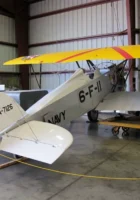
O Boeing Modelo 15 foi um caça biplano de cabine aberta dos Estados Unidos da década de 1920, fabricado pela empresa Boeing. O Modelo 15 entrou em serviço com o Serviço Aéreo do Exército dos Estados Unidos (como a série PW-9) e com a Marinha dos Estados Unidos como um caça baseado em porta-aviões (como a série FB).

FB-5 : 27 construídos, versão de produção. Alimentado por 520 hp (390 kW) Packard 2A-1500 motor. Boeing Modelo 67.

Fonte: Wikipedia Visto no fórum japan-militaire.com

Continue lendo

Visualizações : 1900

Opel Blitz Firetruck - Ande por aí

Caminhão de bombeiros Opel Blitz

PaísAlemanha
TipoCaminhão de bombeiros
Tópico

Álbum de 46 fotos de um caminhão Caminhão de bombeiros Opel Blitz

Galeria de fotos de um Caminhão de Bombeiros Opel Blitz, Opel Blitz was the name given to various German light and middle-weight trucks built by Opel between 1930 and 1975. During the years preceding the Second World War Opel was Germany’s largest truck producer.

Fonte: Wikipédia

Continue lendo

Views : 6082

Arma antitanque aerotransportada 6pdr

Arma antitanque aerotransportada 6pdr

PaísReino unido
TipoArma anti-tanque
Períodoww2

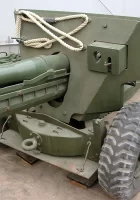
Este é o Aerotransportado version of the 6pdr. anti-tank gun. It was modified by reducing the carriage to fit the 4’6” width of the Horsa glider and had the trail legs hinged in the middle to further accomodate transit. Further changes included relocation of the Elevation Wheel and reducing sides of the lower shield. They would be used by the British in airborne actions in Normandy, Arnhem and in the Rhine Crossing. The US Airborne Command had rejected their British copy of the 6pdr., the 57 mm M1 as unfit for airlanding by glider due to weight and resultantly adopted the British Airborne version instead. The 82nd and 101st were so equiped for the Normandy airdrops and referred to them as simply 57mm guns. The US paratroops used them against German armour near St Mere Eglise and Carentan, however few tanks were encountered and they were mostly used for support.

Fonte: milicast.com/ Visto no japan-militaire.com do fórum

Continue lendo

Visualizações: 3884

21cm Morser 18 Obuseiro

21cm Morser 18 Obuseiro

PaísAlemanha
TipoObus
FabricanteKrupp
Período1939–45 Construído em: 711+

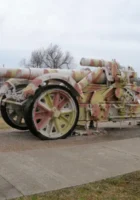
O Mörser 18 de 21 cm (obuseiro pesado) (21 cm Mrs 18) foi um obuseiro pesado alemão usado na Segunda Guerra Mundial por batalhões de artilharia e baterias independentes. Alguns também foram usados por unidades de artilharia de defesa costeira.

Fonte: Wikipédia

Continue lendo

Views : 7625

Zis-3

Zis-3

PaísURSS
TipoArma divisional
Período1941–1945
Construído103.000+

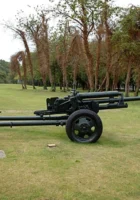
O canhão divisional de 76 mm M1942 (Zis-3) (em russo: 76-мм дивизионная пушка обр. 1942 г. (ЗиС-3)) foi um canhão de campo divisional soviético de 76,2 mm usado durante a Segunda Guerra Mundial. ZiS era uma designação de fábrica e significava Zavod imeni Stalina ("fábrica em homenagem a Stalin"), o título honorífico da Fábrica de Artilharia nº 92, que primeiro construiu esta arma.

Fonte: Wikipédia

Continue lendo

Views : 5404