F-CK-1 Ching Kuo

AIDC F-CK-1 Ching-kuo

KrajuTajwan
RoliSamoloty myśliwskie
Pierwszy lot28 maja 1989
Zbudowany131

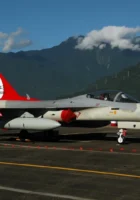
The AIDC F-CK-1 Ching-Kuo (chiń. 經國號戰機; pinyin: Jīngguó Hào Zhànjī), powszechnie znany jako Indigenous Defense Fighter (IDF), to wielozadaniowy samolot bojowy nazwany na cześć Chiang Ching-kuo, zmarłego prezydenta Republiki Chińskiej. Samolot wykonał swój pierwszy lot w 1989 roku. Został dostarczony Siłom Powietrznym Republiki Chińskiej w styczniu 1994 roku i wszedł do służby w 1997 roku. Wszystkie 130 samolotów produkcyjnych zostało wyprodukowanych do 1999 roku.

Źródła: AIDC F-CK-1 Ching-kuo na Wikipedii

Czytaj dalej

Liczba wyświetleń : 1901

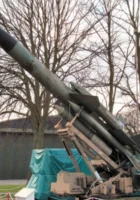
Ogar Bristol

Ogar Bristol

KrajuUk
RoliPocisk ziemia-powietrze
W eksploatacji1958 – 1991
Zbudowany783

Tthe Ogar Bristol is a British ramjet powered surface-to-air missile developed during the 1950s. It served as the UK’s main air defence weapon into the 1990s and was in large-scale service with the Royal Air Force (RAF) and the forces of four other countries. Part of sweeping changes to the UK’s defence posture, the Bloodhound was intended to protect the RAF’s V bomber bases to preserve the deterrent force, attacking bombers that made it past the Lightning interceptor force. Bloodhound Mk. I entered service in December 1958, the first British guided weapon to enter full operational service. This was part of Stage 1 upgrades to the defensive systems, in the later Stage 2, both Bloodhound and the fighters would be replaced by a longer-range missile code named Blue Envoy. When this was ultimately cancelled in 1957, parts of its design were worked into Bloodhound Mk. II, roughly doubling the range of the missile. The Mk. I began to be replaced by the Mk. II starting in 1964.

Źródła: Bristol Bloodhound na Wikipedii

Czytaj dalej

Liczba wyświetleń : 1665

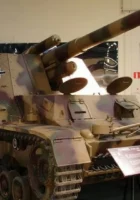
Jagdpanzer Hummel

Hummel

KrajuNazistowskie Niemcy
RoliArtyleria samobieżna
W eksploatacji1943–1945
Zbudowany714

Hummel (German: “bumblebee”) was a self-propelled gun based on the Geschützwagen III/IV chassis and armed with a 15 cm howitzer. It was used by the German Wehrmacht during the Second World War from early 1943 until the end of the war. The full name was Panzerfeldhaubitze 18M auf Geschützwagen III/IV (Sf) Hummel, Sd.Kfz. 165. On February 27, 1944, Hitler ordered the name Hummel to be dropped as it was deemed inappropriate for a fighting vehicle.

Źródła: Hummel na Wikipedii

Czytaj dalej

Liczba wyświetleń : 2510

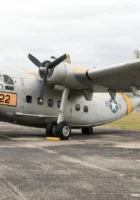
Northrop YC-125B Najeźdźca

Northrop YC-125 Raider

KrajuStany Zjednoczone Ameryki
RoliSamoloty transportowe
Pierwszy lot1 sierpnia 1949
Zbudowany23

Tthe Northrop YC-125 Raider was a 1940s American three-engined STOL utility transport built by Northrop Corporation, Hawthorne, California. Deliveries of the YC-125 to the USAF began in 1950. These aircraft did not serve long as they were underpowered and they were soon sent to Sheppard Air Force Base, Texas and relegated to be ground instructional trainers until retired in 1955 and declared surplus. Most of the surplus aircraft were purchased by Frank Ambrose and sold to bush operators in South and Central America.

Źródła: Northrop YC-125 Raider na Wikipedii

Czytaj dalej

Liczba wyświetleń : 1315

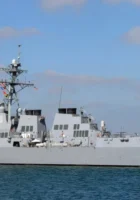
Drugi UsS "Preble"

USS Preble (DDG-88)

KrajuStany Zjednoczone Ameryki
Klasa i typNiszczyciele typu Arleigh Burke
Uruchomiony1 czerwca 2001 r.
Port macierzystyWspólna baza Pearl Harbor Hickam

Drugi UsS "Preble" (DDG-88) is an Arleigh Burke-class destroyer in the United States Navy. She is the sixth U.S. Navy ship named in honor of Commodore Edward Preble, who served in the American Revolutionary War and was one of the early leaders of the Navy. USS Preble is the 38th destroyer of her class. She was the 17th ship of this class to be built at Ingalls Shipbuilding in Pascagoula, Mississippi, and construction began on 22 June 2000. She was launched on 1 June 2001 and was christened on 9 June 2001. On 9 November 2002, she was commissioned during a ceremony at the Commonwealth Pier/World Trade Center in Boston, Massachusetts. At her commissioning ceremony USS Preble was docked bow to bow with USS Constitution, the command of her namesake. The ceremony included a symbolic welcoming aboard of the spirit of Commodore Preble signaled by the ringing of chimes. Among the speakers at the commissioning were U.S. Senator Edward Kennedy, U.S. Representative Stephen Lynch, then Chief of Naval Operations Admiral Vernon E. Clark USN (Ret.) and journalist and sailor Walter Cronkite.

Źródła: UsS Preble na Wikipedii
Czytaj dalej

Liczba wyświetleń : 1110

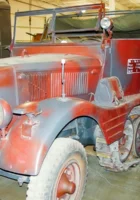
Sd.Kfz.11 3-tonowy półtorowy

Sd.Kfz. 11

KrajuNazistowskie Niemcy
RoliLekka półtornia
Produkowane1938–45
Zbudowany9000+

Tthe Sd.Kfz. 11 (Sonderkraftfahrzeug – special motorized vehicle) was a German half-track that saw widespread use in World War II. Its main role was as a prime mover for medium towed guns ranging from the 3.7 cm FlaK 43 anti-aircraft gun up to the 10.5 cm leFH 18 field howitzer. It could carry eight troops in addition to towing a gun or trailer. The basic engineering for all the German half-tracks was developed during the Weimar-era by the Reichswehr’s Military Automotive Department, but final design and testing was farmed out to commercial firms with the understanding that production would be shared with multiple companies. Borgward was chosen to develop the second smallest of the German half-tracks and built a series of prototypes between 1934 and 1937. However development was taken over in 1938 by Hanomag who designed the main production version, H kl 6.

Źródła: Sd.Kfz. 11 na Wikipedii
Czytaj dalej

Liczba wyświetleń : 2496

Sd.Kfz.8

Sd.Kfz. 8

KrajuNazistowskie Niemcy
RoliCiężki półtorowy
Produkowane1937–45
Zbudowany4000

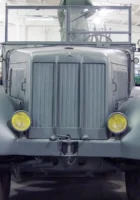
Tthe Sonderkraftfahrzeug 8 ("specjalny pojazd silnikowy 8") był niemieckim półtorem, który był powszechnie używany w czasie II wojny światowej. Jego główne role były jako główny ruch dla ciężkich holowanych pistoletów, takich jak 21 cm Mörser 18, 15 cm Kanone 18 i 10,5 cm FlaK 38, jednak był również zdolny do służby jako transport piechoty. W latach 1938-1945 wyprodukowano około 4000 osób. Był używany w każdej kampanii stoczonej przez Niemców w czasie II wojny światowej, w szczególności inwazji na Polskę, bitwy o Francję, kampanii bałkańskiej, frontu wschodniego, kampanii północnoafrykańskiej, bitwy pod Normandią i kampanii włoskiej.

Źródła: Sd.Kfz. 8 na Wikipedii
Czytaj dalej

Liczba wyświetleń : 1599

Bushmaster 2000

Stout Bushmaster 2000

KrajuStany Zjednoczone Ameryki
RoliSamolot
Pierwszy lot1964
Buily (Buily)2

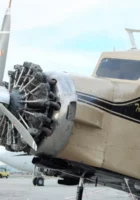
Tthe Bushmaster 2000 Był małym samolotem podmiejskim zbudowanym w Stanach Zjednoczonych w celu ożywienia projektu Forda Trimotora. Prace rozpoczęły się w 1953 roku, testując vintage Trimotor i w 1954 Bill Stout zakupił prawa do projektowania oryginalnego Trimotor. Ze względu na problemy licencyjne "Ford Tri-Motor", Ford 15-AT-D otrzymał nazwę Bushmaster 2000. 15 stycznia 1955 roku Stout i jego partner Robert Hayden z Hayden Aircraft Corporation ogłosili, że planują budowę 1000 nowych bushmasterów, ale minęło jedenaście lat, zanim pierwszy prototyp nowego projektu poleciał.

Źródła: Stout Bushmaster 2000 na Wikipedii
Czytaj dalej

Liczba wyświetleń : 739

BFC-2

Curtiss F11C Goshawk

KrajuStany Zjednoczone Ameryki
RoliMyśliwiec pokładowy i myśliwiec-bombowiec
Pierwszy lotwrzesień 1932
Buily (Buily)30

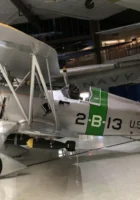
Tthe Curtiss F11C Goshawk był amerykańskim dwupłatowym samolotem myśliwskim z 1930 roku, który odniósł ograniczony sukces, ale był częścią długiej linii samolotów Curtiss Hawk zbudowanych przez Curtiss Aeroplane and Motor Company dla amerykańskiego wojska.

Źródła: RCurtiss F11C Goshawk na Wikipedii
Czytaj dalej

Views : 1668

Krążownik Avrora

Russian cruiser Aurora

KrajuRadzieckiego
Klasa i typKrążownik chroniony typu Pallada
Uruchomiony11 maja 1900

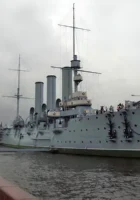
Zorza polarna (Russian: Авро́ра, tr. Avrora, IPA: [ɐˈvrorə]) is a 1900 Russian protected cruiser, currently preserved as a museum ship in Saint Petersburg. Aurora was one of three Pallada-class cruisers, built in Saint Petersburg for service in the Pacific. All three ships of this class served during the Russo-Japanese War. Aurora survived the Battle of Tsushima and was interned under US protection in the Philippines, and eventually returned to the Baltic Fleet. The second ship, Pallada, was sunk by the Japanese at Port Arthur in 1904. The third ship, Diana, was interned in Saigon after the Battle of the Yellow Sea. One of the first incidents of the October Revolution in Russia took place on the cruiser Aurora, which reportedly fired the first shot, signalling the beginning of the attack on the Winter Palace.

Źródła: Rosyjski krążownik Aurora na Wikipedii
Czytaj dalej

Liczba wyświetleń : 1629