Northrop B-2 Spirit

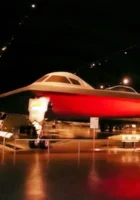
Northrop Grumman B-2 Spirit

KrajuStany Zjednoczone Ameryki
RoliStealth strategiczny ciężki bombowiec
Pierwszy lot17 lipca 1989
Zbudowany21

Tthe Northrop (później Northrop Grumman) B-2 Spirit, znany również jako Stealth Bomber, to amerykański ciężki bombowiec strategiczny, wyposażony w nisko obserwowalną technologię stealth zaprojektowaną do penetracji gęstej obrony przeciwlotniczej. Zaprojektowany podczas zimnej wojny, jest to latający projekt skrzydła z dwuosobową załogą. Bombowiec jest poddźwiękowy i może rozmieszczać zarówno broń konwencjonalną, jak i termojądrową, taką jak osiemdziesiąt 500-funtowych (230 kg) bomb kierowanych MK 82 JDAM GPS lub szesnaście bomb jądrowych B83 o wadze 2 400 funtów (1 100 kg). B-2 jest jedynym uznanym samolotem, który może przenosić dużą broń dystansową powietrze-ziemia w konfiguracji stealth.

Źródła: Northrop Grumman B-2 Spirit na Wikipedii

Czytaj dalej

Liczba wyświetleń : 875

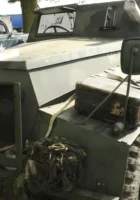
Morris Samochód pancerny

Morris CS9

KrajuUk
RoliLekki samochód pancerny
Okres1936+
ZbudowanyNiewiedzy

Pojazd został oparty na Morris Commercial C9 4×2 15 long cwt (760 kg) truck chassis. On this chassis, a riveted hull was mounted with an open-topped two-man turret. The armament consisted of either Boys anti-tank rifle and Bren light machine gun or Vickers machine gun. The vehicle carried a No. 19 radio set. The prototype was tested in 1936. A further 99 cars were ordered and were delivered in 1938. Thirty-eight of these cars were used by the 12th Royal Lancers in the Battle of France, where all of them were destroyed or abandoned. Another 30 served with the 11th Hussars in the North African Campaign. It was found that, when fitted with desert tyres, the vehicle had good performance on soft sand. However, its armour and armament were insufficient. The vehicle was retired halfway through the North African Campaign.

Źródła: Morris CS9 na Wikipedii

Czytaj dalej

Liczba wyświetleń : 903

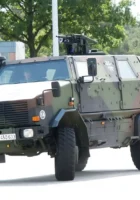
ATF Dingo 2A2-A2.3

ATF Dingo

KrajuNiemcy
RoliPojazd piechoty
W eksploatacji2000 – obecnie
ZbudowanyNiewiedzy

Tthe ATF Dingo is a German heavily armored military MRAP infantry mobility vehicle based on a Unimog chassis with a V-hull design, produced by the company Krauss-Maffei Wegmann (KMW). The first prototype of the Dingo 1 was completed in 1995 and the first production Dingo 1 entered service in 2000 with the German Army. It is designed to withstand land mines, rifle fire, artillery fragments and NBC-threats. ATF stands for Allschutz-Transport-Fahrzeug, meaning all-protected transport vehicle in German. It is named after the Australian native dog, the dingo. The Dingo 2 entered service in late 2004 after undergoing trials from November 2003-May 2004. Currently KMW is developing the Dingo 2 GFF for the German Army with increased internal volume. Textron signed an exclusive deal to produce and market KMW’s Dingo in the United States. However, Textron chose its own more expensive and heavier M1117 Armored Security Vehicle for the MRAP competition, which did not receive a contract.

Źródła: ATF Dingo na Wikipedii

Czytaj dalej

Liczba wyświetleń : 1243

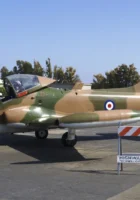
Brytyjski samolot Jet Provost T.Mk.5A

BAC Jet Provost

KrajuUk
RoliWojskowy samolot szkoleniowy
Pierwszy lot26 czerwca 1954
Zbudowany734

Tthe BAC Jet Provost to brytyjski samolot szkolno-treningowy, który był używany przez Royal Air Force (RAF) od 1955 do 1993 roku. Został pierwotnie opracowany przez Hunting Percival z wcześniejszego podstawowego trenażera Percival Provost napędzanego silnikiem tłokowym, a później wyprodukowany przez British Aircraft Corporation (BAC). Oprócz wielu zamówień RAF, Jet Provost, czasami z lekkim uzbrojeniem, był eksportowany do wielu sił powietrznych na całym świecie. Projekt został również rozwinięty w mocniej uzbrojony wariant ataku naziemnego pod nazwą BAC Strikemaster.

Źródła: BAC Jet Provost na Wikipedii

Czytaj dalej

Liczba wyświetleń : 935

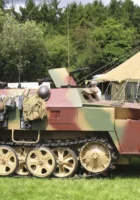
Sd.Kfz. 250

Sd.Kfz. 250

KrajuNiemcy
TypuPółgąsienicowy transporter opancerzony
W eksploatacji1941–1945
Zbudowany6600+

Tthe Sd.Kfz. 250 (German: Sonderkraftfahrzeug 250; ‘special motor vehicle’) was a light armoured half-track, very similar in appearance to the larger Hanomag-designed Sd.Kfz. 251, and built by the DEMAG firm, for use by Nazi Germany in World War II. Most variants were open-topped and had a single access door in the rear. The Sd. Kfz 250 was adopted in 1939 to supplement the standard half-track. Production delays meant that the first vehicle did not appear until mid-1941.

Źródła: Sd.Kfz. 250 na Wikipedii

Czytaj dalej

Wyświetleń: 3273

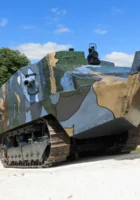
Schneider CA1

Schneider CA1

KrajuFrancja
TypuCzołg ciężki
W eksploatacji1916–1918 (Francja) / 1921–1936 (Hiszpania)
Zbudowany400

Tthe Schneider CA 1 (originally named the Schneider CA) was the first French tank, developed during the First World War. The Schneider was inspired by the need to overcome the stalemate of trench warfare which on the Western Front prevailed during most of the Great War. It was designed specifically to open passages for the infantry through barbed wire and then to suppress German machine gun nests. After a first concept by Jacques Quellennec devised in November 1914, the type was developed from May 1915 onwards by engineer Eugène Brillié, paralleling British development of tanks the same year. Colonel Jean Baptiste Eugène Estienne in December 1915 began to urge for the formation of French armoured units, leading to an order in February 1916 for four hundred Schneider CA tanks, which were manufactured by SOMUA, a subsidiary of Schneider located in a suburb of Paris, between September 1916 and August 1918.

Źródła: Schneider CA1 na Wkipedii

Czytaj dalej

Liczba wyświetleń : 1809

Opel Olympia

Opel Olympia

KrajuNiemcy
TypuSamochód
Produkcji1935–1970
ZbudowanyNiewiedzy

Tthe Opel Olympia is a compact car produced by the German automaker Opel from 1935 to 1940, from 1947 to 1953 and again from 1967 to 1970. The 1935 Olympia was Germany’s first mass-produced car with an all-steel unitized body (monocoque). This revolutionary technology reduced the weight of the car by 180 kilograms (400 lb.) compared to its predecessor. Production of the unibody design required new production methods and materials. Spot welding, advanced types of steel, and a new production line layout were among the many advances introduced by the Olympia.

Źródła: Opel Olympia na Wikipedii

Czytaj dalej

Liczba wyświetleń : 1671

Bartini Beriew VVA-14

Bartini Beriew VVA-14

KrajuRadzieckiego
TypuAmfibie ASW
Pierwszy lot4 września 1972
Zbudowany2

Tthe Bartini Beriew VVA-14 Vertikaľno-Vzletayushchaya Amfibiya (samolot amfibijny pionowego startu) był samolotem z efektem skrzydła w ziemi opracowanym w Związku Radzieckim na początku 1970 roku. Zaprojektowany, aby móc startować z wody i latać z dużą prędkością na długich dystansach, miał wykonywać prawdziwe loty na dużych wysokościach, ale także mieć możliwość sprawnego latania tuż nad powierzchnią morza, wykorzystując aerodynamiczny efekt ziemi. VVA-14 został zaprojektowany przez włoskiego projektanta Roberta Bartiniego w odpowiedzi na postrzegany wymóg zniszczenia okrętów podwodnych z pociskami Polaris marynarki wojennej Stanów Zjednoczonych. Ostatni samolot został wycofany w 1987 roku.

Źródła: Bartini Beriev VVA-14 na Wiki

Czytaj dalej

Liczba wyświetleń : 3394

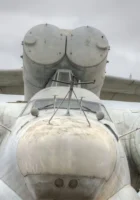
Ekranoplan klasy Lun

Ekranoplan klasy Lun

KrajuRadzieckiego
RoliPojazd szturmowy/transportowy
W eksploatacji 1987–koniec lat 1990.
Zbudowany2

Tthe Ekranoplan klasy Lun (also called Project 903) is a ground effect vehicle (GEV) designed by Rostislav Alexeyev in 1975 and used by the Soviet and Russian navies from 1987 until sometime in the late 1990s. It flew using lift generated by the ground effect acting on its large wings when within about four metres (13 ft) above the surface of the water. Although they might look similar to traditional aircraft, ekranoplans like the Lun are not classified as aircraft, seaplanes, hovercraft, or hydrofoils. Rather, crafts like the Lun-class ekranoplan are classified as maritime ships by the International Maritime Organization due to their use of the ground effect, in which the craft glides just above the surface of the water.

Źródła: Ekranoplan klasy Lun na Wikipedii

Czytaj dalej

Views : 1725

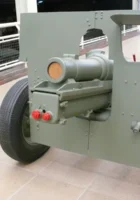
3,7-calowy haubica

QF 3.7-inch howitzer

KrajuUk
RoliPistolet górski
W eksploatacji1917–obecnie
ZbudowanyNiewiedzy

Ordnance, QF 3,7-calowa haubica to działo górskie, używane przez armie brytyjskie i Wspólnoty Narodów w pierwszej i drugiej wojnie światowej oraz między wojnami.

Źródła: 3,7-calowa haubica QF na Wikipedii

Czytaj dalej

Views : 1401