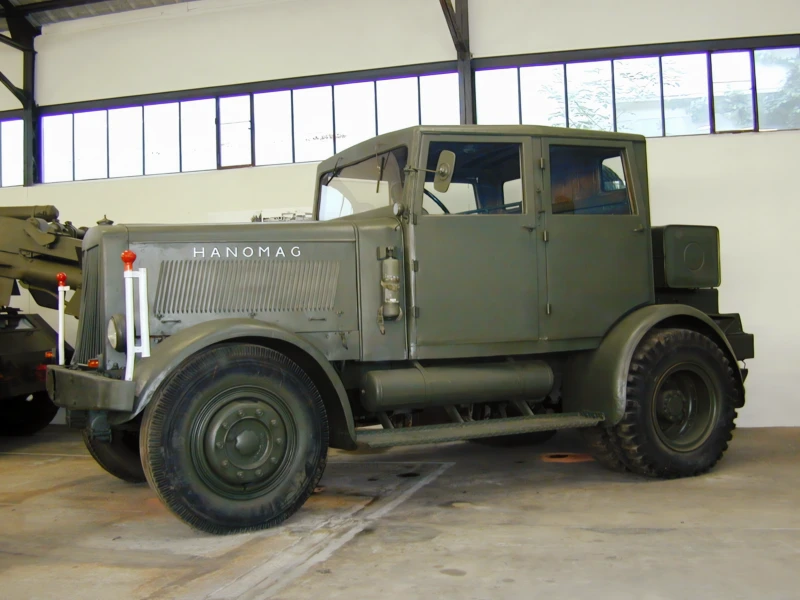
Hanomag ST-100 | |
|---|---|
| Country | Germany |
| Type | Military tractor |
| Period | World War II |
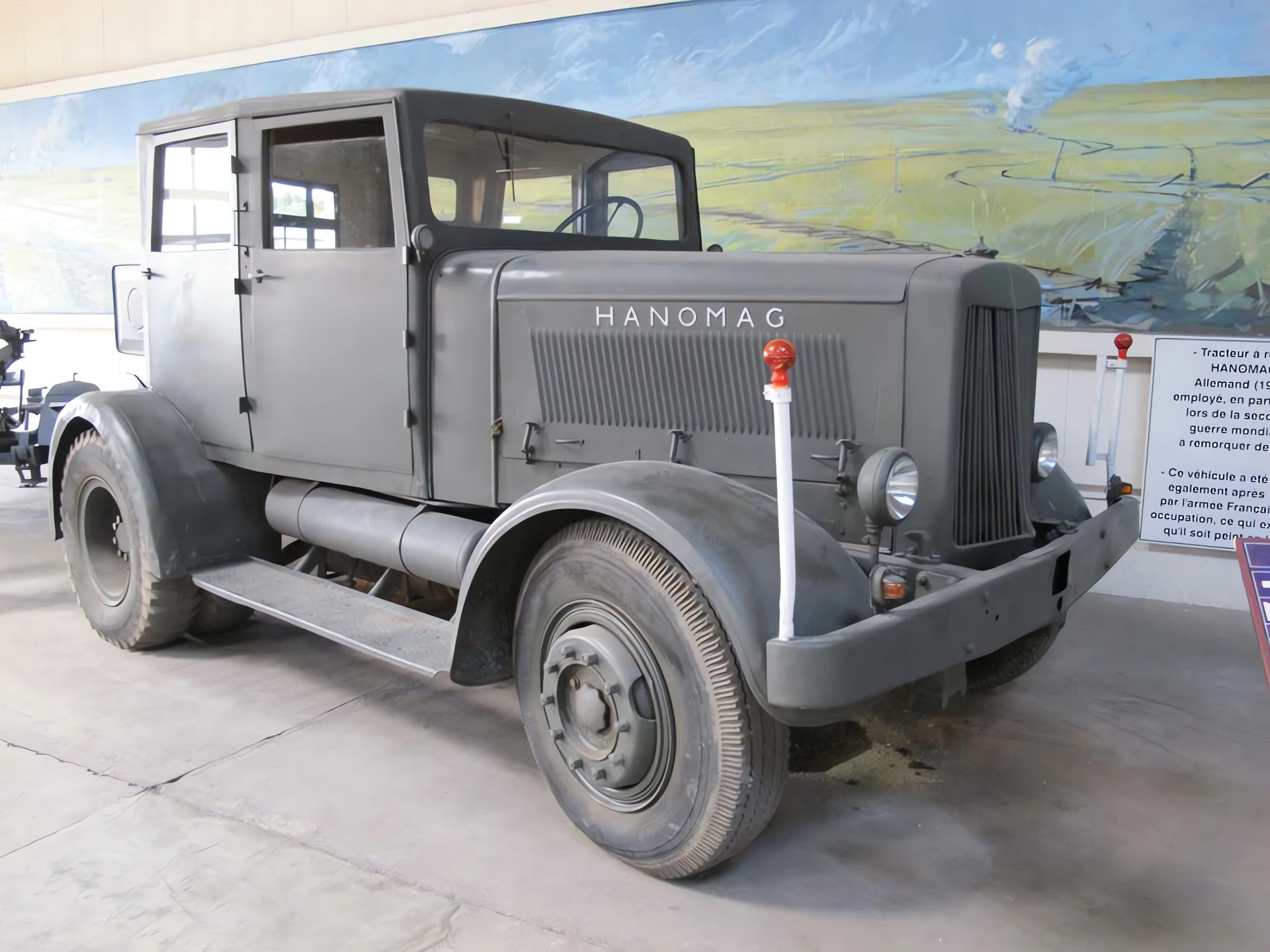
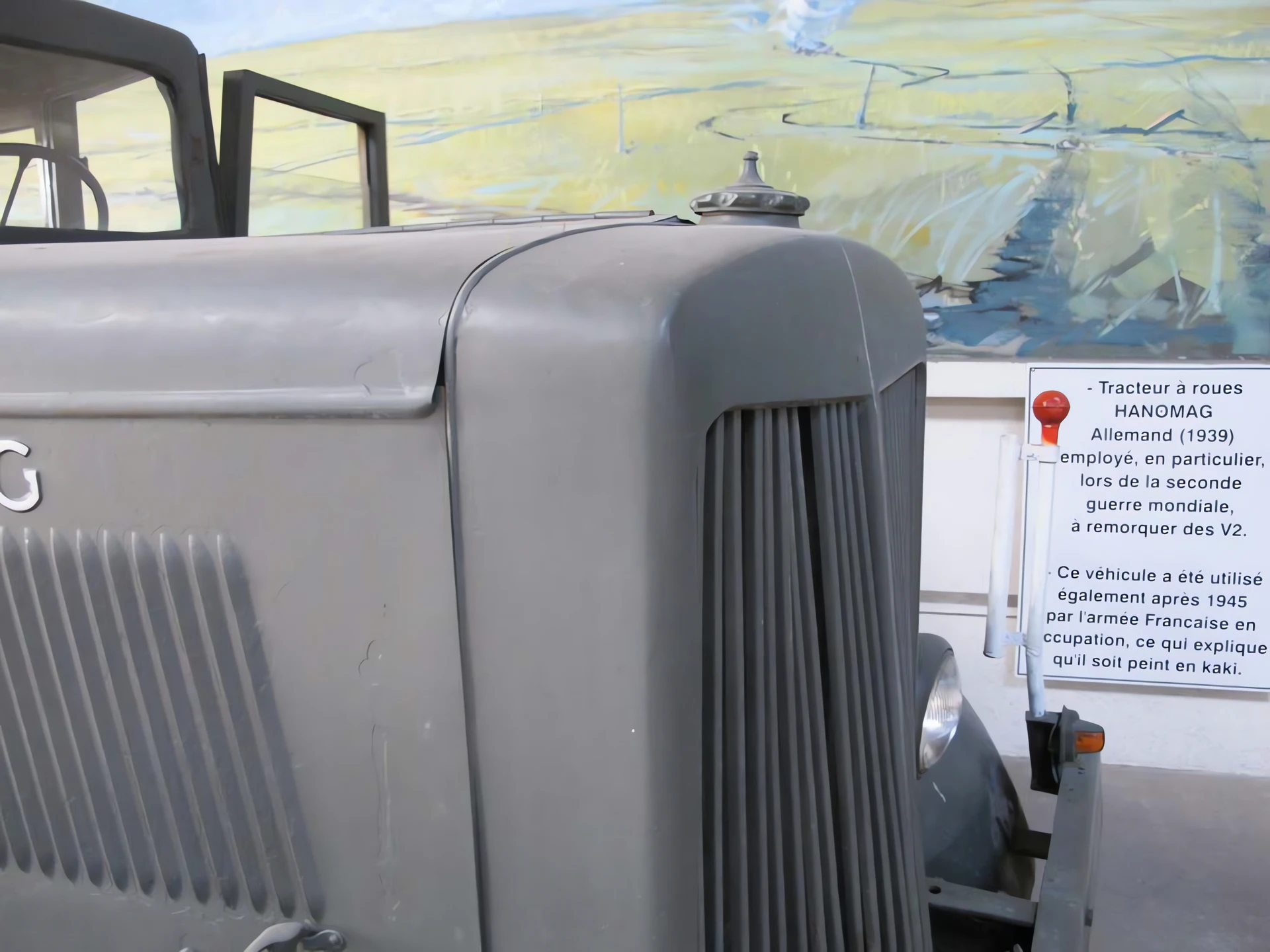
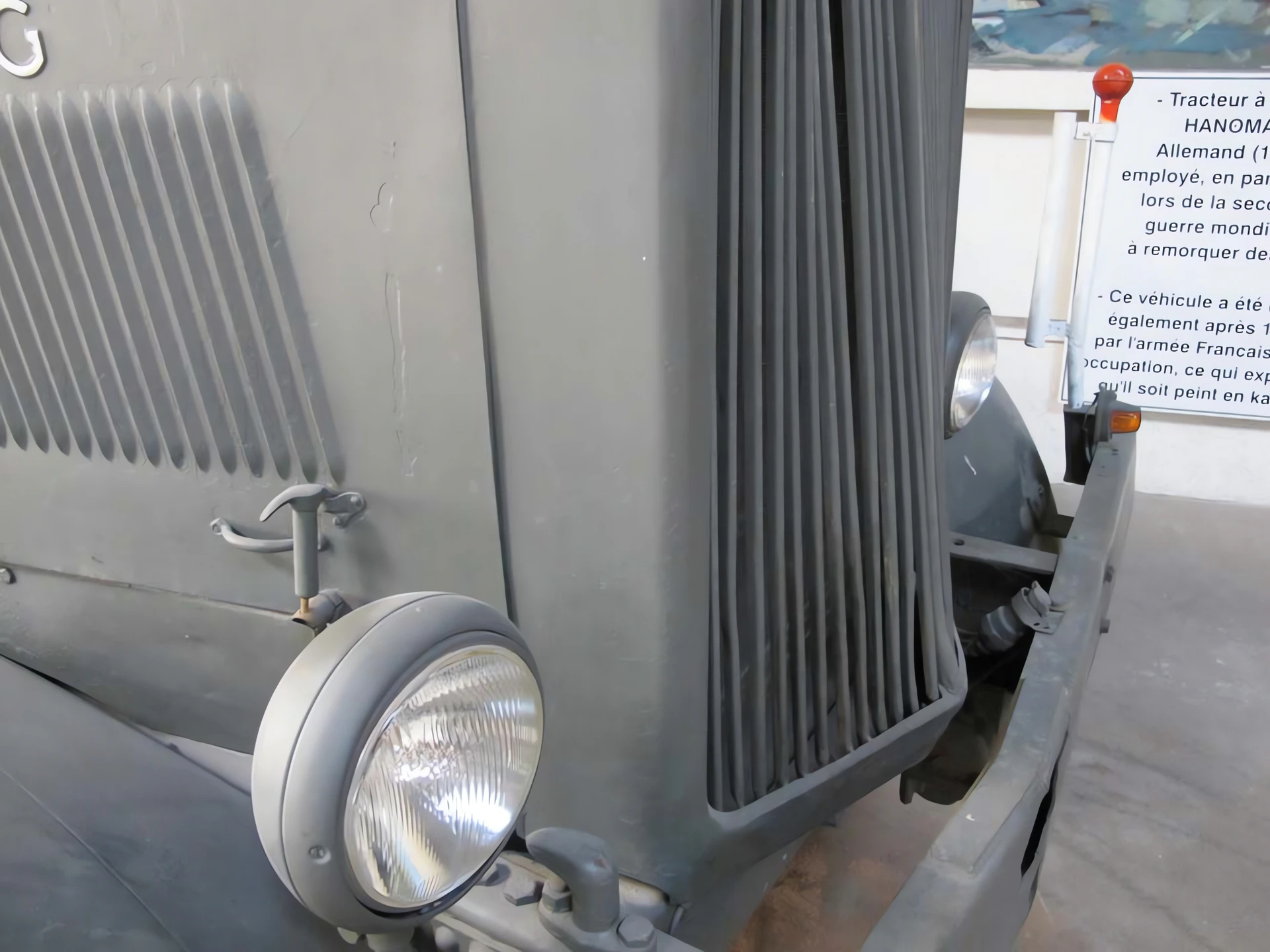
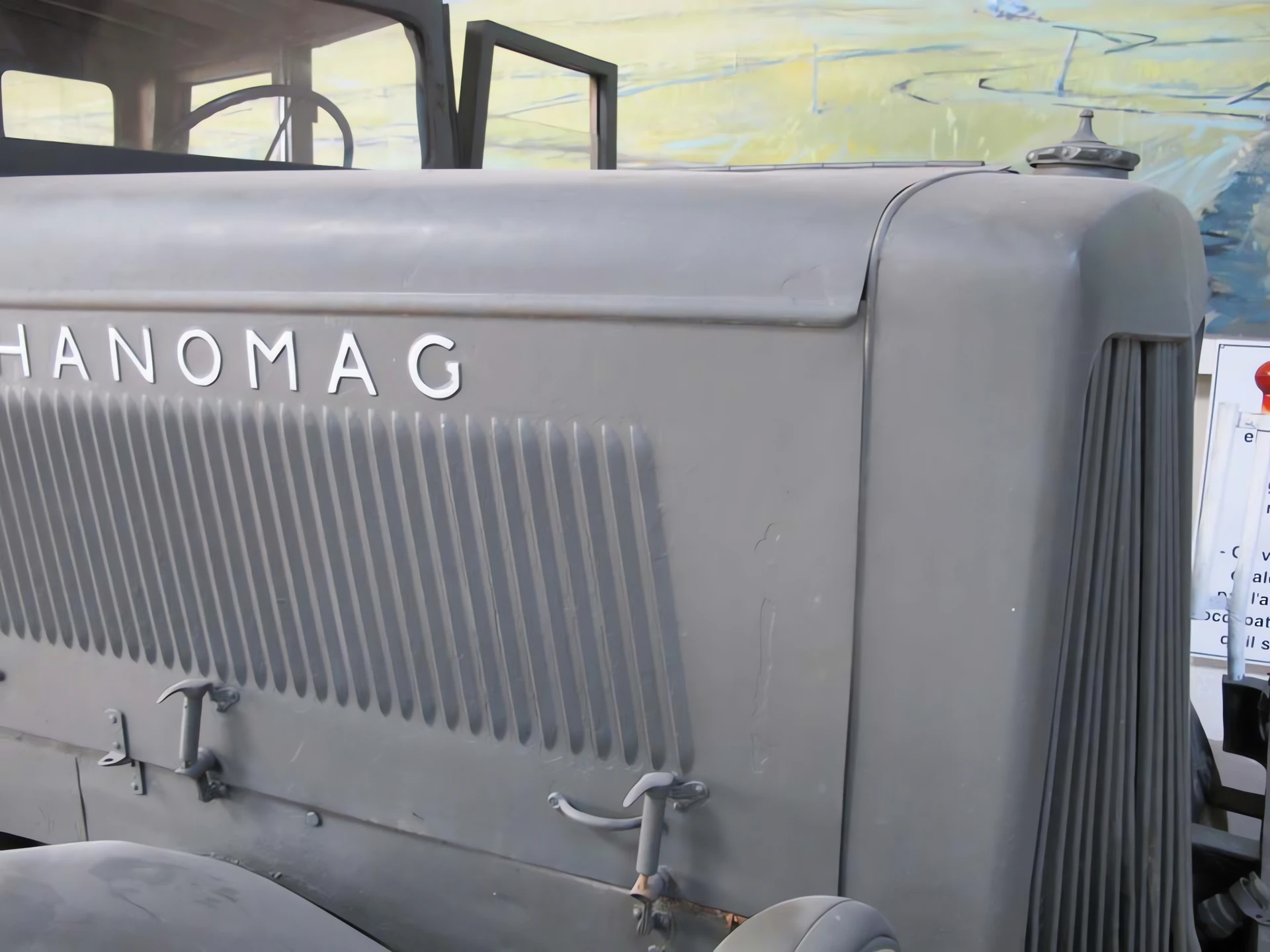
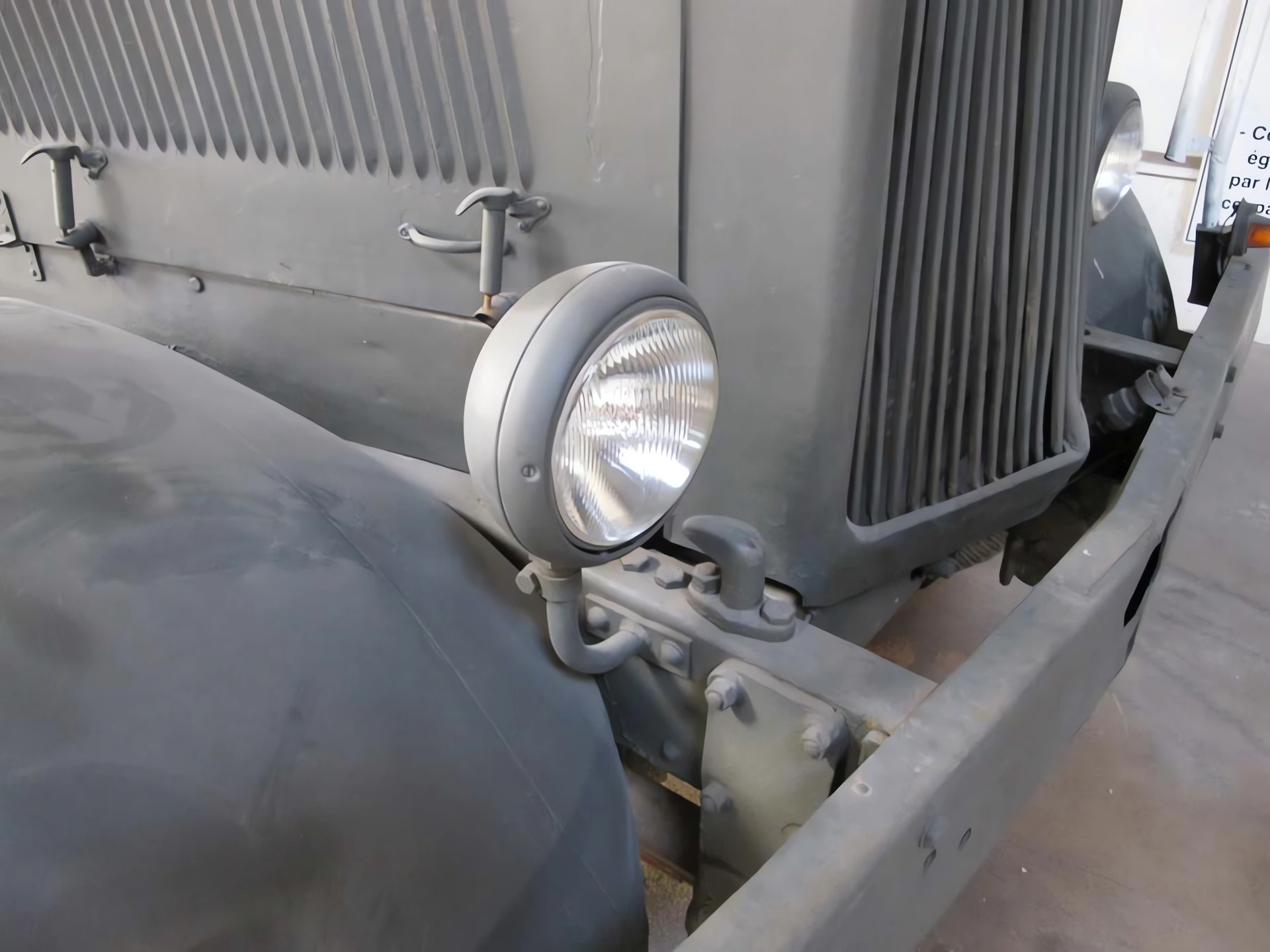
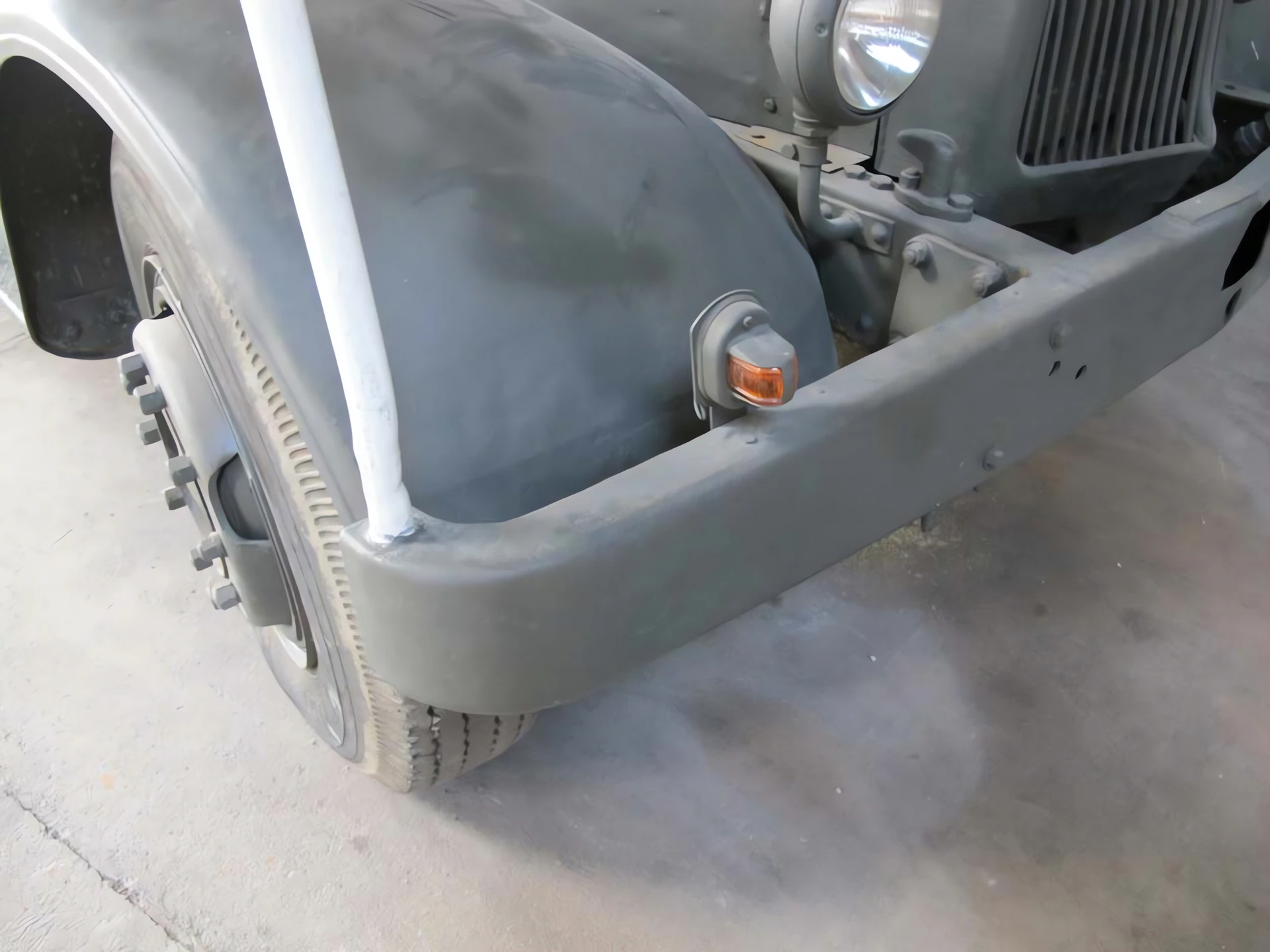
The Hanomag ST-100 comes from the civil tractor developed before World War II. It was a tractor 4 x 2 with a body of 2 or 4 doors, equipped with a winch.
Source: Hanomag ST-100 on Wikipedia
| Hanomag ST-100 Walk Around | |
|---|---|
| Photographer | Vladimir Yakubov |
| Localisation | Musee des Blindes, Saumur |
| Photos | 81 |
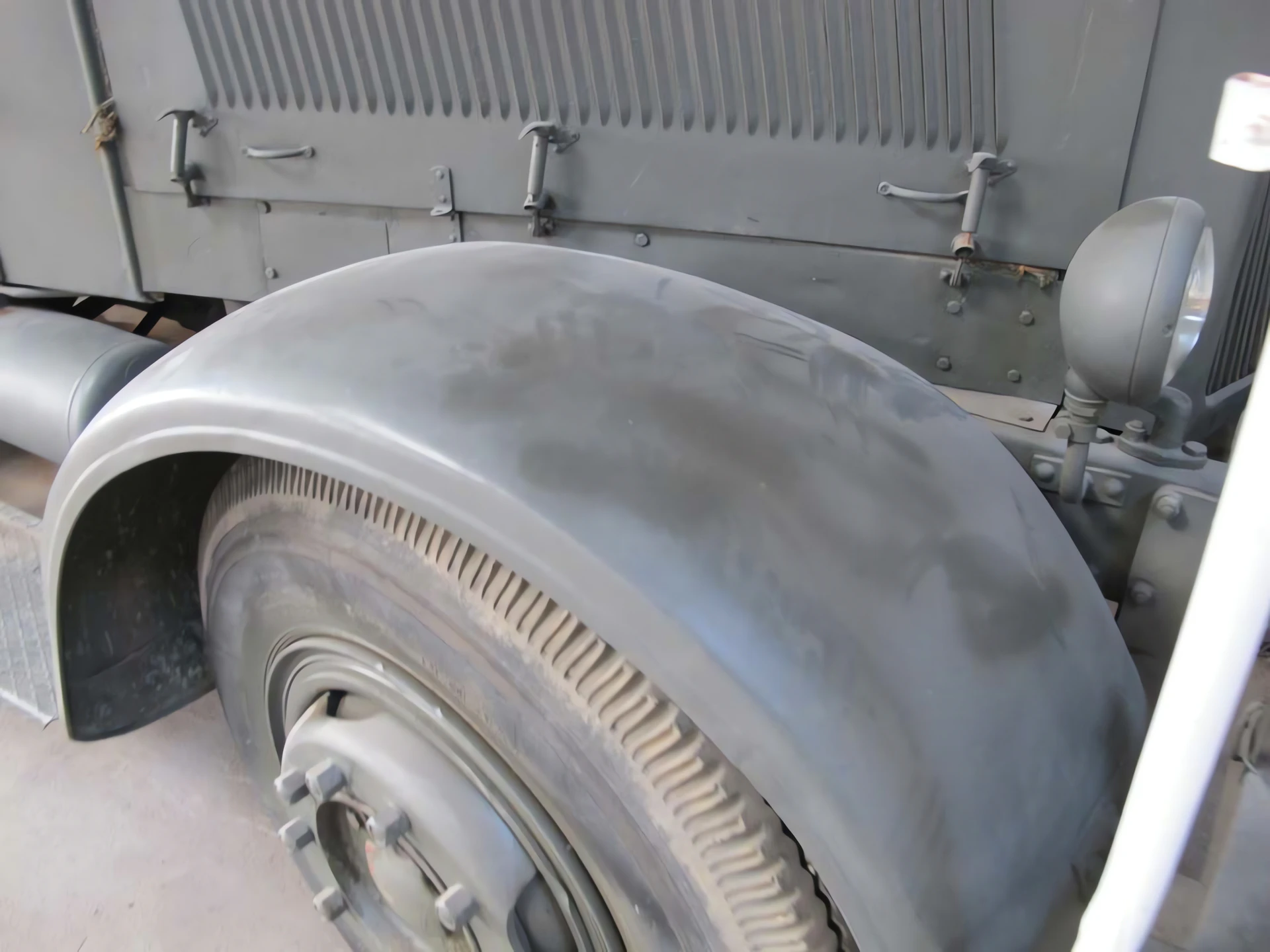
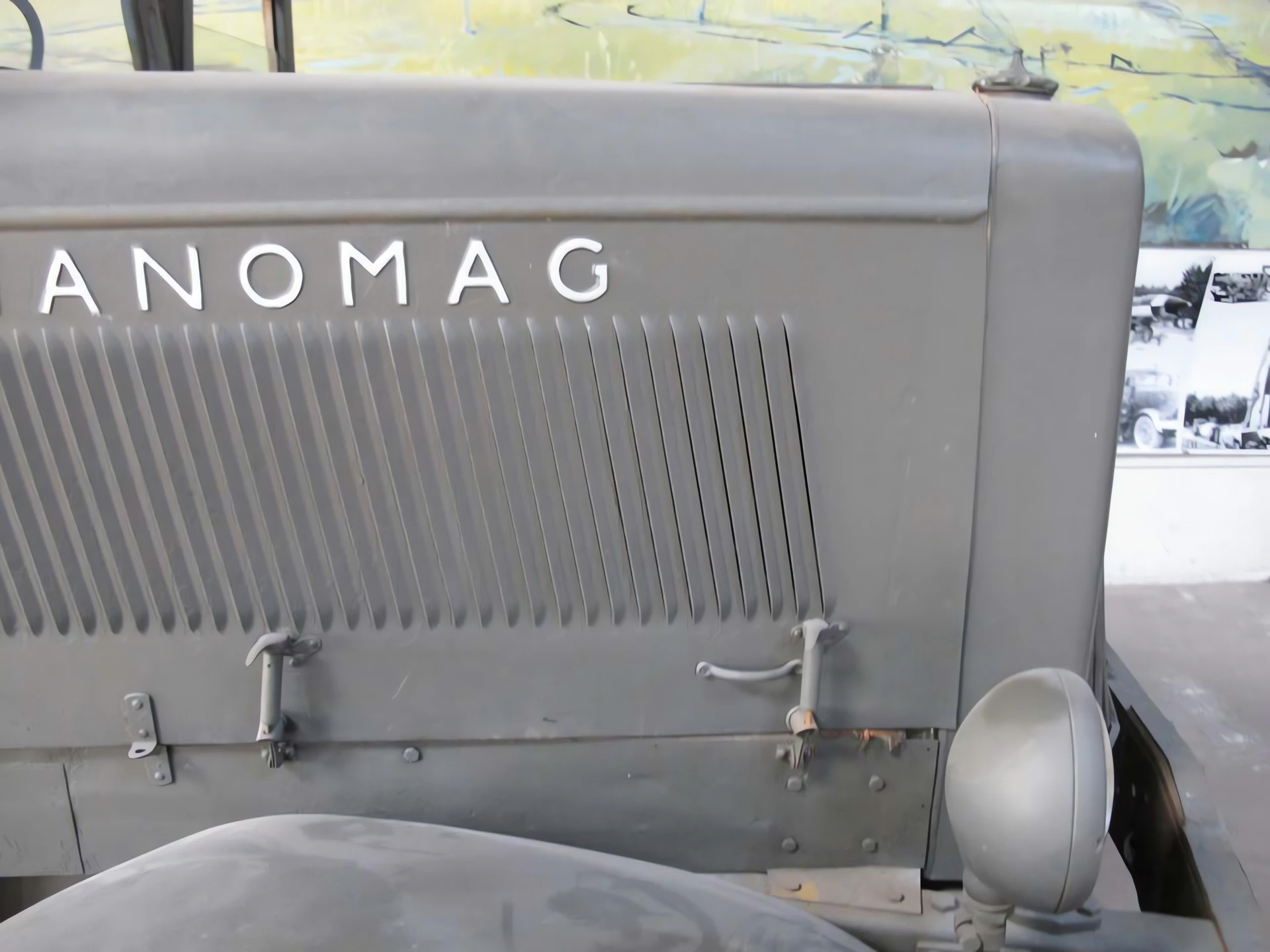

See also:


| Hanomag ST-100 Walk Around | |
|---|---|
| Photographer | Unknow |
| Localisation | Unknow |
| Photos | 31 |
General Characteristics and Role
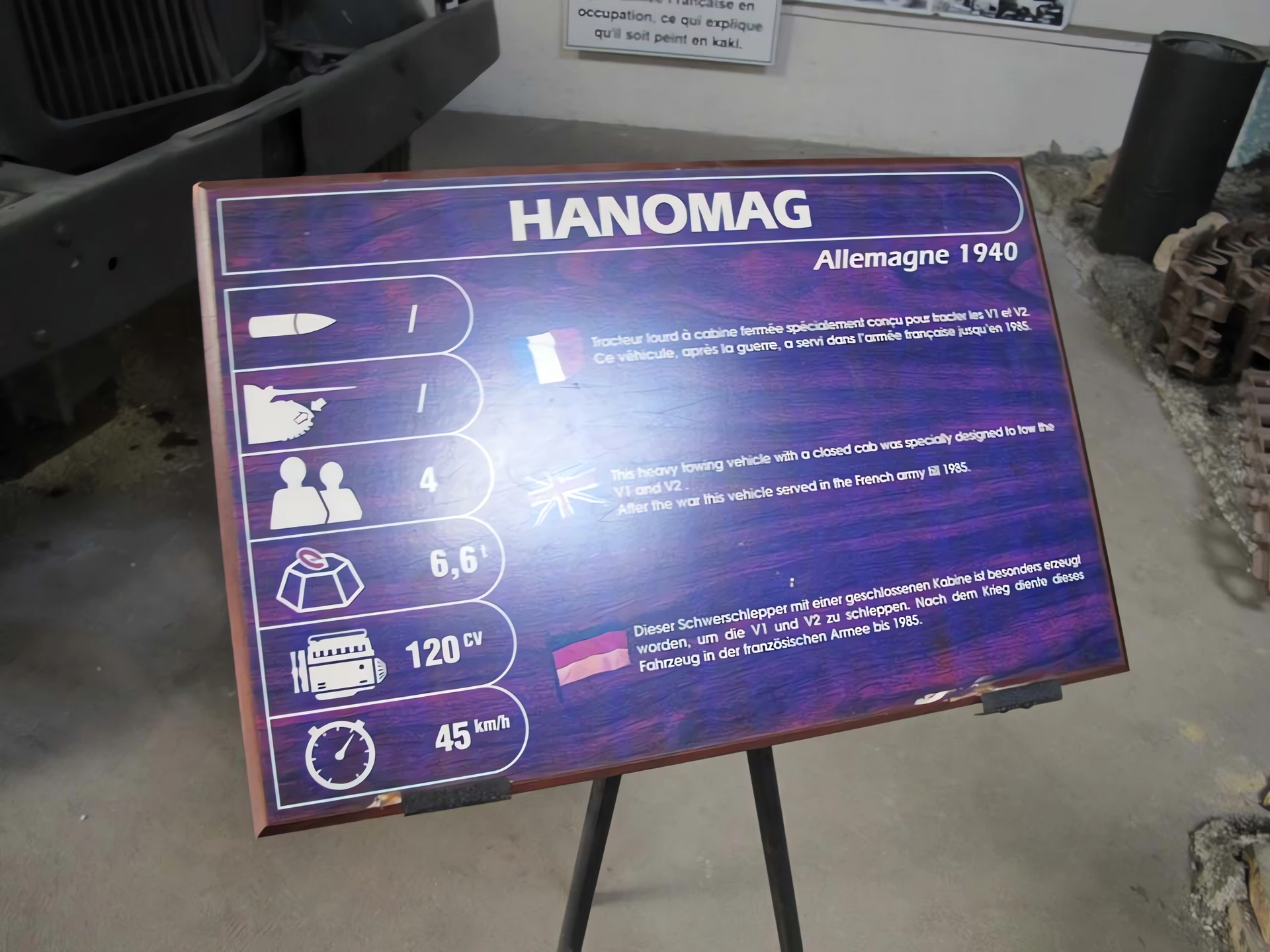
The Hanomag ST-100 was a heavy road tractor originally designed and produced by the German company Hanomag (Hannoversche Maschinenbau AG). The model originated as the pre-war SS-100 (where SS stood for Straßen-Schnelltransporter, or “Road Speed Transporter,” and 100 for 100 horsepower), nicknamed the “Gigant.” Its primary civilian role was as a heavy haulage tractor for towing large trailers, including fairground equipment, well into the postwar era. During World War II, a military version (SS-100) was widely used by the Wehrmacht and Luftwaffe for towing heavy equipment, including large aircraft, artillery (like the 88 mm Flak gun), and most famously, the V-2 missile transporters (Vidalwagen and Meillerwagen). Production of the ST-100 resumed shortly after the war for civilian and export use, including for the French Army.
| Property | Typical Value (ST-100 / SS-100) |
|---|---|
| Type | Heavy Road Tractor / Prime Mover |
| National Origin | Germany |
| Manufacturer | Hanomag |
| Production Period | 1936–1951 (Pre-war/War: SS-100; Post-war: ST-100) |
| Crew Capacity | 2 to 6 (depending on 2-door or 4-door cab) |
| Weight (Empty) | 6,420 kg (14,154 lb) |
| Length | 5.04 m (16 ft 6 in) |
| Width | 2.48 m (8 ft 2 in) |
Powerplant and Features
- Engine: 1 x Hanomag D 85 S 6-cylinder, water-cooled diesel engine.
- Power Output: 100 hp (73.2 kW) at 1,500 rpm.
- Drivetrain: 4×2 rear-wheel drive.
- Transmission: ZF KB60 manual gearbox (4 forward, 1 reverse).
- Maximum Road Speed: Approx. 45–65 km/h (28–40 mph).
- Towing Capacity: Could tow multi-axle trailers up to 20 tonnes.
- Winch: Many military versions were equipped with a heavy-duty winch capable of pulling 20 tonnes.
- Suspension: Semi-elliptical leaf springs front and rear.
Legacy and Historical Significance
- Military Backbone: The SS-100 was crucial to German logistics in WWII, acting as a versatile prime mover for heavy, non-cross-country loads, including aircraft ground handling and rocket transport for the V-2 program.
- Post-War Utility: As the ST-100, its production was quickly resumed after the war, making it one of the first reliable heavy German trucks available for civil reconstruction and infrastructure projects.
- Longevity: Its robust design and powerful diesel engine (for the time) ensured a long service life, with many units remaining in heavy hauling service with fairgrounds and transport companies well into the 1960s.
- Nomenclature: The civilian name for the series was “Gigant.” The wartime military designation was SS-100, and the post-war model was generally known as the ST-100.
Views : 3980
You can see also :
 M6 Tractor – Photos & Video
 Morris C8 – Photos & Videos
 Laffly V15 – Photos & Videos
 Heavy Equipment Transport System – Photos & Videos
 TD-9 International Harvester Tractor – Photos & Video
 Scammell Pioneer – Photos & Video
 FV180 Combat Engineer Tractor – Photos & Video
 M5 High Speed Tractor – Photos & Video
 AT-L Artillery Tractor – Photos & Video
 AEC 0853 Matador – Photos & Video