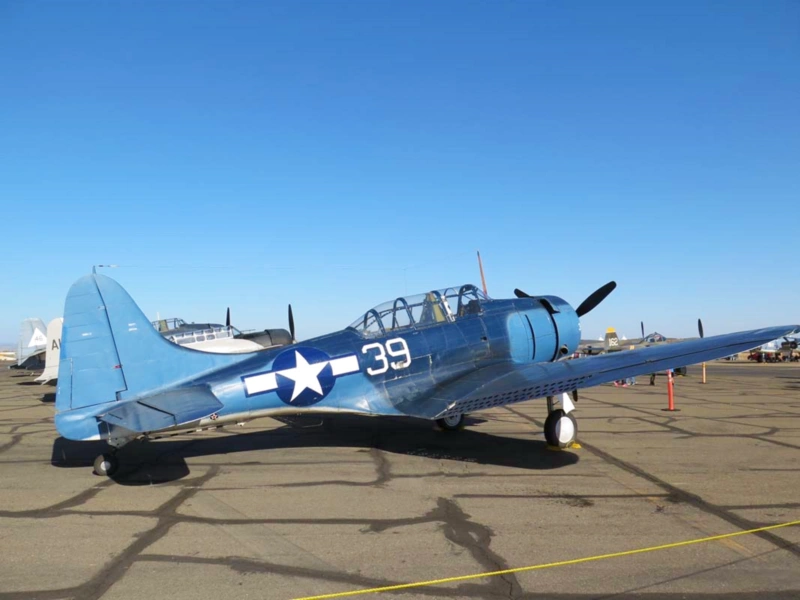
SBD Dauntless | |
|---|---|
| Land | Norge , Norge |
| Rolle | Dykk bombefly - Scout fly |
| Første flytur | 1. mai 1940 |
| Bygget | 5936 |
Den Douglas SBD Fryktløs var et amerikansk speiderfly og stupbombefly fra andre verdenskrig som ble produsert av Douglas Aircraft fra 1940 til 1944. SBD («Scout Bomber Douglas») var den amerikanske marinens viktigste hangarskipbårne speiderfly og stupbombefly fra midten av 1940 til midten av 1944. SBD ble også fløyet av United States Marine Corps, både fra landflybaser og hangarskip. SBD huskes best som bombeflyet som leverte de fatale slagene til de japanske hangarskipene i slaget ved Midway i juni 1942. Typen fikk sitt kallenavn "Slow But Deadly" (med SBD-initialene) i denne perioden.
| SBD-5 Skremmende | |
|---|---|
| Fotograf | Unknow |
| Lokalisering | Unknow |
| Bilder | 53 |
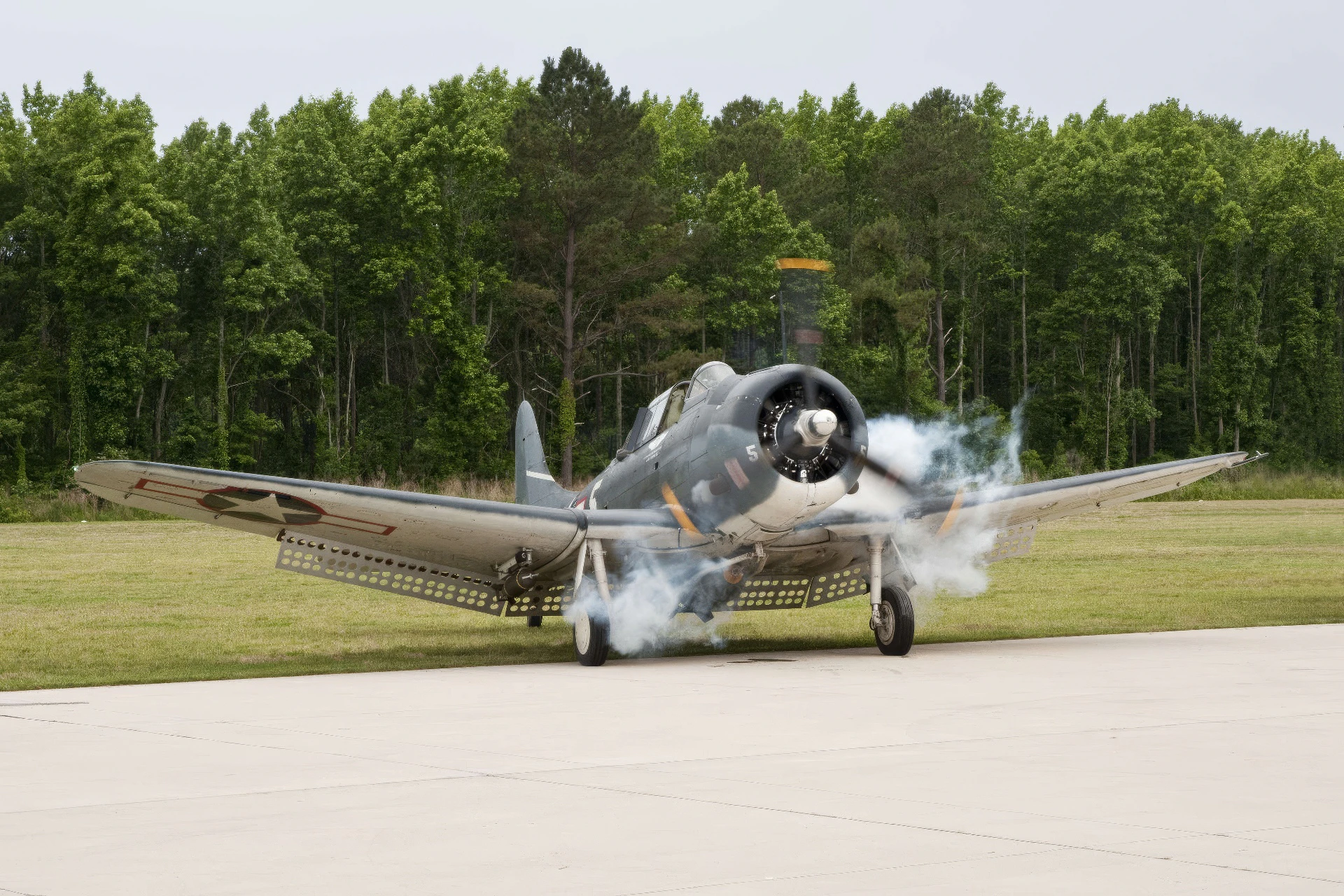
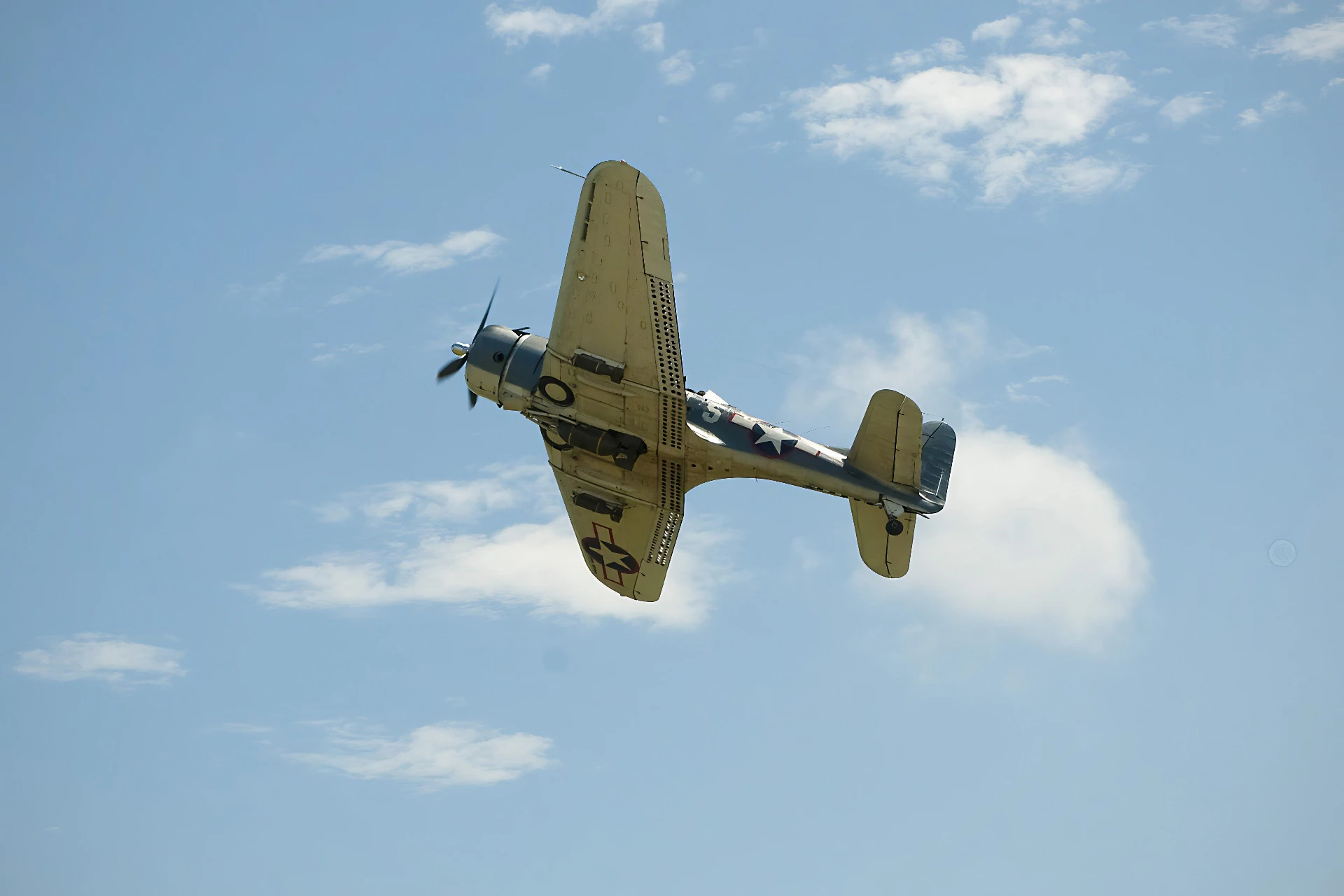
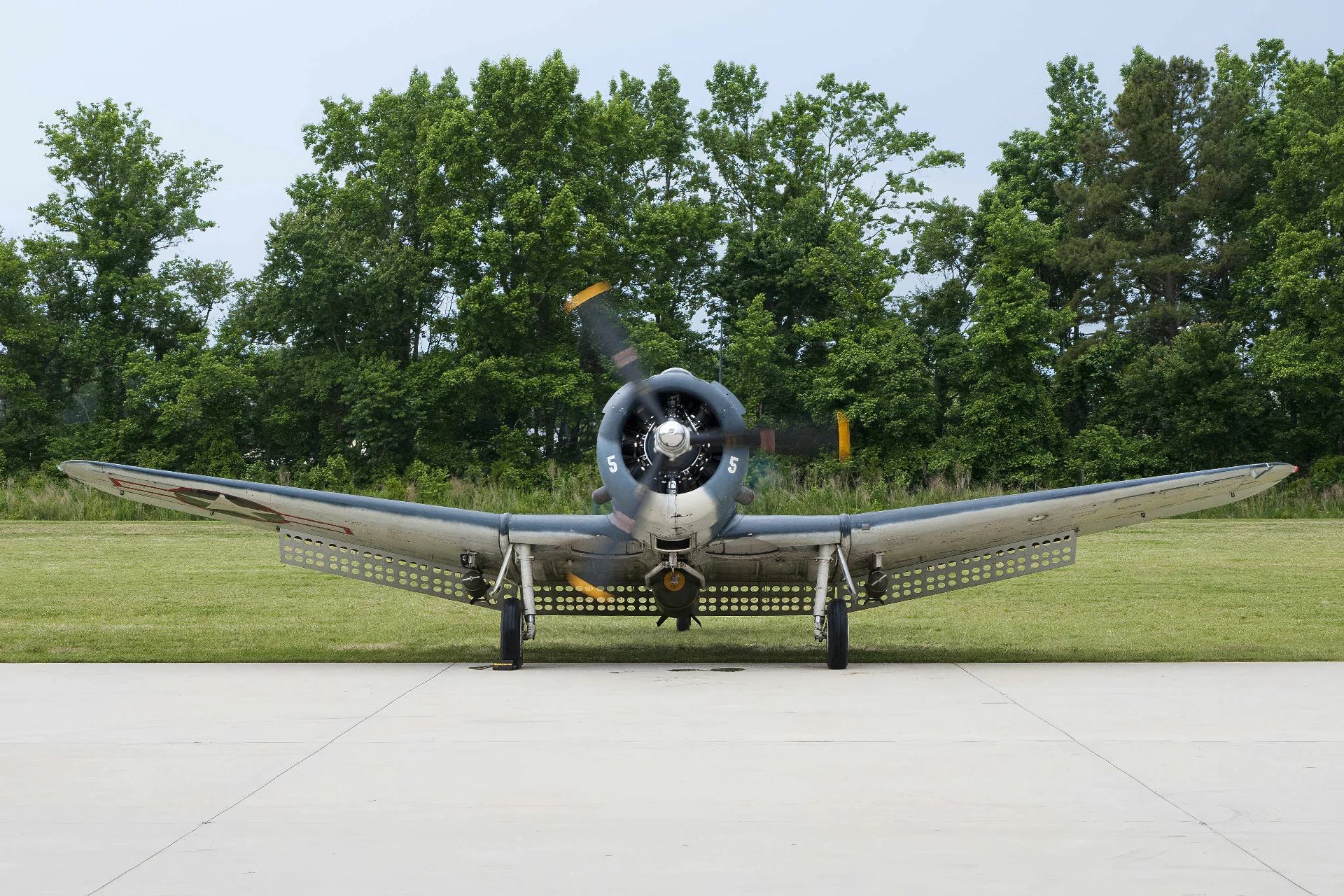
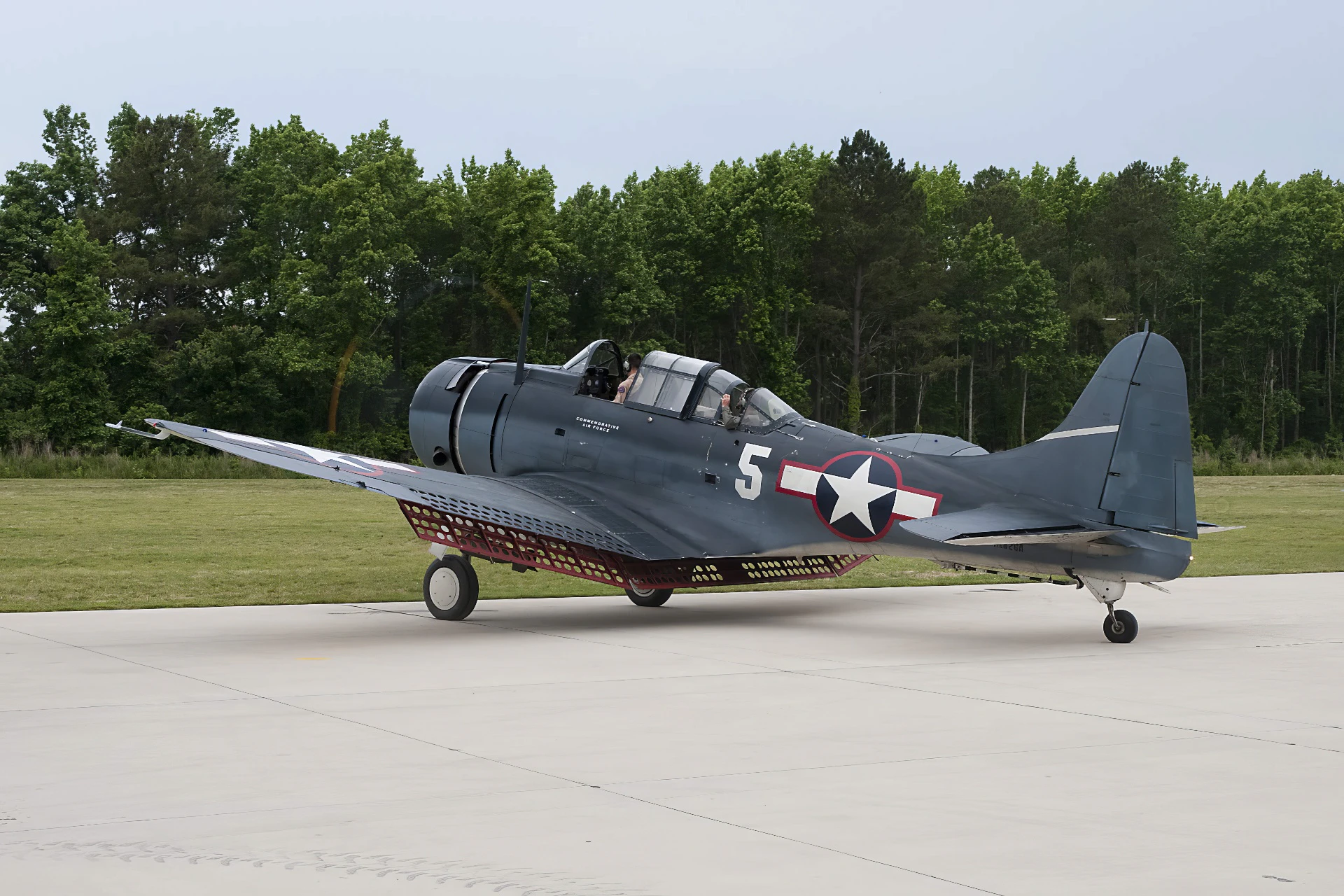
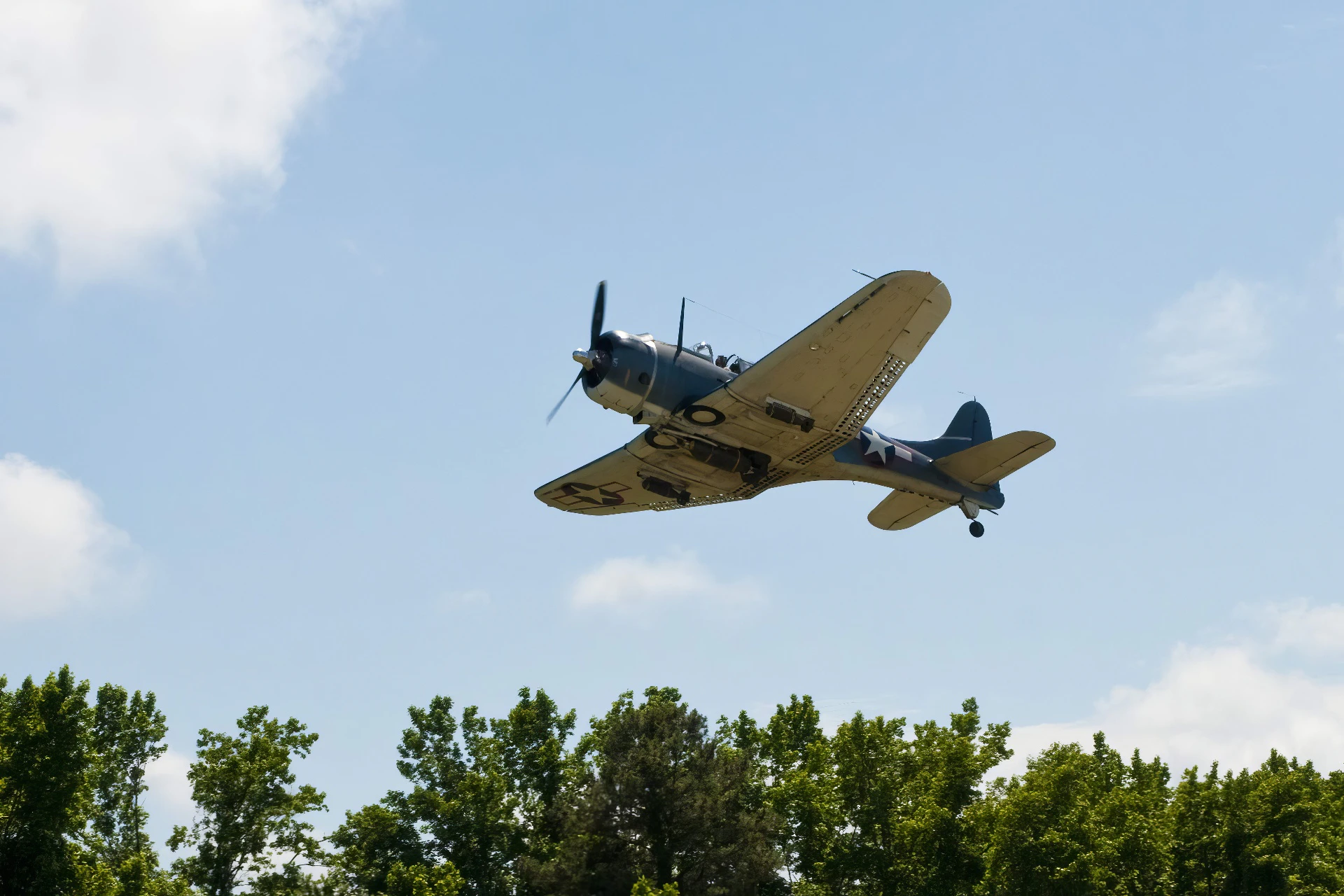
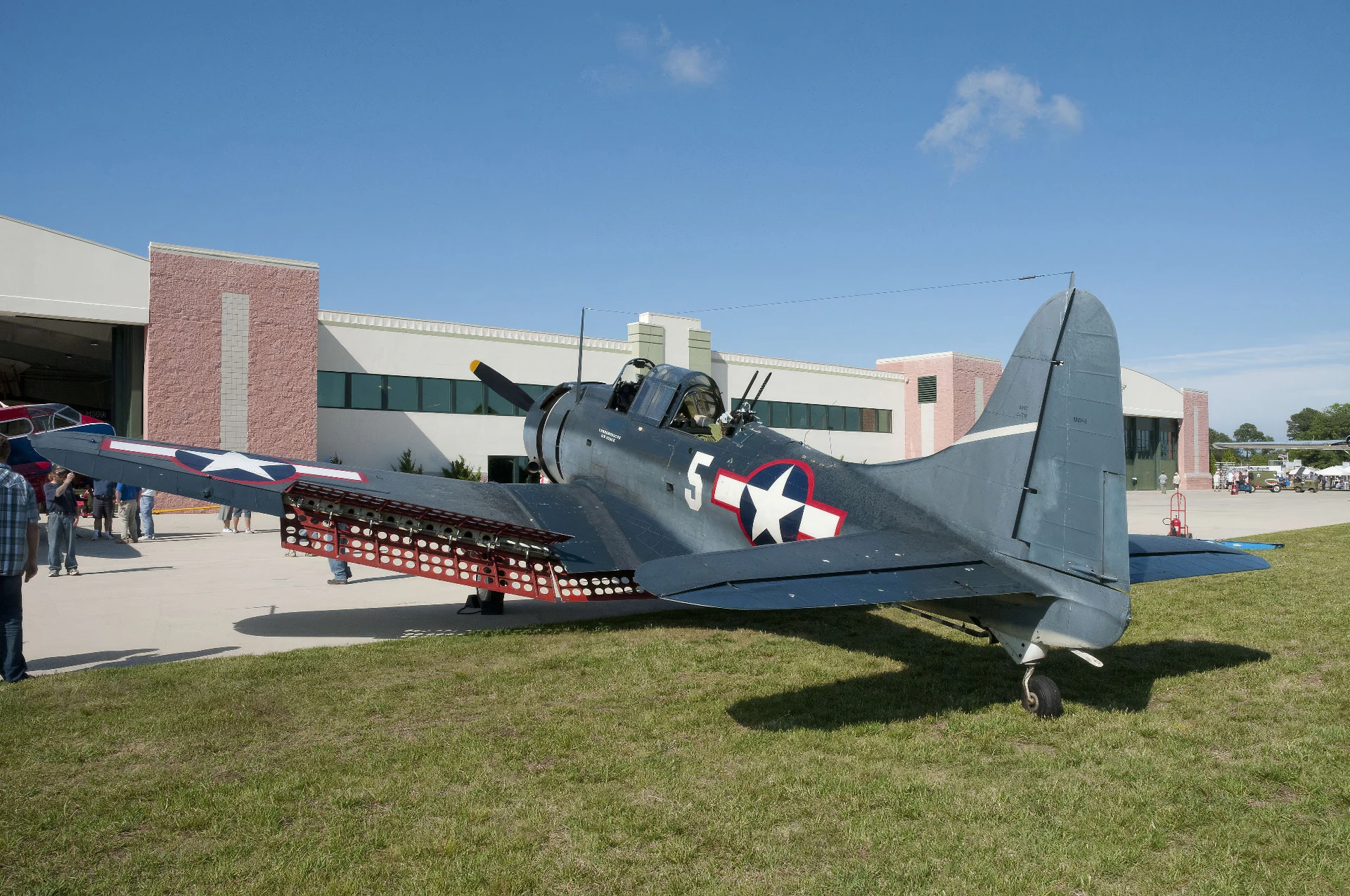
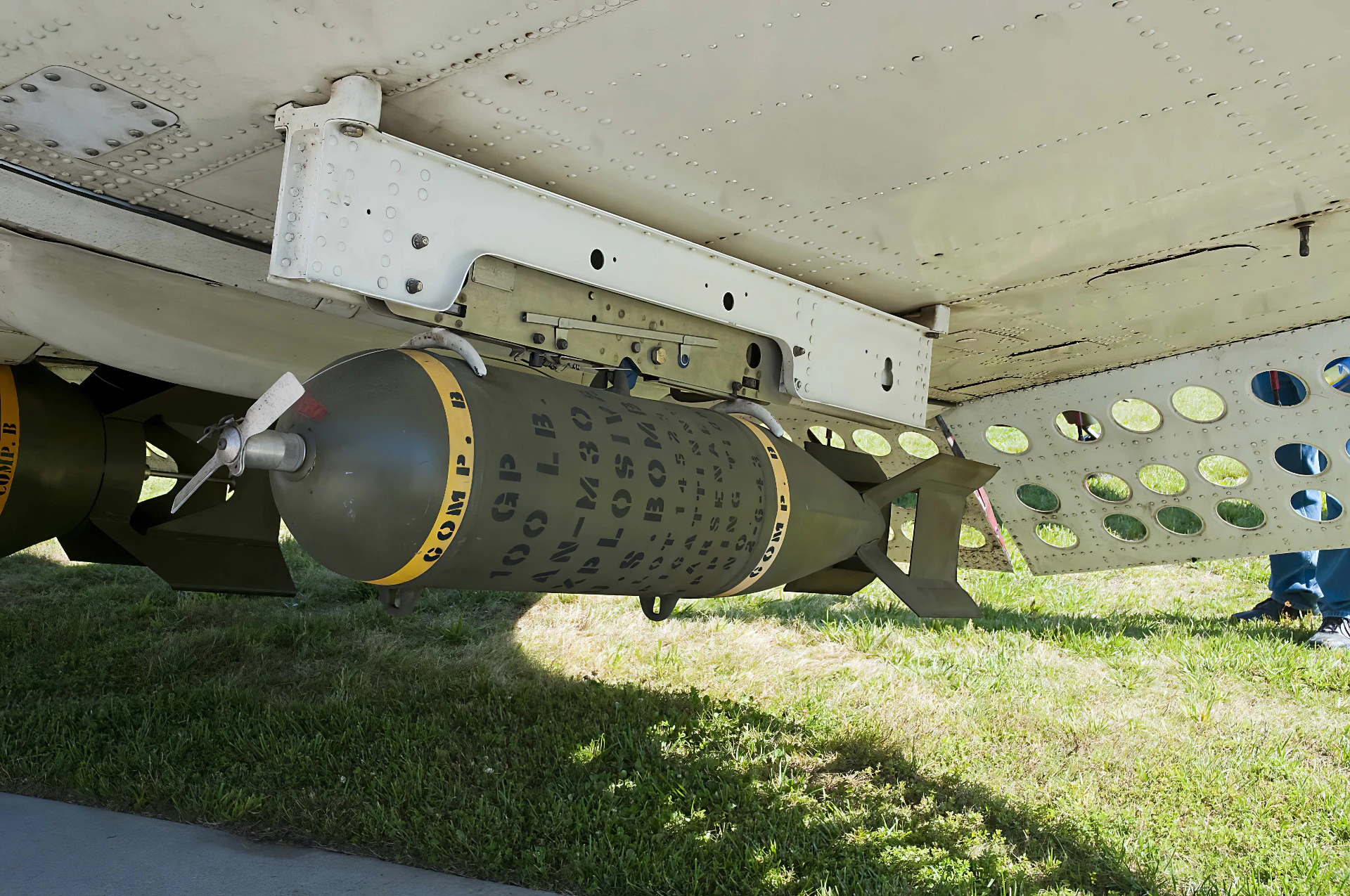
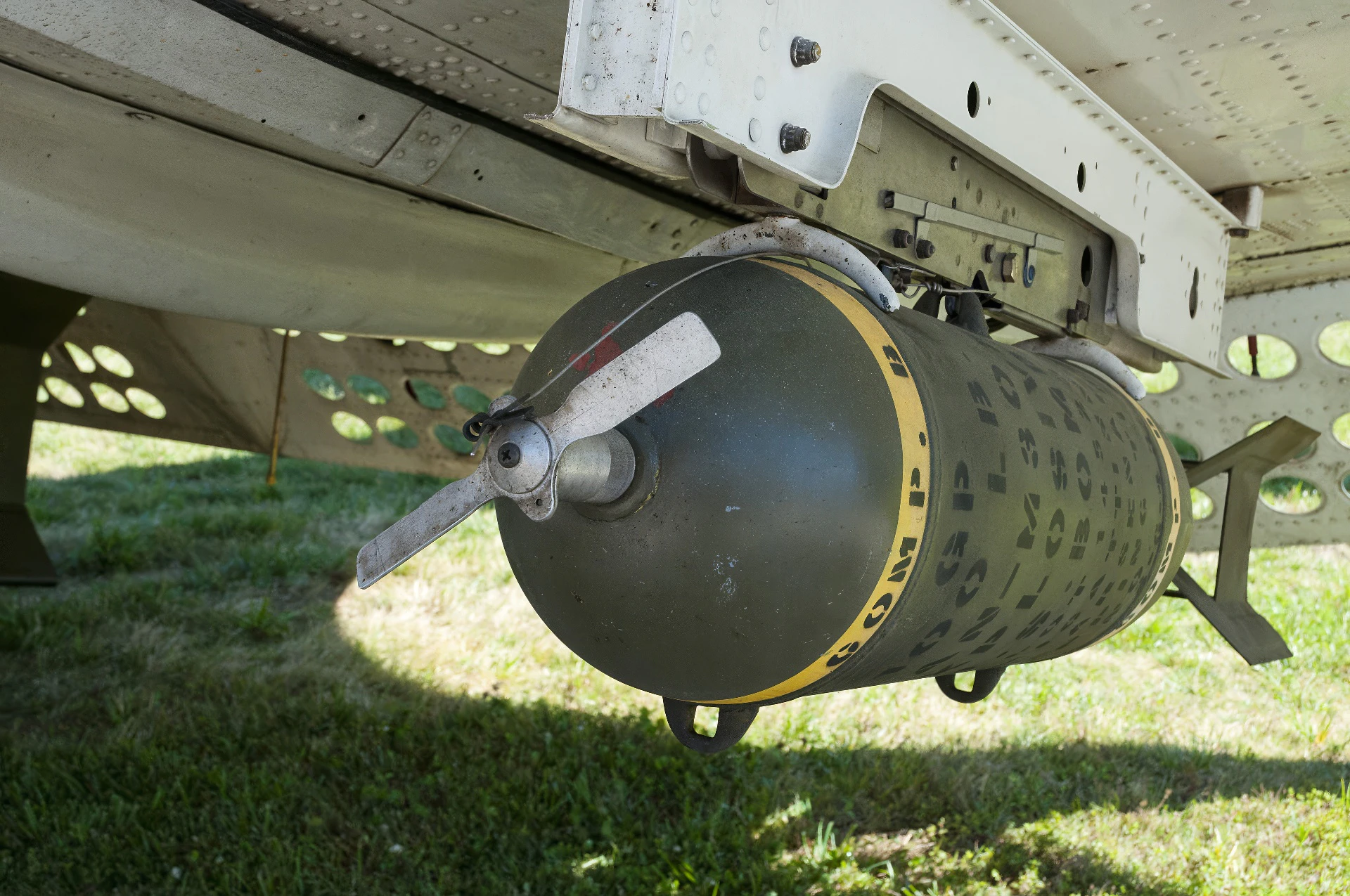
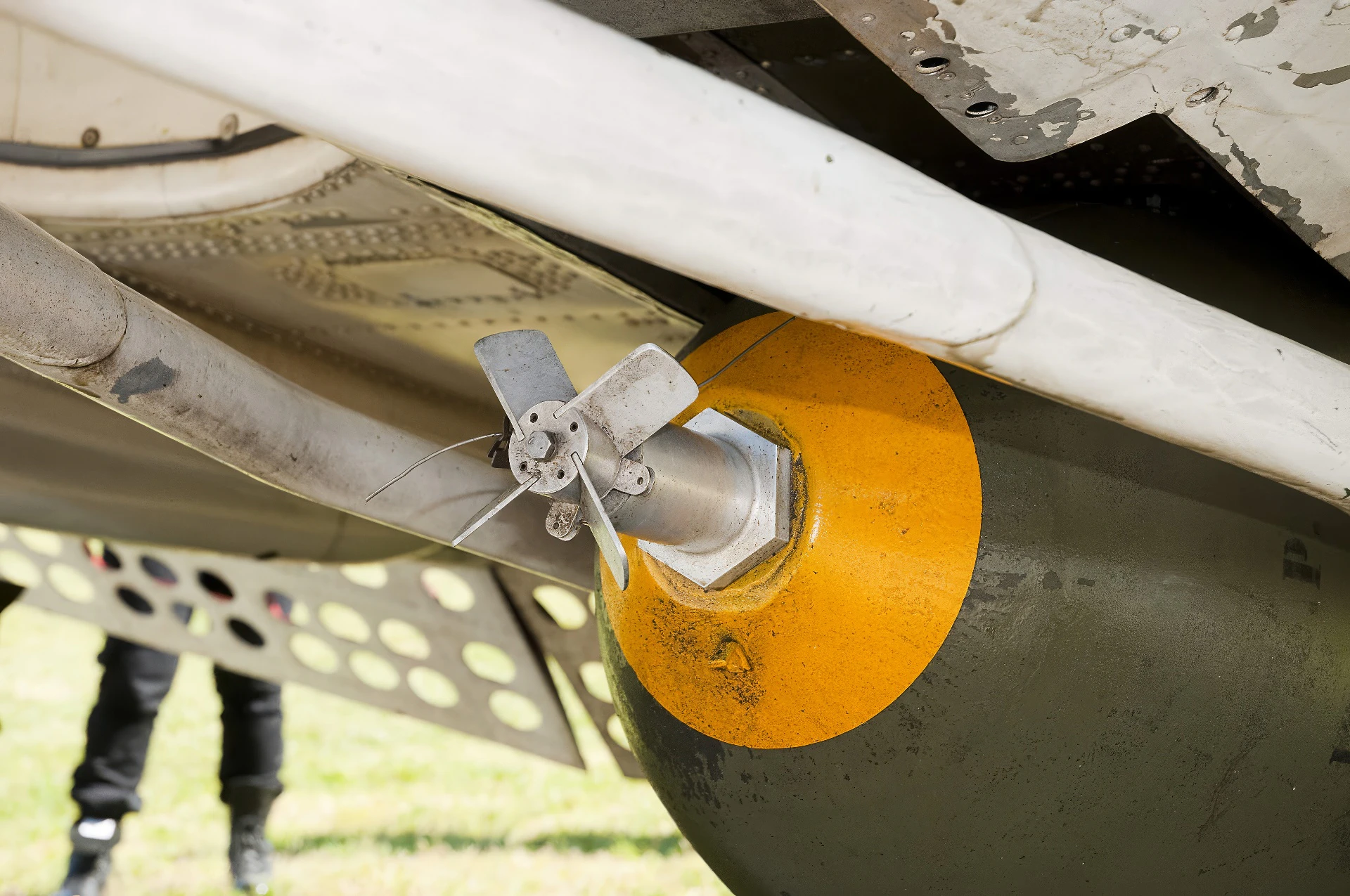

| Douglas SBD-5 Dauntless | |
|---|---|
| Fotografi | Vladimir Yakubov |
| Finne | Palm Springs Air Museum, Palm Springs, |
| Bilder | 101 |
| Douglas SBD-5 Dauntless Walk Around | |
|---|---|
| Fotograf | Vladimir Yakubov |
| Lokalisering | USS Yorktown CV-10 |
| Bilder | 108 |
| Douglas SBD-5 Dauntless Walk Around | |
|---|---|
| Fotograf | Vladimir Yakubov |
| Lokalisering | Capital City Airshow |
| Bilder | 88 |
Les også:


| Douglas SBD-4 Dauntless Walk Around | |
|---|---|
| Fotograf | Cees Hendriks |
| Lokalisering | Unknow |
| Bilder | 37 |
Douglas SBD Dauntless: The “Eighty-Eight” of the Skies
The Douglas SBD Dauntless (Scout Bomber Douglas) was the primary carrier-based dive bomber and scout plane of the United States Navy and Marine Corps during the first half of World War II. Though slow compared to later aircraft, its reliability and deadly accuracy earned it the nickname “Slow But Deadly.”
Historical Significance
The Dauntless is most famous for its pivotal role in the Battle of Midway (June 1942), where its dive bombers delivered the decisive strikes that sank four Japanese aircraft carriers in a matter of minutes. This single action is widely considered the turning point of the Pacific War.
The SBD fleet ultimately accounted for the destruction of more Japanese shipping, including six aircraft carriers, than any other Allied naval aircraft.
Design and Function
The SBD was a two-seat, low-wing monoplane. Its robust and simple design made it highly durable and easy to maintain.
- Dive Brakes: The aircraft’s signature feature was its perforated dive brakes (flaps with numerous holes) on the trailing edge of the wings. These deployed during a dive to limit speed and prevent flutter, giving the pilot a rock-steady platform for precise, near-vertical dive-bombing.
- Bomb Delivery: A large central bomb (up to 1,600 lbs) was carried on a swinging trapeze under the fuselage. This mechanism ensured the bomb cleared the propeller during the steep dive pull-out.
- Crew and Armament: It carried a crew of two: a pilot and a rear gunner/radioman.
- Forward Firepower: Two fixed, forward-firing .50 caliber machine guns mounted in the engine cowling, synchronized to fire through the propeller arc.
- Defensive Firepower: One or two flexible-mounted .30 caliber machine guns in the rear cockpit, operated by the gunner to deter enemy fighters attacking from the rear.
- Varianter: Later, more powerful variants, such as the SBD-5, featured a 1,200 hp Wright R-1820 Cyclone radial engine, along with increased crew armor and self-sealing fuel tanks.
Despite being considered technically obsolete by 1944, the Dauntless remained a highly effective dive bomber and a critical asset until its gradual replacement by the Curtiss SB2C Helldiver.
Views : 12579
Du kan også se :
 Morane-Saulnier AI - Bilder og videoer
 Bréguet 1050 Alizé - Bilder og videoer
 Phönix D.I - Bilder og videoer
 Mitsubishi G4M - Bilder og videoer
 Nieuport 27 - Bilder og videoer
 Martin 4-0-4 - Bilder og videoer
 Bristol F.2 Fighter - Bilder & Videoer
 FM-1 villkatt – WalkAround
 Grumman F-14 Tomcat – WalkAround
 Mikojan-Gurevich MiG-17 – WalkAround