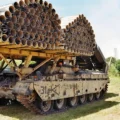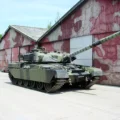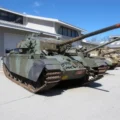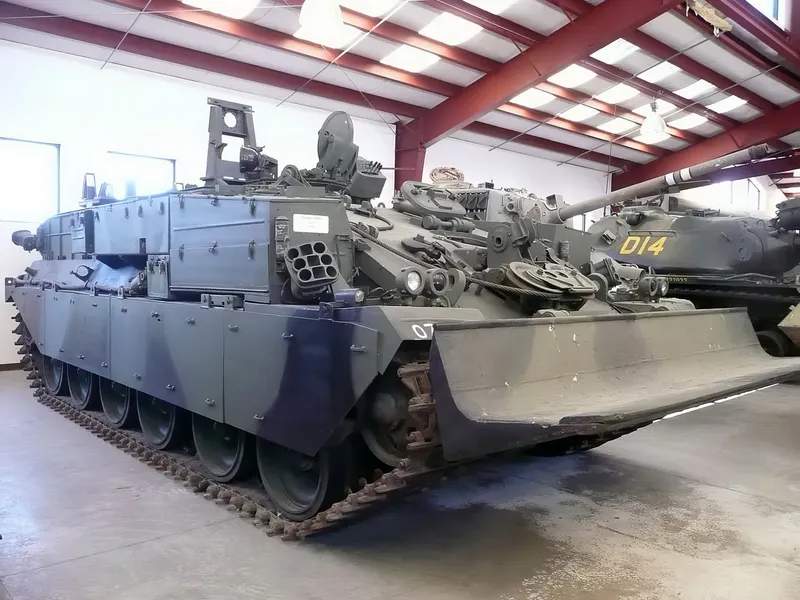
FV4204 치프테인 | |
|---|---|
| 국가 | 영국 |
| 형식 | 중전차 |
| 제목 | «FV4204 Chieftain»의 147 장의 사진 앨범 |
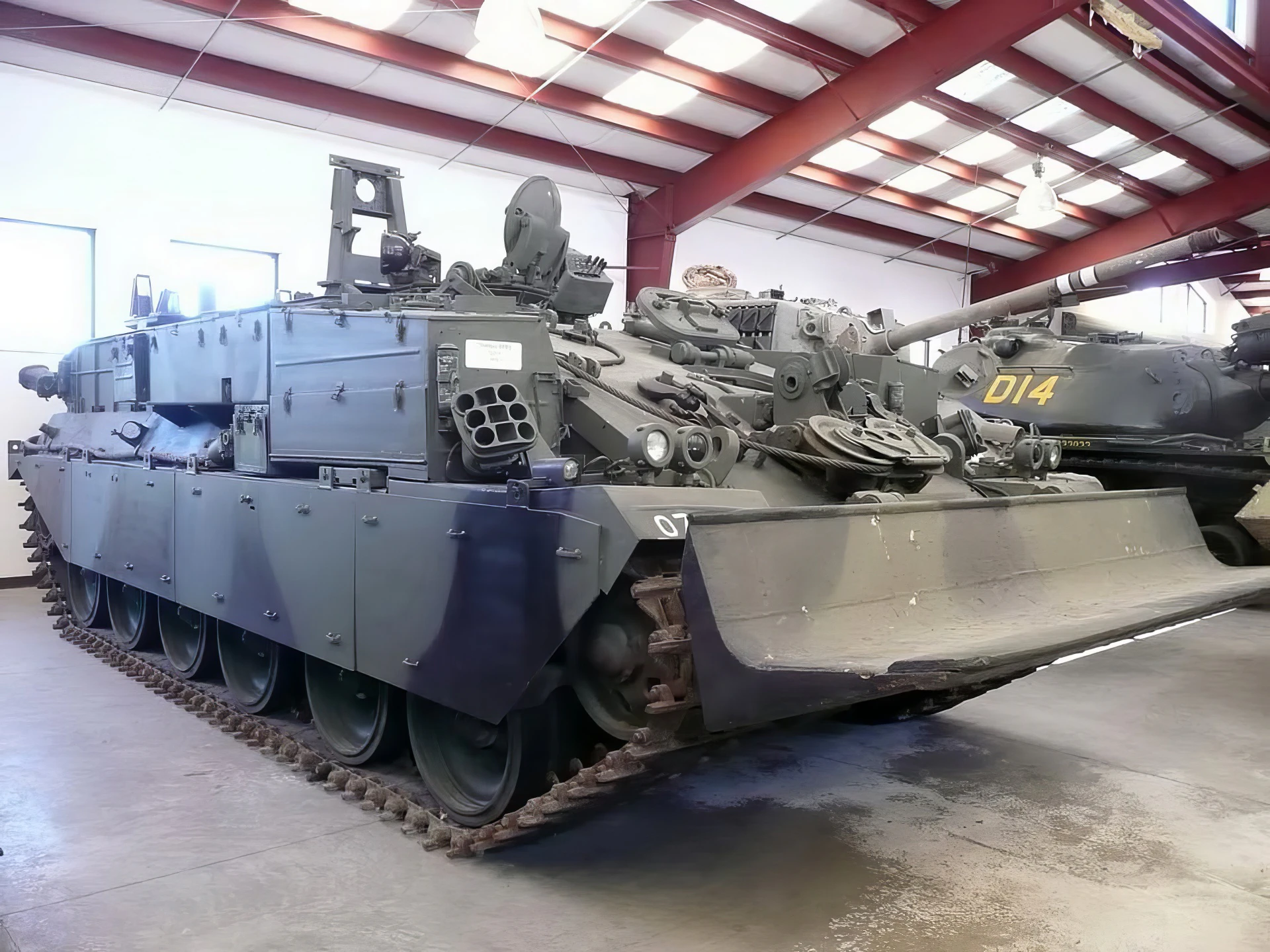
전차 족장 (fv-4204)는 1960년대 왕립 병기 공장이 설계한 영국 중전차로, 1966년부터 1995년까지 영국군과 함께 복무했다. 군사 공학 기계의 버전도 제작되었습니다.
소스: FV4204 위키백과 에 족장
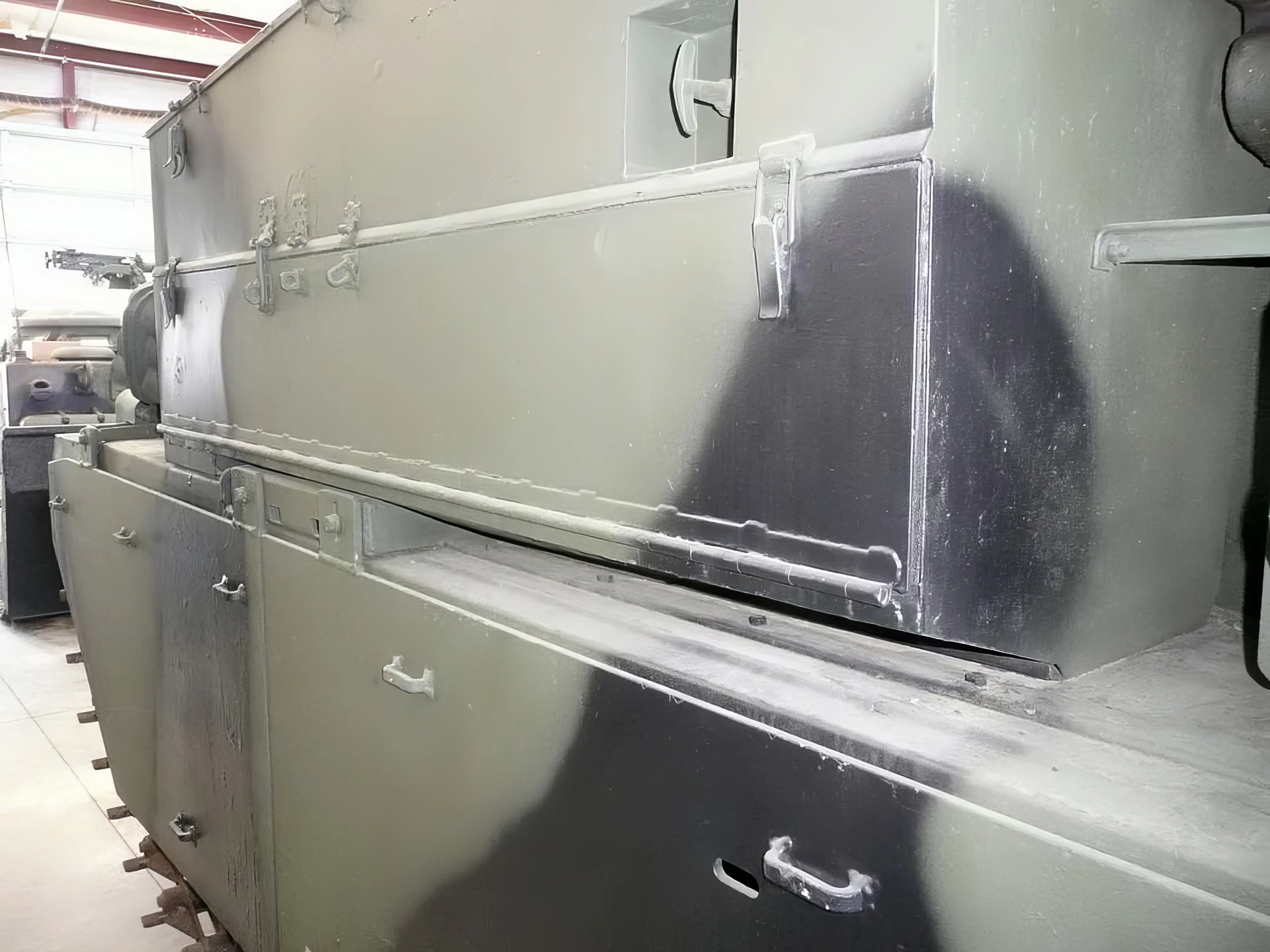
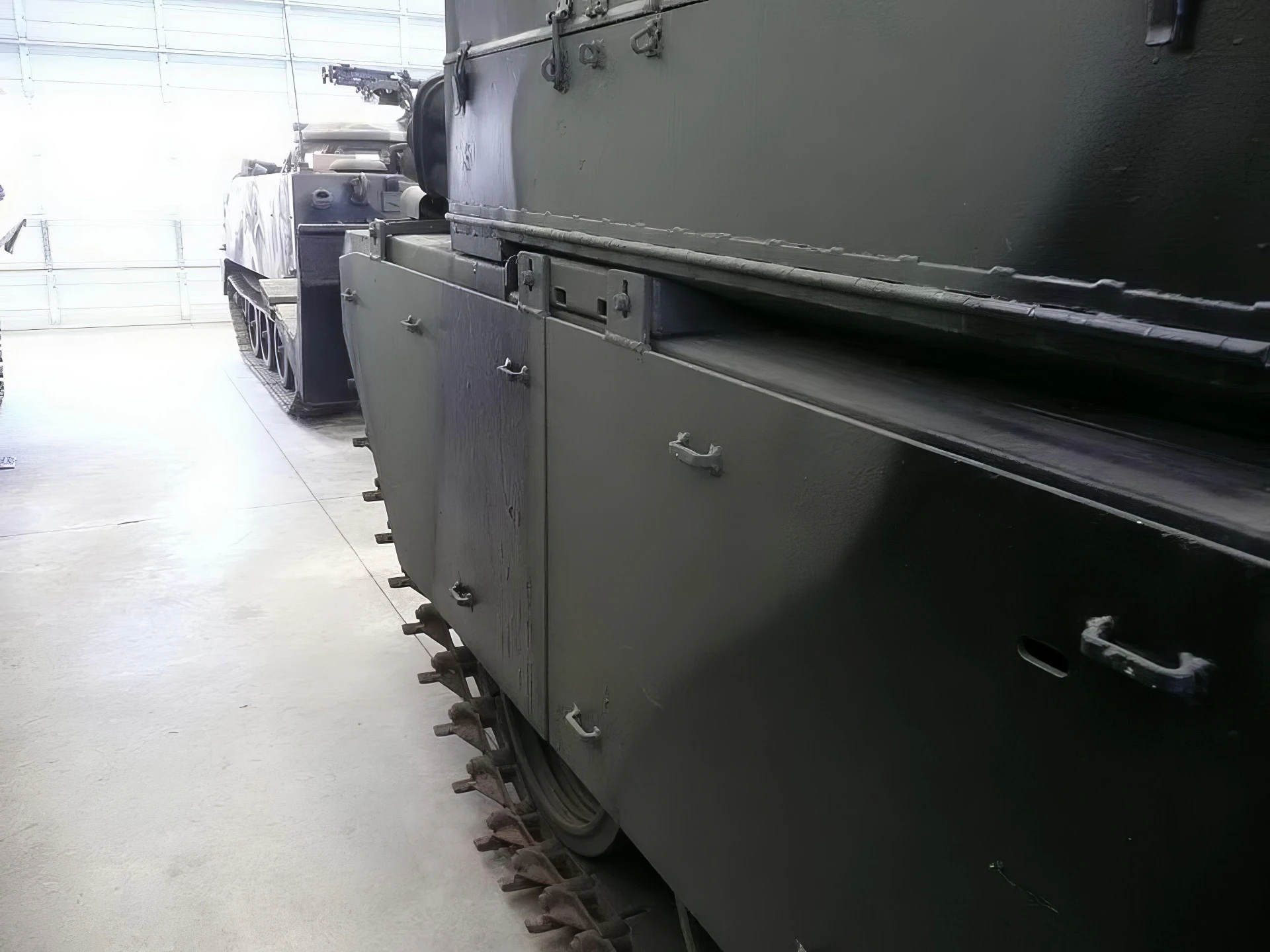
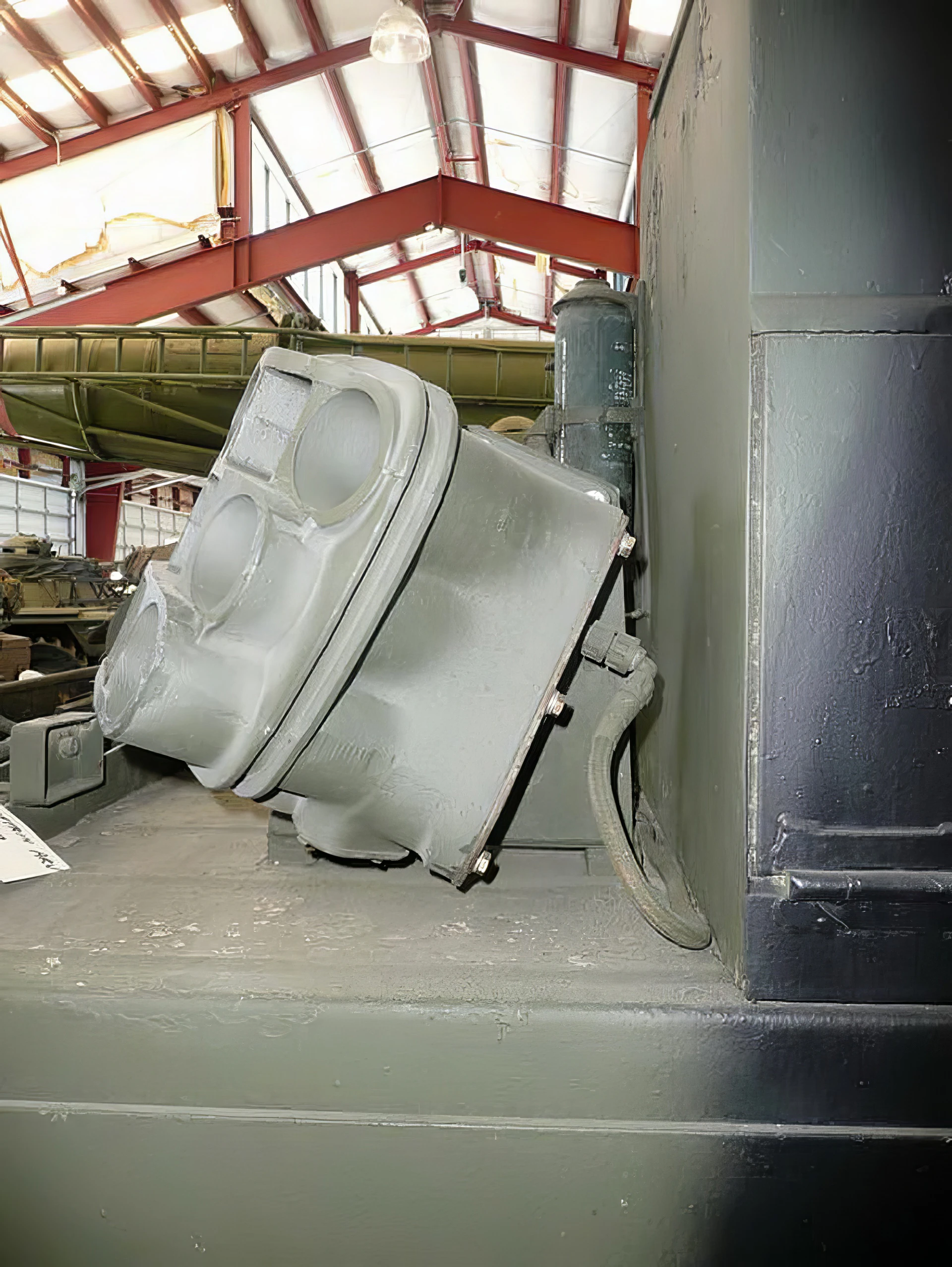
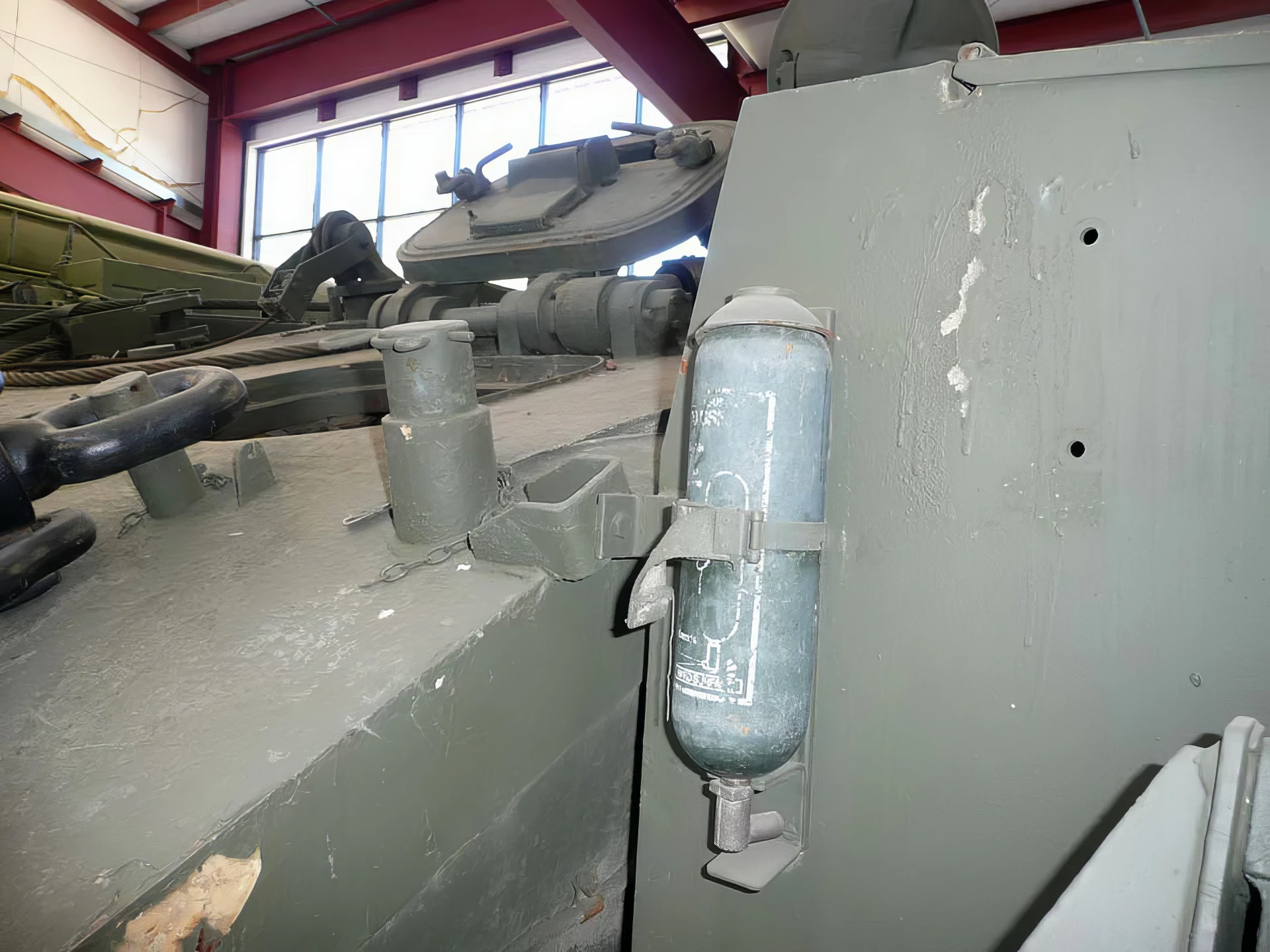
잠깐, 당신을 위해 FV4204 Chieftain을 검색 ...

참고 항목:


The FV4201 Chieftain was the main battle tank (MBT) of the United Kingdom during the 1960s, 1970s, and 1980s. Designed to replace both the Centurion and Conqueror tanks, the Chieftain was, at its introduction, considered one of the most powerful tanks in the world, combining exceptional firepower with heavy armour protection.
It was the first tank to fully embrace the concept of a single vehicle performing the roles of both the highly mobile medium tank and the heavily armoured heavy tank.
Key Features and Specifications
- 형식: Main Battle Tank (MBT)
- Place of Origin: United Kingdom
- Manufacturer: Leyland Motors, Royal Ordnance Factories, and Vickers-Armstrong
- In Service: 1967 – c. 1995 (UK), later with export users.
- Mass (Combat): Approximately 55 long tons (56 tonnes)
- Crew: 4 (Commander, Gunner, Loader/Radio Operator, Driver)
- Innovative Design: The driver sat in a **supine (reclining)** position, allowing for a lower hull profile and a more heavily sloped glacis plate, increasing effective frontal protection.
Armour and Firepower
- Main Armament: The formidable 120 mm L11A5 Rifled Gun which was the most powerful tank gun in NATO when introduced. It used a unique two-piece ammunition system (projectile and separate bagged charges).
- Ammunition: Primary rounds included APDS (Armour-Piercing Discarding Sabot) and the distinctive British HESH (High-Explosive Squash Head).
- Secondary Armament:
- One 7.62 mm L8A1 machine gun (coaxial).
- One 7.62 mm L37A1 machine gun (commander’s cupola).
- (Early models used a .50 cal ranging machine gun, later replaced by a Laser Rangefinder).
- Armour Protection: The tank featured a heavily sloped cast turret and hull. Later variants (like the Mk. 10 and Mk. 11) were fitted with bolt-on Stillbrew appliqué armour on the turret to enhance protection against shaped charges.
Mobility and Service History
- Engine: Leyland L60 multi-fuel, two-stroke, opposed-piston engine, typically developing up to 750 hp in later versions.
- Mobility Challenge: The L60 engine was notoriously underpowered and unreliable in early models, often limiting its cross-country performance, a major drawback. This led to continuous upgrades throughout its life.
- Primary Service: The Chieftain was the cornerstone of the British Army of the Rhine (BAOR) in West Germany during the Cold War, intended to face Soviet armour thrusts. It never fired a shot in anger while in British service.
- Export and Combat:
- It was a significant export success, particularly to Middle Eastern nations including Iran, Jordan, Kuwait, and Oman.
- Chieftains saw heavy combat during the Iran–Iraq War (1980–1988 where Iranian Chieftains engaged Iraqi Soviet-supplied T-55 and T-62 tanks.
- Kuwaiti Chieftains also saw action during the 1990 Iraqi invasionli>
- Legacy: The Chieftain design philosophy—combining a powerful gun with heavy armour—directly led to its replacement, the Challenger 1 MBT.
Views : 3687