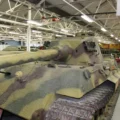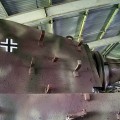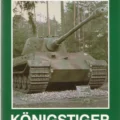
Panzerkampfwagen VI – Königstiger – SdKfz.182 | |
|---|---|
| 国 | ナチスドイツ |
| 役割 | 重戦車 |
| サービス中 | 1944–1945 |
| 構築 | 492 |
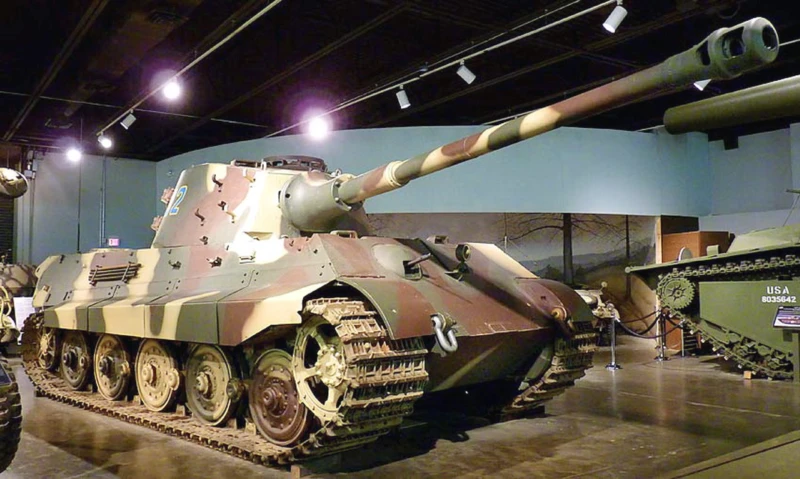
ザ タイガーII ●第二次世界大戦のドイツ重戦車です。ドイツの正式な正式名称は、パンツァーカンプワーゲン・タイガー・オースフでした。Bは、しばしばタイガーBに短縮される。オードナンスインベントリの指定はSd.Kfz. 182でした。非公式の名前でも知られています ケーニヒスタイガー (ベンガルトラのドイツ語名)は、しばしば文字通りロイヤルタイガーとして翻訳され、または連合軍兵士によってタイガー王として、特にアメリカ軍によってやや間違って翻訳
| Panzerkampfwagen VI Königstiger | |
|---|---|
| カメラマン | 知りません |
| ローカライズ | 知りません |
| 写真 | 48 |


関連項目:


The Apex Heavyweight of Late-War Armored Combat
ザ Panzerkampfwagen VI Ausf. B, widely known as the ケーニヒスタイガー (Bengal Tiger, misleadingly translated by the Allies as the “King Tiger” or “Royal Tiger”), represented the absolute zenith—and the ultimate excess—of German heavy tank design during World War II. Developed by Henschel as a direct successor to the legendary Tiger I, the Tiger II combined the near-impenetrable sloped armor concepts of the Panther with the most lethal high-velocity anti-tank gun of the era. On paper, it was an armored god: structurally immune to almost every Allied tank weapon from the front, capable of destroying any opposing vehicle from miles away. In practical reality, however, the King Tiger was a highly flawed mechanical burden. Weighing an astronomical 68 metric tons, it was severely underpowered, plagued by constant drivetrain failures, and fundamentally arrived at a time when Germany had completely lost control of the skies and ran entirely out of fuel.
| Attribute | Technical Specification (Panzerkampfwagen VI Tiger II Standard) |
|---|---|
| 役割 | Heavy Tank (Schwerer Panzerkampfwagen) |
| 乗組員 | 5 (Commander, Gunner, Loader, Driver, Radio Operator/Bow Gunner) |
| パワープラント | 1 × Maybach HL 230 P30 23-liter V12 liquid-cooled gasoline engine (700 hp) |
| 最高速度 | 38 km/h (24 mph) on roads | 15 km/h (9 mph) cross-country |
| Combat Weight | 68.5 metric tons (75.5 short tons) |
| 動作範囲 | ~120 km (75 miles) on roads | ~80 km (50 miles) cross-country |
| Primary Armament | 1 × 8.8 cm KwK 43 L/71 high-velocity tank gun (80 to 86 rounds) |
| 副武装 | 2 to 3 × 7.92mm MG 34 machine guns (coaxial, bow-mounted, and optional anti-aircraft ring) |
| Armor Thickness | Upper Front Plate: 150mm angled at 50° (~200mm effective) | Turret Front: 180mm (Production turret) |
| Production Total | 492 units manufactured by Henschel between January 1944 and March 1945 |
Design Engineering: The Ultimate 88 and the Strain of Excess Weight
- The Fearsome Long-Barrel 88 (KwK 43 L/71): The main armament of the Tiger II was the most powerful tank gun of the war. Spanning over 6 meters long, this high-velocity weapon fired a massive projectile propelled by an enormous cartridge casing. It achieved such extreme muzzle velocity that its shell arrived at the target before the sound of the blast. It could pierce over 200mm of armor from 2 kilometers away, allowing King Tiger crews to methodically snipe Allied Sherman or Soviet T-34 tanks safely outside the range of enemy weapons.
- The Iron Wall of Sloped Armor: Abandoning the boxy, vertical armor slabs of the original Tiger I, the King Tiger adopted sharply angled armor plates. The massive 150mm-thick upper front glacis plate was sloped back at 50 degrees, mathematically ballooning its effective physical thickness to roughly 200mm. Throughout the entire war, there is no verified combat record of a King Tiger’s frontal hull armor ever being successfully penetrated by an enemy anti-tank shell in battle.
- The Heart Failure of an Underpowered Engine: To move this 68-ton steel fortress, German engineers used the exact same 700-horsepower Maybach V12 engine found in the 45-ton Panther tank. This meant the engine was permanently over-strained. If a driver attempted to aggressively gun the throttle or turn sharply on muddy ground, the immense stress would instantly shred the final drive gears, snap the steering linkages, or cause the overloaded engine to overheat and burst into flames.
- The Tale of Two Turrets (Porsche vs. Henschel): The first 50 King Tigers produced featured a curved turret designed by Porsche (built by Wegmann). However, combat quickly revealed a fatal flaw: the curved bottom front of the turret acted as a “shot trap.” Enemy shells hitting the lower half of the turret face would glance downward, deflecting straight into the thin armor of the driver’s roof panel below. Production immediately switched to the flat-faced Henschel turret, which eliminated the trap and increased protection to 180mm.
Operational History: The Shock of Normandy to the Scrap Heaps of the Ardennes
- The Devastating Combat Debut in Normandy (1944): The King Tiger first saw combat on the Western Front in July 1944 with the 503rd Heavy Panzer Battalion. During an engagement near Caen, a tiny group of Tiger IIs completely blunted a massive British armored advance, knocking out dozens of tanks at extreme ranges. Allied crews quickly learned that trying to engage a King Tiger head-on was pure suicide, forcing them to coordinate tactical air strikes or execute high-risk flanking maneuvers to target the tank’s thinner 80mm side armor.
- The Bridge-Collapsing Logistic Nightmare: The King Tiger’s immense bulk made strategic movement nearly impossible. Most European road bridges of the 1940s were rated for a maximum of 30 to 40 tons; driving a 68-ton King Tiger onto them would cause the entire structure to collapse. Heavy tank battalions had to plan highly restrictive travel routes along shallow river-fording locations or utilize specialized, heavy-duty railway transport flatcars that required the crew to physically swap the tank’s wide combat tracks for narrower transport tracks just to fit through rail tunnels.
- The Fuel Crisis and Abandonment in the Ardennes: During the Battle of the Bulge in December 1944, elite SS commander Joachim Peiper led a vanguard of King Tigers into the snowy forests of Belgium. While the tanks easily crushed everything in their paths, they consumed a staggering half-gallon of scarce gasoline for every single mile traveled. When the American forces successfully blew up their own fuel depots to prevent capture, Peiper’s King Tigers ran bone-dry. The crews were forced to plant demolition charges inside their pristine, undamaged tanks and abandon them on foot.
- The Desperate Final Defensive Stands: By 1945, the remaining King Tigers were consolidated into independent Heavy Panzer Battalions (*schwere Panzerabteilungen*) acting as mobile “fire brigades” on the Eastern Front. Driven by veteran crews, individual King Tigers achieved staggering kill ratios, single-handedly holding off entire Soviet tank brigades outside Berlin. However, due to a total collapse of German supply chains, far more King Tigers were lost to mechanical breakdowns, empty fuel tanks, and self-destruction by their own crews than to actual enemy fire.
Views : 13148