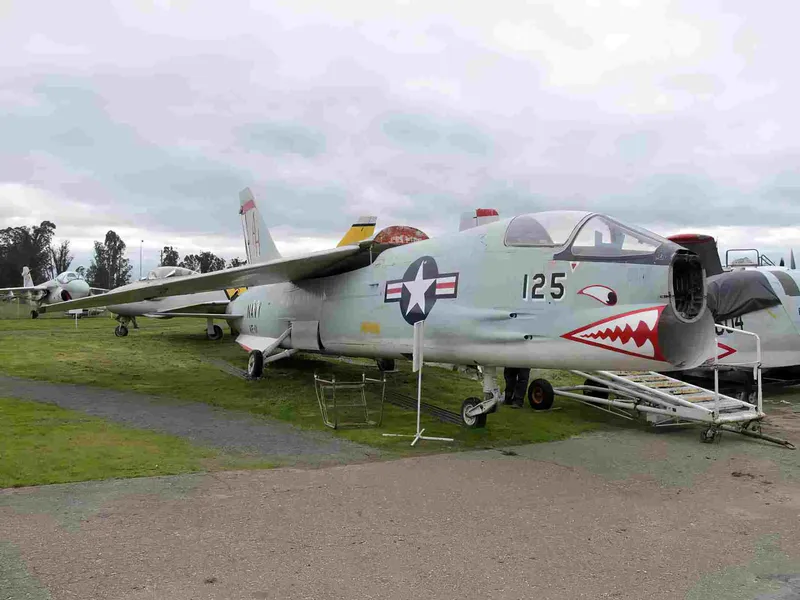
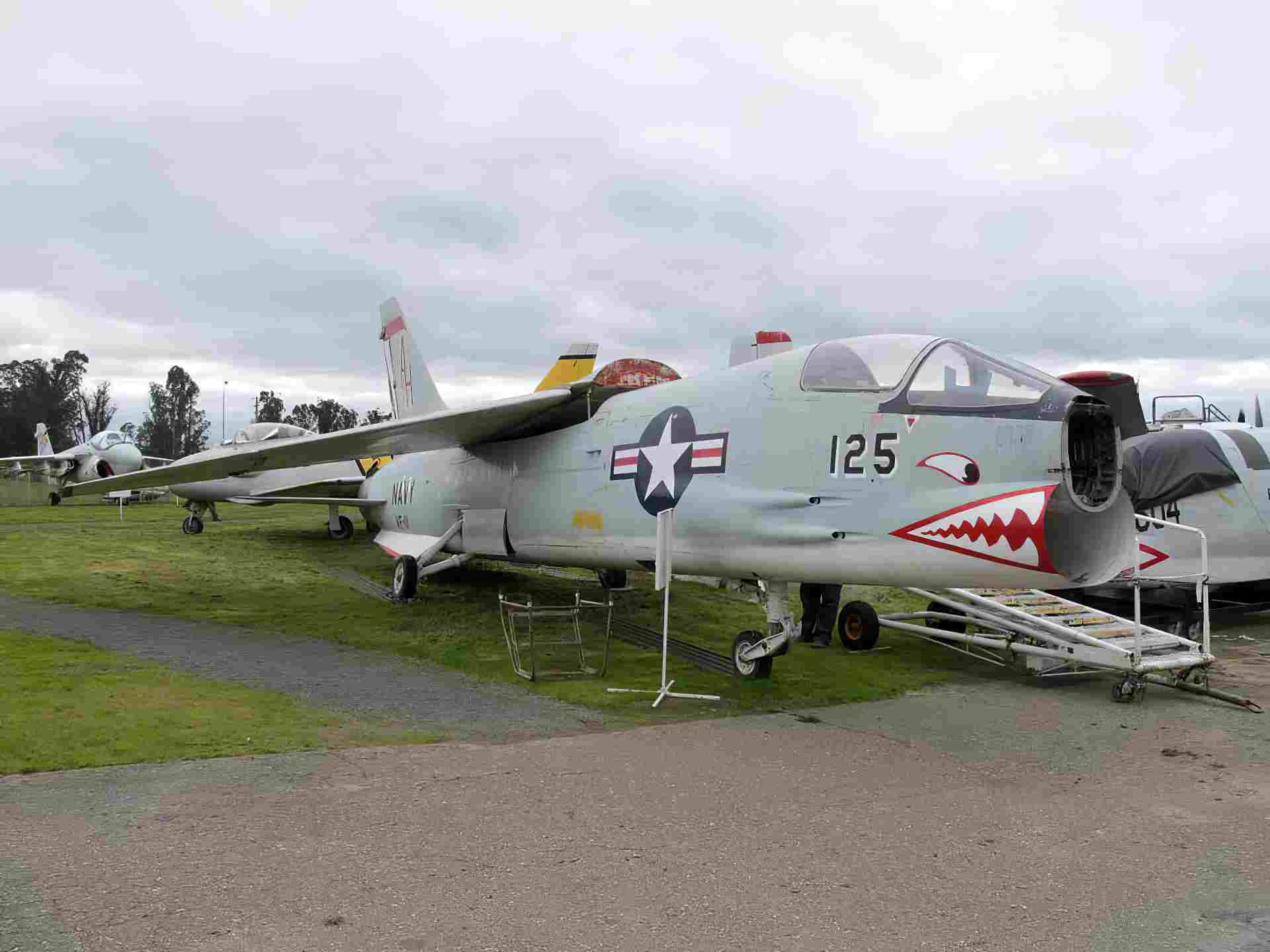
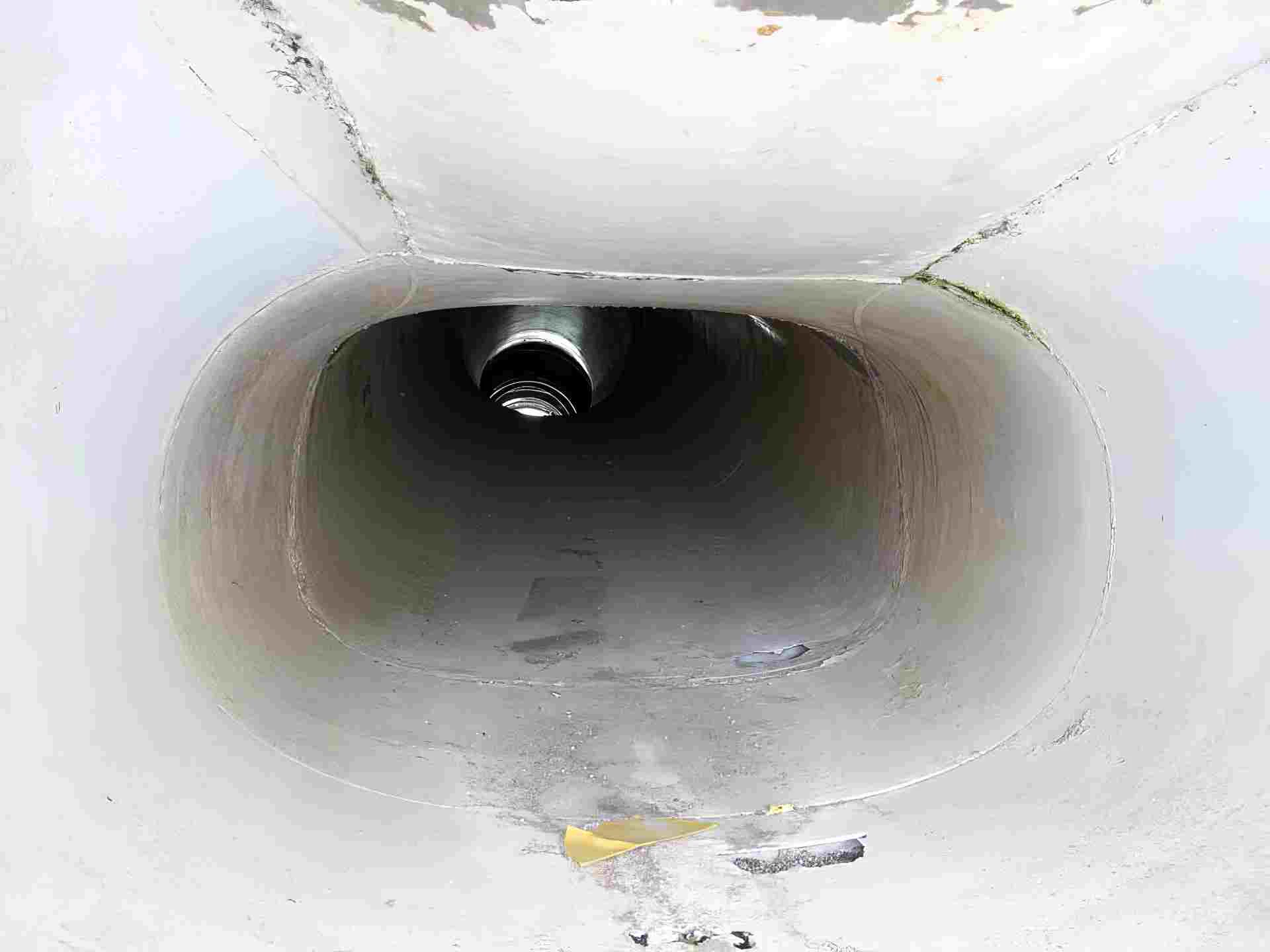
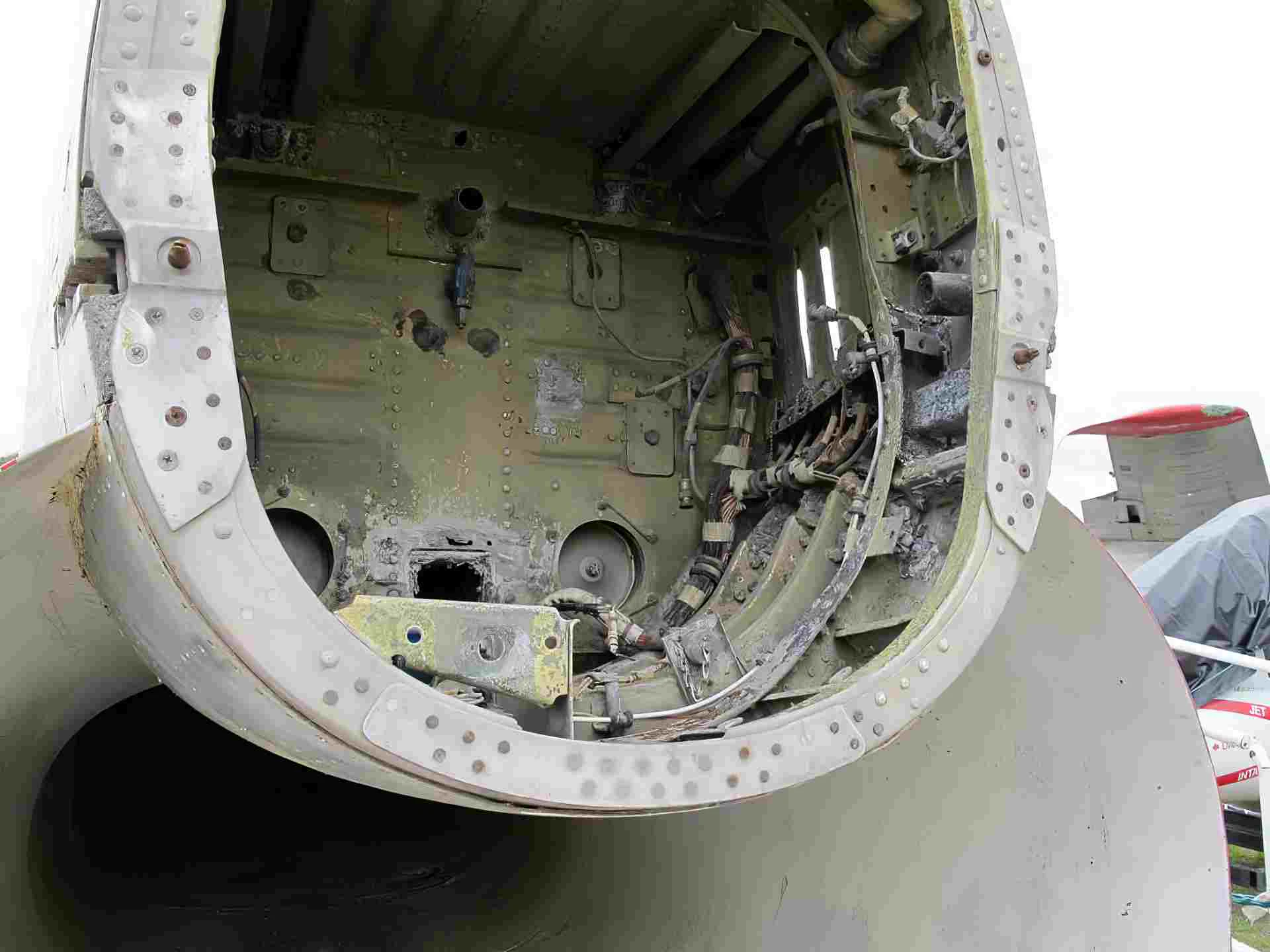
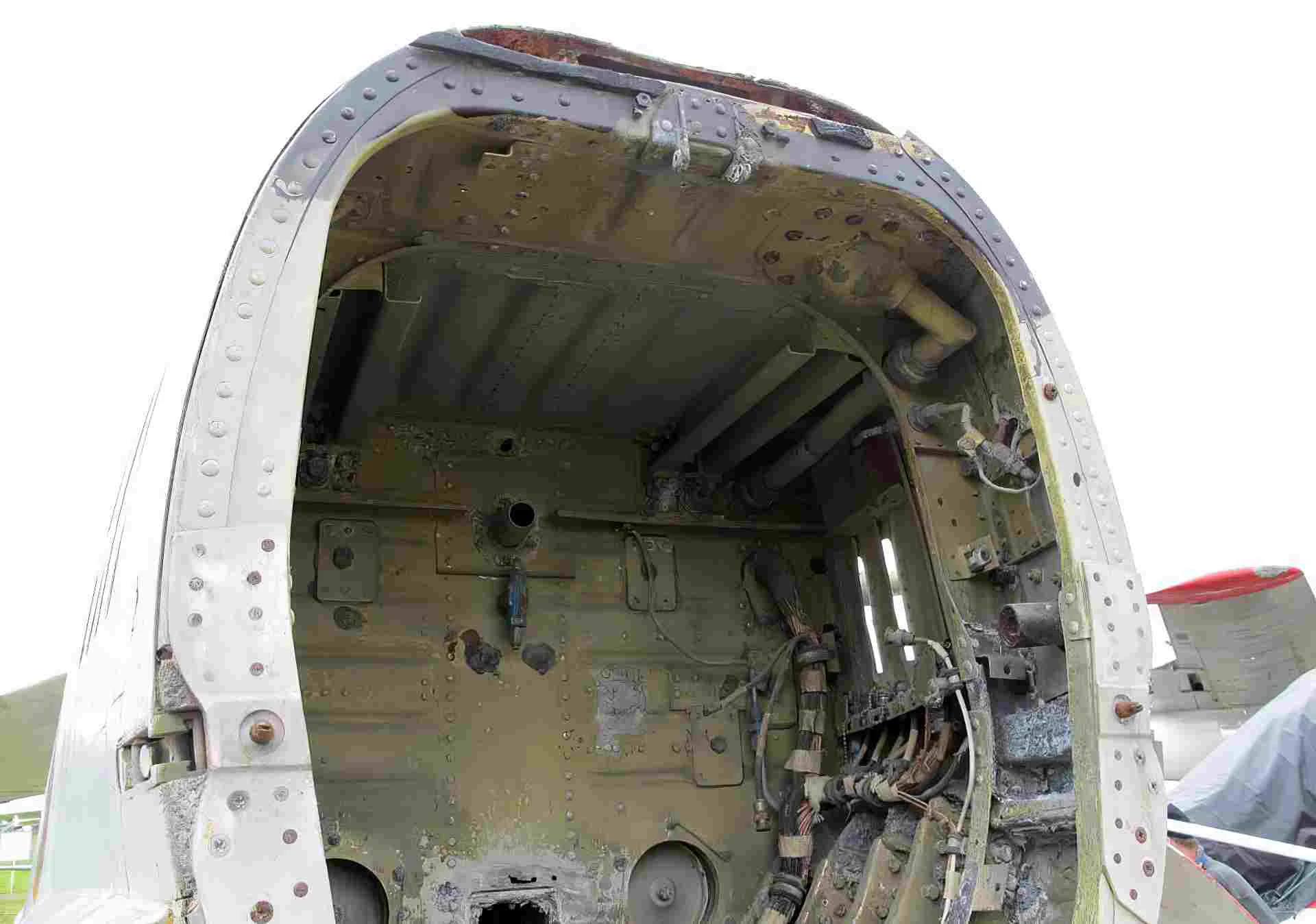
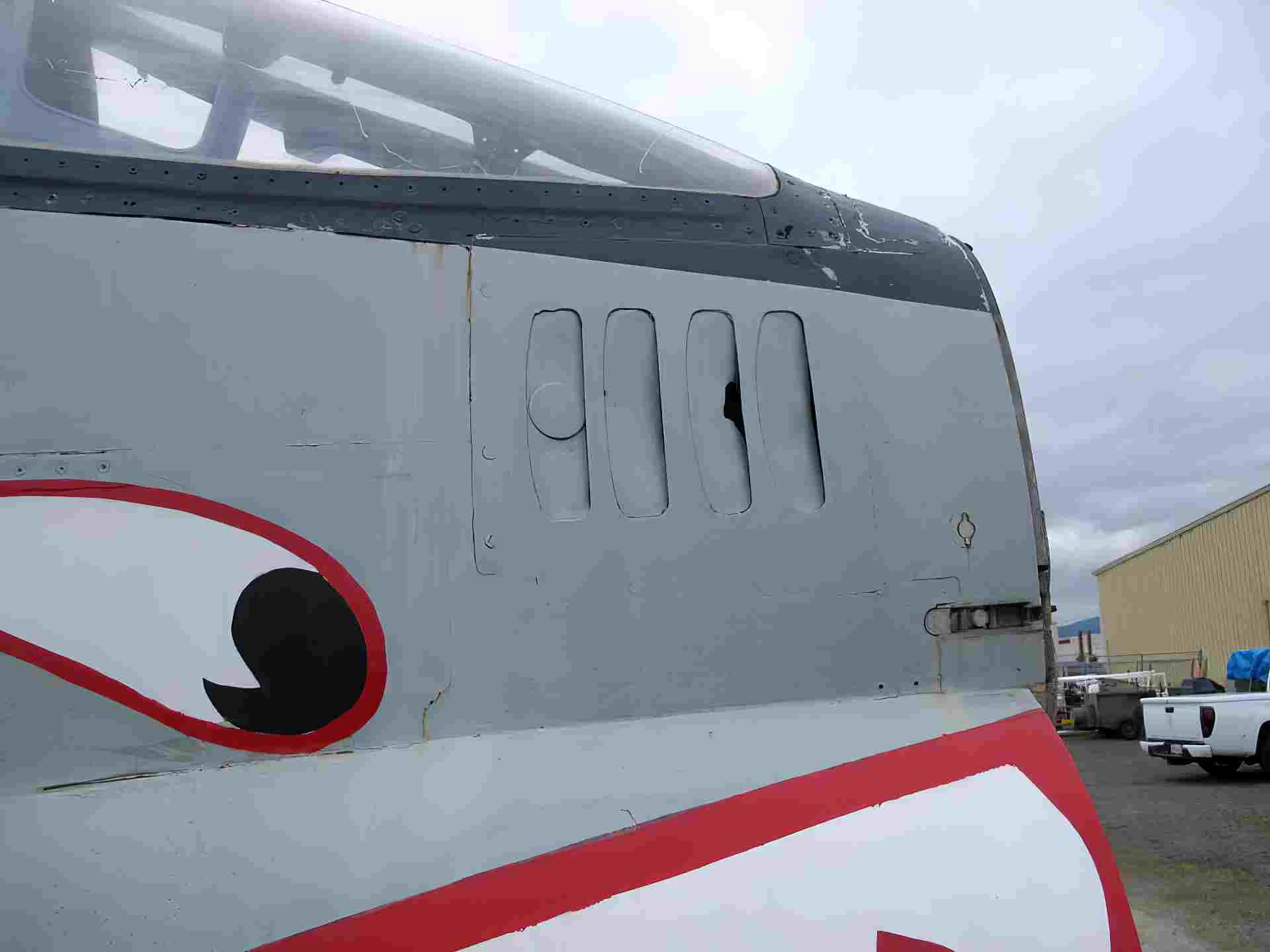
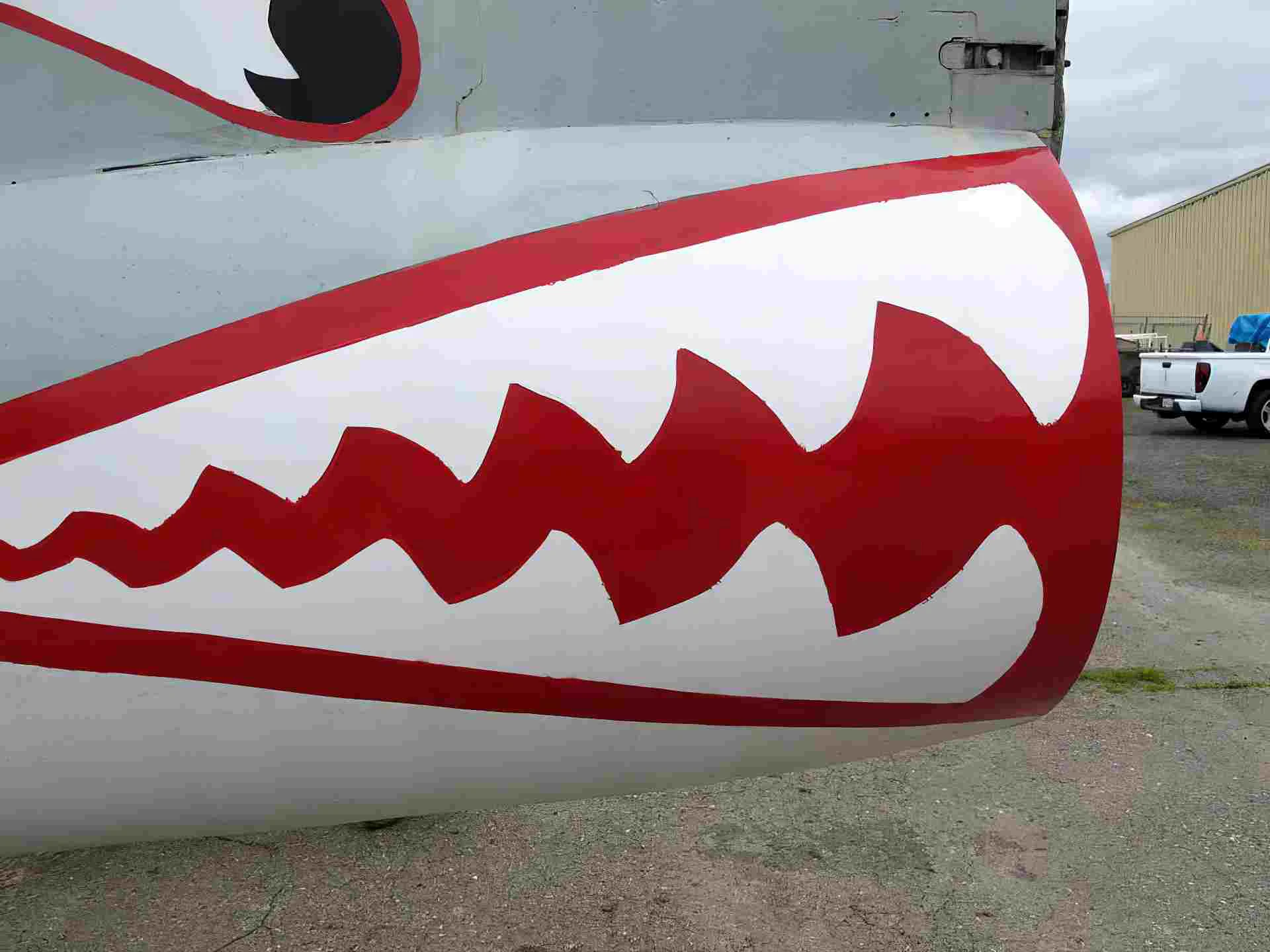
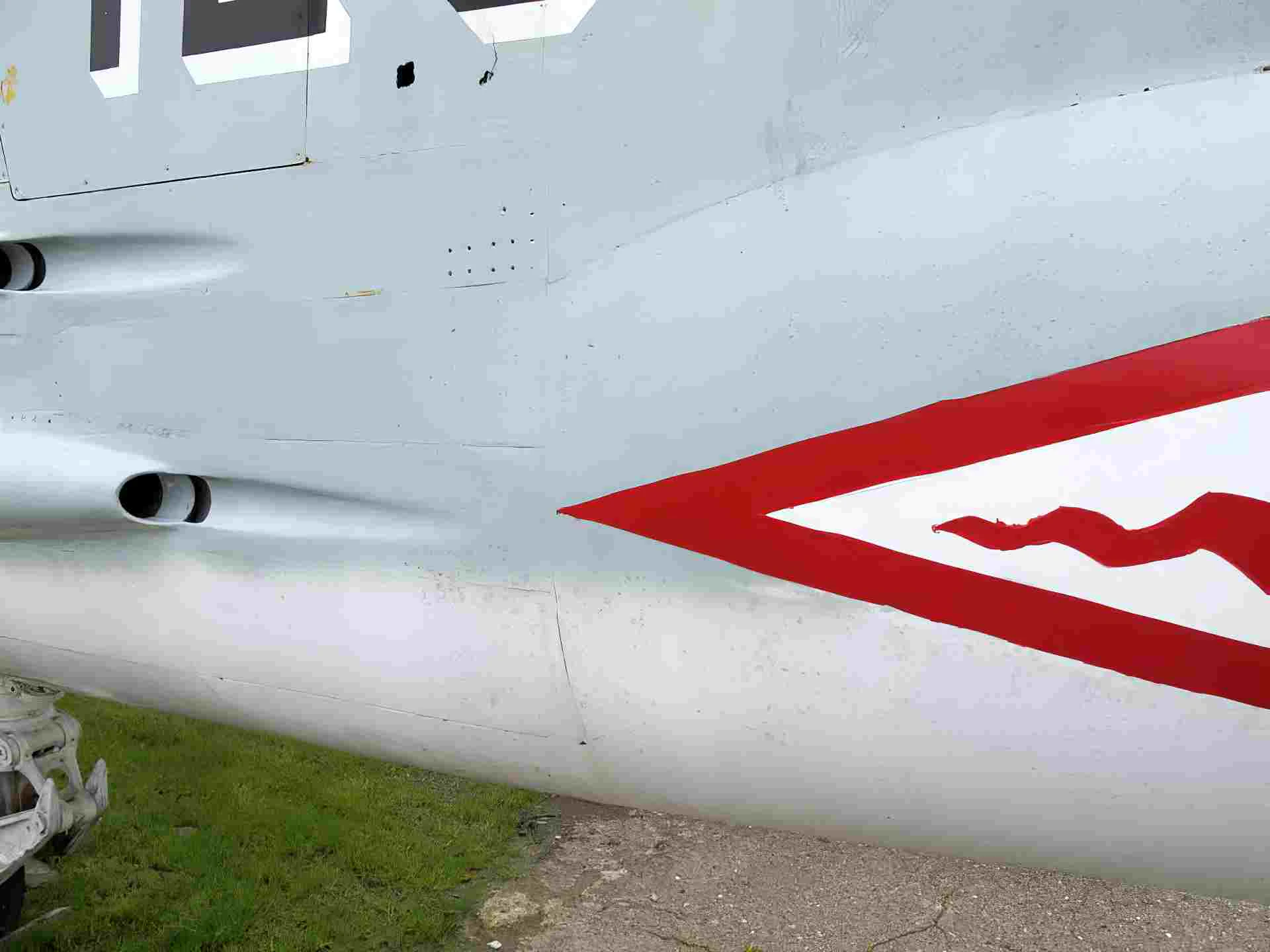
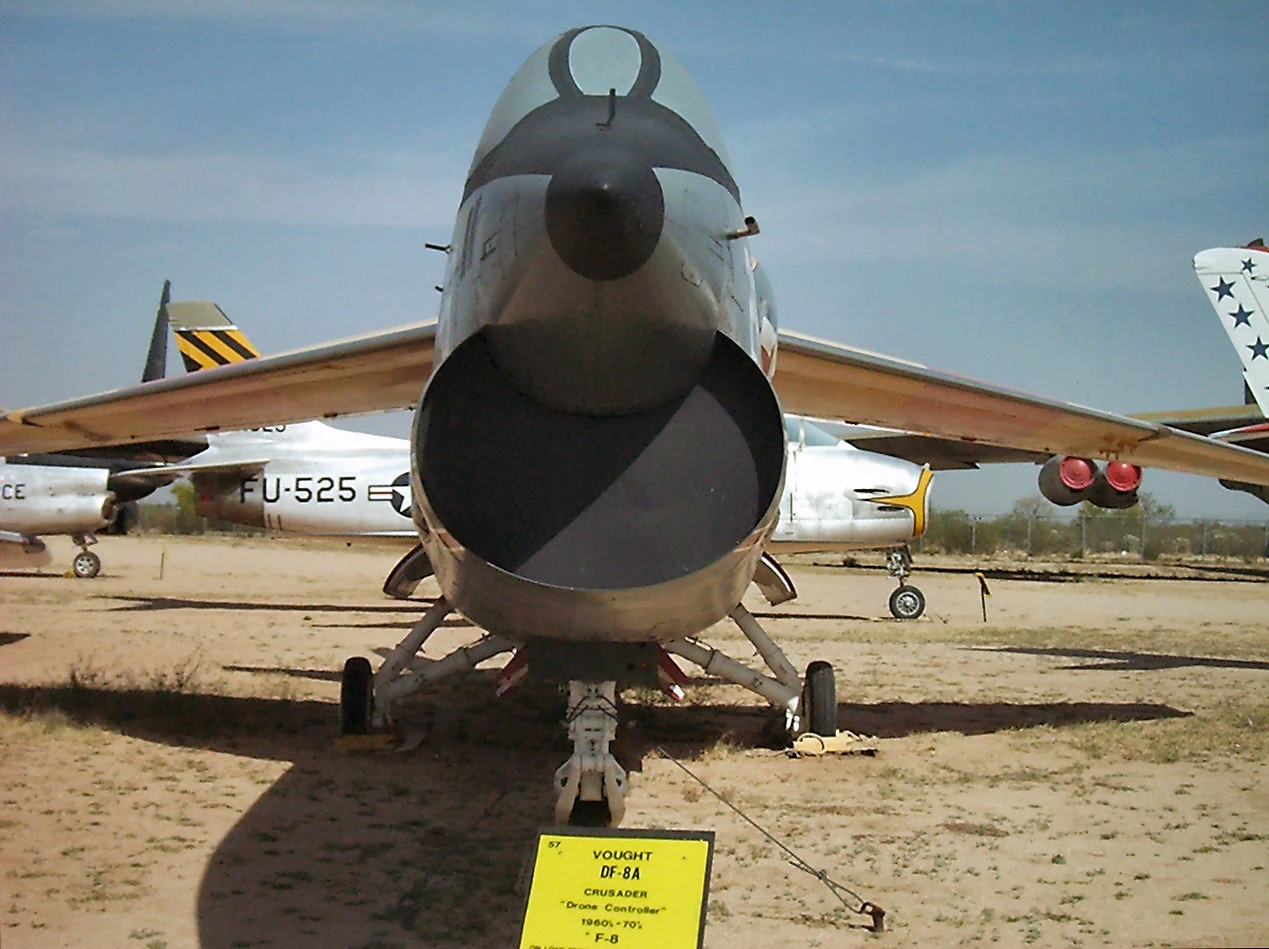
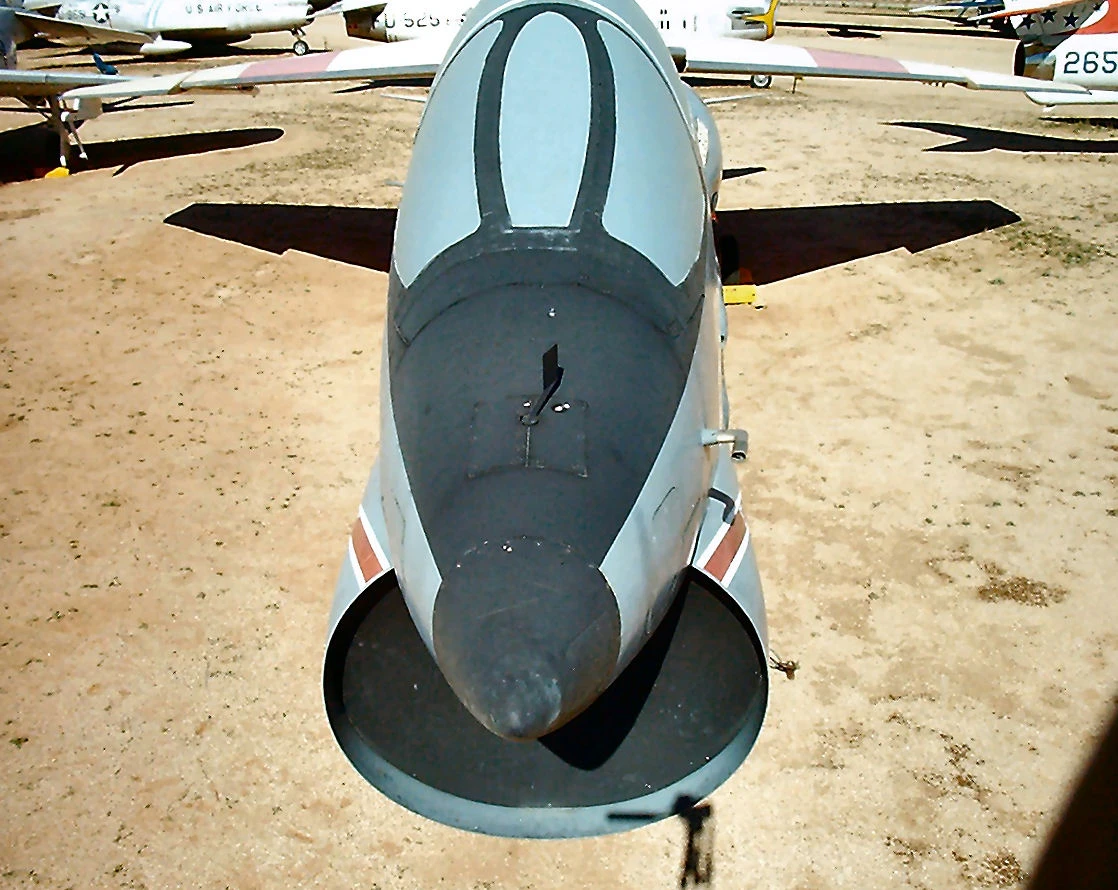
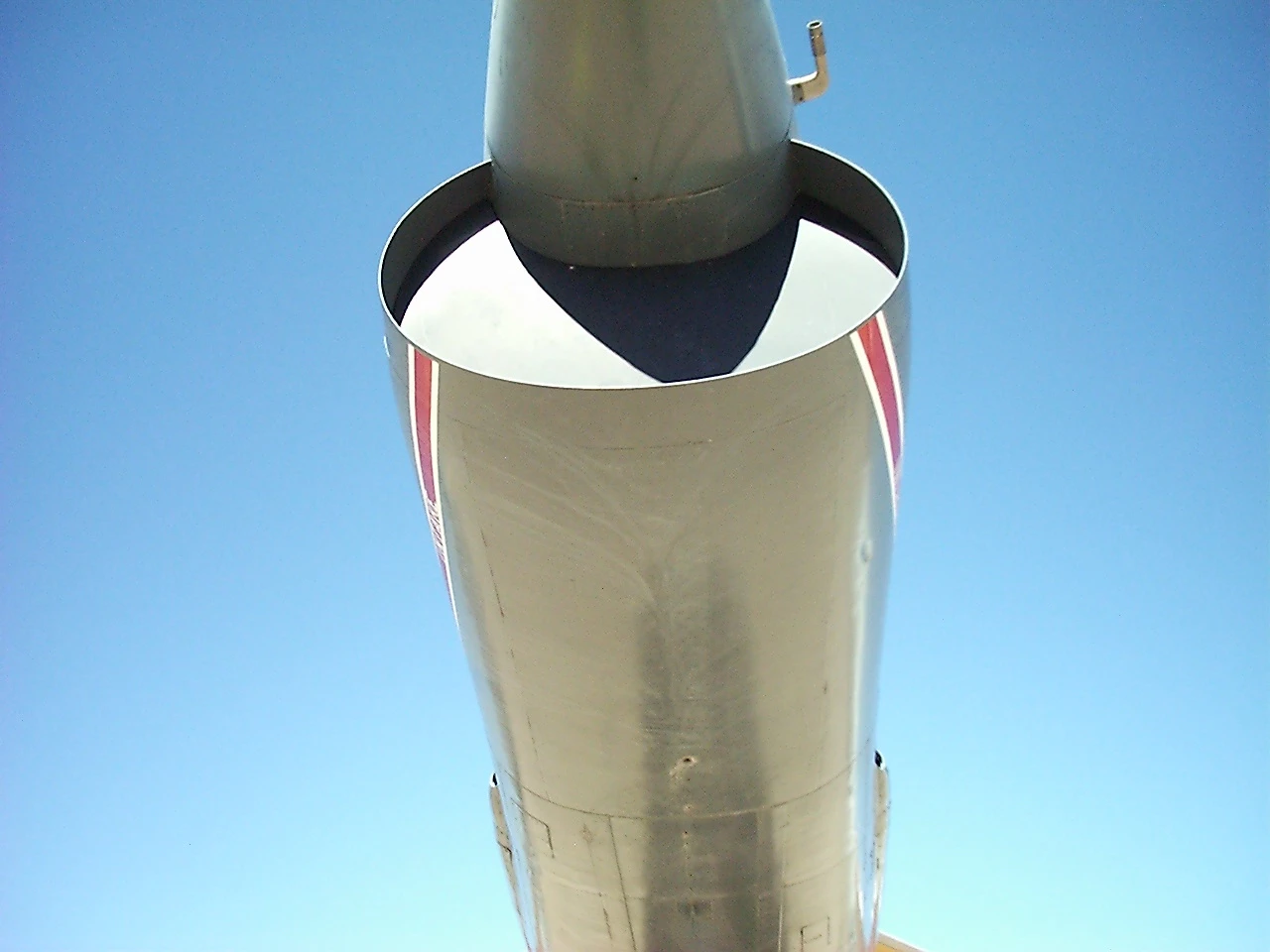
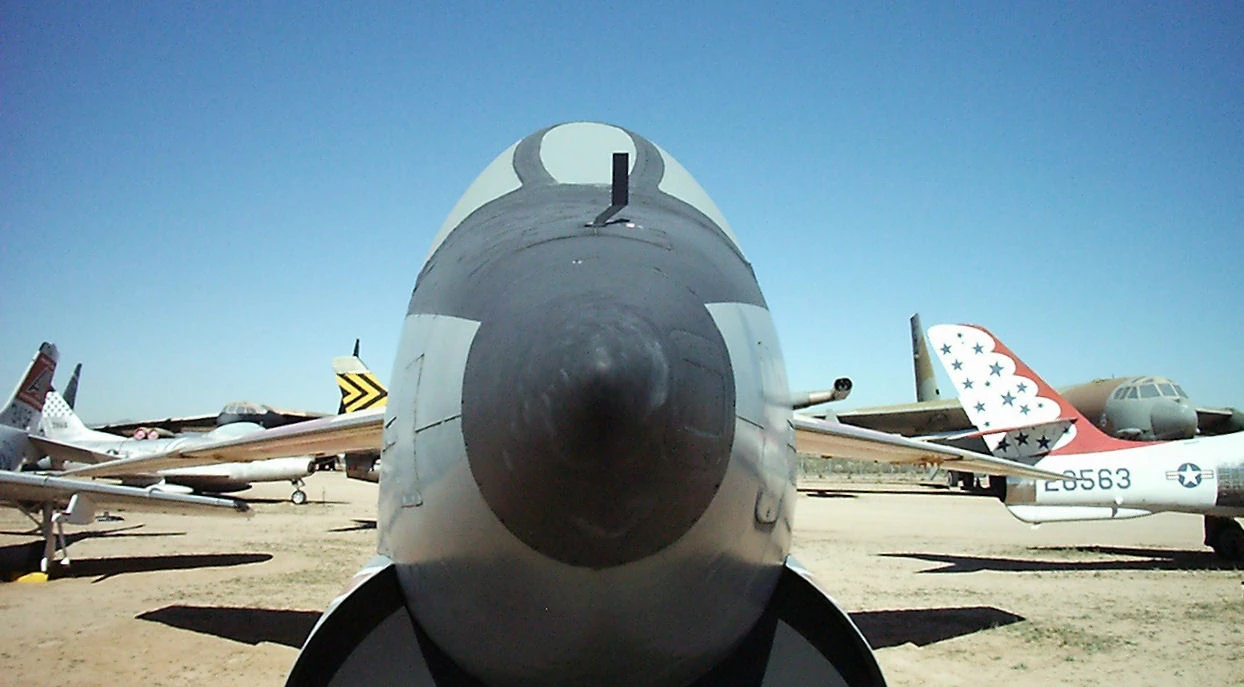
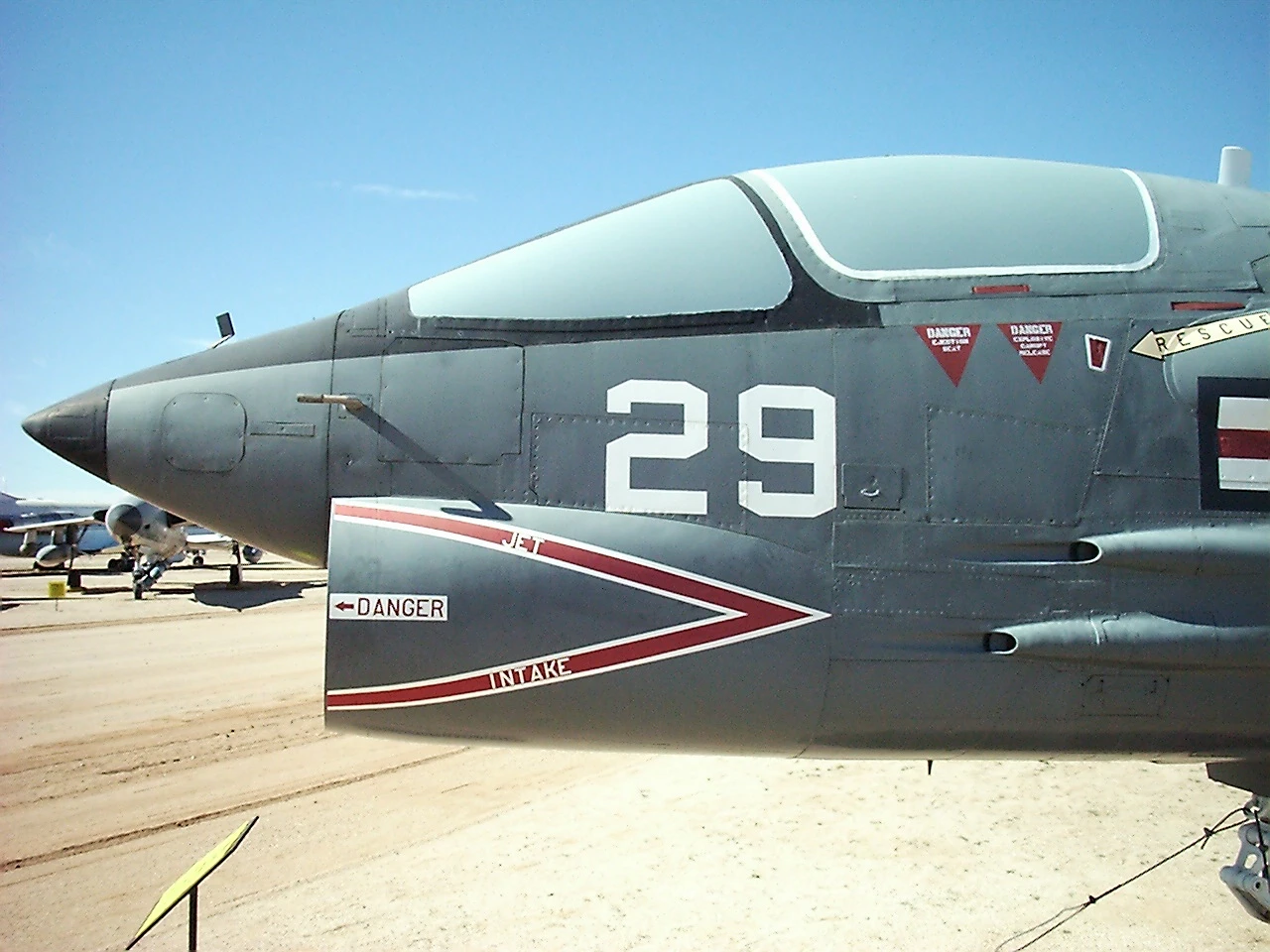
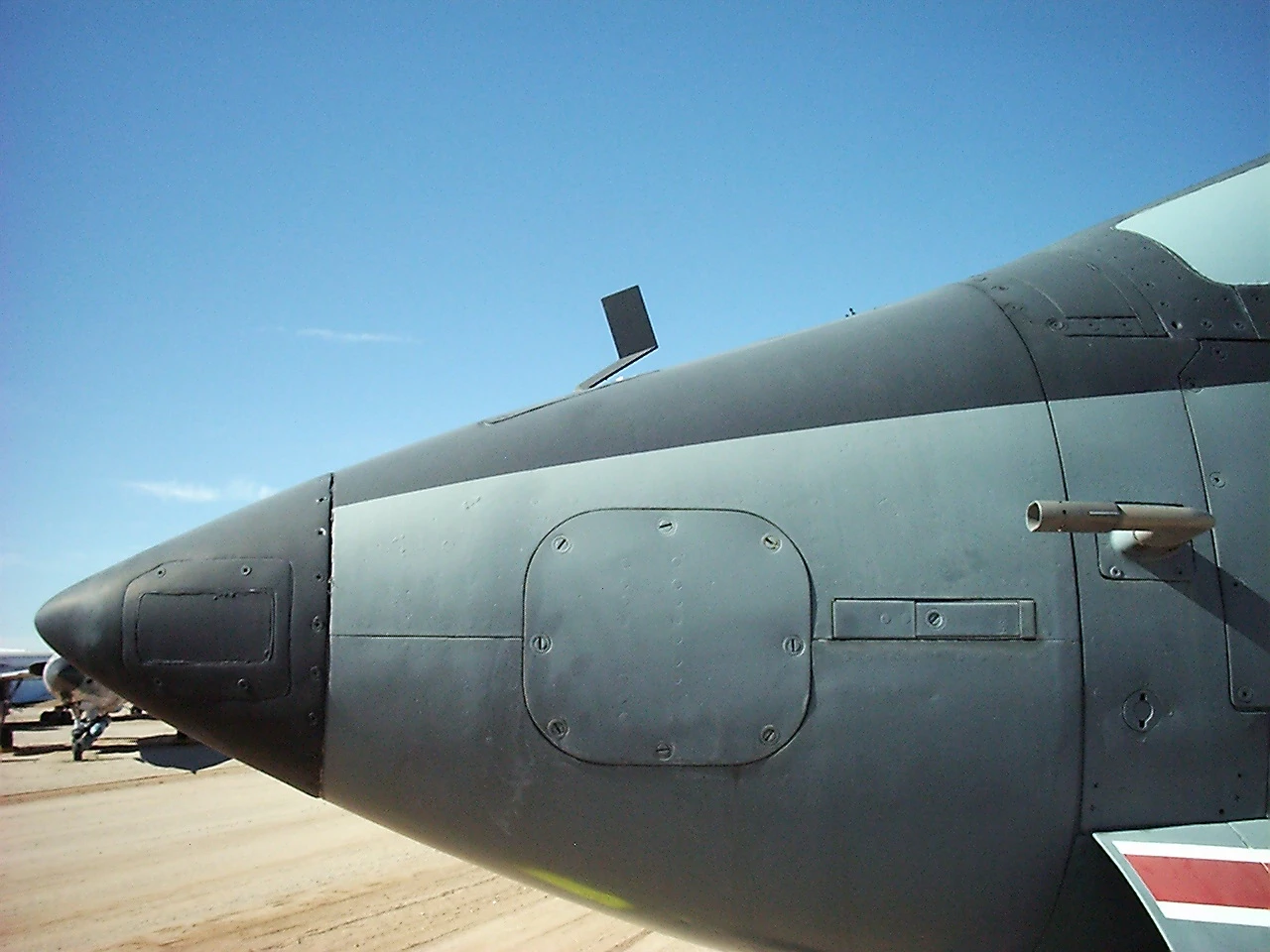
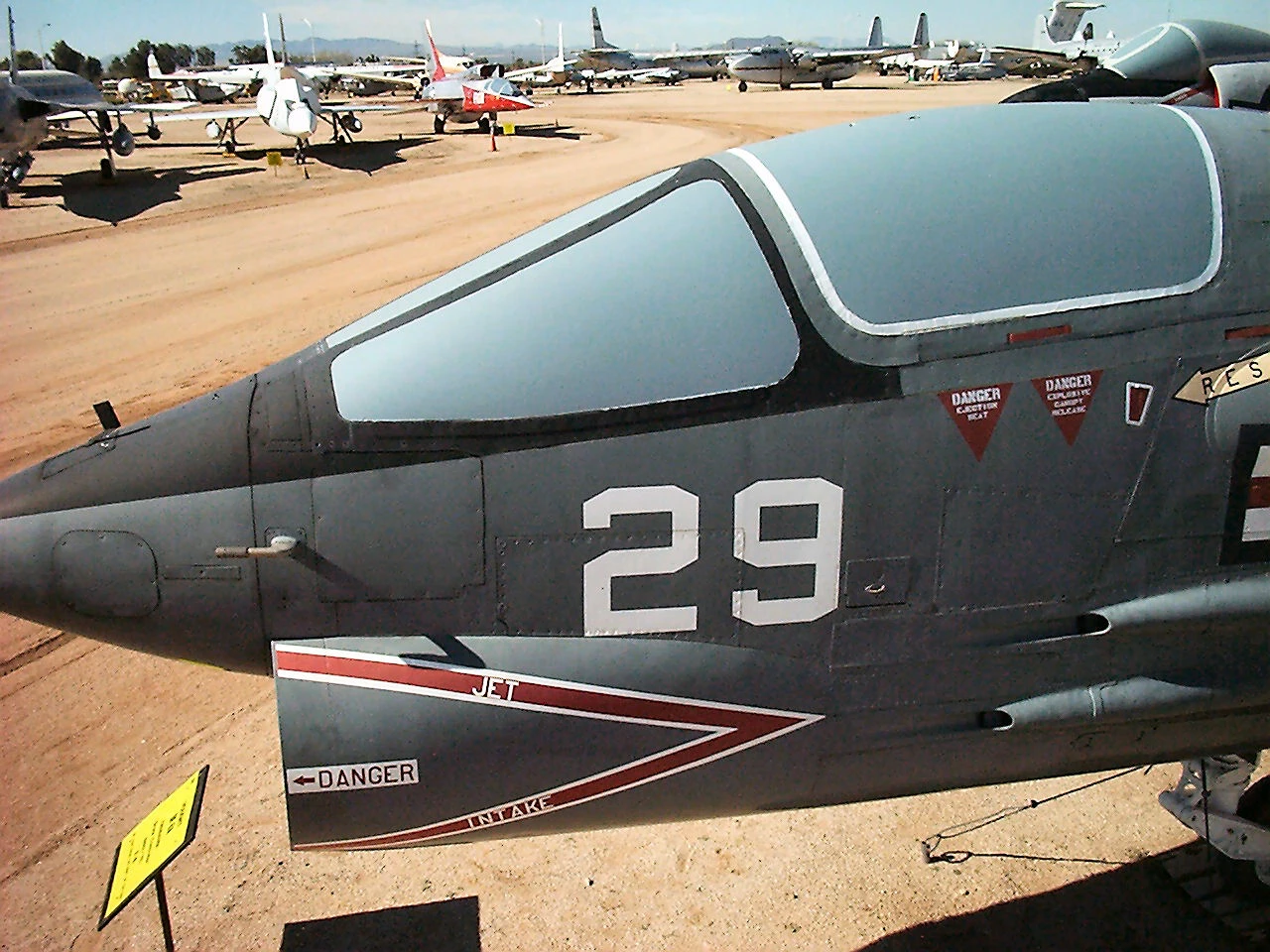
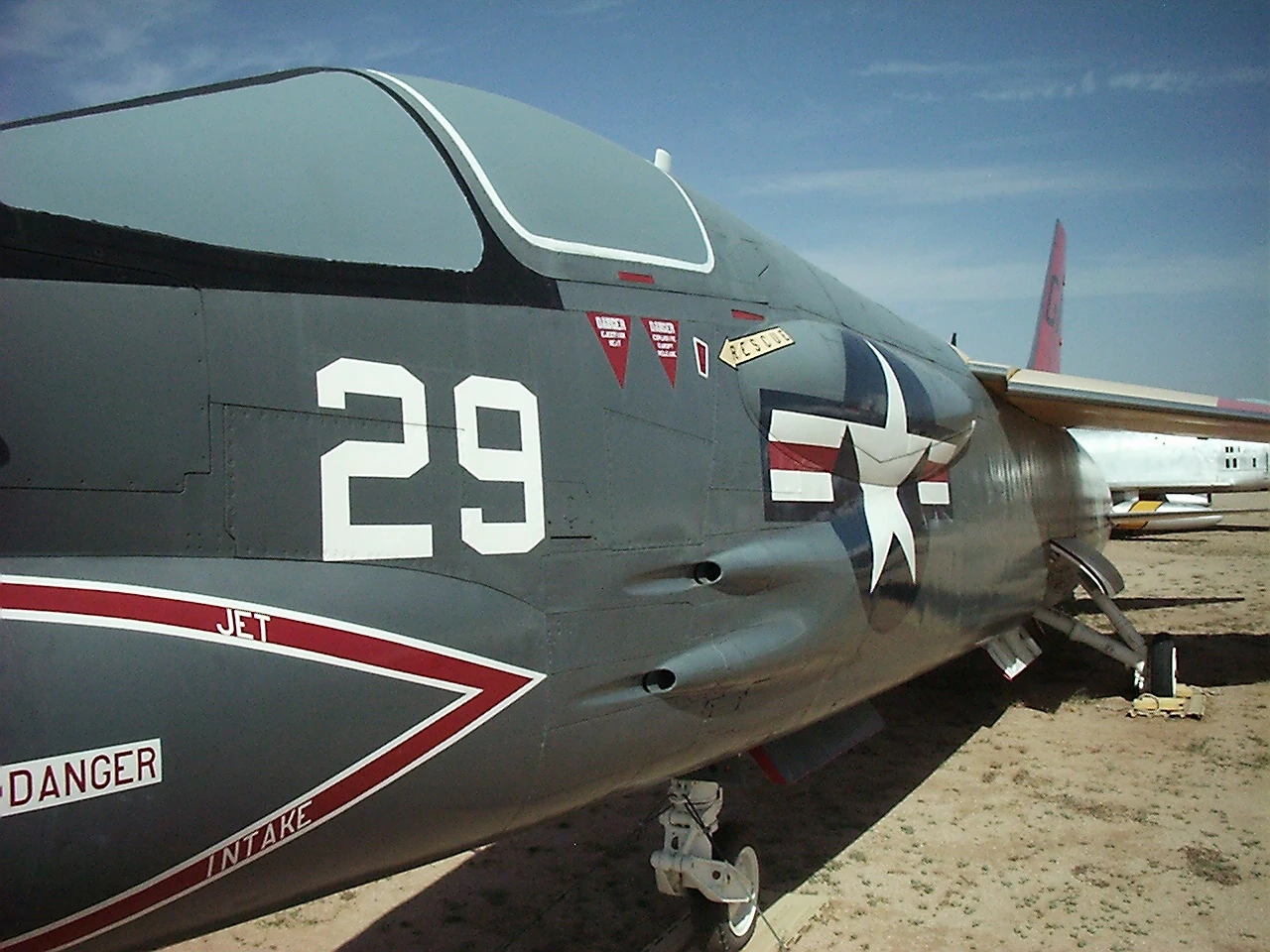
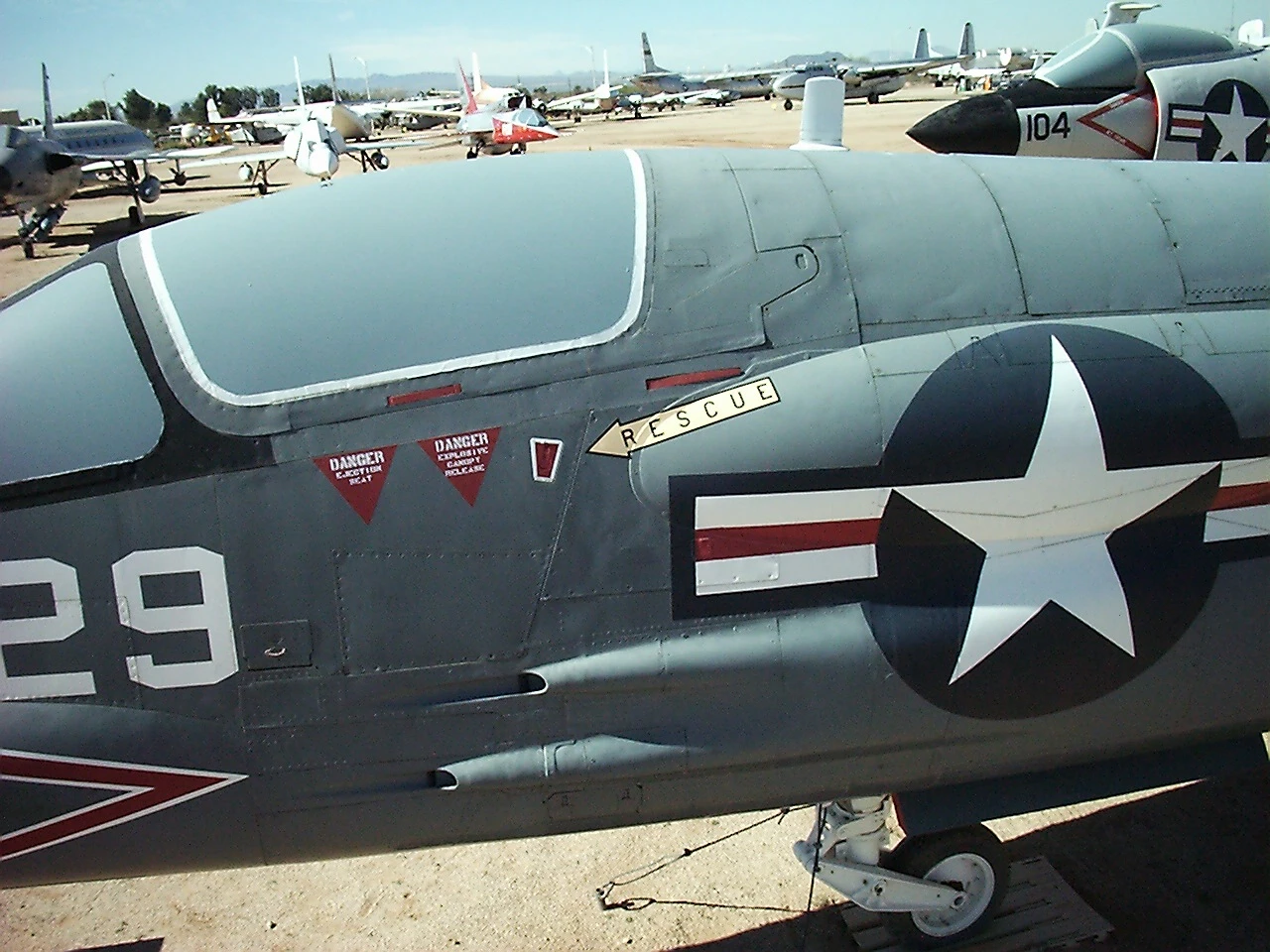
Le Vought F-8 Crusader (originariamente F8U) era un aereo a reazione monomotore, supersonico, basato su portaerei costruito dalla Vought per la Marina e il Corpo dei Marines degli Stati Uniti, in sostituzione del Vought F7U Cutlass, e per la Marina francese. Il primo prototipo di F-8 era pronto per il volo nel febbraio 1955. Gli F-8 servirono principalmente nella guerra del Vietnam. Il Crusader fu l'ultimo caccia americano con pistole come arma primaria, guadagnandosi il titolo di "L'ultimo dei pistoleri".
Aspetta, cerca le foto di Vought F-8 Crusader per te ...
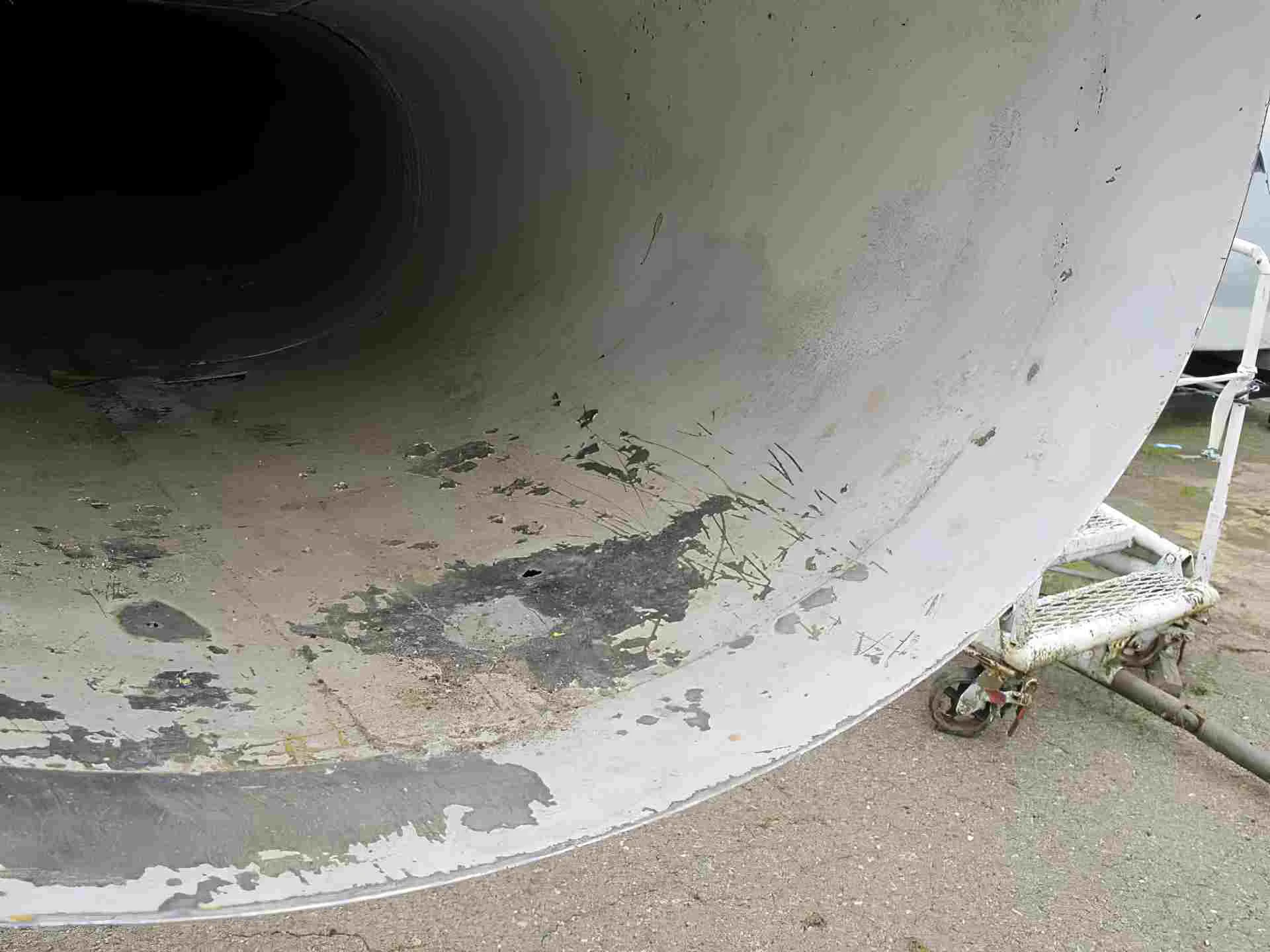
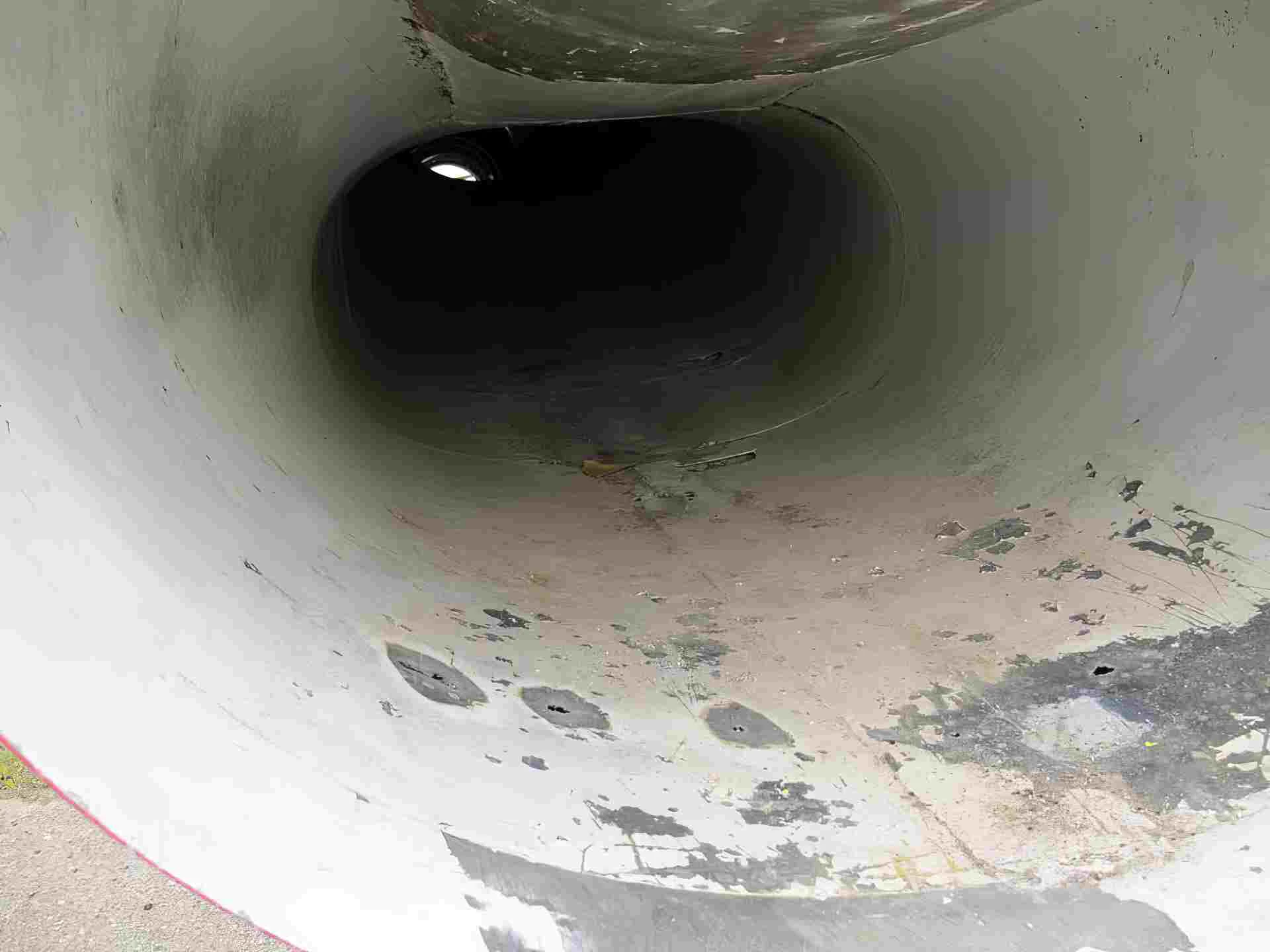
DF-8A Crusader Walk Around
Fotografo
Luc Colin
Localizzazione
Inconsapevole
Foto
16
The Final True Dogfighter
Le Vought F-8 Crusaderwas a legend of the early supersonic era. Entering service in 1957, it was the first carrier-based fighter to exceed 1,000 mph. While the later F-4 Phantom II relied entirely on missiles (initially), the Crusader kept its four 20mm cannons, earning it the nickname“The Last of the Gunfighters.”It was a pilot’s airplane—fast, agile, and unforgiving. In the skies over Vietnam, the F-8 achieved the highest kill ratio of any Navy fighter, proving that in a close-in “knife fight,” a maneuverable jet with guns was still king.
4 × AIM-9 Sidewinders (mounted on fuselage Y-pylons)
Special Feature
Variable-Incidence Two-Position Wing
Design Engineering: The Tilting Wing
Variable-Incidence Wing:To solve the problem of landing a high-speed supersonic jet on a short carrier deck, Vought engineers designed a wing that could tilt upward by 7 degrees. This allowed the F-8 to fly at a high angle of attack for lift while the fuselage remained relatively level, giving the pilot much better visibility of the carrier deck during landing.
The “Area Rule” Fuselage:The Crusader was one of the first jets to successfully incorporate the “Area Rule” (a “wasp-waist” narrowing of the fuselage), which significantly reduced transonic drag and allowed it to punch through the sound barrier with ease.
Area-Intercept Radar:Despite its “gunfighter” moniker, the F-8 was technically advanced, carrying an AN/APQ-94 radar that allowed the pilot to find and track targets even in bad weather—a rarity for a single-seat fighter of that generation.
The Folding Wing-Tip:Like most carrier aircraft, the F-8’s outer wing panels folded up. Famously, the Crusader was so powerful that it was capable of taking off with its wings still folded—though it required a very skilled (and terrified) pilot to bring it back down safely.
Operational History: MIG Master
The Mig-Killers:During the Vietnam War, the F-8 established a 19:3 kill ratio against North Vietnamese MiGs. Most of these kills were achieved with the early AIM-9D Sidewinder, but the presence of the 20mm cannons gave pilots the confidence to engage in tight, turning dogfights.
The “Ensign Killer”:The F-8 was notoriously difficult to land. Its high approach speed and the tendency for the nose-gear to fail if slammed down too hard gave it a fearsome reputation among junior pilots. If you could master the “Gator” (another nickname due to its low-slung intake), you were considered the best of the best.
Photo-Recon (RF-8):The unarmed reconnaissance version of the Crusader played a pivotal role during theCuban Missile Crisis, flying low-level, high-speed missions over Cuba to provide the photographic evidence of Soviet nuclear missiles.
French Service:The Crusader was so effective that the French Navy (Aéronavale) operated a specialized variant (the F-8P) until 1999, making it one of the longest-serving carrier fighters in history.