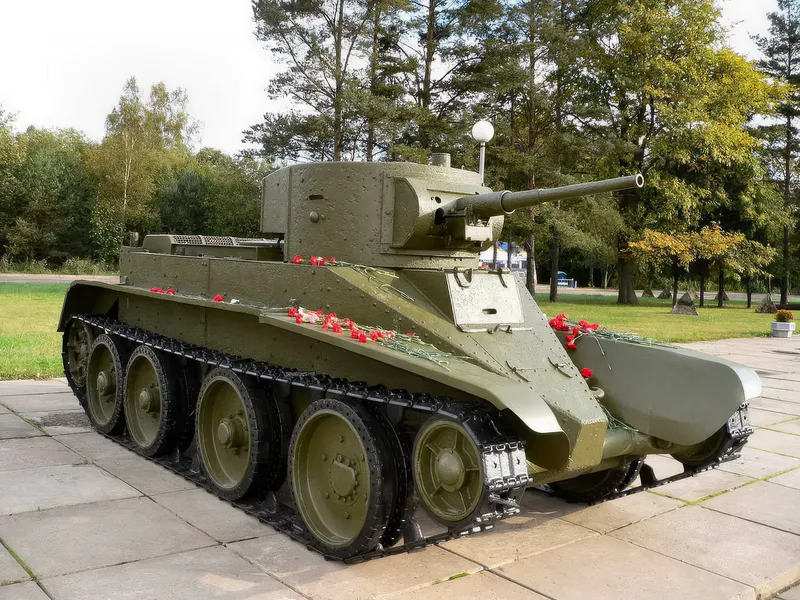
BT-5 serbatoio veloce | |
|---|---|
| Paese | URSS |
| digitare | Serbatoio veloce |
| Produzione | Sconosciuto |
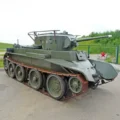
Galleria fotografica su un BT-5, In preparazione dai primi anni '30, la serie di carri veloci Bt giocò un ruolo chiave nella creazione e nello sviluppo della forza corazzata sovietica. Il loro ruolo principale fu quello di essere i primi modelli di carri armati disponibili in gran numero che permisero uno sviluppo delle dottrine delle armi meccanizzate. Il fatto che queste dottrine siano state messe da parte e almeno dimenticate poco prima dell'inizio dell'invasione tedesca è minimo perché hanno permesso l'attuazione delle seguenti dottrine, che hanno usato il successore del BT, il T-34.
| Char rapide BT-5 | |
|---|---|
| Fotografo | Inconsapevole |
| Localizzazione | Inconsapevole |
| Foto | 200 |
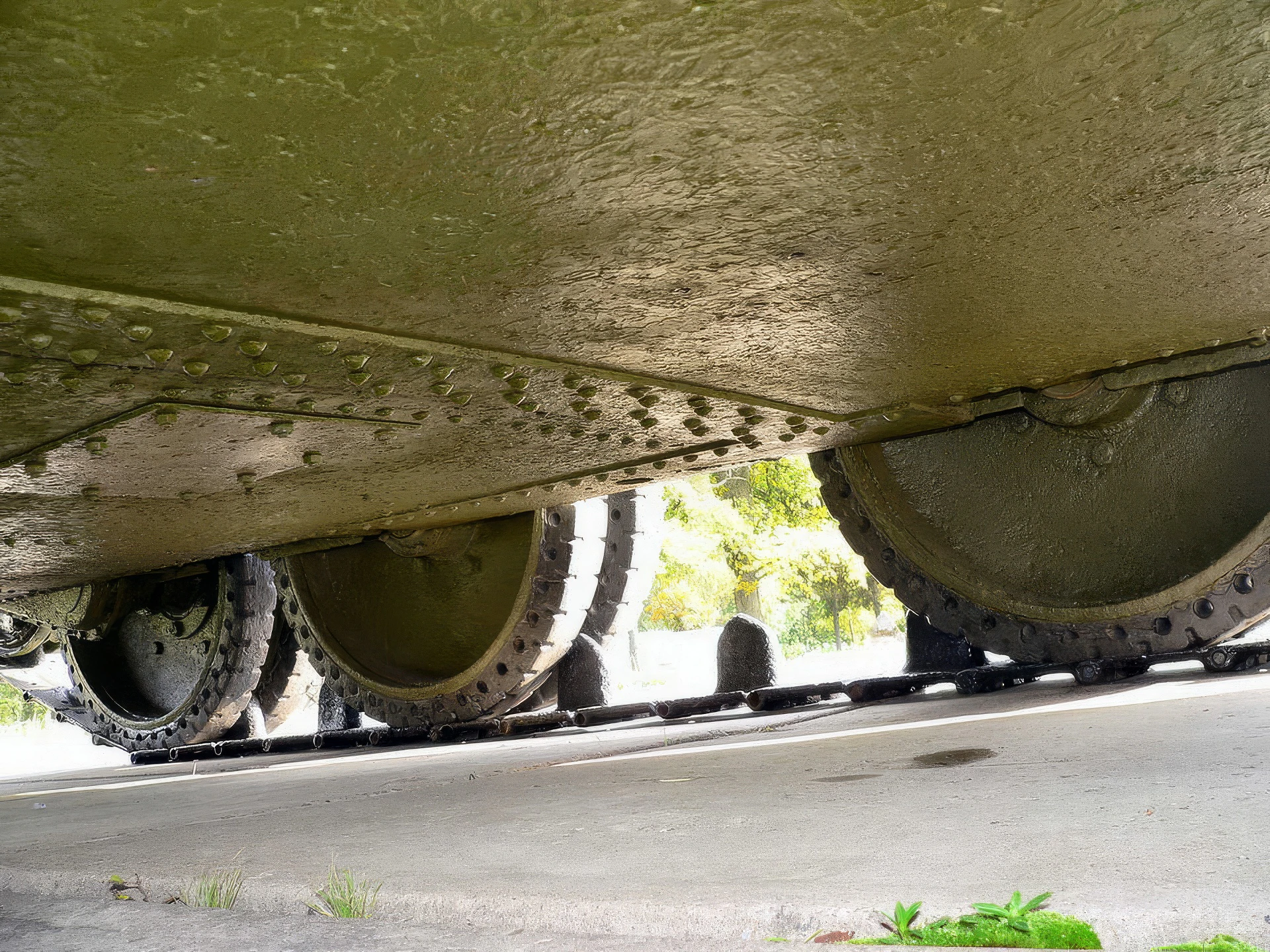
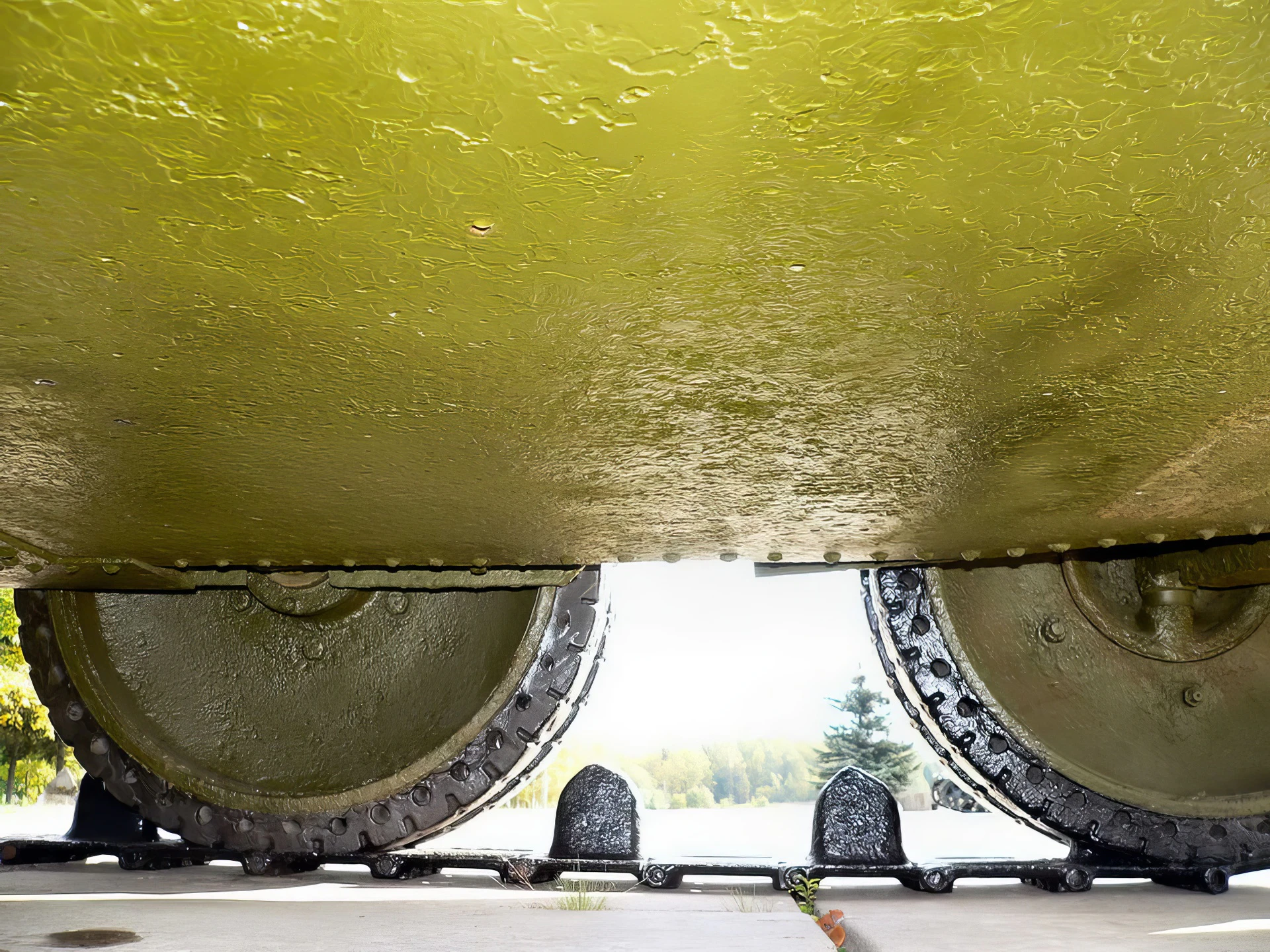

| BT-5 (Bystrokhodny Tank) Walk Around | |
|---|---|
| Fotografo | Jurij Pasholok |
| Localizzazione | Inconsapevole |
| Foto | 349 |
| BT-5 Walk Around | |
|---|---|
| Fotografo | Vladimir Yakubov |
| Localizzazione | Museo dell'armatura di Kubinka |
| Foto | 39 |
Vedi anche:


The High-Speed Convertible Racer of the Red Army
Le BT-5 (Serbatoio Bystrokhodny, literally “Fast Tank”) was a revolutionary Soviet light cavalry tank that defined Soviet armored doctrine during the 1930s and laid the direct engineering foundation for the legendary T-34. Based on the radical convertible suspension designs of American inventor J. Walter Christie, the BT-5 was engineered for a highly specific tactical purpose: once standard infantry tanks punched a gap in enemy lines, the ultra-fast BT units would pour through the breach to wreak havoc deep in the enemy’s rear. For its time, its speed was genuinely unmatched worldwide. However, this blistering agility was achieved by treating armor thickness as an afterthought, relying on paper-thin steel plates that left the tank highly vulnerable to even small-caliber anti-tank rifles and field artillery.
| Attribute | Technical Specification (BT-5 Standard Production Model) |
|---|---|
| Ruolo | Light Cavalry Tank / High-Speed Breakthrough Tank |
| Equipaggio | 3 (Commander/Gunner, Loader, Driver) |
| Motopropulsore | 1 × Mikulin M-5-400 12-cylinder liquid-cooled gasoline engine (400 hp) — adapted from a Soviet aircraft design |
| Maximum Speed (Tracks) | 52 km/h (32 mph) on roads | ~35 km/h (22 mph) cross-country |
| Maximum Speed (Wheels) | 72 km/h (45 mph) on paved roads without tracks attached |
| Combat Weight | 11.5 metric tons (12.6 short tons) |
| Raggio d'azione | ~200 km (124 miles) on tracks | ~300 km (186 miles) on wheels |
| Primary Armament | 1 × 45mm 20-K tank gun (up to 115 rounds carried) |
| Armamento secondario | 1 × 7.62mm DT machine gun mounted coaxially |
| Armor Thickness | Hull Front: 13mm | Hull Sides: 10mm to 13mm | Turret Sides: 13mm |
| Production Total | 1,884 units manufactured between 1933 and 1934 |
Design Engineering: The Convertible Drivetrain and the Aircraft-Engine Heart
- The Christie “Convertible” Drive System: The most unique feature of the BT-5 was its ability to completely shed its tracks. On soft cross-country terrain, it operated normally as a tracked vehicle. However, when it reached a paved highway, the crew could spend roughly 30 minutes removing the tracks, storing them on the side fenders, and engaging a chain-drive system directly to the large rear road wheels. Steering was handled by turning the frontmost pair of road wheels via a mechanical steering wheel, turning the tank into a massive, heavily armed 45-mph armored car.
- The Brutal Punch of the 45mm 20-K Gun: While contemporary Western light tanks of the early 1930s were mostly armed with basic machine guns or tiny 20mm cannons, the BT-5 carried a formidable 45mm main gun. This weapon outclassed almost every other tank gun in the world at the time of its introduction, giving the BT-5 an exceptional offensive punch that could cleanly penetrate any foreign tank armor it faced during its early operational life.
- Adapting an Aero-Engine for Armor: To achieve its blistering speeds, Soviet engineers did not use a standard truck engine; instead, they fitted the BT-5 with a massive Mikulin M-5 aviation engine, which was a domestic copy of the American Liberty aircraft engine. Pumping out a massive 400 horsepower into an 11-ton chassis, it gave the tank an incredible power-to-weight ratio. However, using high-octane gasoline in an unshielded engine bay meant the tank was highly susceptible to exploding or catching fire if the hull was pierced.
- The Fragile Leaf-Spring “Christie” Suspension: Each of the four massive road wheels on each side was attached to an independent, long vertical coil spring housed completely inside the double-walled hull sides. This gave the wheels massive vertical travel, allowing the tank to charge smoothly over rough trenches and even launch over dirt ramps, flying through the air for dozens of feet without breaking its axles. However, this internal spring housing took up massive amounts of valuable cabin room for the crew.
Operational History: From the Spanish Civil War to the Mongolian Steppes
- The Baptism of Fire in Spain (1937): The Soviet Union sent roughly 50 BT-5 tanks to support the Republican forces during the Spanish Civil War. Organized into the International Tank Regiment, they completely dominated the lightweight Italian tankettes and German Panzer I machines deployed by Nationalist forces. However, Spanish crews quickly discovered that standard infantry anti-tank guns and field artillery could easily tear through the BT-5’s thin 13mm armor plates like paper.
- The Masterclass at Khalkhin Gol (1939): Under the brilliant command of a young Georgy Zhukov, hundreds of BT-5 and BT-7 tanks were thrown into action against the Imperial Japanese Army along the Mongolian border. In the vast, flat desert steppes, the BT-5’s incredible road speed allowed Soviet forces to rapidly outflank and encircle the Japanese 6th Army. The high-velocity 45mm guns systematically picked apart Japanese Type 95 Ha-Go light tanks from safely outside the enemy’s effective firing range.
- The Tragic Reality of Operation Barbarossa (1941): By the time Nazi Germany launched its massive invasion of the Soviet Union in June 1941, the BT-5 was severely outdated. Thousands were lost in the opening weeks of the conflict. While their 45mm guns could still damage German Panzer IIIs, their un-sloped 13mm armor offered zero protection against standard German 37mm or 50mm anti-tank guns. Poor maintenance, critical spare part shortages, and tactical confusion caused thousands of BT-5s to be abandoned by their crews before they could even engage the enemy.
- The Final Victory in Manchuria (1945): Though largely replaced by the heavy T-34 on the European front by 1942, the remaining fleet of BT tanks saw one final, spectacular combat deployment. In August 1945, during Operation August Storm, the Soviet Union launched a massive surprise offensive against Japanese-occupied Manchuria. The surviving BT tanks spearheaded a grueling, rapid advance across the barren Gobi Desert and over the rugged Greater Khingan mountain range, easily rolling over the obsolete Japanese defenses in a final echo of their intended high-speed doctrine.
Views : 6614
Puoi anche vedere:
 Carro armato leggero M2 – Foto e video
 Tipo 63 – Foto e video
 SK-105 Kurassier – Foto e Video
 FCM36 – Foto e video
 Stridsvagn m-38 – Foto e video
 T-92 Light Tank – Foto e Video
 AMX-10RC – Foto e video
 Carro armato T-40S – Foto e Video
 AMX-13 – Foto e video
 Carro armato di cavalleria sovietico BT-7 - Walk Around