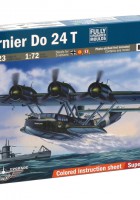
Dornier Do 24 T - ITALERI 1323

Italeri

Ref 1323
digitareKit modello
Scala1/72
Argomento

Dornier Do 24 T

Le Dornier Do 24 era un idrovolante a scafo largo progettato per svolgere compiti di ricognizione, bombardamento, pattugliamento marittimo, ricerca e soccorso. Sviluppato dalla Dornier in sostituzione del vecchio "Wal", il nuovo Do-24 era caratterizzato da un propulsore di tre motori radiali Bramo montati sulle ali da 940 HP. La soluzione adottata, molto più moderna e affidabile della precedente, unita ad una robusta ala parasole e a doppia coda, permise al Dornier Do-24 di raggiungere una velocità massima di 340 Km/h. Grazie alla sua autonomia di 2.700 Km e grazie al suo carico offensivo di 1.200 Kg, il Dornier Do-24 è stato utilizzato per diversi compiti operativi su tutti i fronti. Inoltre è stato apprezzato per la sua affidabilità e flessibilità e, grazie a ciò, ha servito con la Luftwaffe tedesca durante tutti gli anni della seconda guerra mondiale.

fonte: Italeri

Continua a leggere

Visualizzazioni : 2637

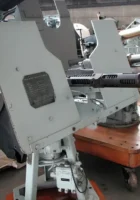
Cannone antiaereo da 20 mm

Cannone antiaereo da 20 mm "Oerlikon"

PaeseURSS
digitareCannone antiaereo
In servizioDal 1940 ad oggi
Galleria fotografica di un cannone antiaereo da 20 mm "Oerlikon", Oerlikon Il cannone da 20 mm è una serie di cannoni automatici, basati su un progetto originale del tedesco Reinhold Becker, all'inizio della prima guerra mondiale, e ampiamente prodotti da Oerlikon Contraves e altri. Vari modelli di cannone Oerlikon sono stati utilizzati durante la seconda guerra mondiale e sono ancora in uso oggi.

fonte: Oerlikon su Wikipedia

Continua a leggere

Views : 4149

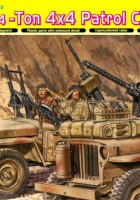
SAS 1/4-Ton 4x4 Patrol Car - DML 6745

Dragon Model

Ref 6745
digitare1/35 Militare della seconda guerra mondiale
Scala1/35
Argomento

SAS 1/4-Ton 4×4 Patrol Car

Un modello del marchio Modello drago il kit : Pattuglia SAS 1/4 Ton 4×4 – DML 6745

Authentic Patrol Car w/excellent rendering detail Realistic Vickers K machine guns/superb details Condenser and modified front grille accurately replicated Well-defined engine grille Realistic produced .50 cal and Vickers ‘K’ MGs w/photo-etched parts Detailed dashboard and driver’s compartment Complex engine represented by multiple parts Well-detailed seats w/realistic cloth pattern Compartment sides rendered w/rivets and fine details Slide-molded upper and lower body tubs Finely detailed steering mechanism and suspension system Highly detailed chassis Detachable jerrycans w/photo-etched straps Photo-etched sand channels on rear of the Patrol Car Well-detailed wheels produced w/authentic tire tread pattern 2 realistic 1/35 scale figures

Al kit in plastica in scala 1/35 di un camion Desert Raider 4×4 si aggiunge questo secondo kit con una diversa configurazione delle armi! Il famoso Special Air Service (SAS) dell'esercito britannico fu fondato nel luglio 1941 da David Stirling. Era una forza di commando progettata per operare in profondità dietro le linee nemiche, cosa che fece con molto successo. In Nord Africa sono stati utilizzati veicoli appositamente adattati, tra cui il famoso camion da 4×4 1/4 tonnellate, anche se pesantemente modificato per il suo ruolo dietro le linee. Il veicolo iniziò ad apparire nel luglio 1942. Erano generalmente smontati per risparmiare peso e, per le operazioni in climi caldi, la griglia veniva rimossa e montato un condensatore ad acqua. Armi come le mitragliatrici Lewis e Vickers K erano montate per l'uso contro bersagli terrestri o aerei.

fonte: Drago

Continua a leggere

Visualizzazioni : 1284

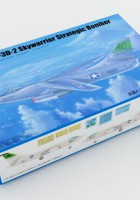
A-3D-2 Skywarrior Bombardiere Strategico - Trombettista 02868

Trumpeter

Ref 02868
digitareKit modello
Scala1/48
Argomento

A-3D-2 Skywarrior Strategic Bomber

Un modello del marchio Trumpeter il kit: A-3D-2 Skywarrior Strategic Bomber – Trumpeter 02868.

The kit consists of over 370 parts : – Detailed fuselage w/accurate design – Canopy made from clear parts – Wing can be folded – Finely detailed cockpit,gear cabin, – crew seats with photo-etched seat belts and harnesses.

The Douglas A-3“Skywarrior”was a strategic nuclear bomber developed for the US Navy. The aircraft had a largely conventional semi-monocoque fuselage, with two J57 turbojet engines in underwing nacelles, A-3’s wings can be folded for storage below deck, radar-controlled tail turret and a crew of three. The A-3 Skywarrior project started in 1947,The prototype XA3D-1 first flew on 28 October 1952, entered service with the Navy Heavy Attack Squadron One in 1956.Production ended in 1961. Douglas total built 282 Skywarriors.

Source: Trumpeter

Continua a leggere

Views : 1563

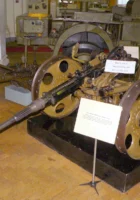
20mm Oerlikon

Cannone antiaereo da 20 mm "Oerlikon"

PaeseURSS
digitareCannone antiaereo
Argomento

Album di 121 Foto walk-around di una pistola 20mm Oerlikon

Galleria fotografica di un cannone antiaereo tedesco da 20 mm "Oerlikon". Le Oerlikon 20 mm cannon is a series of autocannons, based on an original design by Reinhold Becker of Germany, very early in World War I, and widely produced by Oerlikon Contraves and others. Various models of Oerlikon cannon were used during World War II, and they are still in use today. This model is a German cannon captured in 1944.
fonte: Wikipedia
Continua a leggere

Views : 5860

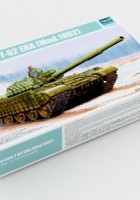
Russo T-62 ERA (Mod.1962) - Trombettista 01555

Trumpeter

Ref 01555
digitareKit modello
Scala1/35
Argomento

Russian T-62 ERA (Mod.1962)

Un modello del marchio Trumpeter il kit: Russian T-62 ERA (Mod.1962) – Trumpeter 01555.

The kit consists of over 680 parts : -the kit w/refined detail -multi-slide moulded lower hull & turret -217 individual tracks links -photo-etched parts included

The T-62 originally was conceived as a companion weapon to the T-55.Being Essentially a T55 up gunned with the2A20 115mm cannon. Both the T-55 and the T-62 Used the same wheels, track, engine, transmission, hatches and other fittings. The primary differences between the two vehicles were the T-62’s lengthened hull and new turret design. The new UT-5 can-non could fire its BR-5 APFSDS steel round through approximately 300mm of armor at a range of 1000 meters. This was adequate to deal with the then perceived threat of such NATO tanks as the American M-48 and later models of the British Centurion. The T-62 was meant to add long range firing capability to Soviet tank regiments being placed alongside T-55s, but in the later years of its deployment it fulfilled much the same role as the T-55. Despite being introduced in 1960, the improved performance of its successors, the T-72, the T-62 still sees service today in many of the world’s army the Arab nations being the largest consumers outside the Warsaw pact. Egypt, Iraq, and Syria have been notable users of the T-62, Israel has acquired a quantity of T-62s in clashes with its neighbors and has rebuilt them to IDF standards.

Source: Trumpeter

Continua a leggere

Visualizzazioni : 2001

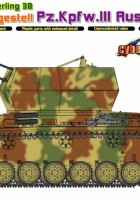
2cm Flakvierling 38 auf Fahrgestell Pz.Kpfw.III Ausf.M - Cyber-Hobby 6778

Cyber-Hobby

Ref 6778
digitareKit modello
Scala1/35
Argomento

2cm Flakvierling 38 su telaio Pz.Kpfw.III Ausf.M

Un modello del marchio Cyber-Hobby il kit : 2cm Flakvierling 38 auf Fahrgestell Pz.Kpfw.III Ausf.M – Cyber-Hobby 6778.

fonte: Cybber-Hobby

Newly designed 2cm Flakvering 38 auf Fahrgestell Pz.Kpfw.III Ausf.M / Spare gun barrel box for Pz.Kpfw.III Ausf.M Hatches on engine deck can be assembled open/closed / Turret ring is accurately produced Armor plates accurately produced / 2-directional side-molded turret for Pz.Kpfw.III Ausf M with realistic weld seams Scale-thickness fighting-compartment armor has extra thin top edge / Cannon can freely posed at different angles Gun-sight cover can be assembled open/closed / Two types of exhaust pipe included as options Two types of muffler mount provided as options / Water-resistant muffler w/realistic detail 2cm Flakvering 38 cannon w/accurate detail / Gun cradle offers great detail definition Gun sight and hand wheels w/ well-defined detail / Slide-molded one-piece gun barrel w/hollow muzzle Spent-shell cage made from photo-etched part / Slide-molded engine deck for Pz.Kpfw.III.Ausf.M Turret side hooks especially designed w/undercut detail / Injection-molded tow cables for engine deck Slide-molded torsions bar included / Access panel w/great design Delicate brake-cooling inlets produced for frontal plate / One-piece slide-molded lower hull is superbly detailed Lower-hull sides come w/full detail / Finely detailed hull-bottom weld seams Cooling-air intake cover included / Photo-etched air intake grills optionally assembled Fenders w/pattern details on both top and bottom surfaces / Jack reproduced in multiple parts Injection-molded on-vehicle tools provided w/clasps / Idler wheels w/photo-etched parts Detailed track tension adjuster / Final-drive housing covers are separate parts for maximum detail Accurate sprocked wheels / Road wheels w/accurate details Toolbox w/padlock produced by slide mold / Slide-molded hydraulic shock absorbers extremely well detailed Detailed suspension swing arms / Air intake covers w/mounts realistically reproduced Newly produced 40 cm DS tracks

Continua a leggere

Punti di vista: 1466

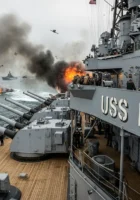
USS Iowa war

USS Iowa

PaeseUsa
digitarecorazzata
ArgomentoAlbum di 308 foto walk-around della corazzata USS Iowa

USS Iowa (BB-61) era la nave principale della sua classe di corazzate e la quarta della Marina degli Stati Uniti ad essere nominata in onore del 29 ° stato. A causa della cancellazione delle corazzate classe Montana, la Iowa è l'ultima nave principale di qualsiasi classe di navi da guerra degli Stati Uniti ed è stata l'unica nave della sua classe ad aver prestato servizio nell'Oceano Atlantico durante la seconda guerra mondiale.

fonte: Wikipedia

Continua a leggere

Visualizzazioni : 8979

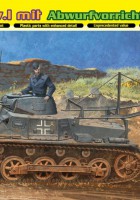
Pz.Kpfw.I mit Abwurfvorrichtung - DML 6480

Dragon Models

Ref 6480
digitare1/35 Militare della seconda guerra mondiale
Scala1/35
Argomento

Pz.Kpfw.I con dispositivo di espulsione

Un modello del marchio Modelli di Dragon il kit : Pz.Kpfw.I mit Abwurfvorrichtung – DML 6480

Newly designed Pz.Kpfw.I mit Abwurfvorrichtung / Intricate spring molded on the bottom of Abwurfvorrichtung New Abwurfvorrichtung represented / Cover of Abwurfvorrichtung can be assembled open/closed Upper hull w/authentic / Idler wheels w/accurate detail Road wheels w/photo-etched rings / Suspension system realistically represented Side fenders w/detailed tread pattern / Lower hull formed from multiple parts for greater detail Accurately modeled glacis plate w/removable transmission inspection cover and accurate bolt detail Fighting-compartment access hatch can be assembled open/closed / Turret roof hatch can be assembled open/closed Gun assembly is movable / Multi-directional slide-molded turret w/accurate bolt detail Suspension w/coil spring in fine detail / Air-intake grill reproduced like the real one Engine deck exquisitely detailed / Engine hatches can be assembled open/closed Driver’s vision port cover can be assembled open/closed / Turret vision port cover can be assembled open/closed On-vehicle tools w/molded-on clasps / Magic Tracks w/accurate detail

Quando la Germania tentò di riarmarsi negli anni '30 in vista della seconda guerra mondiale, la leadership militare fece molto affidamento sul Pz.Kpfw.I. Furono costruiti circa 1.493 esemplari di tutti i tipi e questi carri armati leggeri servirono nelle prime campagne, anche se avrebbero dovuto essere solo piattaforme di addestramento. La produzione di massa dell'Ausf.A iniziò nel 1934, mentre l'Ausf.B migliorato con un motore diverso apparve nell'agosto 1935. L'Ausf.B era allungato e aveva cinque ruote stradali per lato. Il Panzer I era scarsamente corazzato con solo 13 mm di acciaio nel punto più spesso. Operava con un equipaggio di due persone: il comandante/artigliere e l'autista. Una versione insolita di questo piccolo carro armato era l'Abwurfvorrichtung, letteralmente uno strato di cariche da demolizione. Questi carri armati modificati furono tipicamente trovati nel panzer-pionier-bataillon delle divisioni panzer nel 1940, in tempo per la campagna in Europa occidentale. La conversione comprendeva un dispositivo montato sul ponte posteriore che poteva sganciare una carica esplosiva di 50 kg su o contro una fortificazione campale prima di essere fatta esplodere.

fonte: Drago

Continua a leggere

Punti di vista: 1331

Italiano Due Uomini Siluro

'Siluro umano' italiano

PaeseItalia
digitaretorpedine
Argomento

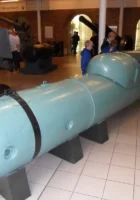
Album di 33 foto a piedi di un 'Siluro umano' italiano

Due uomini progettati per penetrare i porti protetti e atack trasporto nemico.

Il Siluro a lenta Corsa (Slc) or slow course torpedo, also know as the Maiale or Pig, was designed by the Italians in the late 1930s using the knowledge they had gained while pionnering midget submarines and special assault craft during the First World War. It was powered by an electric motor and had a charge-head containing 550lb (250Kg) on TNT. The early SLC served as a model for the British ‘Chariot’. Between 1941 and the Italian armistice of 1943 ‘human torpedos’ scored a number of successes against Aliied shipping. Their most famous attack came in 1941 in Alexandria harbour when three of them seriously damaged the British battleships Valiant and Queen Elizabeth. This is on of the later streamlined craft which fell into British hands after the occupation of Genoa in April 1945.

fonte: Wikipedia

Continua a leggere

Views : 3417