Fokker S14 Machtrainer

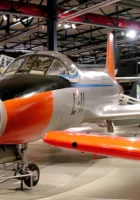
Fokker S.14 Machtrainer

OrszágHollandia
SzerepetJet trainer
Első repülés19 May 1951
Beépített21

A Fokker S.14 Machtrainer is a Dutch two-seater military training jet aircraft designed and manufactured by Fokker for the Royal Netherlands Air Force. Development started in the late 1940s. It was one of the first jet fighter training aircraft in the world, making its first flight on 19 May 1951 and entering service in 1955.

Forrás: Fokker S.14 Machtrainer on Wikipedia

Olvasd tovább

Vélemények : 1110

Northrop JB-1 denevér

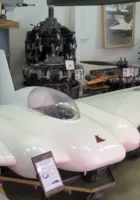
Northrop JB-1 Bat

OrszágUsa
SzerepetPrototype jet-powered flying wing
Első repülésAugust 27, 1943
BeépítettIsmeretlen

A Northrop JB-1 “Bat” was a United States surface-to-surface cruise missile that was a prototype jet-powered flying wing. The United States Army Air Forces MX-543 program was initiated in September 1942 to use license-built versions of Frank Whittle’s jet engine (General Electric J31). The Northrop Corporation was contracted in late 1943, and only 10 JB-1 airframes were built. A manned version was towed for the 1st flight on “August 27, 1943”, from Rogers Dry Lake and a glider version was launched from a rocket-propelled sled and crashed in December 1944. An unmanned JB-1 powered by an improvised General Electric B-1 turbojet with a wing span of 28 feet 4 inches (8.64 m) made its 1st flight from Eglin Field’s Santa Rosa Island, Florida, on December 7, 1944, and crashed 400 yards from the rail launcher.

Forrás: Northrop JB-1 Bat on Wikipedia

Olvasd tovább

Megtekintették : 1360

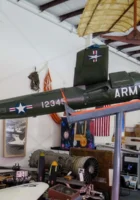
Northrop MQM-57B Falconer

Radioplane BTT

OrszágUsa
SzerepetCél drón
Első repülésIsmeretlen
Beépített7300+

A Radioplane BTT, known as RP-71 by the company, as WS-426/2 by the United States Navy, and as WS-462/2 by the US Air Force, is a family of target drones produced by the Radioplane Company (later a division of Northrop).

MQM-57 Falconer: A variant of the BTT designated the RP-71, also known as the SD-1 Observer and later redesignated MQM-57 Falconer, was built for battlefield reconnaissance, with first flight in 1955. The Falconer was similar in appearance to the Shelduck, but had a slightly longer and stockier fuselage. It had an autopilot system with radio-control backup, and could carry cameras, as well as illumination flares for night reconnaissance. Equipment was loaded through a hump in the back between the wings. Although it only had an endurance of a little more than a half-hour, making it of limited use, about 1,500 Falconers were built and the type was used internationally with several different military forces, remaining in service into the 1970s. Over 73,000 BTT targets were built in all, and the type was used by at least 18 nations. Some may still be lingering in service.

Forrás: Radioplane BTT a Wikipédián
Olvasd tovább

Megtekintették : 840

Intelligens bálna tengeralattjáró

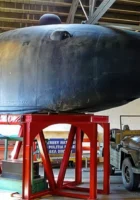
Intelligent Whale

OrszágUsa
SzerepetTengeralattjáró
Megállapított1863
Beépített1

Intelligens bálna, an experimental hand-cranked submarine, was built on the design of Scovel Sturgis Merriam in 1863 by Augustus Price and Cornelius Scranton Bushnell. In 1864 the American Submarine Company was formed, taking over the interests of Bushnell and Price and there followed years of litigation over the ownership of the craft. When title was established by a court the submarine was sold on 29 October 1869 through a contract made by owner Oliver Halstead and Secretary of the Navy George M. Robeson to the United States Navy Department, with most of the price to be paid after successful trials. In September 1872 the first trial was held and was unsuccessful, whereupon the Department refused further payments and abandoned the project.

Forrás: Intelligens bálna a Wikipédián

Olvasd tovább

Nézettség : 1059

Aichi D3A Val replika

Aichi D3A

OrszágJapán
SzerepetHordozó alapú merülőbombázó
Első repülés1938. január
Beépített1495

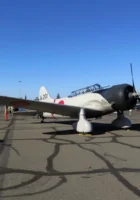
A Aichi D3A Type 99 Carrier Bomber (Allied reporting name “Val”) is a World War II carrier-borne dive bomber. It was the primary dive bomber of the Imperial Japanese Navy (IJN) and was involved in almost all IJN actions, including the attack on Pearl Harbor. The Aichi D3A was the first Japanese aircraft to bomb American targets in the war, commencing with Pearl Harbor and U.S. bases in the Philippines, such as Clark Air Force Base. Vals sank more Allied warships than any other Axis aircraf.

Forrás: Aichi D3A a Wikipédián

Olvasd tovább

Megtekintették : 2571

Convair YF-2Y tengeri dárda

Convair F2Y Sea Dart

OrszágUsa
SzerepetHidroplán vadászgép
Első repülés14 January 1953
Beépített5

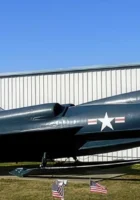
A Convair F2Y tengeri dárda was an American seaplane fighter aircraft that rode on twin hydro-skis during takeoff and landing. It flew only as a prototype, and never entered mass production. It is the only seaplane to have exceeded the speed of sound. It was created in the 1950s, to overcome the problems with supersonic planes taking off and landing on aircraft carriers. The program was canceled after a series of unsatisfactory results and a tragic accident on 4 November 1954, when test pilot Charles E. Richbourg was killed when the Sea Dart he was piloting disintegrated in midair. The four surviving planes were retired in 1957, but some were kept in reserve until 1962.

Forrás: Convair F2Y tengeri dart a Wikipédián

Olvasd tovább

Megtekintések : 2187

Fokker D. XXI

Fokker D. XXI

Országholland
SzerepetHarcos
Első repülés1936. március 27.
Beépített146

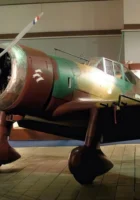
A Fokker D.XXI fighter was designed in 1935 by Dutch aircraft manufacturer Fokker in response to requirements laid out by the Royal Netherlands East Indies Army Air Force (Militaire Luchtvaart van het Koninklijk Nederlands-Indisch Leger, ML-KNIL). The D.XXI was designed as an inexpensive, rugged, and compact fighter aircraft that would possess respectable performance for its era. Entering operational use in the early years of the Second World War, it provided yeoman service for both the Luchtvaartafdeling (Dutch Army Aviation Group) and the Finnish Air Force. Additionally, a few examples were constructed by the El Carmolí factory before it fell into rebel hands during the Spanish Civil War. Following the invasion and occupation of the Netherlands in May 1940, several captured Dutch D.XXIs were subsequently placed into service with the Luftwaffe.

Forrás: Fokker D. XXI a Wikipédiában

Olvasd tovább

Views : 3394

USS Albacore

USS Albacore

OrszágUsa
SzerepetResearch submarine
Indított1 August 1953
Leszerelt9 December 1972

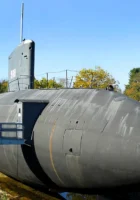
USS Albacore (AGSS-569) was a unique research submarine that pioneered the American version of the teardrop hull form (sometimes referred to as an “Albacore hull”) of modern submarines. The revolutionary design was derived from extensive hydrodynamic and wind tunnel testing, with an emphasis on underwater speed and maneuverability. She was the third ship of the United States Navy to be named for the albacore. Her keel was laid down on 15 March 1952 by the Portsmouth Naval Shipyard of Kittery, Maine. She was launched on 1 August 1953, sponsored by Mrs. J. E. Jowers, the widow of Chief Motor Machinist’s Mate Arthur L. Stanton, lost with the second Albacore (SS-218), and commissioned on 6 December 1953 with Lieutenant Commander Kenneth C. Gummerson in command

Forrás: USS Albacore on Wikipedia

Olvasd tovább

Megtekintés : 2022

Vásárosnamény Mk.III

Fairchild 24

OrszágUsa
SzerepetSTOL bokor sík
Első repülés1932
Beépített2232

A Fairchild Model 24, also called the Fairchild Model 24 Argus/UC-61 Forwarder or Fairchild Model 24 Argus, is a four-seat, single-engine monoplane light transport aircraft designed by the Fairchild Aviation Corporation in the 1930s. It was adopted by the United States Army Air Corps as UC-61 and also by the Royal Air Force. The Model 24 was itself a development of previous Fairchild models and became a successful civil and military utility aircraft.

Forrás: Fairchild 24 on Wikipedia

Olvasd tovább

Megtekintették : 1312