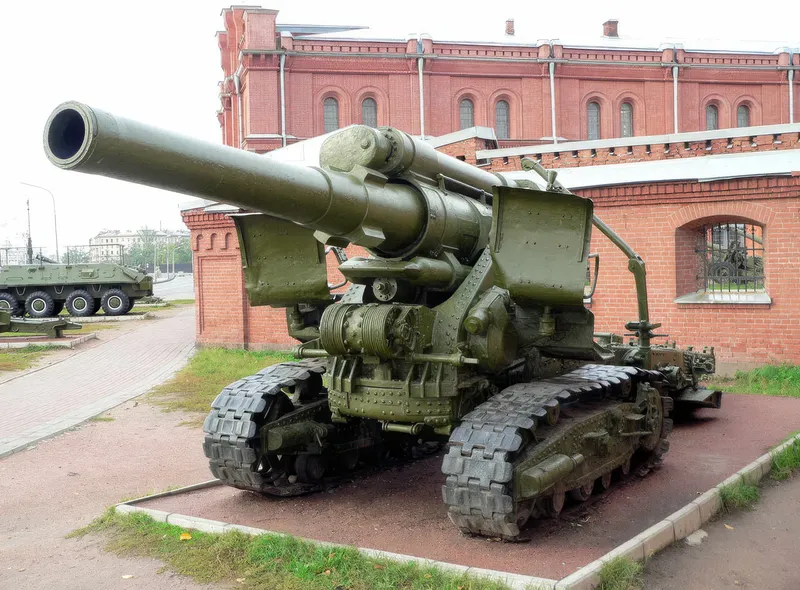
M1931 B-4 de 203 mm | |
|---|---|
| Pays | URSS (URSS) |
| Type | Obusier lourd |
| Produit | Années 1932-1940 |
| Construit | 871 |
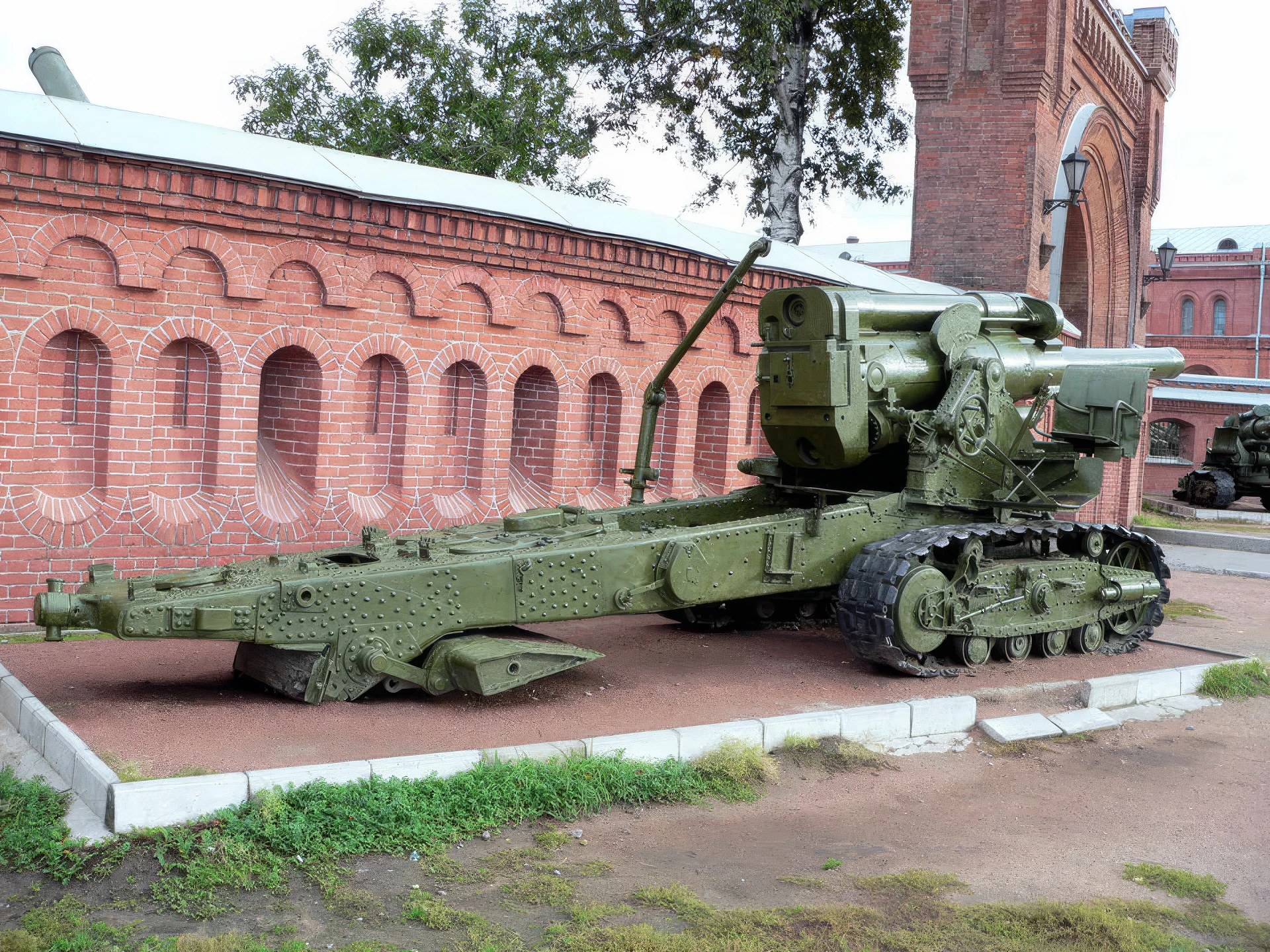
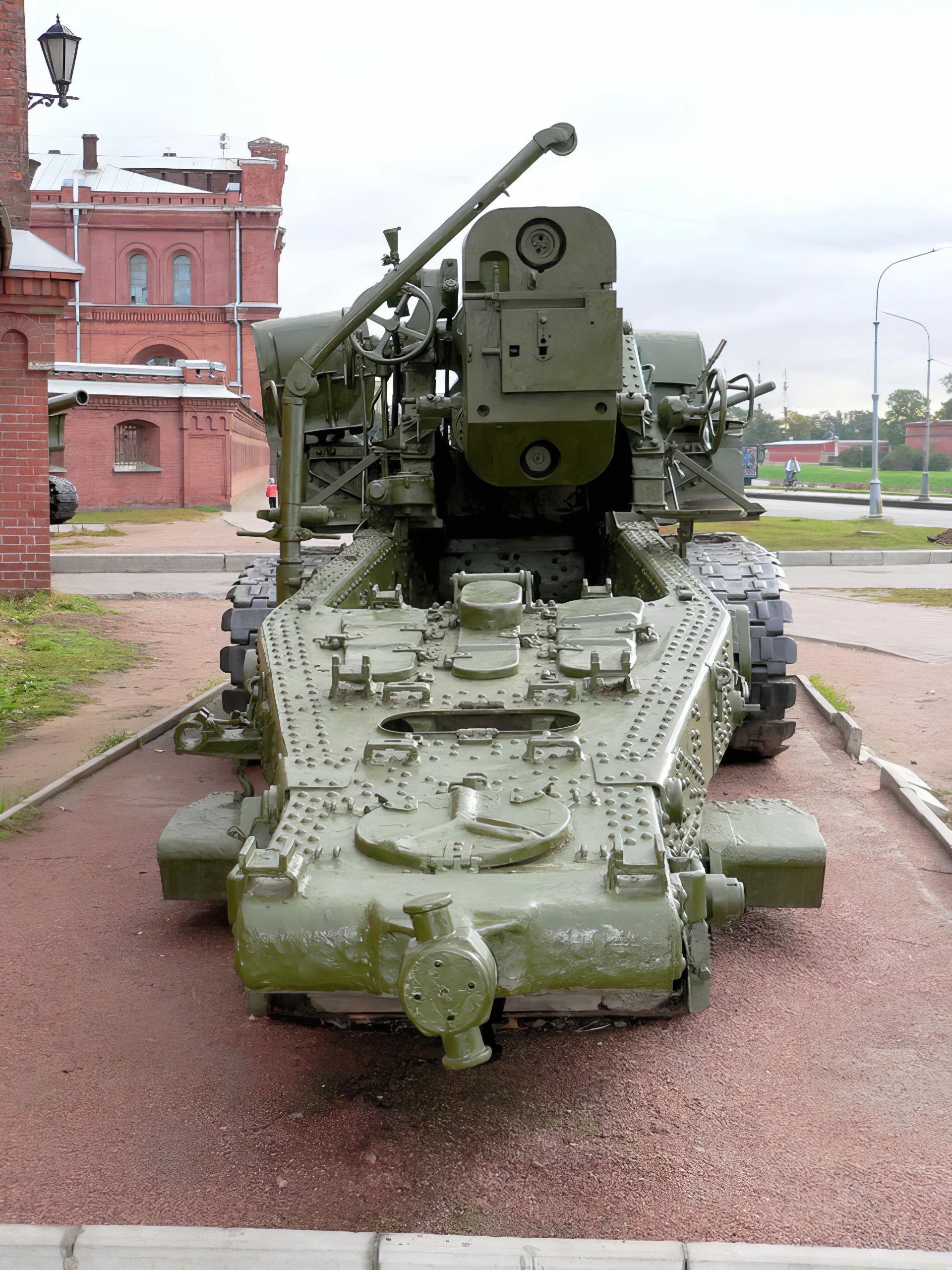
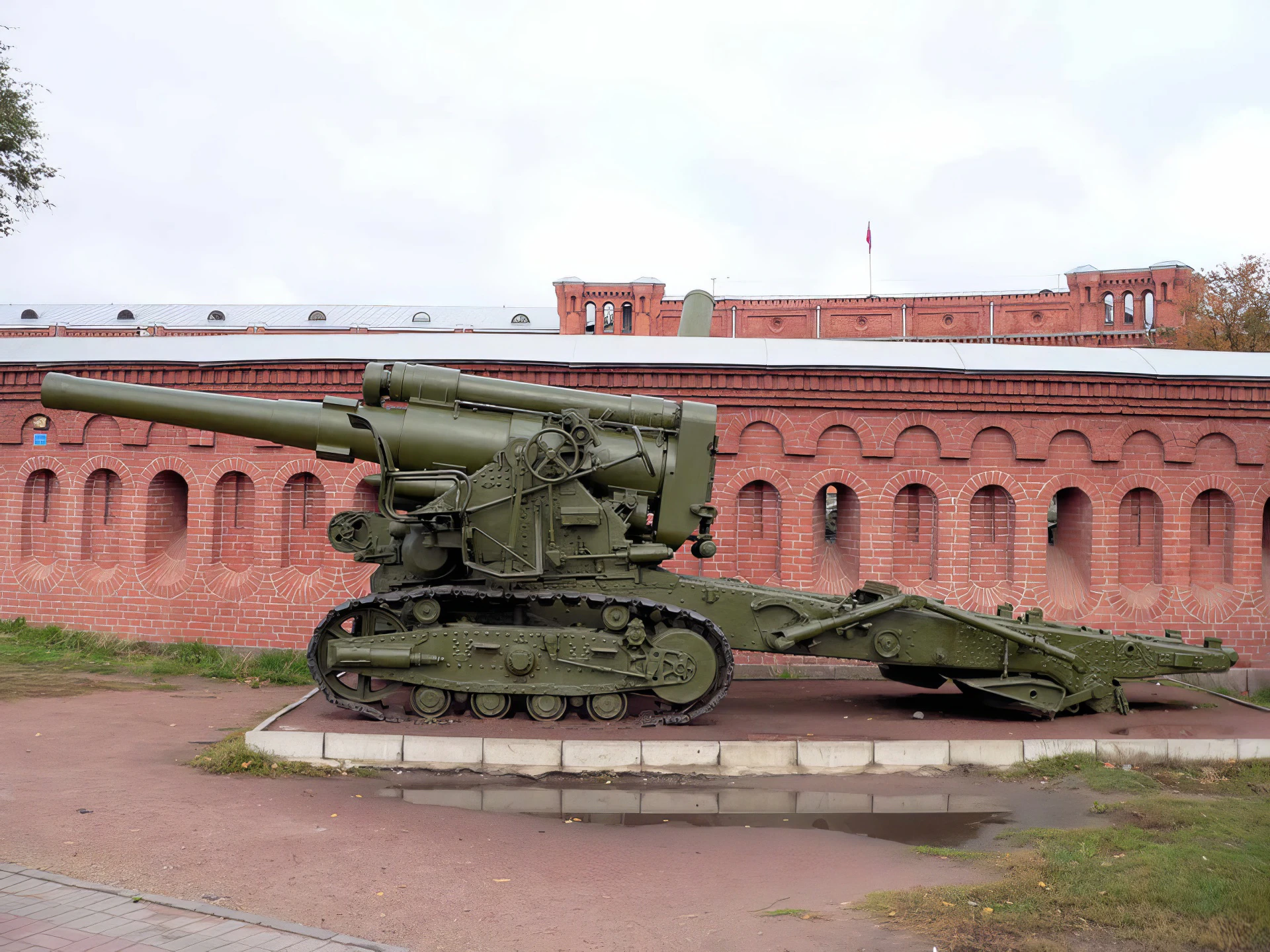
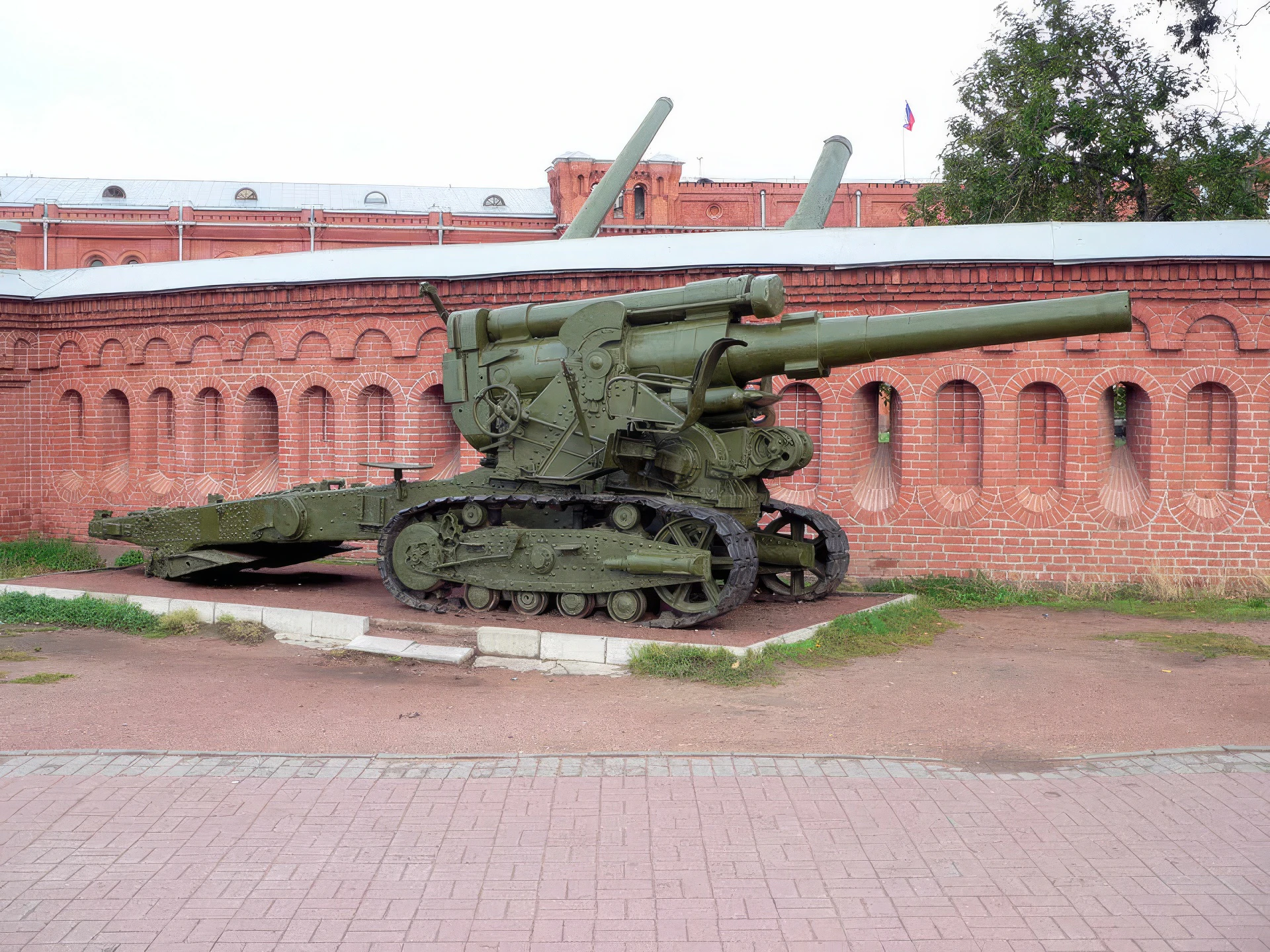
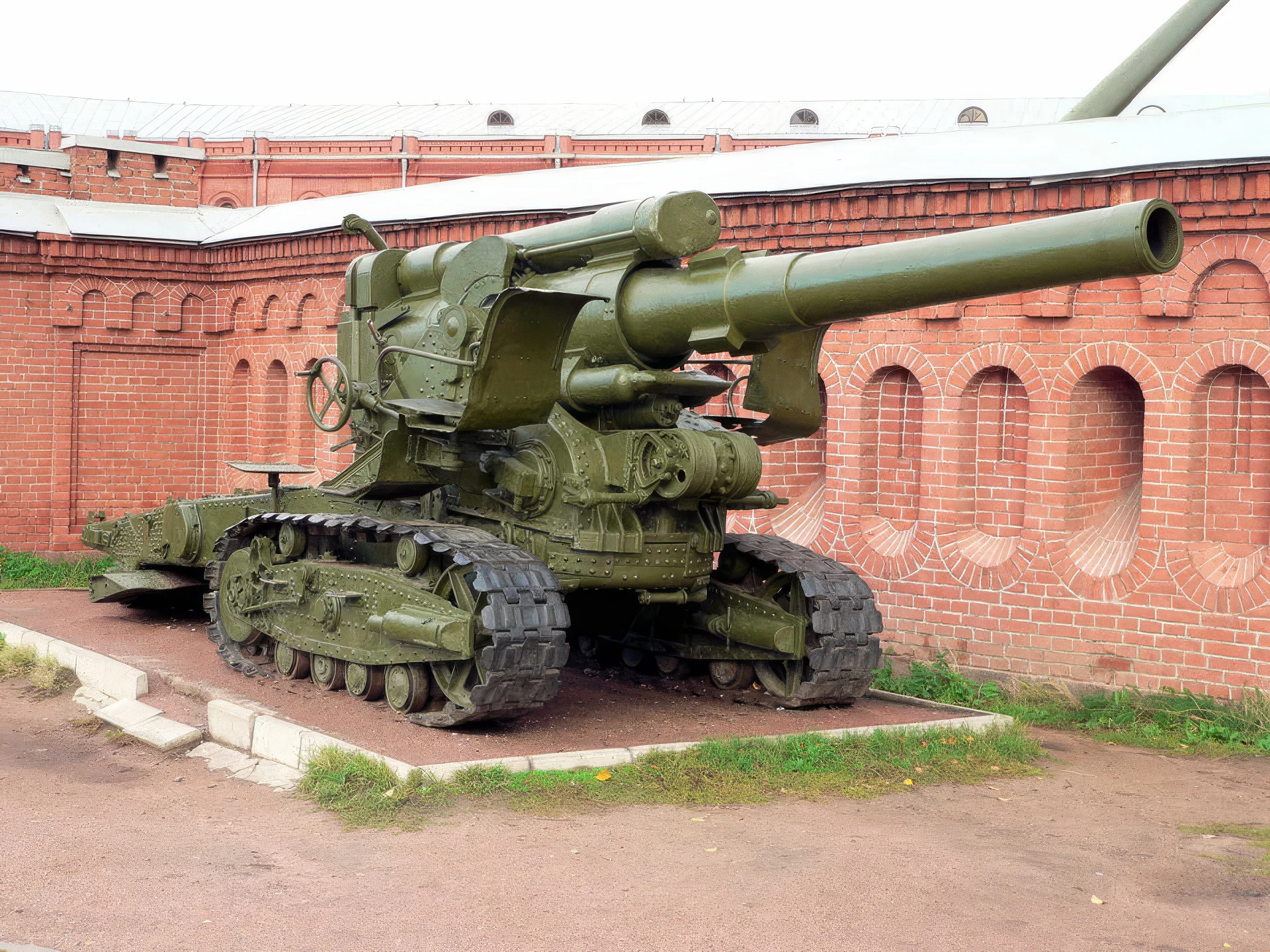
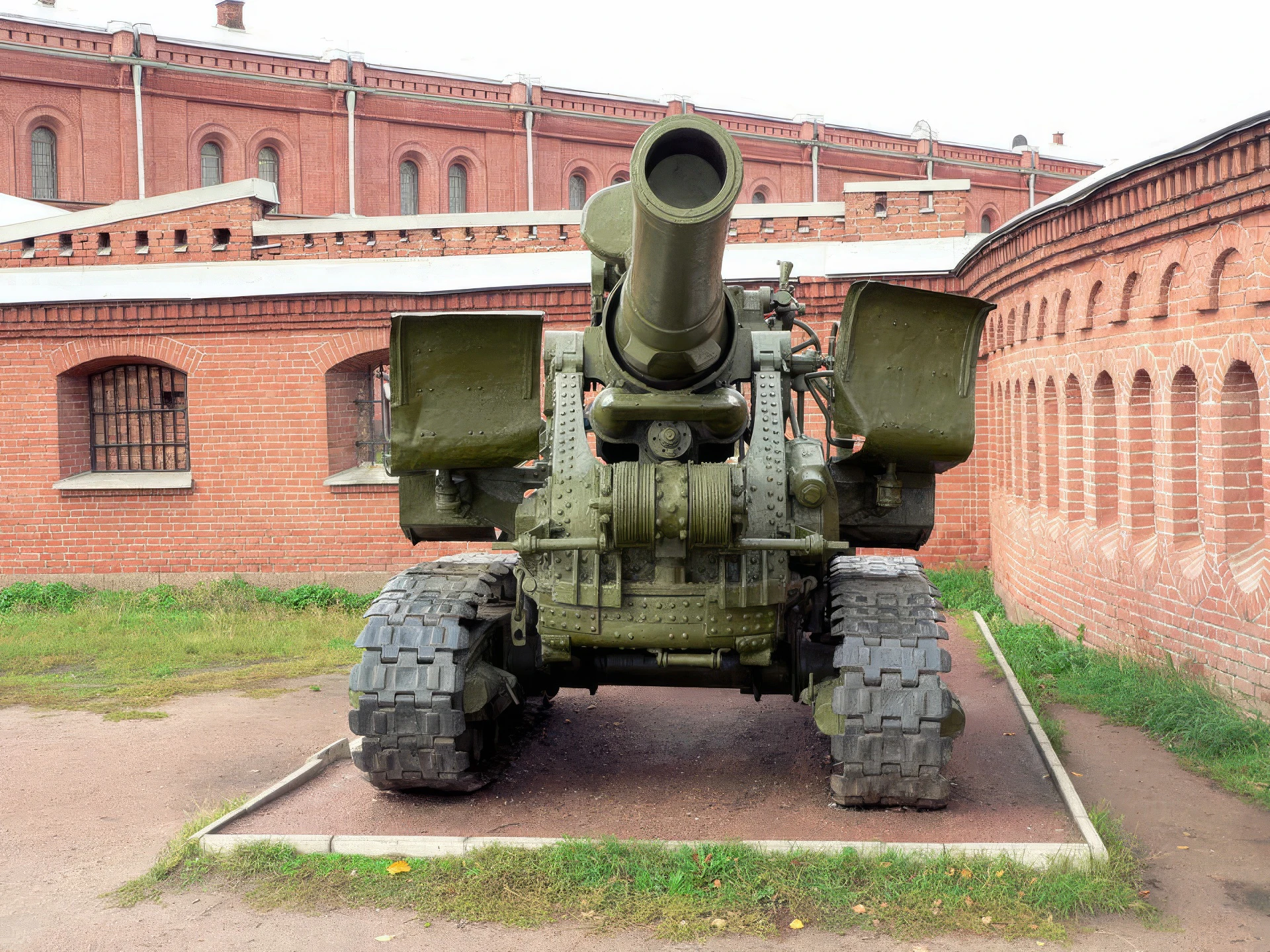
L’obusier M1931 de 203 mm était un obusier lourd soviétique de 203 mm. Pendant la Seconde Guerre mondiale, il était sous le commandement de la Stavka’réserve stratégique. Il a été surnommé « Staline’masse » par les soldats allemands. Ces canons ont été utilisés avec succès contre les lourdes fortifications allemandes et dans les combats urbains pour écraser les bâtiments protégés et les bunkers. Cette arme a été utilisée jusqu’à la fin de la guerre lors de la bataille de Berlin où l’Armée rouge amenait ces canons à bout portant pour détruire les fortifications allemandes avec leurs lourds obus de 203 mm. Au printemps 1944, un châssis de réservoir KV-1s a été utilisé pour créer une variante automotrice, le S-51. Le recul lourd de l’explosion du museau a jeté l’équipage hors de leurs sièges et endommagé la transmission, et il a donc été annulé.
| Obusier 203mm M1931 B4 | |
|---|---|
| Photographe | Inconnu |
| Localisation | Inconnu |
| Photos | 200 |
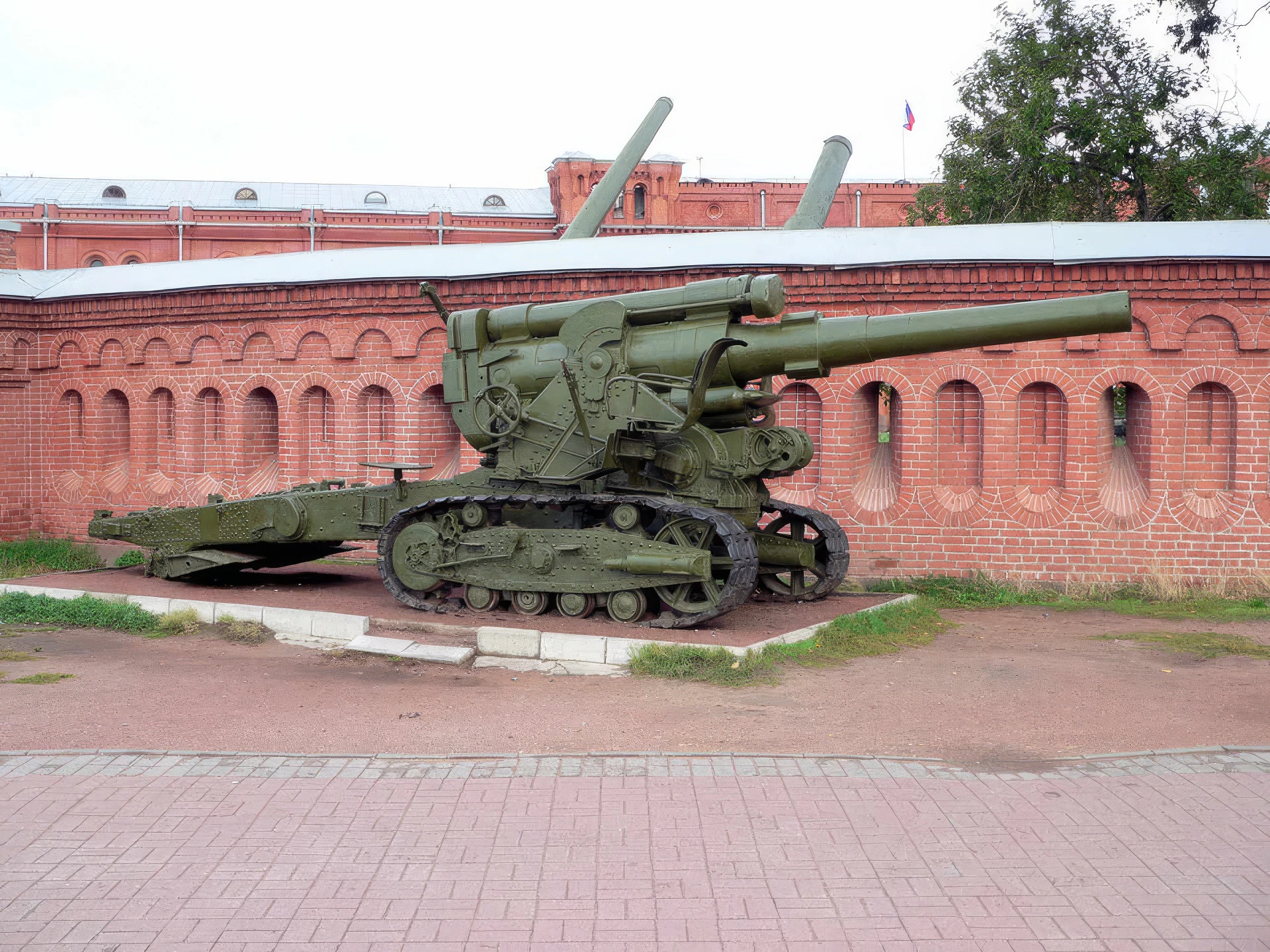
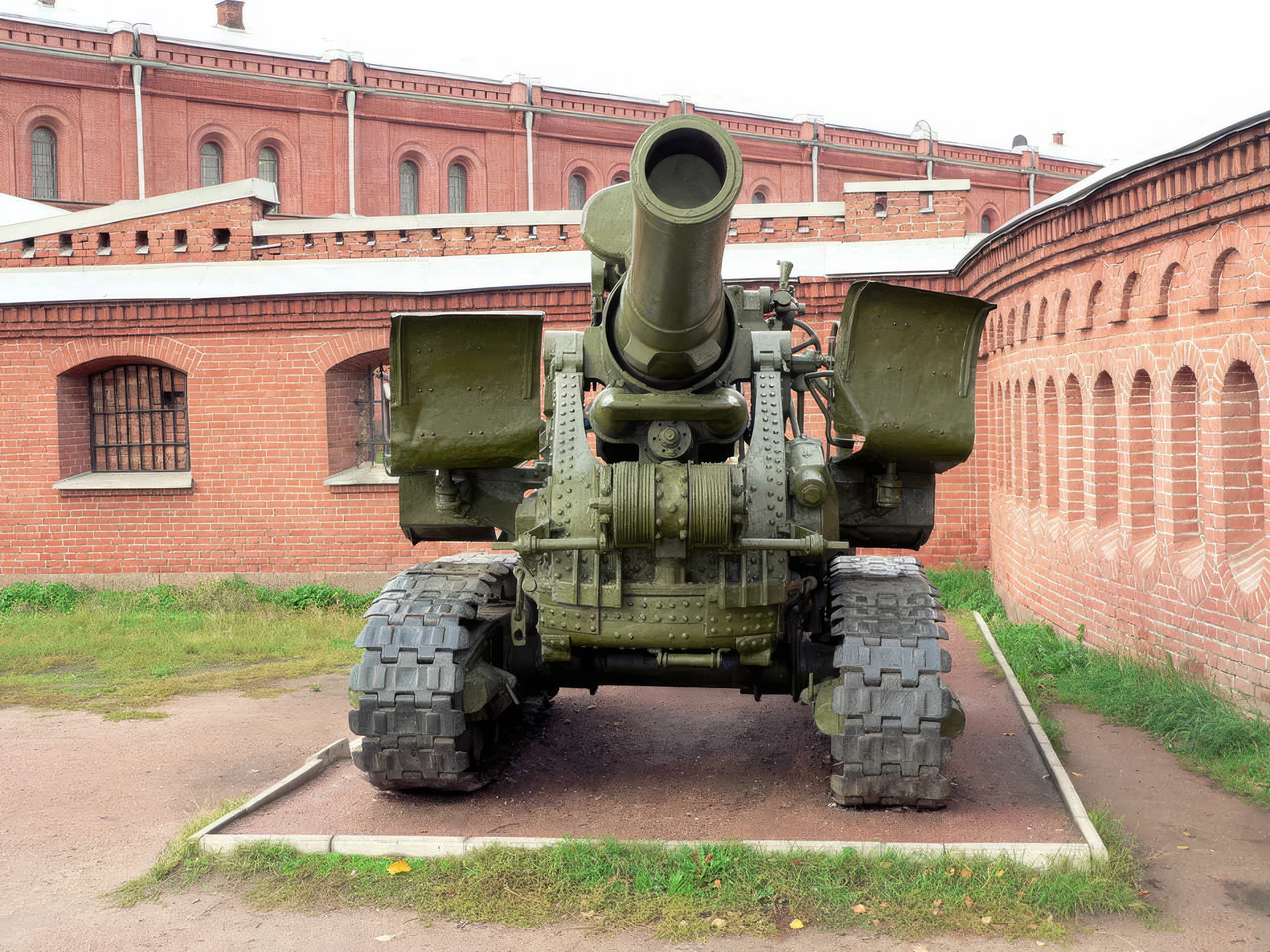
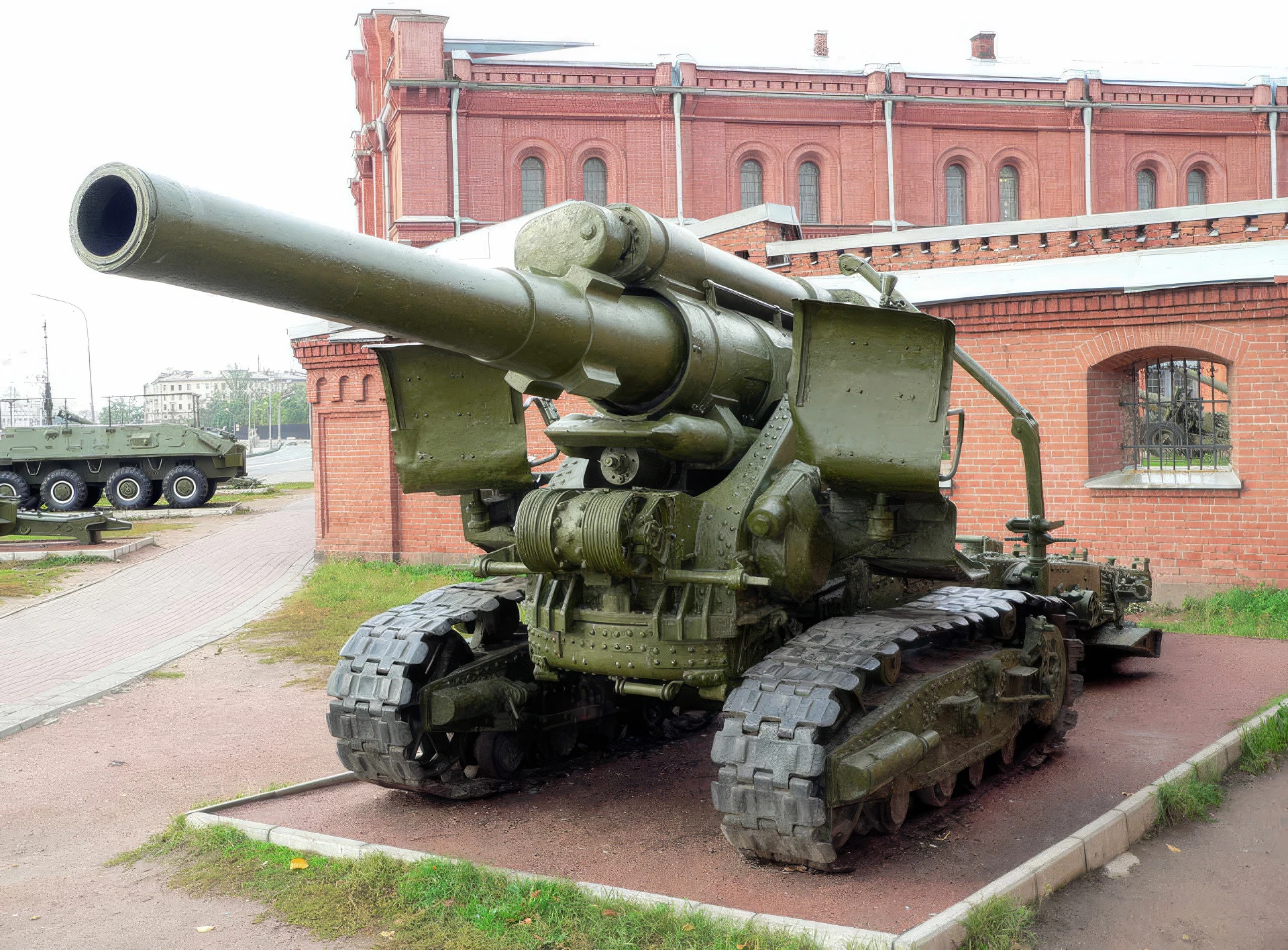

| 203 mm Obusier Mod. en 1931 (B-4) | |
|---|---|
| Photographe | Inconnu |
| Localisation | Inconnu |
| Photos | 21 |
Voir aussi :


General Overview
The B-4 was a Soviet high-power heavy howitzer used to destroy heavily fortified positions and bunkers during World War II.
| Official Name | 203 mm howitzer M1931 (B-4) |
|---|---|
| Place of Origin | Union soviétique |
| Fabricant | Barrikady Plant |
| Production Years | 1932–1945 |
| Primary Role | Siege Artillery / Crushing Fortifications |
| Surnom | Staline’s Sledgehammer (coined by German soldiers) |
Spécifications techniques
| Calibre | 203 mm (8 inch) |
|---|---|
| Mass (Combat) | 17,700 kg (39,022 lbs) |
| Mass (Travel) | 19,000 kg (41,888 lbs) |
| Shell Weight (HE) | 100 kg (220 lbs) |
| Maximum Firing Range | 18 km (11 mi) |
| Rate of Fire | Approx. 1 round every 4 minutes (Slow due to shell weight) |
| Carriage Type | Tracked Carriage (Unique feature for stability) |
| Crew | 15 |
| Towing Vehicle | Voroshilovets or Komintern Artillery Tractor |
Operational Role in WWII
The B-4 was held under the direct command of the Stavka Strategic Reserve and was deployed only where its massive firepower was required.
- Winter War: Known as the « Karelia Sculptor » for its effectiveness against Finnish pillboxes on the Mannerheim Line.
- Urban Combat: Used for direct fire against German fortified buildings and bunkers, notably during the Battle of Berlin in 1945.
- Loading Challenge: Due to the heavy 100 kg projectile, a special hoisting crane was often used to assist in loading the breech.
Key Innovation: The unique tracked carriage allowed the gun to be fired directly from the ground without a separate firing platform, a significant innovation for heavy artillery of that era.
Vues : 12996
Vous pouvez voir aussi :
 Howitzer 149-19 – Photos & Video
 15 cm sFH 13 – Promenade
 Obusier M108 – Photos & Vidéos
 Obusier M119 – Photos & Vidéos
 Obice da 75/18 modello 35 – Photos & Vidéos
 Obusier britannique de 9,2 pouces – Photos et vidéo
 105mm leFH auf Hotchkiss 39H – Photos & Vidéo
 Obusier automoteur M55 – Photos et vidéo
 21cm Morser 18 Obusier - Walk Around
 Obusier de type 92 de 70 mm – WalkAround
Nouvelles photos