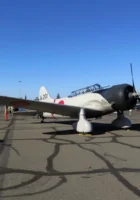
Aichi D3A Val Réplique

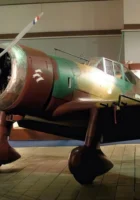
Aichi D3A

PaysJapon
RôleBombardier de plongée basé sur le transporteur
Premier volEn janvier 1938
Construit1495

Lla Aichi D3A Type 99 Carrier Bomber (Nom de rapport allié « Val ») is a World War II carrier-borne dive bomber. It was the primary dive bomber of the Imperial Japanese Navy (IJN) and was involved in almost all IJN actions, including the attack on Pearl Harbor. The Aichi D3A was the first Japanese aircraft to bomb American targets in the war, commencing with Pearl Harbor and U.S. bases in the Philippines, such as Clark Air Force Base. Vals sank more Allied warships than any other Axis aircraf.

Source: Aichi D3A sur Wikipedia

Lire l’article

Vues : 2532

Fléchettes de mer Convair YF-2Y

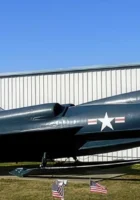
Convair F2Y Sea Dart

PaysUsa
RôleChasseur d’hydravion
Premier volLe 14 janvier 1953
Construit5

Lla Fléchettes de mer Convair F2Y was an American seaplane fighter aircraft that rode on twin hydro-skis during takeoff and landing. It flew only as a prototype, and never entered mass production. It is the only seaplane to have exceeded the speed of sound. It was created in the 1950s, to overcome the problems with supersonic planes taking off and landing on aircraft carriers. The program was canceled after a series of unsatisfactory results and a tragic accident on 4 November 1954, when test pilot Charles E. Richbourg was killed when the Sea Dart he was piloting disintegrated in midair. The four surviving planes were retired in 1957, but some were kept in reserve until 1962.

Source: Convair F2Y Sea Dart sur Wikipedia

Lire l’article

Vues : 2168

Fokker D. XXI

Fokker D. XXI

PaysNéerlandais
RôleCombattant
Premier vol27 mars 1936
Construit146

Lla Fokker D.XXI fighter was designed in 1935 by Dutch aircraft manufacturer Fokker in response to requirements laid out by the Royal Netherlands East Indies Army Air Force (Militaire Luchtvaart van het Koninklijk Nederlands-Indisch Leger, ML-KNIL). The D.XXI was designed as an inexpensive, rugged, and compact fighter aircraft that would possess respectable performance for its era. Entering operational use in the early years of the Second World War, it provided yeoman service for both the Luchtvaartafdeling (Dutch Army Aviation Group) and the Finnish Air Force. Additionally, a few examples were constructed by the El Carmolí factory before it fell into rebel hands during the Spanish Civil War. Following the invasion and occupation of the Netherlands in May 1940, several captured Dutch D.XXIs were subsequently placed into service with the Luftwaffe.

Source: Fokker D. XXI sur Wikipedia

Lire l’article

Vues : 3345

USS Albacore

USS Albacore

PaysUsa
RôleSous-marin de recherche
Lancé1er août 1953
Déclassés9 décembre 1972

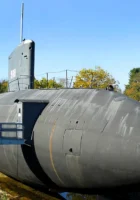
USS Albacore (AGSS-569) était un sous-marin de recherche unique qui a été le pionnier de la version américaine de la forme de coque en forme de goutte d’eau (parfois appelée « Coque albacore ») of modern submarines. The revolutionary design was derived from extensive hydrodynamic and wind tunnel testing, with an emphasis on underwater speed and maneuverability. She was the third ship of the United States Navy to be named for the albacore. Her keel was laid down on 15 March 1952 by the Portsmouth Naval Shipyard of Kittery, Maine. She was launched on 1 August 1953, sponsored by Mrs. J. E. Jowers, the widow of Chief Motor Machinist’s Mate Arthur L. Stanton, perdu avec le deuxième germon (SS-218), et commandé le 6 décembre 1953 avec le capitaine de corvette Kenneth C. Gummerson aux commandes

Source: USS Albacore sur Wikipédia

Lire l’article

Vues : 2000

Fairchild Argus Mk.III

Fairchild 24

PaysUsa
RôleAvion de brousse STOL
Premier vol1932
Construit2232

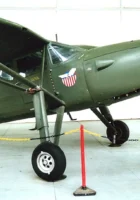
Lla Fairchild Modèle 24, également appelé Fairchild Model 24 Argus/UC-61 Forwarder ou Fairchild Model 24 Argus, est un avion de transport léger monoplan monoplan monomoteur à quatre places conçu par la Fairchild Aviation Corporation dans les années 1930. Il a été adopté par l’United States Army Air Corps sous le nom de UC-61 et également par la Royal Air Force. Le modèle 24 était lui-même un développement des modèles Fairchild précédents et est devenu un avion utilitaire civil et militaire à succès.

Source: Fairchild 24 sur Wikipedia

Lire l’article

Vues : 1285

USS Pampanito

USS Pampanito (SS-383)

PaysUsa
ClasseSous-marin diesel-électrique de classe Balao
Lancé12 juillet 1943

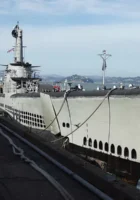
USS Pampanito (SS-383/AGSS-383), un sous-marin de classe Balao, était un navire de l’United States Navy, le troisième nommé d’après le poisson pompano. Il a effectué six patrouilles de guerre de 1944 à 1945 et a servi de navire-école de la Réserve navale de 1960 à 1971. Il est maintenant un monument historique national, préservé en tant que navire commémoratif et musée dans l’Association du parc national maritime de San Francisco située à Fisherman.’s Quai.

Source: USS Pampanito sur Wikipédia

Lire l’article

Vues : 1563

FFV J22

FFVS J 22

PaysSuède
ClasseCombattant
Premier volSeptembre 1942
Construit198

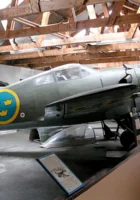
Lla FFVS J 22 is a Swedish single-engine fighter aircraft developed for the Swedish Air Force during World War II. At the onset of World War II, the Swedish Air Force (Flygvapnet) was equipped with largely obsolete Gloster Gladiator (J 8) biplane fighters. To augment this, Sweden ordered 120 Seversky P-35 (J 9) and 144 P-66 Vanguard (J 10) aircraft from the United States. However, on 18 June 1940 after the German occupation of Norway, the United States declared an embargo against exporting weapons to any nation other than Great Britain.

Source: FFVS J 22 sur Wikipédia

Lire l’article

Vues : 2434

de Havilland DH.60G Gipsy Moth

de Havilland DH.60 Moth

PaysRoyaume-uni
ClasseFormateur
Premier volLe 22 février 1925
ConstruitInconnu

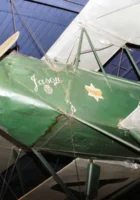
Lla de Havilland DH.60 Papillon de nuit is a 1920s British two-seat touring and training aircraft that was developed into a series of aircraft by the de Havilland Aircraft Company. The DH.60 was developed from the larger DH.51 biplane. The first flight of the Cirrus powered prototype DH.60 Moth (registration G-EBKT) was carried out by Geoffrey de Havilland at the works airfield at Stag Lane on 22 February 1925. The Moth was a two-seat biplane of wooden construction, it had a plywood covered fuselage and fabric covered surfaces, a standard tailplane with a single tailplane and fin. A useful feature of the design was its folding wings which allowed owners to hangar the aircraft in much smaller spaces. The then Secretary of State for Air Sir Samuel Hoare became interested in the aircraft and the Air Ministry subsidised five flying clubs and equipped them with Moths.

Source: de Havilland DH.60 Moth sur Wikipedia

Lire l’article

Vues : 1935

Camion de pompiers International Harvester Loadstar

International Harvester Loadstar Firetruck

PaysUsa
ClasseCamion à benne basculante 4×2
Production1962-1976
Construit940000+

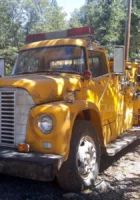
Lla Loadstar était un modèle conventionnel à capot court à usage moyen introduit en 1962. Lorsqu’il a été introduit, il avait un gril gris et « papillon » mais en 1971, un capot basculant d’une seule pièce est devenu la norme. La cabine, également utilisée sur la Fleetstar, avait été introduite sur la série A en 1957. Les modèles à cabine sur moteur étaient également disponibles jusqu’à ce qu’ils soient remplacés par le Cargostar en 1971. Le Loadstar a été utilisé pour la livraison locale, la construction, l’agriculture et comme semi-tracteur. Avec la traction intégrale, il était également utilisé pour les véhicules d’incendie, les chasse-neige et les travaux utilitaires. Les châssis de maître d’école ont été utilisés pour les carrosseries d’autobus scolaires des vendeurs. Les Conventionnels Loadstar ont été remplacés par la série S en 1977.

Source: International Harvester Loadstar Firetruck sur Wikipedia

Lire l’article

Vues : 1638

Camion de pompiers Dodge 1950

Dodge Power Wagon

PaysUsa
ClasseCamionnette pleine grandeur
Production1945–1980
ConstruitInconnu

Lla Dodge Power Wagon est un camion moyen à quatre roues motrices qui a été produit dans diverses séries de modèles de 1945 à 1981 par Dodge, puis comme plaque signalétique pour le Dodge Ram de 2005 à 2013, et, plus récemment '13-présent, comme un modèle individuel commercialisé par Ram Trucks. Il a été développé sous le nom de camion WDX, et jusqu’à environ 1960, il était connu en interne par son code d’ingénierie T137 - un nom encore utilisé pour la série originale par les passionnés.

Source: Dodge Power Wagon sur Wikipedia

Lire l’article

Vues : 1056