Dassault M.D.450 Ouragan

Dassault M.D.450 Ouragan

PaysFrance
TypeChasseur-bombardier
Premier volLe 28 février 1949
Construit118

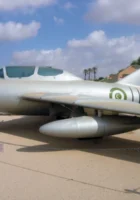
Galerie de photos d’un Dassault M.D.450 Ouragan, The Dassault M.D.450 Ouragan (French: Hurricane) was the first French-designed jet fighter-bomber to enter production, playing a key role in resurgence of the French aviation industry after World War II. The Ouragan was operated by France, India, Israel and El Salvador. While in Israeli service, it participated in both the Suez Crisis and the Six-Day War.

Source: Dassault M.D.450 Ouragan sur Wikipedia

Lire l’article

Vues : 5246

Sturmtiger ( Sturmtiger )

Sturmtiger ( Sturmtiger )

PaysAllemagne nazie
TypePistolet d’assaut lourd
PhotographiesUlrich Wrede, Jan Peters
DescriptionAlbum de 19 photos walk-around d’un « Sturmtiger »

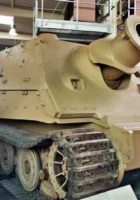
Galerie de photos d’un Sturmtiger ( Sturmtiger ), Sturmtiger (German: « Tigre d’assaut ») était un canon d’assaut allemand de la Seconde Guerre mondiale construit sur le châssis Tiger I et armé d’un grand lance-roquettes. La désignation allemande officielle était Sturmmörserwagen 606/4 mit 38 cm RW 61. Sa tâche principale était de fournir un soutien au feu lourd pour les unités d’infanterie combattant dans les zones urbaines. Les quelques véhicules produits ont combattu dans l’insurrection de Varsovie, la bataille des Ardennes et la bataille du Reichswald. Le véhicule de combat est également connu sous un grand nombre de noms informels, parmi lesquels le Sturmtiger est devenu le plus populaire.

Source: Sturmtiger sur Wikipedia

Lire l’article

Vues : 3848

Dodge WC57

Dodge WC-57

PaysUsa
Type4×4 camions légers>
PhotoYuri Pasholok
Description

Album de 144 photos walk-around d’un « Dodge WC-57 »

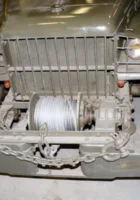
Galerie de photos d’un Dodge WC-57, The Dodge WC series was a range of light military trucks produced by Dodge and Fargo during World War II. The series included weapon carriers, telephone installation trucks, ambulances, reconnaissance vehicles, mobile workshops and command cars. They were replaced after the war by the Dodge M-series vehicles. WC was a Dodge model code: W for 1941 and C for half-ton rating. The C code was retained for the ¾ ton and 1½ ton 6×6 Dodges.

Le WC57 Truck, Command Reconnaissance, 3/4 tonne, 4×4 w/Winch Dodge (G502) était identique au WC56 mais équipé d’un treuil Braden MU2 de 5 000 lb / 2 268 kg au pare-chocs avant. 6 010 construits.

Source: Dodge WC-57 sur Wikipedia

Lire l’article

Vues : 5193

Mig-19PF

Mig-19PF – Shenyang J-6A

PaysChine
TypeCombattant
PhotoVladimir Yakubov
Sujet

Album de 165 photos de promenade d’un « Mig-19PF – Shenyang J-6A »

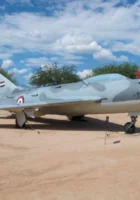
Galerie de photos d’un Mig-19PF – Shenyang J-6A, The Shenyang J-6 (Chinese: 歼-6; designated F-6 for export versions; NATO Code: Farmer) was the Chinese-built version of the Soviet MiG-19 ‘cultivateur’ fighter aircraft. Although the MiG-19 had a comparatively short life in Soviet service, the Chinese came to value its agility, turning performance, and powerful cannon armament, and produced it for their own use between 1958 and 1981. While the basic Soviet-designed MiG-19 has been retired from all nations, the Shenyang J-6 still flies for nine of its original 15 operators, however, in a very limited capacity. The J-6 airframe contributed to the Chinese ground attack version, the Q-5, which still flies for numerous nations. The J-6 was considered « Jetable » et devait être exploité pendant seulement 100 heures de vol (ou environ 100 sorties) avant d’être révisé. L’armée de l’air pakistanaise a souvent été en mesure d’étendre ce délai à 130 heures avec une maintenance diligente.

Source: Mig-19PF – Shenyang J-6A sur Wikipedia

Lire l’article

Vues : 3835

Monde des chars - T-34/85

Italeri

Ref 36509
SerieMonde des chars
Échelle1/35
Sujet

T-34/85

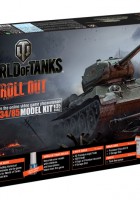
THE BOX CONTAIN: 1 MODEL KIT – 1 LIQUID CEMENT – 1 TANK GUIDE – 1 POSTER (42×59,4cm) – WORLD oF TANKS DECALS – 3 INVITE CODES – 1 BONUS CODE

Arguably the best medium tank of World War II, the T-34-85 was a crucial factor in the outcome of the conflict. Over 35,000 were produced, meaning that it also came to represent, from a Soviet standpoint, the supremacy of socialist industry over capitalism. It was the antithesis of German over-engineering. Designers favoured simple solutions that used fewer resources. It was therefore available in greater numbers – a telling factor as Axis forces were pushed out of the Soviet Union and back to Berlin. The T-34-85 was an up-gunned version of the T-34 tank which carried a 76mm gun that was insufficient at dealing with tanks like the Tiger and Panther. A new turret allowed the installation of an 85mm gun that was capable of penetrating German armour with greater ease. This tank also represented the first proper mass production of a sloped-hull design which meant that the armour could afford to be thinner while still providing the same effective protection. Coupled with sloping on the turret, the survivability of the tank compared to the original T-34 design was much better.

Source: Italeri

Lire l’article

Vues : 2549

Stryker ICV

Stryker ICV

PaysUsa
RôleVéhicule de porte-avions d’infanterie

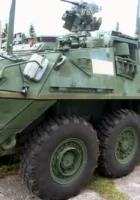
Galerie de photos d’un Stryker ICV, The M1126 Infantry Carrier Vehicle (ICV) is an armoured personnel carrier and part of the Stryker family of vehicles (derived from the Canadian LAV III/Swiss MOWAG Piranha IIIH 8×8) used by the United States Army. The Infantry Carrier Vehicle provides protected transport and, during dismounted assault, supporting fire for the infantry squad. The Stryker is a full-time four-wheel drive, selectively eight-wheel drive, armoured vehicle weighing approximately 19t which carries an infantry squad with their equipment. On paved roads the vehicle can attain speeds of 62 mph without a governor and 37 mph with a governor. The basic infantry carrier vehicle (ICV) provides armored protection for the two-man crew and a squad of nine soldiers.

Source: Stryker ICV sur Wikipedia

Lire l’article

Vues : 4967

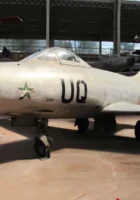
MiG-15UTI

Mikoyan-Gurevich MiG-15bis

PaysUnion soviétique
RôleCombattant
Premier volLe 30 décembre 1947
ConstruitPlus de 12000

Lla Mikoyan-Gurevich MiG-15 (Russe: Микоян и Гуревиш МиГ-15; Nom de rapport de l’OTAN : « Pédé ») was a jet fighter aircraft developed by Mikoyan-Gurevich OKB for the Soviet Union. The MiG-15 was one of the first successful jet fighters to incorporate swept wings to achieve high transonic speeds. In combat over Korea, it outclassed straight-winged jet day fighters which were largely relegated to ground attack roles, and was quickly countered by the similar American swept-wing F-86 Sabre. The MiG-15 is often mentioned, along with the North American F-86 Sabre, as the best fighter aircraft of the Korean War, and among the best fighter aircraft of all time. When refined into the more advanced MiG-17, the basic design would again surprise the West when it proved effective against supersonic fighters such as the F-105 Thunderchief and McDonnell Douglas F-4 Phantom II in the Vietnam War of the 1960s. The MiG-15 is believed to have been one of the most widely produced jet aircraft ever made; in excess of 12,000 were manufactured. Licensed foreign production may have raised the production total to over 18,000. The MiG-15 remains in service with the North Korean Air Force as an advanced trainer.

Source: MiG-15bis sur Wikipedia

Lire l’article

Views : 10275

Strv M40

Strv M40

PaysSuède
TypeChar de combat
PhotoThord Wedman
Sujet

Album de 51 photos de promenade d’un « Strv M40 »

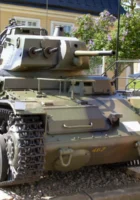
Galerie de photos d’un Strv M40, Tank w / 40 (Strv m / 40) was a Swedish tank, constructed by Landsverk during the early 1940s. On the Tank w / 39 developed battle tank was designated from the start L-60-S III. It got Army designation Strv m / 40, a little later, when m / 40 K (Karlstad) was added to the designated m / 40L (Land Administration). Total ordered 100 pieces from Landsverk delivered in 1943 and 80 pc from Karlstad delivered in 1945.

Source: Strv M40 sur Wikipedia

Lire l’article

Vues : 3286

Fury FJ-3 nord-américain

Fury FJ-3 nord-américain

PaysÉtats-Unis
RôleChasseur
Premier vol27 décembre 1951
Construit741

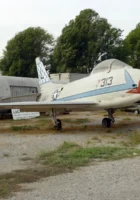
Galerie de photos d’un Fury FJ-3 nord-américain, The North American FJ-2/-3 Fury were a series of swept-wing carrier-capable fighters for the United States Navy and Marine Corps. The FJ-2 resulted from an effort to navalize the United States Air Forces F-86 Sabre. These aircraft featured folding wings, and a longer nose landing strut designed to increase angle of attack upon launch and to accommodate a longer oleo to absorb the shock of hard landings on an aircraft carrier deck. Although sharing a U.S. Navy designation with its distant predecessor, the straight-winged North American FJ-1 Fury, the FJ-2/-3 were completely different aircraft. (The later FJ-4 Fury was again, a complete structural redesign of the FJ-3). The FJ-2 was one of the aircraft used to evaluate the first steam catapult on a US Navy aircraft-carrier.

Source: North American FJ-3 Fury sur Wikipedia

Lire l’article

Vues : 3386

Messerschmitt Me-262A

Messerschmitt Me 262

PaysGermany
RôleChasseur
Premier volLe 18 avril 1941
Tournage construit1430

Galerie de photos d’un Messerschmitt Me 262A Messerschmitt Me 262A Messerschmitt Me 262A Messer, The Messerschmitt Me 262 Schwalbe / Sturmvogel (English: « Avaler »/ « Oiseau de tempête ») de l’Allemagne nazie était le monde’premier avion de chasse opérationnel à réaction. Les travaux de conception ont commencé avant le début de la Seconde Guerre mondiale, mais les problèmes de moteur et les interférences de haut niveau ont empêché l’avion d’être opérationnel avec la Luftwaffe jusqu’au milieu de 1944. Le Me 262 était plus rapide et plus lourdement armé que n’importe quel chasseur allié, y compris le Gloster Meteor à réaction britannique. L’un des modèles d’aviation les plus avancés dans l’utilisation opérationnelle pendant la Seconde Guerre mondiale, le Me 262 a été utilisé dans une variété de rôles, y compris bombardier léger, reconnaissance, et même expérimentale versions de chasseurs de nuit.

Source: Messerschmitt Me 262 sur Wikipedia

Lire l’article

Views : 15583