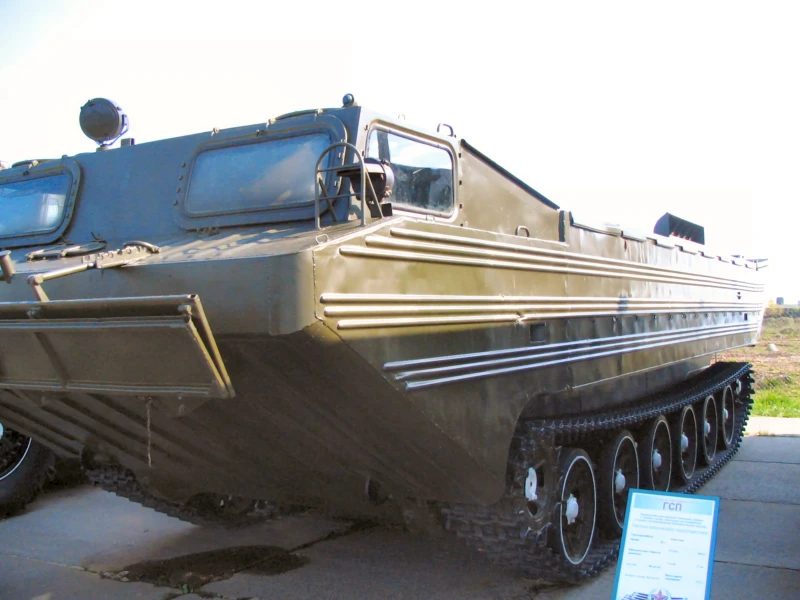
PTS-M-seurattu amfibiokuljetus | |
|---|---|
| Maa | Neuvostoliiton |
| Tyyppi | Telaketjuinen amfibinen kuljetus |
| Tuotanto | alkoi 1965 |
| Korin tyyli | Vedenpitävä runko |
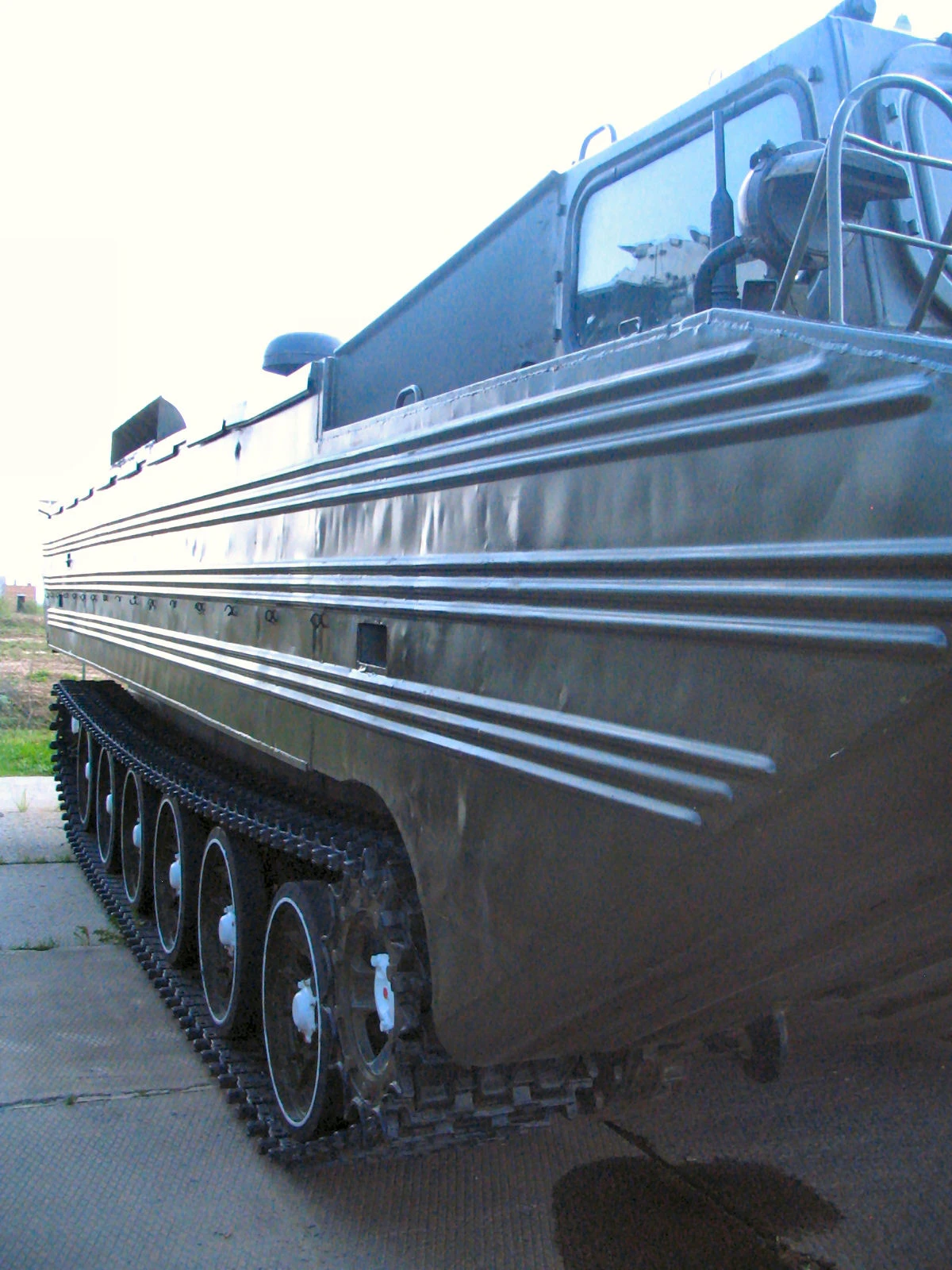
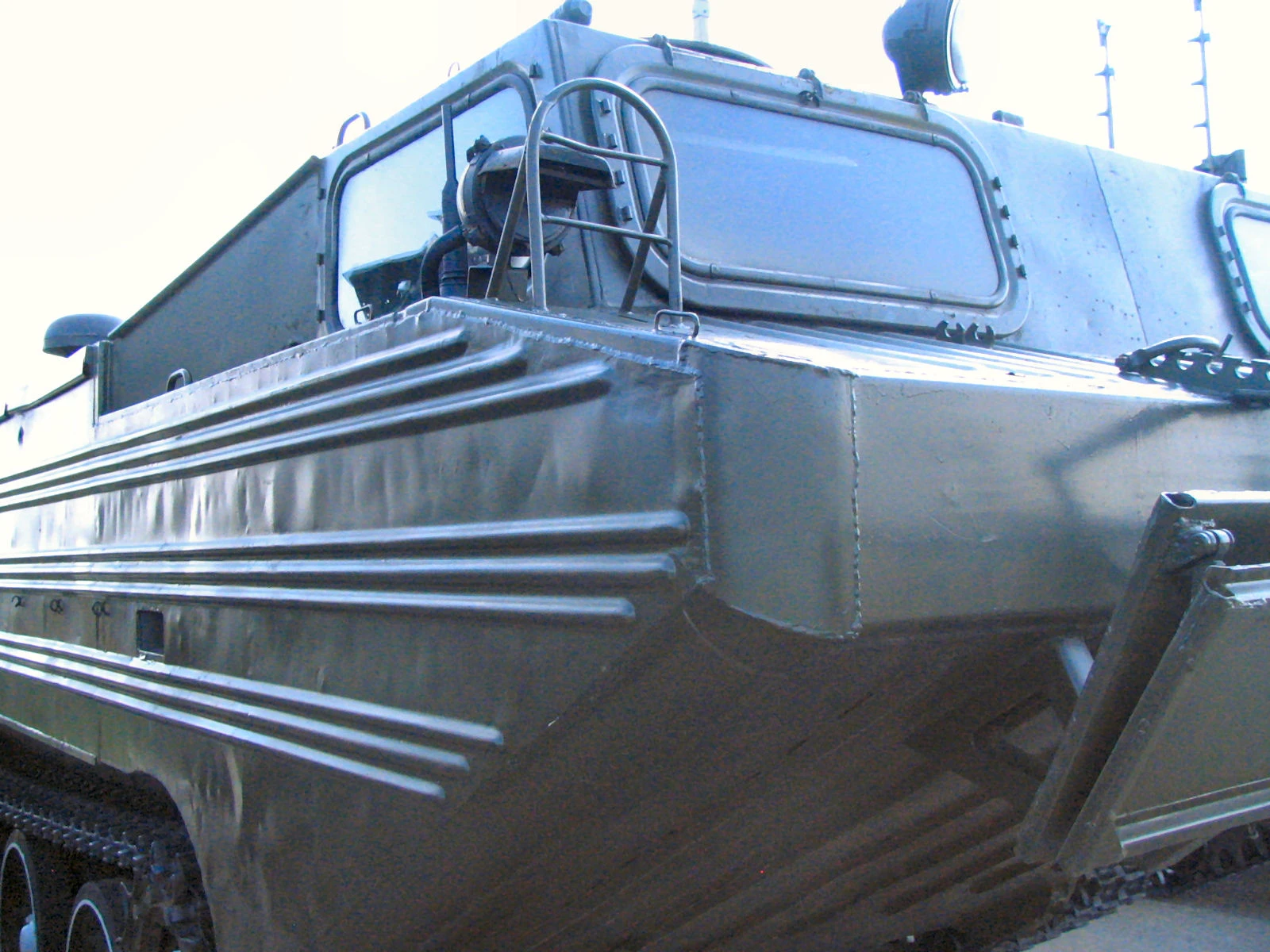
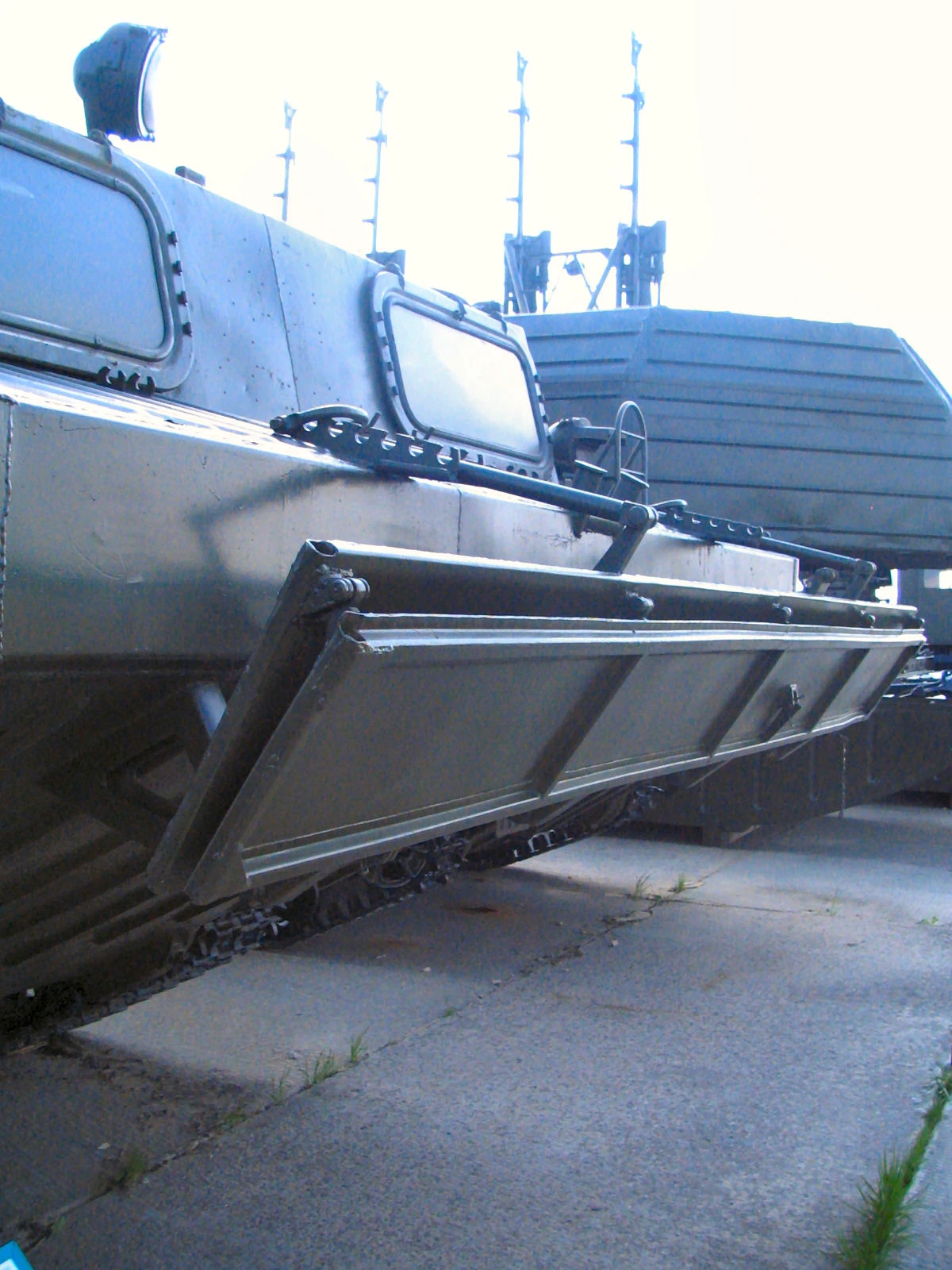
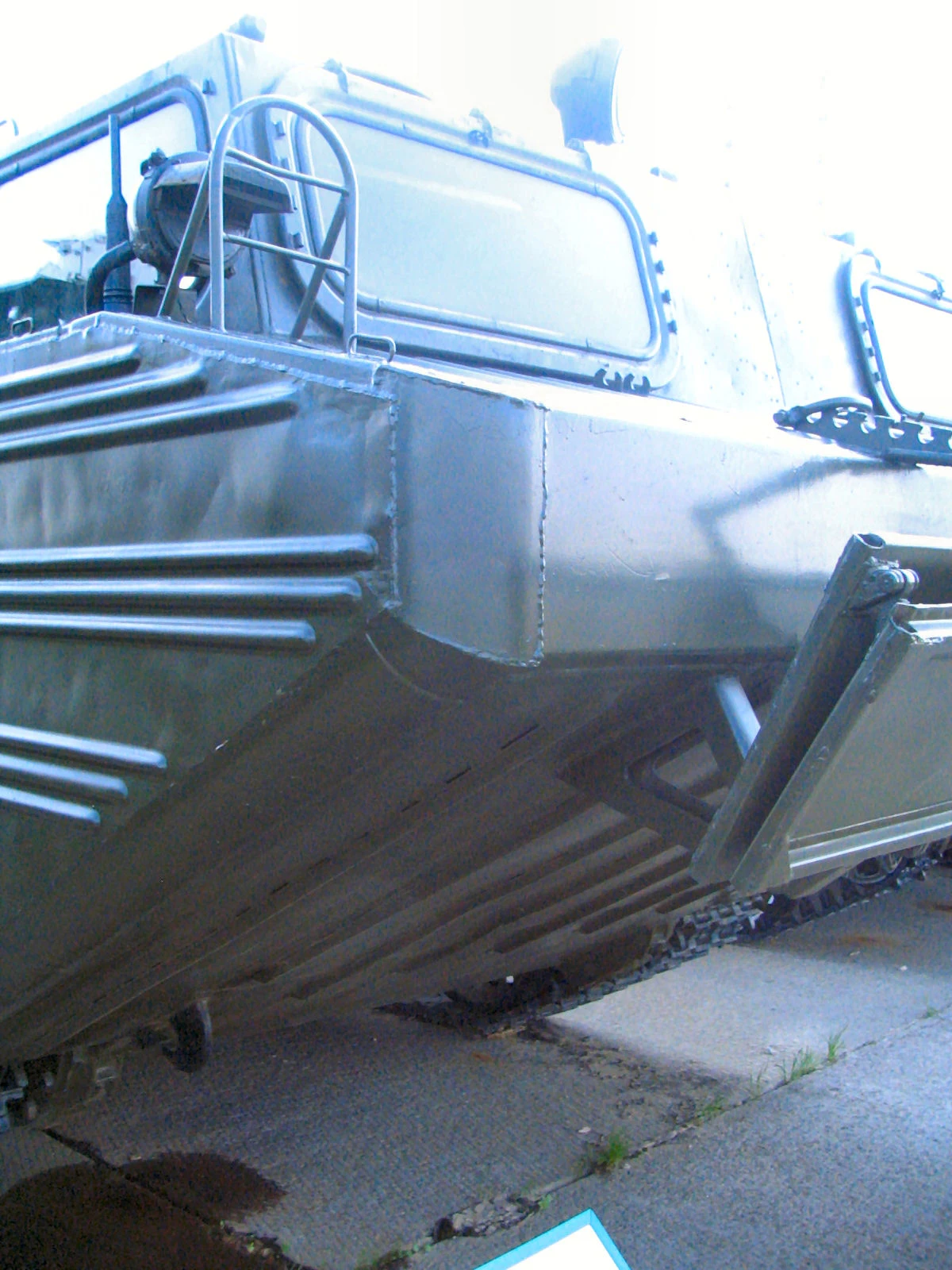
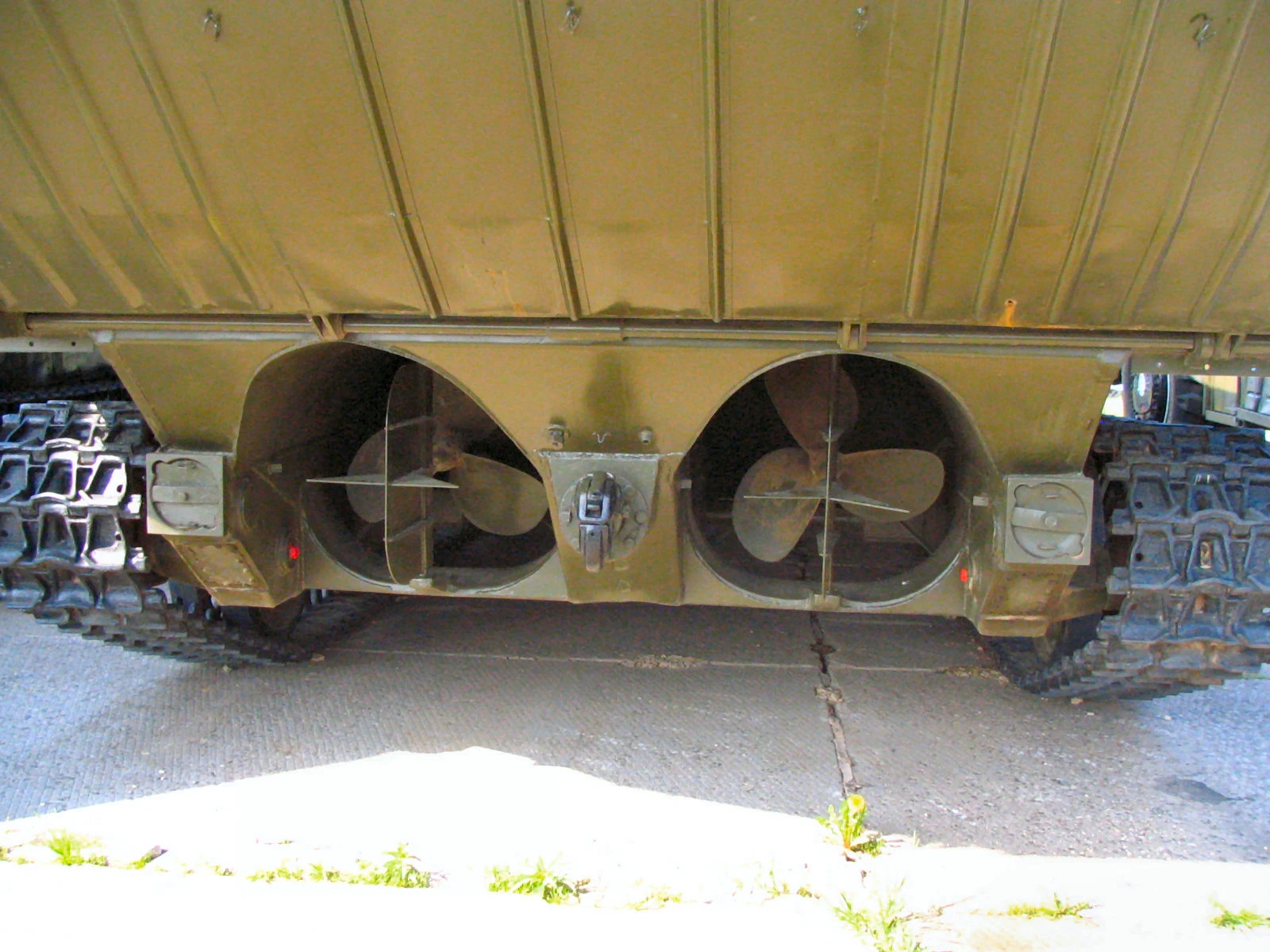
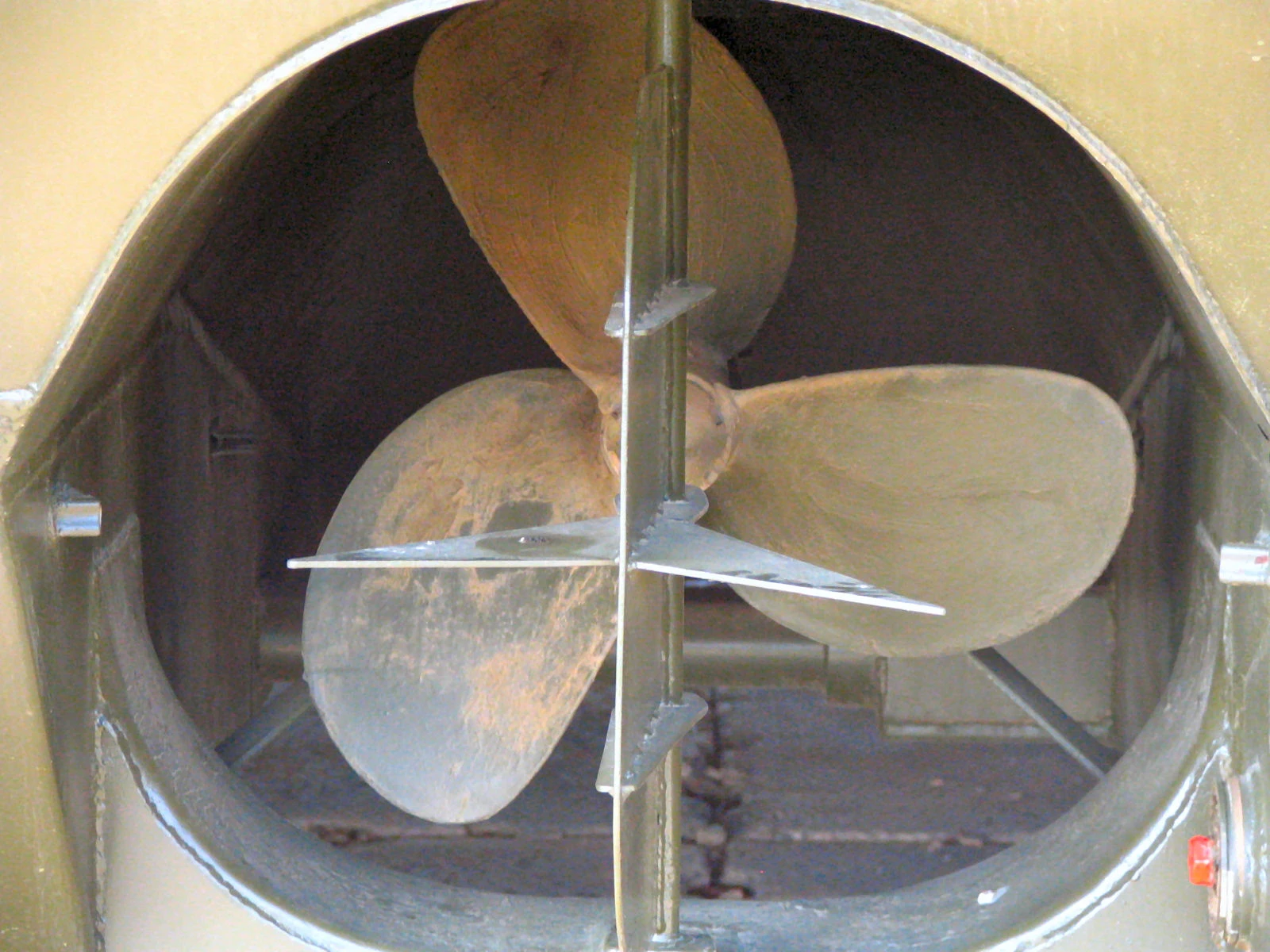
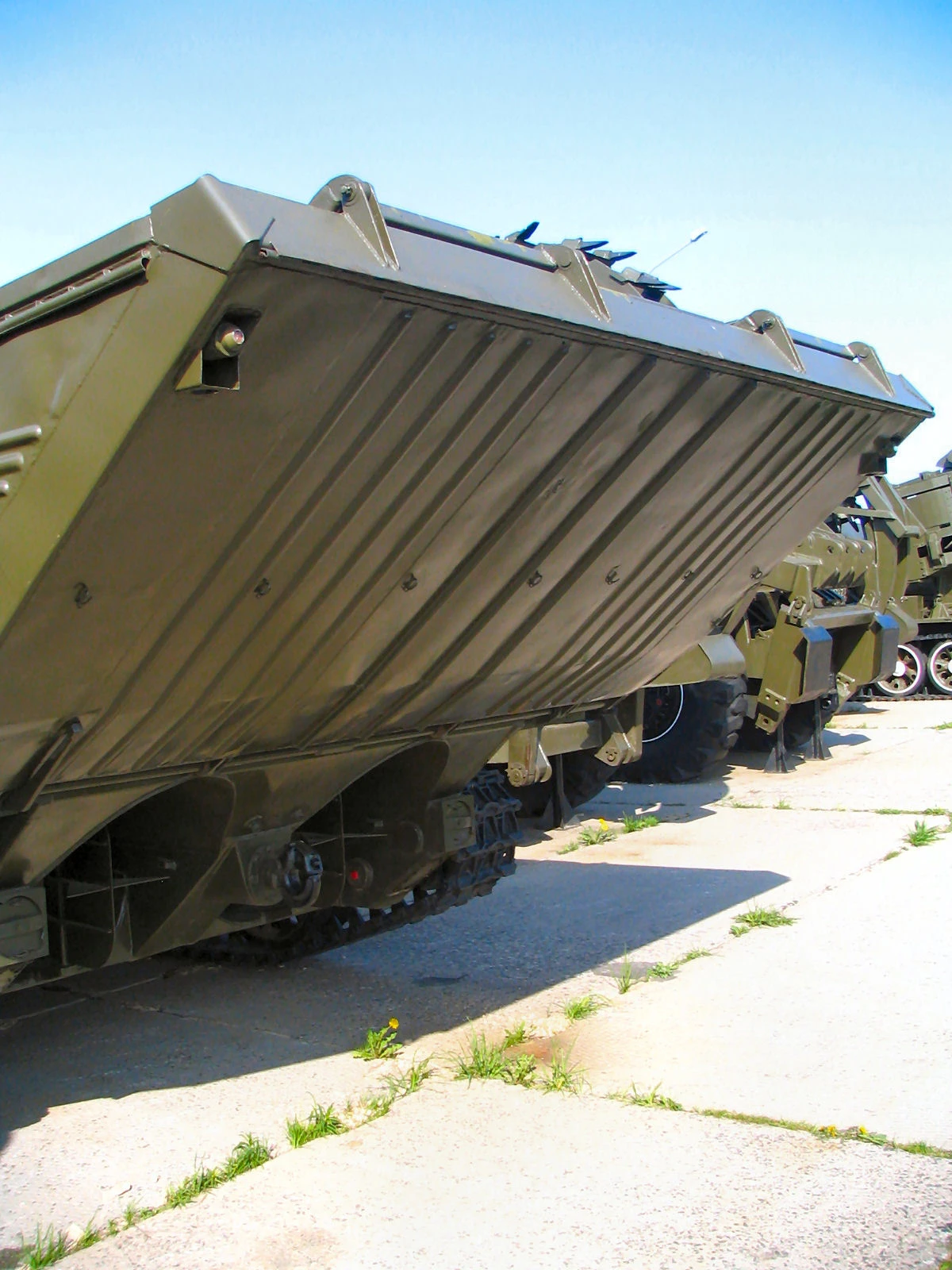
Nniiden PTS is a Soviet tracked amphibious transport. PTS stands for Plavayushchij Transportyer – Sryednyj or medium amphibious transport vehicle. Its industrial index was Ob’yekt 65. Introduced in 1965, it is large, with a substantial payload of 10 tons, two to four times the capacity of the BAV 485, and better cross-country performance, at the cost of greater somewhat higher purchase costs because it is tracked. The most common model is the improved PTS-M that is powered by a 350 hp diesel engine. It has a boxy, open watertight hull, with six road wheels per side, front drive sprocket, rear idler sprocket, and no return rollers. Like the BAV 485, and unlike the DUKW, it has a rear loading ramp. The crew is seated at the front, leaving the rear of the vehicle open for a vehicle, which can be driven (or backed) in, rather than lifted over the side. To aid in facilitating this, the engine is under the floor. Propulsion in water is by means of twin propellers, in tunnels to protect them from damage during land operations.
| PTS-M-seurattu amfibiokuljetus | |
|---|---|
| Valokuvaaja | Carrey |
| Lokalisointi | Ei tietää |
| Valokuvat | 18 |

 Osta minulle kahvia
| PTS-M Walk Around | |
|---|---|
| Valokuvaajat | Vladimir Yakubov, Carrey |
| Lokalisointi | Stalin Line -museo |
| Valokuvat | 48 |
Katso myös:


The Master of River Crossings
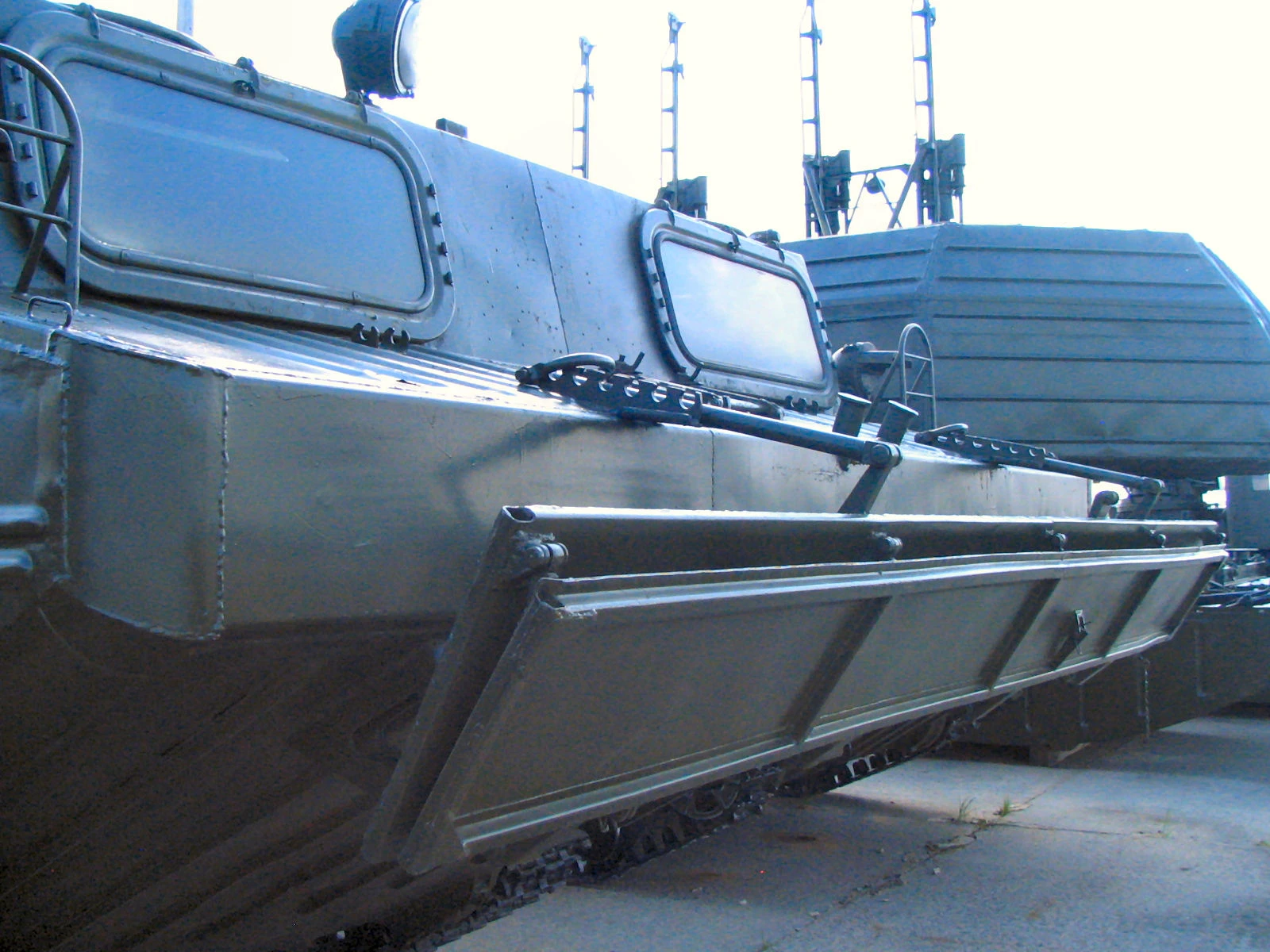
Nniiden PTS-M (Plavayushchij Transportyer Sryednyj – Medium) is a massive Soviet tracked amphibious vehicle designed to ferry troops, artillery, and vehicles across water obstacles. Introduced in the 1960s to replace the older K-61, it is essentially a boat with tank tracks. Unlike smaller amphibious APCs, the PTS-M is a dedicated transport with a cavernous 20-square-meter cargo deck. It is rugged, highly buoyant, and remains in service today with dozens of nations because nothing else can quite match its ability to carry a 10-ton load directly from a muddy bank into a deep, fast-flowing river.
| Attribute | Technical Specification (PTS-M) |
|---|---|
| Rooli | Medium Tracked Amphibious Transport |
| miehistö | 2 (Commander and Driver) |
| Moottori | V-54P V12 Water-cooled Diesel (350 hp) |
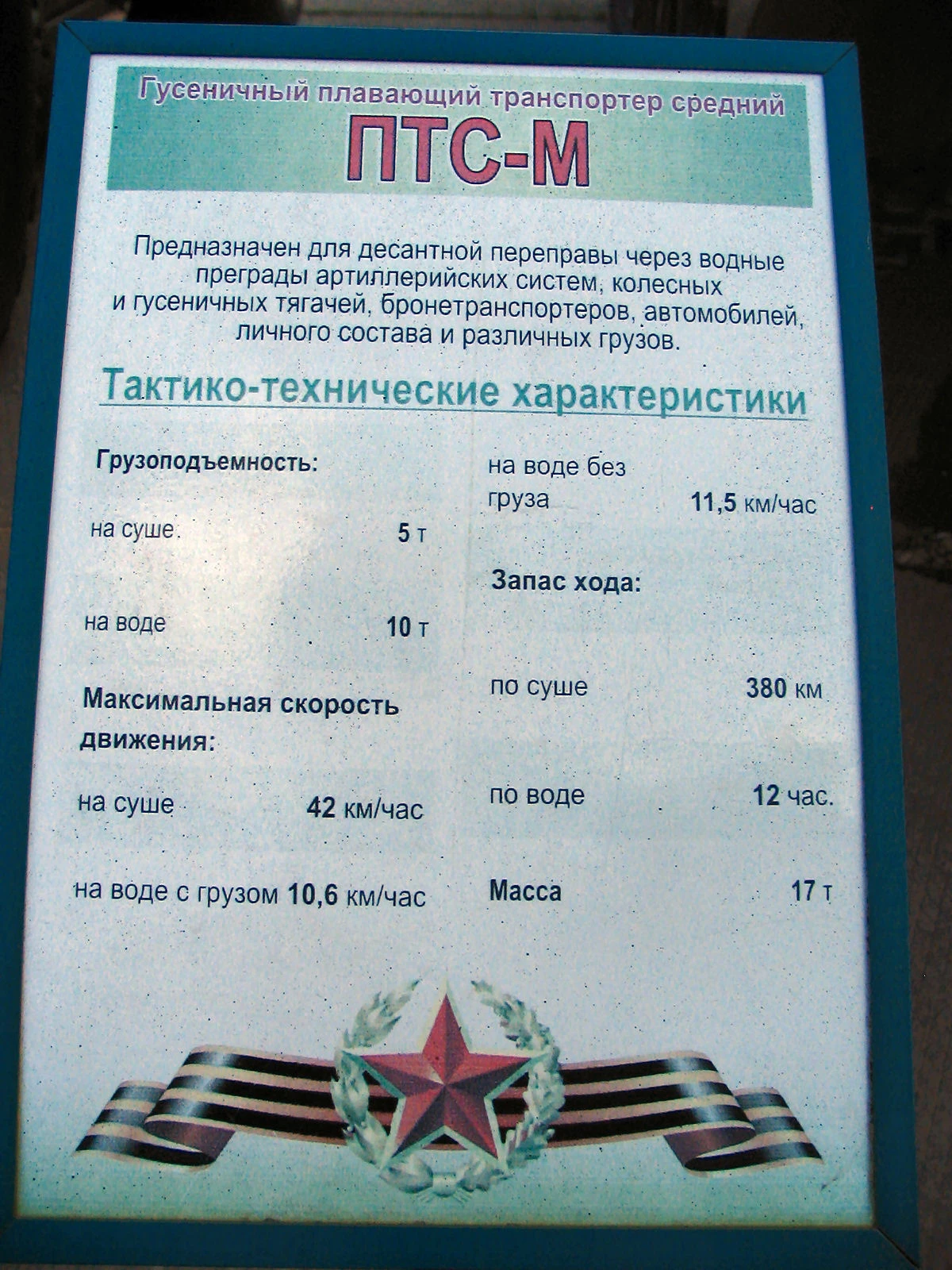
| Max Speed (Land) | 42 km/h (26 mph) |
| Max Speed (Water) | 11 km/h (7 mph) via twin propellers |
| Payload (Water) | 10,000 kg (10 tons) |
| Payload (Land) | 5,000 kg (5 tons) |
| Troop Capacity | 70 fully equipped soldiers or 12 stretchers |
Design Engineering: T-55 Bones and Boat Hull
- Tank-Based Suspension: The PTS-M utilizes a modified, elongated suspension system based on the T-54/55 Main Battle Tank. This gives it the durability to crawl through deep mud and over rough terrain that would trap wheeled amphibious vehicles.
- Rear Loading Ramp: Unlike Western amphibious trucks (like the DUKW) that require cranes for heavy loads, the PTS-M features a full-width rear ramp. Vehicles like the GAZ-66 or Ural trucks can simply drive onto the deck.
- Propulsion Tunnels: The twin propellers are housed in protective tunnels at the rear of the hull. This prevents them from being damaged when the vehicle “crawls” out of a rocky riverbed or moves over land.
- Under-Floor Engine: To maximize deck space, the V12 engine is mounted low in the center of the hull, under the cargo floor. This also lowers the center of gravity, which is critical when carrying a tall, heavy truck in choppy water.
Combat and Service: The Universal Ferry
- The PKP Trailer: The PTS-M often works with the PKP—a boat-like, two-wheeled amphibious trailer. Together, they can ferry an entire artillery battery (truck on the PTS-M, howitzer on the trailer) in a single trip.
- Global Utility: From the Suez Canal during the Yom Kippur War to modern flood relief efforts in Eastern Europe, the PTS-M has been used as much for civilian rescue as for war. Its huge buoyancy reserve makes it nearly impossible to sink, even when overloaded.
- Sea Capabilities: While primarily a river-crosser, a special “sea kit” (extended exhaust and intake snorkels) allows the PTS-M to operate in waves up to 1.2 meters high, making it a capable coastal landing craft.
- Modern Longevity: Even in 2026, the PTS-M and its successors (PTS-2 and PTS-4) are vital logistics assets in the Russo-Ukrainian War, where the destruction of bridges has made amphibious transport a strategic necessity.
Views : 2803
Voit myös nähdä:
 Tyyppi 63 - Valokuvat ja videot
 Assault amfibioajoneuvo - Valokuvat ja videot
 Panhard M3 – Valokuvat ja videot
 LARC-V – Valokuvat ja videot
 T-30 - Valokuvat ja video
 FV180 Combat Engineer Tractor – Valokuvat & Video
 OT-62 TOPAS – Valokuvat & video
 MT-LB Sjvpbv 4024 – Valokuvat ja video
 T-40S-säiliö - Valokuvat ja video
 Ford GPA – Kävele