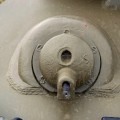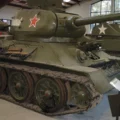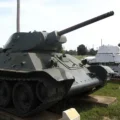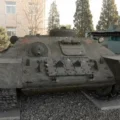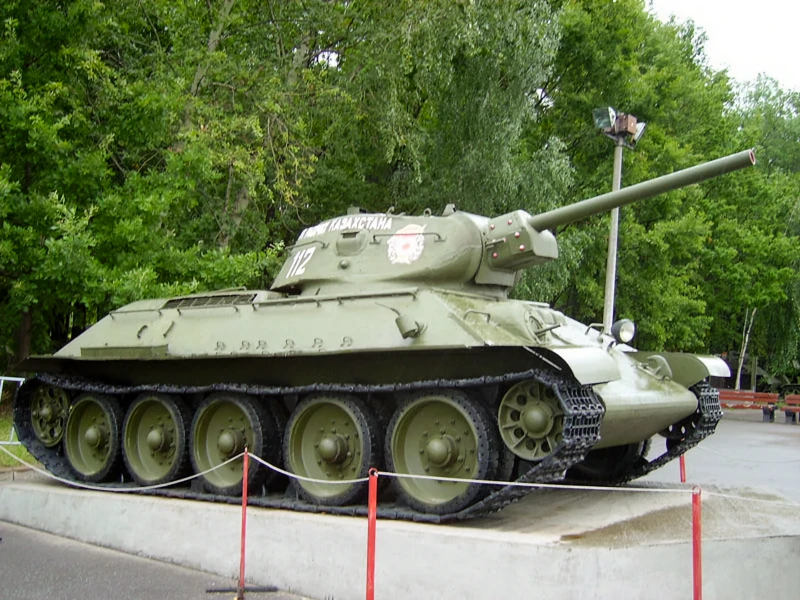
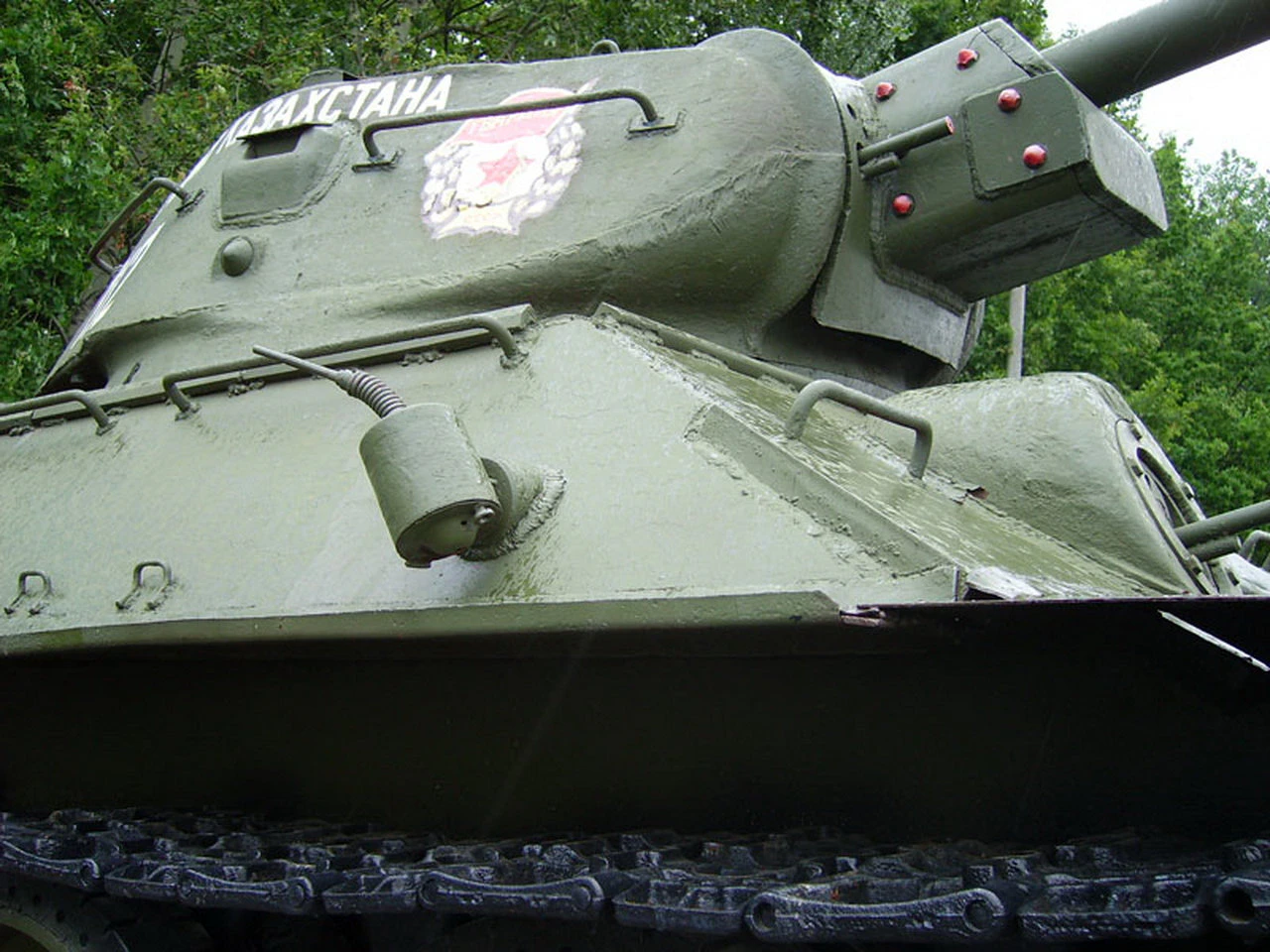
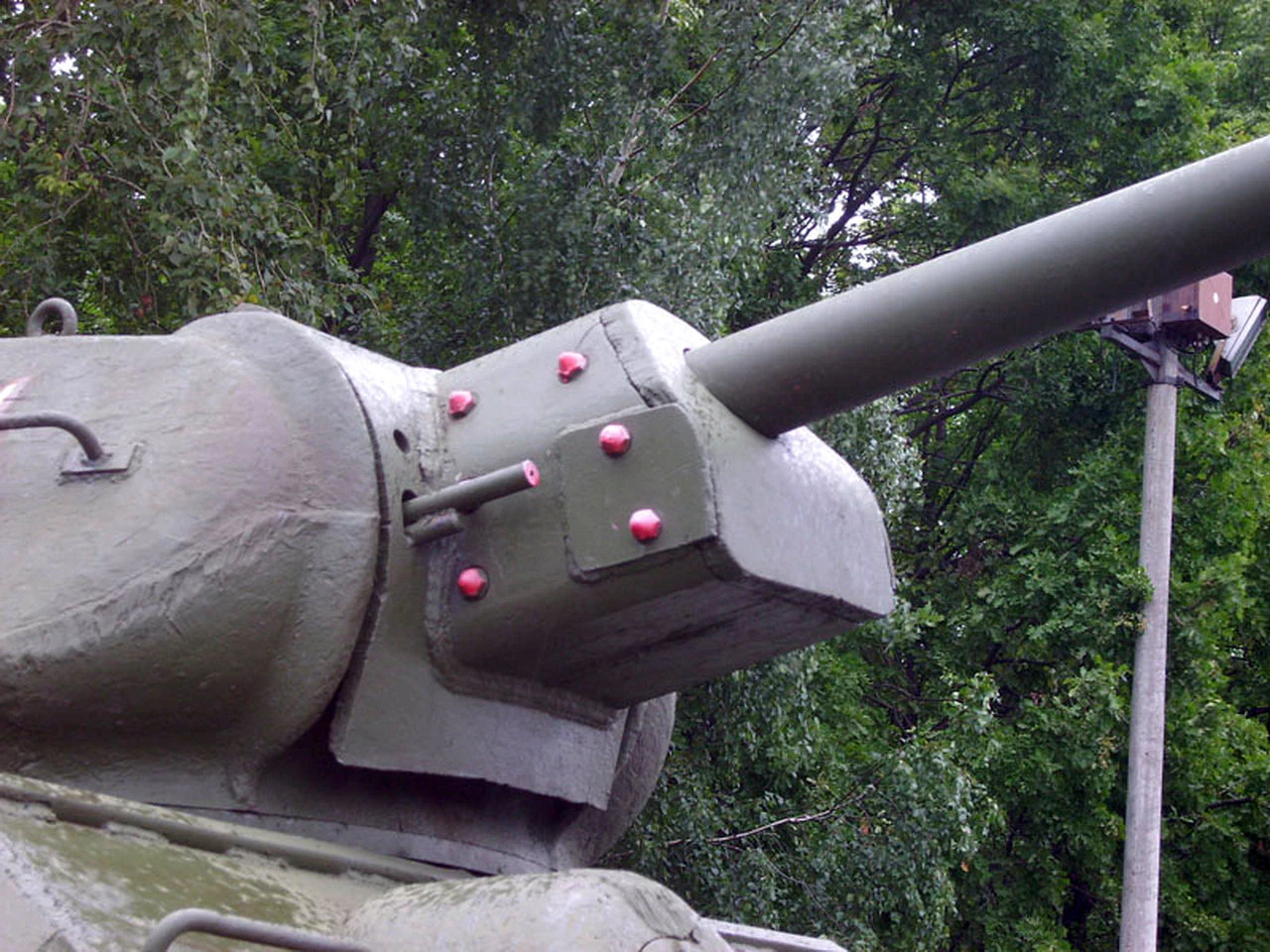
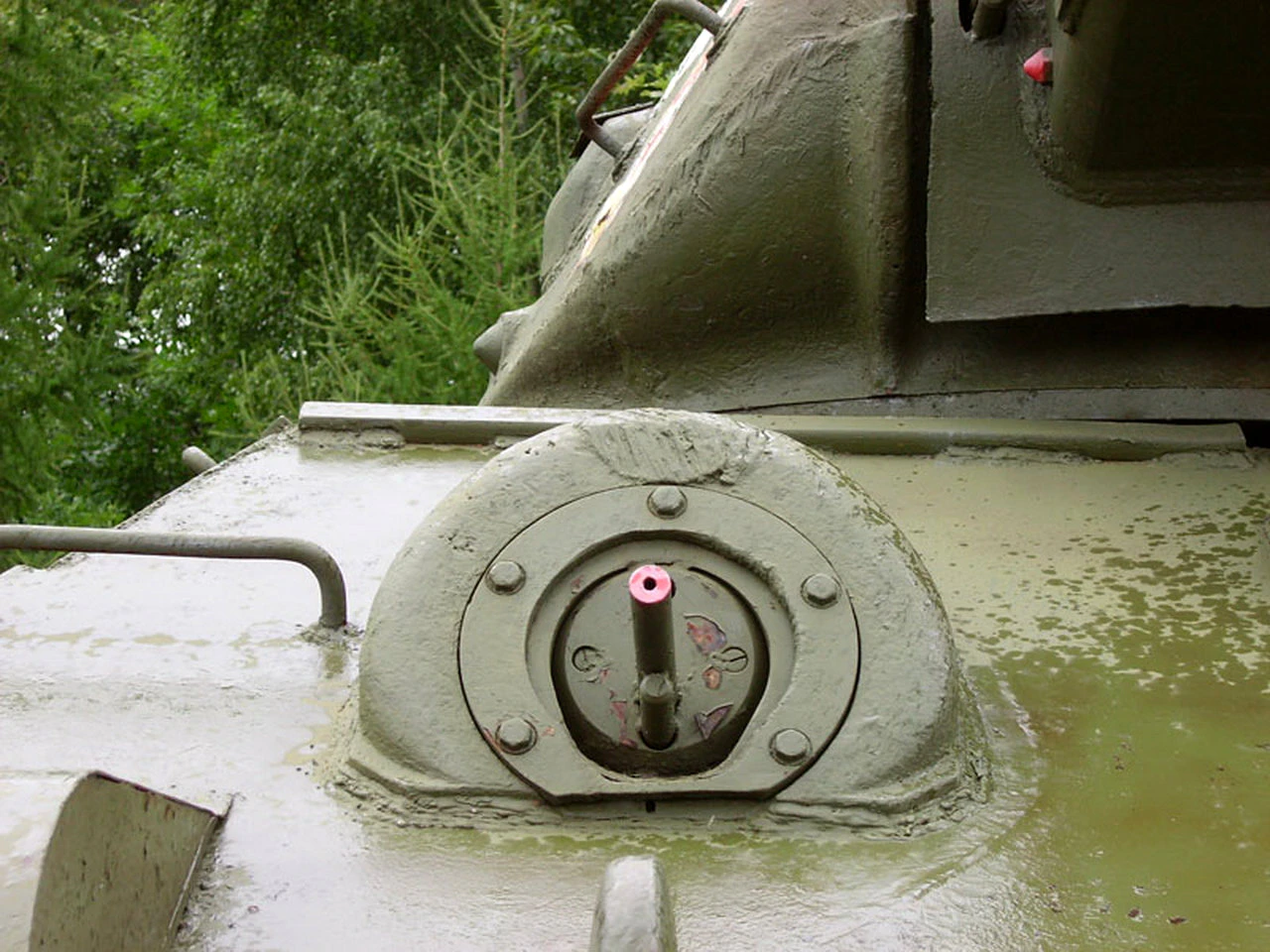
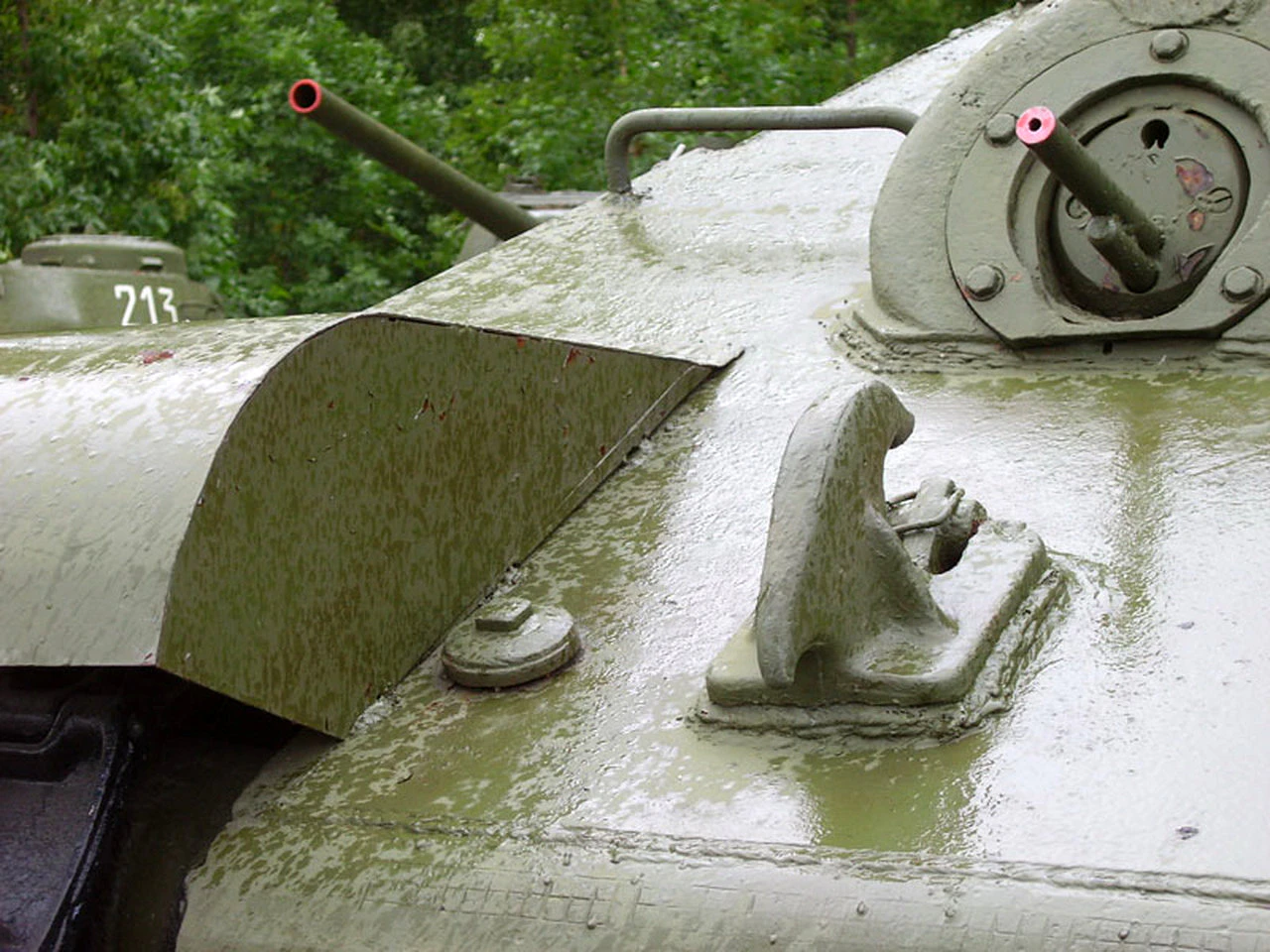
T-34/76 1941 | |
|---|---|
| País | Unión Soviética |
| Papel | Tanque medio |
| En servicio | 1940-finales de la década de 1960 |
| Construido | 84070 |
el T-34 es un tanque medio soviético que tuvo un efecto profundo y duradero en el campo del diseño del tanque. En su introducción, el T-34 poseía una combinación sin precedentes de potencia de fuego, movilidad, protección y robustez. Su cañón de tanque de alta velocidad de 76,2 mm (3 pulgadas) proporcionó un aumento sustancial de la potencia de fuego sobre cualquiera de sus contemporáneos; su armadura bien inclinada era difícil de penetrar por la mayoría de las armas antitanque contemporáneas. Cuando se encontró por primera vez en 1941, el general alemán Paul Ludwig Ewald von Kleist lo llamó "el mejor tanque del mundo" y Heinz Guderian afirmó la "gran superioridad" del T-34 sobre el blindaje alemán existente de la época. Aunque su armadura y armamento fueron superados más tarde en la guerra, a menudo ha sido acreditado como el diseño de tanques más eficaz, eficiente e influyente de la Segunda Guerra Mundial.
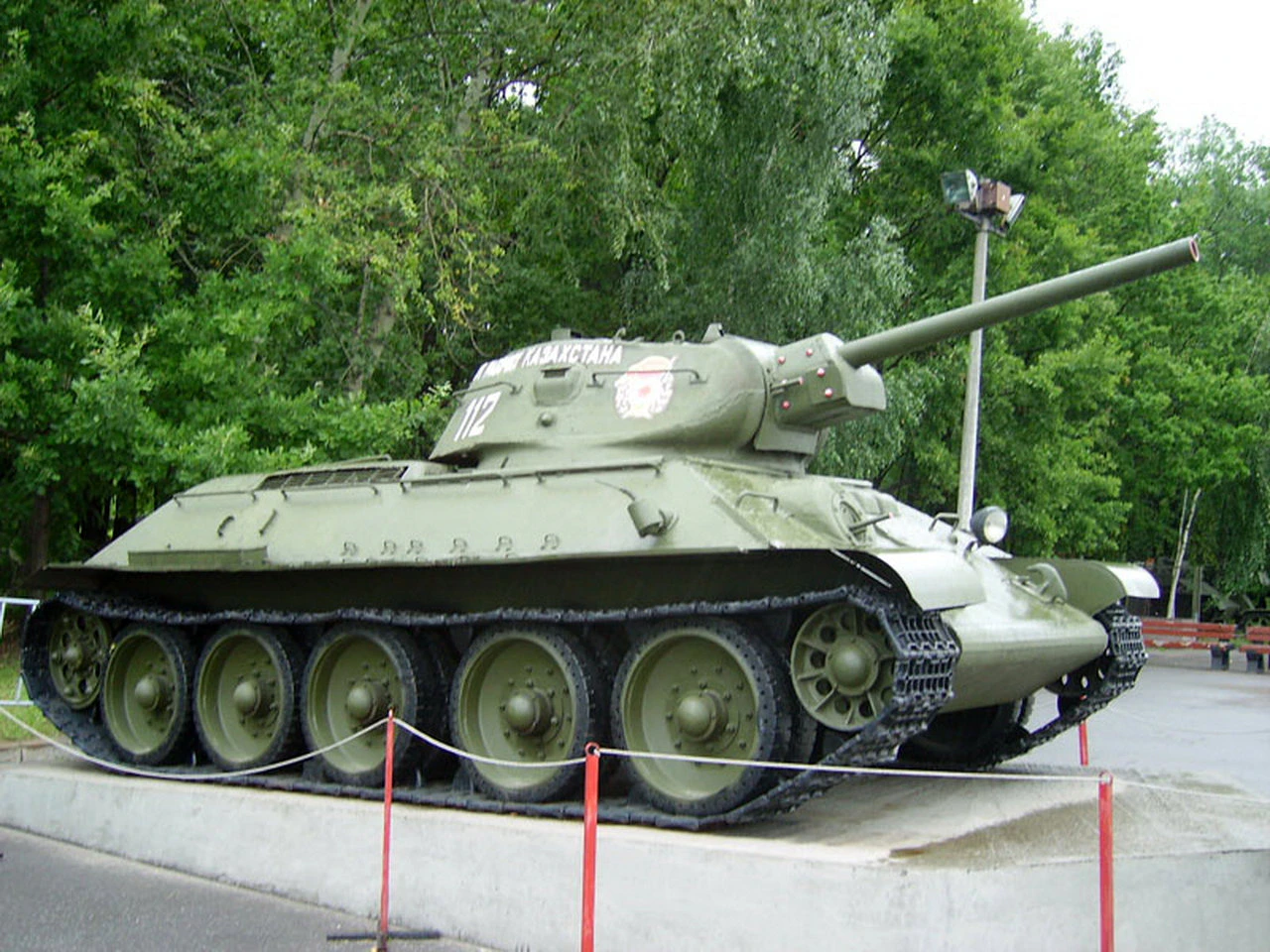
| T-34/76 1941 | |
|---|---|
| Fotógrafo | Unknow |
| Localización | Unknow |
| Fotos | 27 |

Ver también:


The Shock Revolutionary of the Eastern Front
el T-34/76 Model 1941 was the definitive early-war variant of the legendary Soviet medium tank that completely revolutionized global armored warfare. Developed by Mikhail Koshkin’s design bureau at the Kharkiv KhPZ factory, the T-34 combined three gold-standard pillars of tank design into a single package: revolutionary sloped armor, a powerful dual-purpose cannon, and unmatched cross-country mobility. When Germany launched Operation Barbarossa in the summer of 1941, the appearance of the T-34 sent absolute shockwaves through the Wehrmacht. Standard German anti-tank guns watched in horror as their shells bounced harmlessly off the T-34’s angled hull. However, while its fundamental engineering blueprint was brilliant, the Model 1941 suffered from terrible Soviet industrial bottlenecks, primitive internal ergonomics, and a complete lack of tactical coordination that severely crippled its initial combat potential.
| Attribute | Technical Specification (T-34/76 Model 1941 Baseline Production) |
|---|---|
| Papel | Tanque medio |
| Equipo | 4 (Commander/Gunner, Loader, Driver, Bow Radio Operator/Machine Gunner) |
| Planta motriz | 1 × Model V-2-34 38.8-liter V12 liquid-cooled diesel engine (500 hp) |
| Velocidad máxima | 54 km/h (33 mph) on roads | ~25 km/h (16 mph) cross-country |
| Combat Weight | 26.5 metric tons (29.2 short tons) |
| Rango de operación | ~300 km (186 miles) standard | Up to 400 km with external fuel drums |
| Primary Armament | 1 × 76.2 mm F-34 tank gun L/42.5 (77 rounds carried) |
| Armamento secundario | 2 × 7.62mm DT machine guns (coaxial and bow-mounted in a ball mount) |
| Armor Thickness | Hull Front: 45mm angled at 60° (~90mm effective) | Turret Front: 45mm to 52mm |
| Production Context | Produced primarily at Factory No. 183 (Kharkiv) and STZ (Stalingrad) during 1941 |
Design Engineering: The F-34 Punch, Sloped Steel, and the Aluminum Diesel
- The Pioneer of Universal Sloped Armor: Long before the German Panther or King Tiger adopted it, the T-34 proved the immense value of angled steel. By sloping the 45mm thick frontal plate back at a sharp 60-degree angle, the horizontal path an incoming shell had to travel increased to roughly 90mm of effective thickness. More importantly, the severe slope caused the flat-headed German 3.7cm and 5cm shells of 1941 to lose their bite and slide right off the armor face.
- The Heavy-Hitting F-34 76.2mm Cannon: While most tanks of 1941 carried small, specialized anti-tank pop-guns or low-velocity infantry support howitzers, the T-34 Model 1941 introduced the long-barrel F-34 gun. This weapon did everything well: it possessed the high velocity needed to punch through any contemporary German tank from standard combat ranges, while simultaneously firing a highly effective, heavy high-explosive shell to obliterate enemy anti-tank dugouts and infantry lines.
- The Lightweight Aluminum V-2 Diesel Engine: At a time when almost every nation used heavy, highly flammable gasoline engines, the T-34 used the revolutionary V-2-34 diesel engine. Built largely out of lightweight aluminum alloy, this 500-horsepower motor gave the tank an incredible power-to-weight ratio. Furthermore, diesel fuel is significantly harder to ignite than gasoline, which dramatically reduced the chances of the tank instantly exploding into a catastrophic fireball when the hull was hit.
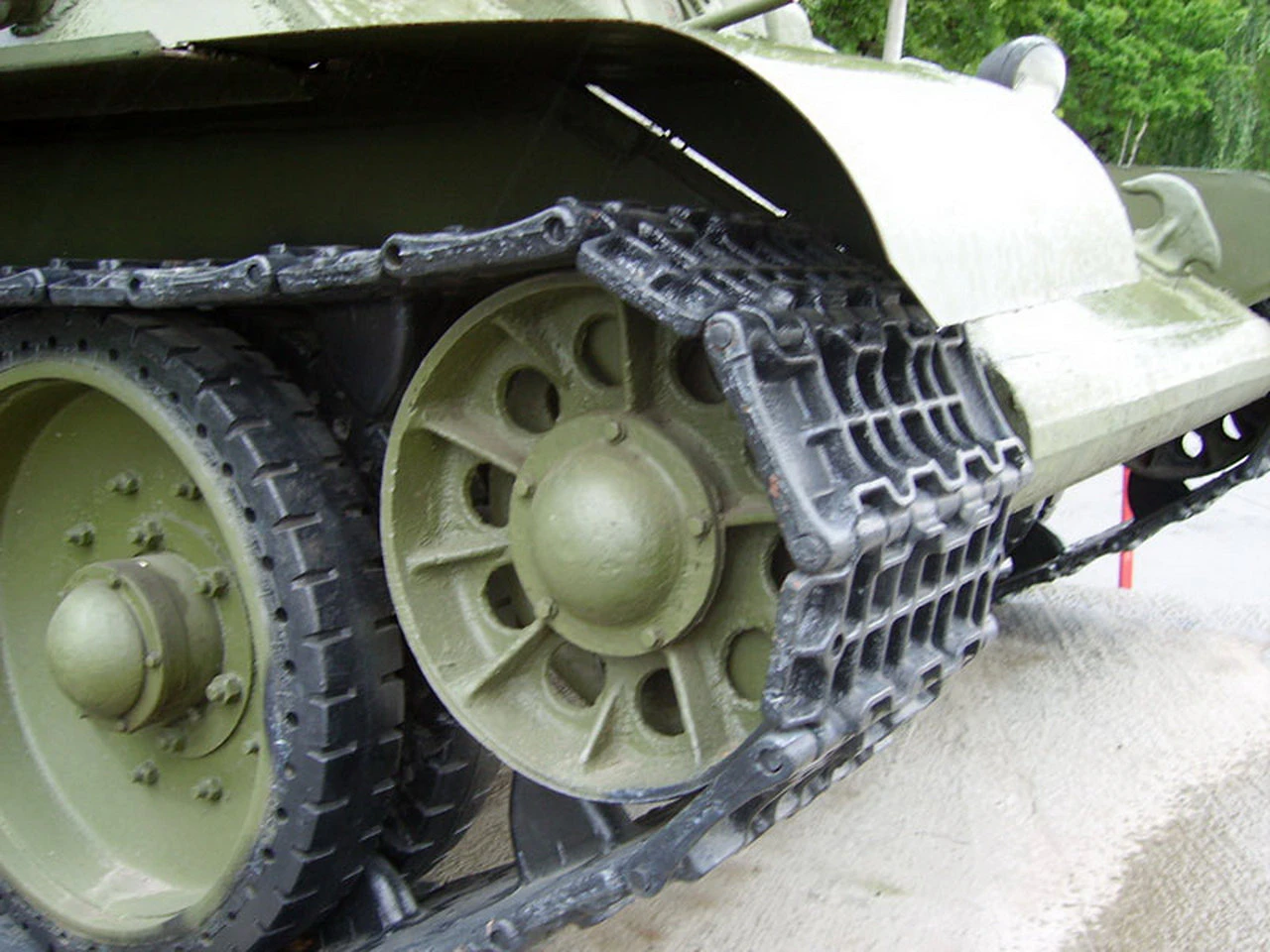
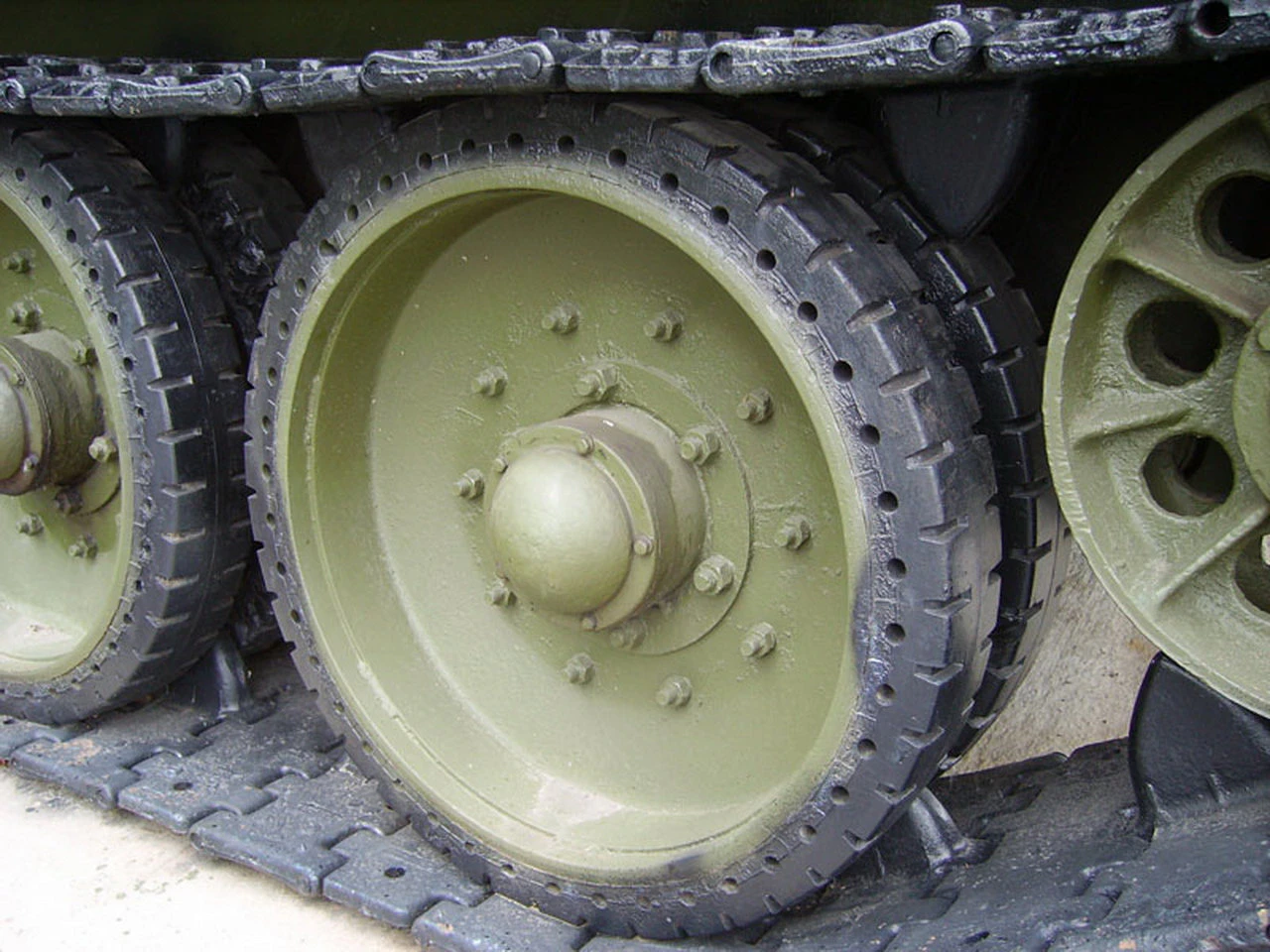
- Christie Suspension and Mud-Floating Wide Tracks: To conquer the brutal terrain of the Soviet Union, the T-34 used a modified version of the American Christie suspension, utilizing large, heavy-duty road wheels without return rollers. Combined with tracks that were nearly 50 centimeters wide, the T-34 distributed its weight beautifully. Its ground pressure was so low that it could effortlessly cruise right over deep snowbanks and swampy spring mud that left narrow-tracked German Panzer III and IV tanks hopelessly bogged down.
Operational History: The “Tank Terror” of 1941 and the Blind Giants
- The Panic of First Contact: When German armored columns first ran into T-34 detachments in the summer of 1941, it caused widespread tactical panic. Standard Pak 36 anti-tank guns were mockingly dubbed “the army’s door-knockers” because their shells simply cracked against the T-34’s skin. German crews were frequently forced to ignore standard tactics entirely, relying on heavy 8.8cm anti-aircraft guns or high-risk infantry squads sneaking up with magnetic mines just to stop a single rampaging Soviet vehicle.
- The Fatal Two-Man Turret Trap: Despite its mechanical dominance, the Model 1941 was crippled by its internal layout. The tiny turret could hold only two men, forcing the tank commander to simultaneously act as the gunner. While under fire, the commander had to search for targets, peer through murky optics, manually aim the weapon, estimate ranges, and fire—all while trying to command his driver and coordinate with the rest of his platoon. This severe task-overload meant the T-34 reacted to threats far slower than its German opponents.
- The “Deaf and Blind” Armored Fleet: Due to severe industrial shortages and rushed production during the 1941 evacuations to the Ural Mountains, only a tiny fraction of T-34s (usually just the platoon leader’s tank) received a radio. The rest of the crews were completely deaf, forced to look out of tiny, easily scratched glass viewing slits and watch for their commander to wave colored flags out of his hatch in the middle of chaotic, smoke-filled battles.
- The Great Industrial Evacuation: As German armies closed in on major industrial hubs in late 1941, the Soviet Union executed a miraculous logistical feat. Whole factories, including heavy machinery, blueprints, and thousands of workers from the Kharkiv KhPZ plant, were dismantled, loaded onto rail cars, and shipped thousands of miles east into the Ural Mountains. There, under open winter skies, production was restarted, transforming the T-34 into a simplified, mass-produced iron tide that would eventually crush the Third Reich.
Views : 7715