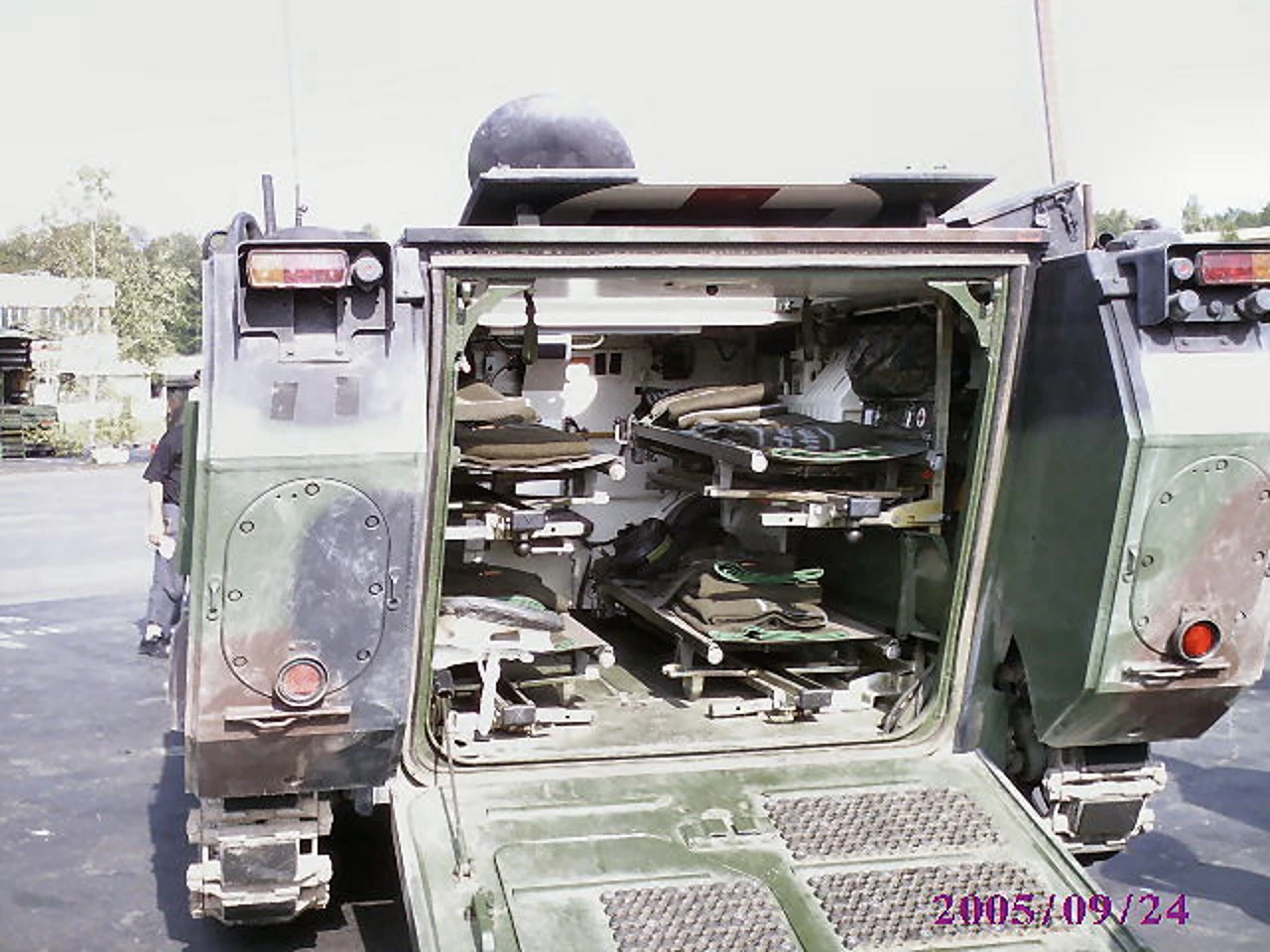
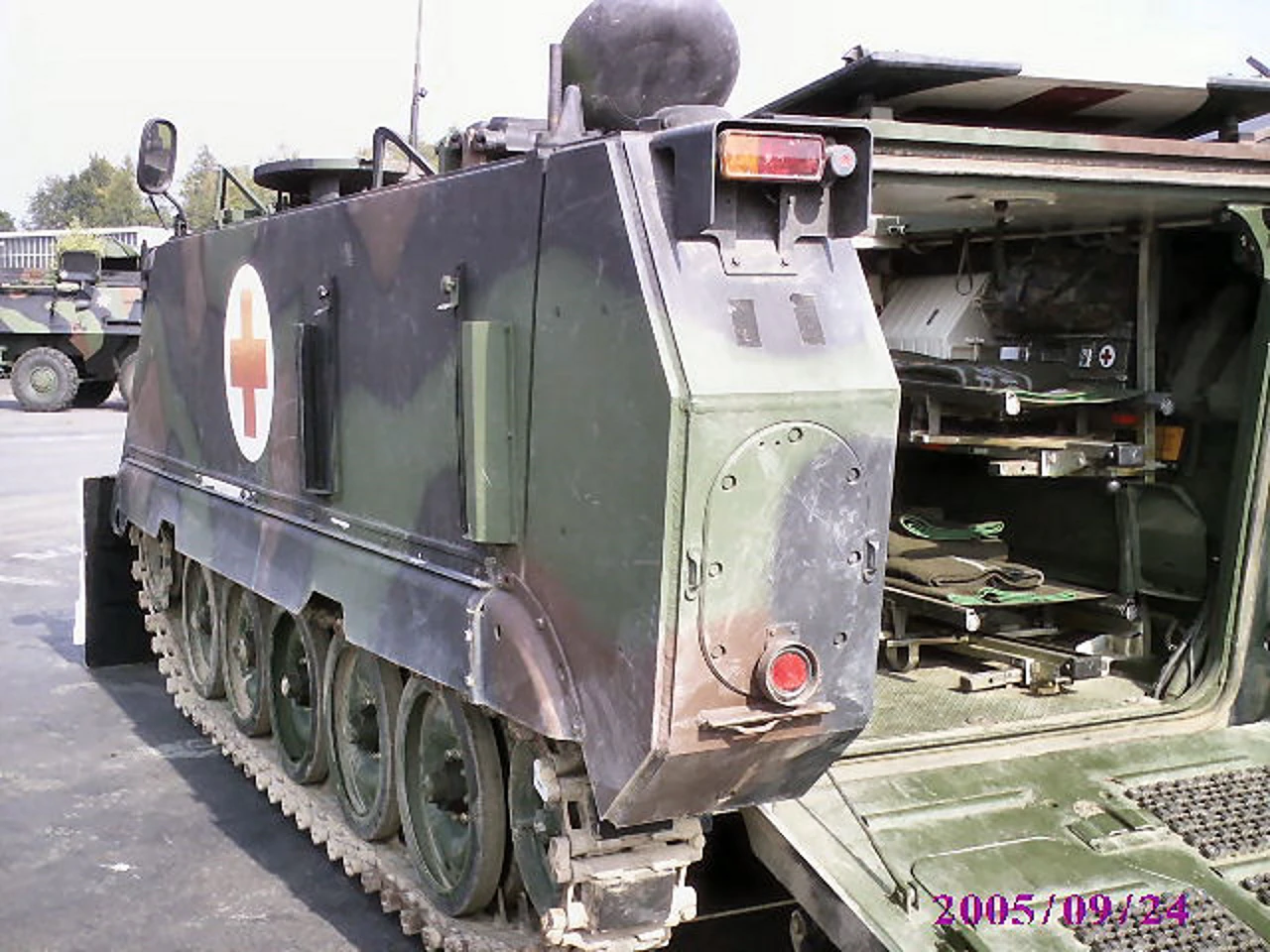
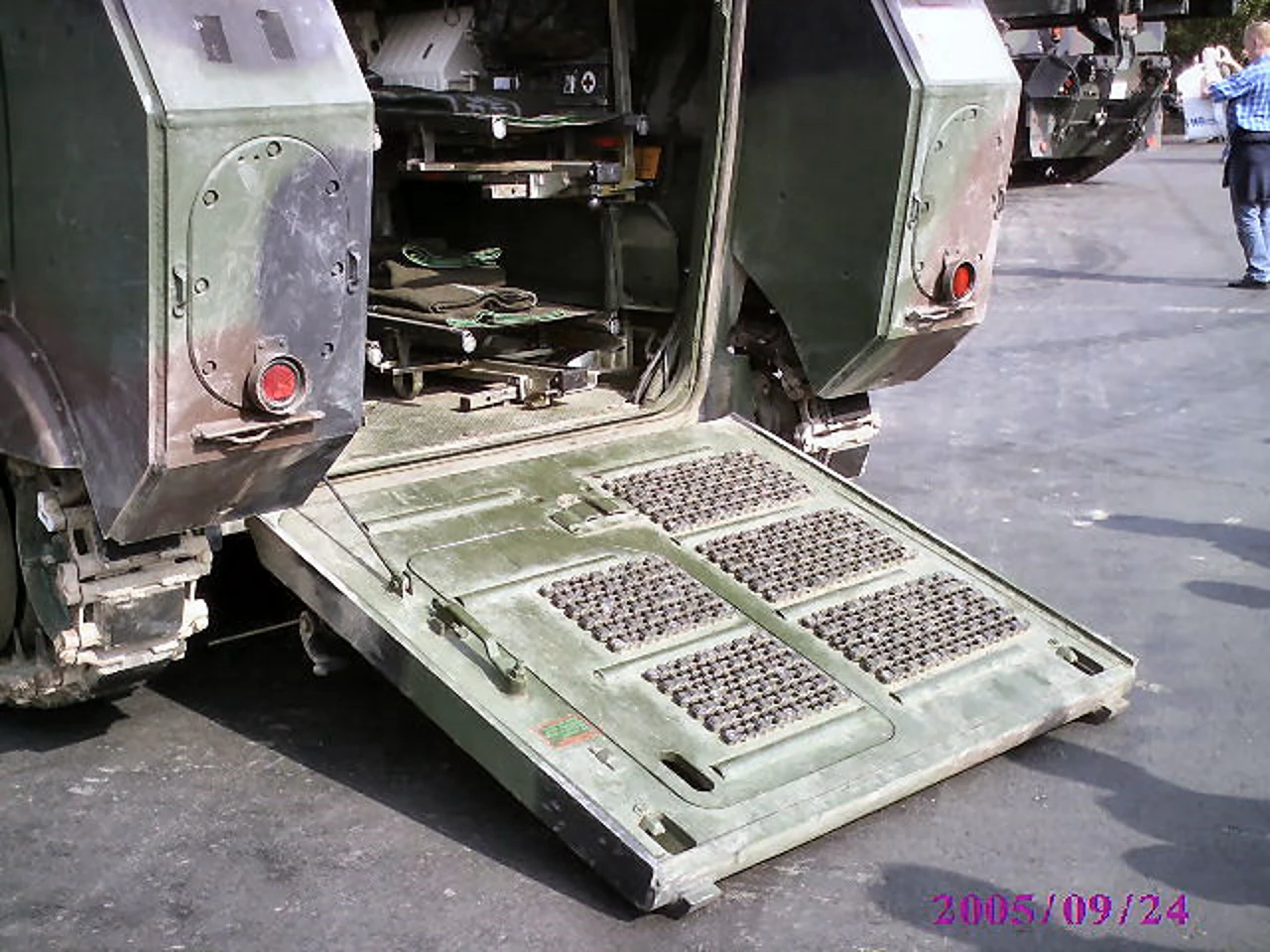
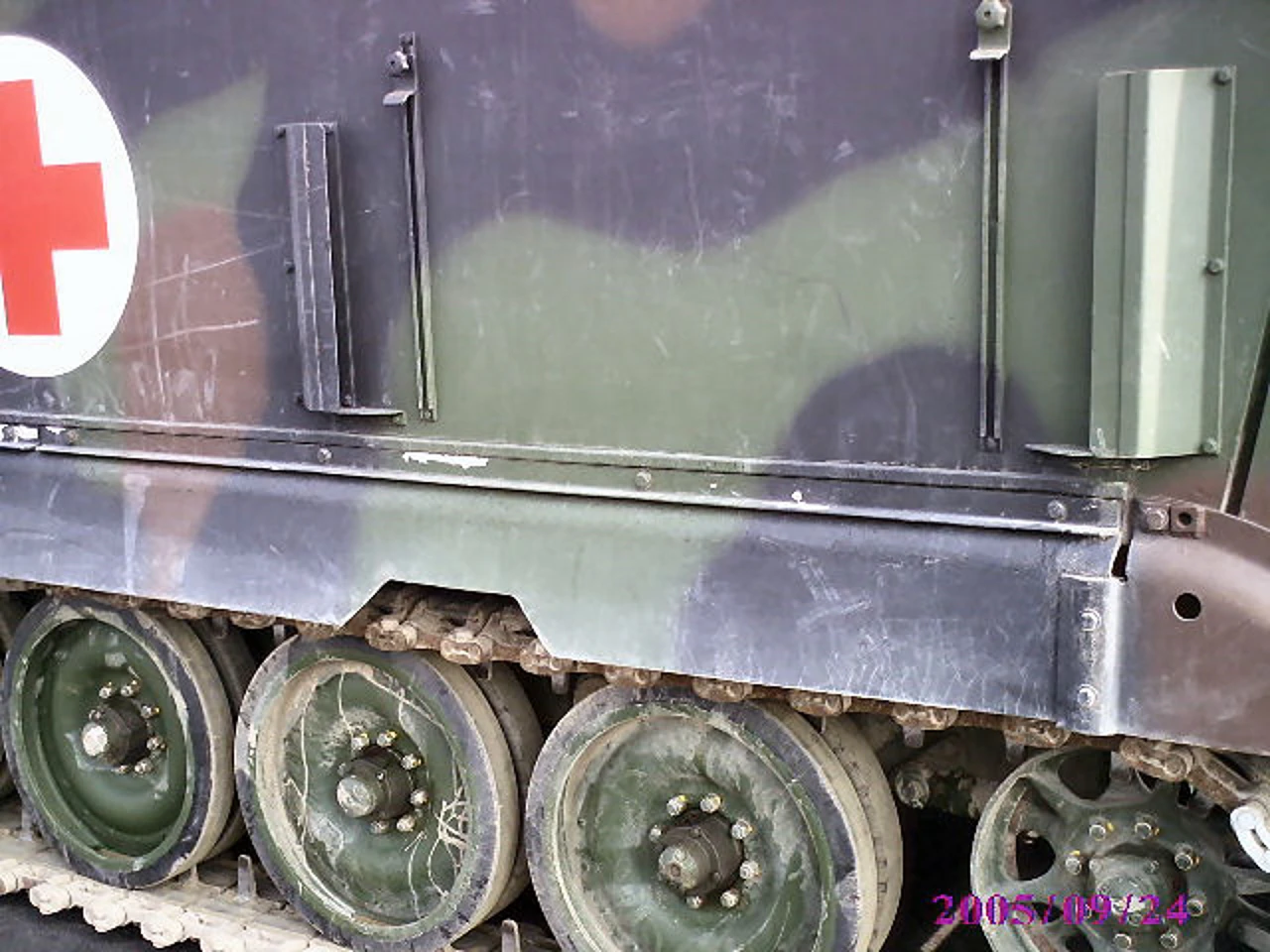
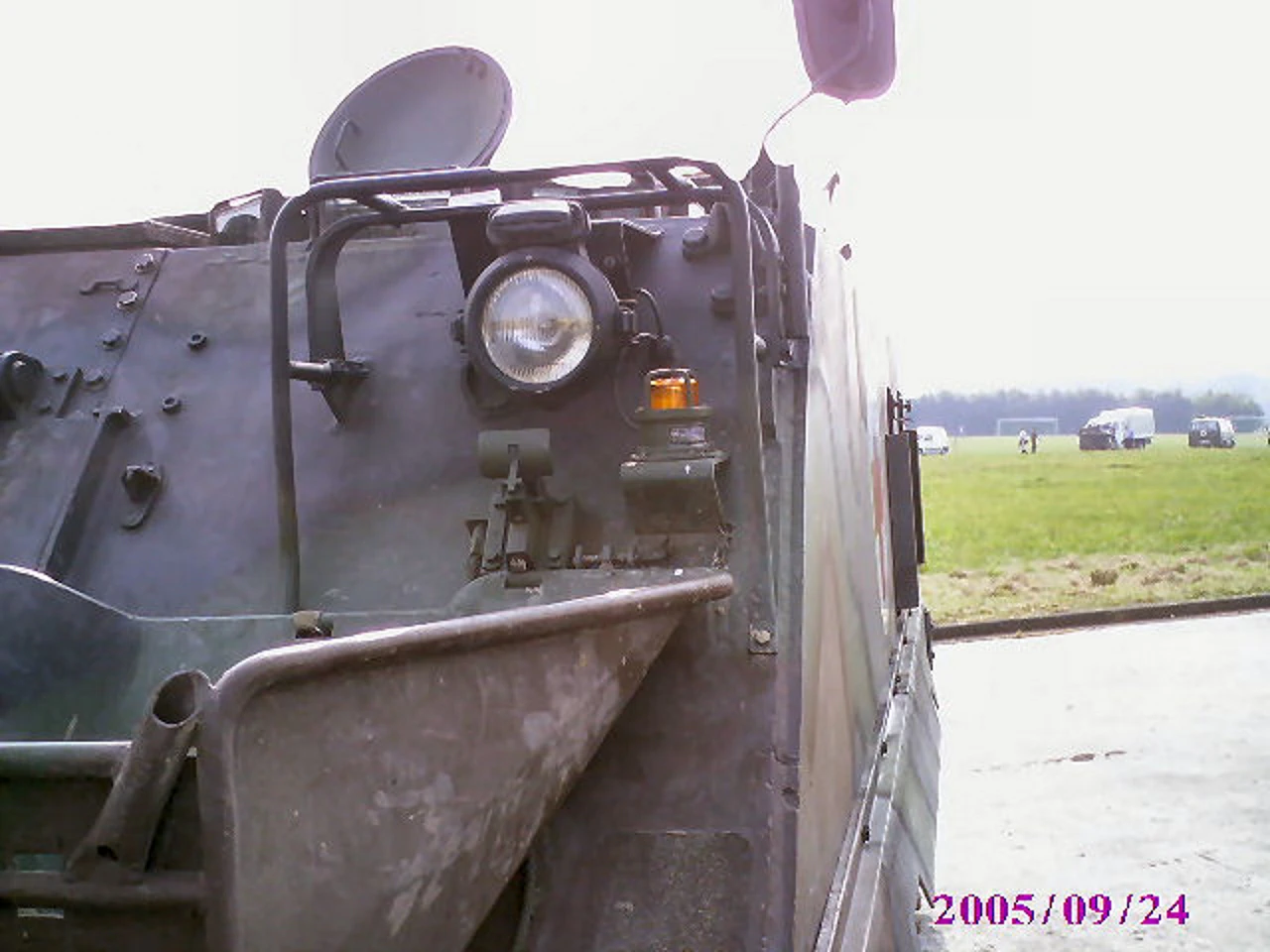
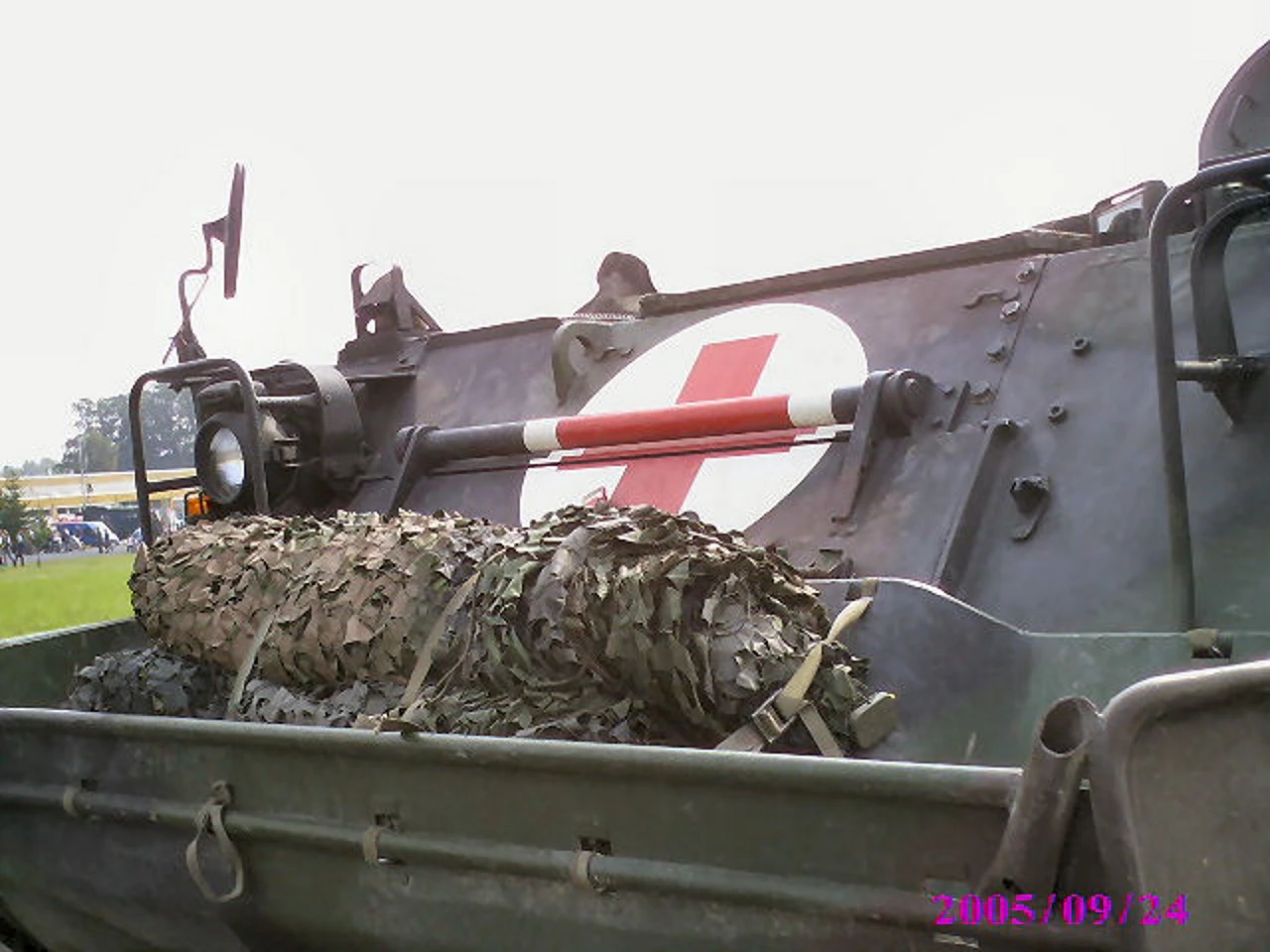
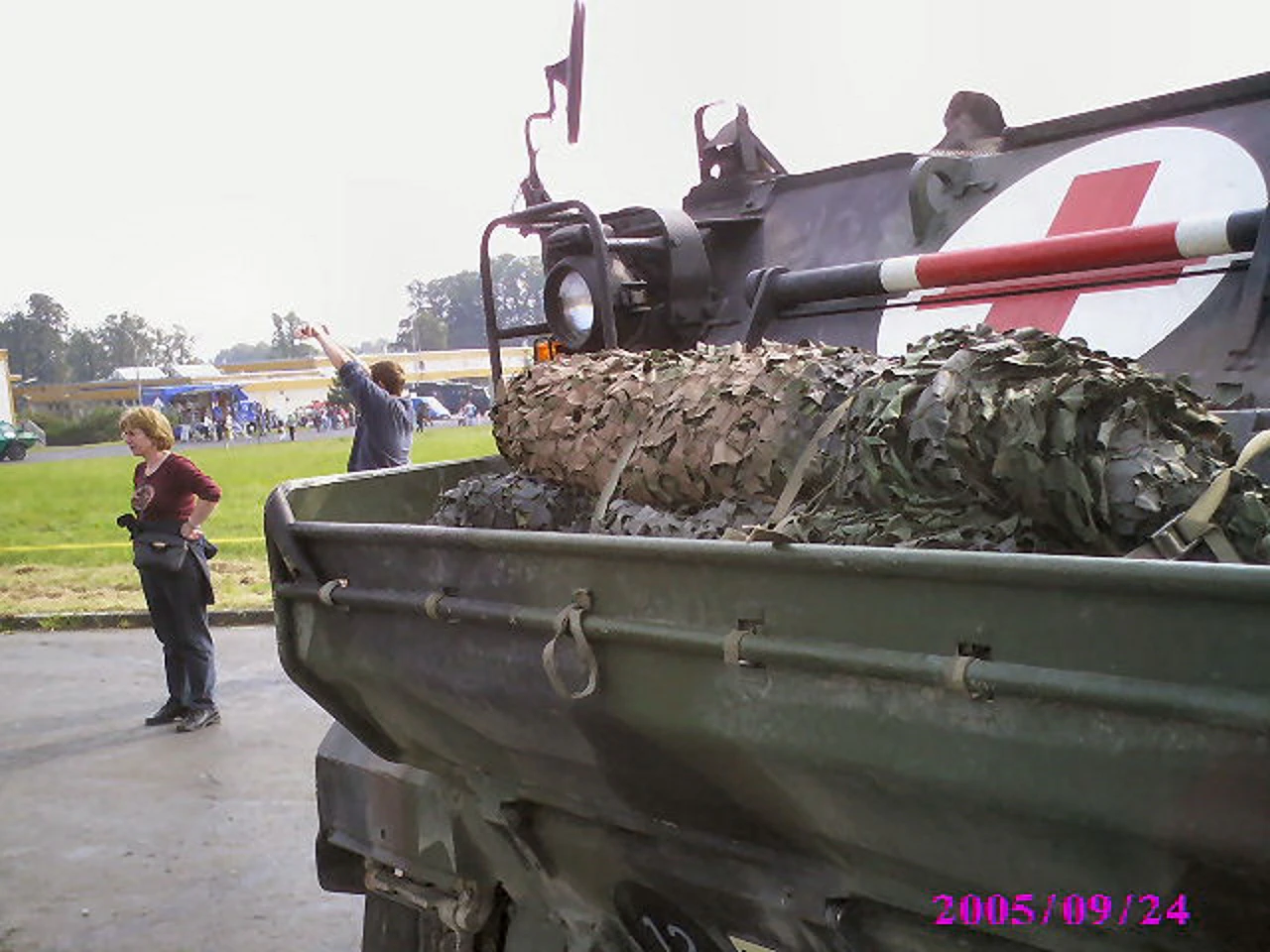
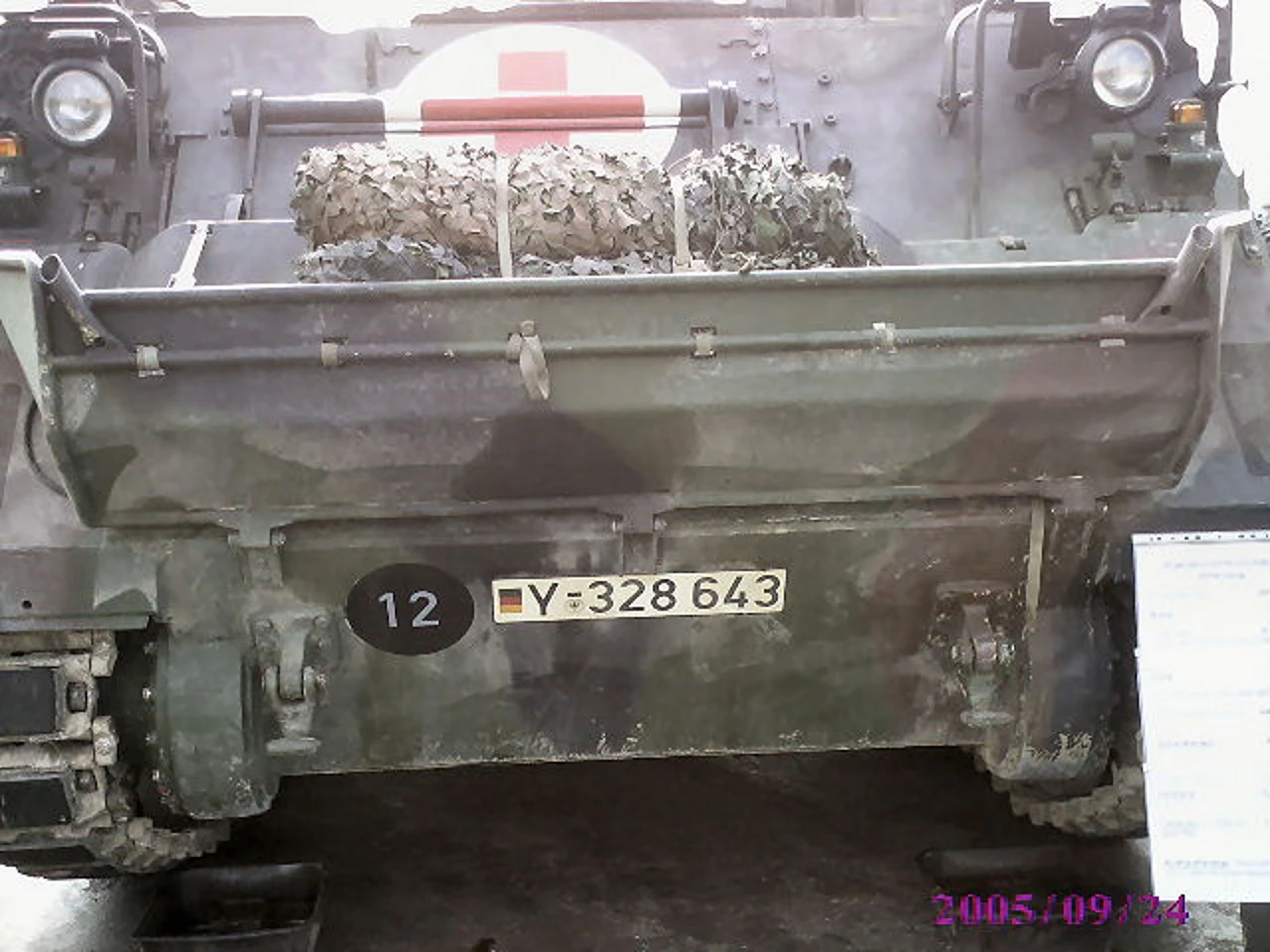
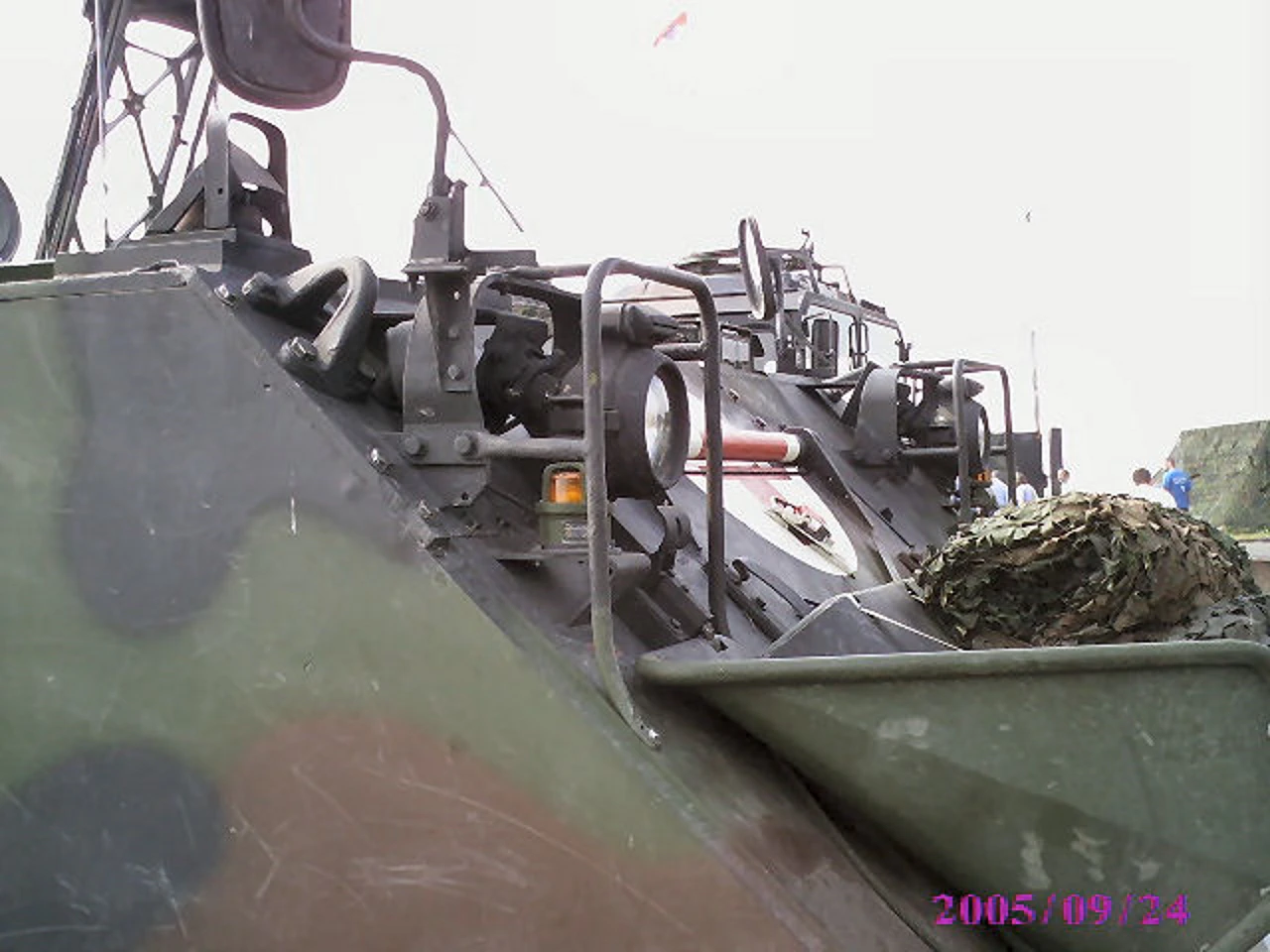
Συλλογή φωτογραφιών ενός M113 Κρκκου,
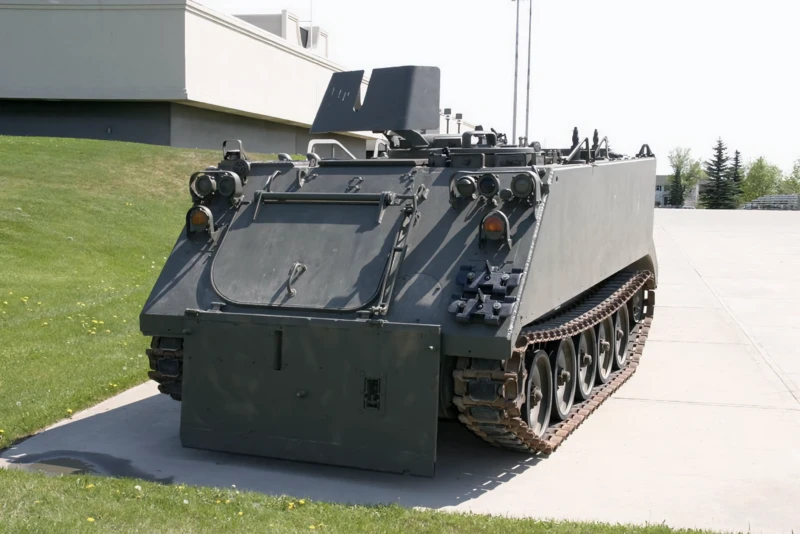
A huge number of M113 Armored Personnel Carrier variants have been created, ranging from infantry carriers to nuclear missile carriers. The M113 armored personnel carrier has become one of the most prolific armored vehicles of the second half of the 20th century, and continues to serve with armies around the world in many roles.
Version KrKw (Krankenkraftwagen) : Ambulance.
Παραλλαγή εντολών, η οροφή πάνω από το πίσω διαμέρισμα στρατευμάτων είναι υψηλότερη. Το όχημα φέρει επίσης πρόσθετους ασυρμάτους και γεννήτρια. Μια παραλλαγή αυτού είναι ο τυποποιημένος ενσωματωμένος μεταφορέας συστημάτων ταχυδρομείου εντολών M1068, εξοπλισμένος με το νεώτερο αυτοματοποιημένο σύστημα διοίκησης και ελέγχου στρατού των ΗΠΑ
Εντοπισμού
Μουσείο Μπάτι χα-Όσεφ
Φωτογραφίες
74
M113A3 Walk Around
Φωτογράφος
Don Busack
Εντοπισμού
Αγνοώ
Φωτογραφίες
67
Beobachtungspanzer M-113 Optronic Walk Around
Φωτογράφος
Unknow
Εντοπισμού
Αγνοώ
Φωτογραφίες
53
Περιμένετε, Αναζήτηση φωτογραφιών M113 για εσάς...
The Box That Moved the World
Teh Μ113is the definitive armored personnel carrier. Introduced in 1960, it revolutionized mechanized infantry by providing a lightweight, amphibious, and air-transportable “box on tracks” that could carry a full squad of soldiers safely to the front lines. While it was never intended to fight as a tank, its simplicity and adaptability led to over 80,000 units being produced in dozens of variants. From the jungles of Vietnam to the deserts of Iraq, the M113 has served in more than 50 countries and remains in active service today, 65 years after its debut.
Attribute
Technical Specification (M113A3)
Ρόλο
Armored Personnel Carrier (APC)
Πλήρωμα
2 (Commander/Gunner, Driver) + 11 Infantry
Hull Material
5083 Aluminum Alloy (Aircraft-grade)
Μηχανή
Detroit Diesel 6V53T, 275 hp (A3 variant)
Maximum Speed
64 km/h (40 mph) on land / 5.8 km/h in water
Main Armament
1 × .50 caliber M2HB machine gun
Combat Weight
12.3 tonnes
Amphibious?
Yes (Propelled by tracks)
Design Engineering: Aluminum Innovation
The Aluminum Hull:To keep the vehicle light enough for air-drops and amphibious use, the M113 was the first mass-produced armored vehicle to use aluminum armor. While it provides the same protection as steel for less weight, it is vulnerable to heavy machine guns and RPGs, leading to the nickname “Aluminum Coffin” among some crews.
The “T-Bar” Steering:Unlike the steering wheels found in some APCs, the M113 uses a simple T-bar lateral control system. Pulling a lever brakes one track, causing the vehicle to turn—a system so intuitive it allowed for rapid training of conscript drivers.
Swimming Capability:The M113 is naturally buoyant. In the water, it is propelled entirely by the movement of its tracks. While slow and possessing a low “freeboard” (the amount of vehicle above water), it allowed infantry to cross rivers without waiting for engineers to build a bridge.
Rear Power Ramp:One of its most influential features was the large hydraulic rear ramp. This allowed an entire squad to deploy or “de-bus” in seconds, staying protected by the vehicle’s hull until the last possible moment.
Operational History: A Thousand Faces
The Vietnam ACAV:Marines and Soldiers in Vietnam modified their M113s into “Armored Cavalry Assault Vehicles” (ACAV), adding gun shields and extra machine guns to turn the “taxi” into a makeshift fighting vehicle for jungle ambushes.
The Variant King:The M113 chassis has been used for everything: theM106mortar carrier, theM163 VADSanti-aircraft gun, theM577command post (with a high roof), and even theΜ901 ΙΤΒ(Improved TOW Vehicle) anti-tank launcher.
Survival in 2026:In the current Russo-Ukrainian War, hundreds of M113s have been donated to Ukraine. Despite their age, they are praised for their mobility in the deep “Rasputitsa” mud, where heavier wheeled vehicles get stuck.
The Successor:While the US Army is replacing the M113 with theArmored Multi-Purpose Vehicle (AMPV), the new vehicle is essentially a turretless Bradley that borrows many of the M113’s “battle taxi” concepts.

 Αγόρασέ μου έναν καφέ

 Panhard PVP – Φώτο & Βίντεο
 Loyd Carrier – Φώτο & Βίντεο
 Schützenpanzer SPz 11-2 Kurz – Φώτο & Βίντεο
 OT-62 TOPAS – Φώτο & Βίντεο
 IDF Achzarit – Φώτο & Βίντεο
 Pansarbandvagn 301 – Φώτο & Βίντεο
 Τεθωρακισμένο όχημα μάχης M114 – Φώτο &; Βίντεο
 M75 APC – Φώτο & Βίντεο
 BTR-40 – Γουόκαρντ
 M59 APC – WalkAround