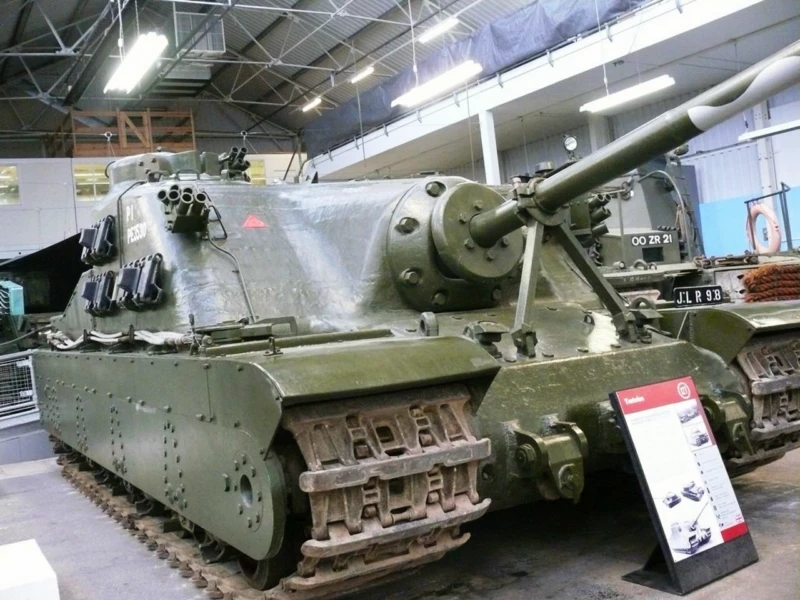
A39 Χελώνα | |
|---|---|
| Χώρα | Ηνωμένο βασίλειο |
| Πληκτρολογήστε | Βαριά δεξαμενή επίθεσης |
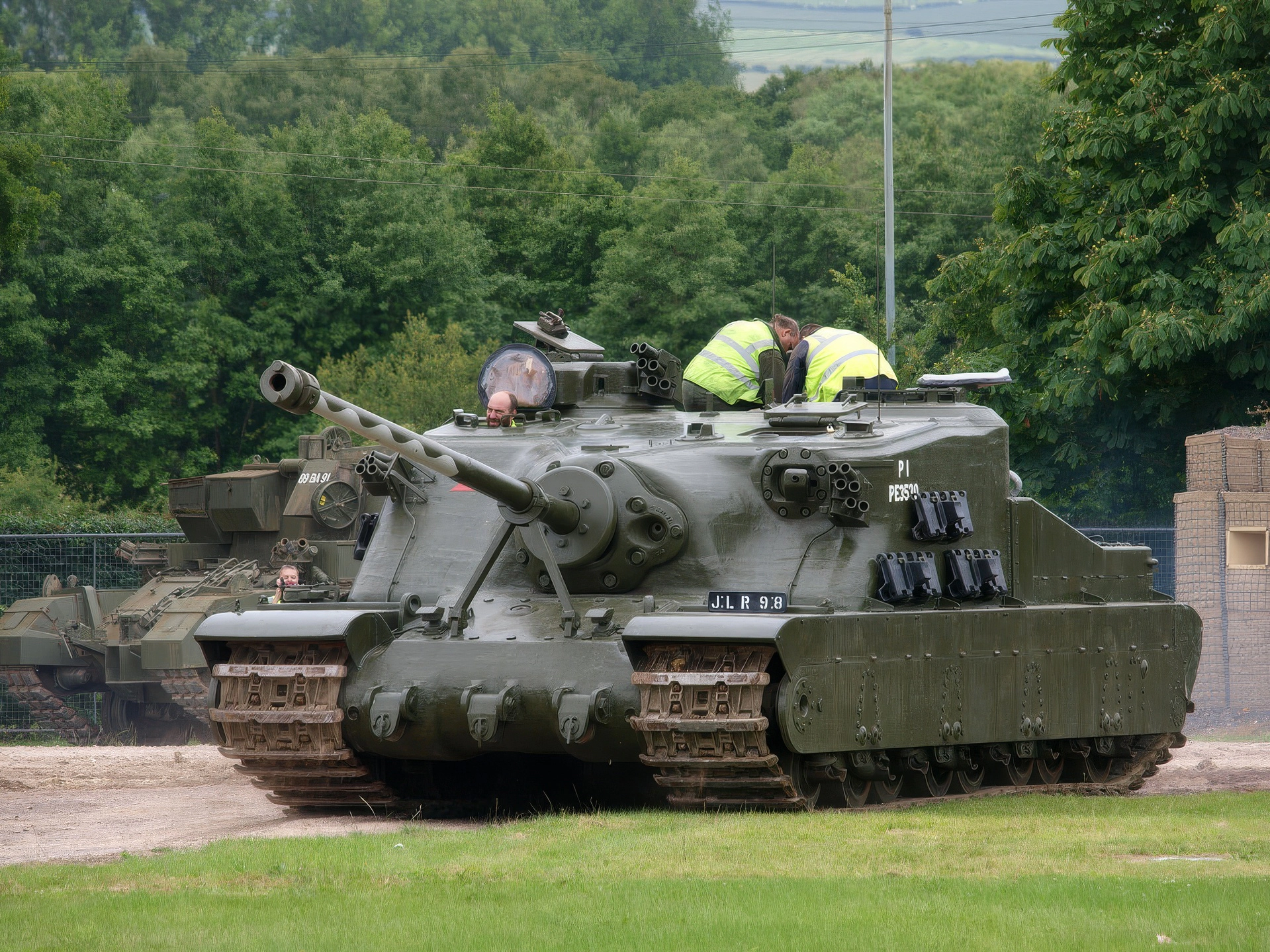
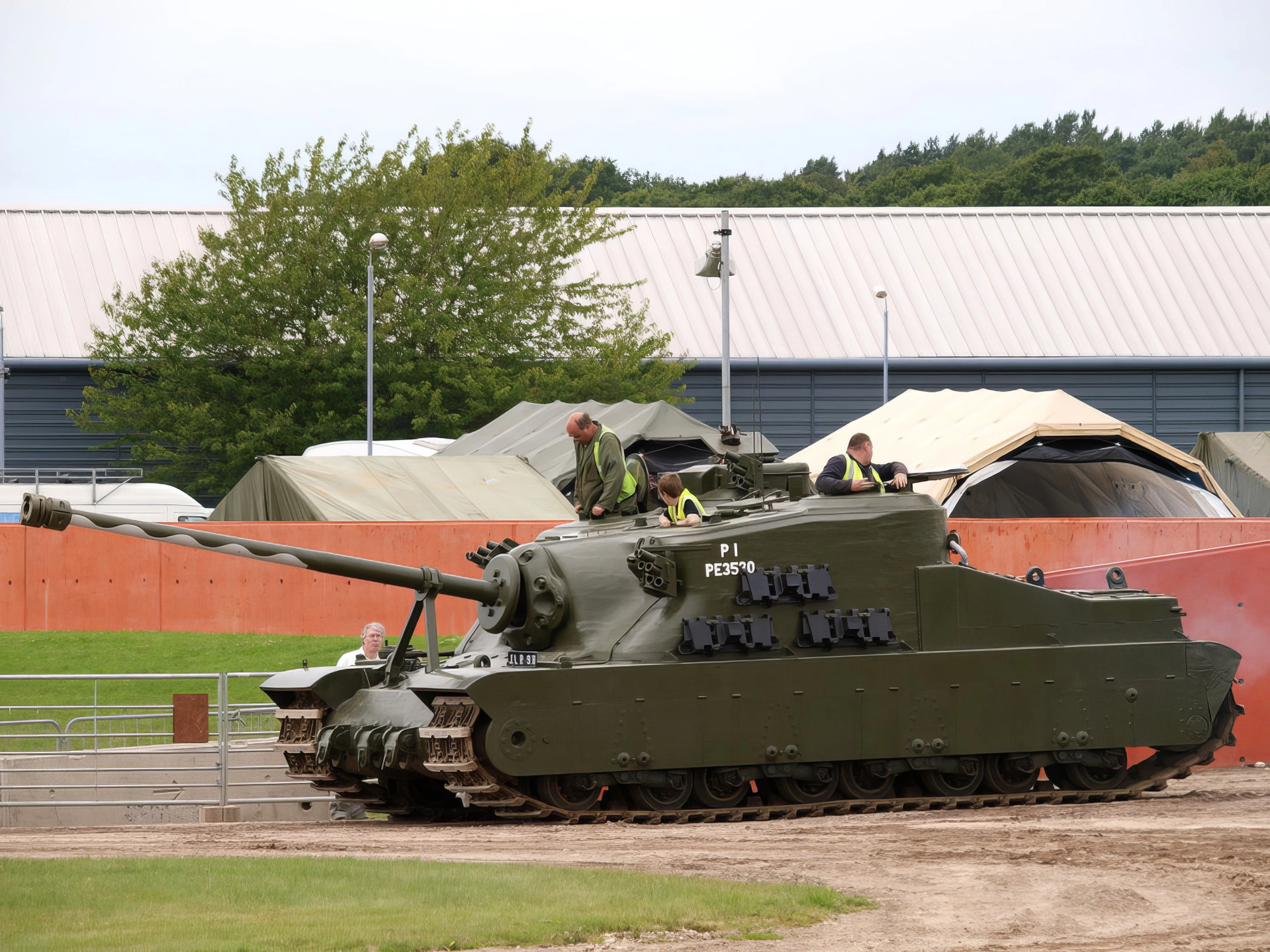
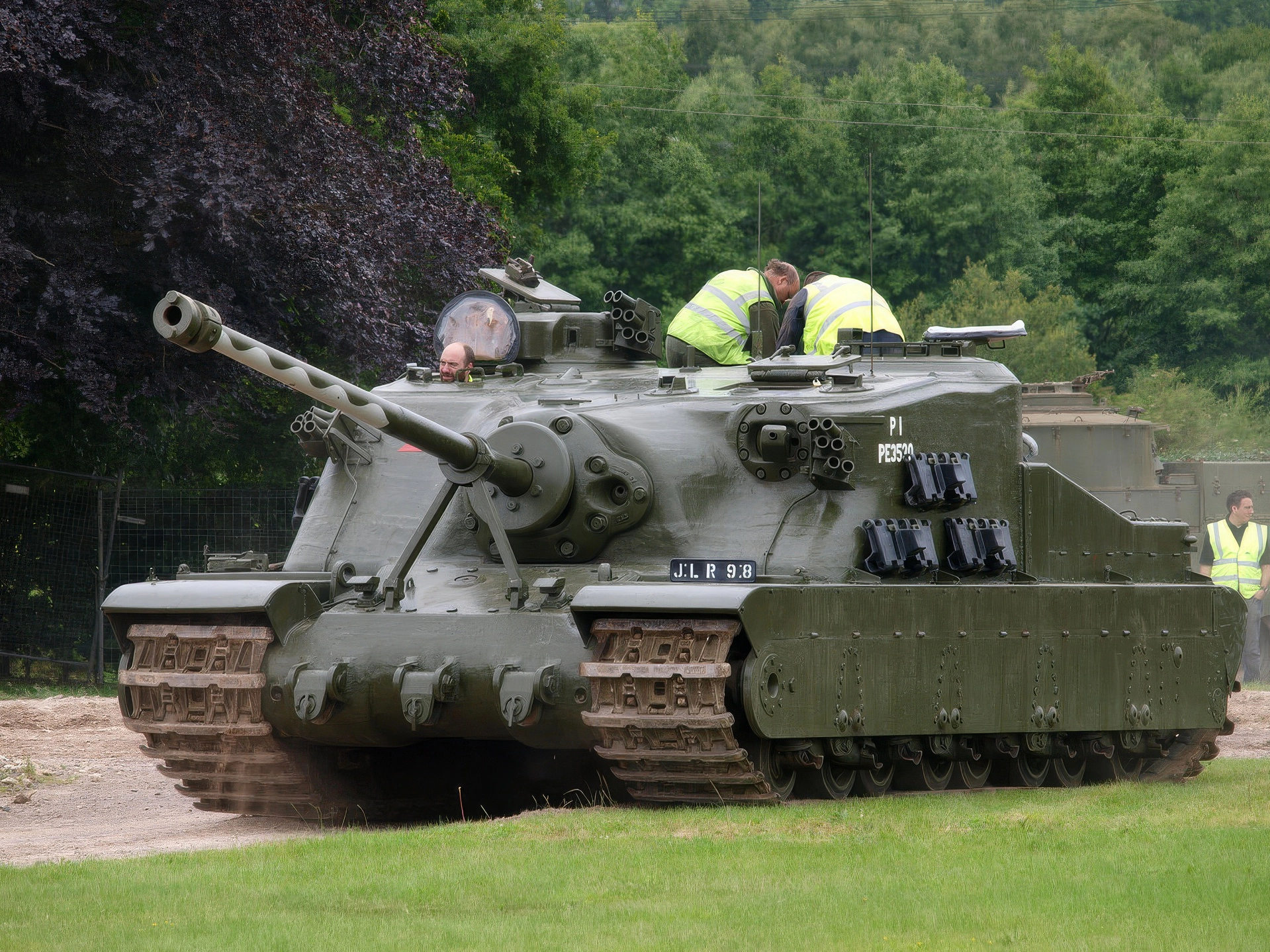
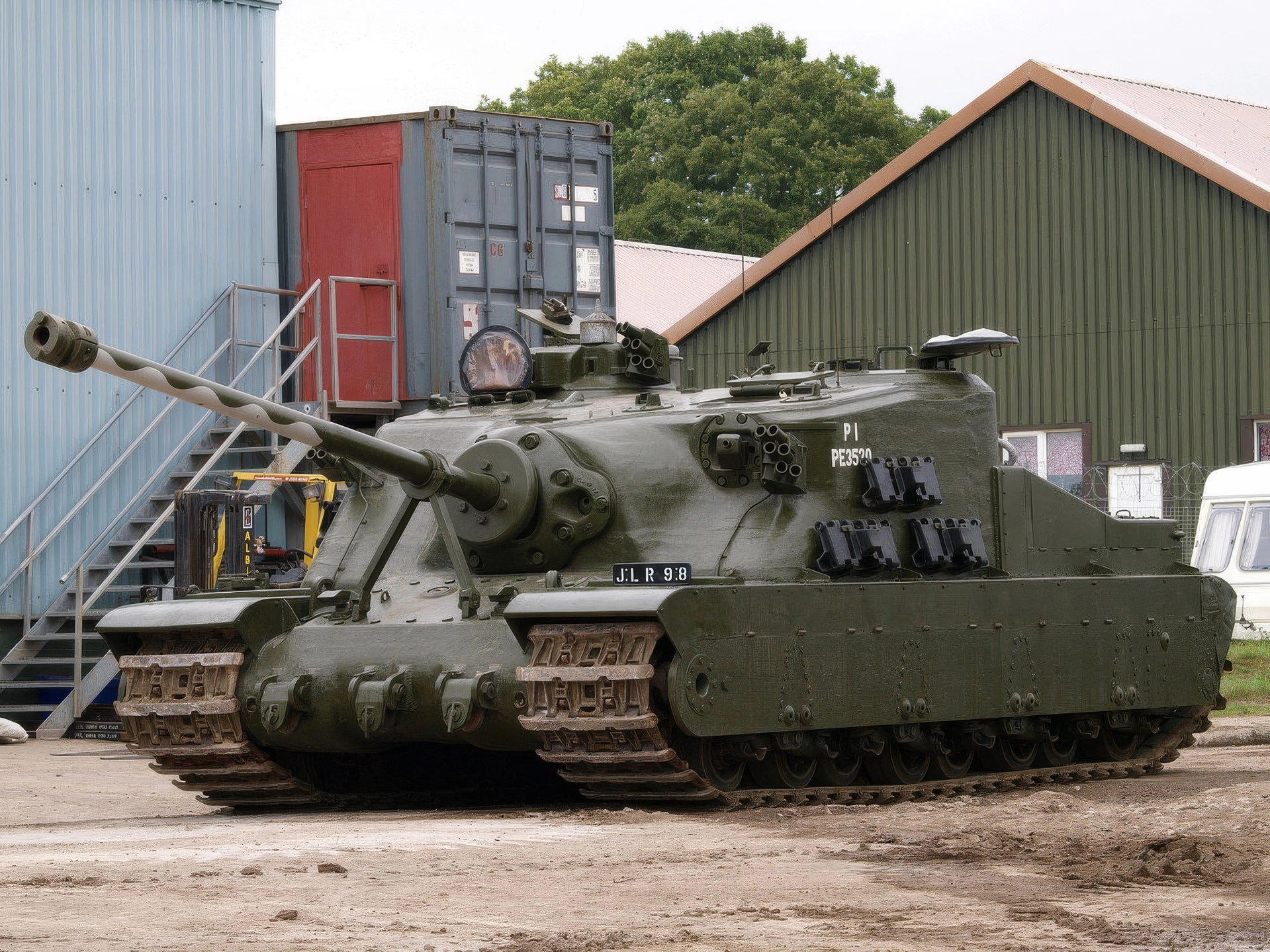
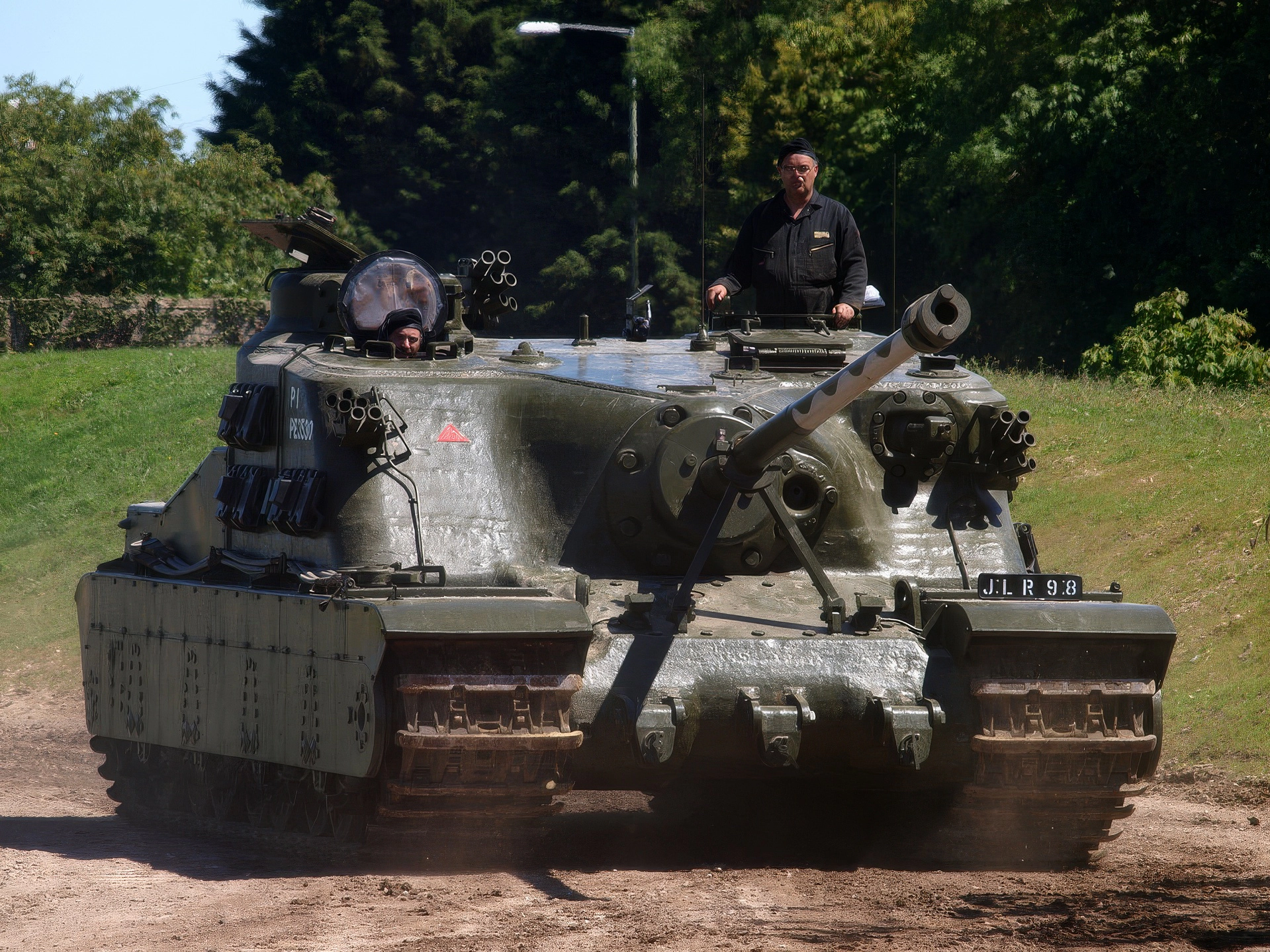
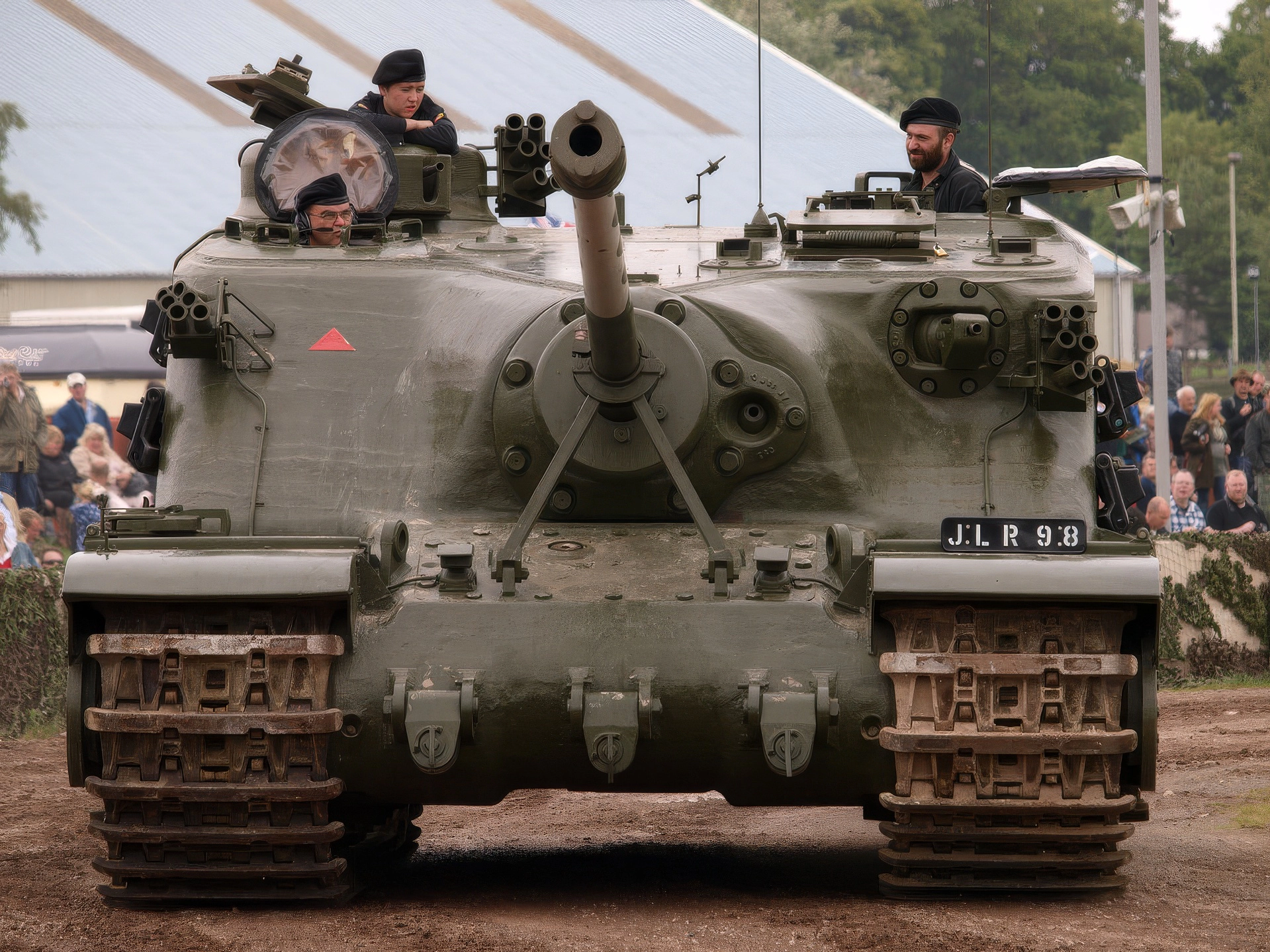
Photo gallery of a A39 Tortoise,The Χελώνα is a British tier 9 tank destroyer.The development of this assault tank began in 1942. The design was finalized by February 1944, and an order was placed for 25 vehicles. However, by the fall of 1947 only five tanks had been manufactured.
Πηγή: Κόσμος των δεξαμενών
| A39 Tortoise – WalkAround | |
|---|---|
| Φωτογράφος | Αγνοώ |
| Εντοπισμού | Αγνοώ |
| Φωτογραφίες | 13 |
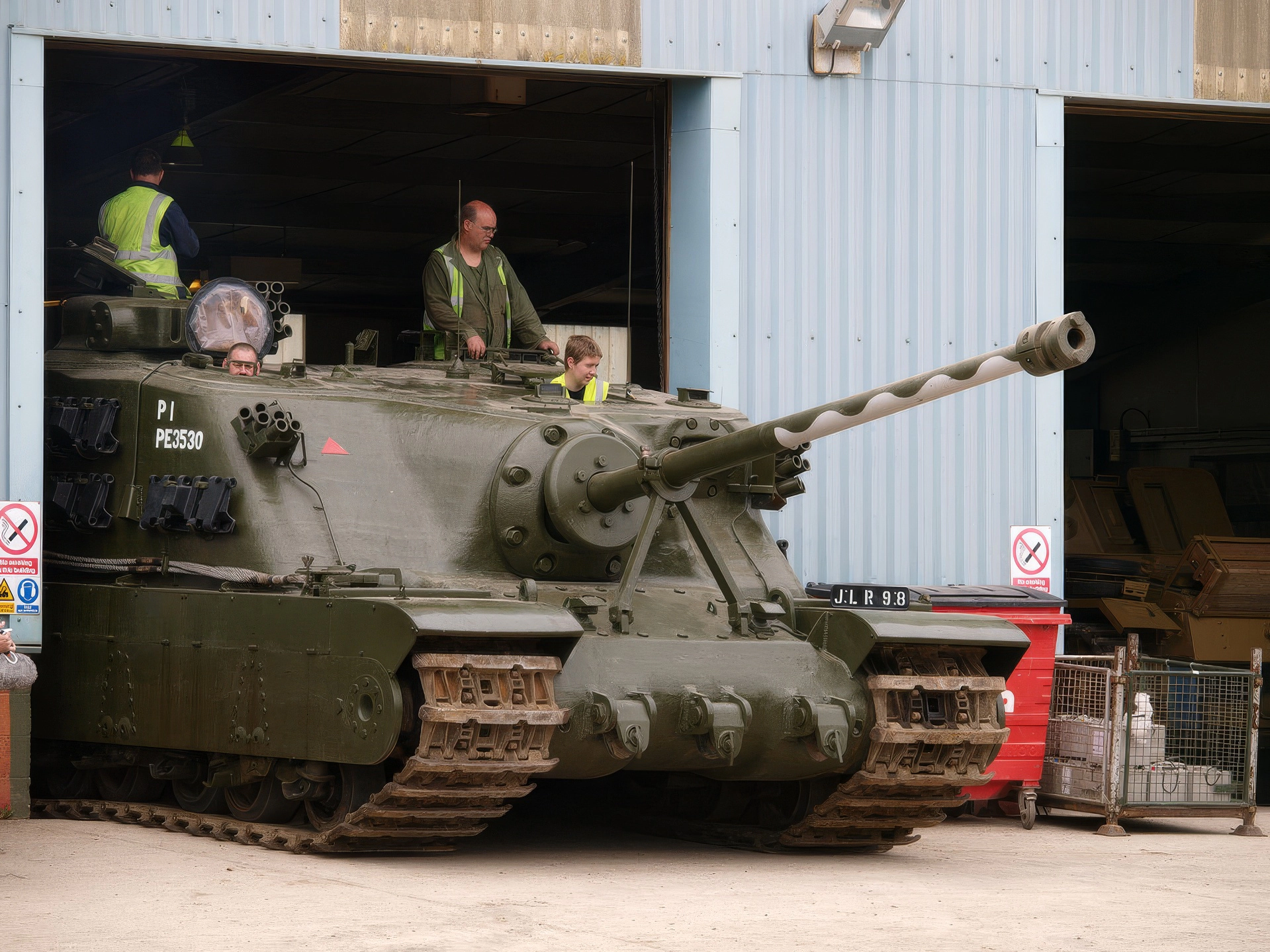
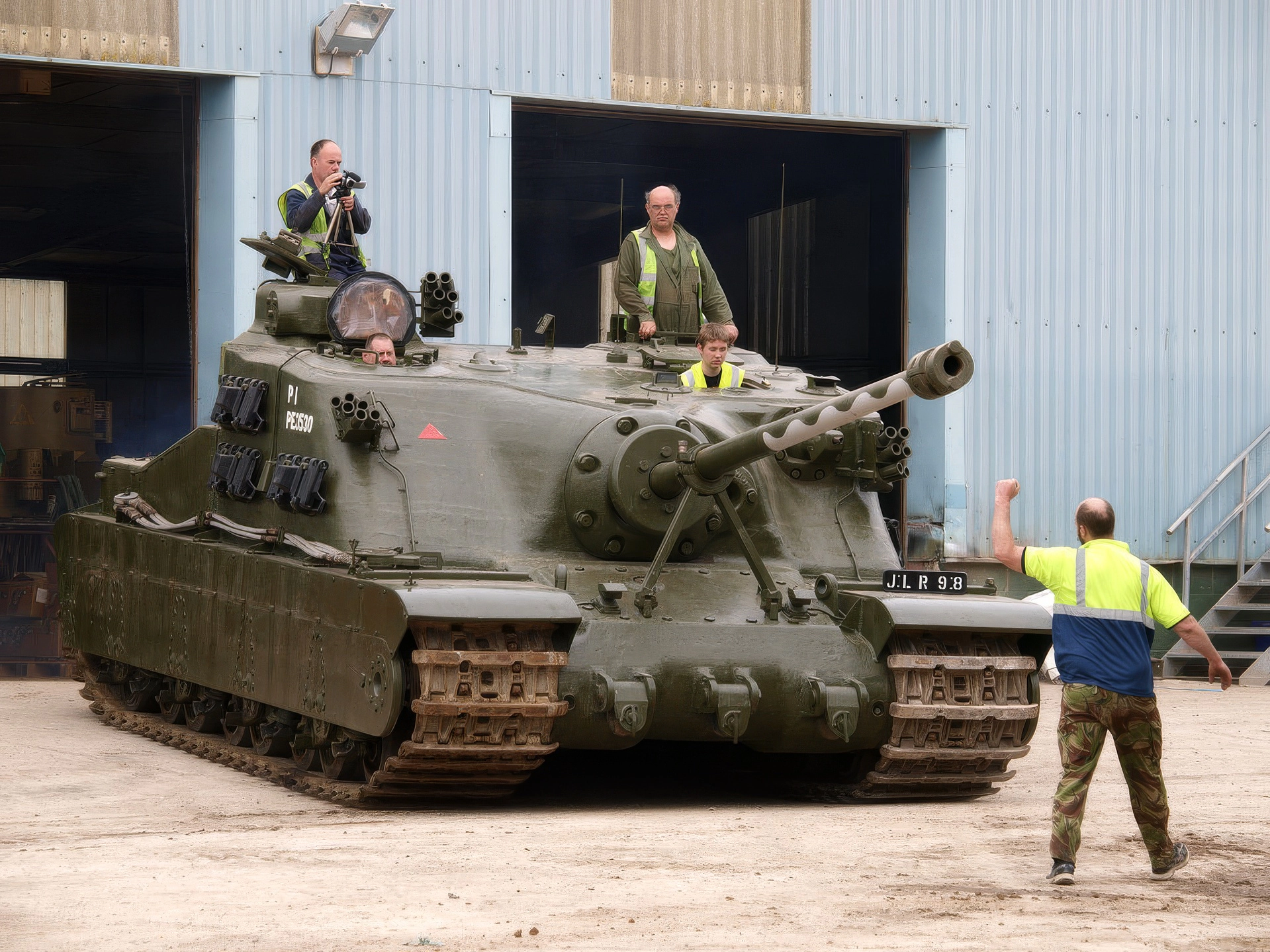
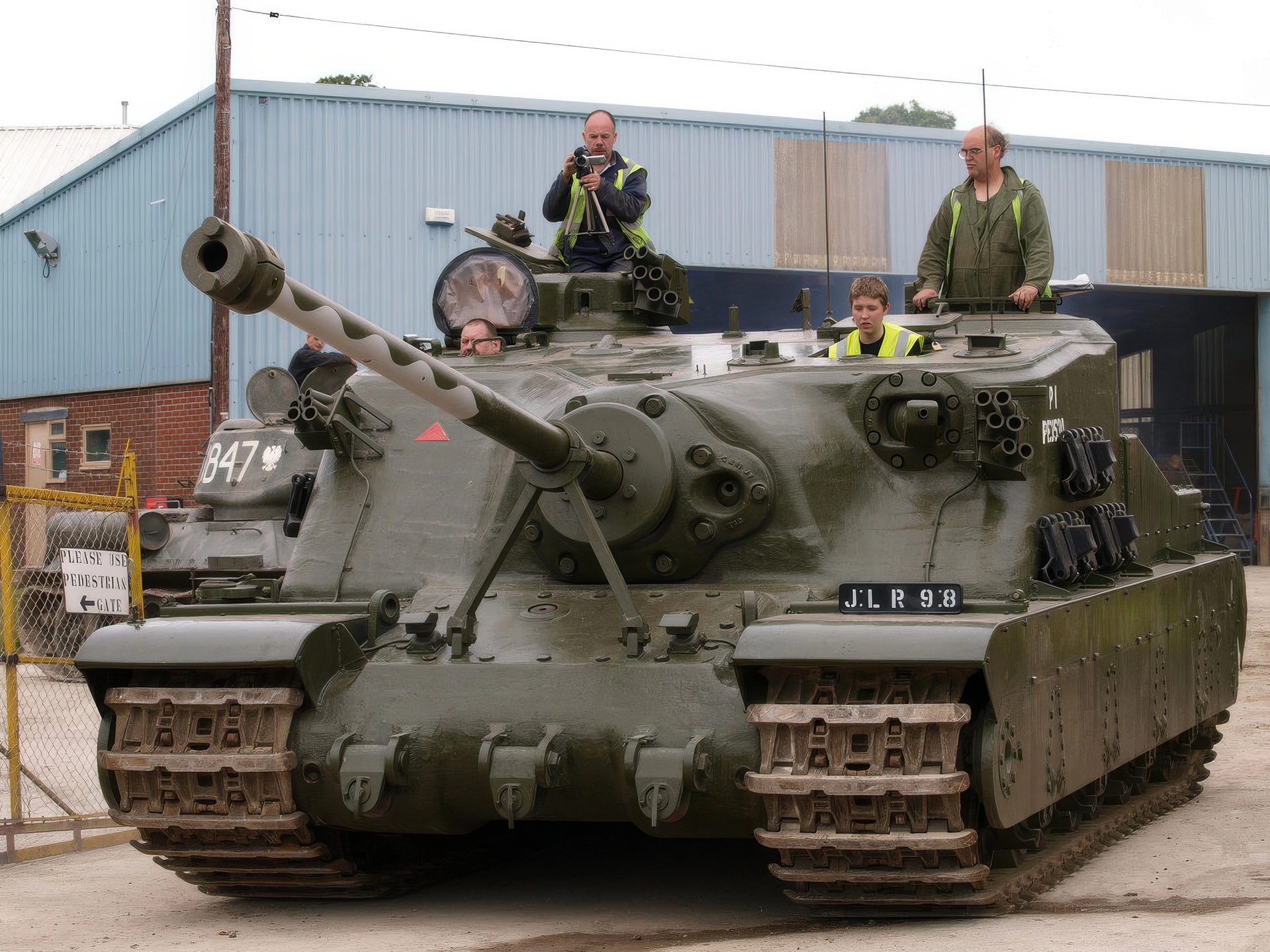

| Tortoise A39 Walk Around | |
|---|---|
| Φωτογράφος | Αγνοώ |
| Εντοπισμού | Αγνοώ |
| Φωτογραφίες | 39 |
Δείτε επίσης:


The **Tank, Heavy Assault, Tortoise (A39)** was a British prototype vehicle designed during World War II. It was conceived as a specialist heavy assault gun with the primary purpose of breaking through heavily fortified defensive lines, such as the German Siegfried Line.
This design philosophy prioritized maximum **armour protection and firepower** over mobility, making the Tortoise one of the heaviest and slowest armored fighting vehicles ever developed by Britain.
Design and Specifications
- Classification: Heavy Assault Gun / Tank Destroyer (often referred to as a Super-Heavy Tank prototype).
- Mass: Approximately 78-80 metric tons (78 long tons).
- Crew: 7 (Commander, Driver, Gunner, two Loaders, and two Machine Gunners).
- Propulsion: Powered by a Rolls-Royce Meteor V12 petrol engine (600–650 hp).
- Speed: Extremely slow, with a maximum road speed of only about 12 mph (20 km/h) and a mere 4 mph (6 km/h) cross-country.
- Armour: Exceptionally thick, featuring up to **228 mm (9 inches)** of frontal armour arranged in a single, massive cast casemate superstructure.
Armament and Firepower
The Tortoise’s main armament was a powerful Ordnance QF 32-pounder (94 mm) gun, which was a modified version of the 3.7-inch anti-aircraft gun. The gun was mounted in a massive, limited-traverse ball-mount in the front hull, which allowed for 40 degrees of traverse (20 degrees left and 20 degrees right) and superior elevation/depression compared to a fixed gun mount.
Secondary armament consisted of three 7.92 mm Besa machine guns: one in a ball mount in the hull alongside the main gun, and two in a small rotating cupola located on the roof of the superstructure.
History and Fate
An initial order for 25 vehicles was placed in 1944, intended for deployment with the 79th Armoured Division. However, the immense complexity and weight of the design led to slow production.
- Production: Only **six prototypes** were completed between 1945 and 1947.
- Operational Status: By the time the vehicles were ready, World War II had ended, rendering their specialist role (breaking the Siegfried Line) obsolete.
- Post-War Trials: Trials conducted in Germany found the Tortoise to be mechanically reliable and an excellent, accurate gun platform. However, its colossal weight and size made transportation logistically impossible for typical military use.
- Survival: Most prototypes were scrapped. One fully restored, operational prototype is preserved and on display at The Tank Museum in Bovington, England.
Θεάσεις : 3790
Μπορείτε επίσης να δείτε:
 Αντικείμενο 770 – Φωτογραφίες και βίντεο
 TOG2 – Φωτογραφίες &; Βίντεο
 Δεξαμενή P26/40 – Φώτο & Βίντεο
 T-28 Super Heavy Tank – Φώτο & Βίντεο
 Δεξαμενή οπλαρχηγού - Περπατήστε γύρω
 IS-2 vol3 - Περπατήστε γύρω
 Τίγρης PzKpfw VIH - Περπατήστε γύρω
 Τίγρης ΙΙ - Konigstiger Vol3 - Περπατήστε γύρω
 Τίγρης Ι – Περίπατος
 JS2-M - Περπατήστε γύρω