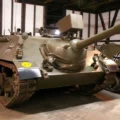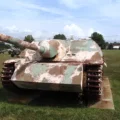
Jagdpanzer IV - Sdkfz.162 | |
|---|---|
| Land | Deutschland |
| Rolle | Jagdpanzer |
| Produziert | Dezember 1943 – April 1945 |
| Gebaut | 2000+ |
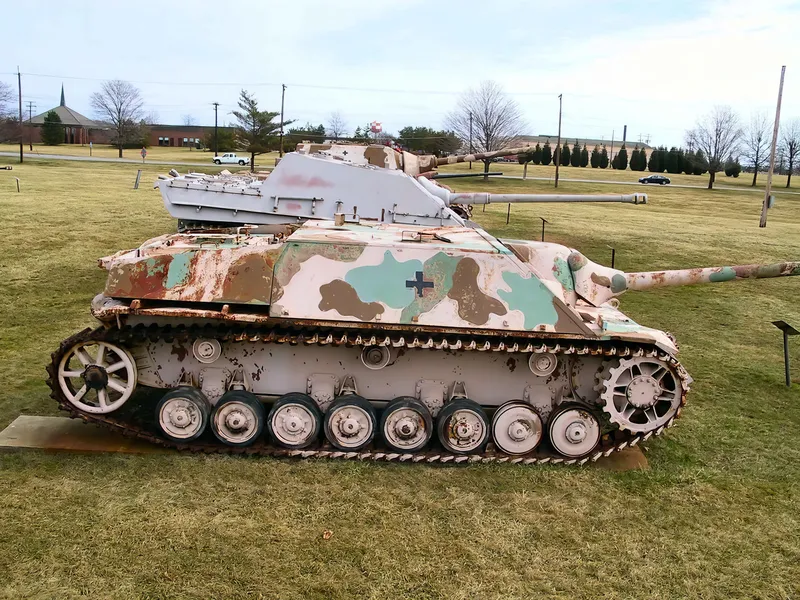
das Jagdpanzer IV, Sd.Kfz. 162, was a German tank destroyer based on the Panzer IV chassis and built in three main variants. As one of the casemate-style turretless Jagdpanzer (tank destroyer, literally “hunting tank”) designs, it was developed against the wishes of Heinz Guderian, the inspector general of the Panzertruppen, as a replacement for the Sturmgeschütz III (StuG III). Guderian objected against the needless, in his eyes, diversion of resources from Panzer IV tank production, as the Sturmgeschütz III was still more than adequate for its role. Officially, only the L/48-armed vehicle was named Jagdpanzer IV. The L/70-armed vehicle was named Panzer IV/70. In this article, both versions are referred to in general as Jagdpanzer IV, except in the variants and surviving vehicles section.
Quelle: Jagdpanzer IV auf Wikipedia
| Jagdpanzer IV | |
|---|---|
| Fotograf | Unknow |
| Lokalisierung | Unbekannter |
| Fotos | 56 |
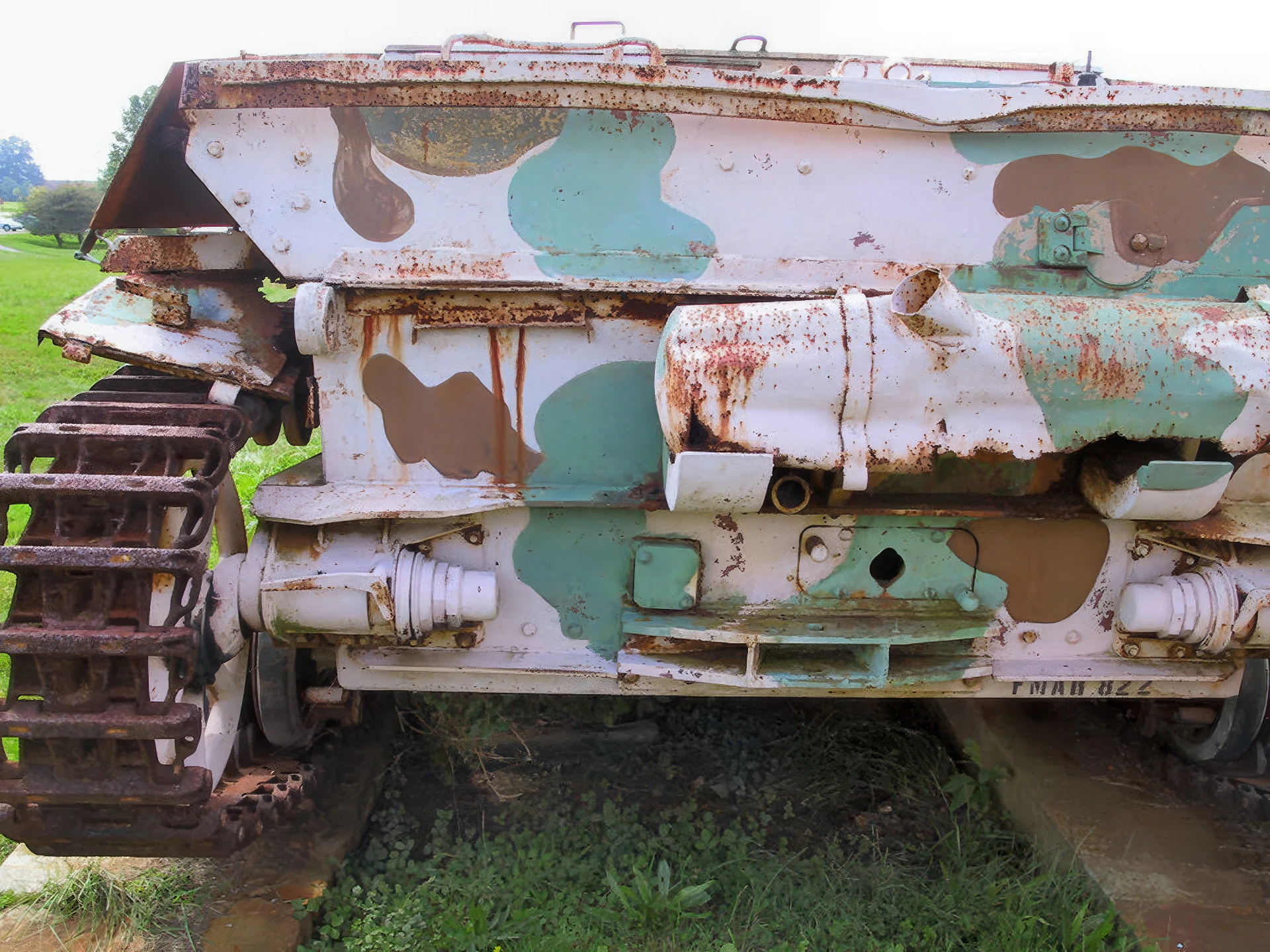
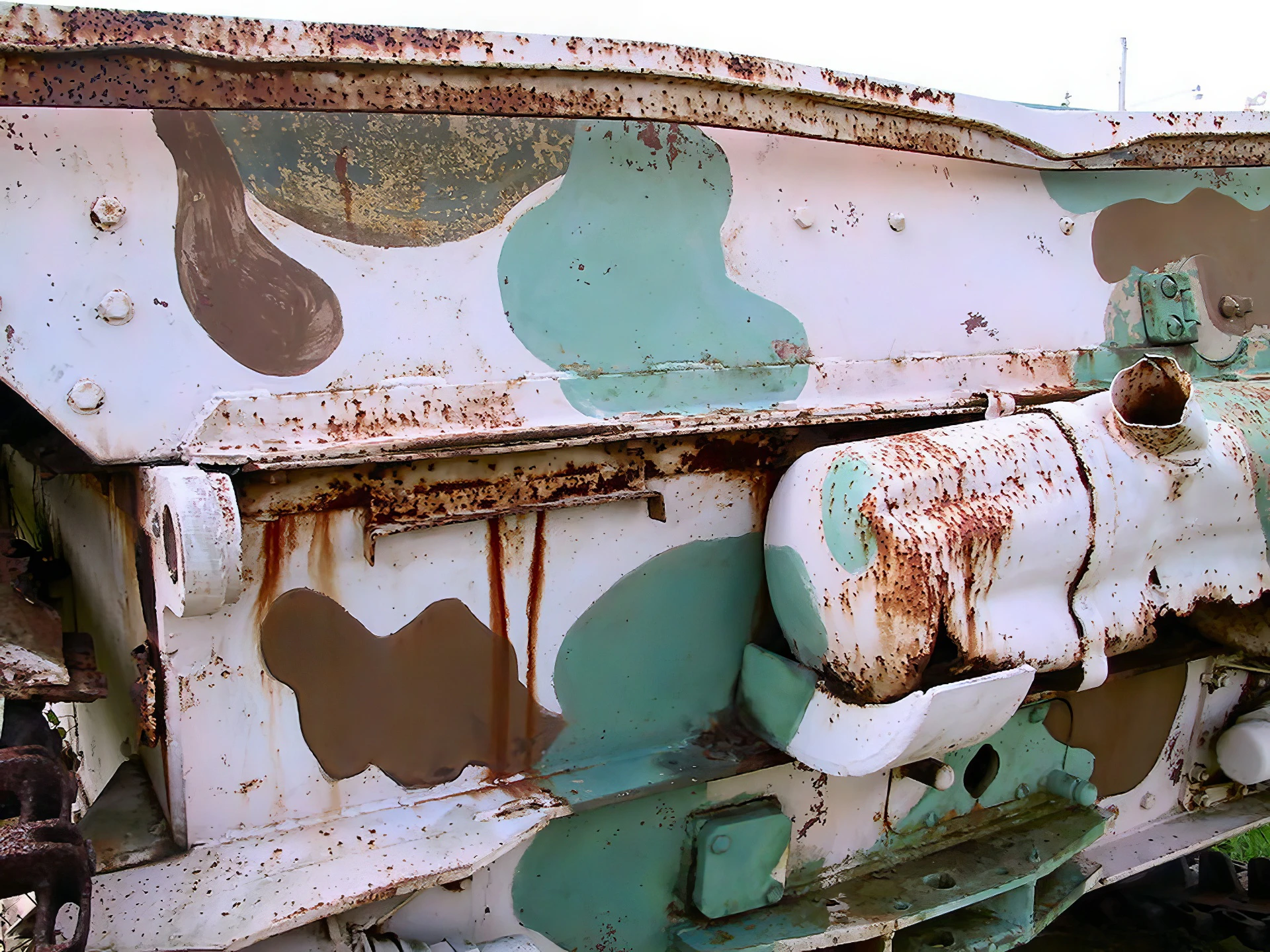

| Jagdpanzer IV | |
|---|---|
| Fotograf | Unknow |
| Lokalisierung | Saumur |
| Fotos | 42 |
| Jagdpanzer IV L-48 walkaround | |
|---|---|
| Fotograf | Unknow |
| Lokalisierung | Saumur |
| Fotos | 26 |
Siehe auch:


General Characteristics and Role
The Jagdpanzer IV (literally “Hunting Tank IV”) was a German tank destroyer based on the reliable Panzer IV chassis. Developed as a successor to the Sturmgeschütz III (StuG III), it featured a low-slung, heavily sloped casemate design rather than a turret. This fixed superstructure allowed for the mounting of a much larger, more powerful gun than could be fitted to the standard Panzer IV turret, while simultaneously offering superior armor protection through sloped plates. Its primary role was defensive: to ambush and destroy enemy tanks using its excellent firepower and low silhouette. The initial version mounted the 7.5 cm PaK 39 L/48 gun, but the definitive and most powerful version, the Jagdpanzer IV/70 (V) and (A), mounted the formidable 7.5 cm PaK 42 L/70, the same high-velocity gun used on the Panther tank. The vehicle was widely respected by its crews for its protection and lethality.
| Property | Typical Value (Jagdpanzer IV/70) |
|---|---|
| Typ | Tank Destroyer (Jagdpanzer) |
| National Origin | Nazi-Deutschland |
| Hersteller | VOMAG (V) and Alkett (A) |
| Entered Service | 1944 |
| Crew | 4 (Commander, Gunner, Loader, Driver) |
| Combat Weight | Approx. 25.8 tonnes |
| Length (Hull) | 6.23 m (20 ft 5 in) |
Powerplant and Firepower
- Engine: 1 x Maybach HL 120 TRM V-12 water-cooled petrol engine.
- Engine Power: 300 hp (220 kW).
- Maximum Road Speed: 40 km/h (25 mph).
- Main Armament: 1 x 7.5 cm PaK 42 L/70 cannon (typically 55 rounds), capable of defeating most Allied armor at long range.
- Secondary Armament: 1 x 7.92 mm MG 42 machine gun (often mounted in an internal slot or on the superstructure roof).
- Armor (Front Casemate): 80 mm (3.15 in) angled at 45 degrees, providing very high effective thickness against frontal fire.
- Suspension: Torsion bar suspension (inherited from the Panzer IV).
- Low Profile: The casemate structure significantly reduced the vehicle’s height compared to a turreted tank, making it excellent for defensive concealment.
Service History and Legacy
- Frontline Service: The Jagdpanzer IV served exclusively on the Eastern and Western Fronts from early 1944 until the end of the war, participating in major battles like the Battle of the Bulge.
- Variants: The main production variants were the original L/48 gun version (Sd.Kfz. 162) and the later, more heavily armed L/70 version (Sd.Kfz. 162/1). The L/70 version was built by both VOMAG and Alkett, the latter having a taller superstructure (‘A’ variant) due to production needs.
- Effectiveness: It was highly valued by its crews for its low profile and formidable frontal armor protection, which could often defeat Allied anti-tank fire.
- Logistics: Sharing many components with the Panzer IV simplified production and maintenance, a critical advantage for Germany late in the war.
- Post-War Use: A number of captured Jagdpanzer IVs were used by the Syrian Army in the 1950s and 1960s, notably seeing action during the Six-Day War in 1967.
Views : 10338