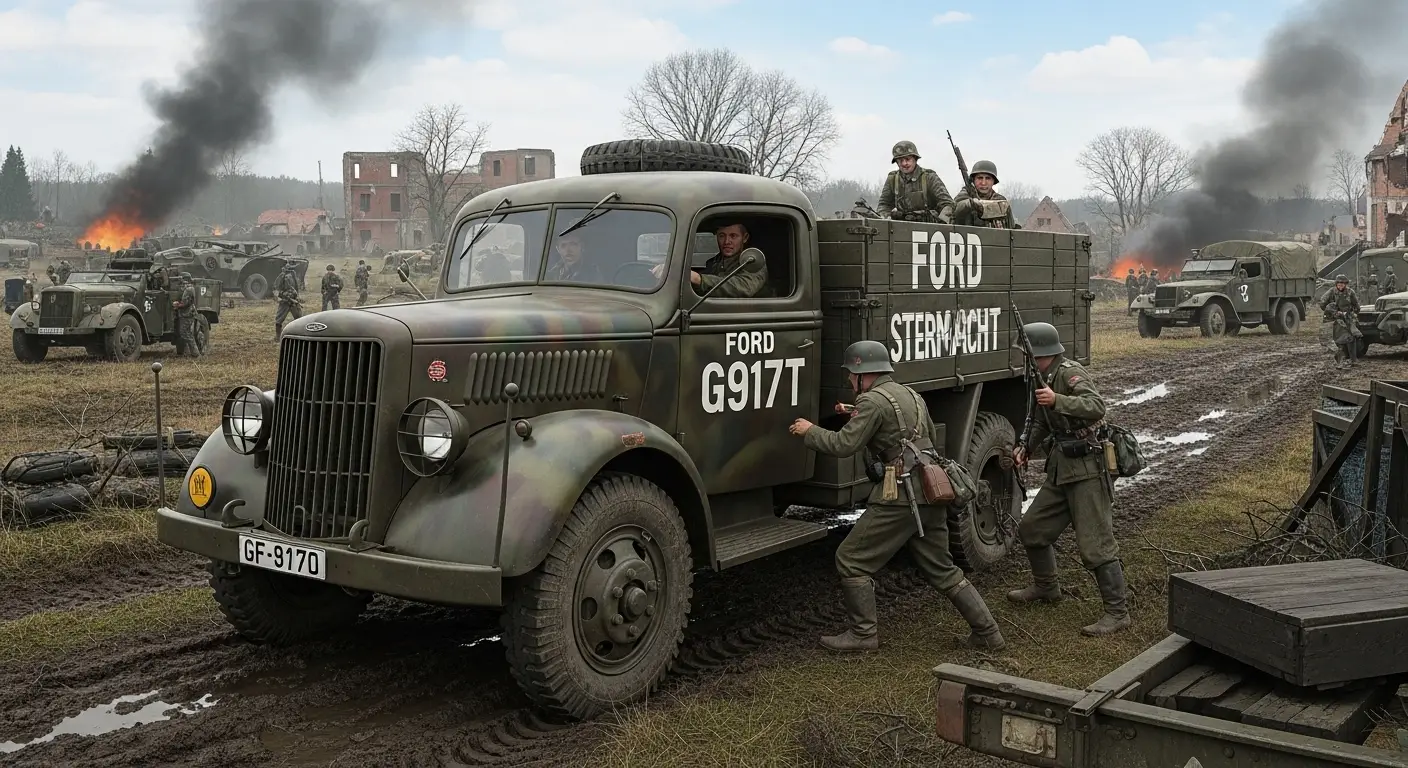
Ford G917T 3-ton | |
|---|---|
| Země | Německo |
| Typ | Střední tonáž těžkých nákladních vozidel |
| Výroby | 1939 – 1942 |
| Postaven | 25199 |
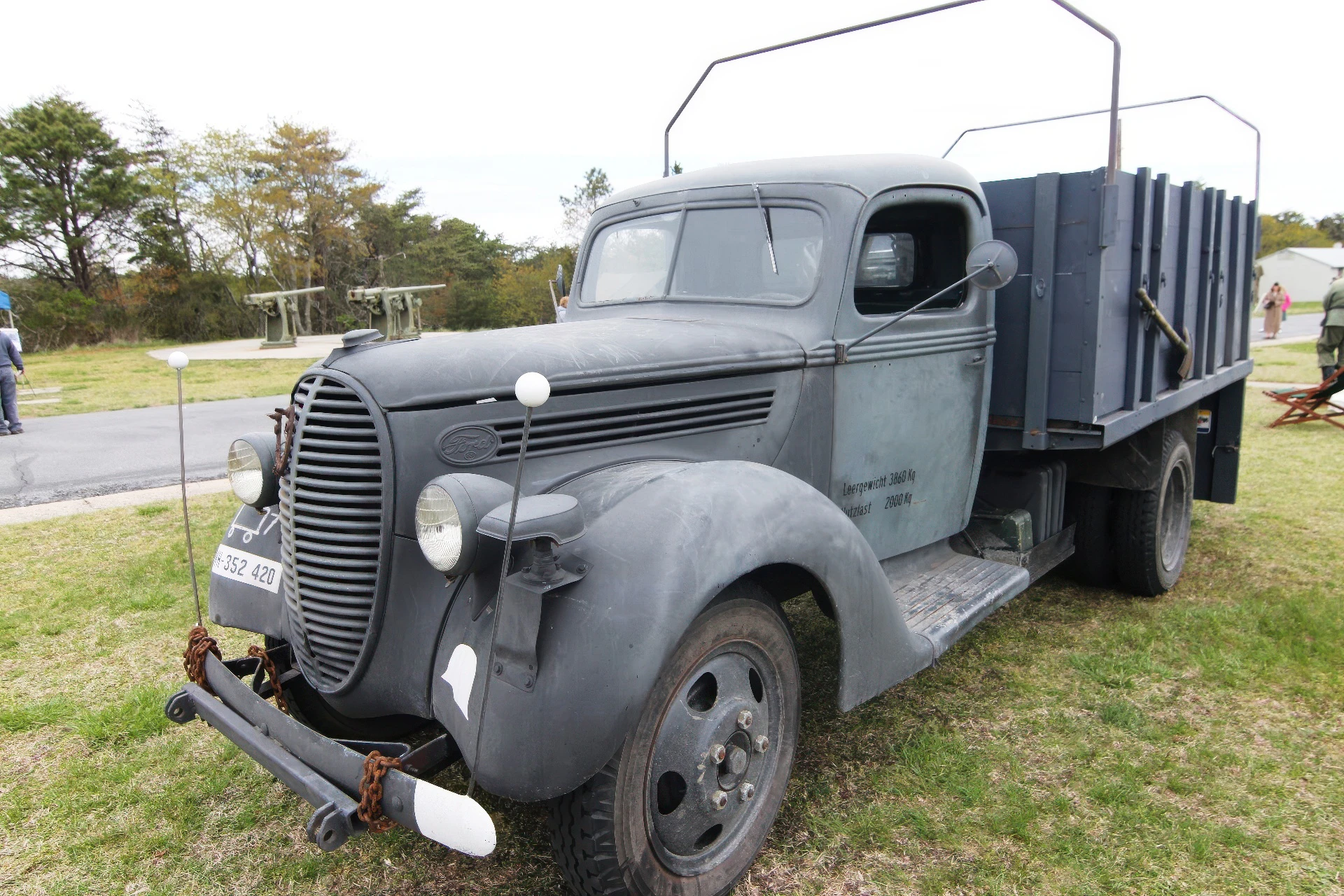
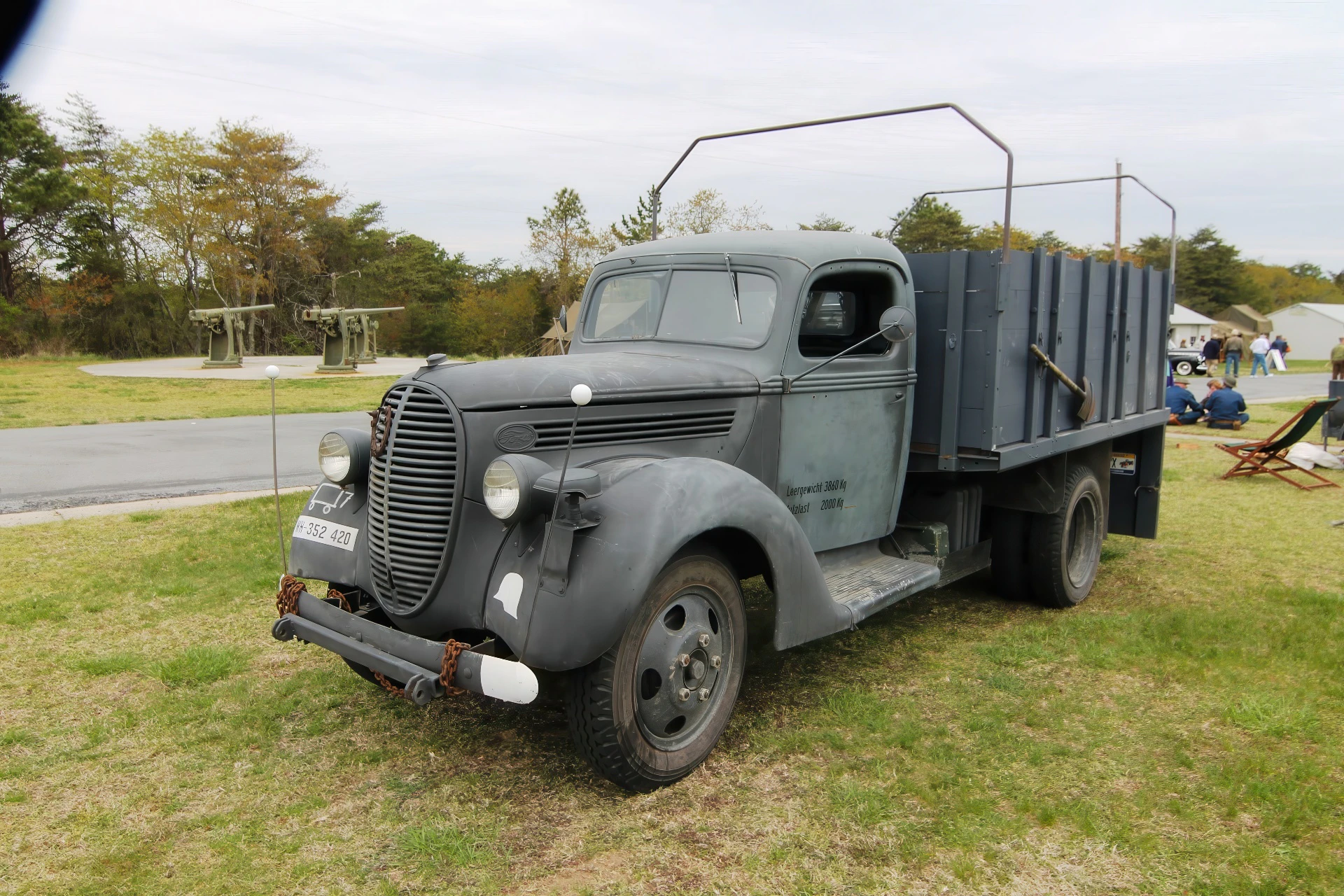
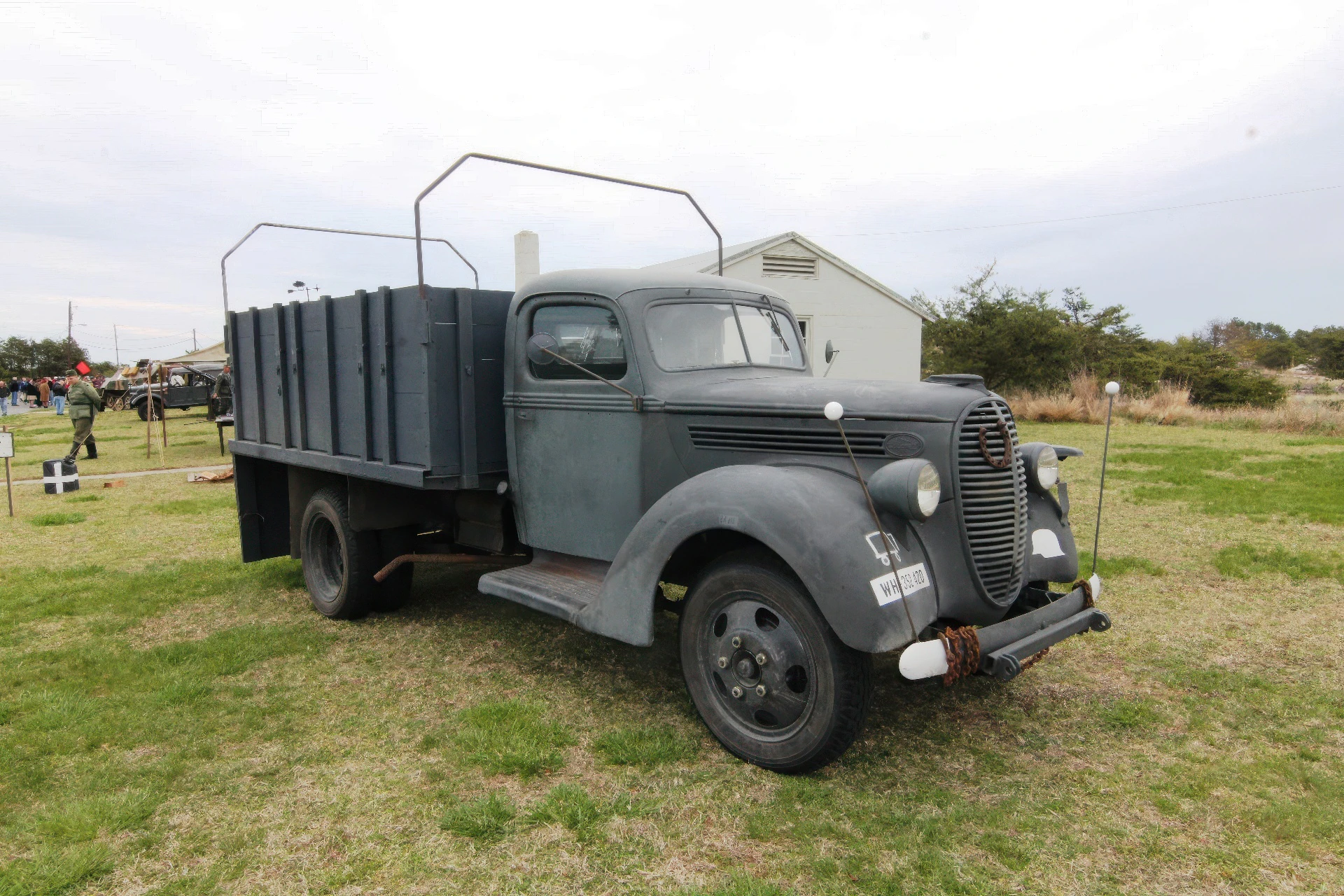
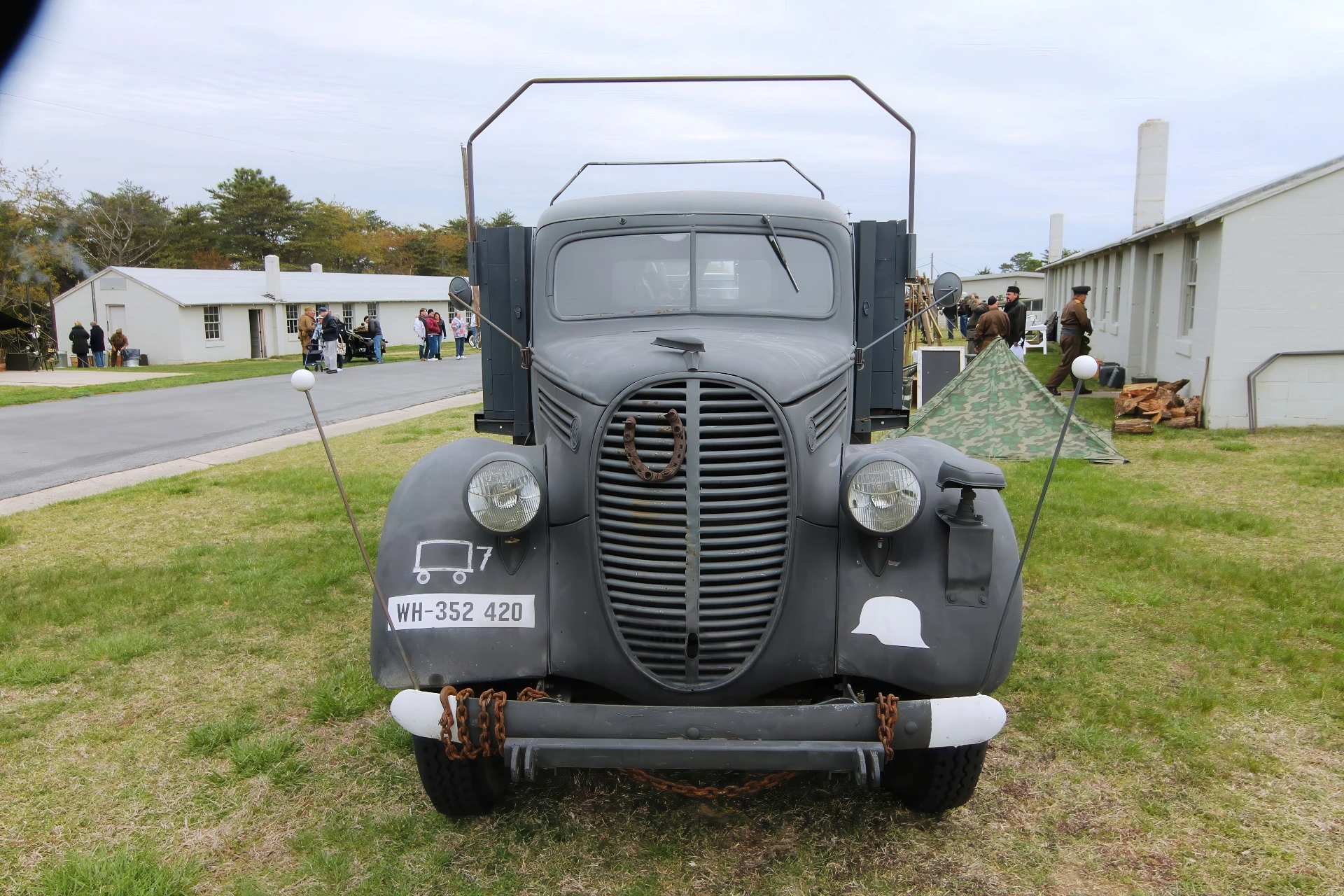
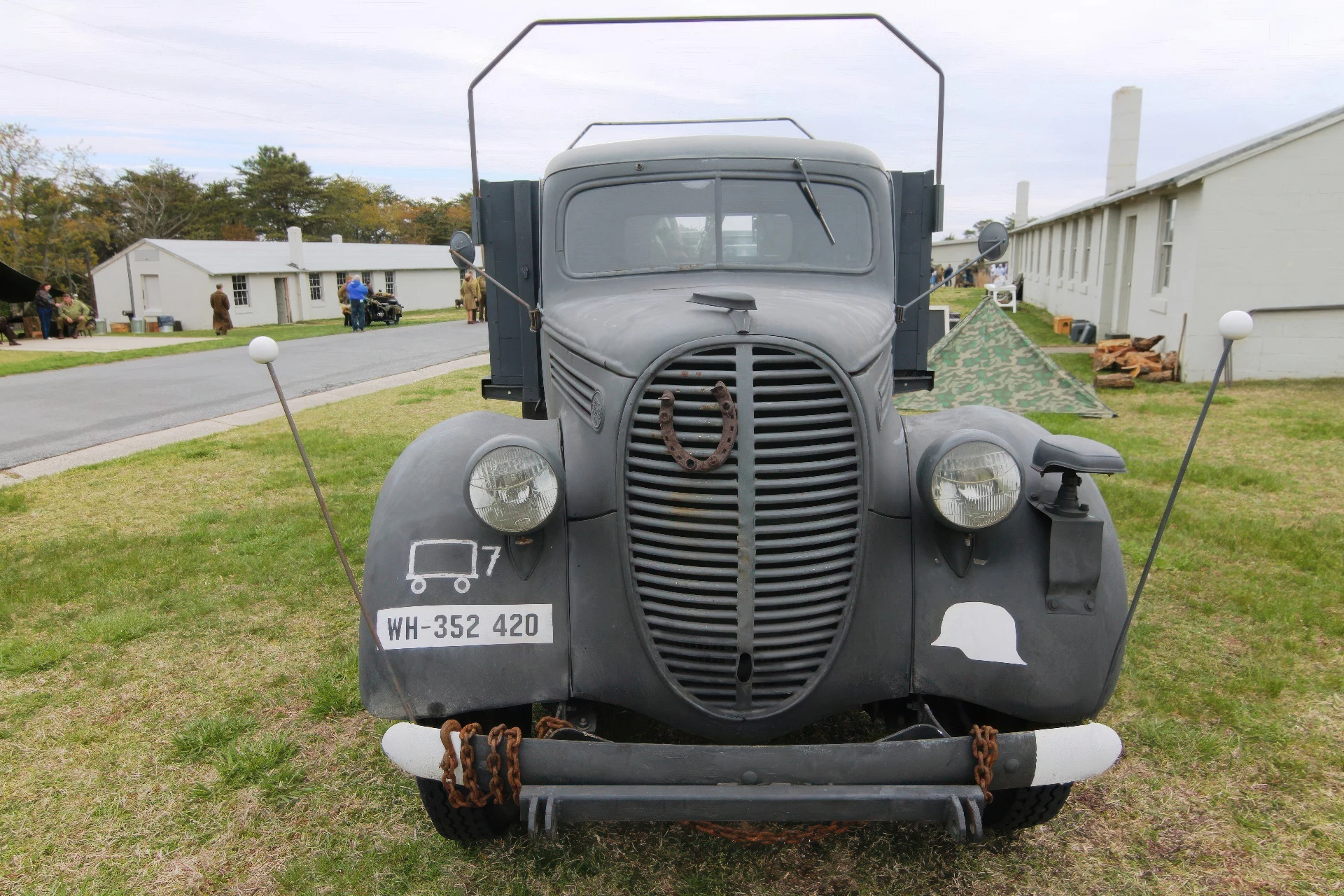
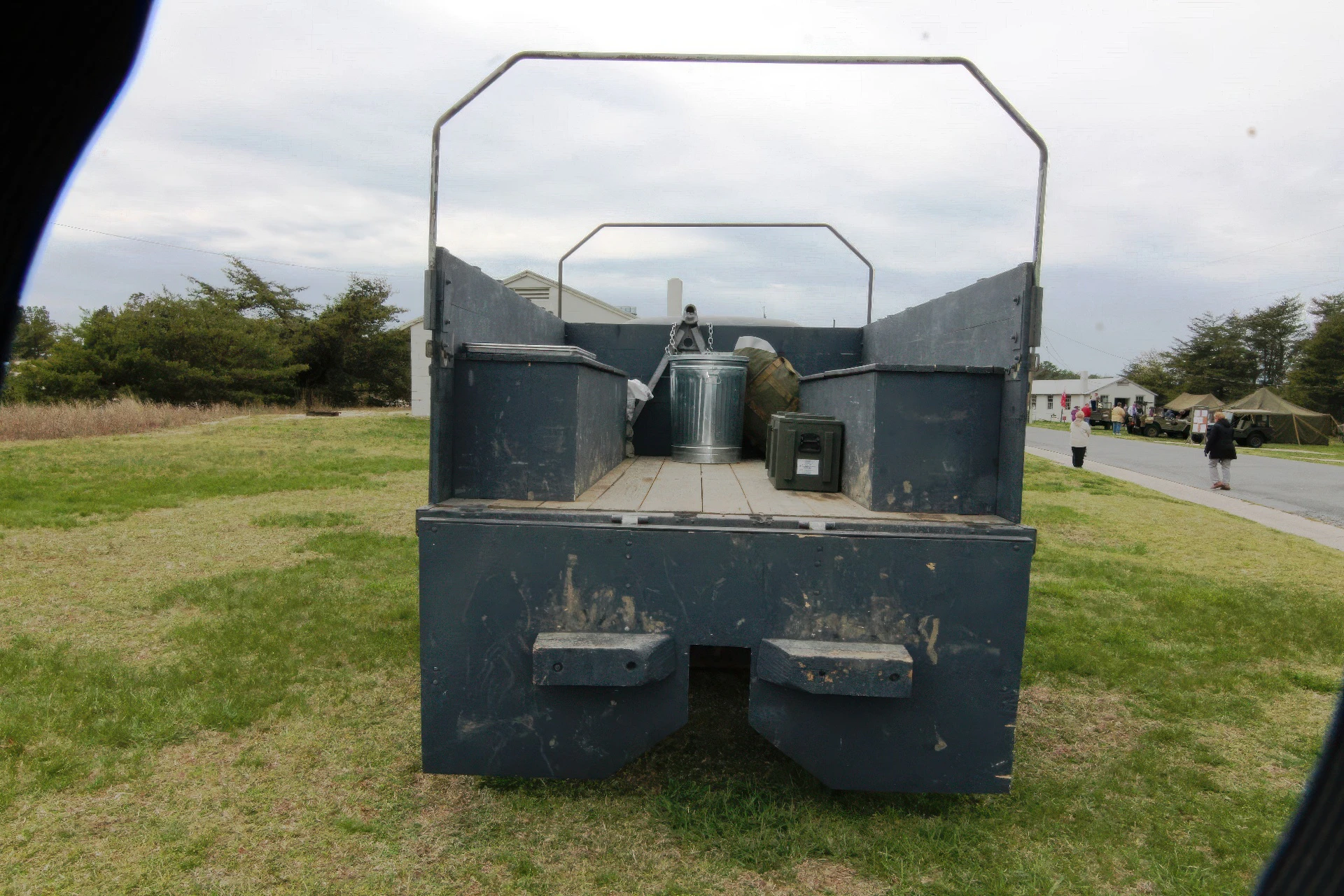
Tá Ford G917T was a 3-ton truck used by the Wehrmacht during World War II. In theory, all Ford models were identical in all countries, but the German version was distinguished by its unique windscreen (not divided as on the original model). These trucks and vans were built for the Wehrmacht at the Cologne plant from 1939 to 1942 under the names G917T, G987T, G987TG and G997T.
Zdroj: Wikipedie
| Ford G917T 3-ton Model 1939 Walk Around | |
|---|---|
| Fotograf | Unknow |
| Lokalizace | Neznámé |
| Fotografie | 11 |
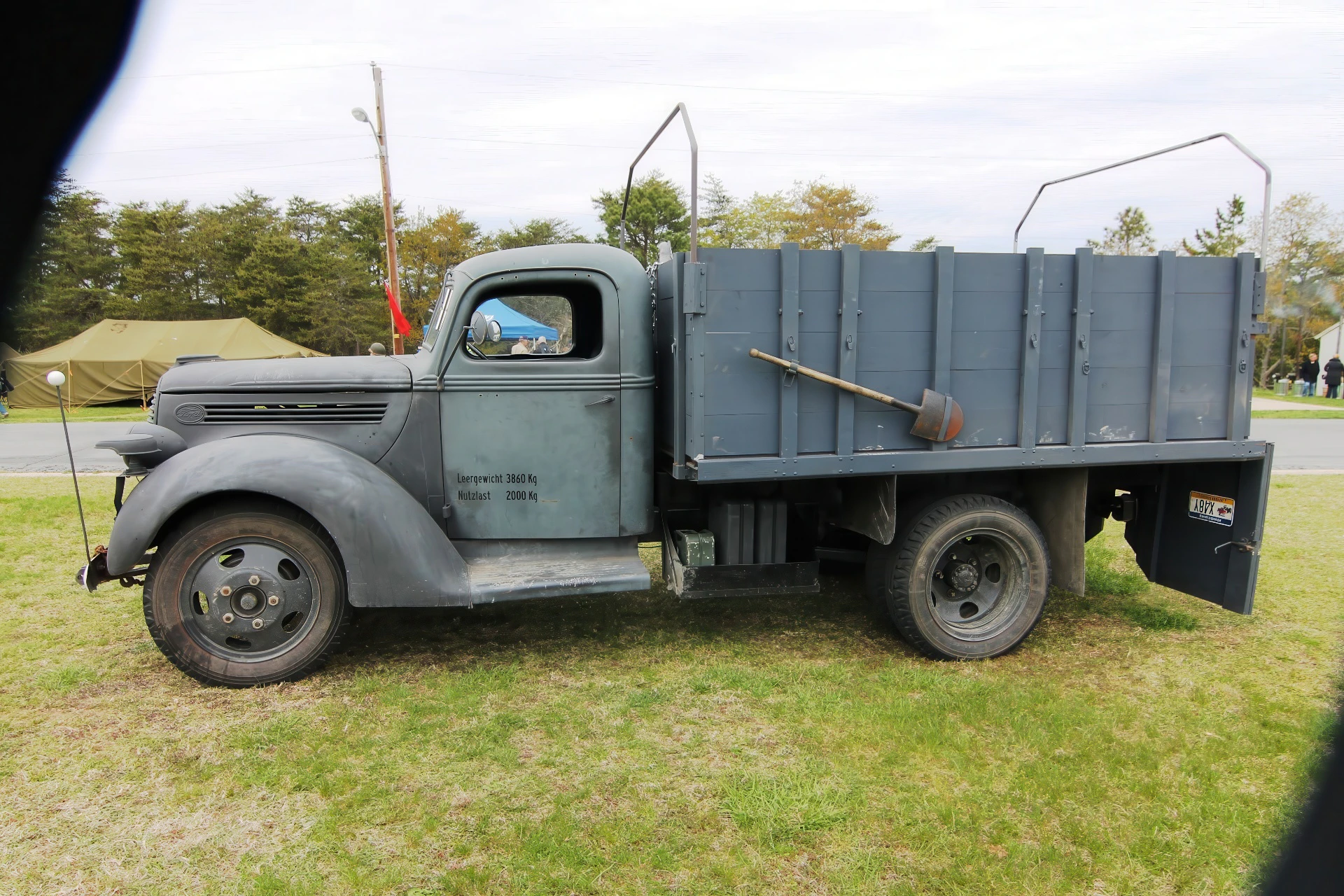
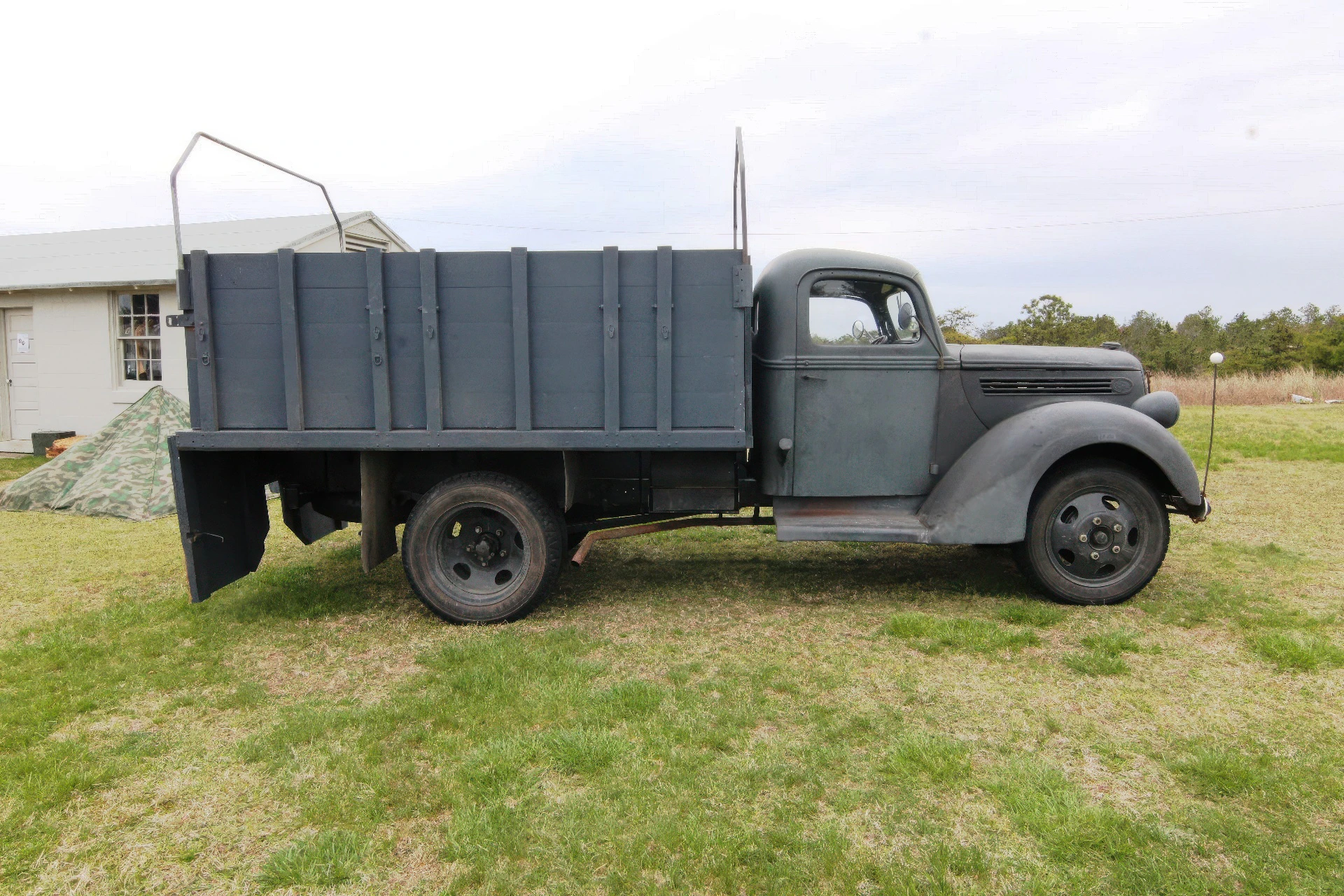
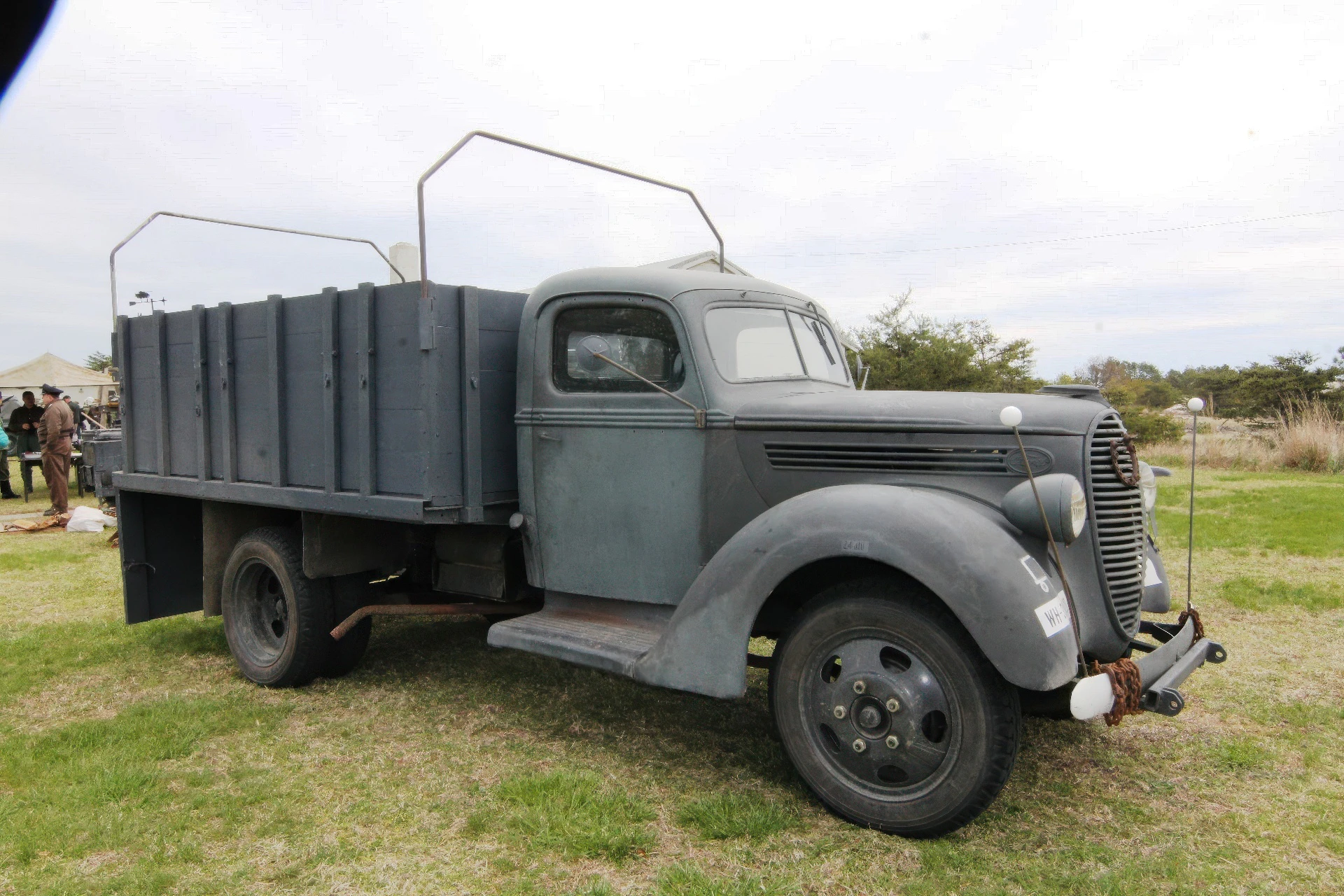

Viz také:


An American Design in German Service
Tá Ford G917T represents a fascinating chapter of industrial history. Produced by Ford-Werke AG in Cologne, Germany, it was based on the American 1939 Ford Model 917 chassis. When WWII began, the factory was placed under German military control. The G917T became one of the most numerous trucks in the 3-ton class used by the Wehrmacht. While its rival, the Opel Blitz, is more famous, the Ford G917T was equally essential, serving on every front from the lightning campaigns in France to the grueling retreats on the Eastern Front.
| Attribute | Standard Specification (Ford G917T / G997T) |
|---|---|
| Roli | Medium Utility / Cargo Truck |
| Payload Capacity | 3,000 kg (3 Tonnes) |
| Pohonná jednotka | Ford V8 “Flathead” Side-valve petrol engine |
| Displacement | 3.6 Liters (3,622 cc) |
| Horsepower | 75 hp to 90 hp (depending on fuel quality) |
| Transmission | 4-speed Manual |
| Drive Configuration | 4×2 (Rear-wheel drive) |
| Maximum Speed | 80 km/h (approx. 50 mph) |
The V8 Advantage and Technical Features
- The Flathead V8: Unlike most German trucks that used inline-4 or inline-6 engines, the Ford used the iconic V8. It was smooth and provided excellent torque, though it was more fuel-thirsty than the diesel engines of the era.
- The 1939 Facelift: The G917T is easily identified by its distinctive 1939 “barrel” grille and the teardrop-shaped headlights integrated into the front fenders.
- Chassis Durability: The frame was a classic ladder-style steel construction, supported by leaf springs. It was known for being flexible enough to handle the rutted, unpaved roads of Russia.
- Braking: Most units were equipped with hydraulic brakes, which provided better stopping power than the mechanical systems found on earlier 1930s utility vehicles.
Production and Wartime Evolution
- The G997T Transition: In 1941, the engine was upgraded to the 3.9-liter V8, and the model designation changed to G997T. To save weight and strategic materials, the ornate 1939 grille was often replaced with a simplified, flat barred version.
- Maultier Conversion: Like the Mercedes L4500 and the Opel Blitz, the Ford 3-ton chassis was used for the Sd.Kfz. 3 “Maultier” half-track conversion to overcome the Russian mud.
- Standardized Cab (Einheits-Fahrerhaus): Late-war models abandoned the rounded steel cab for a boxy, wooden/composite cab to conserve steel for tank production.
- Global Family: Interestingly, the Allied forces used the nearly identical Ford “Marmon-Herrington” and “Canada Ford” trucks, meaning the same basic Ford design was often facing itself from opposite sides of the battlefield.
Počet zobrazení: 701
Můžete také vidět:
 Pavesi P4 – Photos & Videos
 Fenomén Granit 1500 – Fotografie & Videa
 MAZ-537 – Fotografie a videa
 Systém manipulace s nákladem M1120 HEMTT – fotografie a videa
 Mack M123 Truck – Fotografie a videa
 Radar P-18 – Fotografie a videa
 M274 1/2-ton 4×4 užitkové plošiny - Fotografie a videa
 WC52 – Fotografie a video
 Ford CMP 15cwt 4×4 GS – Procházka Kolem
 Palivová cisterna Bedford OYC – Procházka Kolem