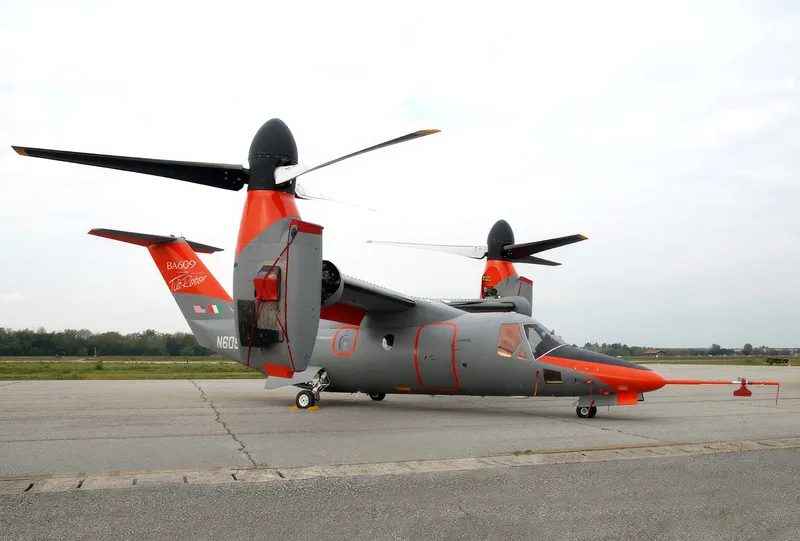
AgustaWestland AW609 | |
|---|---|
| Страна | САЩ Италия |
| Роля | VTOL корпоративен транспорт |
| Първи полет | 7 март 2003 г. |
| Построен | Не знам |
1. АгустаУестленд (сега Леонардо) AW609, по-рано Bell / Agusta BA609, е двумоторен самолет с вертотор VTOL с конфигурация, подобна на тази на Bell Boeing V-22 Osprey.
Източник: AgustaWestland AW609 в Уикипедия
| AgustaWestland AW609 | |
|---|---|
| Photographers | Unknow |
| Localisation | Unknow |
| Photos | 60 |
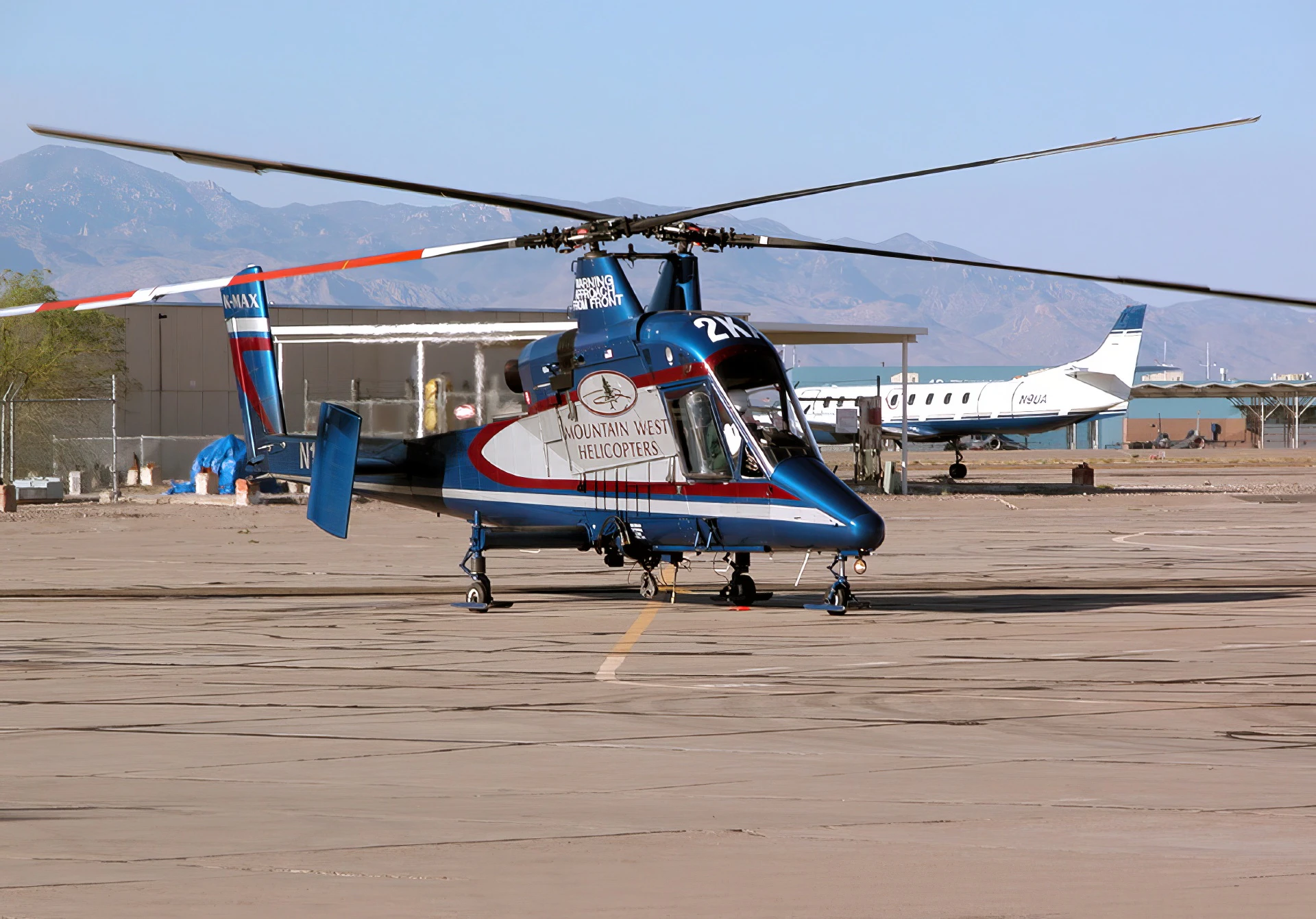
Kaman K-Max 19
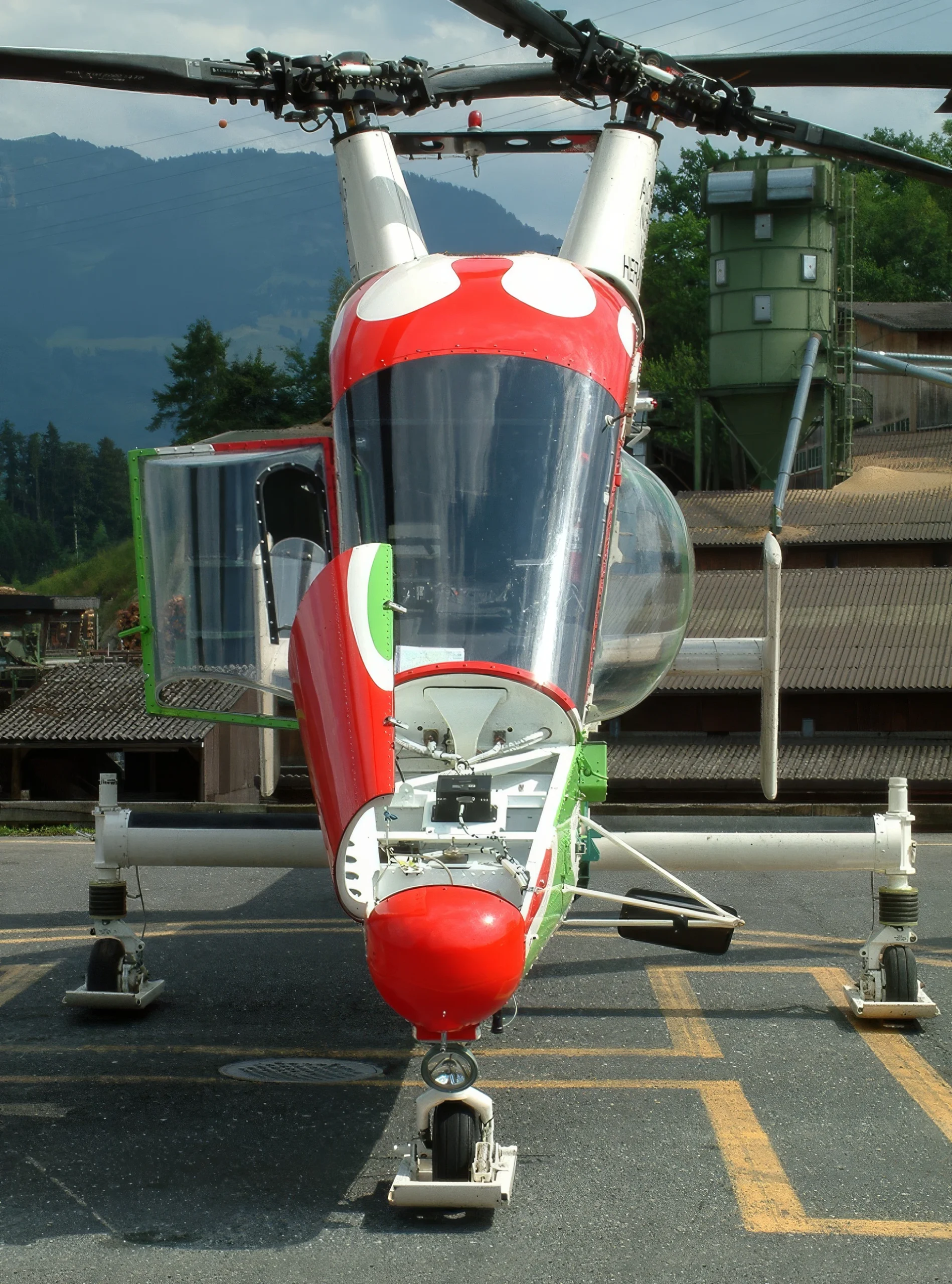
Kaman K-Max 21
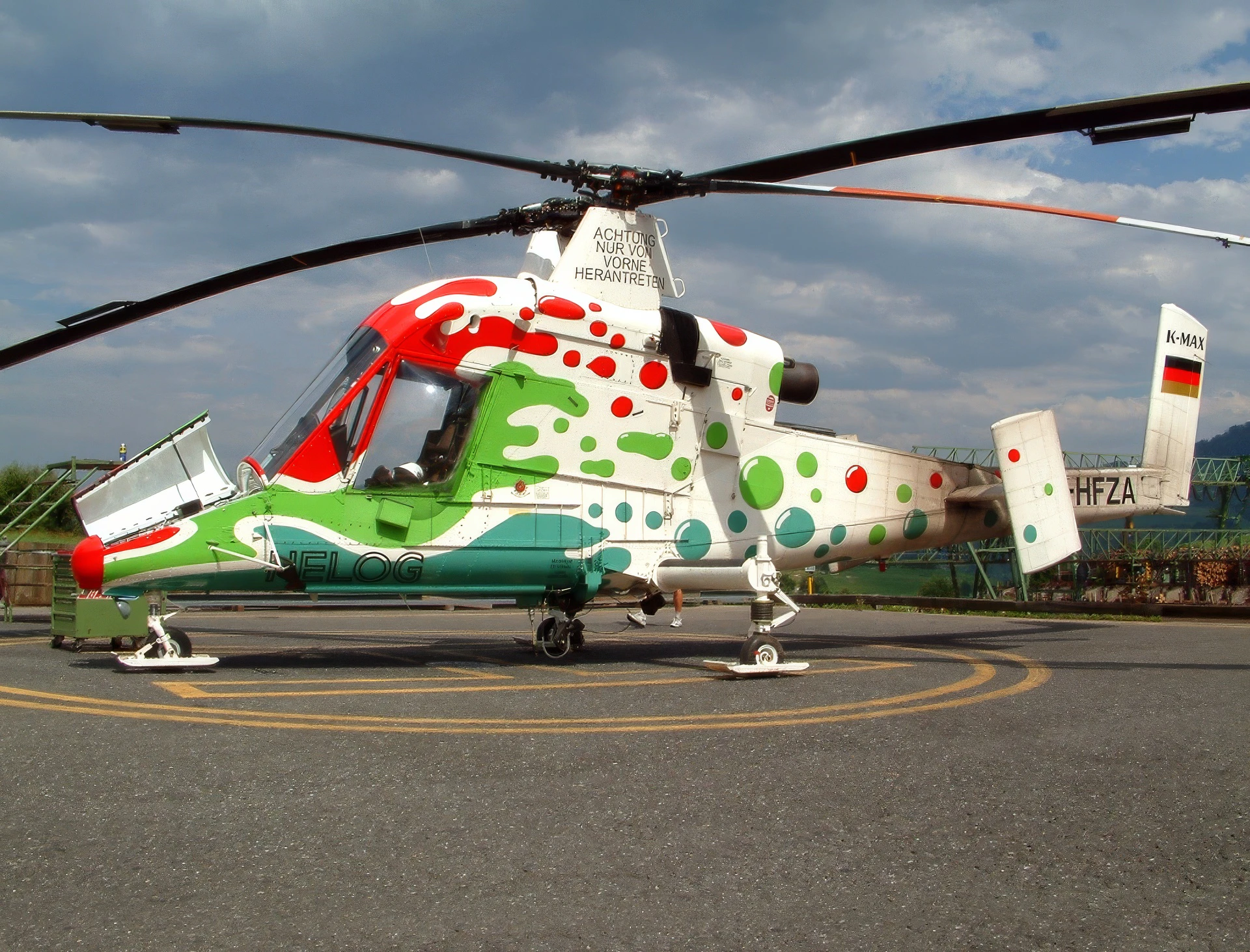
Kaman K-Max 20
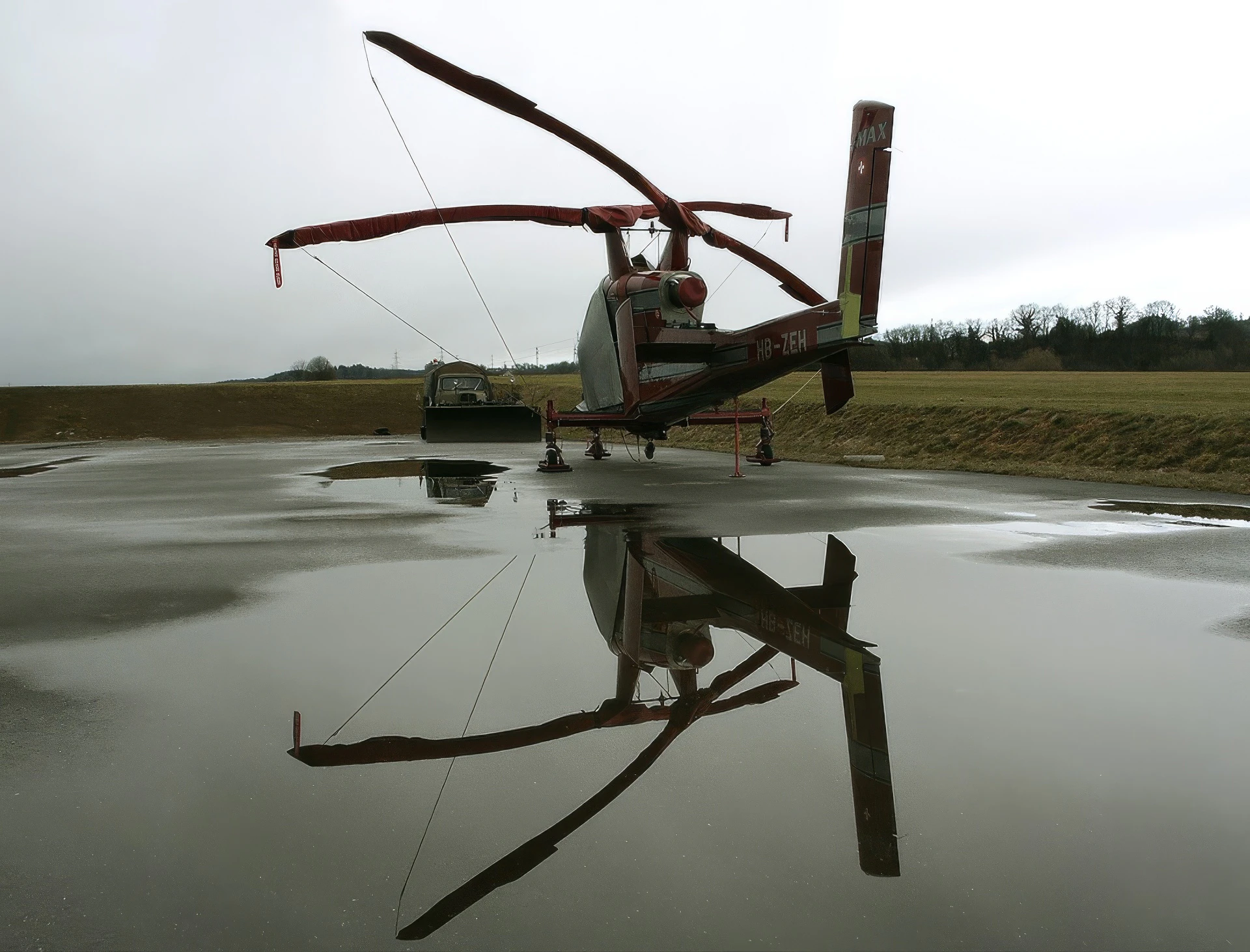
Kaman K-Max 22
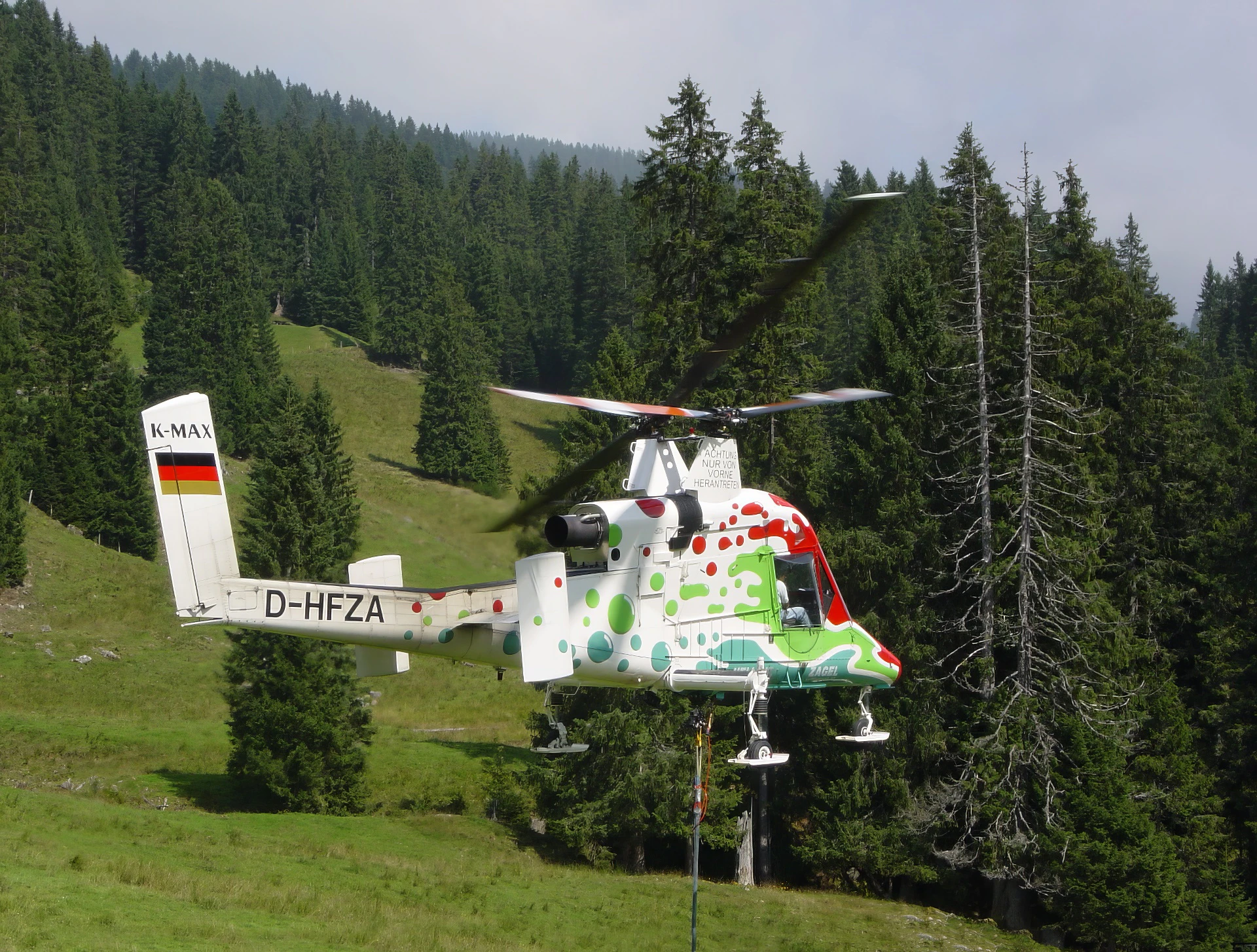
Kaman K-Max 23
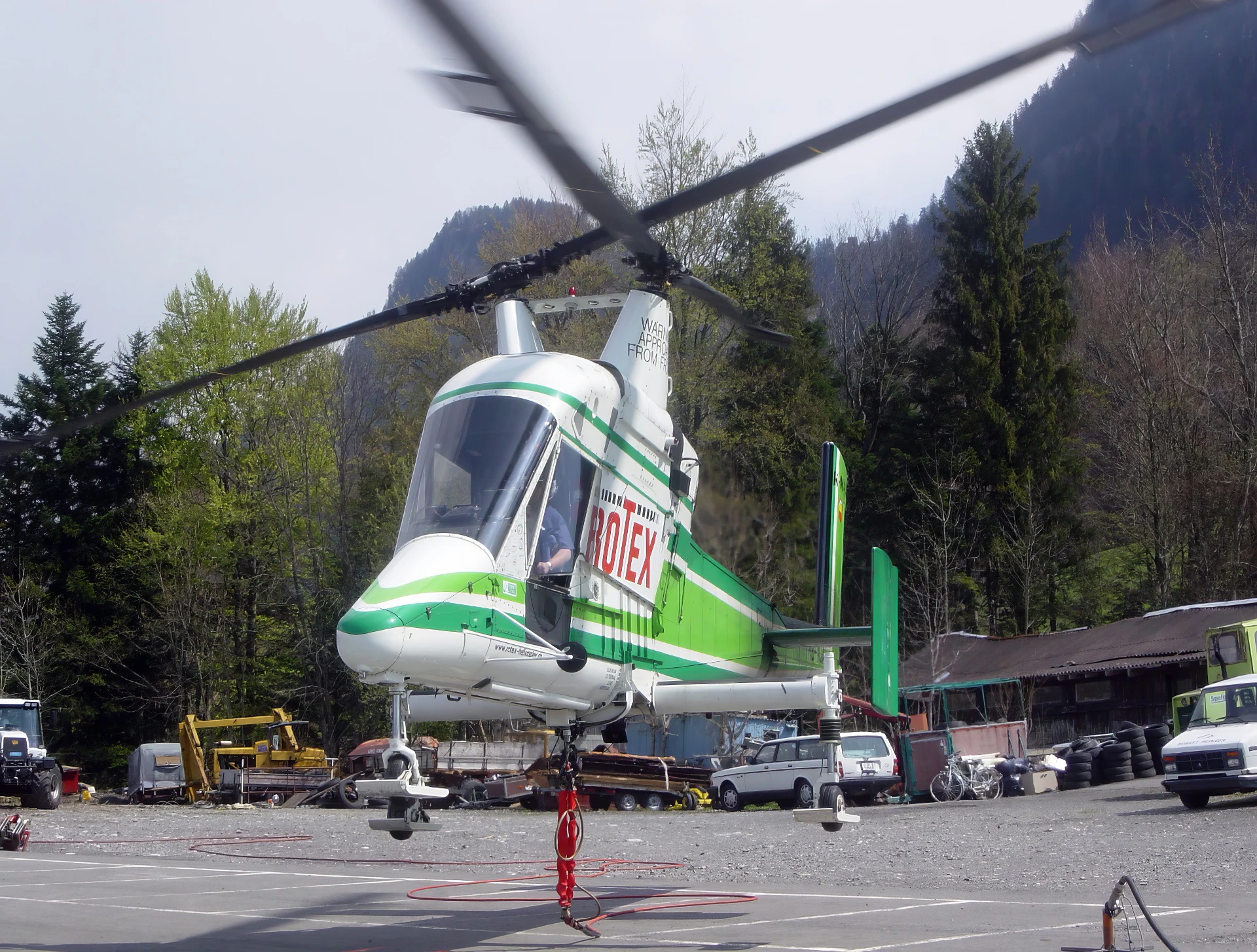
Kaman K-Max 24
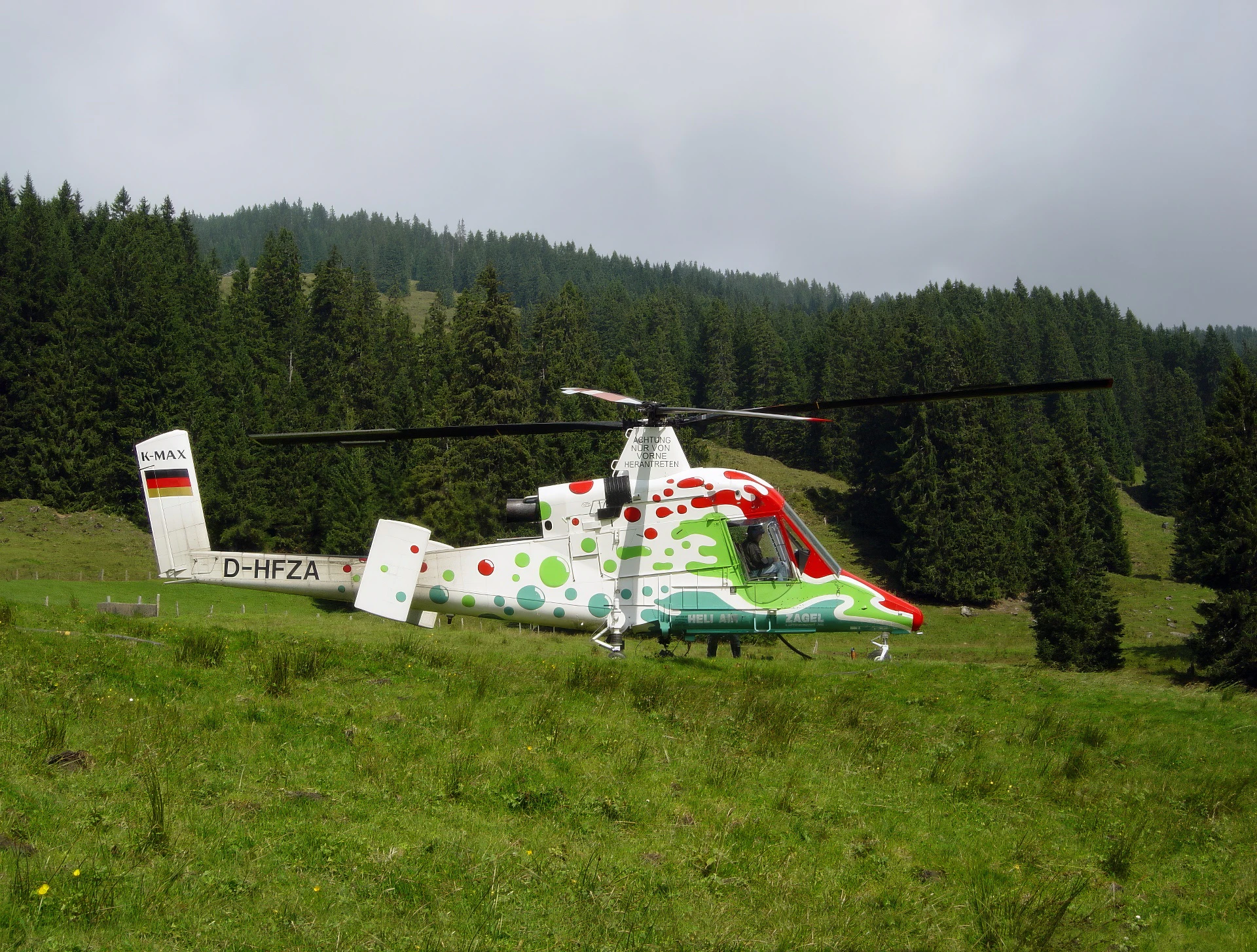
Kaman K-Max 26
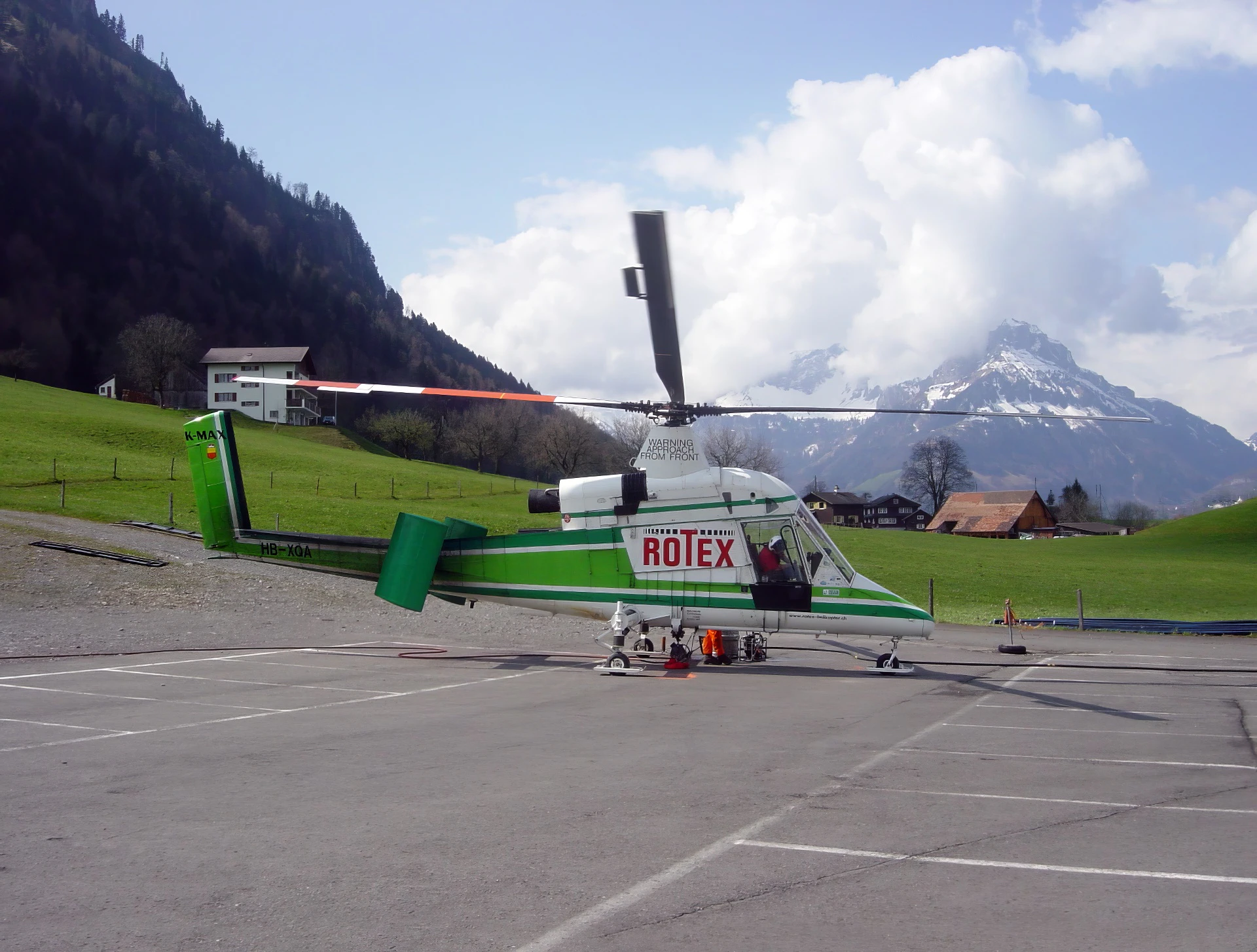
Kaman K-Max 25
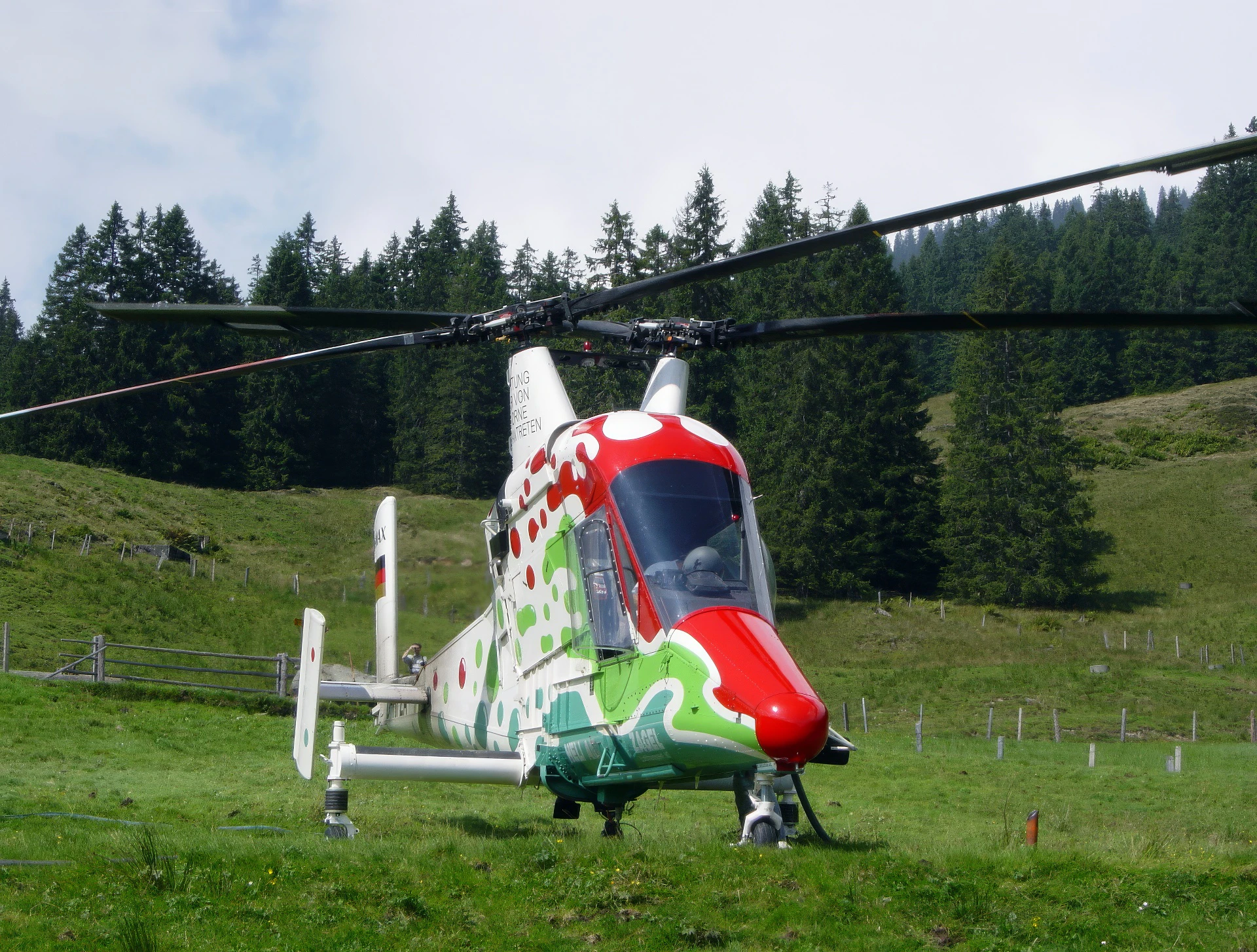
Kaman K-Max 28
Чакайте, търся AgustaWestland AW609 за вас...

 Купи ми кафе
Вижте също:


General Characteristics (Formerly AgustaWestland)
The Leonardo AW609, originally a joint venture between Bell and AgustaWestland, is the world’s first multi-engine tiltrotor aircraft designed specifically for the civil market. It uniquely combines the Vertical Takeoff and Landing (VTOL) capability of a helicopter with the speed, altitude, and range of a fixed-wing turboprop aircraft, making it ideal for point-to-point corporate, SAR, and offshore transport.
| Property | Typical Value (AW609) |
|---|---|
| Роля | Civilian Tiltrotor / VIP / SAR / Offshore Transport |
| Производителя | Leonardo S.p.A. (formerly AgustaWestland) |
| First Flight | March 6, 2003 |
| Екипажа | 1–2 pilots |
| Capacity (Passengers) | Up to 9 passengers (standard 6-8 VIP/Executive) |
| Overall Length | 14.1 m (46 ft 3 in) (Rotors turning) |
| Rotor Diameter (Each) | 7.9 m (25 ft 11 in) |
| Max Takeoff Weight | 7,620 kg (16,799 lb) / 8,000 kg (17,600 lb) Class |
Design and Powerplant
- Configuration: Tiltrotor (Convertiplane). The engine nacelles rotate from vertical (helicopter mode) to horizontal (fixed-wing airplane mode).
- Engines: Two Pratt & Whitney Canada PT6C-67A turboshaft engines.
- Power Output: Approximately 1,447 kW (1,940 shp) each (maximum continuous).
- Proprotors: Two, 3-bladed composite proprotors. The rotors are mechanically cross-linked to allow one engine to power both rotors in the event of a single-engine failure (OEI capability).
- Flight Controls: Fully digital, triple-redundant Fly-by-Wire (FBW) flight control system.
- Cabin: Features a pressurized cabin, allowing the aircraft to cruise above bad weather at higher altitudes, enhancing comfort and speed over conventional helicopters.
Performance and Capability
- Max Cruise Speed: Up to 509 km/h (275 knots, 316 mph). This is roughly twice the speed of a conventional helicopter.
- Maximum Range: Approximately 1,389 km (750 nautical miles) (Standard fuel); up to 1,852 km (1,000 nautical miles) with auxiliary fuel.
- Service Ceiling: 7,620 m (25,000 ft) (with auxiliary fuel).
- Hover Ceiling (Out of Ground Effect – HOGE): 1,828 m (6,000 ft).
- Useful Load: Over 2,721 kg (6,000 lb).
- Safety Features: Designed for flight into known icing conditions and meets the highest Transport Category performance standards, including single-engine operation and autorotation capability.
Views : 1253
Можете да видите също :
 Agusta-Bell AB.212 – Снимки и видеоклипове
 Bell 429 GlobalRanger – Снимки и видеоклипове
 Bell 206 – Снимки и видео
 Bell 407 – Снимки и видеоклипове
 Bell H-13 Sioux – Снимки и видеоклипове
 Bell 47 – Снимки и видео
 Bell AH-1Z Viper – Снимки и видео
 Bell AH-1 Cobra – Снимки и видео
 Bell UH-1Y – Снимки и видео
 Bell XV-3 – Снимки и видео