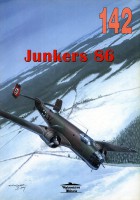
Junkers Ju 86 - Wydawnictwo Militaria 142

Wydawnictwo Militaria

SeriesWydawnictwo Militaria
Réf142
SujetJunkers Ju 86
Periodww2

Signed documentation Wydawnictwo Militaria the book "Junkers Ju 86 – Wydawnictwo Militaria 142".

The Junkers Ju 86 was a twin-engine, low-wing monoplane used by Lufthansa and the German Air Force in the 1930s and 1940s. About 900 copies of the aircraft will be delivered between 1936 and 1942, all civil and military versions combined.

Source: Wikipedia

Continue reading

Views: 1211

Panzer IV - Wydawnictwo Militaria 141

Wydawnictwo Militaria

SeriesWydawnictwo Militaria
Réf141
SujetPanzer IV - Sdkfz.161
"Period"WW2

Signed documentation Wydawnictwo Militaria the book "Panzer IV - Wydawnictwo Militaria 141" .

The Panzerkampfwagen IV (PzKpfW IV), souvent appelé Panzer IV était un char d’assaut utilisé par l’Allemagne nazie durant la Seconde Guerre mondiale. Conçu initialement comme char d’appui-feu, avec un canon de 75 mm court, pour le Panzerkampfwagen III, il finit par remplacer ce dernier quand les chars alliés devinrent trop protégés pour celui-ci. Rééquipé avec un canon long antichar, le PzKpfW IV fut le principal char allemand pendant la seconde partie de la guerre avec plus de 9000 exemplaires produits et donna naissance à de nombreuses versions: Désignation d’usine : SdKfz 161, SdKfz 161/1 (canon KwK 40 L/43) et SdKfz 161/2 (canon KwK40 L/48).

Source: Wikipedia

Continue reading

Views : 860

Wydawnictwo Militaria 140 - Flakpanzer

Wydawnictwo Militaria

SeriesWydawnictwo Militaria
Réf140
SujetFlakpanzer

Signed documentation Wydawnictwo Militaria the book "Flakpanzer - Wydawnictwo Militaria 018".

The Flakpanzer IV is a German anti-aircraft tank of the Second World War, which was used to protect armoured units. It has been available in four versions, M-belwagen, Wirbelwind, Ostwind and Kugelblitz.

Source: Wikipedia

Continue reading

Views : 789

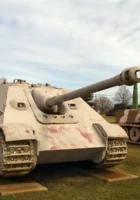
Jagdpanzer

Jagdpanther

CountryNari Germany
RoleTank destroyer
In service1944–1945
Built413

The Jagdpanther SdKfz 173, was a tank destroyer built by Nazi Germany during World War II based on the chassis of the Panther tank. It entered service in 1944 during the later stages of the war on the Eastern and Western Fronts. The Jagdpanther combined the 8.8 cm KwK 43 cannon of the Tiger II and the armor and suspension of the Panther chassis,[1] although it suffered from the general poor state of German ordnance production, maintenance and training in the later part of the war, which resulted in small production numbers, shortage of spare parts and poor crew readiness.

Source: Jagdpanther on Wikipedia

Continue reading

Views : 16340

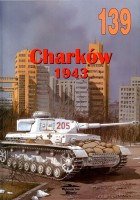
Wydawnictwo Militaria 139 - Charkow 1943

Wydawnictwo Militaria

SérieWydawnictwo Militaria
Réf139
SujetBataille de Kharkov
PériodeSeconde guerre mondiale

Une documentation signée Wydawnictwo Militaria le livre «Bataille de Kharkov – Wydawnictwo Militaria 139» .

La troisième bataille de Kharkov est une contre-attaque allemande menée par le Groupe d’armées Sud allemand contre l’Armée rouge autour de la ville de Kharkov entre le 19 février et le 15 mars 1943. Les Allemands nomment ces opérations la campagne du Donets et les Soviétiques les opérations de Donbass et Kharkov. La contre-attaque allemande conduisit à la destruction d’environ 52 divisions soviétiques et à la reconquête des villes de Kharkov et de Belgorod. Après l’encerclement de la 6e armée allemande à Stalingrad, l’Armée rouge entreprit une série d’offensives plus larges contre l’ensemble du Groupe d’armées Sud. Les Allemands concentraient leurs défenses dans la boucle du Don pour protéger Rostov et la voie ferrée qui ravitaillait les troupes encore dans le Caucase. Les Soviétiques enfoncèrent les défenses des Allemands et de leurs alliés roumains et hongrois sur plusieurs centaines de kilomètres, reprenant Kharkov et Koursk.

Source: Wikipedia

Continue reading

Views : 1196

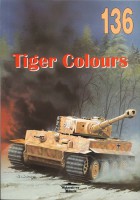
Panzerkampfwagen VI - TIGER - Sdkfz.181 - Wydawnictwo Militaria 136

Wydawnictwo Militaria

SeriesWydawnictwo Militaria
PeriodWorld War II
Réf136
SujetPanzerkampfwagen VI – TIGER – Sdkfz.181

Signed documentation Wydawnictwo Militaria le livre «Panzerkampfwagen VI – TIGER – Wydawnictwo Militaria 136» .

The Tiger I (Tigre), char d’assaut lourd allemand, en service de 1942 à 1945, est l’un des chars les plus connus de la Seconde Guerre mondiale, bien qu’il n’ait été que peu produit par rapport au T-34 soviétique ou au Sherman américain. Ce sont ses dimensions, ses lignes très carrées, sa résistance au combat, sa puissance ainsi que les équipages expérimentés l’ayant mené au feu qui ont marqué les esprits, notamment du fait de la propagande allemande. Son développement a commencé en 1937 et, quand il apparaît pour la première fois sur le front, le 29 août 1942, près de Léningrad, le Tigre I est le char techniquement le plus avancé, le mieux protégé et le plus puissant aligné par l’Axe, affichant une mobilité limitée mais exceptionnelle pour un engin qui fait plus de deux fois le poids de ses prédécesseurs et de la majorité de ses adversaires chenillés. Mais le char lourd, outre de sa production faible, a pâti tout au long de sa carrière de sa mécanique très fragile réduisant considérablement sa disponibilité au feu, de sa mise en œuvre opérationnelle rendue difficile par sa faible autonomie, souffrant également de son poids excessif. Construit à seulement 1 350 exemplaires, il n’a été que rarement endivisionné mais plutôt engagé dans des unités indépendantes.

Source: Wikipedia
Continue reading

Views: 1086

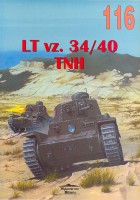
LT vz 34/40 - Wydawnictwo Militaria 116

Wydawnictwo Militaria

SerieWydawnictwo Militaria
Ref116
TopicLT vz 34/40
Periodww2
A magazine signed Wydawnictwo Militaria the book «LT vz 34/40 – Wydawnictwo Militaria 116» . The LT vz. 34, formally designated as Lehký – Light, Tank vzor – Model 34 was a Czechoslovak-designed light tank used mainly by Slovakia during World War II. Its suspension was based on that of the Carden-Loyd tankette, of which the Czechs had purchased three, plus a manufacturing license, in 1930. Dissatisfied with the prototypes of the Tančík vz. 33 tankette, the Czech Army decided that it would be easier to design a light tank from scratch rather than modify a tankette’s chassis to carry a fully rotating armored turret. 50 were built, the last of which was delivered during 1936, of which the Germans captured 23 when they occupied Bohemia-Moravia in March 1939, but they promptly scrapped them. The Slovaks seized the remaining 27 when they declared independence from Czechoslovakia at the same time. In Slovak service it only saw combat during the Slovak National Uprising.
Source: Wikipedia
Continue reading

Views : 894

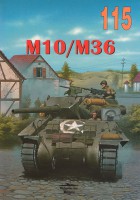
M10 - M36 - Wydawnictwo Militaria 115

Wydawnictwo Militaria

SeriesWydawnictwo Militaria
Réf115
SujetM10 - M36
Periodww2

Signed documentation Wydawnictwo Militaria the book "M10 - M36 - Wydawnictwo Militaria 115" .

The Tank Hunter M10 Wolverine (le nom officiel américain du M10 était « affût automoteur ») est un véhicule blindé américain construit à partir de 1942 utilisé pendant la Seconde Guerre mondiale. Pour suppléer à la faiblesse antichar des Sherman, les Américains dotèrent leurs unités d’un véhicule spécialisé dans la lutte antichar, à l’instar des chasseurs de chars allemands. Le M10 Wolverine était mécaniquement très proche du Sherman et son train de roulement était commun. Sa superstructure et sa tourelle étaient par contre originales. Le canon de 76,2 mm valait largement celui du Panzer IV, mais se révèla trop faible contre le blindage des chars allemands plus lourds. Livré aux Britanniques et adaptés par eux, le M10 prit le nom d’Achilles. Le véhicule est parfois surnommé Wolverine ou Slugger.

Source: Wikipedia

Continue reading

Views : 1063

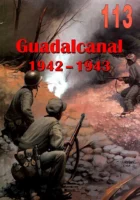
Wydawnictwo Militaria 113 Guadalcanal 1942 - 1943

Wydawnictwo Militaria

SeriesWydawnictwo Militaria
Réf113
SujetGuadalcanal
Periodww2

Signed documentation Wydawnictwo Militaria the book "Guadalcanal – Wydawnictwo Militaria 113".

The battle of Guadalcanal was an important battle of World War II in the Pacific Ocean theater of operations. The assault on the Japanese-occupied island at Guadalcanal by Allied marines landing sixteen thousand men from 7 August 1942 was the first phase of the offensive. Simultaneous amphibious attacks took place on the islands of Florida, Tulagi, Gavutu and Tanambogo.

Source: Wikipedia

Continue reading

Views : 769