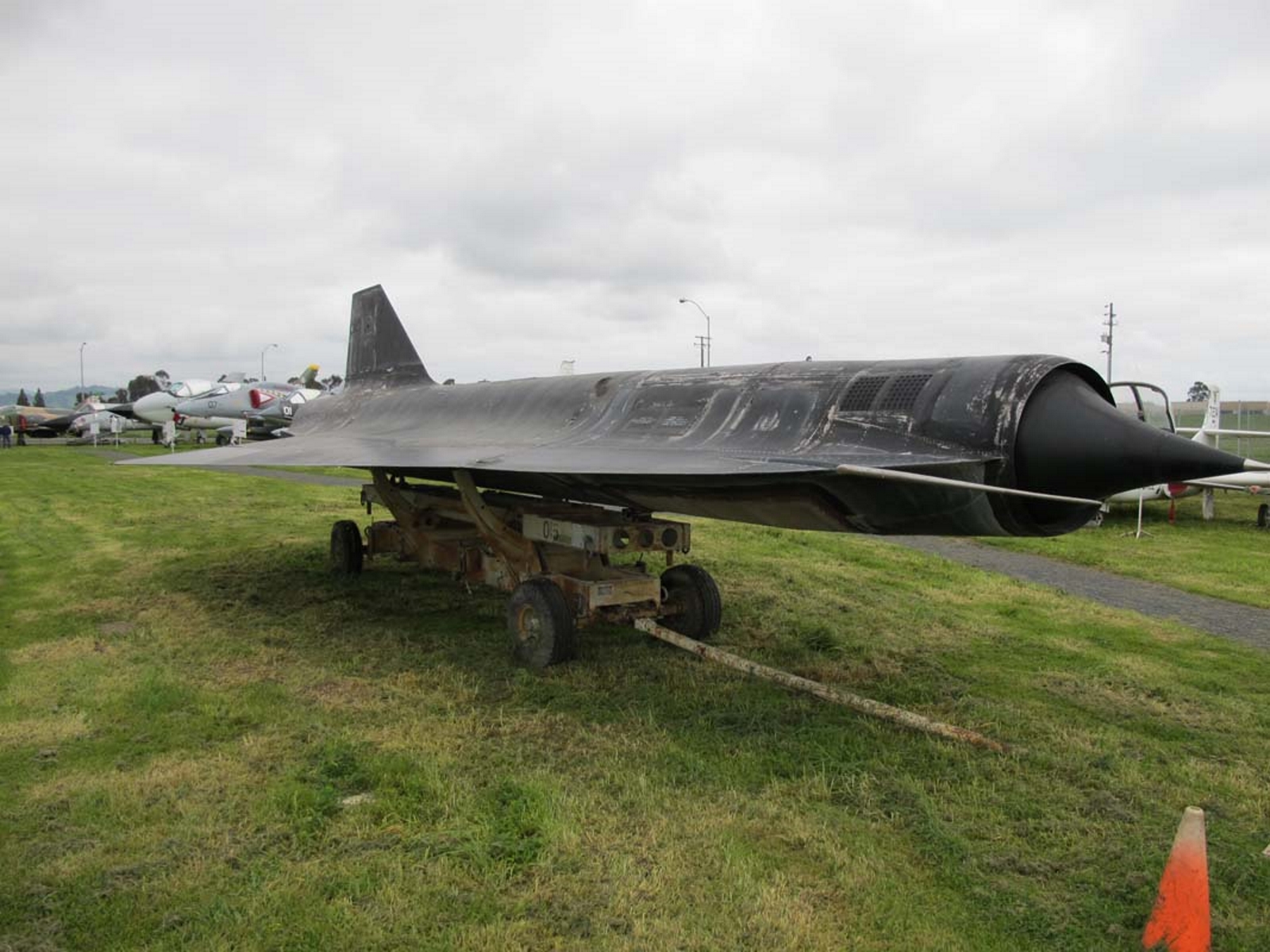
Lockheed D-21 Drone | |
|---|---|
| 国家 | 美国 |
| 作用 | 高空和高速侦察无人机 |
| 首次飞行 | 1964年12月22日 |
| 建立 | 38 |
这 洛克希德D-21 was an American reconnaissance drone with maximum speed in excess of Mach 3.3 (2,215 mph; 3,564 km/h). The D-21 was initially designed to be launched from the back of a M-21 carrier aircraft, a variant of the Lockheed A-12 aircraft. Development began in October 1962. Originally known by the Lockheed designation Q-12, the drone was intended for reconnaissance deep in enemy airspace. The D-21 was designed to carry a single high-resolution photographic camera over a preprogrammed path, then release the camera module into the air for retrieval, after which the drone would self-destruct. Following a fatal accident when launched from an M-21, the D-21 was modified to be launched from a Boeing B-52 Stratofortress. Several test flights were made, followed by four unsuccessful operational D-21 flights over the People’s Republic of China, and the program was canceled in 1971.
| Lockheed D-21 Drone Walk Around | |
|---|---|
| 摄影师 | 弗拉基米尔·亚库博夫 |
| 本地化 | 太平洋海岸航空博物馆 |
| 照片 | 125 |

另请参阅:


这 洛克希德D-21无人机 was a supersonic reconnaissance aircraft that was designed to fly over enemy territory and collect intelligence data. The drone was launched from a modified A-12 or B-52 aircraft and could reach speeds of up to Mach 3.3. The drone carried a camera that would eject its film in a capsule over the ocean, where it would be recovered by a C-130 aircraft.
The D-21 program was initiated in the early 1960s as a response to the U-2 incident, where a spy plane was shot down over the Soviet Union. The program was cancelled in 1971 after four operational missions, none of which were successful. The D-21 Drone was one of the most advanced and secretive projects of its time, but also one of the most costly and risky.
视图 : 1949